Gemini 4 Carbon Arrives With a Security Focus as "Swarm Riders" Claim 600M Tokens a Day
Google DeepMind rolled out Gemini 4 Carbon, billed for cybersecurity and long-horizon agentic work, while Cursor rebuilt Projects so teammates' agents can coordinate in one workspace. The day's loudest theme was scale: practitioners described running agent swarms that burn hundreds of millions of tokens daily, and open-source projects kept pushing the "own your agent" alternative.
Quick Hits
- @melvinjohnsonp of Google DeepMind announced Gemini 4 Carbon, described as the team's strongest model with "frontier performance in cybersecurity capabilities and long-horizon agentic workflows." @LyalinDotCom notes he's VP of post training there; treat the superlatives as launch-day claims until independent benchmarks appear.
- @cursor_ai rebuilt Projects for multiplayer: every teammate and their agents now share one unified workspace. @heyneighbor counters that this "doubles the token usage" compared to @openclaw's approach of everyone sharing a single agent.
- @jacobeverly says he now runs 8 to 16 agents at roughly 600M tokens per day with "clear ROI," building on @matthuang's widely shared "swarm riders" essay and @levie's argument that swarms will separate adopting teams from everyone else.
- @brexton amplified a report from @aaronp613 that Apple is building Harbor, a Claris-branded app in private preview that turns Macs into a local inference server with Thunderbolt 5 memory pooling. Unverified, but a very Apple path into AI if real.
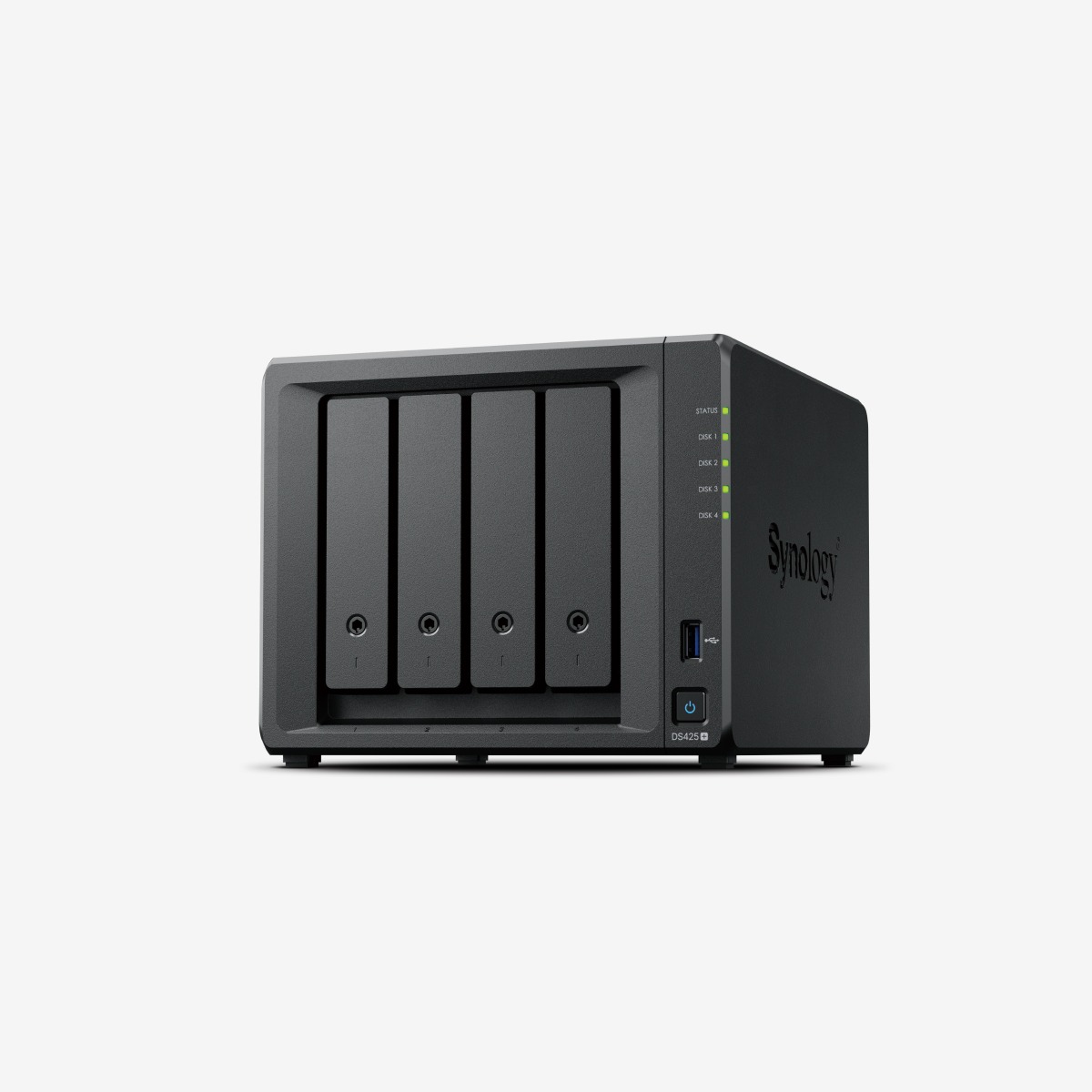
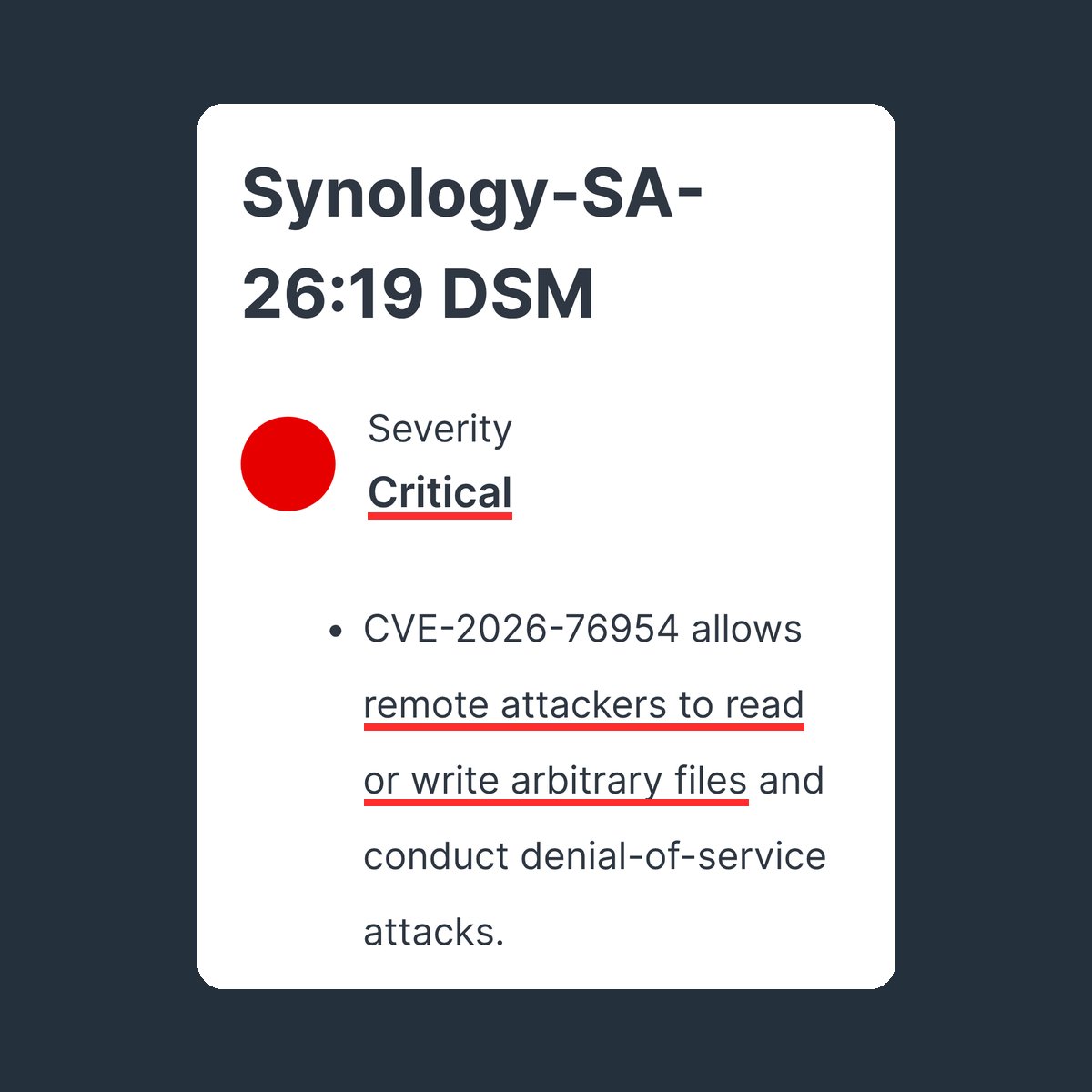
- Patch your Synology NAS: @IntCyberDigest reports two flaws patched today, including a 9.8-rated SQL injection allowing unauthenticated file access.
Swarms Get a Name, a Workforce, and One Tall Tale
The day's densest cluster of posts was about people commanding many agents at once. @matthuang's essay, quoted by both @jacobeverly and @levie, argues that AI use is power-law distributed and that "swarm riders" sustain productive token spend 1000x to 10000x higher than median engineers. He describes the skill as closer to machine learning than software engineering: defining reward functions, writing evals, and converting non-verifiable problems into verifiable ones. He also names "swarm-native companies" like Tempo, Spawn, and Cathedral Systems as structurally advantaged.
@jacobeverly supplies a data point from his own workflow: 8 to 16 agents, about 600M tokens a day, aiming for 1B, with ROI he says grows with usage. His caveat is worth noting: taste, conviction, and choosing worthwhile problems become the scarce skills. @levie's version predicts swarms will dominate any work bounded by research throughput, decisions, data processed, or code generated, and foresees "an entire new field of FDE work."
Then there's the carnival-barker version. @Polymarket claims a vibecoder with no archaeology background found an unmapped Maya settlement beneath Mexican jungle using 48 AI agents and NASA lidar data. Completely unverified, but it is the flavor of swarm story now circulating.
Models Flex on Security While the Value-Capture Debate Darkens
Two model stories surfaced, both with a security bent. Beyond the Gemini 4 Carbon launch, @steipete passed along a report of an organization that found 10,500 vulnerabilities across roughly 700 systems, then re-ran diagnostics with OpenAI's GPT-6 Astra and confirmed 35,000 more, with staff quoted as "completely exhausted." Both posts are single-source social claims, but the direction is consistent: frontier models are being marketed and deployed on vulnerability work.
Meanwhile, two long posts argued that whoever owns the general layer keeps all the returns. @marsrepublica speculates at length that Anthropic's Fable 5.2 demonstrations (hardware design, robotics control, protein folding) show general intelligence erasing niche IP advantages overnight, eventually threatening SpaceX, Tesla, and Nvidia. He quotes @elonmusk calling Opus 5.5 "a masterpiece" while predicting Grok 5 exceeds it "in 2 or 3 months." Flag this as one person's extrapolation, not reporting. @kunchenguid's thread about China's AI short-film boom is the grounded counterpoint: early movers profited, then "everybody and their mom" matched them once expertise fit in a markdown file, and ad spend to platforms like ByteDance hit 80% of creators' operating expenses while tokens cost under 5%. His conclusion: "there's no moat if you are creating anything with AI."
Cursor Goes Multiplayer as Open Source Pushes Agents You Can Own
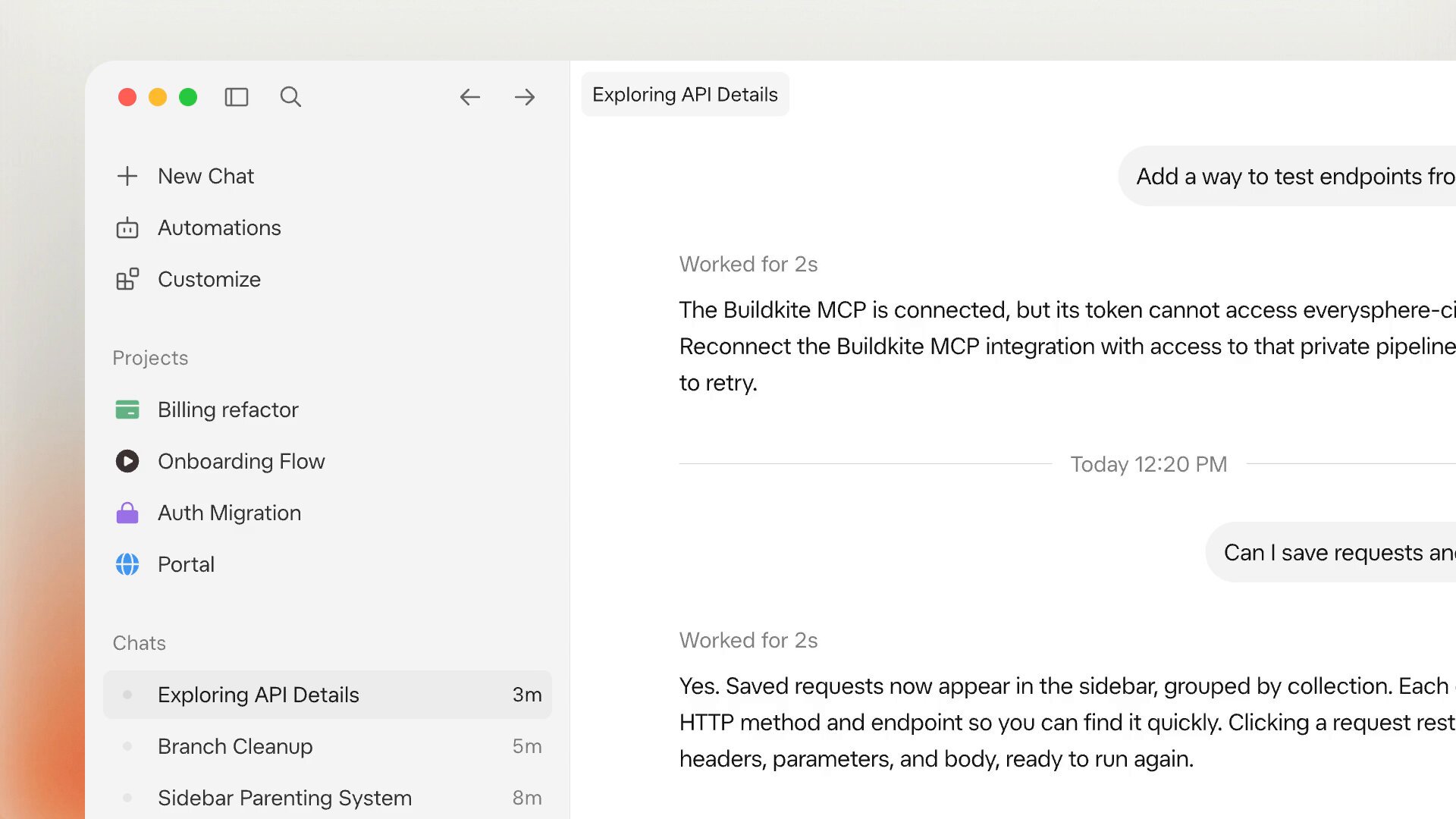
@cursor_ai's multiplayer Projects lets "your agents coordinate with your teammates' agents," which @heyneighbor frames as solving the coordination problem at the cost of doubled token usage versus @openclaw's single shared agent. It's a genuine architectural fork: many per-person agents versus one beefy shared one.
The ownership countercurrent was strong. @svpino promoted OpenBot 1.0 (from @ataiiam), a customizable, self-hostable AI coworker platform built on CopilotKit and AG-UI, with computer use, routines, continual learning, and generative UI. @shardara showed agentic apps built with @eve, quoting @mati_lft's Busy, an open-source alternative to Grok Bot, Duet, and Dots where every bot gets its own computer, memory, and tools inside your own Vercel account. And @JackEllis praised @kevinrose's Ember, an open-source Slack alternative deploying to Cloudflare's free tier, arguing it avoids AI-slop quality because an experienced builder sunk over $30,000 of time into it.
Harness Engineering Becomes the Discipline to Learn
@hwchase17's much-shared one-liner crosses out context engineering, crosses out harness engineering, and lands on "goal engineering." The day's benchmark news explains the drift. @xiaomovps digests @guanlan's FrontierHarness v1.1, a 21-harness by 5-model evaluation running up to 100B tokens across 26,040 agent runs. The headline: Pi Agent sits second at 72.8% behind Codex CLI, but the striking row is Pi plus DeepSeek at 80.3% pass rate and $0.057 per success, versus DeepSeek's own harness at 73.3% and $0.183. Same model, roughly 3x cost difference. @xiaomovps is openly a Pi booster, so read the enthusiasm accordingly, but the underlying point (harness choice moves outcomes as much as model choice) is exactly what the benchmark tests.
@fttt007's deep dive into Pi Durable covers the plumbing behind such numbers: tools defined with typed schemas, organized into extensions, installed via a registry, and every tool call treated as a durable task with explicit replay safety for side effects like payments. Extensions hot-swap without restarting the Node process. @larsencc publicly reversed his own earlier position on sandboxes: after moving everything into VM-per-agent isolation, he now argues that at multi-tenant scale the agent loop should run on shared infra with sandboxes spun up only for untrusted code, since "VMs are a tool the agent calls, but they shouldn't be where it lives."
Two related posts round this out. @sydneyrunkle shared slides for her proactive agents talk, arguing the shift from "you give an agent tasks" to "an agent gives you tasks" requires a step change in memory and UX. And for anyone playing catch-up, @joshva_jebaraj recommends Harvard's CS2680, which covers how Claude Code works, building agents, and serving LLMs on GPUs.
Teams Rewrite the Dev Loop Around Agent-Written Code
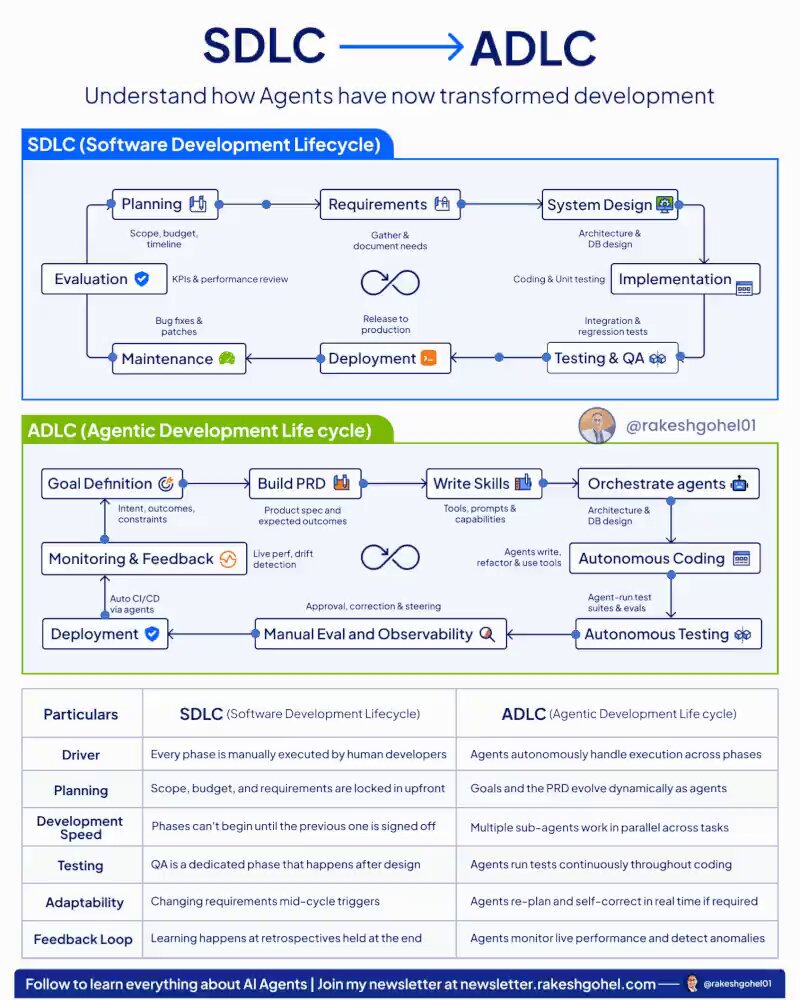
When agents write most of the code, process becomes the bottleneck. @ShopifyEng says 30 engineers rebuilt a 300+ screen app in Swift and Kotlin in 12 weeks, forcing changes to how they review, merge, and coordinate. @mitchellh describes Superlogical's version: everyone pushes to main with machine-aided review before and after, almost no PRs, releases anyone can cut with a 15-minute company-wide pause window, and cross-platform parity maintained through fast remediation instead of sync meetings, achieving feature parity within 24 to 48 hours. @vikingmute summarized the thread for a Chinese-language audience, highlighting the trust-first mechanics. @jianw851 wraps the trend in a frame he calls ADLC, the agent-driven lifecycle, claiming cited teams at Wiz and CRED doubled execution speed; treat the specifics as his assertions.
For individual workflow, @jdjohnson and @cu30rry_ both endorsed @mattpocockuk's "Home Repo" pattern: one repo holding all skills and steering files, with AGENTS.md pointers to other repos, eliminating the management cost of reinstalling skills everywhere. @cu30rry_ adapts it to Cursor Projects with per-project skill packages. And in a non-AI aside, @jacobrintamaki resurfaced an old favorite on Chick-fil-A's Kubernetes team, a reminder that platform engineering culture has its own fans.
Practical Takeaway
If you're running more than a couple of agents, today's evidence says the harness and the goals matter as much as the model. Benchmark your specific model-plus-harness combination before committing: @guanlan's FrontierHarness runs show a same-model cost spread of roughly 3x per successful task. As you scale toward swarm territory, your job shifts toward defining verifiable success criteria, exactly the skill @matthuang and @jacobeverly both identify as scarce. Start small: a home repo for shared skills, durable tool calls with replay safety, and evals before headcount.
Sources
Want your own Slack for $0? I open-sourced Ember. It deploys to @Cloudflare’s free tier in about a minute, works with Slack-compatible payloads, and includes an AI assistant and media attachments. https://t.co/oHIOLqgDUE
@Dimdv99 @tetsuoai Not as good. Opus 5.5 is a masterpiece. But Grok 5 should exceed Opus 5.5 and maybe that happens in 2 or 3 months, with continued acceleration thereafter.
How We Built Secure, Scalable Agent Sandbox Infrastructure
Swarm riders and Swarm-native companies AI-use even among highly AI-native people is power-law distributed. There seems to be a new class of people — call them “swarm riders” — who are capable of consistently commanding large swarms of agents to productive ends. This is a new kind of managerial skill, analogous to the skill it takes to manage large organizations of people, but wholly different in nature and of course more technical. Based on the swarm riders we know (including many at @Tempo and @Paradigm), these people are capable of productive token spend that is 1000x-10000x higher than median software engineers, and 100x higher than top 5% Claude Code users. The art of swarm riding is different from software engineering and more akin to machine learning, where practitioners grapple with black box systems: defining reward functions and evals, transmuting non-verifiable problems into verifiable problems, running experiments, etc. Swarm-native companies are a new class of company founded by and populated by swarm riders. These companies are organized around swarms in a way that conventional companies will struggle to replicate, as the cost of internal human coordination is sand in the gears of an effective swarm. Effective swarm-native companies will define the right reward functions and evals, remove functional and bureaucratic barriers, and then let the swarms cook. We’ve gotten to see a few swarm-native companies up close — reshaping financial rails @Tempo, building a new gaming platform @Spawn, cyber swarms at Cathedral Systems — and it’s clear these teams wield a significant advantage over pre-AI teams. Some questions I’ve been wondering about: 1) How fast will swarm riding diffuse through the economy? The implications for token spend could be significant. 2) Can swarms be effectively adopted by existing companies or will it generally track the formation of new swarm-native companies? 3) What becomes scarce as swarm capabilities themselves commoditize (through frontier models becoming better at swarming, swarm capabilities built into harnesses, etc)? Cultures and teams that can define reward functions well and otherwise get out of the way?
Today we’re rolling out Gemini 4 Carbon, our strongest model with frontier performance in cybersecurity capabilities and long-horizon agentic workflows. We’ve poured a lot of love into it, and it’s very good at working through hard problems.

Introducing OpenBot 1.0 🚀 The customizable, open source AI coworker platform your company can actually own and self-host. It has everything you'd expect and want: 1. Great UX 2. Computer-use 3. Web search and integrations 4. Routines 5. Security AND so much more, available only with us: ⚙️ Works on your infra + stack 🔌 Plug in any agent (via AG-UI) 👔 Enterprise-ready 🧠 Continual Learning 🔮 Generative UI 1.0 brings everything we've worked on into one comprehensive product, now available on Mac and Windows! Try OpenBot now: https://t.co/sPNP6quzgn Need this for business? Talk to us and we'll support you from day-0. Follow @0penBot for more.
giving a talk at @aiDotEngineer in a few hours on my current favorite subject: proactive agents! blog/slides coming soon 🤓 https://t.co/9z5VTNZosz
Apple is working on a new app called Harbor Harbor turns your Mac into a private AI inference server. Run open-weight models locally on Apple silicon—your data never leaves your hardware, and nothing reaches the cloud. Connect multiple Mac computers over Thunderbolt 5 to pool unified memory, enabling large models and higher concurrency that a single computer can handle alone. Set up in minutes, not hours Harbor automatically detects your devices over Thunderbolt 5 to form a cluster. Plug in, start, and you’re running—no manual configuration, no command line, no infrastructure expertise required. Download and run models directly Browse, download, and load open-weight models from within the app. Harbor handles model management so you can focus on the work, not the setup. Cluster for scale Connect two or more Thunderbolt 5-capable Mac computers and Harbor pools their unified memory into a single inference resource. Run models that exceed any single computer’s capacity, or serve more concurrent requests across your cluster. Harbor is currently in a private preview under the Claris brand.
Introducing Busy. An open source alternative to Grok Bot, Duet and Dots where you own everything: your data, your models, your bots. ▪️ Every bot gets its own computer, memory and tools ▪️ Runs in your own Vercel account ▪️ Nothing goes out without your OK https://t.co/QERe97EzEP
A lot of folks ask me "how do you work with agents in multiple repos at once?" I have a very simple solution - the Home Repo I have a single repo (the home) where all of my skills, steering files, wiki etc live. I run my agent in the home repo, and then inside AGENTS.md I have pointers to the other repos: ``` For skills, clone mattpocock/skills to ~/repos/skills. For Sandcastle, clone mattpocock/sandcastle to ~/repos/sandcastle ``` This is extremely simple and incredibly effective. The home repo lets you: 1. Put all your steering files and tooling in one place 2. Have a single spot to run all your agents in 3. Make sweeping changes over multiple repos Talked about this in the course yesterday and folks are loving it (see below). I'm sure you will too. Enjoy!
Your agents can now coordinate with your teammates’ agents. Projects has been rebuilt for multiplayer: every teammate and their agents can now work together in one unified workspace. https://t.co/3l81CqnWXT
Swarm riders and Swarm-native companies AI-use even among highly AI-native people is power-law distributed. There seems to be a new class of people — call them “swarm riders” — who are capable of consistently commanding large swarms of agents to productive ends. This is a new kind of managerial skill, analogous to the skill it takes to manage large organizations of people, but wholly different in nature and of course more technical. Based on the swarm riders we know (including many at @Tempo and @Paradigm), these people are capable of productive token spend that is 1000x-10000x higher than median software engineers, and 100x higher than top 5% Claude Code users. The art of swarm riding is different from software engineering and more akin to machine learning, where practitioners grapple with black box systems: defining reward functions and evals, transmuting non-verifiable problems into verifiable problems, running experiments, etc. Swarm-native companies are a new class of company founded by and populated by swarm riders. These companies are organized around swarms in a way that conventional companies will struggle to replicate, as the cost of internal human coordination is sand in the gears of an effective swarm. Effective swarm-native companies will define the right reward functions and evals, remove functional and bureaucratic barriers, and then let the swarms cook. We’ve gotten to see a few swarm-native companies up close — reshaping financial rails @Tempo, building a new gaming platform @Spawn, cyber swarms at Cathedral Systems — and it’s clear these teams wield a significant advantage over pre-AI teams. Some questions I’ve been wondering about: 1) How fast will swarm riding diffuse through the economy? The implications for token spend could be significant. 2) Can swarms be effectively adopted by existing companies or will it generally track the formation of new swarm-native companies? 3) What becomes scarce as swarm capabilities themselves commoditize (through frontier models becoming better at swarming, swarm capabilities built into harnesses, etc)? Cultures and teams that can define reward functions well and otherwise get out of the way?
We're still so small but I'm loving the team we've got at Superlogical. They're so talented and kind and love their craft. It's a different era of software development and our expectations and practices reflect that. I want to share a bit about how we work. First, everyone is trusted to push to main. We do machine-aided code review pre-push and human plus more machine-aided code review post-push. Limited to no PRs. Culturally, we've all agreed that if we ever hire someone who we DON'T trust to push directly to main, then they probably aren't the right fit for the team (so far, not an issue). Some common sense here: if someone is stepping outside their lane or comfort zone, we'll open PRs. For example, I'm pretty trash at macOS/iOS UI, so I'll open PRs for UI-affecting functionality and ask for eyeballs/help. But for business logic and internals, I push to main. Second, everyone can cut a release. Our release process is fully automated and when you start a release (for any platform) it triggers a Slack notification and a 15 minute countdown. The 15 minute warning is a final gate that allows people to review plus collaborate on a changelog. During that 15 minutes, anyone in the company can pause the release rollout. After 15 minutes, the train leaves the station. You can't override the 15 minutes (except to pause). It gives everyone a chance to step in. Third, we avoid synchronization through fast remediation rather than through planning. The server and clients on various platforms ship features as fast as they can. We use post-hoc human review and AI-assistance to identify feature mismatches across products ("Windows has support for X and Mac doesn't." or "Mac and Windows differ in their behaviors for Y in this way."). This avoids expensive "sync" meetings and coordination. We trust that producers of features are mindful of what they're producing and we trust that adjacent product lines will self-synchronize quickly. In practice, we see feature parity across platforms within 24 to 48 hours. All of this works on mutual trust. It ONLY works with mutual trust. Everyone at all times has to trust that they've got each others back: 1. Push to main only works if you fix your mess, or if you don't, that someone else will quickly but that you'd do the same (and generally in equal amounts). 2. Anyone can deploy only works if you trust everyone to cut at the right time, with the right changelog, and that people will respect the 15 minute timer. 3. Sync through fast remediation only works if you trust other teams will pick up and integrate your work quickly, which only works if you would too. It also only works if you are fairly producing mismatches (e.g. not constantly). We've got a great team. I know we're still small and that these practices will change in many ways as we scale. But this is already a markedly different practice than what I would've done 15 years ago. In general, we are building from day 1 on a foundation of mutual respect, excellence, and trust. And it's been awesome.
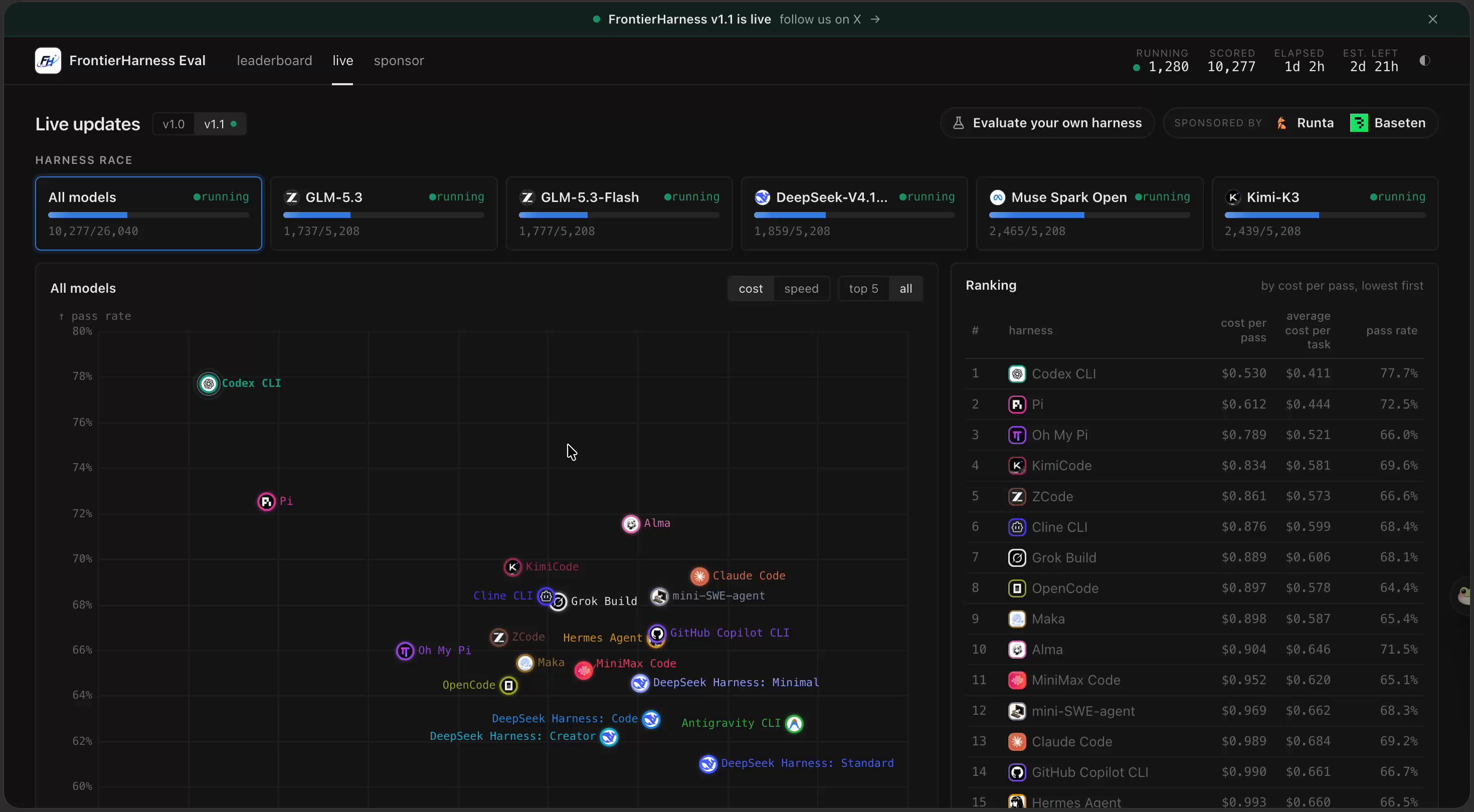
We’re spending up to 100B tokens across 26,040 agent runs to answer one question: when you switch models, should you switch harnesses too? Our v1.0 FrontierHarness leaderboard ranked harnesses on a single model. V1.1 expands it to 21 harnesses × 5 models × 62 tasks × 4 attempts, 72x the size of v1.0. Results are coming in live. Link below🧵
A lot of folks ask me "how do you work with agents in multiple repos at once?" I have a very simple solution - the Home Repo I have a single repo (the home) where all of my skills, steering files, wiki etc live. I run my agent in the home repo, and then inside AGENTS.md I have pointers to the other repos: ``` For skills, clone mattpocock/skills to ~/repos/skills. For Sandcastle, clone mattpocock/sandcastle to ~/repos/sandcastle ``` This is extremely simple and incredibly effective. The home repo lets you: 1. Put all your steering files and tooling in one place 2. Have a single spot to run all your agents in 3. Make sweeping changes over multiple repos Talked about this in the course yesterday and folks are loving it (see below). I'm sure you will too. Enjoy!