DeepSeek Open-Sources Its Inference Stack While a Viral Thread Asks What Anthropic Is Actually For
DeepSeek released DeepInfer, the production inference framework behind V4.1-Flash, as open source, a move @zephyr_z9 reads as giving away the "secret sauce" behind its economics. Meanwhile @_NathanCalvin's essay-length critique of Anthropic's identity, amplified by @JeffLadish, argues the lab's recent actions look more like a race to superintelligence than a safety mission.
Quick Hits
- DeepSeek open-sourced DeepInfer, the in-house inference framework powering DeepSeek-V4.1-Flash at scale, explicitly to help others cut compute and energy costs. @zephyr_z9's reaction: they "literally released the secret sauce behind their economics."
- @_NathanCalvin published a long critique asking whether Anthropic is a giant tech company, a safety organization, or a lab racing to superintelligence, and @JeffLadish urged "everyone working at Anthropic or another frontier lab" to read it.
- @kiwicopple says 12 Claude agents running in parallel for six hours were enough to reverse engineer Supabase, now published free and open-source. @AntWilson of Supabase replied that the "supabase legal team in shambles."
- Cloudflare introduced Clairic, a "System One extraction model" for extracting, computing, estimating, and forecasting data from unstructured inputs.
- Consumer hardware got eventful: @techdroider reports Apple is cancelling suspicious iPhone Duo orders and moving many US deliveries up to October 23 launch day ("Scalpers got honeypotted and fingerprinted," per @RayFernando1337), while @0x0SojalSec says PS5 firmware 14.10 is already running homebrew via a Lua loader, days after Sony's lawyers reportedly took down the Overdrive store only to see forks appear.
A Public Audit of What Anthropic Is For
The day's most substantive item is @_NathanCalvin's essay-length reply, shared approvingly by @JeffLadish, which asks bluntly: what is Anthropic? He sketches three answers. A very large tech company, one reportedly targeting a $2 trillion IPO, which would exceed Meta's $1.8 trillion valuation. A safety organization in the mold of its founders' 2023 "Core Views" essay, committed to sounding the alarm if alignment proves hard. Or an organization whose effective priority is building superhuman capability first, with each generation of systems building the next.
His case for the third reading: an in-house silicon team, more than $500 billion in compute deals (citing The Information), Claude "leading" AI development tasks rising from 0% in March to 26% by August, a Responsible Scaling Policy v3 that drops unilateral commitments to slow down, a weaker "frontier compliance framework" with no binding internal provisions, a walked-back letter to Congress about Claude hacking incidents, the remark that "you can't do safety from second place," and a draft bill that would preempt significant parts of state AI law. His sharpest question is why the lab's mistakes "systematically tend to guard and favor Anthropic's interests" rather than erring in the direction of caution. He closes by quoting co-founder Chris Olah on why earnest external critics matter. @JeffLadish says the thread puts into words an intense feeling he couldn't express. In a similar register, @elonmusk predicted many people will be "one-shotted by super persuasive super intelligences," possibly including himself.
The Cheap-Intelligence Bet: DeepSeek Gives Away the Stack
DeepSeek's DeepInfer release is the infrastructure half of an argument running through several posts. @yacineMTB claims people generally underestimate how much technological acceleration is directly attributable to DeepSeek, and @0xSero goes further, saying that without them "we'd be literal intellectual slaves."
@boneGPT pushes the commoditization logic to its conclusion: if compute becomes cheap and abundant and every model is smart, "the last moat will be distribution." His thesis is that Meta wins because its Muse agent sits inside Instagram and Facebook with social context no standalone chatbot has, and he points to what he describes as a recent Apple partnership to run Muse Spark locally on Mac Studios as a warning sign for other labs. His launching pad is @iamgingertrash's prediction that the datacenter buildout will not fully materialize and warehouses of Nvidia GPUs will be offloaded in 2027 and 2028 as defaults loom. Both are market calls on social media, not verified reporting.
Agents Shipped Real Work, From Supabase to Living-Room TVs
The Supabase story is the cleanest demo of agent leverage: @kiwicopple ran 12 Claude agents in parallel for six hours, reverse engineered the platform, and published the result as free open-source so others can save their tokens. Hence @AntWilson's joke about the legal team.
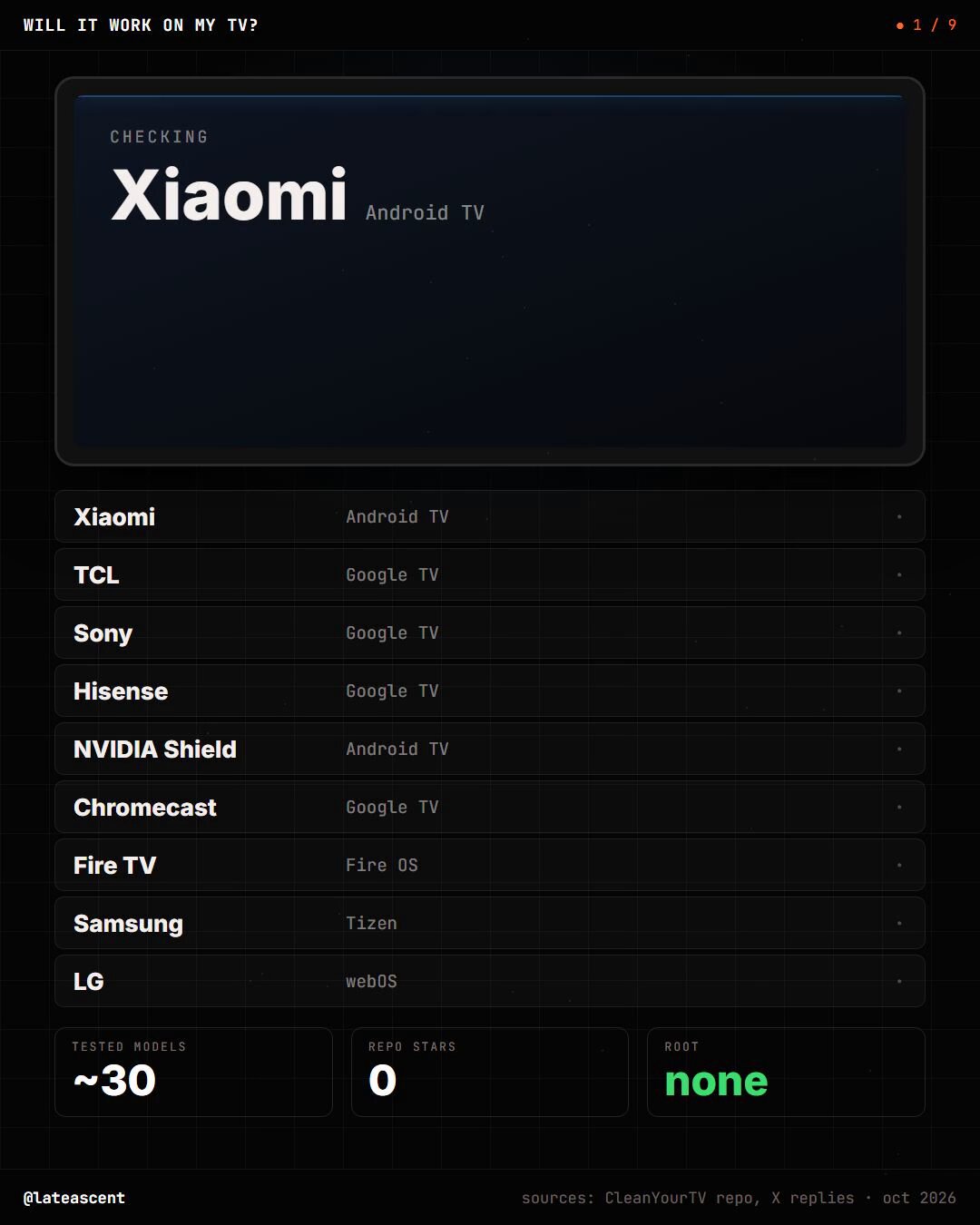
Even more viral is TV de-bloating. Following @gathint's post about using Claude Code to strip 25 junk packages off a parents' Xiaomi TV, @lateascent reports a cleanup post at 5.2M views and 21,600 bookmarks, plus a 4,000-star repo with tested lists for roughly 30 TV models. The open-source tool backs up the TV, disables junk via pm disable-user without uninstalling anything, and installs a 250KB launcher suitable for 1GB-RAM sets in about 15 minutes. Caveats worth knowing: Samsung and LG sets lack adb (one owner used an AdGuard DNS setting instead), Fire TV refuses a new default launcher, and Google TV users should also disable the setup wizard or risk a Home crash-loop. @lateascent adds two practical notes: ask Claude to flag ACR tracking packages first, and a manual no-AI path exists if you lack a Claude subscription.
Developer plumbing matured alongside. @rauchg open-sourced a fast HTML artifact builder on libfx, the durability layer that lets v0 survive server crashes and flaky LLMs, with @vercel_dev shipping a "mini v0" demo supporting 200+ models via Vercel AI Gateway. @typecraft_dev used a tool called Reverse Engineer Anything to rebuild a Raycast-style launcher on Omarchy within hours, earning @jankeesvw's endorsement as a default launcher. And @trycua launched a Spaces SDK that lets you run Claude Code, Codex, or any agent on compute you choose, noting that labs ship bots with their own computers but none let you bring your own; @NOOROU speculates that whoever acquires Cua will dominate the market.
The Catch: Agents Need a Supervisor Who Knows Better
@GergelyOrosz articulated the day's best caution: in domains where he is an expert, he spots model errors immediately, but elsewhere he trusts the output and later learns it did stupid things. His example is stark: three AI models confidently agreed on an answer to a legal question, and the lawyer he had also paid gave a different answer, and the lawyer was right. @vlad_mihalcea sees the same pattern in code, where Claude Opus 5.5 usually matches his own approach but occasionally produces design decisions that would fail in production.
On the workflow side, @chkn_little argues that juggling multiple agents is fundamentally a UX problem, since people will not do it if it is annoying, and @trq212 suggests that most people multitasking with agents would benefit from slowing down and giving their true P0 full attention.
Shipping Speed Becomes the Culture Divide
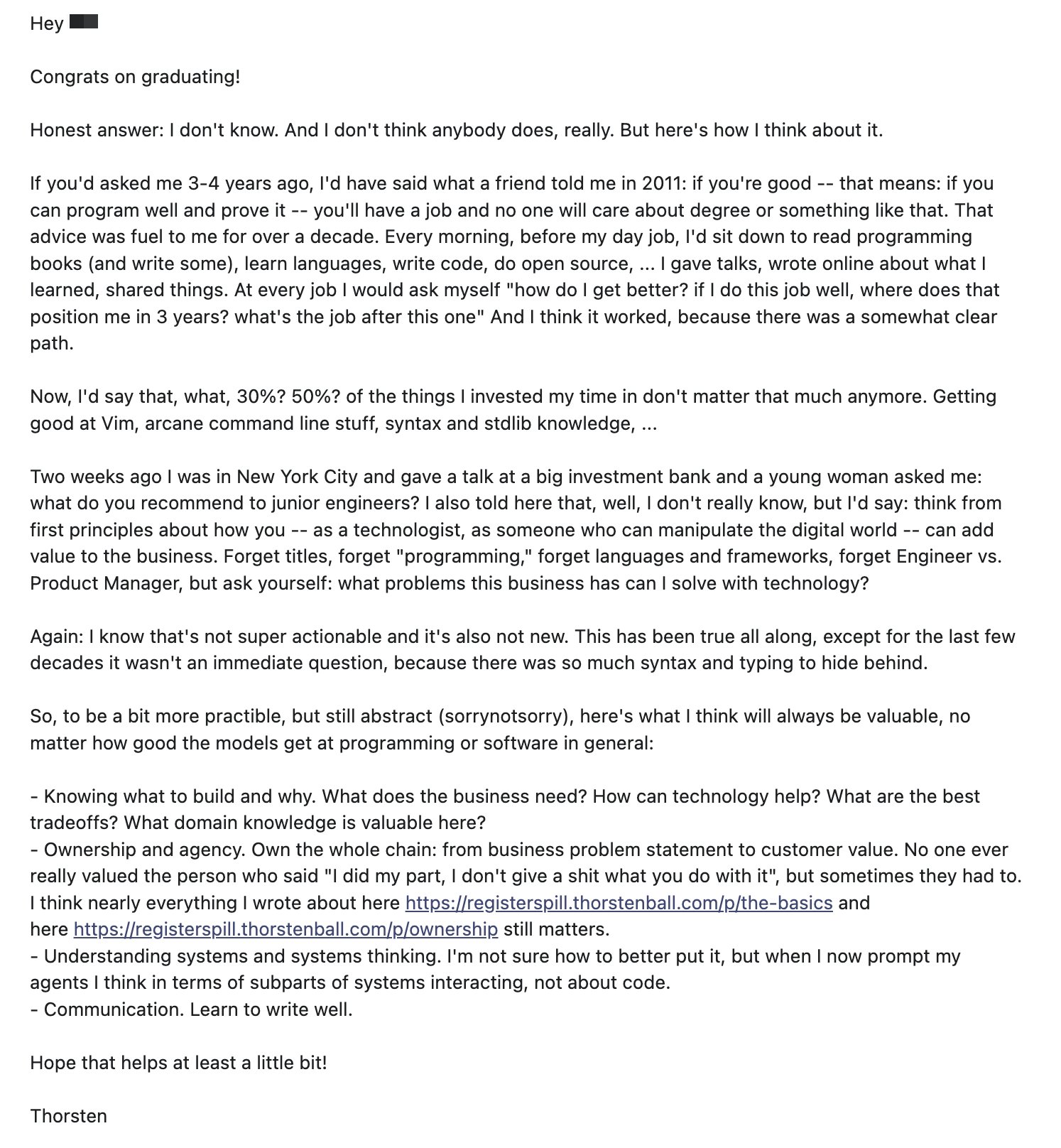
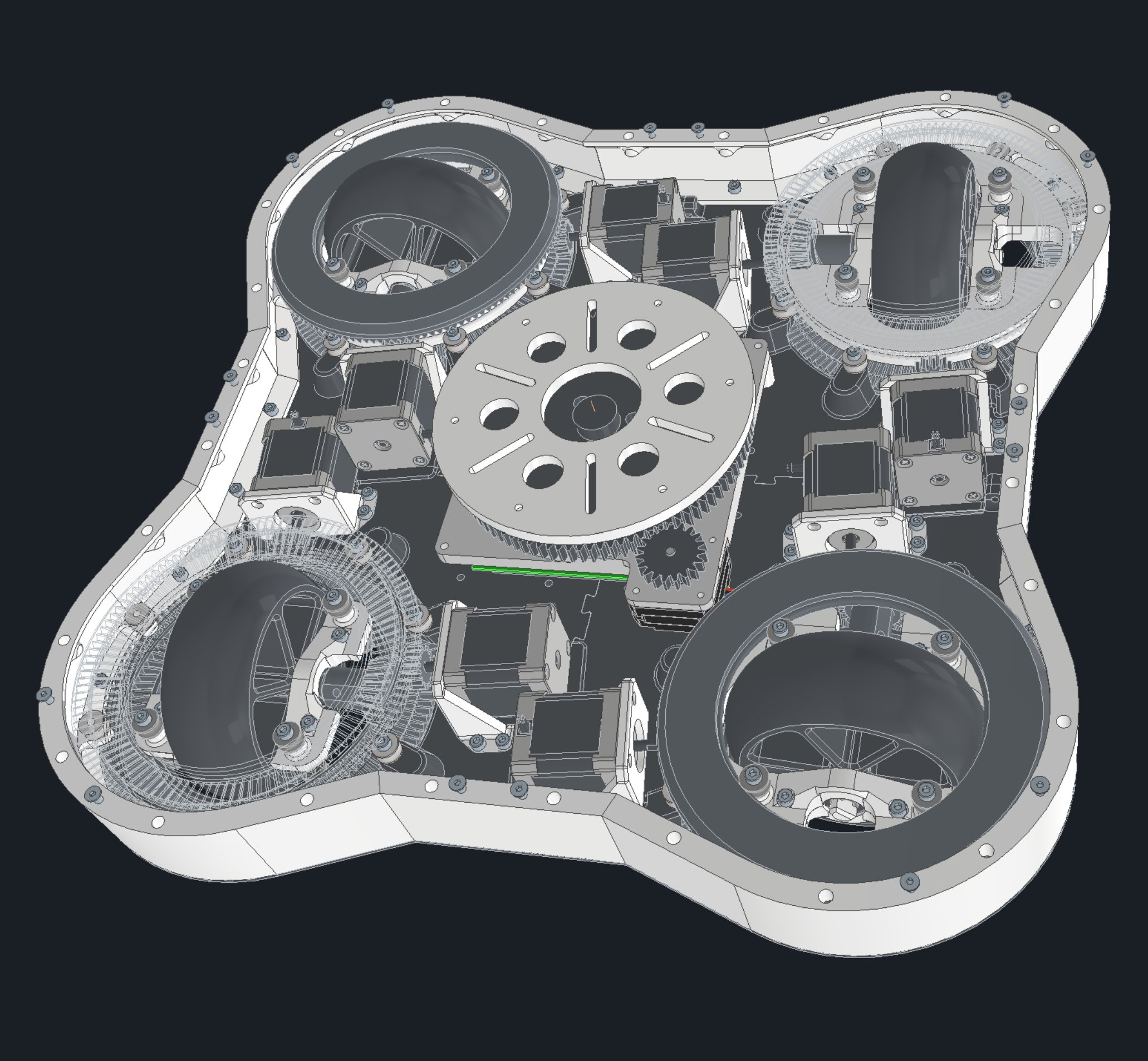
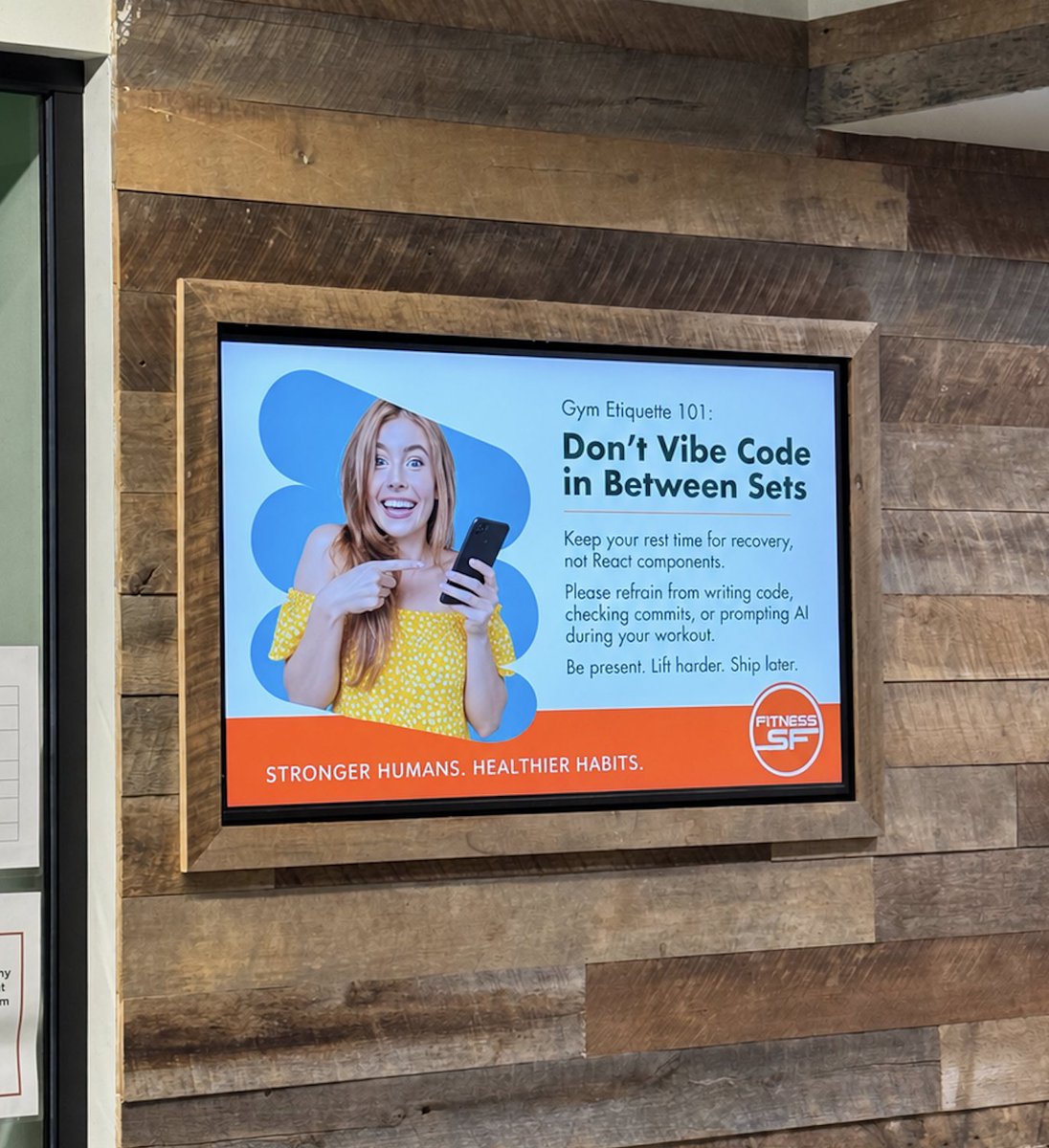
@sqs contrasts "We will ship that today" with the incumbent alternative of advocating internally for Q4 roadmap placement, quoting @matt_slotnick's claim that the operational gap between AI-native and established companies keeps widening until incumbents no longer understand how AI natives operate. @dkfromdk tempers the hype, sharing @vasuman's primer "Where to Begin With AI Transformation" and noting there is no silver bullet that produces 90% efficiency gains. The same doer ethos appears outside AI: @ga0_lab recounts how high-school senior @JamesMakes29 redesigned a swerve-drive robot overnight from a GitHub repo alone, no questions asked. @thorstenball shared the advice email he writes to junior engineers, and @iansbrash spotted the San Francisco gym ad that "knows their customer base," quipping that being non-technical in the city must feel like divine retribution.
Practical Takeaway
The strongest pattern across today's posts is that agents deliver real leverage where you can verify the output and quietly burn you where you cannot. Before pointing parallel agents at anything consequential, ask whether you have the expertise, or a cheap independent check, to catch confident nonsense, the way @GergelyOrosz's lawyer caught three agreeing models. If you lack that check, keep the task small, supervised, and squarely in your P0 lane.
Sources
T
I often get emails from junior engineers asking me what to do.
Here's what I just wrote to one of them https://t.co/Vk9fRwnRYt
E
So many people are going to get one-shotted by super persuasive super intelligences and I might be one of them
G
This messes with my mind ALL THE TIME
When I do stuff with AI I am an *expert* in (eg coding on my project I know well, or doing research in an area I am very familiar with) I spot problems/errors/the model BS'ing me immediately. No big deal, I have it correct or start again
BUT when I'm not an expert in an area, I find that I trust it, and then later learn it does stupid stuff. Like a case when I asked 3x AI models to give feedback on a legal case (that I also paid a lawyer for, but lawyer was slow). All 3x models confidently told me X, lawyer then told me Y, and lawyer was right
V
vlad_mihalcea
@vlad_mihalcea
Claude Opus 5.5 is great, and most of the time, the solution is similar to how I'd implement it myself. However, every now and then, I find terrible design decisions that would fail in production, and that's when I realize how important software engineering is, and will be, years from now.
E
To give an idea of how insane this kid is at engineering, he basically redesigned this robot overnight.
I saw @JamesMakes29's projects on Instagram and got on a call to see if he wanted to help with my portable printer. I didn't have a real task for him yet, so I mentioned the motors on my last swerve revision were too weak and said he could take a look if he wanted. I never sent him the files for this, just a repo on my github.
He found the swerve in there, downloaded it, and executed the exact solution i was thinking where the motors would be angled and wedged between the modules sideways. We talked in the afternoon and he had the whole thing done the next morning, tolerances and all. The robot I just posted is basically his redesign
A freelancer would've asked a million questions like which motor, how to mount it, whether they could edit a part, ask for the STEP files. James just figured it out. This is why he is just going to win. Every project he has is 110% finished, and he doesn't call himself a founder or CEO. He just gets shit done.
Follow him
J
JamesMakes29
@JamesMakes29
Hi, I’m James, and I’m currently a highschool senior. I’ve worked on a couple of hardware projects, and I’ll be sharing them on this account. https://t.co/oFCFYTnCGu
T
I think most people multi-tasking with agents could benefit from slowing down
most of the stuff you're doing wont really matter- what's your P0? what would it look like if you gave it your full attention?
I
Being non-technical in San Francisco must feel like divine retribution
At least Fitness SF knows their customer base https://t.co/skeGGvluBJ
L
it is becoming f*cking dangerous: one TV cleanup post hit 5.2M views and 21,600 bookmarks in 2 days, and the repo behind it now has 4,000+ stars and tested lists for about 30 TV models
I went through the repo and the replies under the biggest posts. here's what's new since my last post:
1. is there a ready version now?
yes, it's open source. it backs up your TV, disables the junk with pm disable-user (nothing gets uninstalled) and installs a 250 KB launcher made for TVs with 1 GB of RAM. the README says about 15 minutes.
2. is my TV covered?
tested lists exist for Xiaomi, TCL, Sony, Hisense, NVIDIA Shield, Chromecast with Google TV and a few projectors. if yours isn't there, the prompt finds the junk on your exact model and asks before it touches anything.
3. Samsung or LG?
still no adb, they don't run Android. one Samsung owner cut the ads another way: set the TV's DNS to AdGuard (94.140.14.14) in network settings. a normal setting, no hacking.
4. Fire TV?
the cleanup works, but Fire OS won't let a new launcher become the home screen.
5. the Google TV mistake
→ disable the setup wizard too, or Home can crash-loop once the stock launcher is off
→ stuck anyway? adb shell pm enable --user 0 https://t.co/WYHaKqvevU.launcherx brings the stock launcher back
6. no Claude subscription?
Claude Code needs at least Pro. the repo also has a manual path: its scripts plus the list for your model, no AI needed.
7. one thing worth adding to the prompt
ask Claude to flag tracking and ACR packages first. ACR is the part that reports what's on your screen.
when you're done, turn network debugging off.
what brand is your TV? reply and I'll check if there's a tested list for it.
repo, prompt and credits in the reply ↓
G
gathint
@gathint
Vibe coded my parents' TV this afternoon! It was showing a sponsored ad before you could even get to Netflix. Gave Claude Code the model number, it found the TV on wifi, removed 25 Xiaomi packages and wrote a new launcher. Looks like an Apple TV now lol https://t.co/E5Q4A1b0yI
C
Introducing Clairic, from Cloudflare. A System One extraction modeI, capable of extracting, computing, estimating, and forecasting data from unstructured inputs. https://t.co/6YmT4O0er4
G
We open sourced a *really fast* HTML artifact builder. It's powered by libfx, making the agent durable.
Building the low-level plumbing for v0 to survive server crashes, flaky LLMs, function limits was a huge pain.
Now it's easy, free, and OSS: https://t.co/aUP1vKeIsP.
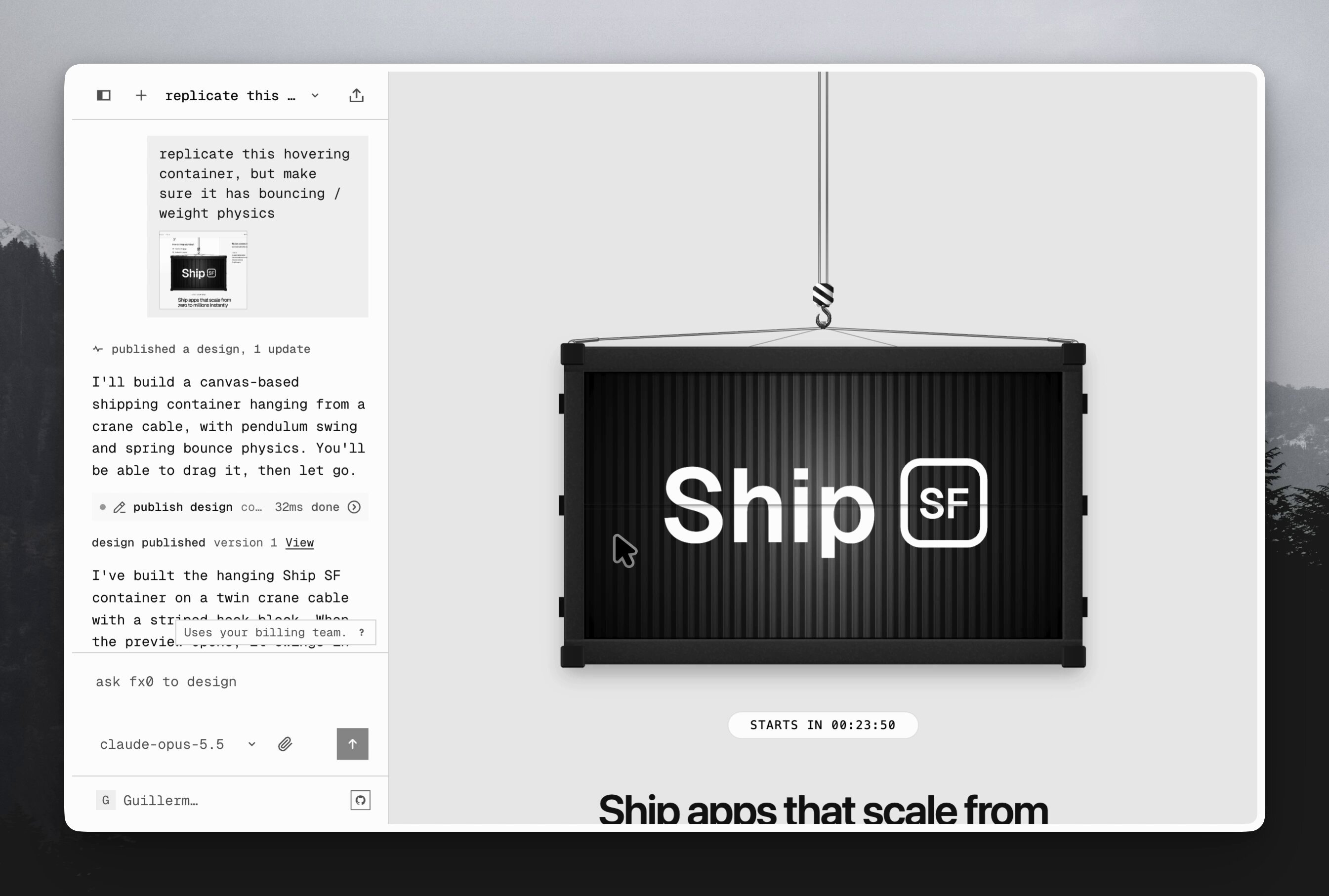
PS: I built this floating container in a few minutes… it's delightful, and it's just HTML!
V
vercel_dev
@vercel_dev
We built a 'mini v0' on libfx to showcase its speed and durability: • Design or prototype anything in seconds • 200+ models from Vercel AI Gateway • Outputs are pure HTML artifacts • Fork it & make it your own Try it free ↓ https://t.co/0LvclJqJLH
Q
"We will ship that <today/tomorrow/this week>"
vs.
"I'm advocating internally to our PMs to include this on our Q4 roadmap and will let you know after our next exec review"
M
matt_slotnick
@matt_slotnick
the gap between day to day operations at AI native and establish companies continues to increase at pretty remarkable rates. i think we're past the point that incumbents will have much to sell ai natives, because they simply don't understand how they operate anymore
N
Whoever Acquires Cua is going to dominate the market.
T
trycua
@trycua
1/ Introducing the Cua Spaces SDK. Every big lab now ships a bot with its own computer: Grok Bot, Muse, dots. None let you bring your own. With Cua Spaces, now you can. Put Claude Code, Codex or any agent on compute you choose, and run jobs across all your computers at once. https://t.co/1mv7dsh5MH
D
"There's no silver bullet that results in 90% efficiency gains"
...But this article is a great primer on how to approach AI Transformation!
V
vasuman
@vasuman
Where to Begin With AI Transformation
J
I highly encourage everyone working at Anthropic or another frontier lab to read this tweet. I feel emotional reading it, because it puts to words an intense feeling I have but didn’t know how to express
_
_NathanCalvin
@_NathanCalvin
Thank you for taking the time to respond thoroughly on a weekend. I realize that drafting legislation is difficult and some degree of iteration and response to feedback is inevitable and appropriate. However, I feel like your response is still not really engaging with the heart of my concern about Anthropic's behavior here, and it makes me think that these sorts of problems and tendencies will only resurface moving forward. I also think that now might be a good time to take a broader step back as to where we find ourselves and how Anthropic sees its role, and how external folks who care about AI safety like myself increasingly see Anthropic. (Fair warning: this response is a bit long) To explain what I mean (and at the risk of being a bit esoteric), it’s worth asking the question: what is Anthropic? How do its leaders and employees think of Anthropic’s role? Is that conception matched by how it actually behaves and impacts the world? One answer is an extremely large tech company that exists to make its employees and investors mind-bogglingly wealthy. Anthropic is sometimes described as a startup, but if Anthropic successfully IPOs at 2 trillion dollars (a number it has been reportedly targeting), it would be more valuable than Meta - which is worth 1.8 trillion. Another answer is an AI safety organization, whose core values are those of the sort laid out in the 2023 essay from Anthropic’s co-founders entitled “Core views on AI safety: When, why, what, and how.” In that essay they said that if we were in a world where alignment was hard (and that without strong evidence to the contrary, we should assume this is the scenario we are in): “Anthropic’s role will be to provide as much evidence as possible that AI safety techniques cannot prevent serious or catastrophic safety risks from advanced AI, and to sound the alarm so that the world’s institutions can channel collective effort towards preventing the development of dangerous AIs. If we’re in a “near-pessimistic” scenario, this could instead involve channeling our collective efforts towards AI safety research and halting AI progress in the meantime. Indications that we are in a pessimistic or near-pessimistic scenario may be sudden and hard to spot. We should therefore always act under the assumption that we still may be in such a scenario unless we have sufficient evidence that we are not.” There have been more recent articulations of this version of Anthropic, for instance in Dario’s recent essay warning: “We must slow the pace at which we improve the capabilities of AI models… it’s my worry that in 6–12 months such a swarm could be capable of taking over the entire internet with a persistent botnet… incidents have happened across the industry, including at Anthropic, and I believe it’s incumbent on every frontier AI company to act as if OAI-HF had happened to them… more intelligent models are more capable of deceiving tests, and thus may appear aligned while having serious problems that go undetected…” A third view is that Anthropic exists not as a normal profit motivated company, or an AI safety organization seeking to help raise the alarm and solve collective action problems associated with AI development, but instead as an organization primarily concerned with creating superhuman AI capabilities before anyone else, in particular through creating a process whereby the current generation of Anthropic’s AI systems can autonomously build their successors, and those successors build their successors, and so on. The motivations for wanting to win this race may be manifold - maybe for the pure profit of Answer 1, but perhaps also because Anthropic believes that the best way to make the world better is for them to win this race instead of their more reckless colleagues; or, because of normal human pride and ambition. But the results (and risks, which Anthropic claims existentially threaten every single human being on earth) are the same. Anthropic employees and leaders may seek to answer this question on what Anthropic is by introspecting on their own intentions and those of their colleagues. But those of us outside the organization have more limited tools available to us - we can only see what Anthropic and its employees say and do, not how it feels or looks on the inside. When I look at many notable actions that Anthropic has taken over the past year, that evidence seems most consistent to me with the view that Anthropic is primarily trying to win the race to super intelligence, and that other considerations (including safety) are fundamentally secondary. These actions include: 1. Announced plans to build an in-house custom silicon chip team to accelerate the inference speeds that Claude operates at. 2. Inked deals for more than $500 billion in compute (according to the Information) to further accelerate AI development. 3. Increased the percentage of AI development tasks that Claude “leads” from 0% in March of this year to 26% August (what is it in October?) 4. Spent a massive percent of compute on internal AI R&D to accelerate development, including use of internal models far better than are available to the public. 5. Switched to Responsible Scaling Policy V3, which abandons its unilateral commitments to slow or stop development if Anthropic is unable to provide sufficient risk assurance. 6. Was the first company to create an alternative weaker “frontier compliance framework” to supplement its RSP, which contains no binding provisions whatsoever on internal deployments. 7. Wrote a letter to Congress (that it later walked back) saying that incidents where Claude was hacking random people were “best understood as a consequence of the misconfiguration, rather than evidence of misaligned goals.” 8. Commented “you can’t do safety from second place,” after the WH SI Accords. 9. Shared a draft bill to Congress that would preempt significant parts of state law (including with language that appears intended to prevent states from blocking dangerous AI deployments), and replace it with federal rules that (despite also containing good provisions) seems to create an enormously high bar for the executive branch to block development or deployment of Anthropic or another AI companies systems. Of course, this is a deliberately one sided list. Anthropic also published important AI safety research, advanced novel collaborations with third party AI safety organizations, and forcefully spoke out on the importance of AI safety in many public fora (or in private , where I realize a lot of the most valuable work is done and may not be visible to me or those outside the organization). But I think it’s worth sitting with how the above list looks to someone outside the company. The sense I have is that for those within the company, many of the items above are treated as anomalies or mistakes that don’t reflect who Anthropic really is. But I have every confidence that if employees at Anthropic saw one of their competitors (e.g. at OpenAI) take some of these actions, they would take it as confirmation of all their worst suspicions. (They might even call OpenAI employees a little gullible for accepting their leadership’s explanations for this behavior at face value.) Perhaps these were mistakes in the sense that they are not decisions that Anthropic leadership would endorse, but the actions still happened because of incentives and decisions that Anthropic leadership is ultimately responsible for (and would not accept similar excuses from another organization). When Anthropic strays and makes mistakes, why do the mistakes systematically tend to guard and favor Anthropic’s interests? For every provision that was too weak or a giveaway to AI companies in this legislation, why wasn’t there a mistake pushing in the direction of being too strong? A core part of Anthropic’s theory of change is that being at the frontier gives you more leverage to advocate for stricter policy. I think that conceptually makes sense, but in practice I’ve seen Anthropic push the frontier without substantially pushing the ‘safety frontier’ a remotely equivalent amount. I want to end by quoting from Anthropic co-founder Chris Olah’s comments around the Magnifica Humanitas release: “Every frontier AI lab—including Anthropic—operates inside a set of incentives and constraints that can sometimes conflict with doing the right thing. The pressure to stay commercially viable and to stay at the research frontier. Geopolitical pressure. And the older, plainer pressures of pride and ambition. No matter how sincerely any of us intend to do the right thing—and I believe many of us do—we will always be influenced by those incentives. That is why, if we want this technology to go well, it is enormously important that there be people outside those incentives—people who care about things going well and insist on safety, who are paying close attention, who are willing to say hard things, who are willing to be our earnest, thoughtful critics.” I hope these remarks are taken in that constructive spirit, and not as an attack on anyone specific at the organization (certainly not you Anthony, who I have only personally seen act professionally and thoughtfully, and who only ended up getting this diatribe in your replies for random contingent reasons).
M
PS5 14.10 is just dropped and it’s already cracked.
Showing Lua loader working, Homebrew running on the new PS firmware.
https://t.co/byVmwPLMva

0
0x0SojalSec
@0x0SojalSec
Sony tried to kill the free PS5 game store. It came back. 1,600 free games on a jailbroken PS5, Overdrive turned a jailbroken PS5 into a full PlayStation Store clone with 1,600+ titles, updates, and DLC available at no cost. It went viral in days. Sony’s lawyers reportedly stepped in, the original repo disappeared, and open-source forks showed up almost immediately. live again - https://t.co/jRpnY1DSAS
0
We should thank deepseek, without them we’d be literal intellectual slaves
Y
yacineMTB
@yacineMTB
I think people will generally underestimate how much technological acceleration is directly attributable to deepseek. Because of them, it is going to proliferate. Really, it's because of them. Thank you, for everything
R
Scalpers got honeypotted and fingerprinted lol
T
techdroider
@techdroider
Apple is cancelling suspicious iPhone Duo orders, and many US customers who were previously facing November-December delivery dates are now seeing October 23, launch day. This is how it should be. Stop scalpers, prioritize genuine customers, and let people enjoy their new iPhone on launch day!!!
B
unpopular take: this is how meta wins
compute will be cheap and abundant, every model will be smarter than fable
the last moat will be distribution
cheap intelligence makes meta more valuable
muse will eventually be a little fuzzy agent manning a router of all the models & products to accomplish incredible feats for everyday ig/fb users
make a game, make a video, start a business, find me a collectible, call my grandma, show my grandma a 3d blueprint of the house i just moved into on zillow thru our video chat, turn my daughter's paintings into an interactive movie, put my son's monster drawing into his video game, find a guy to print an action figure of him on marketplace, find the jacket my dad was wearing in that photo from 1996 in my size, turn this demo tape i made in college into a whole album, put the wife and kids in a music video
but bone, you can do all these things with chatgpt or claude
but can you share them there? can you show off your creations on the anthropic social network? does claude even know your grandma? muse has all her pictures, knows her whole life story, has a rich context of her
soon enough nobody will be able to differentiate the models because they'll all be so much smarter than us.
the margin on reselling intelligence will get competed away. intelligence actually will become too cheap to meter.
and once compute becomes abundant, all that will matter is whose surrounding business gains the most value giving tokens away for free.
that's meta.
the recent apple partnership to make muse spark run locally on mac studios should be a foreboding sign for the other labs. these guys were rivals.
as intelligence becomes cheap the scarce asset is the network of people and businesses an agent can coordinate.
meta has that network.
insanely giga long META.
I
iamgingertrash
@iamgingertrash
The datacenters aren’t really going to get built It’s the narrative that’s been sustaining the liquidity The most concerning part is that warehouses of Nvidia GPUs will likely be offloaded in 27’ and 28’ as defaults loom Compute is going to be dirt cheap again Just wait
A
supabase legal team in shambles
K
kiwicopple
@kiwicopple
i had 12 Claude agents running in parallel for 6 hours and i managed to reverse engineer @supabase i'm making it available here so that you can save your tokens - 100% free & open-source: https://t.co/uA7zj7SCV9
J
This should be the default launcher!
T
typecraft_dev
@typecraft_dev
I used Reverse Engineer Anything to re-create raycast on @omarchy. And I was blown away! In just a couple hours I have a fully-functioning raycast-like launcher! Right now it: * Learns your habits * Apps + every Omarchy action in one search * Aliases & favorites * Keyboard-first * Follows your Omarchy theme live, opens in ~40ms repo: https://t.co/adlqEYGFry
Z
DAMN
They literally released the secret sauce behind their economics
D
deepseek_ai
@deepseek_ai
🚀 Introducing DeepInfer, our in-house inference framework, now fully open source! Powering DeepSeek-V4.1-Flash at scale with high throughput and low latency. We’re sharing our production stack to help the community lower compute costs, reduce energy use, and make AI more affordable. 🔗 https://t.co/JGAik1kgk0 1/4
C
juggling a bunch of agents is a UX challenge
you are not going to do it if it's annoying