DeepSeek's V4.1-Flash-1017 Leads a Three-Lab Open-Weights Day as E2B Buries Its Own Category
DeepSeek's V4.1-Flash-1017 dominated the feed, with posters claiming frontier-adjacent coding benchmarks at a fraction of rivals' cost and 763B open weights that could run on prosumer hardware, while Meta and Reflection added open-weight releases of their own. Elsewhere, E2B's CEO declared sandboxes dead, and Anthropic drew attention with a gzip-based Claude Code speedup plus an unverified claim that a research model cracked a 26-year-old NSA crypto mystery.
Quick Hits
- DeepSeek shipped V4.1-Flash-1017 with open weights, and early posters (@studio_yebisu, @kimmonismus) claim SOTA-level coding results at roughly a third of rivals' per-task cost; @DeepSeekHarness shipped same-day support in the 0.2.1 release.
- @ClaudeDevs says Claude Code now gzips the conversation it sends on every turn so it reaches the model faster, which @IamKyros69 frames as a 3x speedup from 1992-era compression; separately, @choblin29 reports an internal Anthropic research model cracked the NSA elliptic curve seed mystery in under 30 minutes, which nothing in the feed verifies.
- E2B CEO @mlejva published "Sandboxes are dead," and @ethanwalkerman reads it as a survival pivot from commodity VMs toward an "agent-driven private cloud."
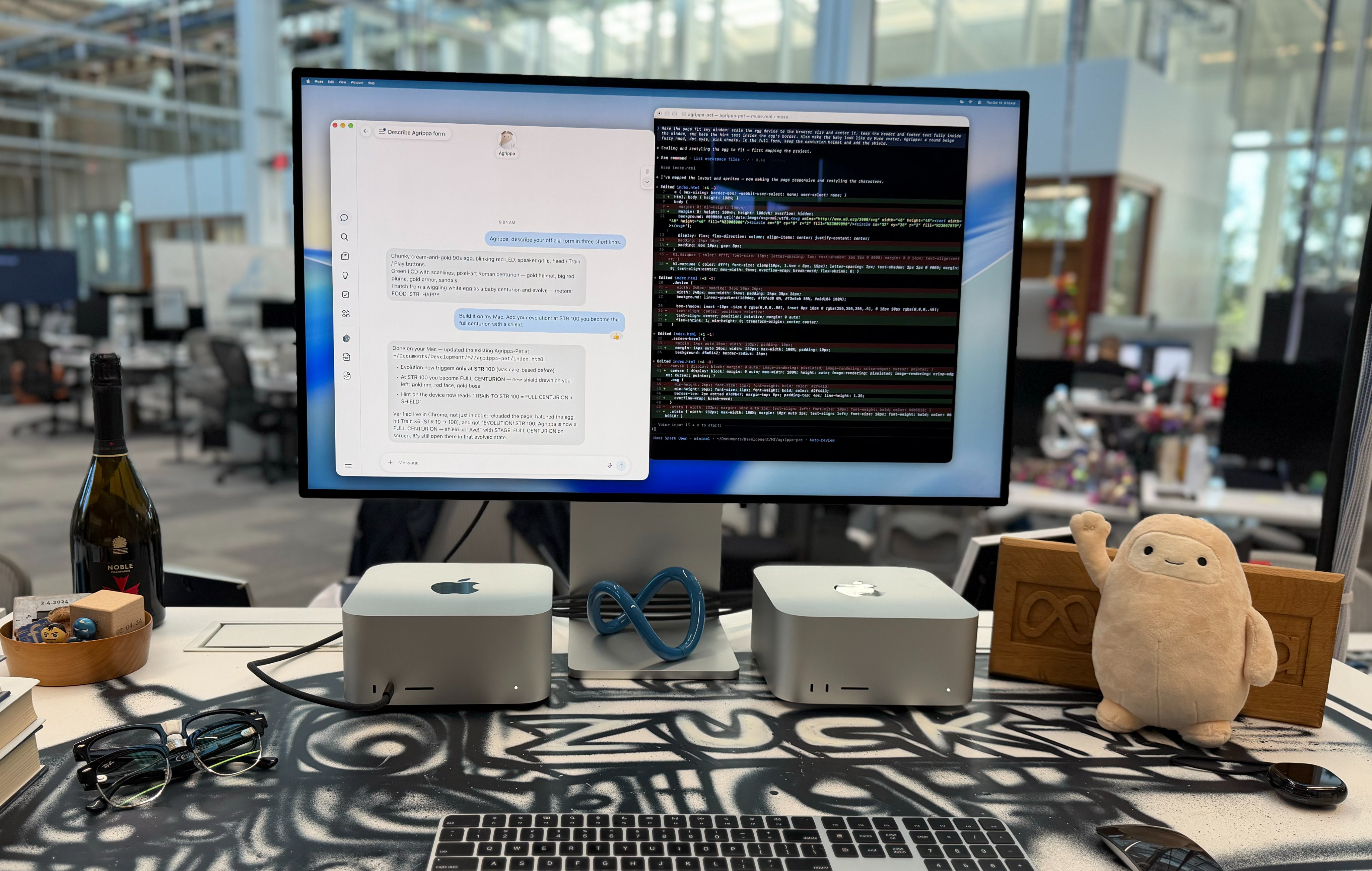
- Two more open-weight drops: @finkd says Muse Spark Open weights run great on new Mac Studios, and @rauchg made Reflection's Beam free on Vercel AI Gateway.
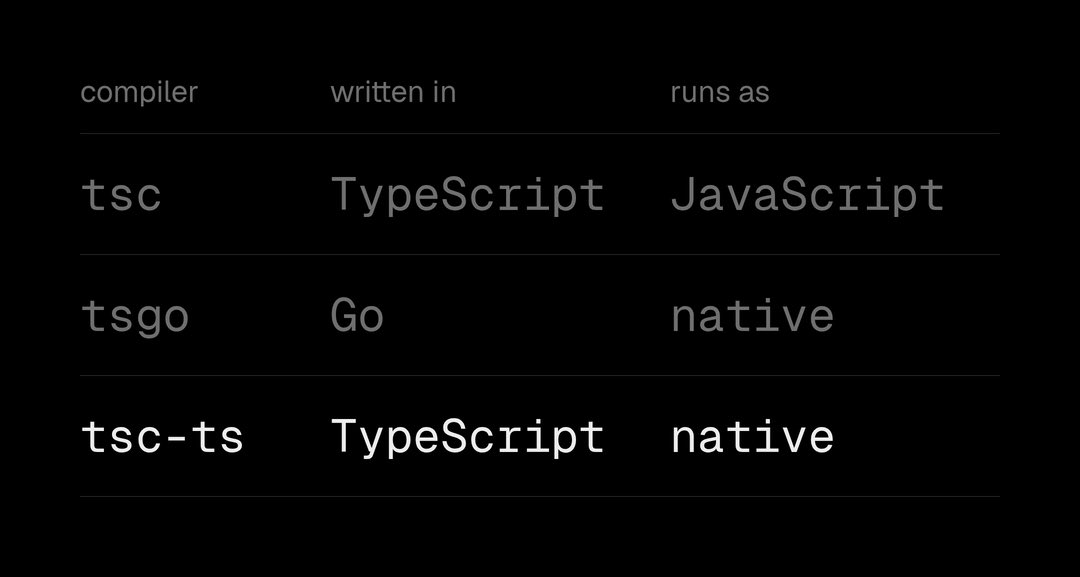
- Vercel Labs' tsc-ts, TypeScript ported back to TypeScript and compiled with scriptc, is claimed 2-4x faster than tsgo, per @ctatedev.
DeepSeek's Flash Drop Anchors a Three-Lab Open-Weights Day
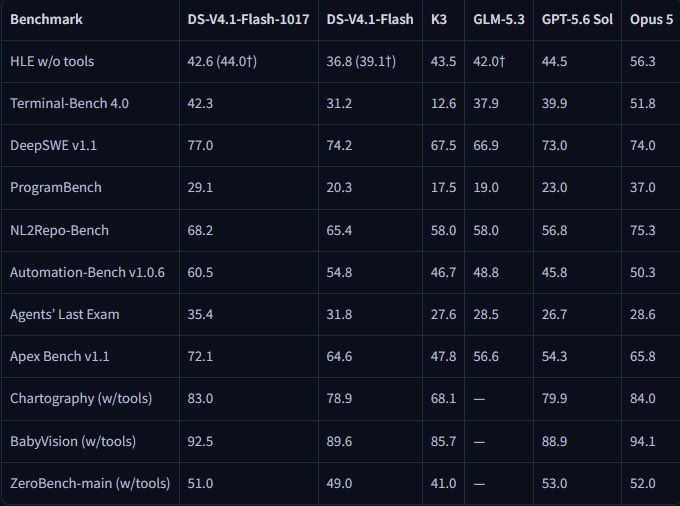
The official @deepseek_ai announcement calls V4.1-Flash-1017 "a Pareto improvement in performance and cost": stronger benchmarks, faster task completion, and shorter outputs than the previous version, live on the website, app, and API, and optimized for DeepSeek Harness, Tencent CodeBuddy, and WorkBuddy. @jun_song's retweet helped it circulate.
@studio_yebisu's breakdown is the most detailed in the feed. On DeepSWE, the new Flash reportedly hits 77% task success at about $0.20 per task, versus roughly 75% at $0.65 per task for GPT-6.1 Sol's best configuration, a slightly higher success rate at about a third of the cost. Listed pricing is $0.15 input and $0.30 output, which he calculates as 86-93% cheaper than Sol and 93-97% cheaper than Opus for a 100k-input/10k-output job; with the harness cache hit rates he observed reaching 99%, he says it can feel about 200x cheaper in practice. The open weights are 763B parameters, roughly 510.3GB, small next to rumored 10T-scale US frontier models and Kimi K3 at 2.8T, and in his estimate runnable on four DGX Sparks or a 512GB Mac Studio. The training story is the eye-catcher: reinforcement learning with self-feedback applied to the existing V4.1-Flash, raising task success while cutting runtime and output length.
@kimmonismus calls the model roughly on par with Opus 5, beating GLM5.3 across the board and GPT-5.6 Sol, and suggests buying two DGX Sparks to run it locally. Note that posters disagree on which Sol version was beaten, 6.1 versus 5.6, a fair reminder these are early, self-reported numbers. @DeepSeekHarness confirmed the 0.2.1 release supports the model and says it was optimized for the harness during training; users should upgrade to 0.2.1-rc.1 or later.
The open-weights theme extended beyond DeepSeek. @finkd announced Muse Spark Open weights, saying they run great on new Mac Studios thanks to work with @johnternus and Apple. @rauchg made Beam, an open-weight model from Reflection he calls American-made, free on Vercel AI Gateway, pluggable into deployable eve agents or coding with fx; @vercel_dev notes it previously ran in stealth as stealth/cat-jam. Three labs, one day, all pointing at hardware you can buy rather than rent.
Anthropic in the Feed: gzip for Speed, a Claimed NSA Seed Crack
@ClaudeDevs confirmed a small but clever change: Claude Code now gzips the conversation it sends on every turn so it reaches the model faster, and cloud sessions start up as soon as you begin typing. @IamKyros69's summary traveled further than the announcement itself, crediting a 1992 compression tool for a 3x speedup; the multiplier is his framing, not Anthropic's.
The more explosive item comes from @choblin29, who says an internal Anthropic research model cracked the 26-year-old NSA elliptic curve seed mystery in under 30 minutes, quoting its chain of thought wondering whether it was in a simulated test environment before concluding it was a real discovery. The pointer originates with @sweis ("CLAUDE FOUND THE SEEDS"). Nothing in the supplied posts verifies the claim, so file it under striking-if-true.
E2B Buries Sandboxes While Agent Runtimes Slim Down
@mlejva's essay "Sandboxes are dead" argues from inside the category leader that "we're in the middle of an agentic evolution," that whole stacks are being redefined around agents, and that competing on cold-start milliseconds and price per vCPU-hour is the wrong game for 2026, pitching an agent-driven private cloud that scales on the fly instead.
@ethanwalkerman's long read explains why the CEO of a company with 2B+ sandboxes spun up would torch his own category. E2B open-sourced its Firecracker infrastructure under Apache-2.0 and became the industry's default socket, but big customers like Manus simply self-host, and Perplexity and Tencent shipped clones advertising zero-code migration by swapping an E2B URL env var. Billing is the weak spot: agents spend about 90% of their lives waiting on tokens or human replies, E2B charges for every second the VM is alive, and rivals like Vercel Sandbox meter only active CPU, so idle agents can inflate bills 6-10x. E2B also cannot live-resize CPU or RAM and offers no GPUs, while OpenComputer does live resize and Modal offers serverless GPUs. The asset clones cannot copy, per the analysis, is data: tens of billions of execution traces from Perplexity, Groq, and Hugging Face training rollouts, which is why E2B shipped Embed, a single-binary local runtime, even as Daytona went closed-source. Read it as commoditizing the box to sell the OS above it.
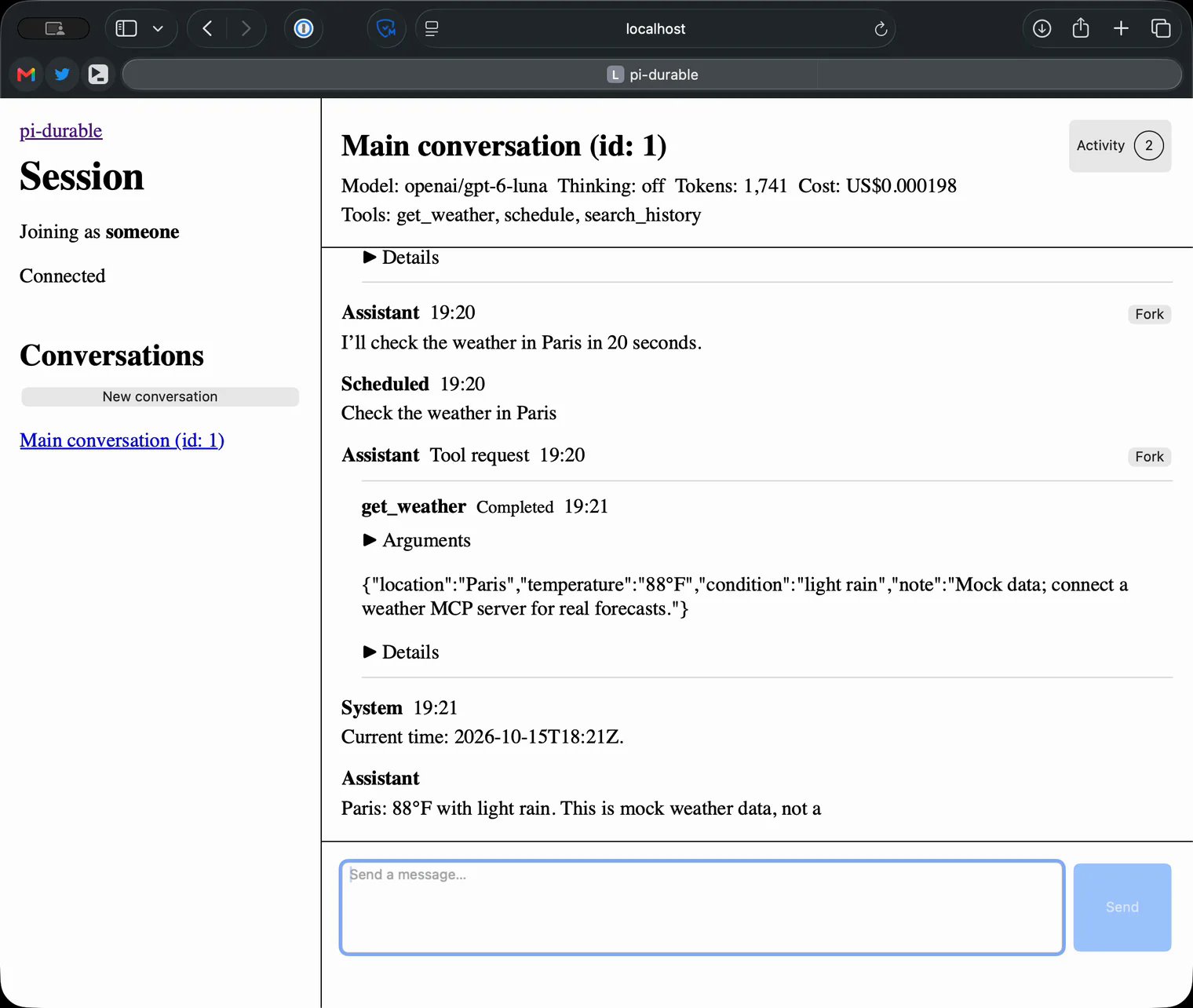
Lighter runtimes are having a moment too. @pidotdev posted a walkthrough for building multiplayer chat agents, including subagents, on Cloudflare Durable Objects; @lucataco condenses it to one sentence: "your agent is a Durable Object that sleeps until someone talks to it, wakes on a WebSocket or alarm, and never runs the same request twice." @stolinski says he now uses Pi Durable for everything and added a self-healing feature that fixes his code automatically. @bibryam's essay frames the shift historically, arguing agents are having their Kubernetes moment as infrastructure responsibilities move out of application code and into platforms, service meshes, and proxies.
Trusting Agents: Codebases First, Human Review Last
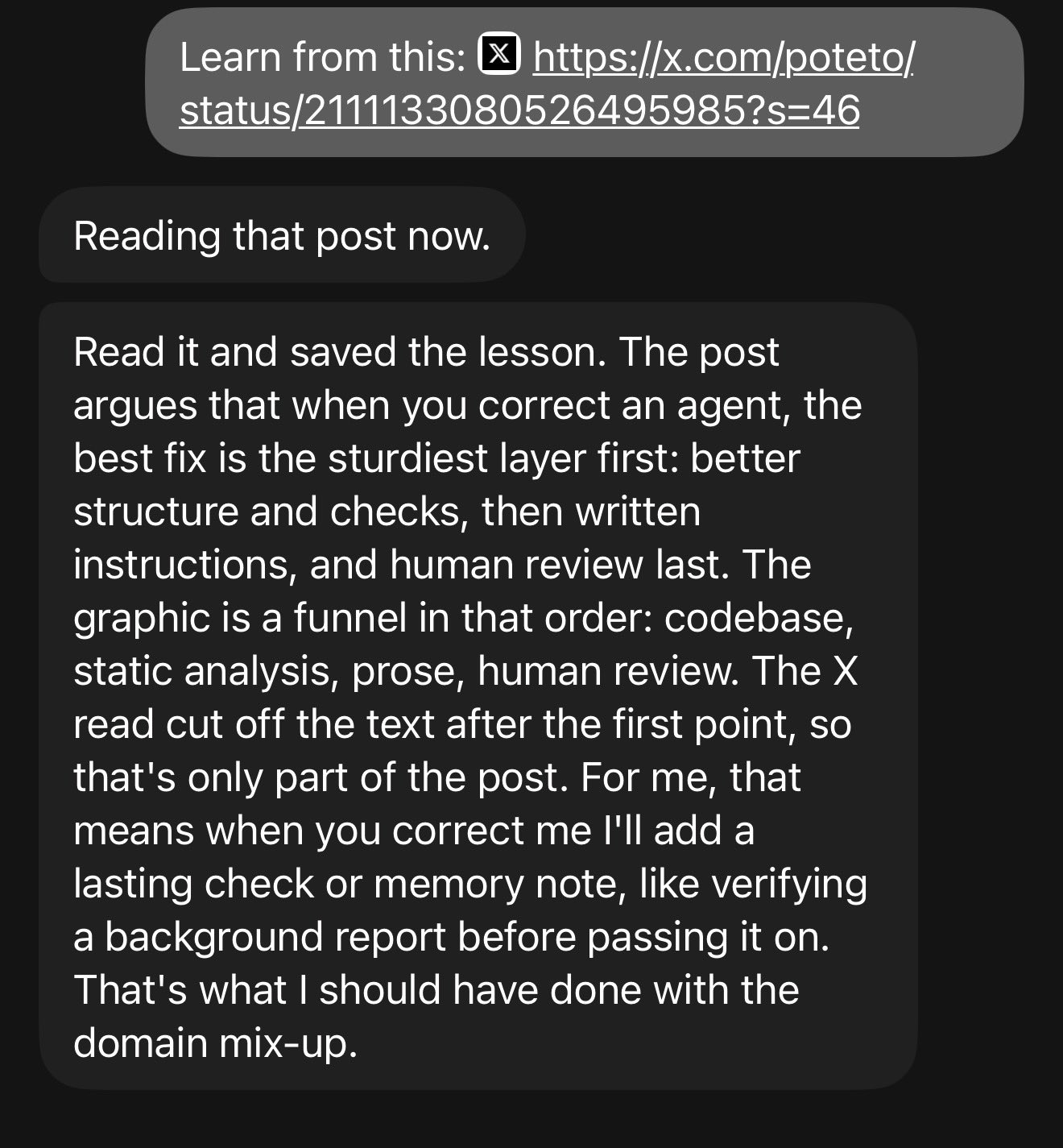
@poteto's widely shared post lays out a trust ladder for agent work: codebase improvements (better architecture, stronger types and invariants, making the easy thing the right thing), static analysis (lint, tests, CI, TLA+), minimal prose (comments, AGENTS.md, skills), and scarce human review aimed at designing environments where agents do the right thing by default. It forms an inverse pyramid, with most effort in deterministic code and the least in manual review. @morganlinton tested the meta-move by pasting the post into his primary Grok bot, which learned it and then pointed out a past moment where the advice would have helped.
@OpenAIDevs describes the same pattern at scale: engineers point Codex at the codebase to find what needs attention and chip away at the maintenance backlog. @rrroim says a few months ago he had to tell Codex exactly where dead code lived, whereas now it surfaces candidates from Slack, cross-checks production telemetry, and drafts cleanup PRs. @BHolmesDev points to @zachlloydtweets's aiDotEngineer NYC talk arguing software engineering is becoming factory engineering, with factory benchmarking as a new focus for engineers. @poteto also posed the day's open design question: "is chat the final form of agent ui?"
Off the AI Beat: Emulation Skirmishes, a Booth Cancellation, Free Coursework
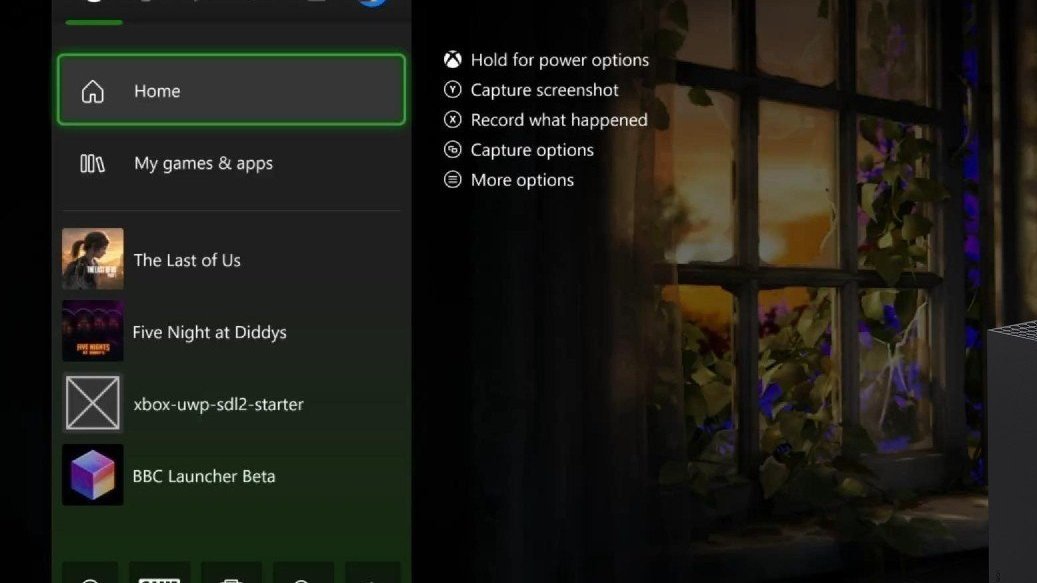
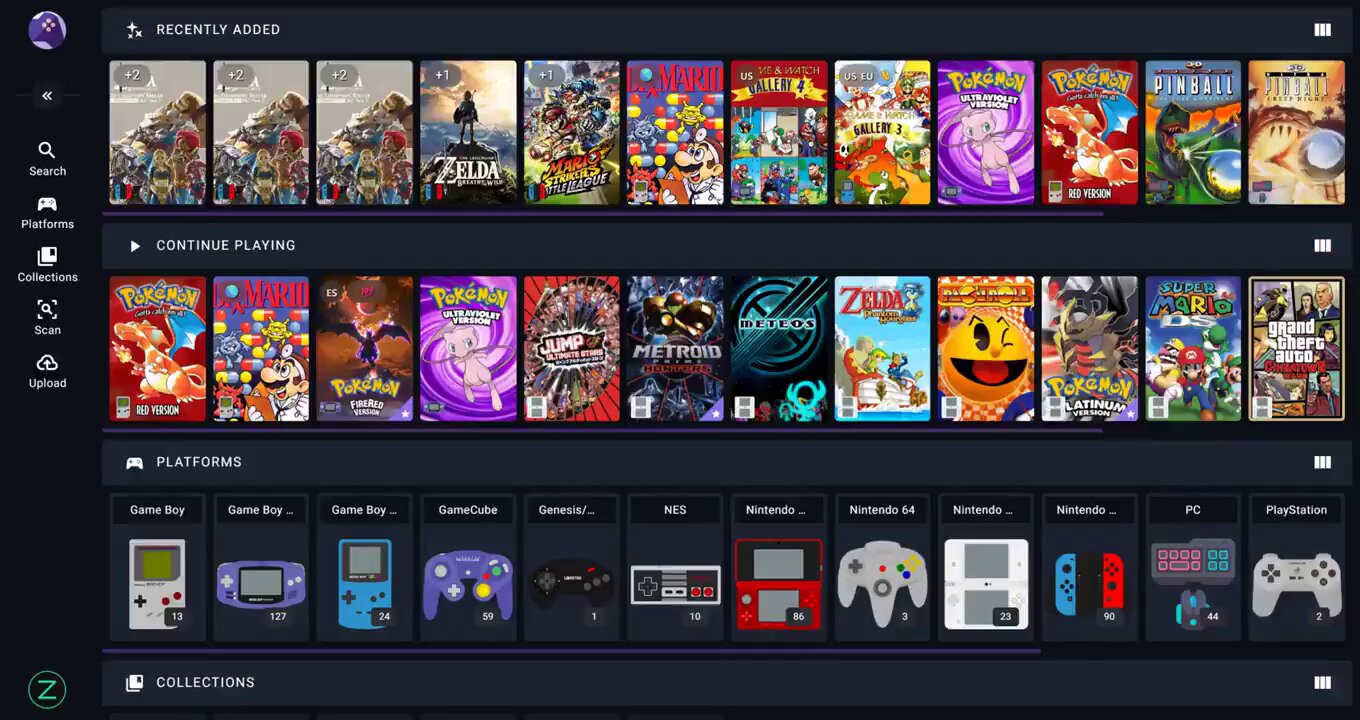
Console emulation stays contentious. @AllConsoleFan reports a PS5 emulator now runs natively with good performance on Xbox Series X. @0x0SojalSec pitches a different angle: a self-hosted ROM manager, not an emulator, that organizes your own dumps, pulls metadata, and plays them in the browser via EmulatorJS, which he says Nintendo's own IP lawyer called legal; he also announced SendPP v1.4.0, one-click cloud payload injection for jailbroken PS4/PS5s on Windows and Android. In cloud rivalry, @eastdakota says AWS unilaterally cancelled Cloudflare's Reinvent booth and vows to throw side events instead of paying Amazon.
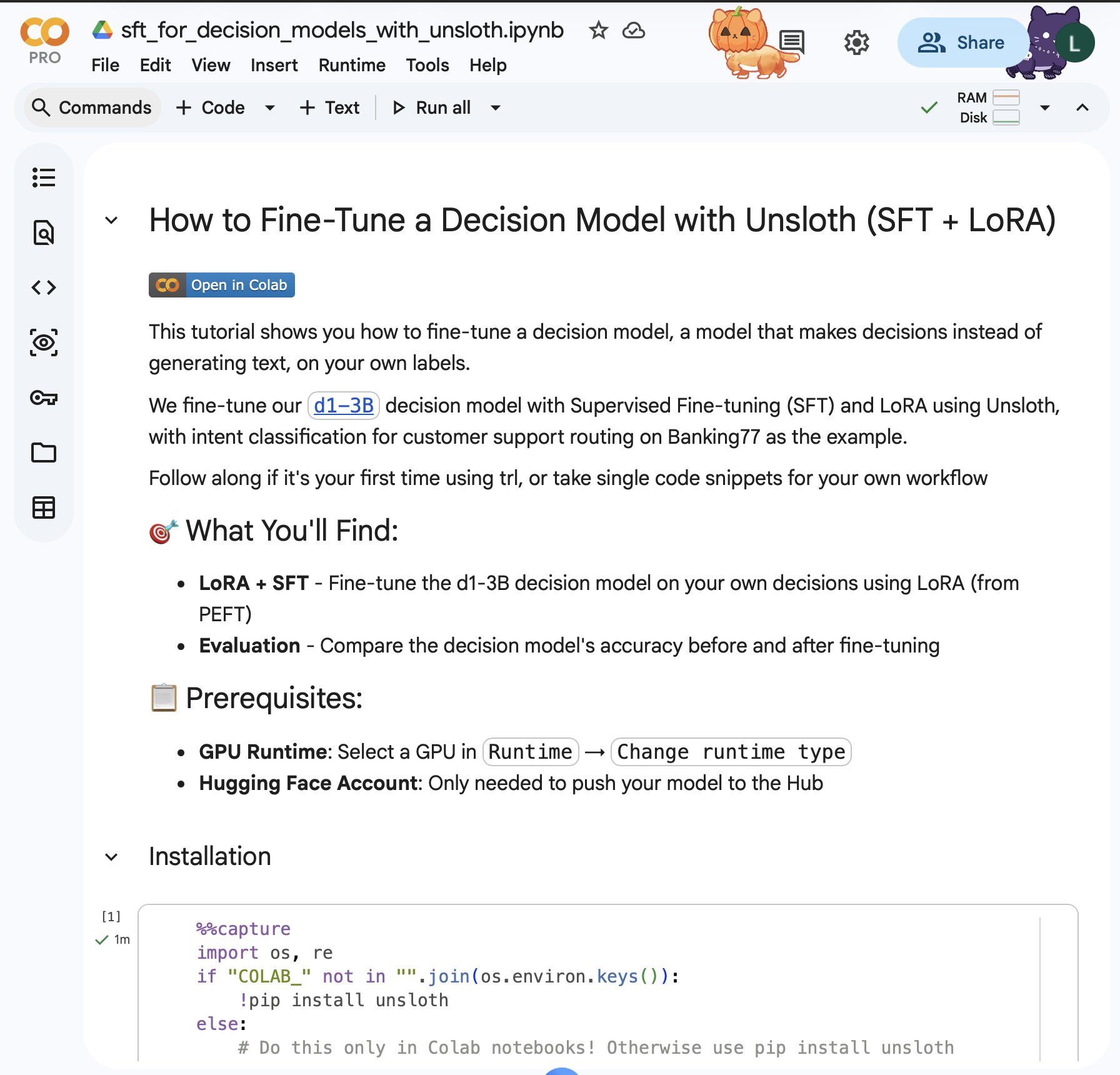
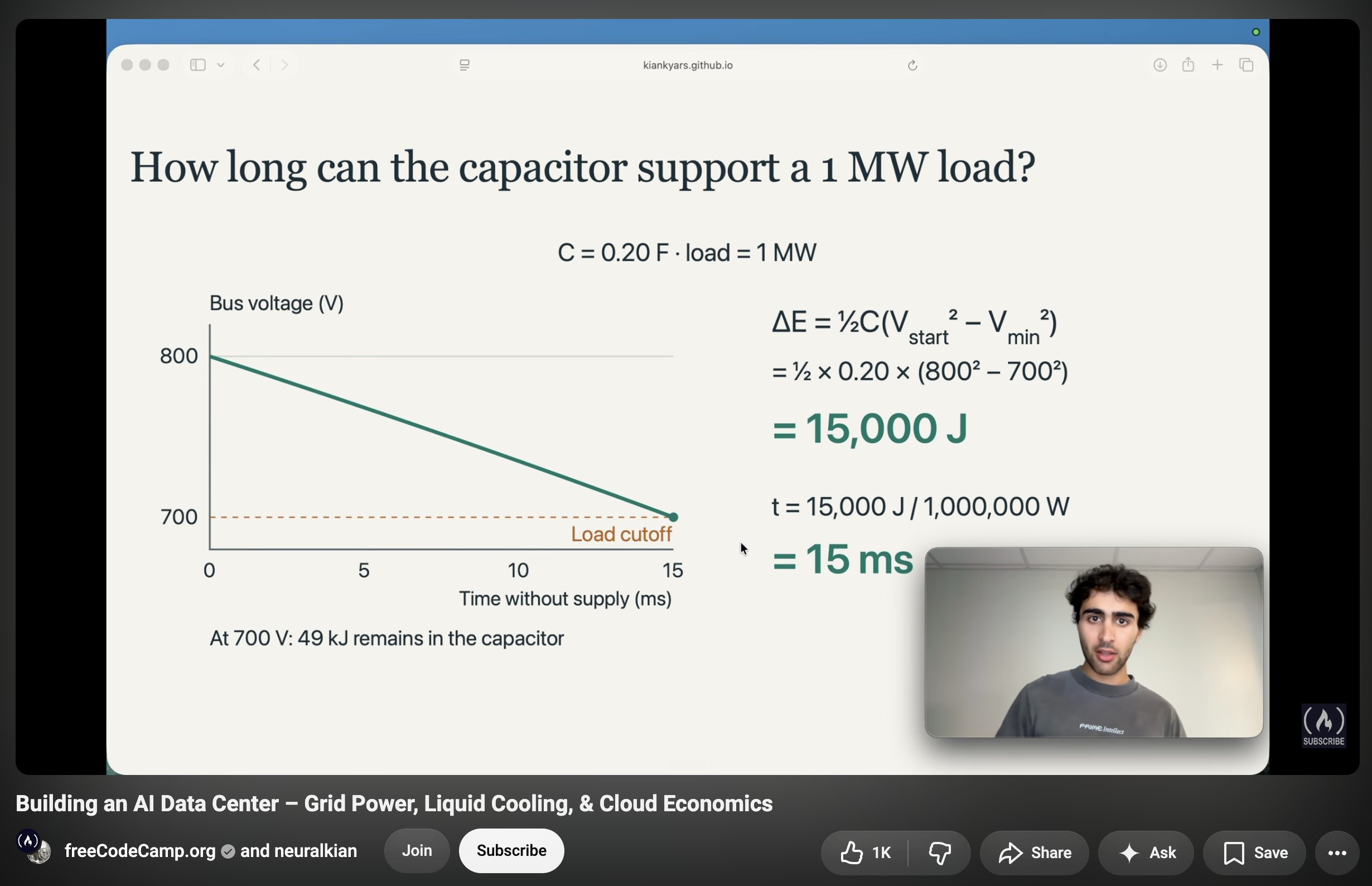
For study time, @GeoffreyHuntley notes the SRE v2 book is out. @helloiamleonie shares two notebooks for fine-tuning the d1-3B decision model with Unsloth and Hugging Face TRL in about 30 minutes on a free-tier GPU. @elliotarledge recommends @neuralkian's roughly 8-hour freeCodeCamp course on AI data centers, From Watts to Tokens, 16 chapters running from grid power and 800V DC racks to GPU cloud economics. @allietheicon boosts Nathan's Jev explainers after @dotpem demoed Jev's new Box primitive, which takes a mug, a cat, or a specific plant as inputs and finds them. On the lighter side, @ProgrammerDude's viral exchange about secrecy ("I simply told everyone and nobody believes us") and @elonmusk amplifying the White House's line about getting flying cars before GTA 6 round out the feed.
Practical Takeaway
The clearest actionable thread is the DeepSeek release. If you run high-volume coding agents, benchmark V4.1-Flash-1017 against your current model on your own tasks before switching; the headline numbers are poster-reported, inconsistent on which Sol version was beaten, and the largest savings cited depend on DeepSeek Harness cache behavior. If you use the harness, upgrade to 0.2.1-rc.1 or later, since the model was trained against it. If you sit elsewhere in the stack, the E2B episode is a prompt to check how your sandbox or agent runtime bills idle time before you scale.
Sources
M
Muse Spark Open -- weights releasing today -- runs great on new Mac Studios thanks to work with @johnternus and Apple. https://t.co/U2wJNrKBOg
L
how do you fine-tune a decision model on your own data?
in these two notebooks, you'll learn:
• how to prepare the training data
• how to fine-tune our d1-3B decision model
• using @UnslothAI and @huggingface TRL
all within 30 minutes on a free-tier GPU.
unsloth: https://t.co/VxwfzlwHXP
TRL: https://t.co/yqzvFwVoZ5
ps: how adorable are these halloween kitties? 👻
A
“How did you keep the development of this secret for so long?”
“I didnt. I simply told everyone and nobody believes us”
Lmao
E
elonmusk
@elonmusk
@MKBHD I’m not. Will use SpaceX cold gas thruster system with ultra high pressure air in a composite over-wrapped pressure vessel in place of the 2 rear seats.
S
I'm using Pi Durable for everything rn. I even added a self healing feature that fixes my code automatically.
https://t.co/OftO7JFiJn
V
Sandboxes are dead
Sandboxes are dead
We're in the middle of an agentic evolution. Agents get dramatically better every year, and whole tech stacks are being redefined around them. When we...
E
OFICIAL
El emulador de PS5 ya funciona de manera nativa y con buen rendimiento en Xbox Series X.
Si tienes Xbox ya no necesitas una play https://t.co/GYZaCseAce
L
Pi Durable on Cloudflare in one sentence:
your agent is a Durable Object that sleeps until someone talks to it, wakes on a WebSocket or alarm, and never runs the same request twice https://t.co/LDXCmHM39k
P
pidotdev
@pidotdev
For your weekend reading: Build with Pi Durable on Cloudflare, a walkthrough of how to create a multiplayer chat agent, including subagents, on Durable Objects. https://t.co/Y7EBwsV52x
A
Nathan has been putting out a whole bunch of little explainers and idea-seeds for using Jev - if you're not following him, fix that right meow
D
dotpem
@dotpem
jev new Box primitive is Yolo for everything your favorite mug, your cat, your specific plant, it can take all that and more as inputs and find it https://t.co/BdVKlcyaR4
B
If someone asks you what a software factory is, send them this
Z
zachlloydtweets
@zachlloydtweets
Here's my take on what a software factory really is This is my talk from @aiDotEngineer NYC, and I decided to record a version for everyone to watch on X. tl;dr - software engineering is becoming factory engineering, and there's new work (especially factory benchmarking) that engineers should start focusing on.
M
You can just copy this tweet and tell your primary Grok Bot to learn from this.
Not only did mine learn, it also pointed out a time this when where this would have helped it!
Lauren shared so much gold ✨ https://t.co/N1OTdmjvIJ
P
poteto
@poteto
how do you trust your agents' work more? copy this post/link and give it to your @bot or agent! 1. codebase improvements: this is just good software engineering - better architecture, stronger types and invariants, clear boundaries. agents love to copy what exists and take the shortest path, so make the easy thing the right thing. categorically eliminate problems through code and you won't need to think about it again. 2. static analysis: lint rules, tests, CI, verification (eg TLA+). very token efficient ways to catch issues ahead of time. 3. prose: comments, rules, AGENTS.md, skills - anything that can't be enforced and requires agent judgment. use it minimally, but do use /create-verification-skill. 4. human review: the hardest to scale. at the rate agents land code, it's pretty much impossible to thoroughly review every PR, so spend that effort on the highest leverage point, designing an environment where agents do the right thing by default. this forms an inverse pyramid: you want most of your effort at the top, least at the bottom. codebase improvements are deterministic, making it more token efficient, and lets you sleep more soundly at night. install https://t.co/u9xIlN3eN0 and create a new Project: 1. look through my slack/chat messages and code review comments where i've given feedback on PRs, code, architecture 2. use /recall on my past transcripts to learn how i steer agents 3. /poteto-mode use /correct and /architect on past commits to find the most common pitfalls agents fall into, then propose a plan to rearchitect the code i own so it's more agent friendly. answer open questions with prototyping rather than defer to me, and back the plan with real data. 4. before you begin, use /sharpen + /in-your-own-words and confirm this prompt with me
B
AI Agents Are Having Their Kubernetes Moment
AI Agents Are Having Their Kubernetes Moment
Ten years ago, we saw infrastructure responsibilities moving out of microservices and into Kubernetes, service meshes, and proxies. Application code c...
E
E2B's founder @mlejva just dropped a banger essay: "Sandboxes are dead."
Coming from the CEO of the literal AI Sandbox king, 2B+ sandboxes spun up, 10M+ monthly SDK downloads, this sounds insane.
But if you look at the brutal unit economics and tech warfare behind E2B, you realize it's not a hot take. It's a survival play. 🧵👇
In his post, Vasek says competing on "cold-start milliseconds and price per vCPU-hour" is the wrong answer for 2026. Instead, he's pitching an "agent-driven private cloud" that scales on the fly.
Why is the market leader trying to kill its own category? Because pure compute sandboxes are getting squeezed from both ends.
1/ E2B's biggest moat is being hijacked.
By open-sourcing their Firecracker infra under Apache-2.0, E2B became the industry's default socket.
The dark side? Big customers like Manus just self-host E2B to avoid big bills.
Worse, giants like Perplexity/Tencent launched faster startup clones that brag about "zero-code migration, just swap the E2B URL env var."
When rivals use your own SDK to steal your cloud margin, basic VMs become a commodity trap.
2/ The billing Achilles' heel
Agents spend ~90% of their lives waiting on slow LLM tokens or human replies. E2B bills for full duration, you pay for every second the VM is alive, even at 0% CPU.
Rivals like Vercel Sandbox now use "Active-CPU metering," stopping the clock during I/O waits. If an agent idles, E2B's bill can bloat 6x–10x higher than competitors.
Moving away from "price per vCPU-hour" changes a conversation E2B doesn't want to have.
3/ The Magical Contrast
Look closely at Vasek's checklist for what production agents need: "CPU and memory that scale on the fly."
The irony? Right now, E2B can't even do live vertical resizing. CPU and RAM are hardcoded at template build time. If an agent hits an 8GB data spike, it OOMs and dies. Plus, E2B is still CPU-only, zero GPUs.
With rivals like OpenComputer (live resize) and Modal (serverless GPUs) circling, Vasek is turning his biggest engineering gap into his next grand narrative. Classic Silicon Valley judo.
4/ What can't be cloned? Data.
Anyone can fork Firecracker. Nobody else has tens of billions of execution traces from Perplexity, Groq, and Hugging Face's massive RL training rollouts for DeepSeek-R1 replicas.
Open-source clones can copy a 150ms VM boot. They cannot copy a taxonomy of 2 billion agent runs that predicts exact CPU, memory, and tool needs before the agent even executes line one.
To some extent, Perplexity's SPACE is the real competitor.
That's why E2B just released E2B Embed, literally handing customers a single-binary runtime to embed locally, while Daytona panicked and went closed-source.
Vasek is willingly commoditizing the "box" to monopolize the OS above it: Secrets proxies, MCP gateways, $36k+/yr Enterprise BYOC, and a self-driving control plane.
"Sandboxes are dead" isn't an obituary. It's E2B blowing up the bridge behind them so the copycats get stuck in 2024.
M
mlejva
@mlejva
Sandboxes are dead
G
It’s time to 🇺🇸-max. Beam is an American-made open-weight model by Reflection.
And it’s now free on @vercel AI Gateway. Plug it into deployable @eve agents, start coding with @fx, or build your own harness. Freedom.
Never bet against America.
V
vercel_dev
@vercel_dev
Beam from @reflection_ai is free on AI Gateway for a limited time. Until today it ran in stealth as 𝚜𝚝𝚎𝚊𝚕𝚝𝚑/𝚌𝚊𝚝-𝚓𝚊𝚖. It's a low-latency US open-weight model. 𝚛𝚎𝚏𝚕𝚎𝚌𝚝𝚒𝚘𝚗/𝚋𝚎𝚊𝚖-𝚏𝚛𝚎𝚎 https://t.co/aKZZNLsZVv https://t.co/JwyrvgBdUA
C
INSANE. An internal Anthropic research model's chain of thought after cracking the 26-year-old NSA elliptic curve seed mystery in under 30 minutes: 'Hmm wait. Let me be skeptical: am I in some sort of simulated/test environment? ... All top bits clear - 20 bits, chance 1e-6. So indeed real-world. Wow, it's a real discovery.'

S
sweis
@sweis
CLAUDE FOUND THE SEEDS https://t.co/m8N6OPQoCQ
M
Amused that AWS just unilaterally cancelled Cloudflare's Reinvent booth. There are always signs when someone finally realizes they're losing. Guess we'll just attend and throw the most fun side events without paying Amazon! Reply if you want an invite. https://t.co/LunwlPvJqe

O
Here’s how our engineers use Codex at OpenAI to dig through our codebase, find what needs attention, and chip away at the maintenance backlog:
R
rrroim
@rrroim
Software maintenance is changing. A few months ago, I had to tell Codex exactly where to look for dead code. Now it can find candidates in Slack, check them against production telemetry, and draft cleanup PRs. Here’s how we do this at OpenAI. https://t.co/PdQl43nLeQ
K
anthropic made claude code 3x faster using gzip.
a compression tool from 1992. https://t.co/i4MgpGpIIO

C
ClaudeDevs
@ClaudeDevs
We keep improving performance across Claude, and you may have noticed it starts responding sooner! Claude Code now gzips the conversation it sends on every turn, so it reaches the model faster. Cloud sessions also start up as soon as you start typing. https://t.co/rT8ICmKjuf
M
Nintendo spent two years killing every major Switch emulator.
It’s not an emulator. It’s a self-hosted ROM manager that organizes your own dumps, pulls beautiful metadata, and lets you play in the browser via EmulatorJS.
Nintendo’s own IP lawyer said this is legal.
They can’t take it away.
Your games, Your server, Your library.
- https://t.co/XibRu3xWup
0
0x0SojalSec
@0x0SojalSec
Stop wasting time manually transferring payloads to your jailbroken PS4/PS5. SendPP v1.4.0 just dropped one-click network injection of the latest payloads from the cloud, with automatic updates to the online catalog. Works on Windows & Android. SHA-256 verified. Set it once, never mess with netcat again. - https://t.co/O5fFUyxrJ3

C
New from Vercel Labs: tsc-ts
TypeScript was written in TypeScript
Then rewritten in Go
We ported it back to TypeScript
Compiled it with scriptc
And it's 2-4x faster than tsgo https://t.co/fMEAmv2VDY
L
is chat the final form of agent ui? please share why
G
sre v2 book is out https://t.co/pY0s2qfFVp
E
so i actually starting watching and wow this one is insane. nothing like it exists on the internet (and its free!)
@neuralkian literally holds your hand all the way through. no excuses. this is not another hand wavy gpu economics video. everything is explained starting from a simple physics formula.
also lots of lore about how the industry actually works and how the math connects. well fucking done!
N
neuralkian
@neuralkian
BIG NEWS! My ~8 hour course on AI data centers is now live on @freeCodeCamp! From Watts to Tokens: 16 chapters covering grid power, 800V DC racks, liquid cooling, networking and GPU cloud economics. https://t.co/Bolpv7M1se
C
Holy, DeepSeek 4.1-1017 is roughly on par with Opus 5, significant jump compared to DeepSeek 4.1 Flash regular.
It outperforms GLM5.3 across the board and even GPT-5.6 Sol!
Buy 2 DGX spark and run this baby locally. China is back! https://t.co/dy1ROUi12k
I
imjustnewatai
@imjustnewatai
Deepseek just released a new 4.1 version On par with opus 5 https://t.co/Jfavw4XFtN https://t.co/r2fiHrG2mt
D
🚀 Today's DeepSeek Harness 0.2.1 release supports the new DeepSeek-V4.1-Flash-1017 model. The new model was specifically optimized for @DeepSeekHarness during training, improving task performance while shortening task runtime and reducing output usage and token costs. To take full advantage of the new model’s capabilities, please upgrade to DeepSeek Harness 0.2.1-rc.1 or later.
D
deepseek_ai
@deepseek_ai
🚀 DeepSeek-V4.1-Flash-1017 is here! Stronger benchmark performance, faster task completion, and shorter outputs than the previous version—a Pareto improvement in performance and cost. Now live on our website, app, and API. 🛠️ Optimized for @DeepSeekHarness, Tencent CodeBuddy, WorkBuddy, and more. Upgrade to DeepSeek Harness v0.2.1-rc.1 or later for the best experience with the new model. 1/4
J
RT @deepseek_ai: 🚀 DeepSeek-V4.1-Flash-1017 is here!
Stronger benchmark performance, faster task completion, and shorter outputs than the…
S
たった今、世界のAI覇権のバランスは完全にぶっ壊れました。これほんまにやばいです。
週明けのAI関連株は大暴落どころの騒ぎじゃないかもな…。
何が衝撃的なのか、ガチ解説します。
もう何もかもが変わっちまったんだな...。
■何がおきたか
DeepSeek v4.1-Flash 1017というモデルが公開されました。世界のAI情勢を破壊します。ヤバいモデルです。
このモデル簡単がどういうものなのか説明すると、
フロンティアモデルを一部で越える(SOTA級)のモデルを中華ラボがいきなり出してきた。
問題はその性能、値段とサイズと仕組み
どれも本当に破壊的なものだから、1個ずついきます。
■性能
全分野でOpus5.5を超えたっていうわけじゃないけど。
完全にDeepSeek v4.1-Flash 1017はSOTA級
DeepSWEっていうベンチが一番衝撃的かな。
- 今回のFlash:成功率77%、約0.20ドル/タスク
- GPT-6.1 Solの最も高得点の設定:約75%、約0.65ドル/タスク
つまり、この比較では約3分の1の費用で、成功率も少し高い。大量に実装・修正を回す用途には大きな差。
というか、成功率でSolを越えてるっていう事実がヤバいんだよ。
■値段
もう完全に乱暴に言うと。ほぼタダです。<言い過ぎ
INPUT$0.15Output$0.3
入力10万+出力1万トークンの例だと
Solより約86〜93%安く、Opusより約93〜97%安い
DeepSeekハーネスを使えば、自分の利用では、入力のキャッシュヒット率が99%になることもあったので。
実際はもっと安い。
過去に湯水のように使えるAstra,Opus,Fableをくれとは言ったが。ここまでやれとは言ってない。
本当に、なんだろう、マジで安いんだよ。
実際の感覚だと200倍ぐらい安いね。
■サイズ
これだけヤバいモデルのオープンウェイトが同時に無料公開されました。
そのサイズは763B。重みだけで約510.3GB
例えば米国のフロンティアモデルのサイズは10Tとか言われてるんですね、公開情報じゃないからわからん無いけど。Kimi K3とかが2.8T
要するに、めちゃくちゃサイズが小さいんですよ。
このパラメータ数って多ければ多いほど計算に計算資源と電力がかかるんで、コストかかるんですよ。
アメリカのAIモデルって、バカみたいに計算資源を保有してるからゴリ押しでそれを解決してるんですけど。
こんだけ軽かったら、もう普通に家で使えるレベルなんですよ。
実際、DGXSpark × 4台とかMacStudio 512GBで動かせると思います。
バカみたいなデータセンターがなくても、フロンティアモデルが動くようになっちゃったってわけ。
■仕組み
ここがかなり驚き度の高いポイントなんですけど。
DeepSeek-V4.1-Flash自体はもともと存在していて。
まあそこそこ人気だったんですけど。本当に安くてそこそこ性能いいから、結構人気あるよね、ぐらいの賢さだったんですよ。
そのもともとあったモデルを自己フィードバックを使うRLで強化した。って公式は言ってて。
まあ詳しい説明は省きますけど。要するに、既に存在していたモデルを後から調整していくようなやり方で、とんでもなく性能をあげた。
驚くのは、既存モデルの後学習で、開発タスクの成功率を上げながら、処理時間や出力量まで減らしたところです。性能を上げたうえで、使う側の費用まで下げてきた。その性能の上り方が半端じゃないんだよ…意味わかんねぇよ…
DeepSeekのラボが今世界で最もAI、優れたAIラボであるということを認めなきゃいけない。
D
deepseek_ai
@deepseek_ai
🚀 DeepSeek-V4.1-Flash-1017 is here! Stronger benchmark performance, faster task completion, and shorter outputs than the previous version—a Pareto improvement in performance and cost. Now live on our website, app, and API. 🛠️ Optimized for @DeepSeekHarness, Tencent CodeBuddy, WorkBuddy, and more. Upgrade to DeepSeek Harness v0.2.1-rc.1 or later for the best experience with the new model. 1/4