Open Weights Squeeze Paid AI From Three Sides: Emotive TTS, a $300k Frontier-Class Claim, and Free DeepSeek
Independent releases pressed on paid AI APIs from multiple directions, as @FishAudio open-weighted a controllable TTS model, a five-person team shipped a knowledge-work model they call frontier-class at 60x lower cost, and DeepSeek V4.1 Flash went free in OpenCode. Meanwhile, forecaster @eli_lifland's stark probabilities on superhuman AI and takeover risk unsettled @Jonas_Vollmer, and the first draft of a security reference architecture for autonomous software factories opened for community feedback.
Quick Hits
- Open-weight releases crowded the paid API stack: @FishAudio launched Drama 3, an open-weight TTS model with word-level tone control; @bertgodel's team shipped Ultramarine 1 Flash, claiming performance similar to Fable 5 at 60x lower cost after roughly $300k of post-training by five people (weights in two weeks); and @opencode made DeepSeek V4.1 Flash free.
- AGI forecaster @eli_lifland put broadly superhuman AI at ~10-15% by end of 2027 and ~50% by end of 2030, with ~67% AI takeover if labs don't slow down and ~40% extinction conditional on takeover; @Jonas_Vollmer, who calls Eli the forecaster he trusts most, says the post made him more worried.
- @gregisenberg returned from 48 hours in SF with 21 observations, headlined by data brokers reportedly making around $2M a week, agent harnesses as the new GPT wrappers with swappable models, and value migrating from software to the data inside it.
- @ianlivingstone published the first draft of an Agent Baseline Software Factory Reference Architecture, an open blueprint for securing autonomous software factories; @dexhorthy says it turns previously "hand-wavy" MCP gateway talk into a spec builders can actually use.
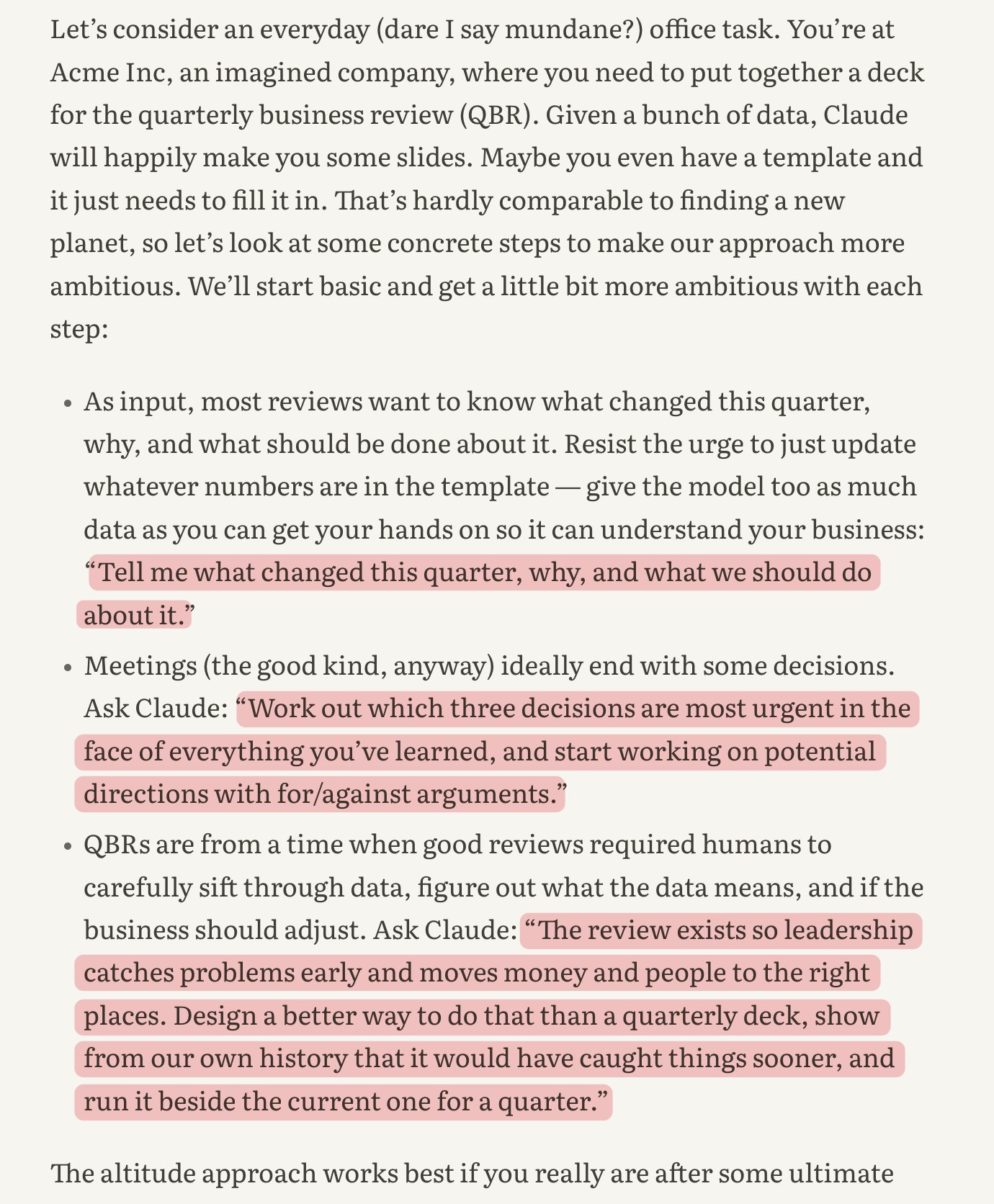
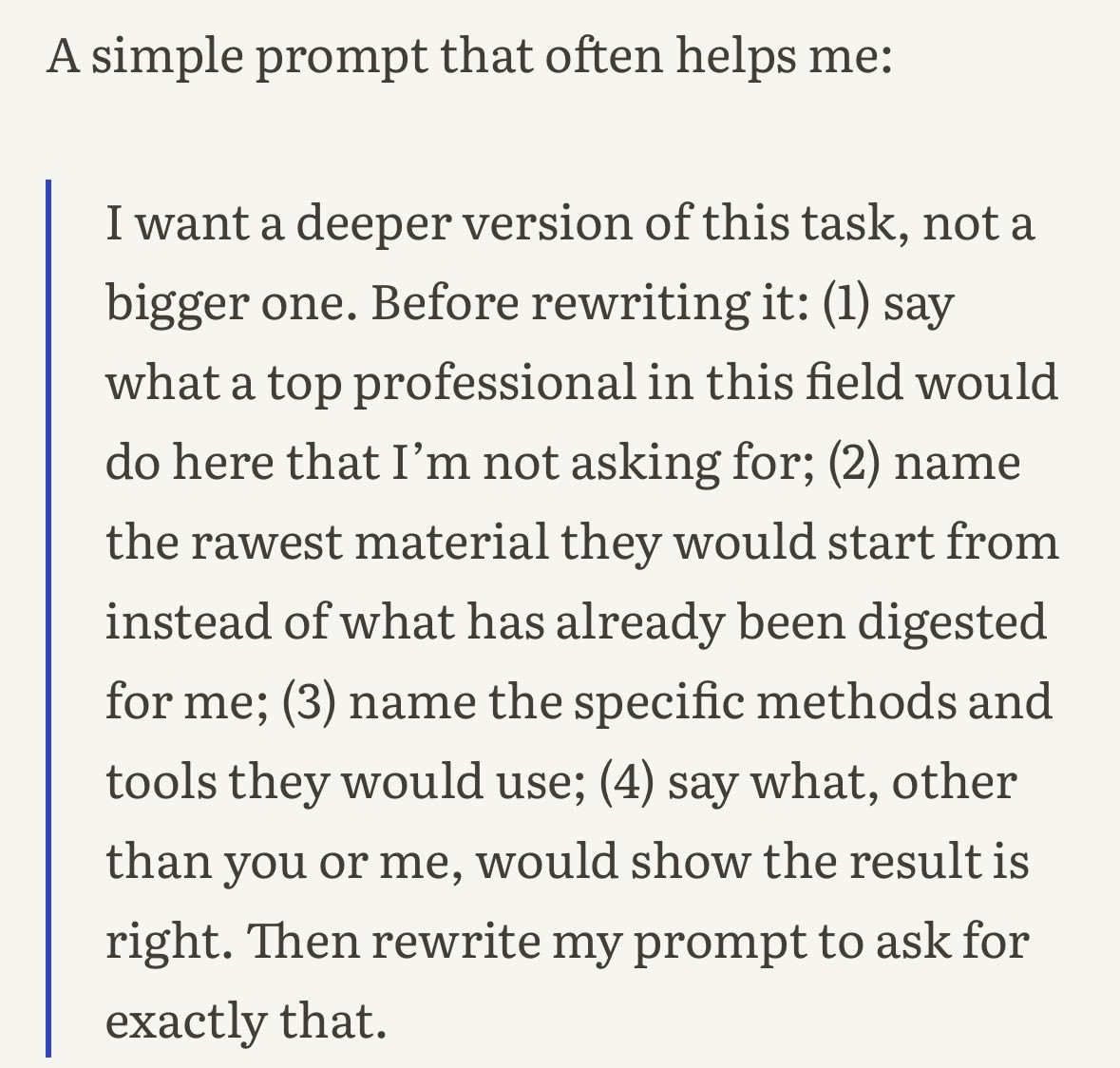
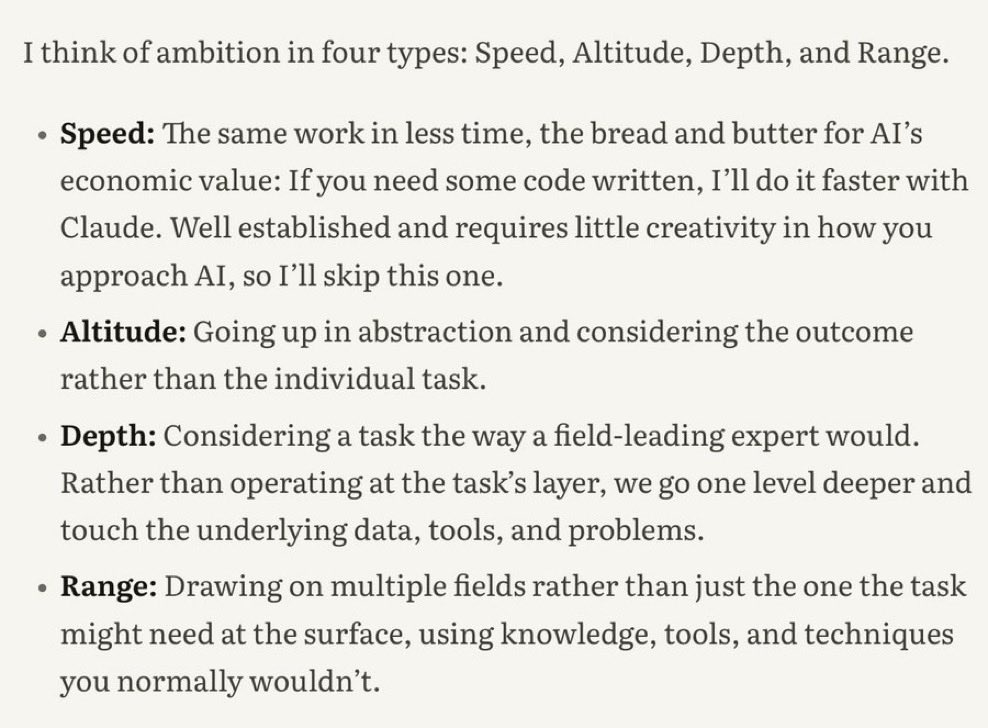
- A tutorial from @felixrieseberg, an eng lead on Claude, about using AI more ambitiously drew reactions from @tkvtk, @cgtwts, and @thorstenball, who flagged how much first-principles thinking sits inside its simple prompts.
Open Weights Hit Voice, Knowledge Work, and Small GPUs
The day's clearest pattern across the feed: open releases aimed at the niches where paid APIs charge most. @shiri_shh joked that the ElevenLabs CEO opened X to find "his entire product released with open weights," quoting @FishAudio's launch of Drama 3. The announcement, which cites a $52M seed round and 15M+ users, claims "the most emotive and controllable TTS model in the world," open-weight, with control over how a single word sounds, tone changes, and mid-sentence voice shifts.
Knowledge work got similar treatment. @bertgodel announced Ultramarine 1 Flash, a model the team labels "frontier-class" and open-source, claiming "similar performance to Fable 5, while being 60x cheaper," post-trained by five people for ~$300k all-in, available on API now with weights releasing in two weeks. @EXM7777's viral framing goes well beyond the release post: beating OpenAI and Anthropic, under $4M raised, 88 kinds of real tasks from bankers, consultants, and lawyers, and PowerPoint decks, Excel models, and Word memos from a single prompt in the Feather app. Worth noting the gap: the announcement claims parity with Fable 5, not victory over the big labs.
Local options widened too. @opencode announced DeepSeek V4.1 Flash is now free in OpenCode. @coldniko shipped an easy implementation of Qwen3.6-35B-A3B for iGPUs and smaller systems, with the caveat that no big optimizations were done yet, drawing awe from @aktsmm at the sheer development speed. @sudoingX introduced a feed of hands-on local AI experiments across GPU tiers from 8GB up to 256GB, including uncensored and unusual models, aimed at getting "normal people" started with owning their models on their own hardware.
The economics reached game guides as well. @0xFitz open-sourced Polestar on CurseForge: 158 guides covering every race, levels 1-60, "proudly made with AI," after getting fed up with paid competitors Zygor and RestedXP. A small but concrete example of AI-assisted production making a free, open alternative viable against paid products.
Claude's Eng Lead Says Be More Ambitious; Practitioners Answer With Principles
@felixrieseberg, an eng lead working on Claude, published a tutorial on what "being more ambitious" with AI actually means in practice. It spread in three directions: @tkvtk bluntly paraphrased it as an Anthropic engineer saying everyone uses AI badly; @cgtwts shared screenshots of the prompts; and @thorstenball pointed at the deeper lesson, the first-principles reasoning buried in plain instructions, quoting the line "review exists so leadership catches problems early and moves money and people to right places."
@poteto's post on pstack's engineering principles complements the tutorial: very concise skills of roughly 10-20 lines that distill good practice, with a /poteto-mode index that makes agents name "each principle that shaped a decision and the specific choice it changed." The principles came out of months of correcting agents (one, Attack the Premise, was inspired by @VictorTaelin), and @poteto expects most to compress into short principles or generic workflows as models get smarter. @unclebobmartin reckons there's enough wisdom in there to teach a master class.
Isenberg's SF Notes: Value Migrates to Data, Harnesses, and Memory
@gregisenberg's 21-point field report from San Francisco is the densest read of the day. Highlights, all attributed to him: data brokers making around $2M a week selling company data to labs; a dinner question that silenced half a table, "If a new model drops next month, does your company get better or worse?"; a revenue bar of $1B in 12 months paired with almost nobody discussing retention; the mental model of the model as CPU, harness as operating system, skills as apps; a guess that an agent which watches you work for a week and then does your job is about 12 months out; harness teams treating models as swappable and preferring portable prompts over fine-tuning; suites of $5B+ apps cloned open source, pushing value toward the customer data and workflows inside legacy SaaS; internal data cleanup before MCP exposure as a consulting opportunity; agent failure logs as a valuable asset; memory as the next consumer fight, where "the model that remembers the most about you wins"; agent insurance arriving once an agent makes an expensive mistake; and the most-wanted hire being someone with taste who can write evals.
Physical AI threads through the post: @gregisenberg relays a robotics founder's line that "the hardest problems in AI are deployment problems now, not research problems." Separately, @naveedg recommended following @Ryan__Dunwoody, an 11-year Shenzhen hardware veteran ($40M raised, 500K+ custom products shipped, a Guinness record for the first 3D-printed laptop) now running Powerhouse and a hardware accelerator, and who is asking for leads in hardware, physical AI, and robotics.
First Reference Architecture for Securing Autonomous Software Factories
@ianlivingstone announced the first draft of the Agent Baseline Software Factory Reference Architecture, described as "an opinionated blueprint for securing increasingly autonomous software factories," open for feedback and contributions. @dexhorthy supplied the backstory: a podcast conversation with @vtahowe, @ianlivingstone, and the CISO of a billions-of-market-cap company about giving developers MCP access to ticketing, email, and Slack without inviting data exfiltration, prompt injection, or credential hijacks. The previously hand-wavy "MCP gateway" idea, he argues, has now materialized into a formal spec, a starting point rather than a finish line. A small sign the vocabulary is circulating: @jamescmartinez polled software factory people on their favorite software factory.
Also in Tech: Forced PS5 Updates, Browser Piracy, and a Roadster Claim
@Macrike reports a forced update to PS5 firmware 14.10, with PSN access disabled on 14.00 and below. @pokerdev7 argues piracy will reach unprecedented levels as browser play removes the risky-download barrier that used to deter people, quoting @izzynobre's incredulous reaction at whatever browser-play mechanism started the thread. And @elonmusk called the new Tesla Roadster "a candidate for greatest product demo of all time."
Practical Takeaway
If you pay for AI APIs, this week's strongest theme is testability: before renewing spend on voice or knowledge-work endpoints, benchmark the open-weight options that just landed (Drama 3 now, Ultramarine 1 Flash weights when they ship in two weeks) against your current stack, and keep @gregisenberg's dinner question in mind, whether a new, cheaper model makes your product better or worse. If you direct agents daily, borrow from @poteto and @felixrieseberg: capture your hard-won lessons as short first-principles rules, and require the agent to name which rule shaped each decision, so the reasoning surfaces instead of hiding in the output.
Sources
S
ElevenLabs CEO opening X this morning to find his entire product released with open weights 😭 https://t.co/aCRYxzmMpD

F
FishAudio
@FishAudio
$52M seed round. 15M+ users. But this is what we're most proud of yet. Introducing Drama 3: the most emotive and controllable TTS model in the world And yes, it's open-weight. You can now control how even a single word should sound, change its tone, and shift your voice mid-sentence. Uncle Roger was impressed too. Try it here: https://t.co/4nbz4sQ4yy Comment “DRAMA” within the next 48 hours for 1 month free. If you're an enterprise your first month is on us: https://t.co/jBXXZSAg0p
M
Forced update now in place for PS5 14.10.
PSN access disabled for 14.00 and below.
F
Said I'd open source it.
Polestar is live. Free, open source, on CurseForge.
158 guides. Every race. 1-60.
Proudly made with AI. https://t.co/Ki1j4XbMdk

0
0xFitz
@0xFitz
Got pissed off with Zygor and RestedXP. Built my own. https://t.co/Cie4gWErkj
G
I spent 48 hours in SF hanging out with billionaires, data labs and AI founders and execs running $1B to $100B companies.
My observations:
1. Sooo MANY stories of data brokers making like $2M a WEEK selling company data to labs. I can't tell if it's the beginning or a bubble, and I kept wondering which niches are left. Digging into it actively.
2. At dinner, someone asked the table, "If a new model drops next month, does your company get better or worse?" HALF the table went quiet! I think that's the best question to ask about any AI startup right now.
3. The bar people talk about now is hitting $1B in revenue in 12 months (I guess that's the new unicorn?). What I didn't hear much about is retention. AI revenue can come in fast and leave fast, and I think we're going to see a lot of stories of AI companies with huge revenue and terrible retention.
4. It's pretty clear we're living through the reinvention of the computer. The model is the CPU, the harness is the operating system, and skills and plugins are the apps. Thinking about it that way makes it easier to see where the whitespace is.
5. We're maybe 12 months from an agent that can watch you work for a week and then do your job without any instructions. The screen recording plus agent memory plus local model combination makes this possible right now.
6. Agent harnesses feel like the new GPT wrappers, in a good way, especially vertical ones. The best teams I talked to treat the model as swappable. One founder walked me through routing different models to different jobs: one for taste and visuals, a cheaper one for the everyday stuff, another for text.
They use prompts they can move across models over fine-tuning, and A/B test the output on what users actually do with it: do they edit it, export it, share it? A vertical harness is basically four things: the connectors for that industry's data, evals written by people who know the work, rules for what the agent can and can't touch, and a clean screen for a human to review. The model is maybe 20% of it.
7. There's a lot of reverse engineering going on/cloning going on more than I've ever seen. People are decompiling software and rebuilding it with agents, and someone showed a suite of like 10 apps that are worth $5B+ each all that he cloned open source. Me and everyone are still thinking through what it means when software gets this easy to copy.
8. My guess is the value moves to data. If the software can be rebuilt quickly, what's worth paying for in a legacy SaaS company is the years of customer data and workflows inside it. Some SaaS companies are secretly data companies.
Gets me thinking about how do you truly value data for this saas companies? Like if we were buying these dying saas companies at 2x ARR before (as example), maybe there is a better metric. Idk, just thinking out loud here.
9. It feels like a good chunk of legacy software won't make it to the agentic era, especially anything built around people clicking through a lot of screens.
10. Every company I talked to wants to pipe its internal data into one place and expose it to agents through MCP. Then they look at the data and realize it's a mess: five versions of the same customer, old Slack channels, PDFs nobody can search. Cleaning that up feels like a big consulting opportunity!
11. A lot of founders are building the basic building blocks for agents: APIs, data layers and tools. Some of the companies I saw barely have a UI because the main user is an agent. I really believe the startups that build primitives to this agentic era will do extremely well. Building blocks is the best way to think about it.
12. Labs can get plenty of training data, but it's harder to get real examples of agents failing inside companies. Whoever has those logs has something valuable.
13. Someone running a big consumer company told me the next fight is over memory. The model that remembers the most about you wins, and the smartest model matters less than people think.
14. Physical AI came up a lot. Astra I think was the first model that got people into AI can actually do CAD, and I think a lot of people are thinking what does vibe manufacturing really look like. The line I keep thinking about came from a robotics founder: the hardest problems in AI are deployment problems now, not research problems. Their robots work on their own, call a human when they get stuck, and every one of those calls becomes training data.
15. Cybersecurity companies are having a moment and are actually cool companies to build now, especially the ones that clean up after a breach. Every agent with access to your systems is a new door into your company, and a lot of those doors were left open.
16. Some startups are worth more dead than alive now. A shutdown company with 5 years of Slack, email and code can get paid for licensing all of it. I wouldn't be surprised if founders start factoring that into when they shut down.
17. People are starting to talk about monetizing the agent web. It feels really early, but when the most popular user of the internet is an agent, what startups should you be building?
18. I think agent insurance is coming. Once an agent makes an expensive mistake, insurers will want audits before they cover anyone.
19. Several people said the hire they want most is someone with taste who can write evals. The models are getting good at generating ideas, so the hard part is judging which ones are good.
20. New trend I observed: startup raises VC, uses venture dollars to become a creator, startup fails, founder falls back on being a full-time creator and incubates other products bootstrapped.
21. Getting SIGNIFICANT distribution is HARD right now. Founders are sponsoring buses, buying billboards like crazy and throwing parties with famous DJs to get noticed. Kinda feels dotcom era in that sense.
Attention is what's scarce! The growth guy going viral sharing his UGC strategy from Wispr Flow is a good example. It's the sauce everyone wants, and I truly believe there are probably only 50 people on the planet who know how to scale these types of businesses efficiently in this era.
Always good to get that dose of SF. I felt sooo lucky to have such an incredible trip during such an incredible time in building businesses. Surreal in so many ways.
Happy to be home and locked in.
Until next time!


P
a pirataria vai atingir níveis sem precedentes
antes tinha a barreira de fazer o download do jogo pirata, que afastava muitos pelo risco de ter vírus
agora é so você entrar no browser e jogar, sem risco nenhum
I
izzynobre
@izzynobre
https://t.co/lW3ahsnccz sério, COMO como isso funciona?!
D
a couple months back i was on a pod with @vtahowe and @ianlivingstone chatting w/ a Billions-of-market-cap CISO about how to balance giving developers tools to make coding agents useful (think, mcps to all kinds of useful context link ticketing, email, slack etc) while avoiding data exfiltration, prompt injection, credential hijacks, etc. There was some hand-wavy "mcp gateway" talk but really cool to see this important question materialized into a formal spec for builders.
There's a lot more to build here, but this is a great start
I
ianlivingstone
@ianlivingstone
Today we're publishing the first draft of the Agent Baseline Software Factory Reference Architecture! An opinionated blueprint for securing increasingly autonomous software factories, built with folks across the community. It's open for feedback and contributions! https://t.co/7mK1lGtx1V
M
wait... so you're telling me five randoms just put $300k into training an AI model just to see what happens??
and they ended up beating OpenAI and Anthropic for a fraction of the cost
no PhDs and with under $4M raised, they built a model that does the work of bankers, consultants and lawyers:
-they taught it 88 kinds of the real tasks those people do every day
- now you type ONE prompt and it builds the deck in PowerPoint, the financial model in Excel and the memo in Word
- in two weeks they're releasing the model, so any company can run it on its own servers and keep its data at home
it's called Ultramarine 1 Flash... try it in the Feather app and lemme know what you get
B
bertgodel
@bertgodel
We are releasing Ultramarine 1 Flash, a frontier-class model built for knowledge work. It is open-source and achieves similar performance to Fable 5, while being 60x cheaper. It was post-trained by a team of 5 for ~$300k all-in. Available on API now, with weights releasing in 2 weeks.
🆈
このおじさんの開発速度と人類に対する貢献ヤバすぎる
ナニモノ??
どっかのAIベンダーに特別待遇で雇われそう
C
coldniko
@coldniko
Enjoy also an easy implementation of Qwen3.6-35B-A3B for those with iGPUs, smaller systems that need fast workers! Remember - no big optimisations were done on this, so better performance is yet to come. https://t.co/El0Cb04Az6
N
Ryan is one of the coolest guys in Shenzhen, with some of the best vibes all around.
Highly recommend a follow if you're interested in the SZ hardware scene, as he's just started getting active on X!
R
Ryan__Dunwoody
@Ryan__Dunwoody
At 23yo, I moved into a Chinese factory to build hardware for my first startup. That’s where I got my Chinese name: 杜无敌 (Duwudi). “Du the Invincible.” Eleven years later, I’m still in Shenzhen. Apparently I haven’t suffered enough. Along the way: $40M raised, 500K+ custom products shipped and a Guinness World Record for the world’s first 3D-printed laptop. Now I run Powerhouse out of an old factory, helping other founders get from idea to mass production at Shenzhen speed. Ideally with fewer expensive lessons than I had. We’re also launching a hardware accelerator, and I’m writing my first angel cheque. The plan: build and back the next generation of hardware companies. I share what building hardware here actually looks like: prototypes, production problems, factory life and robots behaving badly. Who should I be following in hardware, physical AI and robotics? If that’s you, say hello 👋
J
software factory people, what's your favorite software factory?
L
perhaps one of the most durable parts of pstack are its engineering principles: very concise skills (~10-20 loc) that distill down good practices into its core.
as models get smarter, i expect most of pstack skills to compress into short principles or workflows (a generic list of steps) and that i will be able to delete a few of them.
how it works is that /poteto-mode contains a short index of available principles and tells agents "In your reply, name each principle that shaped a decision and the specific choice it changed." this is why you'll often see a Principles Named or Used section at the end of the agent's response
many of these principles were extracted from my sessions correcting agents since the start of this year. some are inspired by problems i see people talk about, like Attack the Premise, inspired by @VictorTaelin's post https://t.co/qTGVfoKSyD
you can also use the principles as skills if you want greater control, by invoking /principle-<name>
https://t.co/wuTWsflVN3
U
unclebobmartin
@unclebobmartin
I'm a newcomer to @poteto's plist; But it seems to me that there is some very significant wisdom encoded in there. I suspect you could teach a master class on the principles.
T
What I find the most fascinating about this post:
How much first-principles thinking goes into these seemingly simple prompts.
I don't know many people who could write
"review exists so leadership catches problems early and moves money and people to right places." https://t.co/OtZYBFsqiT
F
felixrieseberg
@felixrieseberg
Hi, I'm Felix. I'm an eng lead working on Claude. I love watching people take flight and do things they never thought possible. We often describe that as "being more ambitious" when using AI, which is tricky advice to follow. I wrote a tutorial: https://t.co/vNPPs5FWm8
J
Eli is the single person whose AGI forecasting I trust the most, both because of his excellent prediction track record and the quality of the underlying reasoning. So this is making me more worried. https://t.co/6b5qeRO4hL
E
eli_lifland
@eli_lifland
My current view: - AI companies could develop broadly superhuman AI any year now (~10-15% by EO2027, ~50% by EO2030). - If they don't slow down, AI takeover is ~67%. - Conditional on AI takeover, human extinction is ~40%. Many non-extinction worlds still have lots of deaths.
E
The new Tesla Roadster is a candidate for greatest product demo of all time
E
elonmusk
@elonmusk
Timing is everything
T
AnthropicのエンジニアによるみんなAIの使い方下手だねと言う話
F
felixrieseberg
@felixrieseberg
Hi, I'm Felix. I'm an eng lead working on Claude. I love watching people take flight and do things they never thought possible. We often describe that as "being more ambitious" when using AI, which is tricky advice to follow. I wrote a tutorial: https://t.co/vNPPs5FWm8
C
anthropic’s lead engineer btw. https://t.co/pTlsbqDlXm
F
felixrieseberg
@felixrieseberg
Hi, I'm Felix. I'm an eng lead working on Claude. I love watching people take flight and do things they never thought possible. We often describe that as "being more ambitious" when using AI, which is tricky advice to follow. I wrote a tutorial: https://t.co/vNPPs5FWm8
S
i should have posted this a long time ago
hey, i'm sudo, and if you own a gpu and want to get your hands dirty with local ai, follow along
i run hands on experiments with local models on every tier of hardware, 8gb, 12gb, 16gb, 24gb, 32gb, 64gb, 128gb, all the way up to 256gb and climbing, and i've been in the local ai space for a while now
i also drop recommendations for the uncensored models and the weird ones, odd models and odd setups, so you can experiment and actually understand what's happening on your own hardware
my goal is to get as many normal people as possible started in local ai, and give them a taste of what owning your thinking feels like on your own metal
so if this moves something in you, listen to it, tell me in the comments what you want to see and i'll do my best to get you the answer, and if i can't, someone else will, the people in local ai are the most helpful crowd i've ever seen
O
DeepSeek V4.1 Flash is now free in OpenCode