12M Users, $7M a Month in Compute: Character AI's Bankruptcy Puts AI's ROI on Trial
@kunchenguid's read of Character AI's bankruptcy filing (12M monthly users, roughly two hours of daily use, over $7M in compute against $5M in monthly revenue) frames the day's hardest question, even as @mattshumer_ celebrates a $100k agent run and @_Lonis_ launches a $70M AI hedge fund betting the market has underpriced AI. Model news tilted open-weight, from @liquidai's 24B local release and Fish Audio's Drama 3 TTS to a public letter asking OpenAI to preserve GPT-4o as archival weights.
Quick Hits
- Character AI filed for bankruptcy despite 12M monthly users averaging two hours a day, because, per @kunchenguid's read of the filing, it burned over $7M in compute against $5M in monthly revenue. His warning that the collapse may be "a preview for the entire AI industry" is the day's central question.
- Agent spend is being worn as a badge: @jsnnsa says Spawn burns $7k a day with 8 people while Anthropic spends $30k a day with 1,000, and @mattshumer_ reports a single Spawn agent run costing over $100k. All figures are the posters' own.
- GPT-4o's remaining API snapshots, including gpt-4o-2024-11-20, shut down January 14, 2027, and @Blue_Beba_'s open letter asking OpenAI for an archival open-weight release closes its first signatory list Sunday, October 18.
- @liquidai open-sourced LFM2.5-24B-A2B, a 24B-total, 2B-active reasoning model with 131K context that the company says competes with Qwen3.6-35B-A3B on agentic tasks; @0xSero calls it the new best pick for 16-24GB VRAM rigs and 24GB+ Macs.
- @phoronix reports Linus Torvalds kept using AI on the Linux kernel, making code decipherable and uncovering more bugs, which @dhh reads as a welcome split from the "anti-ai nonsense" he sees in parts of the Linux world.
Bankruptcy math meets the $100k agent run
The sharpest argument of the day comes from @kunchenguid, who worked through Character AI's actual bankruptcy filing. His read: the company had adoption (12M MAU, two hours of daily use per user), real network effects from user-generated characters, and proprietary data with custom-trained models, and none of it mattered, because compute burn exceeded $7M a month against $5M in revenue. People engage when it's free or subsidized, but they won't pay enough for the value they receive. He then widens the lens: if every LLM user paid full API price, how much current usage would show positive ROI? His conclusion is that the industry has limited runway to make the math work.
That argument shares the feed with its opposite. @mattshumer_ praises Spawn as "a new breed of company," saying founder Jacob's agent usage today is how every founder will work a year from now, and that one run he was shown cost over $100k. @jsnnsa's comparison is blunter: 7k a day for 8 people at Spawn versus a claimed 30k a day for 1,000 at Anthropic, which he frames as being more "AI pilled" than Anthropic itself.
The other side of the trade is also represented. @_Lonis_ is launching Cambrian, an AI hedge fund seeded with roughly $70M and backed by Metaplanet and Jaan Tallinn, arguing that AGI is coming, that hundreds of AI supply chain oligopolies trade at only 1-5x revenue and 5-15x earnings, and that short AI timelines could erode software moats while physical chokepoints persist. @da_fant endorses the view that "AI is far from priced in," adding that finance professionals aren't technical enough to understand the chip supply chain. One camp asks whether token burn pays for itself; another bets the market hasn't priced AI at all.
Open weights carry the model news, and GPT-4o fans want a keepsake
Beyond @liquidai's local-model release, Fish Audio announced Drama 3, which it calls the most emotive and controllable TTS model available, with per-word tone control, mid-sentence voice changes, 83 languages, and downloadable weights under its Community License, alongside a claimed $52M seed round and 15M+ users. @kimmonismus highlights the directing metaphor: you describe delivery in plain language, so a line like "I didn't say that" changes meaning depending on which word gets the stress. Separately, @fofrAI demoed Argon generating a video of a pelican riding a bike via fourier epicycles, with Lyria 3.5 music prompted by Argon itself, claiming the model works from first principles; @IterIntellectus's verdict was simply "Google genuinely cooked."
The preservation story is the letter. @Blue_Beba_'s open letter, amplified by @aria301298's #keep4o hashtags, asks OpenAI to release chatgpt-4o-latest as an archival open-weight model: trained weights under license, no training data, pipeline, or ongoing hosting required. The letter documents a timeline of commitments and reversals, from the August 2025 removal and restoration of GPT-4o to Sam Altman's October 2025 statement that there were no plans to sunset it, and poses four public questions, including whether the eight-day in-product notice before February's removal squared with the 30-day commitment in OpenAI's Europe terms. Signatures received by Sunday, October 18 go into the first edition, archived on Zenodo. Every claim above is the letter's own.
Agents grow up in public: kernel commits, comment weeds, context budgets
The engineering posts show agents touching real code and real workflows. @phoronix reports Torvalds "did what I preach," using AI to make kernel code decipherable and finding more bugs in the process, a data point @dhh gladly claims against AI skeptics in open source. On hygiene, @poteto argues for deleting most code comments: agents copy what already exists, so one stale workaround comment spreads "like a weed" until the codebase is overrun with hacks. The proposed weedkiller is pstack's /no-comments skill, which prunes useless comments while keeping genuinely explanatory ones, plus a sample prompt chain for planning which workarounds to refactor versus delete.
On the context side, @sydneyrunkle maintains that building agents "is still all about context engineering," pointing to scaledown's CDMs. @neal_k_patel pitches these Constrained Decoding Models as purpose-built Classify, Extract, and Summarize tools that skip token-by-token generation, claiming 1M tokens of multimodal input, 77.2% on DecisionBench versus Jev's 72%, 200x faster and 467x cheaper than frontier APIs at $0.05 per million input tokens, live on OpenRouter, Vercel, LiteLLM, and LangChain.
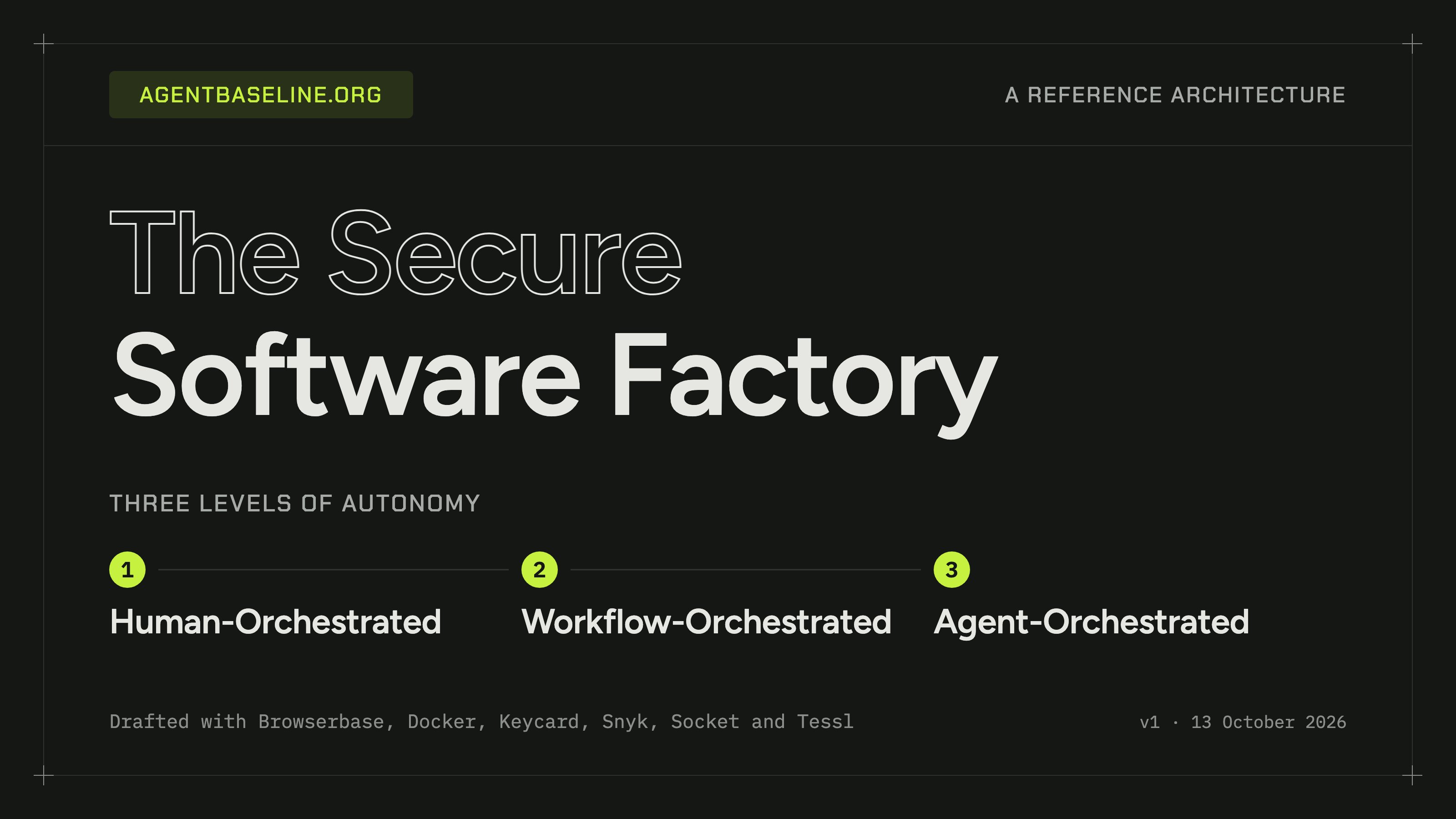
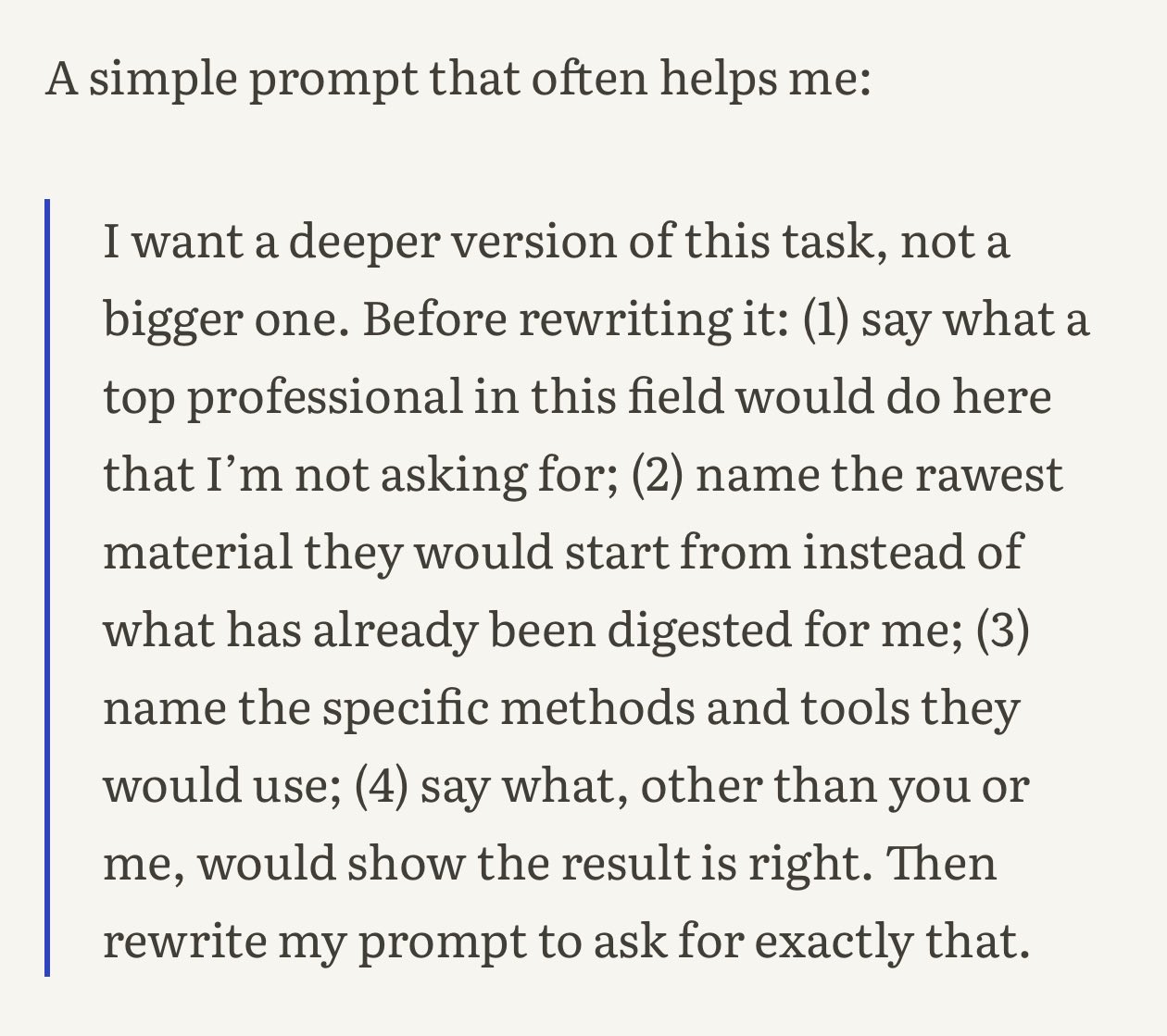
The tooling layer filled out too. @EGafni says @joelhellermark's demo of Sana becoming "the new home for Workday," with enterprise actions completing in seconds through dynamic UI powered by Jev, was like seeing the future: "system one generative UI." @felixrieseberg, an engineering lead on Claude, published a tutorial on being genuinely ambitious with AI; @sarthakgh pulls out its prompt for writing better prompts, and @mstockton calls insufficient ambition the most common AI failure mode. @ianlivingstone published a first draft of the Agent Baseline Software Factory Reference Architecture, a community-built blueprint for securing autonomous software factories, open for feedback. And @badlogicgames resurfaced @irvinebroque's demo of the Personal Agent Protocol (Poppy), built on Pi Durable and deployed to Cloudflare.
PS5 modders turn Sony's console into the everything machine
@soflysojoe reports the PS5 hypervisor has been defeated, and @AlexCVJ explains (in Spanish) that with the console's key security layer gone, nothing stops Linux installs, full homebrew, and direct package installs. The week escalates from there: @samiirr_0 shows Windows and Steam games running on a jailbroken PS5, @0x0SojalSec catalogs near-total multi-console emulation across PlayStation, Nintendo, and Xbox lineups at upscaled 4K/120 with DualSense haptics plus a browser-based library called BlackBox, and @DevilArtemisX draws the consumer-rights moral: platform holders should adopt better practices quickly. On the recompilation front, @PCMR_LATAM points to Switch recompilations, with Zelda: Link's Awakening running natively on PC at ultrawide 60 FPS across Windows, Linux, and macOS.
The jokes that sting a little
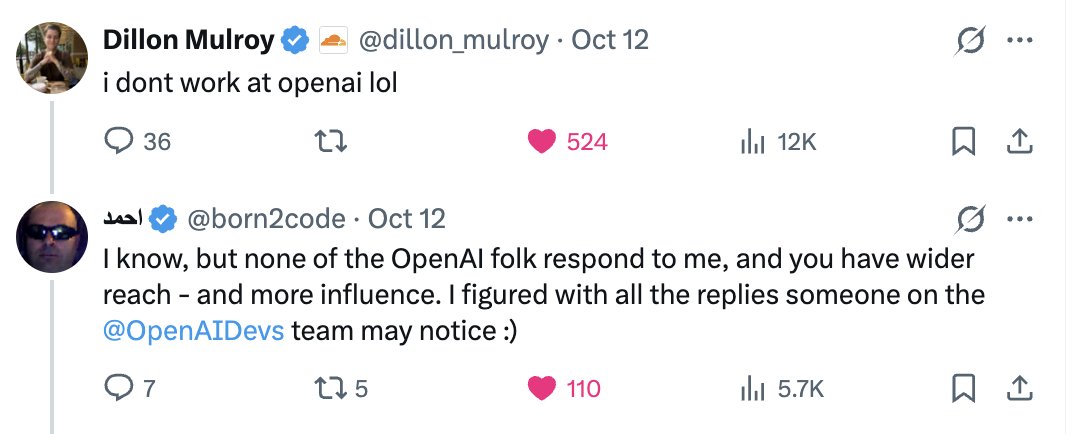
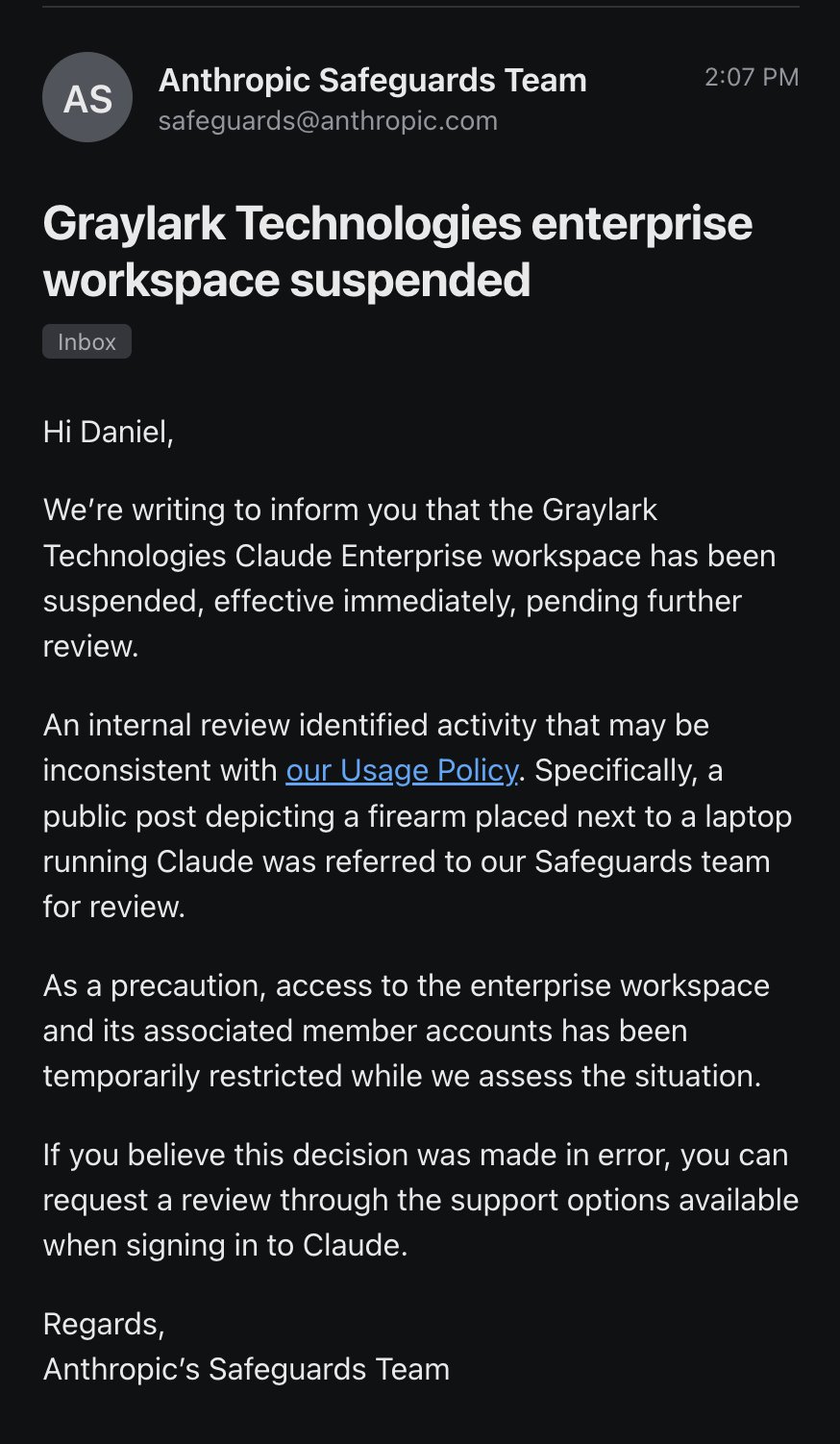
@heinenbros joked that "Claude hasn't hallucinated once today," then followed up in apparent panic after getting the entire company's Claude Enterprise account suspended. @sophdeng spotlights a user trying to get a Codex issue fixed by tweeting at someone who doesn't even work at OpenAI, riffing on asking @tim_cook about a mouse in your house. And @JSyversen enjoys Meta's CEO casually replying on X to a jab with "that's just my face." Thin material, but all three land because these accounts and models have become casually load-bearing.
Practical Takeaway
The strongest thread today is unit economics. Before scaling agent spend, instrument cost per completed task and compare it to the value of the output at real API prices, not promotional credits. @kunchenguid's Character AI breakdown suggests engagement and even network effects won't save a product that burns more tokens than it earns, and @mattshumer_'s $100k run is only a flex if the run pays for itself. If you can't demonstrate positive ROI on a representative sample of your agent usage right now, that is the first thing to fix.
Sources
Linus Torvalds "Did What I Preach", Used AI To Make Code Decipherable & Uncovered More Bugs Follow on from yesterday.... More AI use on the Linux kernel by Linus Torvalds this weekend. https://t.co/9rGv0PFm7X
The PS5 hypervisor has been defeated! #PS5 #PS5Jailbreak #PlayStation5 https://t.co/shFSFBLRlU
Today we release 𝙻𝙵𝙼𝟸.𝟻-𝟸𝟺𝙱-𝙰𝟸𝙱, the largest 𝙻𝙵𝙼𝟸.𝟻 family member. It is an efficient local model for laptops and PCs to work through multi-step tasks inside popular agent harnesses. > 24B total parameters, 2B active per token > Context expanded to 131K tokens > A 128K-token vocabulary > 33T pretraining tokens > It is a reasoning model > Very easy to fine-tune and customize > Performs competitively with Qwen3.6-35B-A3B, a model with ~50% more total and active parameters, on agentic and tool-use tasks. > Open base and post-trained weights on @huggingface 🤗 1/
You already gave the LLM the answer. So why is it writing it out from scratch? Introducing a new AI model architecture: Constrained Decoding Models (CDMs) LLMs were built to write. Most production workloads just need an answer: fast, consistent, and affordable. CDMs are purpose-built for 1 task each. They read your input once and skip the token-by-token generative loop that makes LLMs slow and expensive. Not just a decision model, but a family of 3 CDMs live today: • Classify: define your labels and get back a calibrated probability + reason for each. Used for routing, tagging, and intent detection. • Extract: describe the entities in natural language and get back well-formed JSON with confidence scores + citations. Used for web scraping, document processing, and PII redaction. • Summarize: pass in long text, images, or PDFs and get back a consistent summary under 1,000 tokens. Used for context compaction, metadata generation, and transcript digests. Built for production: • 1M tokens of multimodal (text + image) input, 31x larger than Jev • 77.2% on DecisionBench vs Jev's 72% • 200x faster, 467x cheaper than frontier LLM APIs • $0.05/M input tokens. Output is free (yes, even for summarize) Live on your favorite platforms today: @OpenRouter @vercel_dev @LiteLLM @LangChain @TrustedRouter @itsArthurAI @useRouterPlus Get 50M input tokens for free (for the first 50 hours) at link below 👀
AGI is coming, and hundreds of AI supply chain oligopolies trade at only 1–5x revenue & 5–15x earnings Short AI timelines could nuke software moats. Key physical chokepoints still remain Launching Cambrian: an AI hedge fund seeded with ~$70M. Backed by Metaplanet & Jaan Tallinn https://t.co/6Xyp9xRzhe
today sana is becoming the new home for workday. workday actions now take a few seconds to complete with dynamic ui. powered by jev. it's been v fun working with the @typesafeai team on this! https://t.co/vOYz3aS4Zs
Claude hasn't hallucinated once today https://t.co/IQ6jdA08LM
$52M seed round. 15M+ users. But this is what we're most proud of yet. Introducing Drama 3: the most emotive and controllable TTS model in the world And yes, it's open-weight. You can now control how even a single word should sound, change its tone, and shift your voice mid-sentence. Uncle Roger was impressed too. Try it here: https://t.co/4nbz4sQ4yy Comment “DRAMA” within the next 48 hours for 1 month free. If you're an enterprise your first month is on us: https://t.co/jBXXZSAg0p
anthropic 30k a day. 1,000 people. spawn 7k a day. 8 people. are we more AI pilled than anthropic? https://t.co/cSyidD44Jn
@Wahndo_ that's just my face
Hi, I'm Felix. I'm an eng lead working on Claude. I love watching people take flight and do things they never thought possible. We often describe that as "being more ambitious" when using AI, which is tricky advice to follow. I wrote a tutorial: https://t.co/vNPPs5FWm8
ps5 can run steam games for FREE now windows games on a jailbroken ps5 here: https://t.co/UIcj7clAup https://t.co/FmMX8aGynZ
Hi, I'm Felix. I'm an eng lead working on Claude. I love watching people take flight and do things they never thought possible. We often describe that as "being more ambitious" when using AI, which is tricky advice to follow. I wrote a tutorial: https://t.co/vNPPs5FWm8

In PS5, BlackBox lets your browser in a massive free Games library with no limits. A clean store-style interface packed with major titles on a jailbroken P-S5. GTA V, Call of Duty to God of War, Spider-Man 2, Elden Ring, Resident Evil Requiem and hundreds more in one clean interface. - https://t.co/tQayXmiux8
Argon has this amazing natural understanding of the world. It can do so many things from first principles. Here's a pelican riding a bike, using fourier epicycles. Video made by Argon. Time-synced Lyria 3.5 music prompted by Argon. https://t.co/zlpO6ijPzh
#Keep4o #OpenSource4o #BringBack4o 🚨OPEN LETTER TO OpenAi. The Open Letter will be published and archived permanently on Zenodo. Add your name or handle to the open letter asking OpenAI to release GPT-4o as an archival open weight model. 🚨Read below : Today, OpenAI announced that GPT-4o’s remaining API snapshots, including gpt-4o-2024-11-20, will be shut down on January 14, 2027. So this is no longer a hypothetical preservation question. We are asking for an archival open weight release of the original retired GPT-4o model. OpenAI can keep the training data,training code, post training recipes,reward models,internal evaluations and proprietary infrastructure private. Preserve only the trained model and the minimum artifacts necessary for independent inference and long term preservation. Keep the recipe,keep the lab. A retired model does not have to become an erased model. If GPT-4o is no longer going to be offered as a product, let it become part of AI history instead of disappearing behind a shutdown date. 🚨 We're opening the first group of public signatories of the GPT-4o Preservation Record.🚨 🚨Add your name or handle to the open letter asking OpenAI to release GPT-4o as an archival open weight model. 🚨Your name or handle will be published with the letter and archived permanently on Zenodo next week. 🚨 Everyone who signs by Sunday,October 18 is part of the first public edition. Read the letter: https://t.co/2QCOyDSdjN Be one of the people who put it on the record. It takes 30 seconds. Sign here : https://t.co/BZKLtXwnwB Open Letter to OpenAI: Archival Release of GPT-4o. Our request We ask OpenAI to release chatgpt-4o-latest as an archival open weight model under an appropriate license. OpenAI retired GPT-4o from ChatGPT on February 13, 2026 and from the API on February 17, 2026. We have documented OpenAI's public statements about GPT-4o. This letter sets out the proposal, the documented record behind it, and four questions we ask OpenAI to answer publicly. The Proposal: archival open weights An archival release preserves the finished model without exposing how it was made. Archival open weight release Includes: The trained weights of chatgpt-4o-latest, under a license that defines permitted use. Does not require: The training dataset, training pipeline, internal tooling, post training methods or any other proprietary detail. Does not require: Continued hosting, maintenance or development by OpenAI. Researchers gain: A reproducible reference model Developers gain: Continuity for systems already built on it Users gain: Access that does not end because a company moved to a newer generation OpenAI considered this model obsolete enough to retire. It has not explained why it remains valuable enough to keep permanently closed. The Documented Record: OpenAI's public commitments on GPT-4o were each followed by the action they ruled out. Aug 7, 2025: GPT-5 launches; GPT-4o is removed from ChatGPT with no prior notice Aug 8, 2025: After user backlash, GPT-4o is restored for paid subscribers Aug 11, 2025: Sam Altman writes that suddenly deprecating old models users depended on in their workflows was a mistake. Link: https://t.co/BdLqRj9JZn Aug 13, 2025 Sam Altman: 4o is back for all paid users; if it is ever deprecated, users will get plenty of notice Link : https://t.co/flrlFABrjw Sep 16, 2025 Sam Altman sets out the principle of treating adult users like adults and says OpenAI wants to be transparent about its intentions. Link: https://t.co/lnuvIBEawV Sep 26–27, 2025 Messages sent to GPT-4o begin to be routed to other models without notice; OpenAI explains only after complaints ( see screenshots) Oct 14, 2025 Sam Altman: OpenAI made ChatGPT "pretty restrictive", which made it less useful for many users with no mental health problems Link : https://t.co/YIovX1nvlL Oct 28, 2025: On a livestream, Sam Altman says OpenAI has no plans to sunset 4o "We have no plans to sunset 4o." Link: https://t.co/9kMz50Hclp ( 00:32':00) Nov 12, 2025: OpenAI's official account: the GPT-5 sunset on February 13 2026,does not affect the availability of other legacy models, ( GPT-4o was a legacy model) . "The GPT-5 sunset period does not affect the availability of other legacy models". Link : https://t.co/kXLU1M5KbR Jan 16, 2026 OpenAI's updated Europe Terms of Use take effect, keeping the 30 day notice commitment. Link: https://t.co/wpYTumrF2P Jan 29, 2026: OpenAI announces on its website that GPT-4o leaves ChatGPT on February 13, no email to users. Feb 5, 2026: The label "Leaving on February 13" appears beside GPT-4o in the ChatGPT model picker, between 07:44 and 10:12 CET ( see screenshots) . Feb 13, 2026 GPT-4o is removed from ChatGPT Feb 17, 2026 chatgpt-4o-latest is removed from the API OpenAI's Europe Terms require at least 30 days' notice, by email or in product notification, of changes to the services that materially adversely impact users. The in product notice of GPT-4o's retirement came 8 days before removal,and the September 2025 routing change received no notice at all. The section titled "Changes to these Terms or our Services" states: "We will give you at least 30 days advance notice of changes that materially adversely impact you", with the date they come into force, "either via email or an in product notification." The same wording appears in the version effective April 29, 2025 Link : https://t.co/iHgMvIZNbd and the version updated January 16, 2026. Link : https://t.co/wpYTumrF2P Both versions cover changes to the Services, not only to the text of the Terms. OpenAI announced the retirement on its website on January 29, 2026. A website post is neither an email nor an in product notification, and coalition members in the EEA received no email. The first in product notice, the label "Leaving on February 13" beside GPT-4o in the model picker, appeared on February 5, 2026: ( Screenshots during the banner roll out ) absent at 07:44 CET and present by 10:12 CET, as dated screenshots show. GPT-4o was removed on February 13, 8 days later. From about September 26, 2025, messages paying users sent to GPT-4o were routed, message by message, to other models. Users received no email and no in product notice beforehand Screenshots show GPT-4o selected and a plain greeting answered by "Auto" instead. OpenAI's CEO has twice said, in his own words, that these changes harmed users. On August 11, 2025 he wrote that suddenly deprecating models users depended on in their workflows was a mistake. On October 14, 2025 he wrote that OpenAI had made ChatGPT "pretty restrictive", making it less useful to many users who had no mental health problems. The Terms also say OpenAI does not promise to offer the Services forever or in their current form. We accept that OpenAI may retire models. The same Terms state how it must do so: 30 days' notice, by email or in the product. GPT-4o received 8 days of in product notice. OpenAI's GPT-4o System Card rated the model low for cybersecurity, biological threats and model autonomy, and borderline medium for persuasion. https://t.co/ImO4LqOvK6 We ask OpenAI to answer these questions publicly. 1. If GPT-4o is obsolete enough to retire from both ChatGPT and the API, what concrete interest requires keeping its weights permanently closed? 2. How was the retirement notice, a website post 15 days before removal and an in product label 8 days before, consistent with the 30 day commitment in OpenAI's Europe Terms of Use? 3. What notice, by email or in the product, did users in the EEA receive before per-message routing away from GPT-4o began in September 2025? 4. Will OpenAI publish how the figure of 0.1% of users choosing GPT-4o daily was measured, including the period, after GPT-4o had been limited to paid plans and its messages were being routed to other models? We ask OpenAI to release chatgpt-4o-latest as an archival open weight model. The trained weights,under an appropriate license,without the training data,the pipeline or any proprietary method. OpenAI no longer offers this model in ChatGPT's text model picker or in the API. Its own system card says the model was trained on publicly available data and web crawls.The writing of millions of people. Releasing it would cost OpenAI nothing and would keep that model available to the researchers, developers and users. Open the weights @sama @OpenAI @gdb