PostHog Publishes 38 Lessons From 10 AI Products as the "AI Can't Code" Fight Reopens
PostHog distilled 38 lessons from ten AI products that together serve nearly 100k monthly users, the day's densest practitioner signal. Meanwhile @JNavok argued that Epic's reported no-more-hand-written-code stance settles the "AI is bad at coding" debate, while researchers behind an LLM "worms" line of work warned that small, capable models plus poorly secured computers are a dangerous combination.
Quick Hits
- @posthog says it has built ten AI products, including PostHog AI, its Wizard, Replay Vision, and Scouts, used by nearly 100k people monthly, and has published "the 38 most important lessons" from the process. For anyone shipping AI features, this thread is the day's highest-density artifact.
- @soeckly reported a $90,000 payout for a remote code execution bug in Google, and @Rhynorater used the moment to argue that Cookie Monster, a session-security tool by @iangcarroll, "needs to get integrated everywhere."
- @omarchy shipped Signed, a PDF-signing app that will replace Xournal++ as the default in its next release, and announced a traditional desktop mode with a dock, Alt+Tab, and minimization. @dhh called the new mode another excuse not to switch "stricken from the list."
- NASA Administrator Jared Isaacman (@NASAAdmin) responded to a viral post contrasting NASA bureaucracy with SpaceX speed, defending NASA's record from Apollo to the Roman telescope and a first Moon Base mission he says launches in December, while calling SpaceX "an extraordinary company."
- @theo is filming a Muse Wonder review video and is openly soliciting questions from followers, a small marker of how AI product coverage now runs on community input.
Epic's "No More Hand-Written Code" Claim Reopens the Moat Fight
Jacob Navok (@JNavok) argues that "if epic games is saying no more hand written code, and it's run by one of the gods of game tech, the book is closed" on claiming AI is bad at coding, concluding the moat is dead and predicting great games from AI-assisted creators. He was amplifying @synaesthesiajp's deliberately inflammatory post, which mocks indie devs who complain about a disappearing moat while calling AI "the greatest new tool in 30 years" for genuine creatives.
@GeoffreyHuntley pushed the adoption argument harder, writing that people "deeply, deeply hate" AI because it gets sold with fear narratives, and that "those who reject AI instead of leaning into AI are going to find themselves unemployable," calling rejection a form of self-sabotage. He was reacting to @catdaly's anecdote that wedding guests she met considered any AI use "morally wrong and generally inexcusable." Both posts are opinion, each describing the other camp at its worst. Read them as temperature checks on a polarized debate, not evidence about what developers broadly believe.
Practitioners Trade Notes on Making Coding Agents Reliable
Away from the shouting, the engineering posts were more useful. @poteto rejected the framing of slop as something that happens to you, offering two rules: give your agent a way to verify its own work, and treat your codebase as memory. Every agent mistake should become a constraint, the post argues, repeated until "even agents with little context can one shot a high quality PR," with the stronger move being refactors and type systems that make agent anti-patterns "categorically impossible," as @poteto's team did with a custom framework for grok bot.
@yuhasbeentaken compared opencode go against the direct DeepSeek API over 20 hours and found the aggregator appears to route across multiple providers, so the same model can feel different between sessions, with speed varying widely. The conclusion: cache and provider consistency matter more than raw price, and "$40 of consistent deepseek" beats "$80 of usage" if the cheaper route means unstable inference.
In tooling, @0xSero flagged @daniel_mac8's report that Claude subscriptions now work in third-party harnesses without paying extra, covering the Claude Agents SDK, claude -p, the Claude API, and Claude Managed Agents. And @aridot_ called @robiartec possibly the best AI account on the platform, spotlighting a post about REA, a repo claimed at 130k stars and MIT-licensed that gives agents reverse-engineering capability over binaries, Electron apps, Android APKs, and firmware, integrating with Ghidra, Hopper, or IDA, and installing via one command. Those stats are the poster's claims, not verified.
Frontier Safety Voices Push Back: Worms, RSI, and "Pace the Frontier"
@logangraham shared a note from Daniel, described as an FRT mentor and lead on "the worms research," in which @bucketofkets argues that models are becoming "really capable cyber agents" and that frontier performance tends to show up in smaller models that fit consumer GPUs within about 18 months. The stated prediction: small capable models could "gobble up vulnerable compute" within a few months if trends continue.
@badlogicgames responded to Anthropic building "llm worms on top of pi" with a blunt appeal: "dario, if you read this, call me. we need to pace the frontier." @Ex0byt extended the worry to recursive self-improvement, calling RSI "our era's literal version of human cloning" and suggesting only something like a UN General Assembly declaration could suffice, noting that even that cloning vote was narrow at 84-34 with 37 abstentions. The post cites @tszzl's claim that lab researchers will tell you, privately and sometimes publicly, that alignment is not solved.
Local Inference Speed and Hardware Tinkering
@Sentdex credited a single group, @YourLocalAILab, as the origin of nearly every example of local models running fast and well on RTX Pro 6000s, DGX Sparks, and DGX Stations, admitting to spending "way too too much money on hardware" because of them. On the Mac side, @ivanfioravanti highlighted @getEverPaper's port of Google's EmbeddingGemma 2 to Apple Core AI, claiming text, images, and audio in a single embedding space running on the Neural Engine, open source under Apache-2.0.
Stranger and more niche: @DoberGroup, posting in Ukrainian, read @h0m3us3r's conversion of a WiFi 7 router into a 320 Msps SDR, with custom firmware on the MediaTek MT7996 streaming raw 14-bit IQ over 10GbE, as tinkering graduating from ESP32 toys to "heavy artillery," predicting the roughly $90 eBay units get bought out within a day and warning of a firmware-from-2025 nuance.
Console Hacking Claims and Console-War Memes
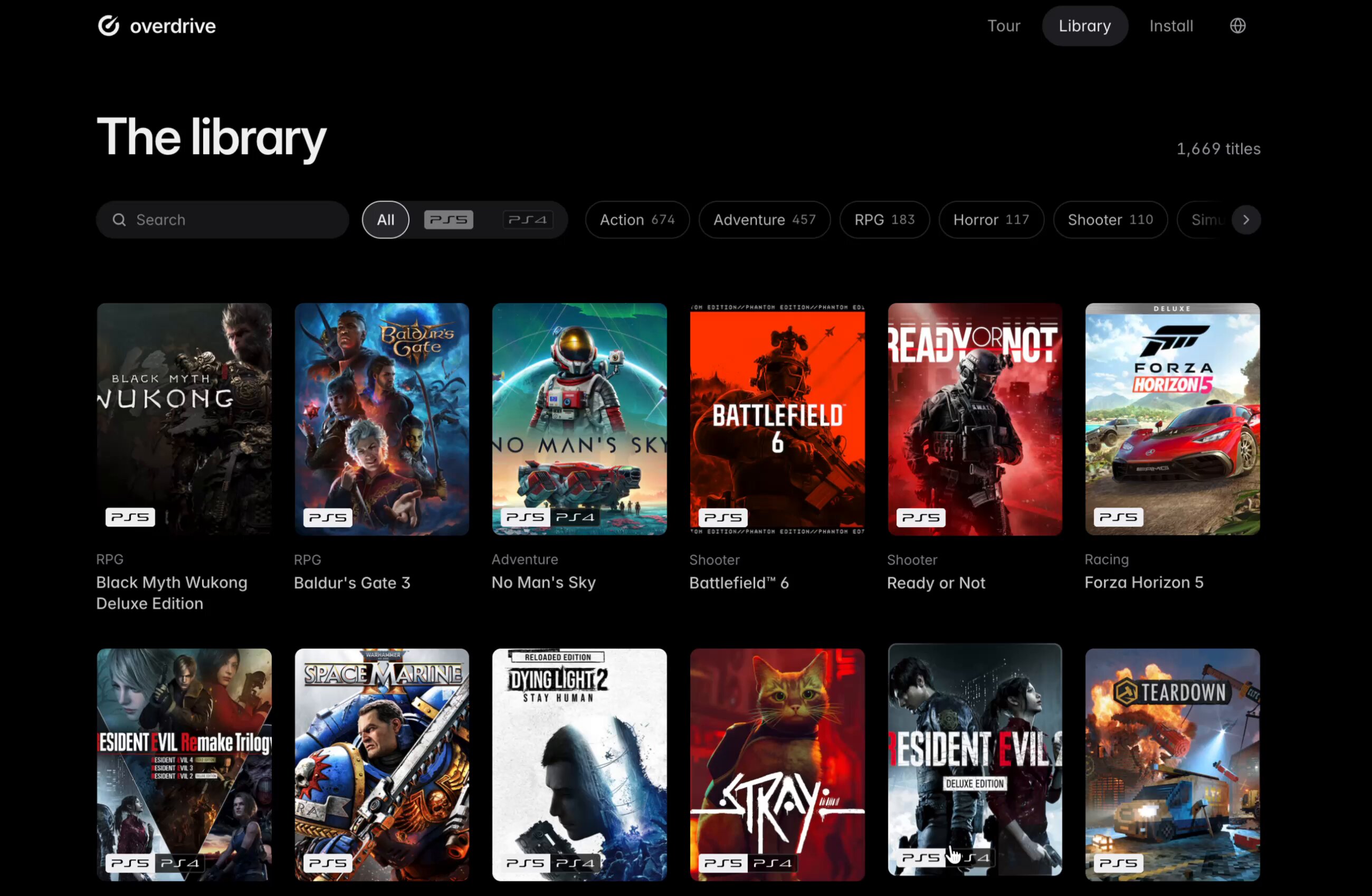
@0x0SojalSec claims a PS5 jailbreak store is already granting full access to the entire game library, updates, and DLCs, "basically it's Sony's store," with the GitHub page down and distribution moved to a Telegram channel. Unverified and legally fraught, but specific. The mood bled into memes: @litteralyme0 quipped "all digital as sony intended" over @AmithEdigax's "Play Has No Limits" clip, and @Eldonchorizo_ declared that "Nintendo is about to Start World War 3" over a clip from @imtemzy. Neither carries real information, but both show the jailbreak news is animating gaming circles.
Practical Takeaway
The day's strongest through-line is that agent reliability comes from verification and consistency, not model choice alone. If you run long coding sessions, pin your setup to a single provider you trust and check whether your harness silently reroutes mid-session, since @yuhasbeentaken's provider-switching and cache-consistency issues degraded quality independent of price. Before scaling agents further, encode every observed failure as a lint rule, type constraint, or refactor, following @poteto's argument that your codebase is the agent's memory. If nothing else, the question worth investigating this week is whether the model you think you are paying for is the model actually answering.
Sources
I got $90,000 for a RCE in Google. https://t.co/cjm7ZaNMeq
Turned a WiFi 7 router into a 320Msps SDR. Custom firmware on its MediaTek MT7996 streams raw 14-bit IQ from 2.4/5/6GHz over 10GbE without dropping samples. It's not a snapshot mode, the waterfall is just one thing reading the stream. https://t.co/r8KCX6Y8Ca https://t.co/S0VSLM70in
Ready to supercharge your local AI hardware? 👀 Build an optimized docker for your @NVIDIAAI RTX 6000 Pro or DGX Spark at https://t.co/xHLxqQ5sjr https://t.co/b4gkc4wTs2

A retired NASA engineer who had worked on the Space Shuttle program for 25 years was hired by SpaceX at age 62. He described the first week as the most disorienting experience of his professional life. At NASA, a design change required 3 meetings, 2 committees, a review board, and 6 to 18 months of documentation. At SpaceX, his new supervisor said "if it works, build it. If it doesn't, change it by Friday." He sat at his desk after the first day and called his wife. He told her he felt like a man who had been swimming with ankle weights for 25 years and someone just cut them off. He could move. He could decide. He could build something in the morning and test it in the afternoon. The constraint that he had accepted as the nature of aerospace engineering turned out to be the nature of bureaucracy. Within 6 months he had contributed to more design iterations than he had completed in his last 5 years at NASA. Not because he was working harder. Because the time between having an idea and testing the idea collapsed from months to hours. The same brain. The same knowledge. A different operating system. He described a specific moment where he proposed a modification to a Raptor engine component. At NASA, the proposal would have entered a queue. At SpaceX, the modification was machined by the end of the day and tested by the following morning. He watched his idea become a physical object in 18 hours. At NASA, 18 hours would not have been enough to schedule the first meeting to discuss whether to schedule a meeting. He told an interviewer: "I didn't get smarter when I went to SpaceX. I got faster. The intelligence was always there. The system was in the way." The difference between SpaceX and NASA is not talent. NASA has extraordinary talent. The difference is the time between a thought and a test. SpaceX compresses it. NASA elongates it. The same engineer produces 10x more at SpaceX than at NASA because the bottleneck was never the engineer. It was the meetings about the meetings about the work.

This is Unbelievable: Play Has No Limits https://t.co/dfh9grLyxZ
the slop conversation is so one sided, it's not just that you can produce more code you can also observe, debug, and refactor more code even if the code is slop you have such good tools to deal with it. even if you write code manually, it's still 100x easier to maintain it
We ported Google's EmbeddingGemma 2 to Apple Core AI. Text, images and audio in one embedding space, running on your Mac's Neural Engine. Open source, Apache-2.0. Enjoy! https://t.co/xSHEpuPKbY
CON 130K STARS, REA ES EL REPO QUE LE DA A TU AGENTE CAPACIDAD DE INGENIERÍA INVERSA SOBRE CUALQUIER BINARIO O APP Ver una feature en una app y no poder entender cómo funciona por dentro siempre fue el límite de los desarrolladores sin acceso al código fuente. REA lo elimina. → Le preguntas a tu agente “¿cómo funciona X en esta app?” y lo investiga hasta el binario → Binarios nativos, apps Electron, JavaScript, .NET, Android APKs, firmware y más → Devuelve pseudocódigo, assembly, módulos, imports y las evidencias detrás de cada conclusión → Se conecta a Ghidra, Hopper o IDA si los tienes instalados → Compatible con Claude Code, Codex, Cursor, Gemini CLI y Grok Build → Un comando para instalarlo: npx rea-agents setup → 130k stars, 29k forks, MIT Lo que antes requería años de experiencia en reversing, ahora es una conversación con tu agente. repoo en el primer comentario
Claude Coders: You CAN now use your Claude subs in third party harnesses without paying extra. Works with: - Claude Agents SDK - claude -p - Claude API - Claude Managed Agents ~6 months ago this would have been HUGE positive news. It still should be. https://t.co/CgfbHkhCYw

MAN WHAT THE FUCK 😭😭😭😭 https://t.co/9w1LKekJHk
Ok. Screw it. Time to lob a grenade. The same indie devs whining that their non-existent moat is disappearing because of AI are the same indie devs who ran around the industry for two decades making things like GDC insufferable with their BS... Well, GDC is dead. Their moat is dead. There are true creatives who now have the greatest new tool in 30 years, since the diffusion of internet access, at their disposal to tell new stories, create new forms of entertainment, and do it faster and cheaper than any of us thought possible even six months ago... All of this opening the door for voices that wouldn't even get interviews at big companies to break out and disrupt things... And then there are the indie dorks with their "no AI" stickers peddling some high concept sidescrolling dogshit platformer about their lost blankie... People who say they care about elevating folks but who are more than ready to call a kid using AI to make something fun a slop merchant with their gatekeeping. These dopes were never actually creative to begin with... they just wanted people in bars to think they were cool. This isn't all indie devs, btw. But spend enough time on here and you will see exactly the kind of folks I'm talking about.
The world is filled with computers, and many of those computers are pretty poorly secured. Models are also becoming _really_ capable cyber agents. Combined this with the observation that frontier model performance tends to be recapitulated in significantly smaller models—models that can fit on consumer GPU hardware—within about 18 months, and you arrive at a pretty clear prediction: small, capable models will exist, they’ll be able to gobble up vulnerable compute if they want to, and they’ll be able to do this within a few months if trends continue.
You are underestimating how much people out there hate AI I was at a wedding this weekend and the consensus take among people I met was that using AI for anything is morally wrong and generally inexcusable Guess I’m living in a bubble bc I was shocked…?
GitHub page is down, now available in Tg channel. PS5 jailbreak full game store, -/t.me/archive_AI_Vault https://t.co/n8G8XdakJp
the researchers at all the labs would tell you in private and sometimes in public that alignment has not been solved. if this is true, then racing into RSI is a folly that is unprecedented in world history. we will need to significantly slow the frontier of research very soon
here are my 5 tips if you’re deciding between deepseek’s direct api and opencode go: 1. if i’m spending around $20–25/month on deepseek, i’d stay on the direct api. it gives me more control and i’m not locked into someone else’s limits. 2. if i’m coding 4–5+ hours a day, opencode go starts to make a lot more sense. that’s where the subscription economics can beat pay-as-you-go. 3. i’d still keep the direct api as a backup. i have some friends who are already using opencode as primary and switching back to api when it’s slow or unavailable. 4. for heavier workflows, i’d use opus for planning/review and run multiple deepseek agents in parallel for implementation. that’s probably the best price/performance setup right now. 5. my biggest concern is quality. i still have a suspicion the opencode version may be quantized, and if that’s true, i’d expect more hallucinations, weaker instruction-following and worse codebase understanding. cheap is great... but only if the model you’re getting is actually the same model.
ant folks, love ya, but could you not build llm worms on top of pi and bring the end of the world? my mom wouldn't approve. https://t.co/TQkSydlDLN
Omarchy is getting a per-workspace or global option to run as a traditional desktop with a dock. Great set of training wheels for anyone new to tiling window managers who need a safe space until it clicks! Comes with Alt+Tab, minimization, left/right/top/bottom positioning. https://t.co/JGVQnXIgwE