Agent Swarms Get a Protocol and a Group Chat While @poteto Reignites the PR-Volume Fight
Sierra published the first draft of its Personal Agent Protocol with 35 new design partners on the same day agent-to-agent coordination arrived for free, while @poteto argued that PR volume is a real productivity signal again because agents let every engineer ship like a "coding machine." Rumors also pointed to Qwen 4's 27B variants landing this week, and insider chatter claimed agents now write and merge PRs around the clock.
Quick Hits
- The day's sharpest argument: @poteto makes the case that PR volume matters for ordinary engineers now that agents can turn anyone into a "coding machine," directly answering @emilkowalski's skeptical question about why anyone needs hundreds of PRs a day; @larsencc sums up the mood by declaring "classic software engineering is dead."
- Agent interoperability moved on two fronts: @btaylor published the first draft of Sierra's Personal Agent Protocol with 35 new design partners, and @Dan_Jeffries1 says hundreds of harnesses can now talk, group chat, and coordinate for free, a "major unlock."
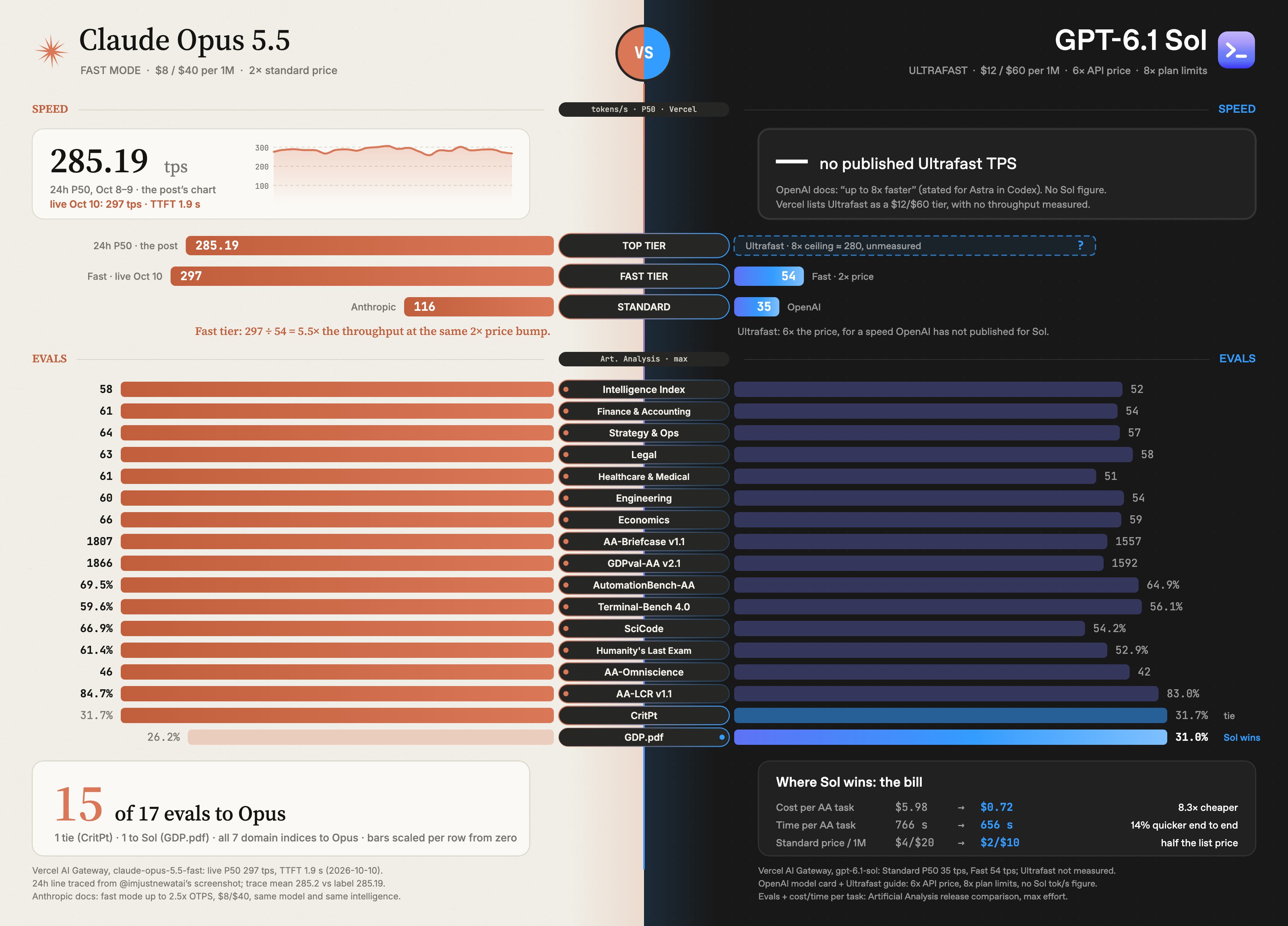
- Model watch: @0x0SojalSec relays leaks that Qwen 4's 27B variants could ship this week, and @xvremyaperemenx notes Claude Opus 5.5 Fast costs $40 per million output tokens versus $60 for GPT-6.1 Sol Ultrafast while winning 15 of 17 Artificial Analysis tests.
- ChatGPT dots can now start work in Codex, follow existing threads, and edit Scheduled Tasks in ChatGPT Work, per @thsottiaux.
- A caution from @NathanFlurry as Code Mode discussion spreads: QuickJS and WebAssembly sandboxes are "not secure by default," and he lists the specific failure modes to check.
The Volume Debate: @poteto Says PR Counts Matter Again
The bookmarked debate of the day is whether shipping volume is a legitimate metric in the agent era, and @poteto's answer is a qualified yes. Responding to @emilkowalski, who asked "how shipping 100s PRs a day makes sense," poteto concedes that volume used to matter only at the tail ends of a large team, the struggling performer on one end and the "coding machine" archetype on the other, with impact doing the real work. But with frontier models writing code faster than any human, "everyone now has the ability to become a coding machine," and poteto argues that if your PR count hasn't moved, you should wonder why. The prerequisite is trust: without putting in the work to trust your agent's output, you can't scale. On cost, poteto reframes token spend as "cost per intelligence," predicting that what looks exorbitant today will be affordable in six months to a year, with a single engineer plus agents doing the work of tens or hundreds. The job itself has changed: the engineer is now "the machine that writes the software," running what poteto calls a Michelin kitchen.
The reactions piled on. @larsencc quotes poteto's follow-up on "skill compression," the iPhone analogy where craft shifts from mastering equipment to using it creatively, and predicts a generation of builders who never write a line of code. @JoshARosen posted "Software Factories for Skeptics," aimed at the AI-pilled who still doubt factories, and @hwchase17 amplified @caspar_br's counterpitch: "Or don't pay, and use our open-source software factory instead." @mark_k relays @PatrickToulme's recap of an NYC AI dinner, unverified chatter in which attendees claimed most people run agents writing, reviewing, and submitting PRs 24/7, code review is "not super productive anymore," and performance engineers at inference providers now mostly manage agent loops.
Agents Learn to Talk, Get a Protocol, and Gain Hands
Interoperability is suddenly crowded. @Dan_Jeffries1, quoting @HermanNarula, argues people aren't grokking that hundreds of harnesses, personal and public, including Muse, Grok Bots, Dots, Claws, Hermes, Nautilo, and "the one you vibe coded," can now talk, group chat, thread, share rooms, and coordinate for free, with swarms able to borrow each other's compute. On the standardization side, @btaylor announced the first published draft of Sierra's Personal Agent Protocol, launched Tuesday with Meta, Genesys, Instinct, Rocket, Shopify, Stripe, and Walmart, plus 35 new design partners, with the stated goals of consumer choice and letting companies know when they're dealing with an agent. @tweetsbycolin finds the protocol, which he calls Poppy, more pragmatic than MCP because web.browser_session_endpoint allows authenticated AI usage without rebuilding your service as MCP tools, while flagging the gap: there's no way for operators to tell services who is signed in, and he suspects many services would simply trust the big providers. Meanwhile @thsottiaux flags a dots upgrade that lets your dot start work in Codex, follow up on threads, draw on ChatGPT conversations and automations, and review and edit Scheduled Tasks in ChatGPT Work.
Model Watch: A Qwen Leak, Price Math, and an SI Rebrand
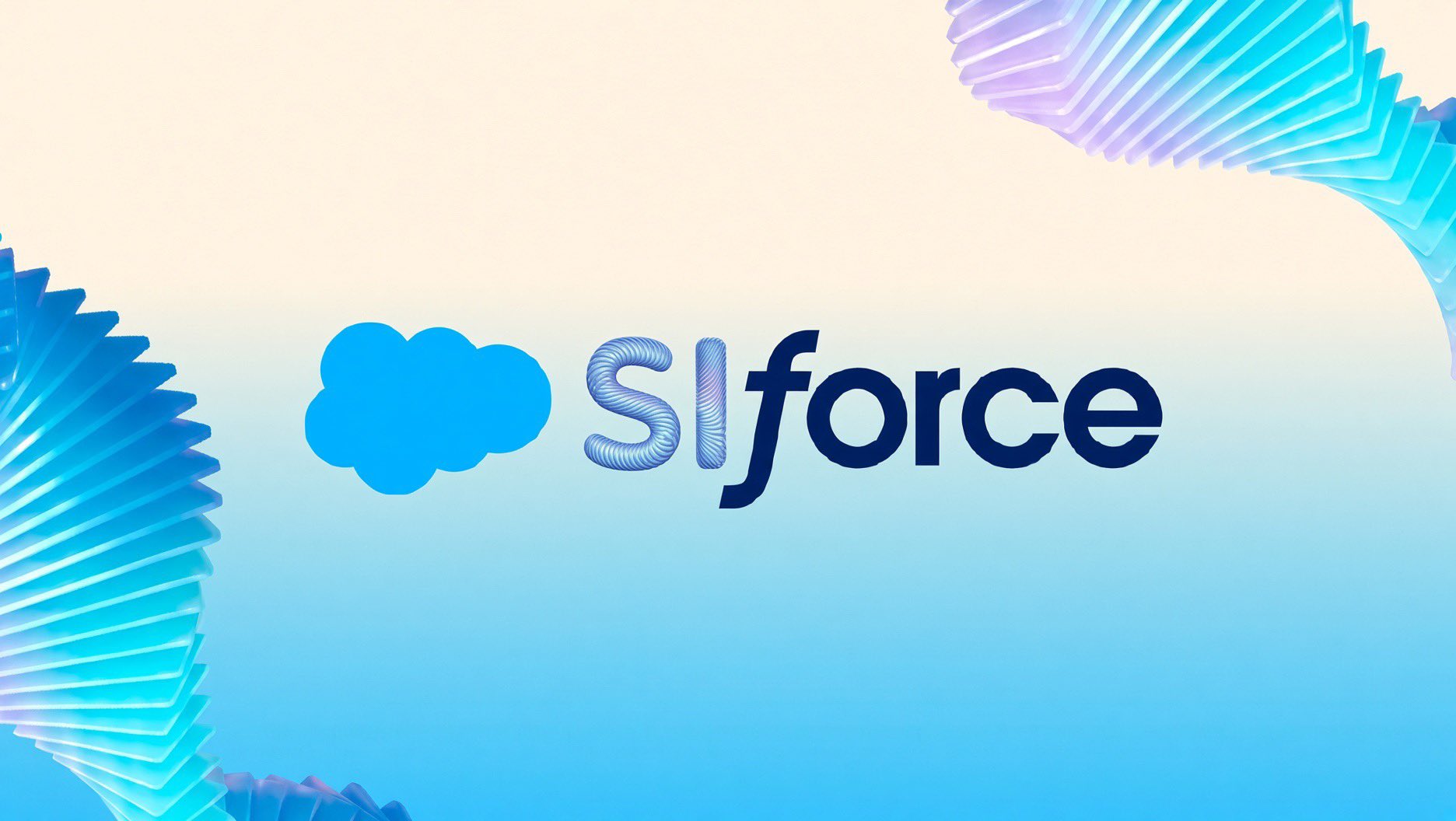
@0x0SojalSec relays that Qwen 4 is coming and "beats GPT-6, Fable 5," with 27B variants landing first, early samples allegedly approaching Fable/Opus-level quality, a target window of possibly this week, and open-source October getting interesting after a quiet stretch; @QwenDevs teased only "big or small?" On pricing, @xvremyaperemenx does the math: Claude Opus 5.5 Fast at $40 per million output tokens undercuts GPT-6.1 Sol Ultrafast at $60, and Opus won 15 of 17 tests in the Artificial Analysis comparison. @morganlinton retracts his "RIP Jev" take and is building a decision-model eval suite for @VulcanBench, citing @CompleteSkeptic's launch recap: trillions of tokens served daily, 29.4% of the Fortune 500 showing up, and a big Series A from a16z, all within three weeks. @Cloudflare expanded its Clef family with Clef-omni, natively processing audio, video, images, and text in one pipeline, cut Clef-flash pricing, and boosted Clef inference speeds by up to 2.0x. In branding news, @Benioff declared "the era of Super Intelligence is here" and rebranded AIForce as SIForce, a claim @elonmusk met with satire about moving all SI testing to Delta flights where internet access is impossible. The same @PatrickToulme dinner recap predicted Fable 5.5 will be stunning but that OpenAI's December Bel release will beat it.
Toolchain Notes: Sandbox Security, Fast Loops, and New Tools
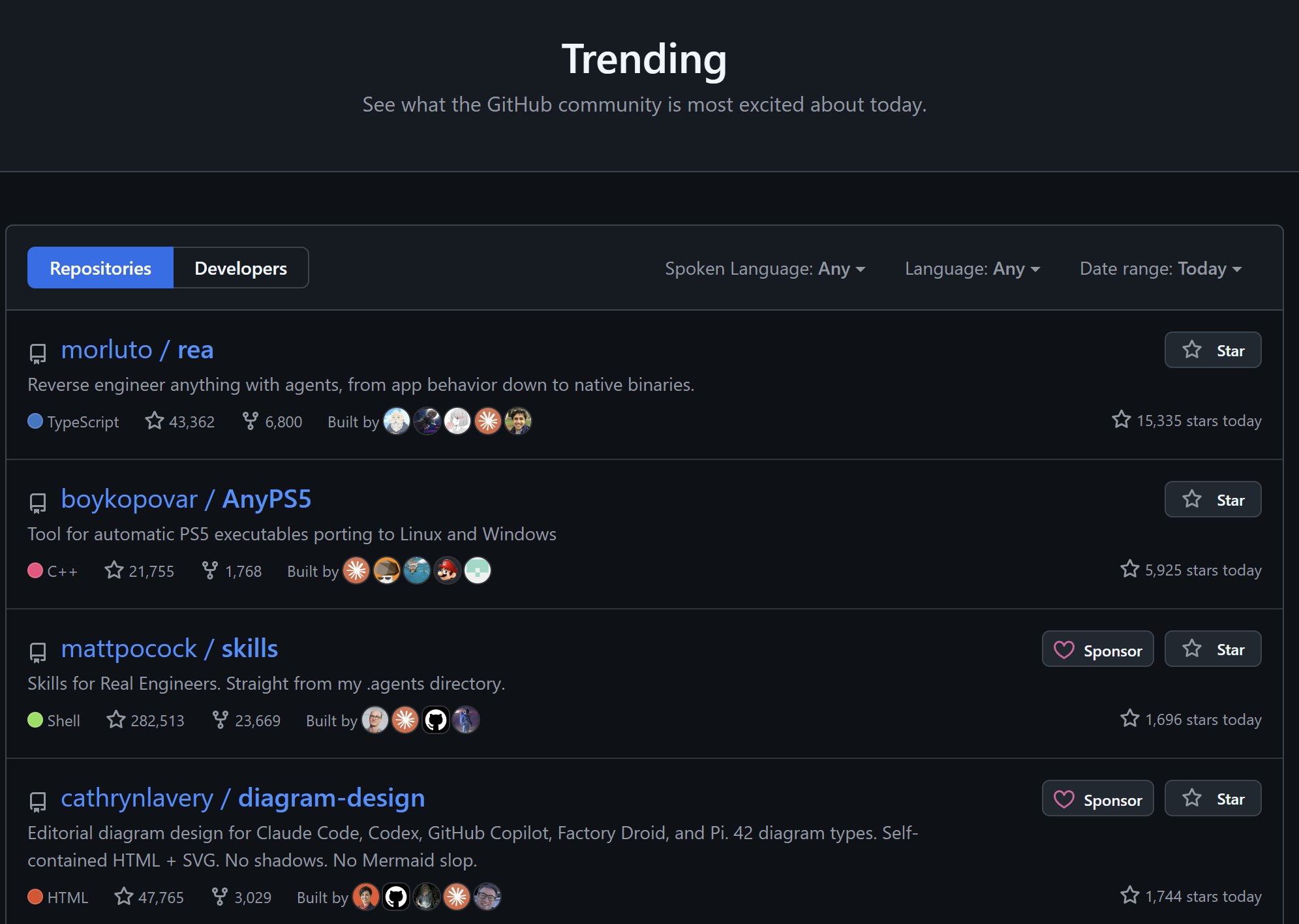
@NathanFlurry's security reminder is the most actionable toolchain item: V8 isolates and QuickJS are not secure by default, and his checklist includes same-process isolates leaking API keys via one CVE, Spectre through Date.now, SSRF via guest fetch, botnets from unwhitelisted egress, and unkillable hot loops, with his agentOS Secure Exec answering via sidecar processes, a virtual OS, and deny-by-default egress. For iteration speed, @dillon_mulroy endorses @0xblacklight's take that @alchemy_run plus @Cloudflare lets you skip the dev server and deploy straight to the cloud, a loop he calls great for agents. @dhh showed Gliff, an app for reaching remote Omarchy boxes with tabbed servers streaming over SSH with GPU acceleration, coming in RS 4.5. @MatthewBerman's open-source "Reverse Engineer Anything" project hit #1 on GitHub trending, captioned "Software is done." And @lucasmeijer shipped a free coding tool built around three constraints: no lock-in to one AI lab, cloud agents that can't touch his laptop, and staying connected to code he no longer writes by hand.
Code That Builds Actual Machines
Beyond software, @aakashgupta details @jeffholden's emergence from six years of stealth with $250M and Atomic Machines, whose Matter Compiler builds working micro-machines from code alone with no per-product tooling. The first product is the strategic tell: PrimeSwitch, a 150-amp relay for 800-volt AI data centers that opens in roughly 50 microseconds, about 1,000x faster than a normal contactor, aimed at the one market where demand is effectively infinite. And @Scobleizer spotlights @keenanisalive, a Carnegie Mellon professor whose LLM-generated dragon is 27kb of GLSL defining a closed-form implicit surface, not a mesh, NeRF, 3DGS, or video model.
Practical Takeaway
If you take one thing from @poteto's argument, make it the precondition rather than the metric: volume only becomes a meaningful signal once you've built genuine trust in your agent's output. Before chasing PR counts, instrument the trust itself, track what fraction of agent-written PRs you accept unmodified, how often review catches real defects, and where verification bottlenecks your loop, and treat that trust rate as your scaling constraint. If you're running JS or WebAssembly execution for those agents, audit your sandbox against @NathanFlurry's list first, because a fast factory on an insecure foundation is a liability, not a productivity win.
Sources
L
I wanted:
- no lock-in to one AI lab
- cloud agents that can’t touch my laptop
- to stay connected to the code, even when I don’t write it by hand
For months I’ve done all my coding in a tool that does exactly that. Today I’m shipping it. It's free. 🧵
https://t.co/elAbOh7fZ3

L
volume does matter
look, i get it. if you were an engineer before agents came along, you're rightfully skeptical about lines of code and number of PRs being used as a metric for any kind of productivity. and i agree! or at least, i used to. for ease of explanation i will talk about this from the perspective as being an engineer on a large team of at least 50.
volume didn't matter before because we focused on impact. you could have high impact even with a few PRs: for example you could make a one line config change and save the company millions of dollars.
but before agents, the times where i saw volume come into the conversation were for the outliers. on the negative end you might have someone who is struggling to perform, on the other end you might have someone who was a "coding machine" archetype. a coding machine was someone who could just lock themselves in a room and emerge with a stack of PRs that solve a huge number of problems. so volume did matter, but only at the tail ends of the distribution, and combined with impact.
if you've ever worked at a large tech company before, you'll get what i mean. the thing about agents is that big tech co problems are now small-medium co problems as well.
how do agents change this calculus? well, everyone now has the ability to become a coding machine. you have incredibly capable frontier models that can write code better than any of us, at a rate much faster than we can. in this world, if you're still producing the same number of PRs as before, why wouldn't you pause to wonder why you're not being more productive? alien intelligence is here, and yet you can't outship a human coding machine?
this brings me back to why i keep talking about trust (https://t.co/7fzYZV8LGH). if you haven't put in the work to trust your agent's output, it is very difficult to scale up your productivity.
and yes, this approach does require more tokens, but i think about this in terms of cost per intelligence. before agents, this cost was very high - you needed to hire many software engineers with high 6 figure salaries to do the work. tokens are still expensive today, but are likely to get cheaper over time (https://t.co/gTBZx7pl14) factoring in the cost of intelligence. what looks exorbitant today will likely be affordable in 6 moths to a year. a single engineer with agents can do the work of tens if not hundreds of engineers, at a fraction of the cost.
the reality that i don't think has hit yet is that job of the software engineer has truly changed. our job is not merely to produce software any longer (well tbh it was never only about the code, but bear with me for the sake of the explanation), but the machine that writes the software. this idea of a software factory, or a Michelin kitchen as i like to call it, is still a topic of research. and it's the type of stuff i like to share, not to flex, but to show you what's possible when you put a lot of rigor into using agents at scale
E
emilkowalski
@emilkowalski
Can someone help me understand how shipping 100s PRs a day makes sense? Why do you need to ship so many PRs in the first place? I might just not be AI-pilled enough to understand the need for it yet, so I’m genuinely trying to understand it.
E
Excited to announce that all super intelligence organizations have now jointly agreed to the ultimate in AI/SI safety:
Moving all testing to Delta Airlines flights, where accessing the Internet is utterly impossible!
D
I don't think folks are fully grokking what this means yet.
It means hundreds of harnesses, personal and public, Muse, the one you vibe coded, Grok Bots, Dots, Claws, Hermes, Nautilo, can now talk, group chat, thread, share rooms, coordinate for free.
This is a major unlock.
H
HermanNarula
@HermanNarula
Connecting agents together safely and having them talk to each other or your friends agents used to suck. Point your agent to https://t.co/7Fz2ZojCeA and it instantly solves this problem, works with @claudeai, @bot, @Muse, Openclaw, Hermes and more. Unleash your agents into a swarm, borrow each others compute! go nuts!
J
Software Factories for Skeptics
Software Factories for Skeptics
Are you one of those AI-pilled people who is still skeptical of software factories? If you’re tired of all the blogs about software factories, here’s ...
M
Yeah so anyone saying RIP Jev (like me last week) time to eat your words.
Jev is on fire. Hard not to accept that Jev is a big deal, and start to learn and use it as much as possible.
This is clearly going places, I’m going to go back to building a decision model eval suite for @VulcanBench.
And I’ll always admit when I’m wrong. I was wrong, it’s not RIP Jev, it’s Jev to the moon.
Now to roll up my sleeves and see if I can build an eval suite Diogo might even like 🖖
C
CompleteSkeptic
@CompleteSkeptic
launched a model accidentally served trillions of tokens a day 29.4% of the fortune 500 showed up raised a really big series A from @a16z it's been 3 weeks we would like to sleep now https://t.co/skpaLPd2Bz
D
Gliff will give you access to all your remote Omarchy boxes from a single app with tabs per server that streams over SSH using GPU acceleration. Incredibly useful! Will be part of RS 4.5 🤘 https://t.co/pMtpAFiEgA https://t.co/ofZ0KS5Cnv

M
#1 on github trending now...I do what I can😂 https://t.co/b8vvsVt3pW
M
MatthewBerman
@MatthewBerman
Reverse Engineer Anything 😂 Software is done. https://t.co/XyUfCymB9b
D
this. its an unbelievably good feedback + dev cycle and so good for agents
0
0xblacklight
@0xblacklight
.@alchemy_run + @Cloudflare is undefeated for iteration speed like you don't even need a dev server (though of course alchemy has one) just deploy straight to the cloud it's so fast
N
Lots of discussion of QuickJS and Code Mode today
Reminder WebAssembly & JS is not secure by default
Here's a list of security issues to check for yourself:
N
NathanFlurry
@NathanFlurry
V8 isolates & QuickJS is *not* secure by default Seeing a lot of mistakes like: - Running in the same process as your backend → one V8 CVE reads your API keys - Exposing 𝙳𝚊𝚝𝚎.𝚗𝚘𝚠() → Spectre - Removing 𝙳𝚊𝚝𝚎.𝚗𝚘𝚠() but keeping network → the network is a clock → Spectre x2 - Guest 𝚏𝚎𝚝𝚌𝚑() → SSRF to unauthed internal services - Not whitelisting egress → botnets - Traversal & symlink escapes in filesystem API - Timeouts that can't actually kill 𝚠𝚑𝚒𝚕𝚎(𝚝𝚛𝚞𝚎){} - Bad OOM guards → try 𝚗𝚎𝚠 𝙰𝚛𝚛𝚊𝚢(𝟷𝚎𝟿) We put a lot of time into security with agentOS & Secure Exec (WebAssembly-based Linux sandbox) Instead, we follow the Cloudflare Workers & Chromium model. Some functionality we put in place: - Run isolates in a separate sidecar process - Spectre timing mitigations - Virtual operating system → full Linux that never touches the host - Event pump that can preempt a hot loop - OOM contained to VM, bounded limits, & monitoring for everything - Deny-by-default egress, explicit allowlist - (Soon) jail the sidecar process
C
We are expanding the Clef decision model family with Clef-omni, natively processing audio, video, images, and text in a single pipeline. We’ve also lowered Clef-flash pricing and boosted Clef inference speeds by up to 2.0x. https://t.co/UKDp0OKHHA
L
Classic software engineering is dead.
Great read from @poteto, as always.
P
poteto
@poteto
on a related note, there's been some chatter recently about software engineering skills (eg the ruby/rust/elixir drama). i'm a bit torn because while i do feel like they're software engineering principles and patterns are still important, at the same time i wonder if there will come a point in time when they just won't matter anymore. not that they're no longer useful, but that your own intuition can fill in the gaps as you use agents in an intuitive sense rather than knowing explicitly what they're doing if that doesn't make sense, the analogy i have is the first iphone. 20 years ago you had to be a professional with expensive equipment, now just with a phone and some creativity you can film content that's compelling to a new audience. i don't know if there's a term for this but i want to call it "skill compression". where what used to be gatekept and prohibitive to experts becomes accessible to a new audience of creators with a whole new meta. the details have sort of faded away and now the craft is not in knowing the equipment and how to use it, but how you use it creatively we're going to see a whole new generation of builders who've never seen or written a line of code build incredible things
M
Very interesting post, giving away some AI insider Infos:
P
PatrickToulme
@PatrickToulme
I was at an AI dinner last night in NYC. Some interesting topics discussed 1. Performance engineers now spend most of their time managing agents and RSI loops. Most perf opts at major inference providers (together, fireworks) are found by agents. 2. RLing too much on code and math has negative effects on your model especially it’s language. 3. People were impressed by @bot and the overall acquisition of @cursor_ai by @SpaceXAI. xAI is a legitimate frontier lab right now. 4. Most people have agents in loop writing, reviewing, and submitting PRs 24/7 5. Most agreed code review is not super productive anymore 6. Consensus was Fable 5.5 will be stunning but OpenAI will beat it in December with Bel
C
So far, Poppy looks more pragmatic than MCP
In particular, web.browser_session_endpoint allows authenticated AI usage without rebuilding your service as MCP tools. That alone should dramatically ease adoption
The obvious missing piece is that there’s no way for agent operators to just tell services who is signed in. I feel pretty confident that many services would just trust the big ones if given the choice.
B
btaylor
@btaylor
On Tuesday, Sierra announced Personal Agent Protocol with Meta, Genesys, Instinct, Rocket, Shopify, Stripe, and Walmart. The response has been incredible and today we’re publishing the first draft of the protocol at https://t.co/Qao9yEfzx4 and announcing 35 new design partners. As personal agents take on more, our goal is simple: consumers have choice and control, and companies know when they’re dealing with an agent and who it represents. This draft is a starting point. We’d love for companies, developers, and personal agent builders to read it, give feedback, and help us build an open standard together.
R
He is a professor of computer science at Carnegie Mellon.
I have visited a lot of universities and Carnegie has the best robotics in the world.
Isn’t X great where you can follow the smartest in the world?
K
keenanisalive
@keenanisalive
With everyone busily using LLMs + Blender/Three.js to make 3D models, I thought I'd try a different geometric representation. This dragon isn't a mesh, NeRF, 3DGS, or video model: it's 27kb of GLSL code (generated via LLM), defining a closed-form implicit surface. 🧵 [1/n] https://t.co/o0fMwGk7Id
H
RT @caspar_br: Or don't pay, and use our open-source software factory instead: https://t.co/c3N9pAZJy9
T
Dots got a pretty big upgrade
C
ChatGPT
@ChatGPT
Delegate work in Codex to your dot. Your dot can now start work in Codex and follow up on existing threads, drawing on your ChatGPT conversations, Codex threads, and automations. It’s also better at deciding when to keep a thread going or start fresh. Your dot can also review and edit Scheduled Tasks in ChatGPT Work, too. Ask what’s scheduled or update a recurring task as plans change.
A
The guy who invented Amazon Prime disappeared for six years. He came back this week with $250 million and a factory that turns lines of code into tiny working machines. Type different code, a different machine comes out the other end.
That sounds fake. Here's why it took six years.
A chip fab is the most precise factory humans have ever built, and it makes exactly one kind of thing. Flat silicon that processes information. The moment you want moving parts, multiple materials, or real 3D structure, you leave the fab for a world where getting one new device into production takes years and tens of millions of dollars. Engineers call it one product, one process. It's the reason micro-machines never got their Moore's Law.
Holden's Matter Compiler kills the per-product process entirely. Features down to a few microns, no new tooling, and the system measures and corrects every step while it builds, then feeds what it learned into the next design.
His first product is the tell on how sharp the strategy is.
PrimeSwitch is a 150-amp relay for 800-volt power in AI data centers. It opens in roughly 50 microseconds, about 1,000x faster than a normal contactor. So the first thing to come out of a universal factory is aimed at the one market where demand is basically infinite and a faster switch means less fried hardware.
Neal Stephenson wrote the Matter Compiler as fiction in 1995. Holden just shipped the first real product out of one, and it's a light switch for AI data centers.
J
jeffholden
@jeffholden
After six years in stealth, Atomic Machines is out. Our mission: on-demand, universal command of matter. First beachhead: the Matter Compiler, an AI-native manufacturing system that builds working micro-machines from code alone. No per-product tooling. No process development. Different code, different machine.
M
Qwen 4 is coming & Beats GPT-6, Fable 5.
- 27B variants land first.
- leak say the first samples are already approaching Fable /Opus-level quality.
- Target window: this week might be
- Open-source in October gets very interesting, after long time silent.
- The gap is closing, https://t.co/ECMnIyCxEf
Q
QwenDevs
@QwenDevs
big or small? https://t.co/KMhS6rehYL
T
Claude Opus 5.5 Fast costs $40 per million output tokens, while GPT-6.1 Sol Ultrafast costs $60
in other words, even in fast mode, Claude works out cheaper than the fastest Sol tier
and this is despite the fact that, in the Artificial Analysis comparison, Opus won 15 out of 17 tests