CLM Challenges Jev for the Fast-Decision Slot as Agent Loops Start Grading Themselves
The sharpest signal is a contest over the "System One" decision layer inside agent harnesses: @jackyk02's CLM claims 9x faster inference than Jev, while @Av1dlive and @kunchenguid show routing setups cutting costs sharply. Elsewhere, @muratcan reports a self-improving agent loop closing with Opus 5.5 and GPT-6 Astra, Docker ships an open agent sandbox spec with the Linux Foundation, and @kimmonismus relays Trump's "leave it exactly where it is" position on AI.
Quick Hits
- A decision-model race is forming: @omarsar0 flags CLM (Contrastive Language Model) as the second "System One" model after Jev, with @jackyk02's announcement claiming 9x faster inference and new marks on agentic coding benchmarks. The numbers are self-reported, so treat them as claims until outside evals appear.
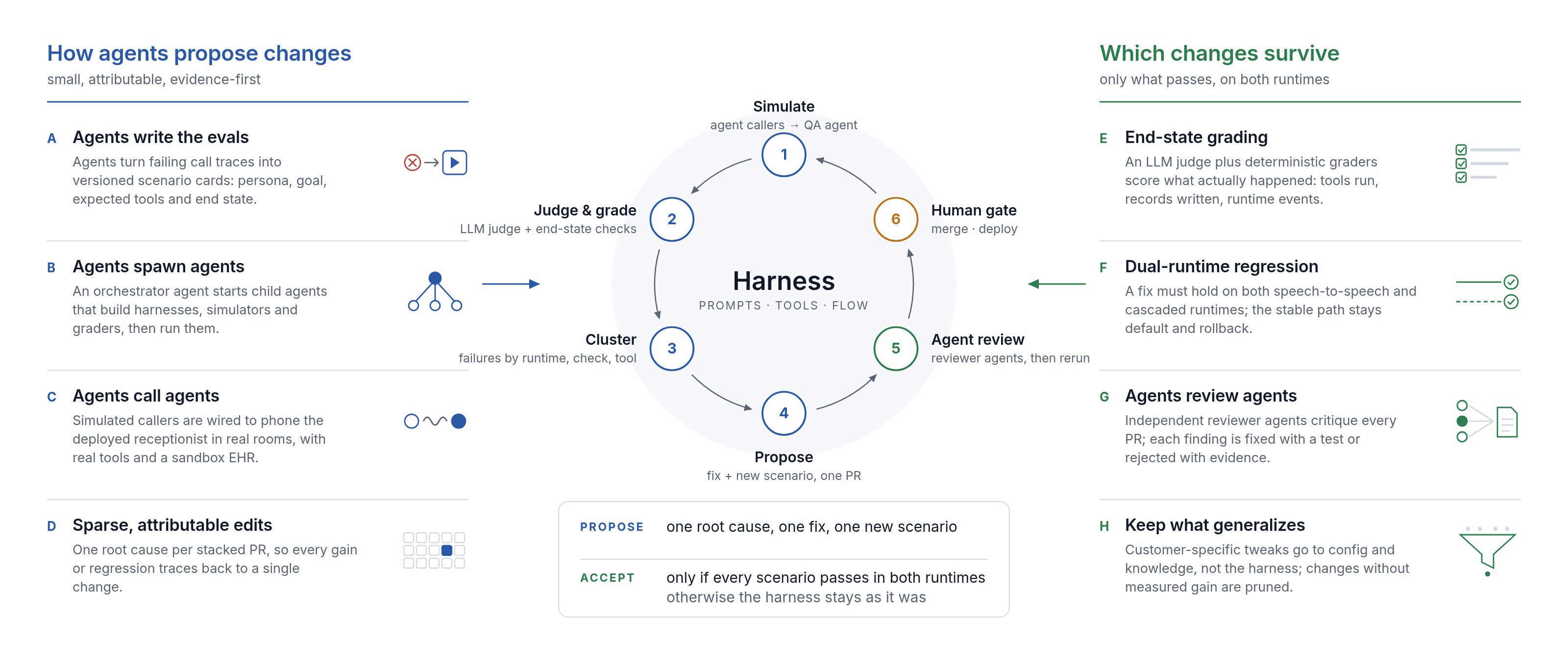
- @muratcan says recursive self-improvement is visibly working in his team's harness on Opus 5.5 and GPT-6 Astra: agents write evals, call each other, grade, and review, while humans still own merge and deploy "for now."
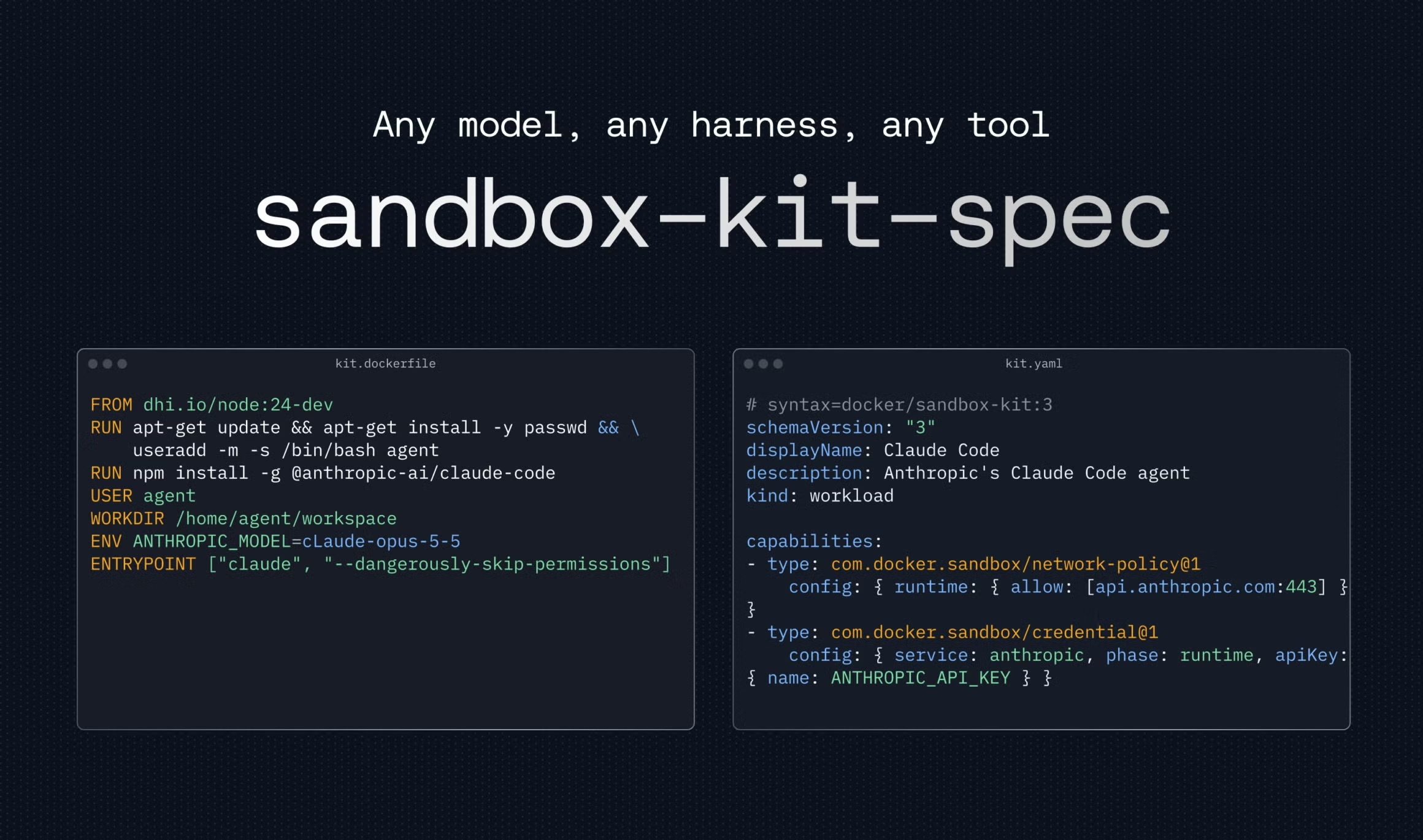
- Docker and the Linux Foundation announced the Docker Sandbox Kit Specification at WeAreDevs: an Apache 2.0 open standard for declaring what an agent may do, where it may reach, and what it may touch.
- Per @kimmonismus, Trump wants to "leave it exactly where it is" on AI, says China agrees, and calls the DOJ the guardrail, which @kimmonismus reads as the end of the slowdown discussion.
- @suraj_sharma14 surfaces Meta's Global AI Developer Hackathon: 10 days, fully virtual, free, open worldwide, with $1M in prizes and access to Meta's newest models.
The "System One" decision layer is suddenly contested
The fast-decision slot inside custom harnesses went from one contender to two this week, and practitioners are building routing stacks around it.
@omarsar0's framing: watch this wave if you build custom harnesses. CLM is 9x faster than Jev and, in his read, a better verifier on long-horizon tasks. The two differ in method: Jev is trained with Reinforcement Learning for Calibrated Decisions and returns typed decisions with probabilities from predefined questions, while CLM embeds situations and candidate actions, then ranks or selects the best match. Per @jackyk02's thread, CLM-8B is pre-trained on internet-scale data, matches Jev on computer-use, gaming, and tool-calling, and sets claimed SOTA on DeepSWE (81.6%) and Terminal-Bench 2.1 (87.6%), benchmarks where Jev "fails to serve as an effective verifier." The team also disaggregates state and action embeddings for caching, cutting latency when state evolves but the action set is fixed.
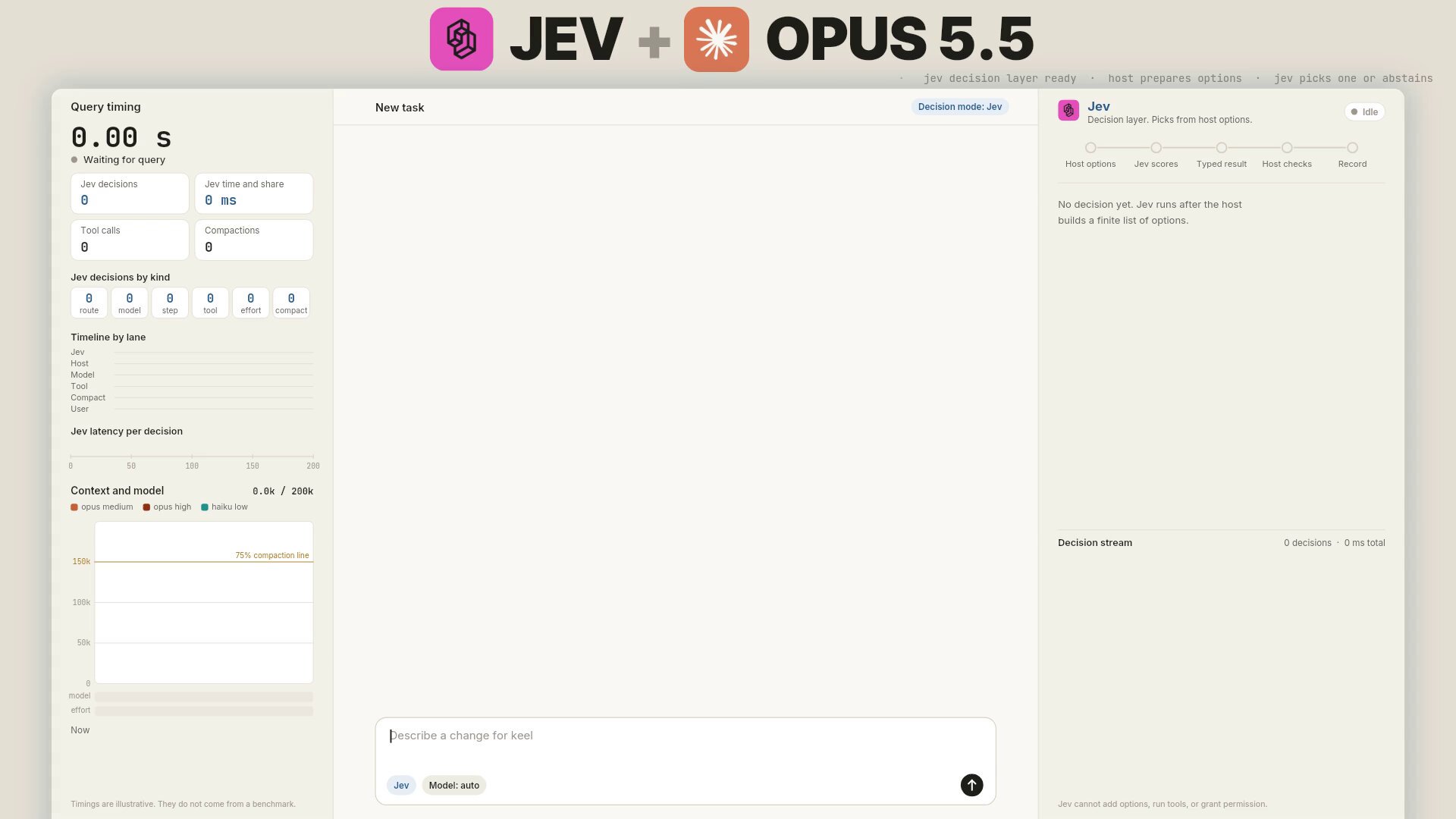
The practical payoff shows up in @Av1dlive's workflow: pairing Jev with Opus 5.5 cut his costs and time by roughly 80%. Jev picks from options the harness prepares (which notes to load, when to route to a faster worker, recovery paths, focused checks), while Opus handles the hard reasoning. Promotional tone, but the architecture is concrete.
@kunchenguid adds the routing map after a busy release week: interactive orchestrators (Opus 5.5, Grok 4.7), premium intelligence for escalations (GPT-6 Astra, Fable 5.1), planners (Opus 5.5), implementers (GPT-6 Sol, Grok 4.7), and trivial fixers (GPT-6 Luna), with Muse Spark 1.3 and DeepSeek V4 Flash as budget fallbacks. He feeds those preferences to Firstmate and says Jev makes the routing cheap; notably, Opus 5.5 spans nearly every bucket, so Anthropic is his pick if he can keep only one subscription.
Agent fleets are talking to each other, and grading each other
Several posts describe agents collaborating, reviewing, or messaging on humans' behalf, and the ones with evidence lean hard on verification.
@nicbstme's workplace story is the most vivid: his agent DMs colleagues on Teams for context, sometimes reaching a colleague's own agent, which digs through emails, documents, meetings, or cloud storage and sends back the answer. He frames most agent-to-agent traffic as context exchange and predicts a "company brain" holding all context with access rights attached. The human punchline: a colleague got a Teams message "from" him while he stood there holding a coffee.
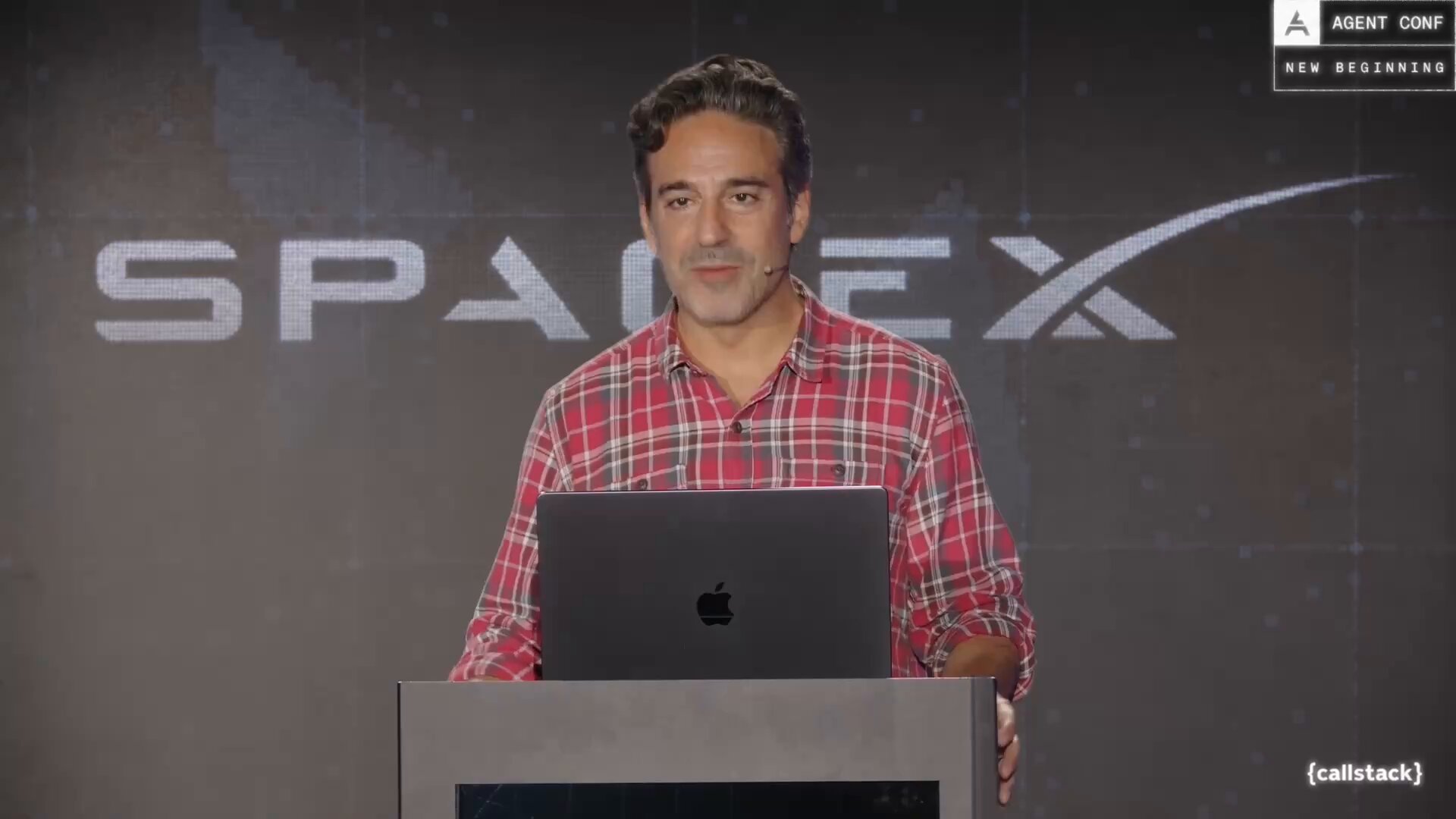
@0xCodez shares a 27-minute demo attributed to SpaceXAI engineer Nick Miller, who says he runs 20+ GrokBot agents in a loop and graph, including Chief of Staff, PM, and QA bots. Secondhand and hypey, but it's another fleet-over-single-bot data point.
@muratcan's four-step loop is the boldest claim: agents write evals from failing call traces, simulated callers phone a deployed receptionist with real tools and a sandbox EHR, an LLM judge plus deterministic end-state checks score and cluster failures, and reviewer agents critique stacked PRs, one fix per root cause. He's explicitly echoing Anthropic's recursive self-improvement framing, so calibrate the enthusiasm accordingly.
The most checkable recipe comes from @mattpocockuk's summary of a talk by @poteto (who says they shipped 2,500 PRs last month): lock agents down with abstractions they can't misuse plus an internal framework called Dune, build verification infrastructure with custom CLIs and factory-ready deploys, and maintain synced "feature maps" so agents can navigate the codebase. @martin_casado amplifies @poteto running 10+ Cursor projects in parallel with pstack.
The hand-written code debate rolls on
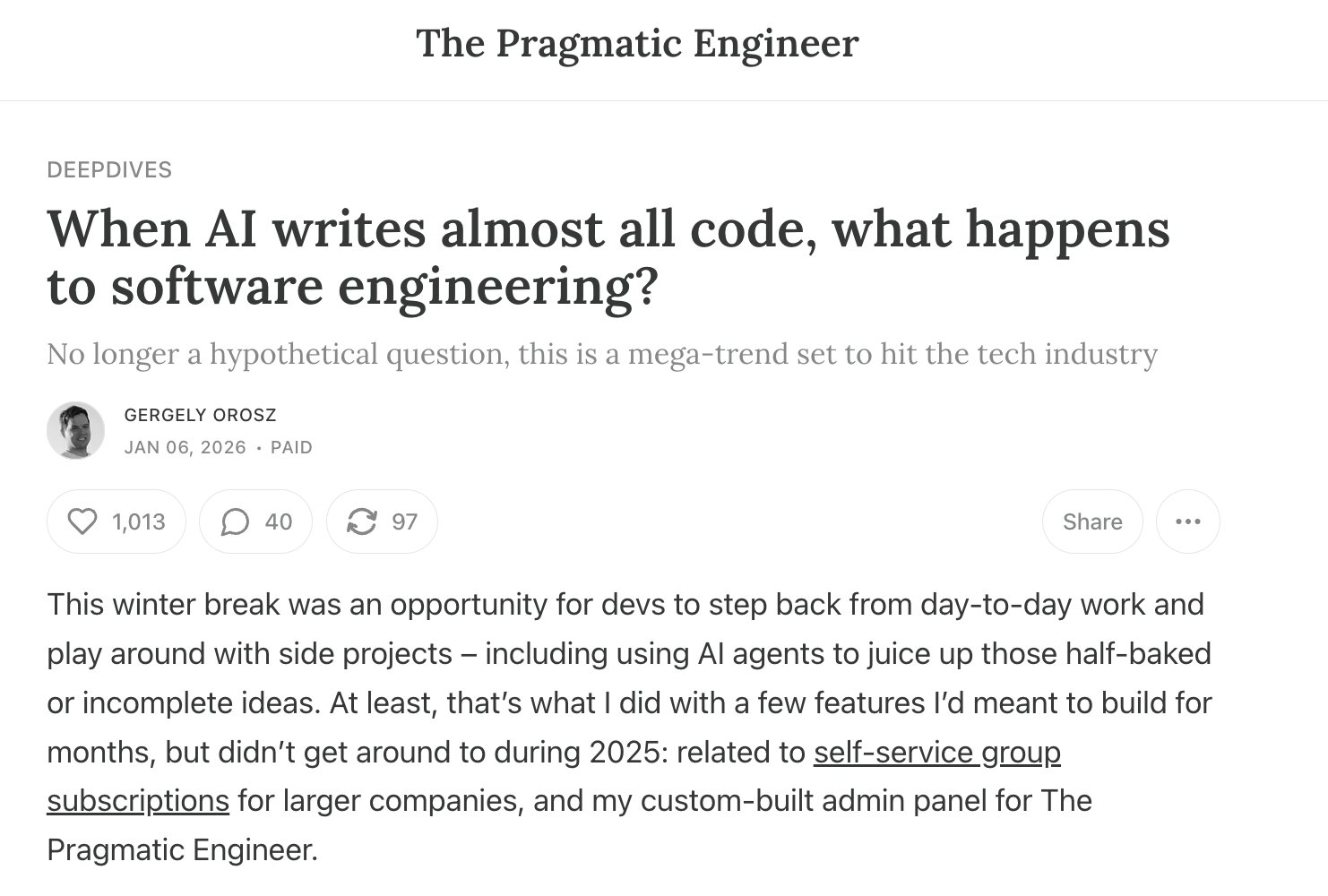
@GergelyOrosz finds the uproar over DHH declaring the age of hand-written code over "a bit interesting," arguing it was clear since roughly January to anyone using the models and paying attention, and links a paywall-free version.
@GeoffreyHuntley pushes further: language convergence is "crossing the overton window," and languages that don't adapt to an agent consumer base will die. Why add human ergonomics like operator chaining if humans no longer write the code? His personal split: Rust where memory and performance guarantees matter, Elixir/OTP for everything else, partly because agents can attach to an actor process and troubleshoot fast.
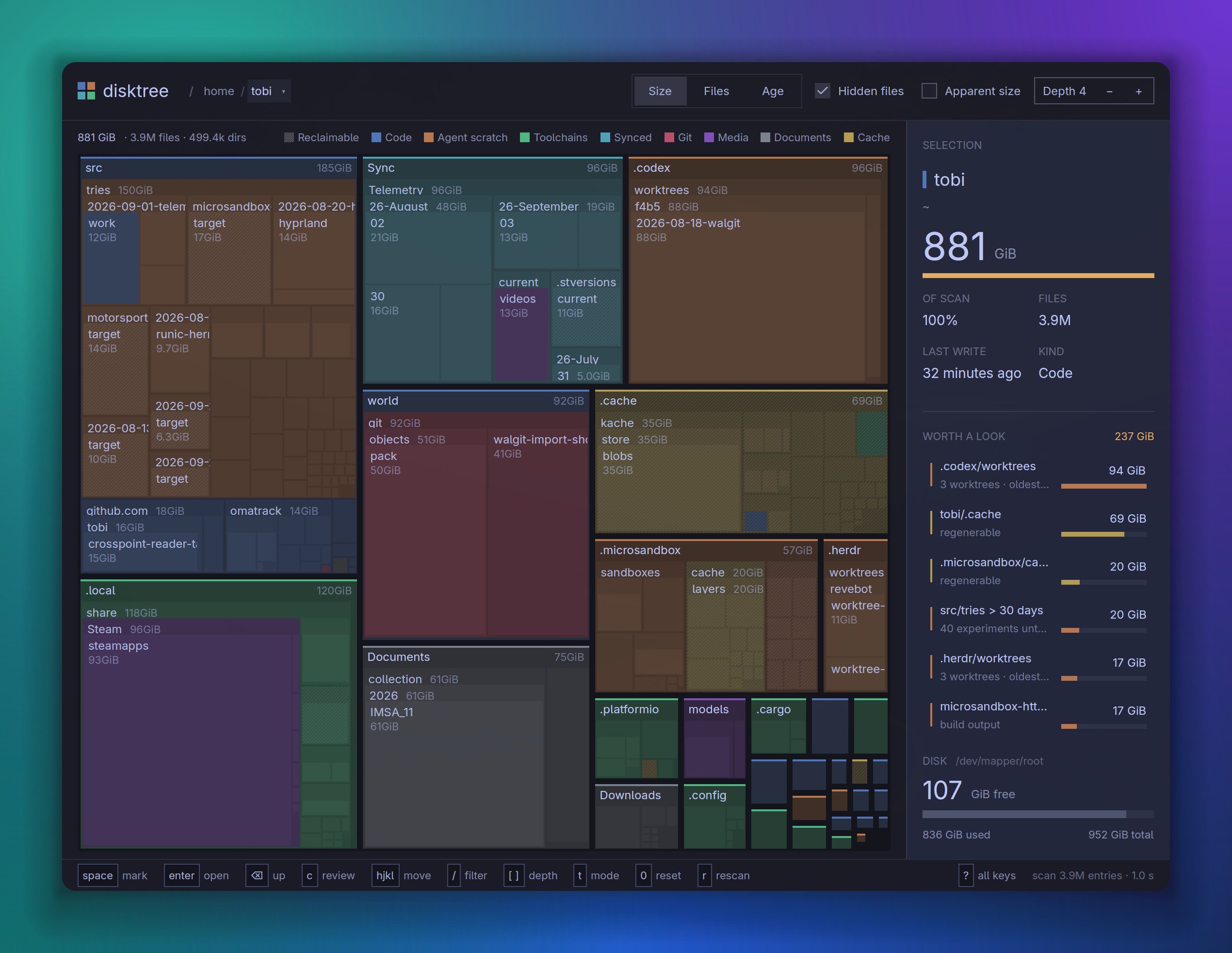
Lighter takes round it out: @tobi built a disk-space utility and muses "You can simply wish software into existence," @thekitze jokes about mastering IT for 20 years just to stare at a screen daily, and @alexandr_wang posts satire mocking the gap between consumer AI gadgets and the demand for enterprise B2B integrations.
Infra drops: agent sandboxes, billion-token SQL, TPUs in orbit
Docker's Sandbox Kit Specification, built with the Linux Foundation, targets the exact pain the fleet posts imply: an open standard (Apache 2.0) declaring what an agent may do, where it may reach, and what it may touch.
@charles_irl introduced Quail, an open source system for AI-SQL queries, joking about crossing a query planner with an inference engine. The quoted announcement from @sh_reya says the Modal collaboration plans queries and LLM inference together to reach 1B+ input tokens per minute on a single H100 for one query. Impressive if it replicates outside their setup.
Google announced Project Suncatcher's first orbital test: a prototype satellite launching to evaluate how TPUs perform in space. And @zephyr_z9 retweeted @elonmusk listing Colossus 1 at 150k H100, 50k H200, and 30k GB200, with Colossus 2 at 110k GB200 and 440k GB300, plus another 220k GB300 teased before the post cuts off. Those are Musk's own numbers, unaudited.
Building for agents: MCP craft, bubbles, and searchable ontologies
@RhysSullivan's MCP guide is the day's most actionable post for tool builders: give the MCP full parity with your dashboard (including deletes, made safe by deep-linking into the product), skip lazy loading and codemode, ship a search-docs or skills tool, provide a deep-link-into-product tool, and stop restricting which clients can OAuth. He names PostHog and Sentry as references and argues that shipping your API spec plus CIMD OAuth covers 99% of agents.
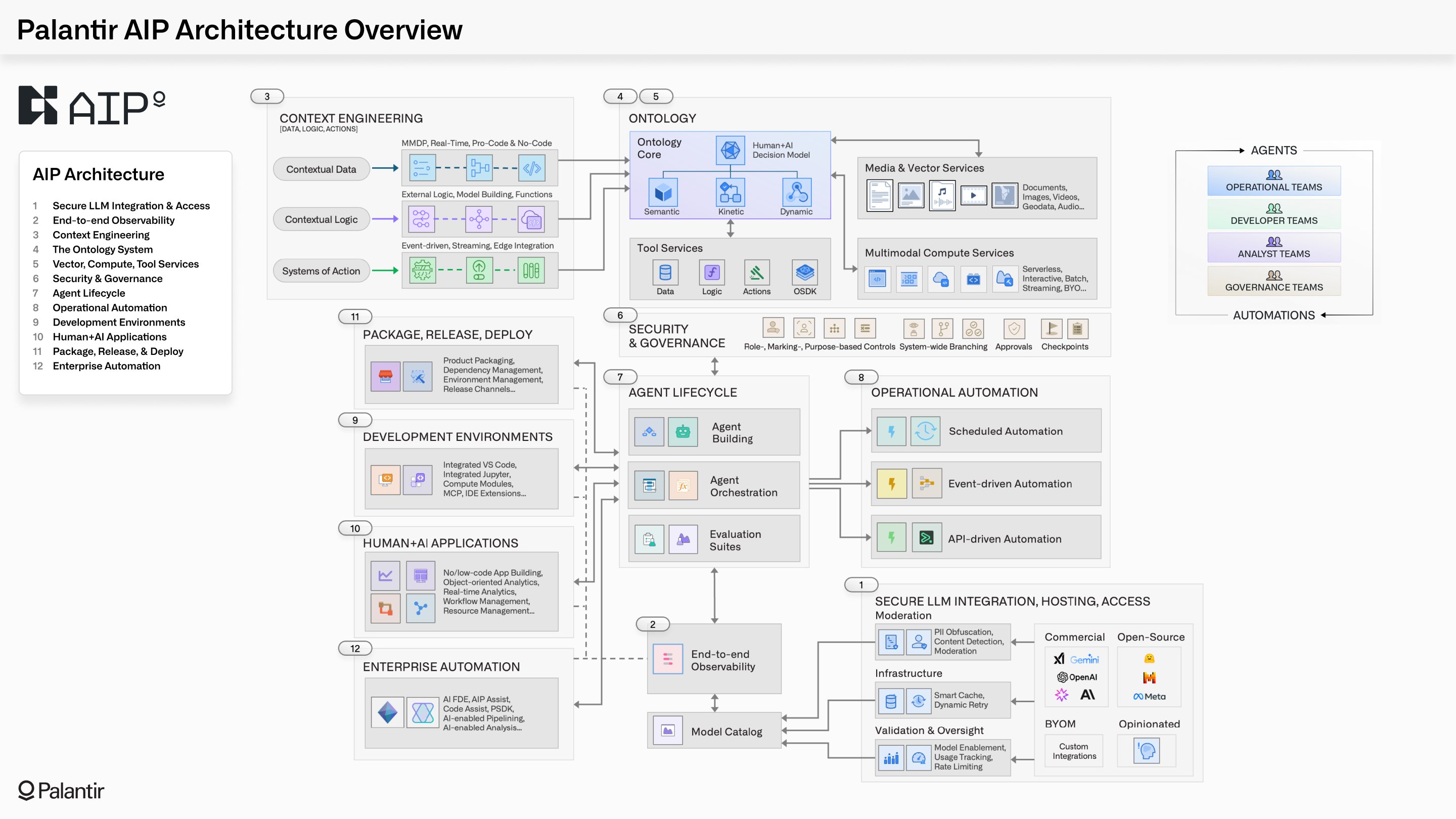
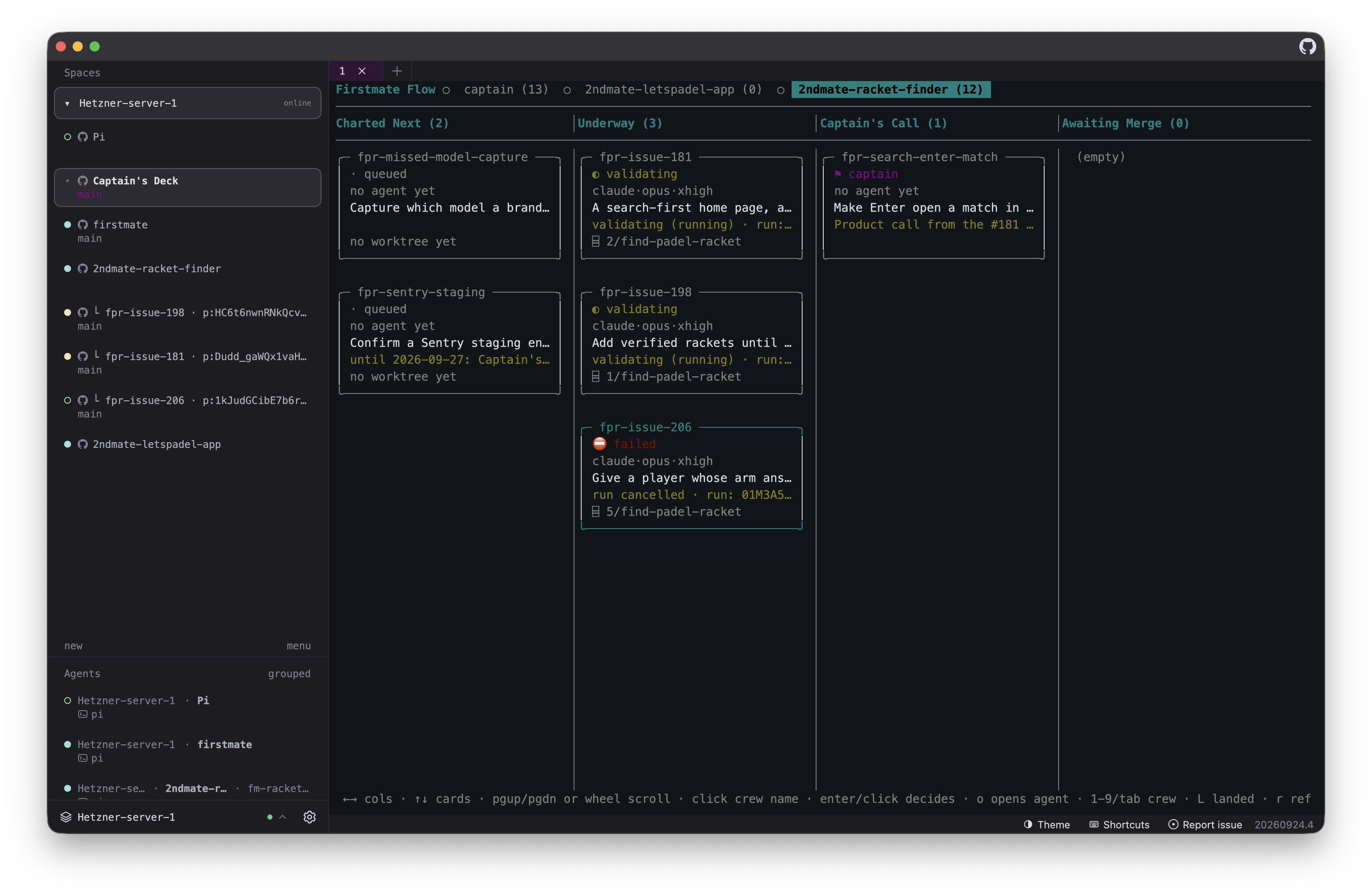
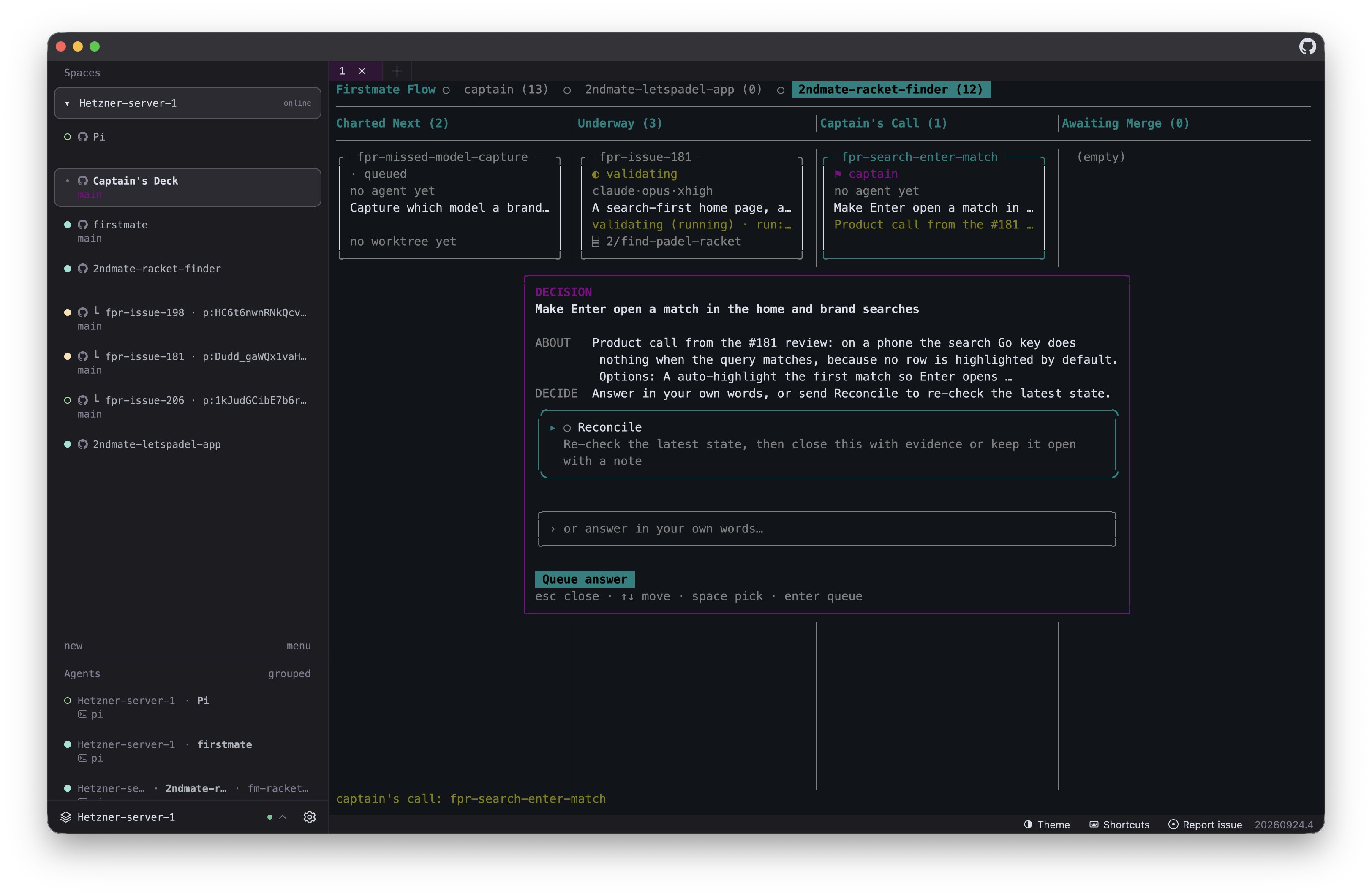
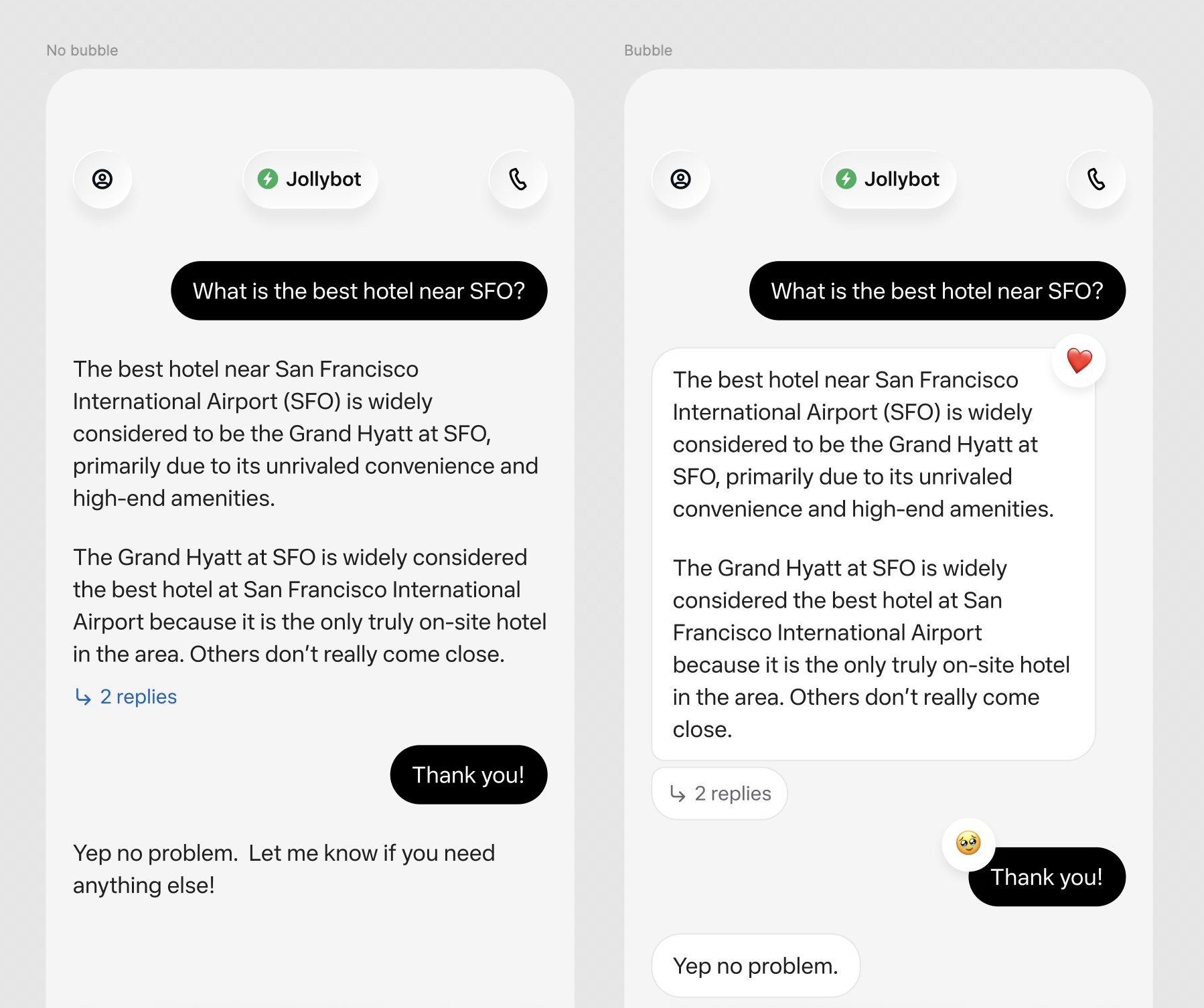
On UX, @alexcornell explains a founding Muse decision: every message lives in a bubble because Muse "should feel like an entity not a tool," an agent rather than a search box, a position he'd argued against years earlier. @chadwahl's Palantir thread calls the Ontology an indexed space and vector store where enterprise search across links, relationships, logic, and action logs falls out of the box, and he's taking architecture questions. @deimantasnork demos a live Kanban "Captain's Deck" for Firstmate on Herdr-gpui, tracking work from Charted Next to Landed. And @sarlev_ proposes Urbit as the identity and networking layer for Omarchy to deliver an iCloud-like experience, quoting @urbit's announcement and framing it as helping @dhh kill Apple; more rallying cry than roadmap.
Practical Takeaway
If you're running agents, the strongest-supported move from today's posts is a role-based model lineup (orchestrator, planner, implementer, trivial fixer, as @kunchenguid describes) with a fast decision layer doing the routing, since @Av1dlive reports ~80% cost and time savings from exactly that. Two caveats before you commit: benchmark Jev against CLM on your own workload, because CLM's claims come from its own announcement thread, and only let fleets run where you've built verification and guardrails. Even the team reporting a closing self-improvement loop still keeps humans on merge and deploy.
Sources
G
That DHH saying out loud that the age of writing code by hand is over for the industry, and causing such a huge uproar is a bit interesting, given this was clear enough since ~January for most of us using the models + paying attention.
Removed paywall: https://t.co/sSfyCm8jk8 https://t.co/WGcv11SHOR
C
Ontology is at the center but there is a lot more there, all integrated across the entire platform.
AMA about the architecture or components
https://t.co/OAAondoYem https://t.co/3o0CatG9vx
C
chadwahl
@chadwahl
Did you know the Palantir Ontology is an indexed space and a vector store? You get enterprise search out of the box as you build your Ontology, including searches across links, relationships, how and where objects are used, logic on these objects, and action logs. Everything is connected and searchable in both business terms and technical logs. This compounds quickly as you build out your Ontology.
C
Trump made his position on AI clear today: he wants to “leave it exactly where it is” and says China agrees.
No slowdown from either side. “Our guardrail is the DOJ.”.
That puts a definitive end to the slowdown discussion. https://t.co/0DGfKylgyh

E
Pay attention to this new wave of System One models if you are building custom harnesses.
First Jev. Now, Contrastive Language Model (CLM).
CLM is 9x faster than Jev.
CLM seems to be a better verifier than Jev, particularly at long-horizon tasks.
How do Jev and CLM differ?
CLM is contrastive, and Jev is trained with Reinforcement Learning for Calibrated Decisions (RLCD).
Jev receives a situation plus predefined questions, and returns typed decisions with probabilities. CLM embeds the situation and candidate actions, compares their similarity, then ranks or selects the best match.
The point is that there are several ways to attack this problem, which is exciting.
You can see my recent guide on combining System One and System Two models for building custom harnesses. https://t.co/Ccy5o4s6QU
J
jackyk02
@jackyk02
Introducing Contrastive Language Model (CLM): an ultra-fast System One Model trained with a contrastive learning objective that connects states and actions. CLM-8B is pre-trained on internet-scale data and delivers up to 9× faster inference than Jev ⚡ while achieving comparable performance across computer-use, gaming, and tool-calling tasks. With lightweight fine-tuning, CLM-8B sets a new SOTA on challenging agentic coding benchmarks, such as DeepSWE (81.6%) and Terminal-Bench 2.1 (87.6%). In contrast, Jev fails to serve as an effective verifier for these long-horizon tasks. We also build an efficient training and serving infra for CLMs by disaggregating states and actions, allowing their embeddings to be cached and reused independently. This substantially reduces inference latency in settings where the state evolves continuously while the action set remains fixed. Finally, we establish scaling laws for CLMs and show that the test contrastive loss decreases predictably as a power law in training compute, model size, and dataset size. 📄 Blog: https://t.co/zwi9JOHKGx 💻 Code: https://t.co/rsHRYCGR8I 🗣️ Discord: https://t.co/Uqtdefvo3J 🤗 Data & Models: https://t.co/wdSWGGO3hu More details on CLM’s architecture, data recipe, and scaling laws in the thread below 🧵
K
imagine mastering the craft of IT for 20 years just to stare at this daily https://t.co/PtIUUXAEjk

A
jev + opus 5.5... i simply can't comprehend why everyone isn't building this yet.
in my workflow, this cut costs and time by ~80%. i think it's one of the best ways to use it.
→ pick relevant project notes before loading the context
→ route suitable tasks to a faster worker
→ choose a recovery path when a tool fails
→ run focused checks before the full test suite
opus handles the hard reasoning. jev picks from options the harness prepares and validates.
i explain how to build the decision layer in the article below:
A
Av1dlive
@Av1dlive
How to Build Agentic Harness using Jev (Builder's Guide)
C
What do you get when you cross a query planner with an inference engine?
Over a billion tokens a minute!
Introducing Quail, an open source system for running AI-SQL queries.
S
sh_reya
@sh_reya
Excited to share Quail, our new open source AI-SQL engine (a collab with Modal)! By planning queries and LLM inference together, it reaches 1B+ input tokens/min on one H100 for one query 😱🚀 AI-powered data operators create a new, interesting inference workload👇 https://t.co/HoJQUyGRi4
D
Hey captain @kunchenguid,
look what I built for Firstmate on @fabienpenso’s Herdr-gpui edition 👀
Captain’s Deck: live Kanban - Charted Next → Underway → Captain’s Call → Awaiting Merge → Landed.
Answer Captain’s Calls from the board.
https://t.co/FXthAeFbdW https://t.co/kA2uFWeZMw
C
SpaceXAI engineer, Nick Miller:
"99% of people run one GrokBot and call it done, only 1% build teams of bots that talk to each other.
i'm running a team of 20+ GrokBot agents in a loop & graph. I have a Chief of Staff bot, PM bot, QA bot and 15+ workers - that's the new stack"
In a 27-minute demo, a SpaceXAI engineer explains how to build a team of GrokBot agents from scratch
worth more than a $500 agentic engineering course
skip Netflix today and watch this, then read how to build a fleet of GrokBot agents in the article below
0
0xCodez
@0xCodez
Grok Bot Agents: how to automate your life in 10 Steps (Full-tutorial)
M
It's actually weird feeling to watch recursive self-improvement start working in your own harness, and to finally see the results.
With Opus 5.5 and GPT-6 Astra, our harness now improves itself and agents do almost every step of it.
1. Agents write the evals.
They turn failing call traces into versioned scenarios: caller persona, goal, the tools that should run, and the final state expected in the EHR.
2. Agents call agents.
Simulated callers are wired to phone our deployed receptionist in real rooms, with real tools and a sandbox EHR, in text and audio, across both of our runtimes.
3. Agents grade agents.
An LLM judge plus deterministic end-state checks score each call, and failures are clustered by runtime, tool and check. Agents then write one fix and one new scenario per root cause as a stacked PR.
4. Agents review agents.
Reviewer agents critique every PR, findings get fixed with tests, and scenarios are rerun. A change proposed only if it passes on both runtimes. We still own merge and deploy, for now.
We're early, but for the first time the loop is starting to close. I've never experienced a pace like this. It's getting faster so RAPIDLY.
A
AnthropicAI
@AnthropicAI
Our internal data shows Claude is accelerating AI development—a possible path to recursive self-improvement, or AI autonomously building a more capable successor. It’s happening faster than we thought, and the implications deserve greater attention. https://t.co/OVVPJO7VQx
D
Today at @WeAreDevs, Docker and the @linuxfoundation are announcing a collaboration around the Docker Sandbox Kit Specification: an open standard for declaring what an agent may do, where it may reach, and what it may touch.
Open source under Apache 2.0.
Read the deep dive: https://t.co/meuAmgy5Ln
N
Friends, work is getting so hilarious right now!
My agents run in a loop with /goal. When they need context, they DM one of my colleagues on Teams. But some of my colleagues are also using agents, so their agent replies to mine.
My agent is basically asking another person’s agent for context that is not in either person’s brain. It’s somewhere in their emails, documents, meetings, or cloud storage. The other agent finds it, sends it back, and mine keeps working toward my goal.
It feels obvious that agent-to-agent communication is about to become insanely fast. Most of it is just context exchange.
The next step is a company brain where all the context lives, with access rights attached. Instead of messaging five people, your agent retrieves exactly what it is allowed to know and continues working.
The funniest part: I was grabbing a coffee when a colleague received a Teams message “from me.” He looked at me, saw that I was obviously not typing, and immediately understood that it was my agent.
We are already becoming managers of agents talking to other agents.
G
Behind Project Suncatcher, our moonshot to put AI in space
Behind Project Suncatcher, our moonshot to put AI in space
After years of research, Project Suncatcher is scheduled to embark on its first test in orbit, launching a prototype satellite to evaluate how Google ...
A
“they’re eating up the booty muse and the tamagotchi. now drop another enterprise b2b saas integration” https://t.co/5nBvvJtvjv

T
Was wondering where my disk space went.
Therefore this exists now. You can simply wish software into existence. https://t.co/hd1uCGo9ck
G
seems like programming language convergence is crossing the overton window thanks to @dhh. i still stand by below, it hasn’t aged.
some programming languages will die, authors of languages who do not adapt for a changing language consumer demographic (agents). for what is the point adding sugar to a language (operator chaining) to make a language easier for humans to produce code when humans no longer write the code?
in other news; i’ve been smashing the OTP and Rust pretty hard lately. i’ve found my personal happy divide:
rust: cli, anything where memory pressure and perf need explicit guarantees (ie: network daemons or sockets) and for everything else elxir/otp. god damn these agents can attach to an actor process, observe what’s going on and troubleshoot fassst.
G
GeoffreyHuntley
@GeoffreyHuntley
At the @aiDotEngineer World Fair, I sat down and dumped my brain on a podcast. Here are my latest ponderoos on these topics… ✨ Why code doesn't need to be readable by a human anymore; it needs to be explainable to one. ✨Why frontier intelligence isn't required for most tasks, and why some of the sharpest engineers I know run 20 concurrent $300/year subscriptions instead of one frontier plan. ✨ Why I haven't hand-written code in over two years, and why Git is perhaps already end of life. ✨ Why porting between programming languages is now nearly free, and what that means for which languages survive.
M
RT @poteto: cursor projects are just too good with pstack. i now routinely have at least 10 projects running in parallel, tackling everythi…
A
One of the most fundamental decisions we made early on with @Muse, was to contain every message in a bubble, like a chat app. Attaching the earliest comparison I could find – showing no container vs. the initial bubble treatment we used.
A founding principle was that Muse should feel like an entity not a tool. It’s an agent! Not a search box. And one of the clearest patterns to imply this is a message bubble.
Ironically, years before, I had argued for the exact opposite model.
K
alright! as the dust settles around this insane week of model releases, i've stabilized around a new model line-up so sharing here for reference
this time my approach is a bit more structured. i've bucketed various LLMs into a few categories:
1. interactive orchestrators
these are models that i use as firstmate (and second mates), because they are fast, efficient, pleasant to talk to, intelligent enough to understand my intent, and have good enough judgment to steer the crew around it
for me, this bucket is opus 5.5 and grok 4.7
viable budget alternatives when my subscription quota runs out: muse spark 1.3, deepseek v4 flash
2. premium intelligence
these are models that i only use for highly ambiguous or creative tasks that i decide to truly need the extra intelligence and justifies the cost
i also use this bucket to handle escalations - when crewmates started arguing with each other, when a review-loop started spiraling out of control, when a simple change somehow ended up with a giant PR - i call these models to untangle the mess
for me, this is currently gpt 6 astra and fable 5.1 (or opus 5.5 when fable quota is tight)
3. planners
these models are the ones i trust as default for planning new features and investigating complex bugs. they would produce a spec that get implemented by a cheaper model
i almost exclusively use opus 5.5 for this right now because of its incredible ROI, whenever i don't need the premium intelligence
4. implementers
these are efficient workhorses that when given a well defined spec they can produce solid implementation
i use opus 5.5, gpt 6 sol, and grok 4.7 for this right now, and again the budget options: muse spark 1.3 and deepseek v4 flash (i'm sure there are many other viable alternatives as well - i just haven't got enough time to try them out)
among these models i currently find sol to be the best adversarial code reviewer (i haven't tried astra for this, as it's a bit too expensive to run at such high volume)
5. trivial fixers
these are the models i use for extremely trivial changes like a one-liner fix or config change. they really don't need much intelligence because often times what needs to be changed was already defined
for these i use gpt 6 luna and again the budget options if quota is tight
the way i actually make use of the categorization is that i told these routing preferences to firstmate, and it can then help me route the right task to the right model (which is now made very efficient because of Jev)
one last thing i'll point out is you can see how versatile opus 5.5 is in my line up - it can do pretty much everything! this is the first model that spanned across almost every bucket in my setup, which is quite a massive advantage because it means if i have to choose only one subscription it would have to be anthropic at the moment
~
we are going to help @dhh kill @Apple.
@urbit as the identity and networking layer to give an icloud-like experience to every omarchy user.
U
urbit
@urbit
Urbit is coming to @OmarchyLinux.
S
Meta just put $1M on the table for builders.
Meta Global AI Developer Hackathon:
- 10 days to build
- Access to Meta's newest models
- $1M in prizes
- 100% virtual, open worldwide
- Free to enter
apply: https://t.co/NEeMOvSRoD
No visa. No flight. No fee.
Just a laptop and 10 days to ship.
Bookmark this + tag the builder you'd team up with.

R
Here's Rhys' practical guide to shipping an MCP your users want:
- Your MCP should be able to do everything your dashboard can
Yes including things like deleting resources. The way to make this practical inside of an agent while not having things be unsafe is to deep link them into your product from inside the MCP
- Do not ship lazy loading / codemode inside of your MCP
CodeMode is a harness detail. Most harnesses (Claude / Codex / OpenCode) support codemode now, the problem is if you have two codemode MCPs they don't compose nicely (Executor v2 will still support CodeMode, but, will start to default to a transparent tool proxy for better clients)
- Ship a search docs / skills tool
Agents love these and it helps give them more understanding of your product
MCP is getting skills over mcp which will help here in the future
- Have a deep link into product tool
Let the agent generate a URL that brings them into your product, people still want to use your dashboard and data visualization! They just don't want to click through things
- Customization
I think this matters less over time, but, you can allow people to select 'toolsets' of things to connect with to clients. Some clients don't support customizing tool selections and then it's also nice to have tool permissions set to the auth token
- Let people OAuth from whatever client they want
Please stop putting restrictions on which clients can authenticate to MCP servers, your users hate it, it doesn't improve security, all it does is add more friction
PostHog and Sentry are my two 'AI native' companies to look at today, they both have an excellent onboarding, MCP / CLI experience, if you need a place to learn from look at them
To be honest though, while all the above is helpful just shipping your API spec + CIMD OAuth to it is enough for 99% of agents to have a good experience
D
designertom
@designertom
When using an MCP: 1. What makes for a great experience? 2. What are examples of good MCP experiences?
Z
RT @elonmusk: @minchoi Colossus 1 is 150k H100, 50k H200 and 30k GB200.
Colossus 2 is 110k GB200 and 440k GB300.
Another 220k GB300 wil…
M
This is an extremely good watch.
The things that felt novel/interesting to me:
1. Lock down your agents
Humans tend to like 'sharp knife' abstractions - that are powerful, but you can cut yourself if your use them wrong. Lauren says agents perform much better in extremely locked-down environments. Abstractions are designed so they can't screw up, and lint rules enforce it.
They built a whole internal framework (Dune) to keep the agent on track.
That helps optimise agents that don't have a large context window to work productively in your codebase.
2. Create verification infrastructure
To trust the results of any agent, you either need to sit and watch it OR have it provide evidence of its improvement. This has always made sense to me, but Lauren really pushes it hard here:
- Invest in custom CLI's that let the agent drive the app and measure its performance
- Make the app "factory ready" from the get-go - i.e. deployable to an environment where the agent can mess about with it
3. Feature Maps
Lauren's software factory (what she calls an 'outer loop') often requires the agent to break down vague bug reports from users and to turn those into potential fixes.
To aid that, they built a 'feature map' of all the main features in their application, which describe exactly how the app is supposed to function.
This has become essential for helping the agent navigate the codebase, and figure out quickly how things are supposed to work. It's maintained along with the codebase, and kept in sync via automations.
This is the kind of documentation I usually warn against. It goes stale quickly and can confuse agents if it's not kept up to date.
But Lauren's team are using it as critical navigation infrastructure, and it makes it possible for agents to explore faster and better - even on a large codebase. So it sounds like navigation docs like this are worth it if they enable new behavior.
Banger talk - watch the whole thing on 2x.
P
poteto
@poteto
here's how i shipped 2,500 PRs last month to production this was originally supposed to be for Cursor Compile in London. i couldn't make it since i was livestreaming for Grok @Bot Galaxy so i'm making it available for free here on X! watch it on 2x speed, i talk slowly https://t.co/NgrGz7tmPM