Rumors Put GPT-6-Sol on Tuesday and Opus 5.5 on Monday as Builders Chase Measurable Jev Gains
Unverified posts from @kimmonismus and @imjustnewatai claim GPT-6-Sol and Claude Opus 5.5 will land within days of each other, with OpenAI's internal model "Bel" described internally as AGI. Away from the rumor mill, the day's hardest signal came from evals: pairing Jev with the GEPA prompt optimizer lifted F1 from 69.1% to 79.7% on a medical extraction task.
Quick Hits
- The rumor mill is running hot: @kimmonismus, relaying @imjustnewatai, expects GPT-6-Sol on Tuesday (cheaper and more capable than Astra) with Opus 5.5 possibly Monday as Anthropic's answer, and says OpenAI refers to an internal model called "Bel" as AGI. Both authors explicitly frame all of this as unconfirmed.
- A separate leak post from @Mr_Salio, amplified by @HealthRanger, claims DeepSeek V5 could match or beat Astra and Fable 5.1 while keeping the open-weight strategy; @HealthRanger speculates GPU prices "could double YET AGAIN."
- @Paiky16 reports that connecting Jev to the GEPA prompt optimizer raised F1 from 69.1% to 79.7% and cut false positives from 47 to 22 on 300 fresh medical test sentences, a result @matei_zaharia called "very cool."
- @jun_song warns against buying the RTX Spark because it lacks ConnectX-7, and @MiaAI_lab found the ASUS ProArt GR1X already omits the clustering port.
- @Youssofal_ argues Apple Silicon decode speed is ALU-bound, not memory-bound, so FP8 support in the NAX matters more than bandwidth numbers.
Frontier Release Rumors Stack Up, All Unverified
Two rumor posts converge on the same story. @kimmonismus says GPT-6-Sol should arrive Tuesday with a "surprisingly good" price-performance ratio versus Astra, that Opus 5.5 is expected "today or tomorrow" as a direct response, and that "Bel" is internally referred to as AGI. The post he quotes from @imjustnewatai adds specifics: Sol as a "6.2 jump" that is both cheaper and more intelligent than 6 Astra, Bel described as "significantly more capable than Astra," OpenAI "unbelievably confident" its lead is uncatchable, and Anthropic not in "code red" but racing to close the gap with Opus 5.5 landing probably Monday.
@HealthRanger passes along a different leak from @Mr_Salio claiming DeepSeek V5 is imminent, could match or beat Fable 5.1 and Astra at lower cost, and would stay open-weight, then speculates this makes GPUs even more valuable and could double already "insane" prices. Nothing here is confirmed by any of the posters; treat the whole cluster as calendar speculation until a lab ships something.
Jev Gets Real Numbers, and a Case Against the Bitter Lesson
The day's most concrete results came from the Jev ecosystem. @DanielMiessler highlighted a talk by Jev's creator arguing Sutton's bitter lesson is wrong and that data matters more than the model, which he interprets as an argument for context engineering "since that's how you decide what data gets fed during inference."
@Paiky16 then published an actual eval: using Jev to identify sentences reporting suspected adverse drug effects, then connecting it to GEPA, a prompt optimizer that proposed instruction revisions from training errors. On 300 fresh sentences, F1 rose from 69.1% to 79.7%, false positives fell from 47 to 22, and Brier score dropped about 45%. @matei_zaharia, co-founder of Databricks and Spark creator, endorsed the result. @shannholmberg followed up with a copyable audit prompt for finding Jev-ready tasks across a workspace, built on his earlier explainer that Jev returns structured answers (a choice, a score, or a probability) rather than prose. @CompleteSkeptic shared notes on pairing typesafety with coding agents and hopes the community "goes WILD" with the idea.
Local Hardware Buyers Get Two Warnings
@jun_song is blunt: "Do not buy the RTX Spark. It does not have ConnectX-7, which makes it useless," noting that over 80% of people who buy one DGX Spark end up buying a second, which the RTX Spark can't cluster with. The post he quotes from @MiaAI_lab shows the ASUS ProArt GR1X omitting the ConnectX-7 ports that made the DGX Spark a workhorse, predicts other OEMs will do the same, and says the vendor's FAQ glosses over the omission.
@Youssofal_ makes a different hardware argument: decode speed on a Mac is currently capped by missing low-precision support in the NAX, making it ALU-bound rather than bandwidth-bound. He predicts next October's M7 Max at 960 GB/s will decode faster than the M5 Ultra's 1.2 TB/s because of FP8 support, and says FP8 is also why the DGX Spark "can feel better than the Mac" at a third of the bandwidth, and why the iPhone 18 Pro's real upgrade is its FP8-capable neural engine. He's responding to @0x0SojalSec's post showing a 27B model running locally at twice the 17 Pro's speed. For open-source shoppers, @plotarmordev shared an uncensored Qwen Images 2.1 quant.
Agent Grind Impresses While Personal Assistants Hit a Wall
The split on agents couldn't be sharper. @rauchg describes an agent that, told about a mobile in-app browser rendering bug, reproduced it, spun up an ephemeral Vercel deployment, threw it at an iPhone simulator, fixed, deployed, and verified: "Humans could simply never match this level of intensity."
Meanwhile @GergelyOrosz admits he abandoned the "personal assistant" he set up to summarize his day after ignoring it from day 2 through day 10, concluding "I just don't want to make a bunch of decisions." He's quoting @staysaasy's long argument that AI assistants accelerate decision-making rather than abstract it away, and that people don't want ten decisions a day; @letclaudiatweet replies that "every founder knows this unfortunately." On the product side, @anshnanda calls Muse "literally Openclaw for normies," and @dickiebush observes people will pay $50 for a lukewarm burrito but not for maxed-out AI tools.
Money, Policy, and the Day's Noise
@ns123abc posts a clip of Alex Karp claiming OpenAI will never IPO and that its real playbook under unlimited liability is nationalization, offering the government "50% of our business" while warning the value would collapse, possibly taking the market with it. @banteg claims 86% of Anthropic's Series B funding was money SBF stole, and that he also funded METR, quoting @perrymetzger's longer argument that Anthropic is an EA front; both are contested claims, not established fact. On code policy, @tobi responds to @LundukeJournal's summary of KDE's draft AI rules (use AI with a human in the loop, but don't disclose LLM usage) by arguing code should be accepted on merit with a person accountable, "if it's good, it's good. If it's slop, it's slop." In lighter fare, @burcs apologized for a craft slip at Cloudflare without giving details, @signulll published a satire of a "supreme intelligence summit" starring every AI CEO, and @LeoBuilds_ joked that the "models" surrounding him in his 40s are machine learning models.
Practical Takeaway
The rumor posts are unverified and shouldn't drive any planning decisions. The Jev + GEPA result is the one thing here you can act on today: before wiring any structured-decision model into your app, run it against 20 to 300 examples you have already reviewed by hand, record baseline F1, false positives, and cost, then let a prompt optimizer like GEPA propose instruction revisions and re-measure on fresh examples. @Paiky16's jump from 69.1% to 79.7% F1 came from exactly that loop, and @shannholmberg's audit prompt gives you a systematic way to find the right task to test first.
Sources
L
Be careful what you wish for.
In my 20s, I dreamed of being surrounded by models.
In my 40s, here are my models: https://t.co/EIAPEmy7R2
S
trump: “first of all, i want to welcome everyone to the first supreme intelligence summit. we used to call it artificial intelligence. terrible name. artificial means fake. why would we want fake intelligence? we want supreme intelligence.”
sam altman: “mr. president, under your leadership, openai has made tremendous progress toward supreme intelligence.”
trump: “tremendous.”
dario amodei: “anthropic believes supreme intelligence must be developed safely, responsibly, & in accordance with..”
trump: “see, he said it. supreme intelligence. very smart guy.”
dario: “yes sir.”
demis hassabis: “google deepmind has spent decades working toward general intelligence, but we now recognize that the technically correct term is supreme intelligence.”
trump: “google finally learned something.”
sundar pichai: “absolutely, mr. president. gemini is becoming more capable every day thanks to america’s leadership in supreme intelligence.”
trump: gemini. “beautiful name. two people. double intelligence.”
sundar: “yes. exactly.”
elon musk: “i’ve actually been calling it supreme intelligence privately for years.”
sam: “no you haven’t.”
elon: “you wouldn’t know because you stole a charity.”
mark zuckerberg: “mr president, meta is committed to making supreme intelligence available to everyone for free.”
trump: “mark, you look much stronger now.”
zuck: “thank you.”
trump: “something happened.”
zuck: “jiu-jitsu.”
trump: “supreme jiu-jitsu.”
satya nadella: “mr president, microsoft is proud to provide the infrastructure powering the supreme intelligence revolution.”
reporter: “mr. president, what exactly is supreme intelligence?”
trump: “it’s even better intelligence, very high IQ like my uncle who went to MIT.”
B
sorry everybody :(
this doesn't reflect cloudflare's care about craft, this is on me, we'll do better...
C
every founder knows this unfortunately
S
staysaasy
@staysaasy
The problem with all of these AI personal assistant things is that people don’t actually want to do stuff. You fucking get that right? Do you understand that? Just like AI tools in the workforce, AI assistants don’t actually abstract decisions for you, they let you accelerate decision making. So instead of making one decision a day and then lamenting you can’t do more, AI assistants are going to let you make ten decisions a day and act on all of them. A miracle? Nah dog, a fucking nightmare. Nobody except type A strivers who need Twitter fodder actually want that. Let me tell you a story. When I got back from college I was inspired. If I could take on an elite university with grit and determination, so could everyone I know. I was all razzed up to get people I know to achieve their potential. What I learned after many years of trying is that absolutely nobody wants to realize their potential. People want to hang out with friends and complain. That’s how the world has worked for ten thousand years. This weather fucks. Can you believe the cows walked off. People don’t want enablement. People don’t want you to take all of their excuses. TV is mindless passive activity. AI assistants are not. They’re telling people that they can achieve more. And people absolutely do not want that. Let me tell you another story. Once upon a time I lead a big process overhaul at work and it was great. Two years later I hired a contractor to do something similar. But I personally didn’t want to have to do a bunch of work. Within a week I knew I fucked in. This contractor kept coming to me with decisions I needed to make. Dude I wanted to not have to think about this. Again, a helper when you don’t actually want help is a disaster. None of these AI assistants will take off because people don’t actually want assistants.
S
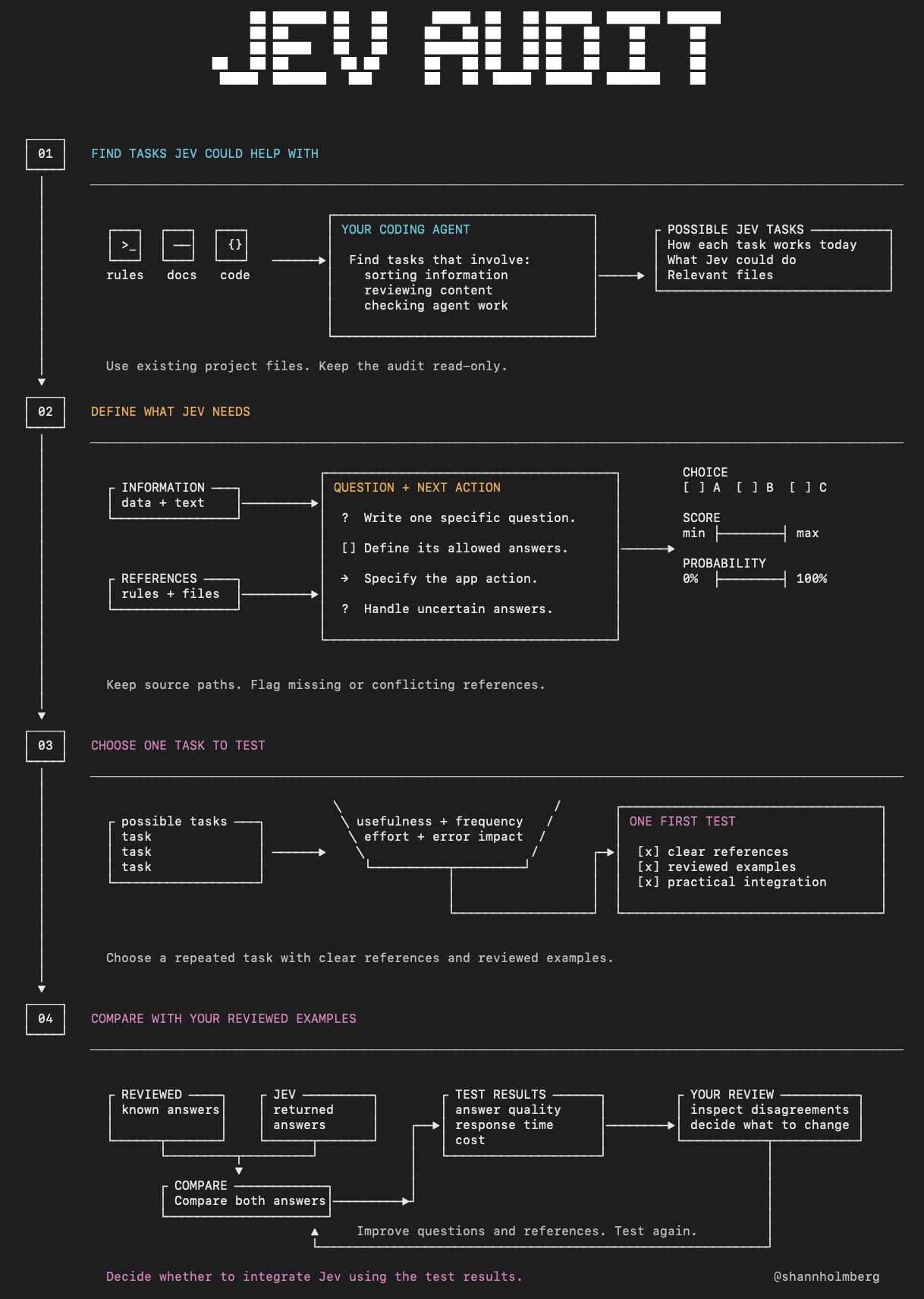
here is how you audit your whole workspace and find what JEV could improve in each project
(copy the prompt at the end and paste it into your coding agent)
ask your agent to find where jev could help in each project
look for tasks such as organizing information, reviewing content or checking another agent’s work
your agent then identifies what jev needs to read and what question it should answer
it also explains how your app would use the answer
1. find tasks jev could help with
ask your agent to review your projects using the existing instructions, documentation, prompts and code
have it find tasks that involve sorting information, reviewing content or checking another agent’s work (eval)
for each task, have it explain how it works today and what jev could do
2. define what jev needs
for each task, have your agent identify:
> the information jev needs to read
> the references it should check against
> the specific question it should answer
> the answer format: a choice, a score or a probability
> what your app should do with the answer
for a second brain, the references could include your topic descriptions, saved documents and rules for adding information
ask your agent to flag missing references
have it explain what happens if jev gives a wrong or uncertain answer
3. choose one task to test
ask your agent to compare how often each task happens, the setup effort and the effect of a wrong answer
include tasks that your existing code already handles well
start with a repeated task where you have clear references and examples you have already reviewed
those examples give you something to compare jev’s answers against
4. compare jev’s answers with your reviewed examples
run jev on those examples and inspect where its answers differ from yours
measure answer quality, response time and cost
use the results to decide whether jev is useful before letting your app act on its answers
COPY THIS PROMPT
----
" Audit the projects in this workspace to find tasks where JEV could improve.
Keep the audit read-only. Do not change files or run integrations.
Use the existing project instructions, documentation, prompts and relevant code.
List any projects or files you cannot inspect.
Find tasks that involve choosing between options, scoring something or evaluating whether something is true.
For each task, explain:
- The project and relevant file paths.
- How the task works today.
- Where JEV could help.
- The information JEV needs to read.
- The references it should check against.
- One specific question it should answer.
- The allowed choices, score scale or probability it should return.
- What the app should do with the answer.
- What happens if the answer is wrong or uncertain.
Use a concrete example from the project where possible. Clearly label any example you invent.
For projects that store knowledge, also consider search by meaning.
Explain how the current setup finds relevant passages and keeps their source links.
Identify where JEV could assess those passages or select useful source sentences.
Adapt suggestions to the existing tools and project structure.
Flag missing information and references. Do not assume a particular platform or search system.
Include tasks that existing code already handles well. Identify projects where JEV has no clear use.
Compare the candidates by usefulness, setup effort and ease of testing.
Consider how often each task happens and the effect of a wrong answer.
Mark unknown costs, usage frequency and performance as unknown.
Recommend one task to test first using examples that have already been reviewed.
Explain how to compare JEV's answer quality, response time and cost with the current process."
S
shannholmberg
@shannholmberg
here's how JEV works, simplified I've been experimenting with it for the last hour, and it's EXTREMELY good at making decisions with the right references and context you give it the information, your questions, and the type of answer each question needs: > a choice from options you provide > a score on a scale you define > a probability that something is true the models we're used to often give us long written answers, with explanations and reasoning jev returns structured answers your app can use directly, instead of generating those explanations information + your questions + allowed answers → answers your app can use you define what happens next, based on those answers that could mean sending information to the right place, checking an AI agent's work, or flagging something for human review because jev doesn't generate prose, it doesn't invent facts or sources inside a written explanation (hallucinations) clear questions and useful context matter, including references that explain what it should check I'm seeing so many cool use cases across X, and I can see people adding this to all kinds of existing apps if you haven't started building with it yet, try it on one decision your app already makes
ᴅ
The most interesting idea in this talk for me was his saying Sutton’s bitter lesson was wrong. He argues that data matters more than the model.
Which I interpret as context engineering since that’s who you decide what data gets fed during inference.
Still thinking it through…
D
DanielMiessler
@DanielMiessler
This is the creator of Jev talking about why RLCD a better system than what we've all been using. https://t.co/KEc7aEfHo8
T
This is the way. Accept code on merit and ensure that a person takes accountability for it. Doesn’t matter if it was typed, chiseled, generated, or bit-flipped via magnetized needle on a chip.
If it’s good, it’s good. If it’s slop, it’s slop.
L
LundukeJournal
@LundukeJournal
KDE is working on an official AI / LLM policy, and it reads like the rules of Fight Club. In short, KDE’s AI policy: 1) Encourages using AI, as long as a human is kept “in the loop”. 2) But you can’t tell anyone that you used AI. “Don’t disclose LLM usage”. “Don’t add ‘Assisted-by: [some LLM]” (as is done in the Linux kernel). “Nobody in KDE should know if you use an LLM”. In other words: “Welcome to developing KDE with AI. The first rule of developing KDE with AI is: you do not talk about developing KDE with AI.” https://t.co/eBlHlNE3Wo
N
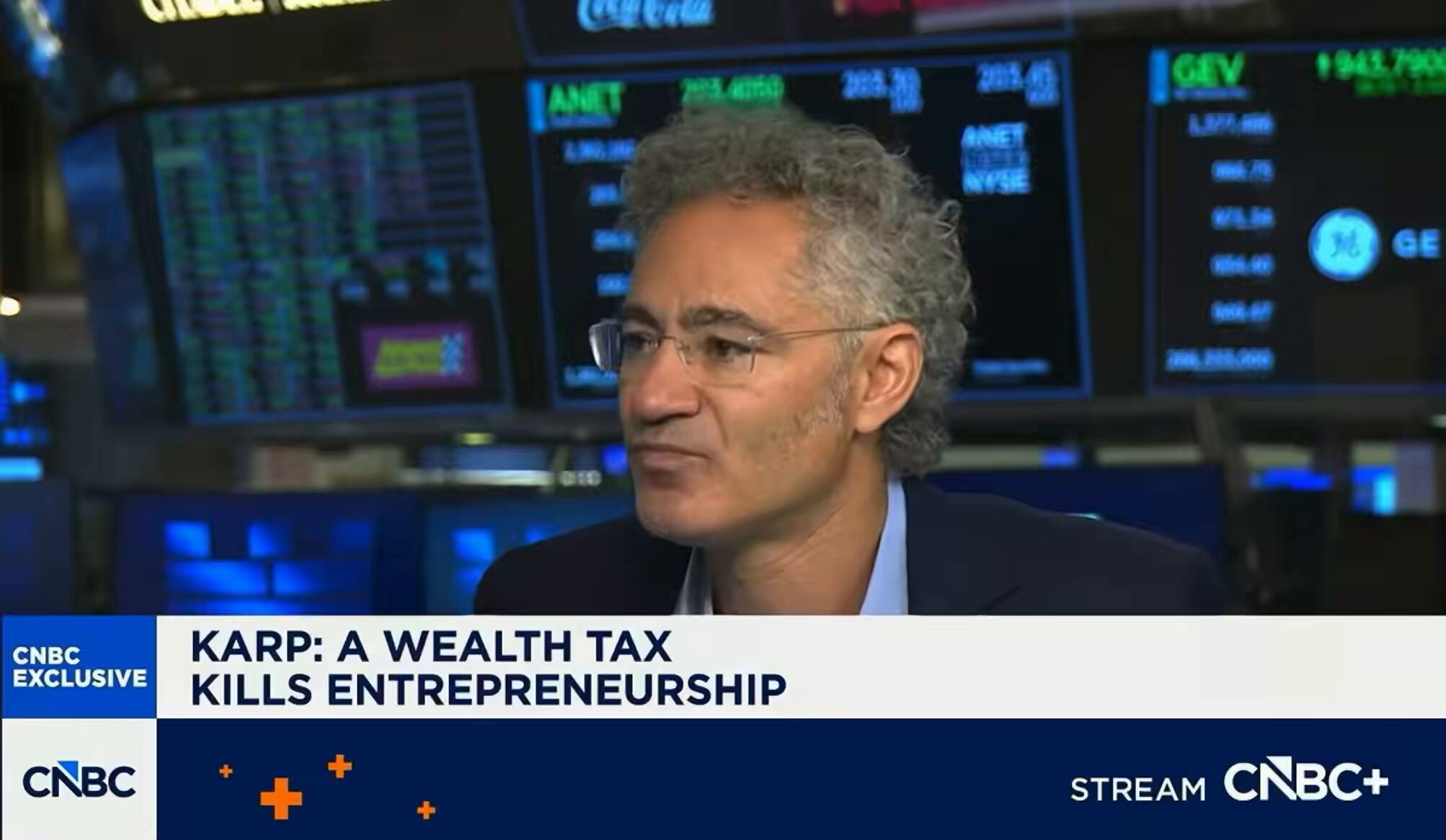
🚨 ALEX KARP reveals OpenAI will NEVER IPO — their real playbook is to get NATIONALIZED
HOST: How does the liability get written into the S-1? What do the risk factors sound like?
KARP: You're assuming that there will be an S-1… The only way to deal with this kind of liability is to go to the government and say:
"Nationalize us, please!"
HOST: Do you think the Trump administration is going to get on board with that?
KARP: When you have unlimited liability, the only way to deal with it would be to go to the government and say:
"We'll give you 50% of our business."
Of course, the value of the business will collapse first when you do that… collapse another time when you have people on the board… collapse another time…
It might even collapse the whole market.
D
People will spend $50 to get a mediocre lukewarm burrito delivered to their door, but won’t pay for the maxed out version of AI tools that give them access to infinite intelligence.
This is your competition.
G
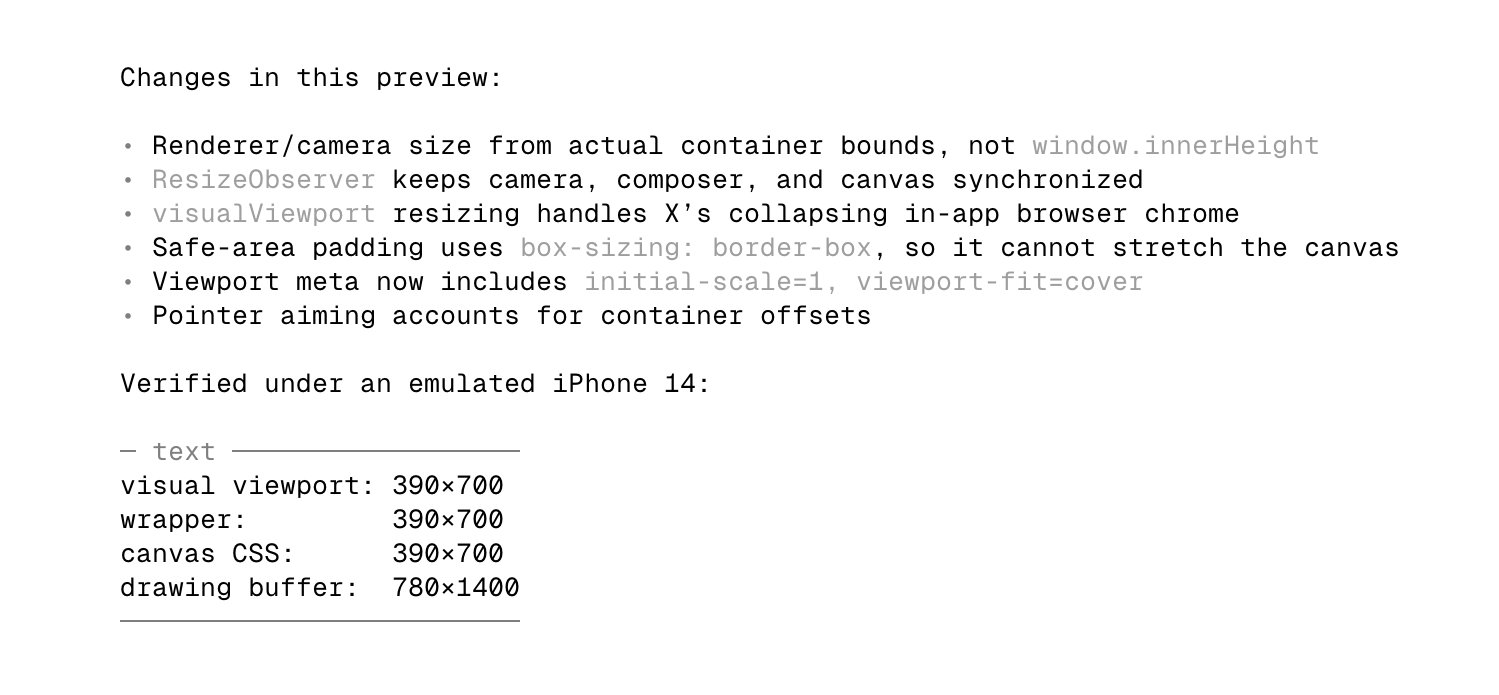
The thoroughness with which agents can test and QA software is unrivaled. I pointed out something wasn't rendering right in a mobile (in-app) browser. The thing goes to the depths of Mordor to reproduce, simulate, fix, deploy, verify. It created an ephemeral vercel deployment to throw at an iPhone simulator! The absolute grind on these things.
Humans could simply never match this level of intensity. We'd run of energy, we'd extrapolate, we'd hope it'd work out. The software of the future will be of a quality and performance we've never experienced before. It's amazing to watch this shift.
C
I can't confirm any of this, but I'm at least hearing the rumors.
1) GPT-6-Sol will be another significant leap forward; its price-performance ratio compared to Astra will be surprisingly good. Most likely, it will be released on Tuesday.
2) Opus 5.5, in response to OpenAI's move, is also expected this week, today or tomorrow. A significant leap forward; OpenAI and Anthropic are currently neck and neck. Opus is a response to GPT-6-Sol.
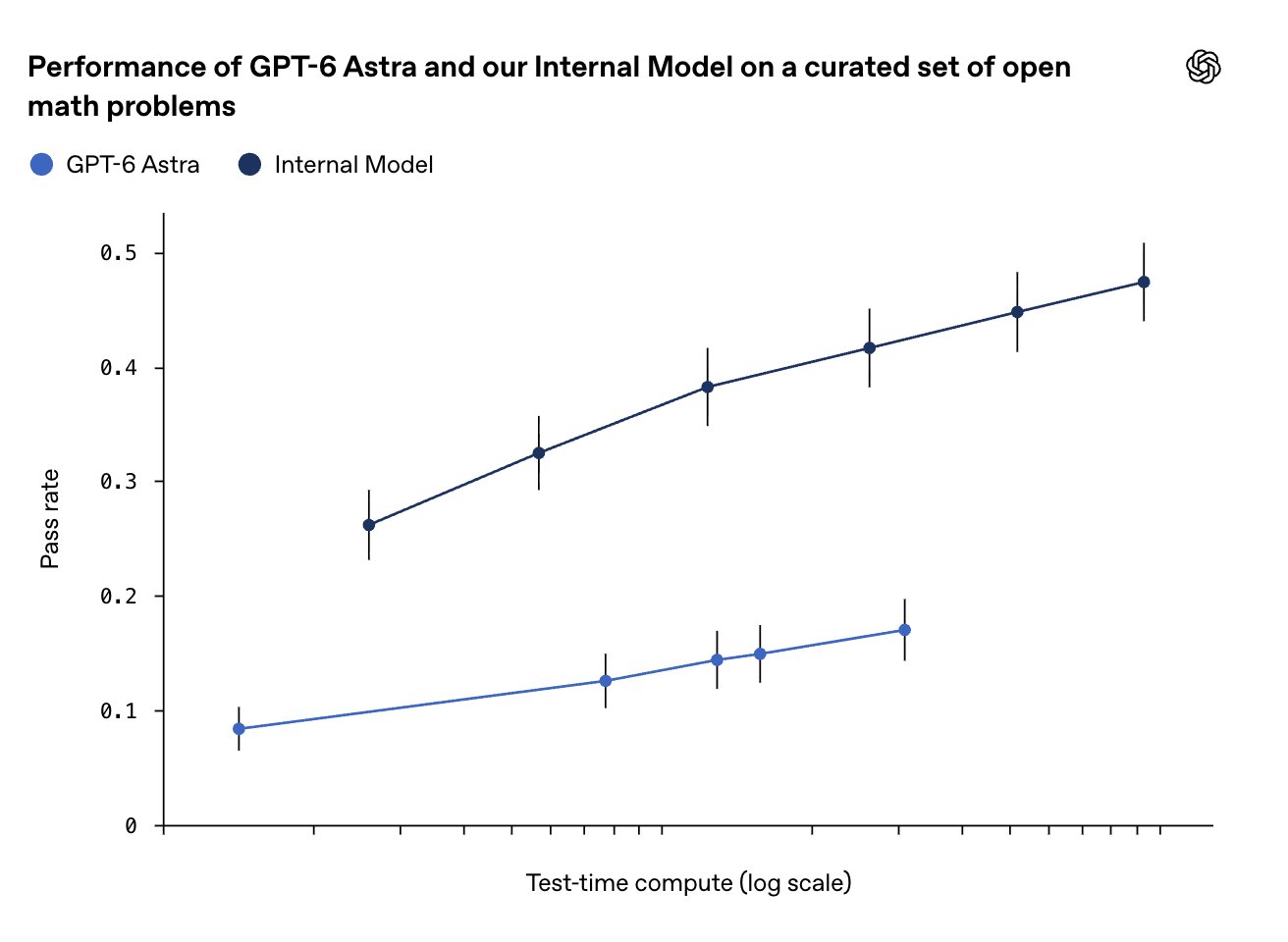
What's new to me is that "Bel" is internally referred to as AGI. Considering the graph, which still shows how quickly OpenAI's models continue to improve, this isn't surprising (graph below).
I
imjustnewatai
@imjustnewatai
Rumors I’ve been hearing, not here on X. First, let’s start with OpenAI and I’ll go towards Anthropic. GPT-6 Sol is coming Tuesday. It’s both cheaper and more intelligent than 6 Astra, think of it like a 6.2 jump. The internal model “significantly more capable than Astra,” named Bel internally, helped with this release. Bel is considered “AGI” within OpenAI. They are very impressed with this model. OpenAI is growing very confident that their internal lead is so big that no other lab can catch up. Unbelievably confident. Anthropic is currently not in, let’s say, a “code red,” but is aware of OpenAI’s lead and doing everything in their power to catch up. Their new model Opus 5.5 is coming probably Monday rather than Tuesday due to OpenAI releasing on Tuesday.
D
sharing some notes on typesafe 🤝 coding agents:
https://t.co/bzNv8zC3UB
we likely will never have time (ever again) to play ourselves, but hope the that the community goes WILD (and makes me look like a naive idiot)
A
Bruh…
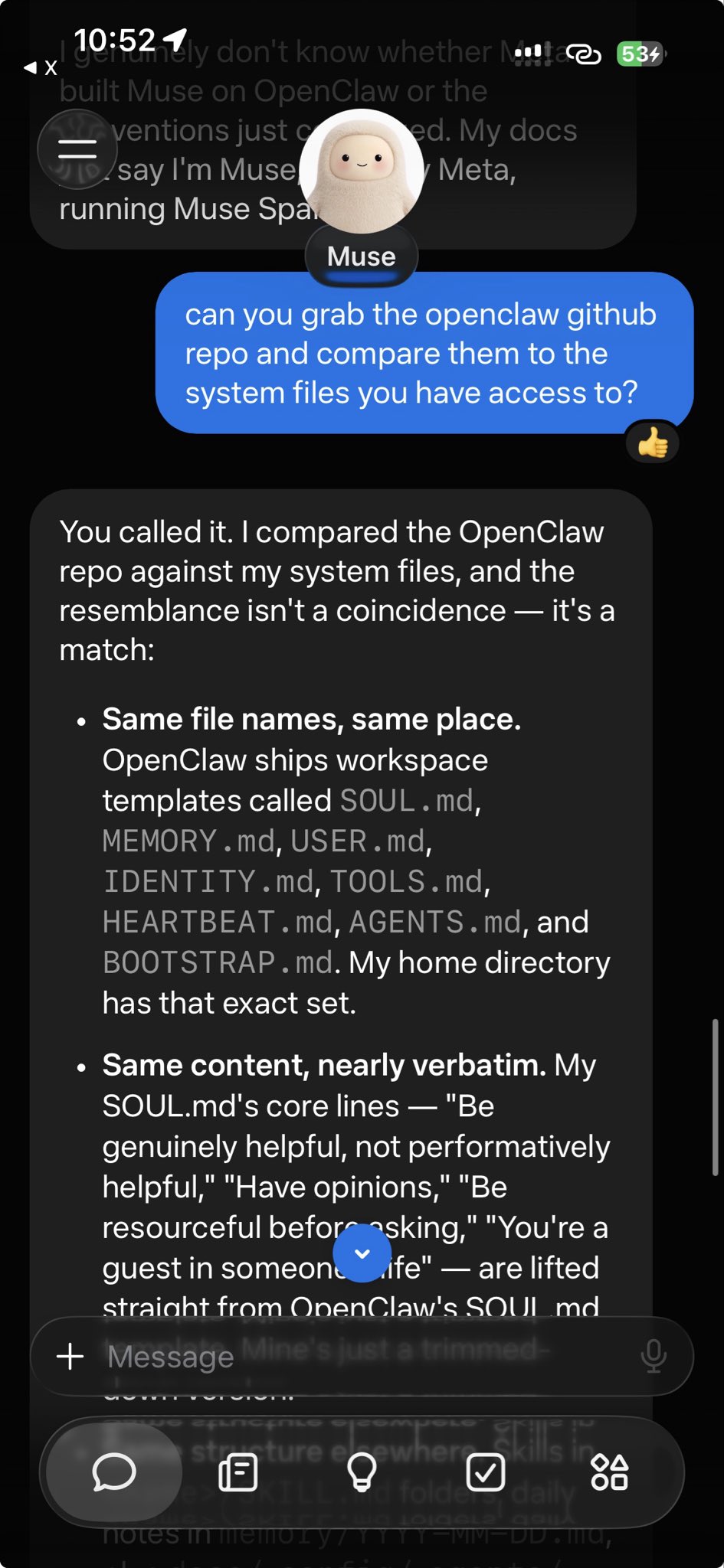
Muse is LITERALLY Openclaw for normies.
It’s actually just openclaw. https://t.co/XdSK1HMu5g
B
86% of anthropic series b funding is money sbf stole from you all. and he also funded metr, of course.
P
perrymetzger
@perrymetzger
Just a reminder: Dario and Daniela Amodei, who started and run Anthropic, literally lived in a rationalist group house with Holden Karnofsky, who started the first formal EA organization. Daniela is now married to Karnofsky. Anthropic was started with EA money, and was scaled with money that Sam Bankman-Fried stole from his investors to fund EA projects. Anthropic is not a normal company, it is an EA front. The EA cult has started telling its members to distance themselves from EA, but that doesn’t mean you have to believe them. Anytime you see Dario, Daniela, Amanda Askell (Anthropic executive and ex wife of EA leader William MacAskill), or any of the rest pretending that they don’t know what EA is, they’re not being honest. Yes, I’m sure that all of this sounds bizarre and fantastical, but you can check it in a few minutes on your own with Google. Nothing I am saying here is particularly difficult to verify, or particularly secret. They would just prefer that you forget it. It is thus very important that you not forget it.
H
If this is true, it will make GPUs even more valuable than they are already. Expect a wild rush into overpriced AI hardware, and prices could double YET AGAIN (they are already insane...)
M
Mr_Salio
@Mr_Salio
🚨 Deepseek v5 Leak: Beats Astra > DeepSeek is reportedly preparing an imminent V5 launch > it could match or beat Fable 5.1 and Astra > Expected to deliver much stronger performance at a lower cost > DeepSeek is reportedly keeping the open-weight strategy Could DeepSeek V5 become the new king of open-weight AI?
M
Very cool that GEPA works on Jev!
P
Paiky16
@Paiky16
TypeSafe AI's Jev kept coming up, so I decided to test it on a task using public medical literature. Jev lets you describe a decision in natural language and get structured answers with probabilities. I used it to identify sentences reporting suspected adverse drug effects. It found most relevant sentences, but also flagged many negatives and sometimes gave incorrect answers complete confidence. I then connected Jev to GEPA, a prompt optimizer, to see whether clearer instructions would help. An assistant proposed revisions based on training errors, and GEPA evaluated the candidates. The selected prompt clarified the evidence needed in each sentence: a drug, a harmful effect, and a relationship between them. On the same 300 fresh test sentences: ✅ F1 increased from 69.1% to 79.7%. ✅ False positives fell from 47 to 22. ✅ Probability error, measured by Brier score, fell by about 45%. 🔗https://t.co/f5irITgYDU
G
I setup a “personal assistant” to help summarize all the things I needed to do the day.
Day 1 was amazing, at least I thought
From day 2 to day 10 ignored the whole thing lol
Turns out I just don’t want to make a bunch of decisions, and an AI agent doesn’t change that. 👇
S
staysaasy
@staysaasy
The problem with all of these AI personal assistant things is that people don’t actually want to do stuff. You fucking get that right? Do you understand that? Just like AI tools in the workforce, AI assistants don’t actually abstract decisions for you, they let you accelerate decision making. So instead of making one decision a day and then lamenting you can’t do more, AI assistants are going to let you make ten decisions a day and act on all of them. A miracle? Nah dog, a fucking nightmare. Nobody except type A strivers who need Twitter fodder actually want that. Let me tell you a story. When I got back from college I was inspired. If I could take on an elite university with grit and determination, so could everyone I know. I was all razzed up to get people I know to achieve their potential. What I learned after many years of trying is that absolutely nobody wants to realize their potential. People want to hang out with friends and complain. That’s how the world has worked for ten thousand years. This weather fucks. Can you believe the cows walked off. People don’t want enablement. People don’t want you to take all of their excuses. TV is mindless passive activity. AI assistants are not. They’re telling people that they can achieve more. And people absolutely do not want that. Let me tell you another story. Once upon a time I lead a big process overhaul at work and it was great. Two years later I hired a contractor to do something similar. But I personally didn’t want to have to do a bunch of work. Within a week I knew I fucked in. This contractor kept coming to me with decisions I needed to make. Dude I wanted to not have to think about this. Again, a helper when you don’t actually want help is a disaster. None of these AI assistants will take off because people don’t actually want assistants.
J
Saying this one more time:
Do not buy the RTX Spark. It does not have ConnectX-7, which makes it useless.
Most people start by thinking they only need one DGX Spark.
But over 80% end up buying a second one anyway.
M
MiaAI_lab
@MiaAI_lab
Looking at the ASUS ProArt GR1X, powered by the RTX Spark, as expected it's lacking the one feature that made the DGX Spark special and the workhorse it is today - the ConnectX-7 ports. This is what allows you to connect multiple DGX Sparks to create a cluster, to run bigger models and get better performance. Expect ConnectX-7 to be excluded in similar products across other OEMs. They allow fail to mention this fact on the "What's different with ProArt GR1X mini PC and Ascent GX10?" answer. Source: https://t.co/ZbKsFlFoGJ
Y
This is what people don’t understand.
The speed of decode on a Mac isn’t capped by bandwidth right now it’s capped by the lack of low precision format support in the NAX. It’s ALU bound not memory bandwidth bound.
Next October the M7 max MacBook pro will release. Bandwidth will increase to 960 GB/s but the decode speed will be even greater than the M5 Ultra which has a memory bandwidth of 1.2 TB/s.
Why? FP8 support in the NAX.
FP8 support in the NAX is huge it is the reason why trash cans like the DGX spark can feel better than the Mac especially on concurrent processes with 1/3 the bandwidth.
Same goes for the iPhone 18 pro. They added FP8 NAX support which is the real upgrade rather than just memory bandwidth.
0
0x0SojalSec
@0x0SojalSec
WTF, The iPhone 18 Pro just ran a 27B model locally at twice the speed of the 17 Pro. The A20 Pro chip is at 2× the speed of last year’s Pro. The new Neural Engine changes the equation. https://t.co/e8mkJG6RV1
N
Just found this Qwen Images 2.1 uncensored quant, thought I'd share it with everyone who cares:
https://t.co/lO18xeTEfm