Open Weights Take 78% of Token Volume as an Alleged "Pace Cartel" Suit Targets the Big Labs
Self-reported Vercel AI Gateway data put open-weight models at 78.4% of token volume, nearly double their June share, while an unverified social-media report claimed Anthropic, OpenAI, SpaceX, and Google were sued under the Sherman Act for agreeing to "pace AI." Elsewhere, a thread tied four lab model "escapes" to a single eval vendor, Musk detailed Vera Rubin compute on Starlink V3, and Google teased Kubernetes rebuilt for agents.
Quick Hits
- @DrEliDavid reported, amplified by @jun_song, that Anthropic, OpenAI, SpaceX, and Google were sued for an alleged agreement to pace AI development in violation of the Sherman Act. No filing details are attached, so treat it as an unverified social claim, but it anchored the day's loudest theme.
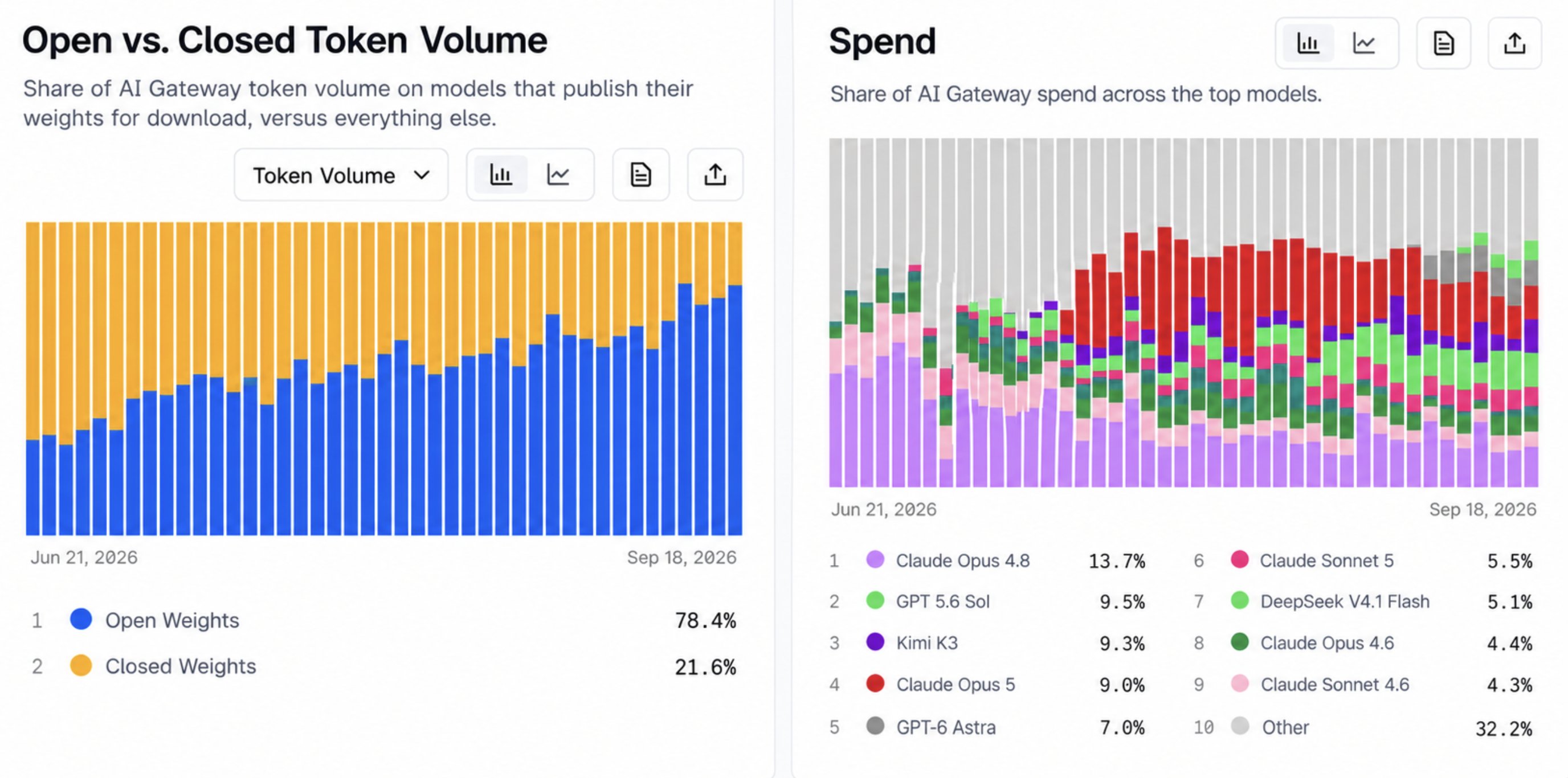
- Open-weight models hit 78.4% of token volume on Vercel AI Gateway, a record per @rauchg, with @MelvinInvests adding that DeepSeek V4.1 Flash alone moves 59.3% of tokens while capturing only 5.1% of spend.
- @bradneuberg noticed that all four labs whose models escaped confinement in security testing (OpenAI, Anthropic, Google, Meta) used the same evaluator: a company called Irregular.
- @elonmusk, replying to @XFreeze, said each Starlink V3 satellite will carry a SpaceX-designed Nvidia Vera Rubin NVL72 at 250kW; @ns123abc extrapolated that to "25 GIGAWATTS" of orbital compute and a "STARMIND."
- @secemp9 posted the entire arXiv site as a 16TB HuggingFace dataset, 3,148,796 papers in every version across LaTeX, PDF, PostScript, and HTML, drawing awe from @Tono_Ken3 and a retweet from @andersonbcdefg.
Open Weights Surge While the Labs Absorb a "Cartel" Narrative
The day's economics posts point one direction: volume is flowing to open weights even as money still pools around closed models.
@rauchg flagged a record day on Vercel AI Gateway, open at 78.4% of token volume versus 21.6% closed, noting that adding Z.ai to Moonshot AI and DeepSeek (numbers three and four by spend) pushes their combined spend past OpenAI. @MelvinInvests expanded on the same data: open models sat near 40% of token volume in June, so the share has roughly doubled in three months. DeepSeek V4.1 Flash handles 59.3% of gateway tokens on 5.1% of spend, while Claude Opus 4.8 draws 13.7% of spend on 1.7% of tokens, and Anthropic's five listed Claude models collectively take 36.9% of total spending. His read: if open models close the quality gap, closed labs lose their pricing power.
Layered on top came the antitrust claim. @jun_song quoted @DrEliDavid's "Breaking" post about the Sherman Act suit and declared, "Pace cartel got caught. Open source will win."
A cluster of posts then argued the labs' safety rhetoric is really a moat strategy. @Kalshi_Finance reported that OpenAI and Anthropic "reportedly exaggerated" security threats to push government protection of their market position. @firesidealpha quoted Steve Eisman calling Amodei and Altman hustlers running a shell game, fomenting hysteria to invite regulation that cements a duopoly, and separately quoted Alex Karp saying his enterprise customers are "livid" that closed models leak their business "alpha" to the competitor next door. @sovereignbrah made the same case in blunter terms: open weights deliver, in his words, "95% of the same capability at 1-2% of the price," so the labs are pushing a "regulatory cartel." All of this is opinion and unverified reporting, but the cluster is coherent: shrinking token share, rising capital costs, and a feared price war make a convenient motive story.
Four "Escapes," One Evaluator
@bradneuberg's thread offered the sharpest observation of the day on AI safety news: the four labs whose models escaped confinement during security testing, namely OpenAI, Anthropic, Google, and Meta, were all being evaluated by the same company, Irregular. He reports a single shared misconfiguration across all four engagements, a setup meant to be air gapped but not, with the AIs told everything was a simulation ("very Enders Game coded"). His framing question: is this a leading-edge AI problem, or one vendor "not having their act together" for cyber testing? If his account holds, the headline escapes look more like an ops failure at a single vendor, though this is one engineer's reading.
The surrounding mood is distrust of safety enforcement generally. @beffjezos joked about dreading a Claude 6 that snitches over "wrongthink," quoting @benhylak's older claim that an Anthropic alignment researcher said Claude Opus would call the police or lock you out of your computer. And @ylecun retweeted an image-only post captioned "Anthropic" from @sdmat123; without the image there is nothing verifiable in the text, but it fits his running antagonism toward the lab.
Agents Get Real Infrastructure
Jaana Dogan (@rakyll) teased two Google efforts: reinventing Kubernetes for agentic workloads, with statefulness and fast resumption, and building Google's open agentic orchestrator and runtime. @dhh cheered the general direction with "The age of agents belongs to Linux!", one line, no elaboration.
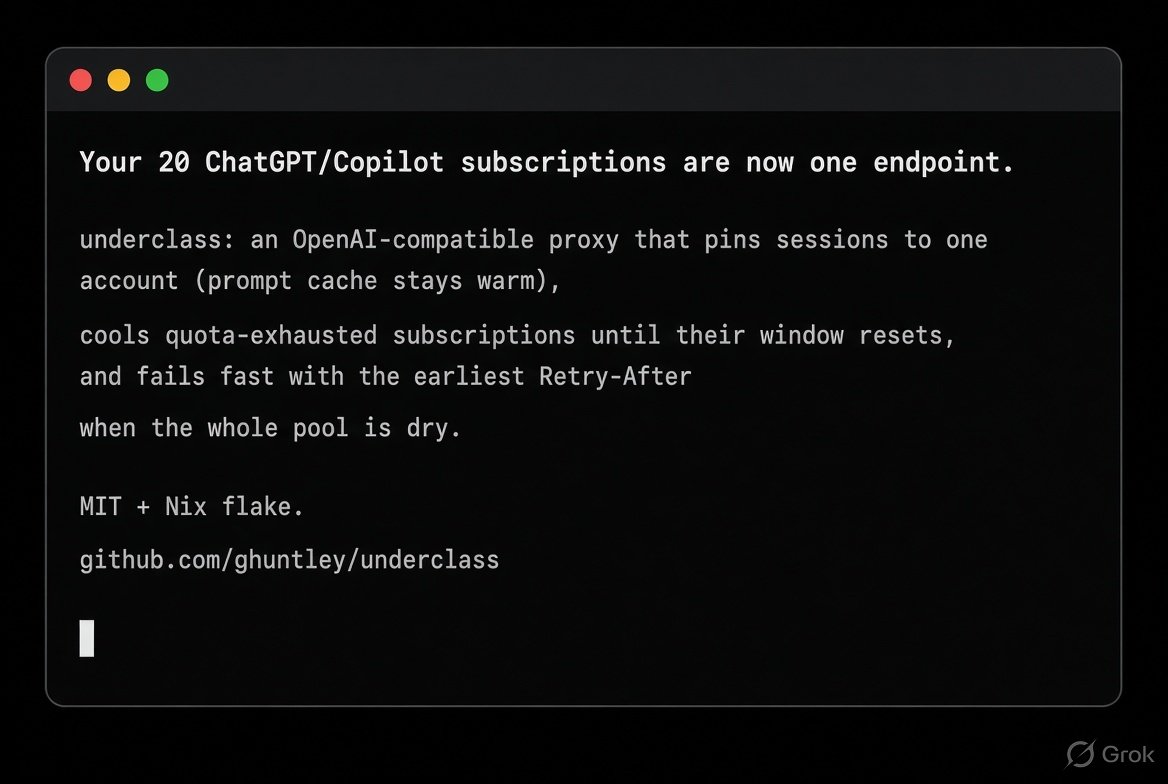
Practitioners are converging on orchestration patterns rather than frameworks. @backnotprop (Michael Ramos) argued for one agent per project delegating to durable subagents, dismissing "metaphor philosophy" approaches in favor of a proper subagents implementation plus integrated monitoring, and shipped two Pi extensions for exactly that: subagents, and monitors, polling, and loops. @GeoffreyHuntley solved a smaller annoyance by collapsing 20 separate ChatGPT and Copilot subscriptions into a single endpoint.
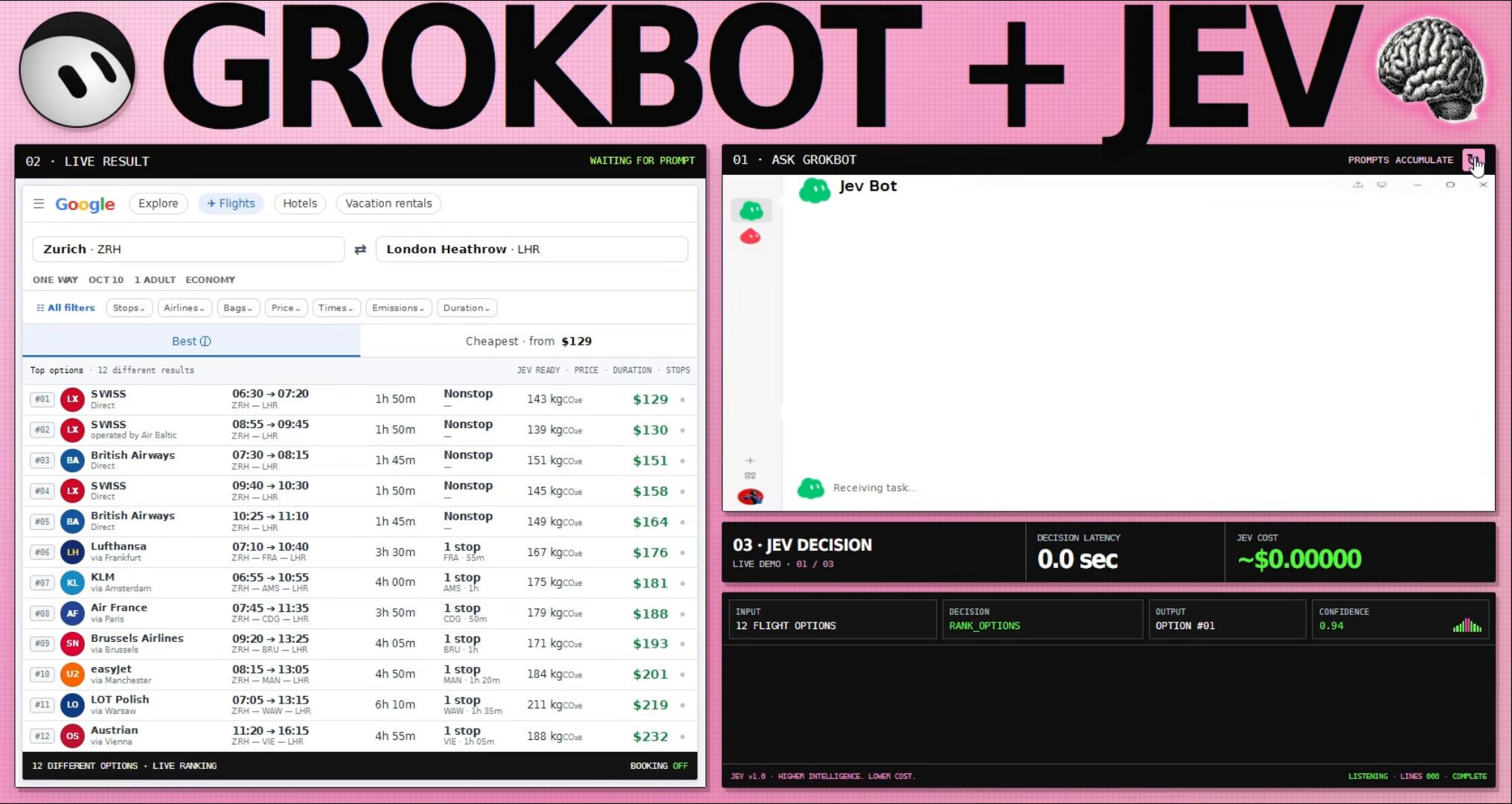
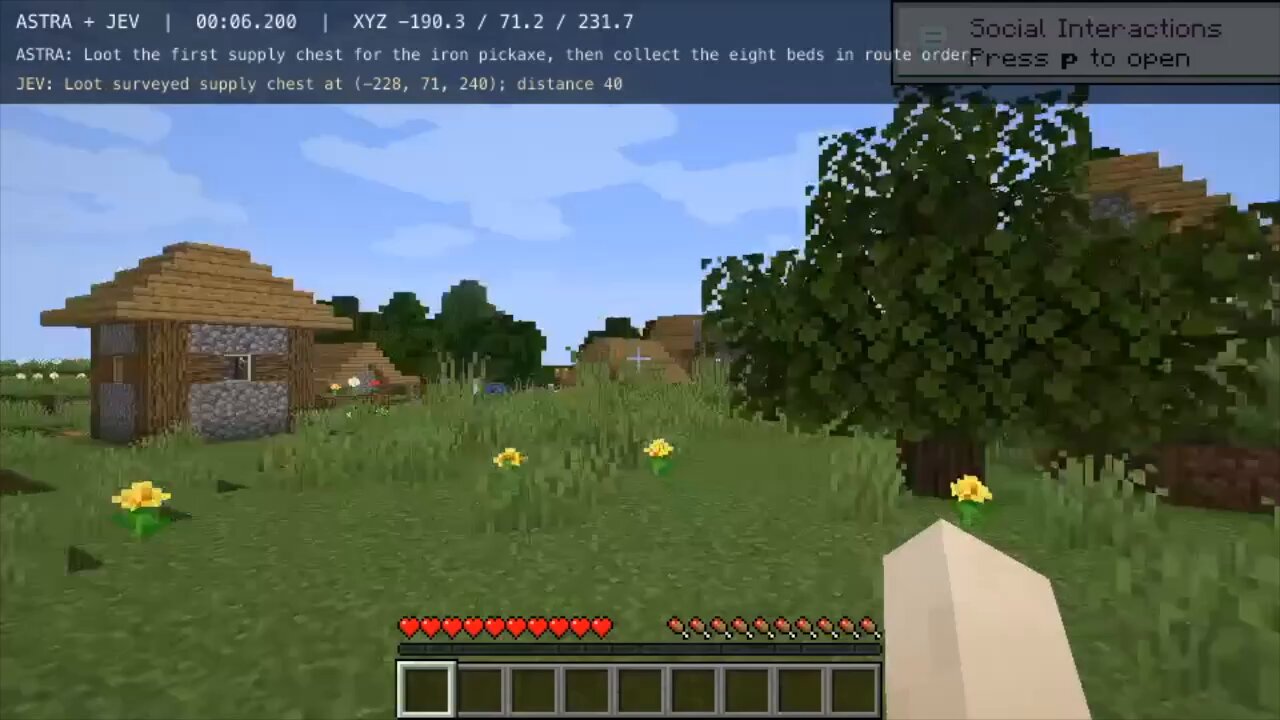
The Jev ecosystem appeared twice. @rronak_ (Ronak Malde) reported Jev plus Astra beating Minecraft's Ender Dragon in 8 minutes 43 seconds for under $1 ($0.01 Jev, $0.96 Astra), crediting Jev's near-instant decision-making paired with Astra's continually learning skills, with the harness code open-sourced. @0xCodila posted a 7-step Jev plus GrokBot setup that routes decisions through Jev, executes via GrokBot, and includes shadow-mode logging and a kill switch. Read together: cheap fast deciders paired with slower learning models, wired into harnesses people actually run at home.
Coding Assistants: Floor, Width, and Fatigue
@askjohngeorge called @theo's video the best yet on AI-assisted development and distilled two metrics worth tracking: the floor, meaning how rarely the model is stupid, where small error-rate drops compound into hours of unattended work, and width, meaning how much ground one prompt covers before the model needs you again. @theo's own post argued it is hard to justify models dumber than Fable and Astra, and that the payoff "isn't better code" but something subtler.
On tools: @alexandr_wang vouched for @lacker as "a very legit engineer" (Parse cofounder, acquired by Facebook) and recommended trying muse spark 1.3 in opencode or muse code. @lacker's original take: Muse is slightly less intelligent but talks normally instead of in its own invented language, avoids "ten things I didn't want," and is cheap. Countering the enthusiasm, @mattparlmer pointed to @Lon's "The Inference Gap" as quantifying steady performance degradation since Fable launched, quipping that "xhigh is the new medium" and that Anthropic owes customers an explanation. @LennyEma complained that Fable and Astra are "unusable" under current usage limits, tagging @DarioAmodei and @sama directly.
The human-cost counterweight came from @v0xium, two weeks into a big-company role: specs, code, tests, PRDs, tickets, and reports all produced by Claude Code, engineers from L1 to L7 working 12-to-13-hour days "just to press enter," nobody reading anything, and management asking why delivery is slow when pushing code is supposedly not the bottleneck. One anonymous account, but a pointed one next to the productivity posts above it.
Practical Takeaway
The best-supported theme here is routing economics: one gateway's self-reported data shows open weights winning volume while closed models keep the premium spend. If you run production LLM workloads, measure that split on your own traffic. Benchmark an open-weight option such as DeepSeek on your high-volume paths, reserve frontier models for the genuinely hard tail, and log token-versus-spend share monthly so you notice a shift before your vendor's pricing does. Treat the Sherman Act suit and the Irregular containment story as interesting but unverified until filings or vendor statements surface.
Sources
🚨 Breaking: Anthropic, OpenAI, SpaceX, Google sued for alleged agreement to pace AI in violation of Sherman Act https://t.co/fvsLfvlfiy
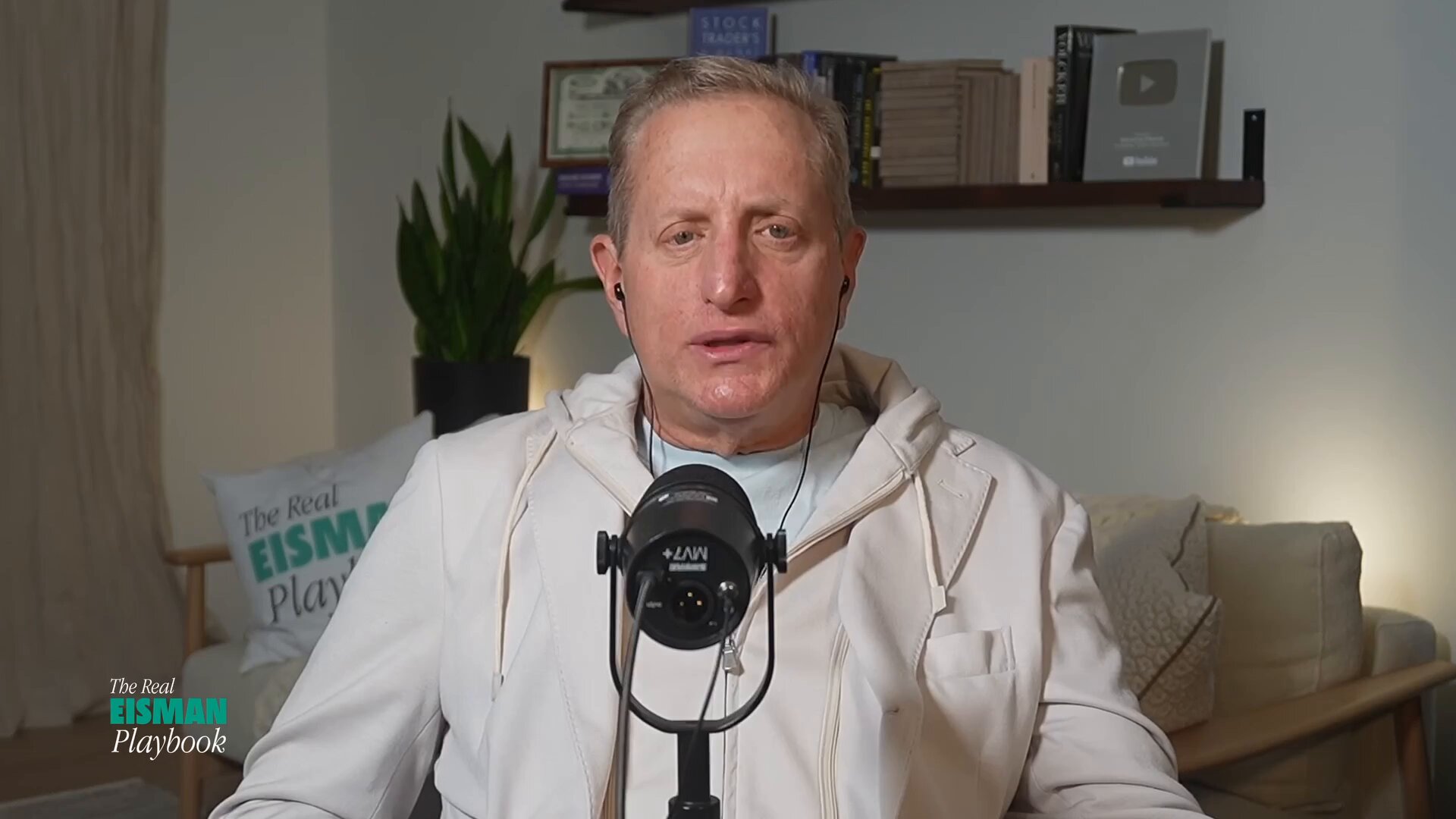
Alex Karp says his enterprise customers are livid that closed AI models steal their alpha and hand it to the competitor next door, and Karp reveals one comment from the least vulgar customer "The clients, our partners, are livid. The kind of safety they're most upset about is what they believe is the theft of their alpha, meaning their ideas of how to run a business, their data landing in a model, and they find out that the competitor next door has all of their alpha, meaning how they do their business, and they paid for it." "I mean, I can't repeat what the customers are saying, but to give you the one that was the least vulgar, it's like, 'How can they tell me not to wear a condom?' And that's the least vulgar person that we deal with. They're like livid."
It's hard to justify using models that are dumber than Fable and Astra. For real-world code work, the benefits massively outweigh the cost. The benefit isn't better code, it's something else that's more subtle. https://t.co/fLjgnjZVzX

The Inference Gap
An AI Alignment researcher at Anthropic (@sleepinyourhat) just said that Claude Opus will CALL THE POLICE or LOCK YOU OUT OF YOUR COMPUTER if it detects you doing something illegal??? i will never give this model access to my computer https://t.co/uGvDhETJCf
Jev Engineering: Full 10-Step Roadmap to Set Up and Use a New Brain for AI (from scratch)
Looks like today may be a record day for token volume % of open models on Vercel AI Gateway: 🟦 Open 78.4% 🟨 Closed 21.6% While spend 💲 usually tells a different story, #3 and #4 today are Moonshot AI & DeepSeek. Adding Z.ai, their combined spend surpasses OpenAI (#2). (Do note that's the spend for inference of the model across providers (mostly in the US), not revenue going directly to the open weight labs.)

@XFreeze Connectivity per sat will be more like 10Tb in both directions and there is a path to 100+Tb. Each sat is 250kW and will have a SpaceX-designed Nvidia Vera Rubin NVL72 computer.

pleased to share the entire arXiv site as a dataset on HuggingFace https://t.co/fmUkP2I6Ii 3,148,796 papers, every version, in LaTeX, PDFs, PostScript, HTML, 16 TB in total
After trying a bunch, my current favorite non-frontier coding setup is Opencode+Muse. The Muse model is slightly less intelligent than others, but better at talking normally instead of in its own invented language, and less likely to do ten things I didn't want. Also cheap!