Jev's Probability-Only Model Splits Reviewers While Zuckerberg Pushes Back on Safety Coordination
A new model called Jev, launched by @CompleteSkeptic with claims of 20-200x speedups, drew warm early testing notes from @danshipper and classical-ML pushback from @mstockton. Meanwhile @finkd framed Meta's quiet Muse safety delay as proof labs don't need to coordinate, and @OpenRouter reported OpenAI model spend topping Anthropic's for the first time in over 2.5 years.
Quick Hits
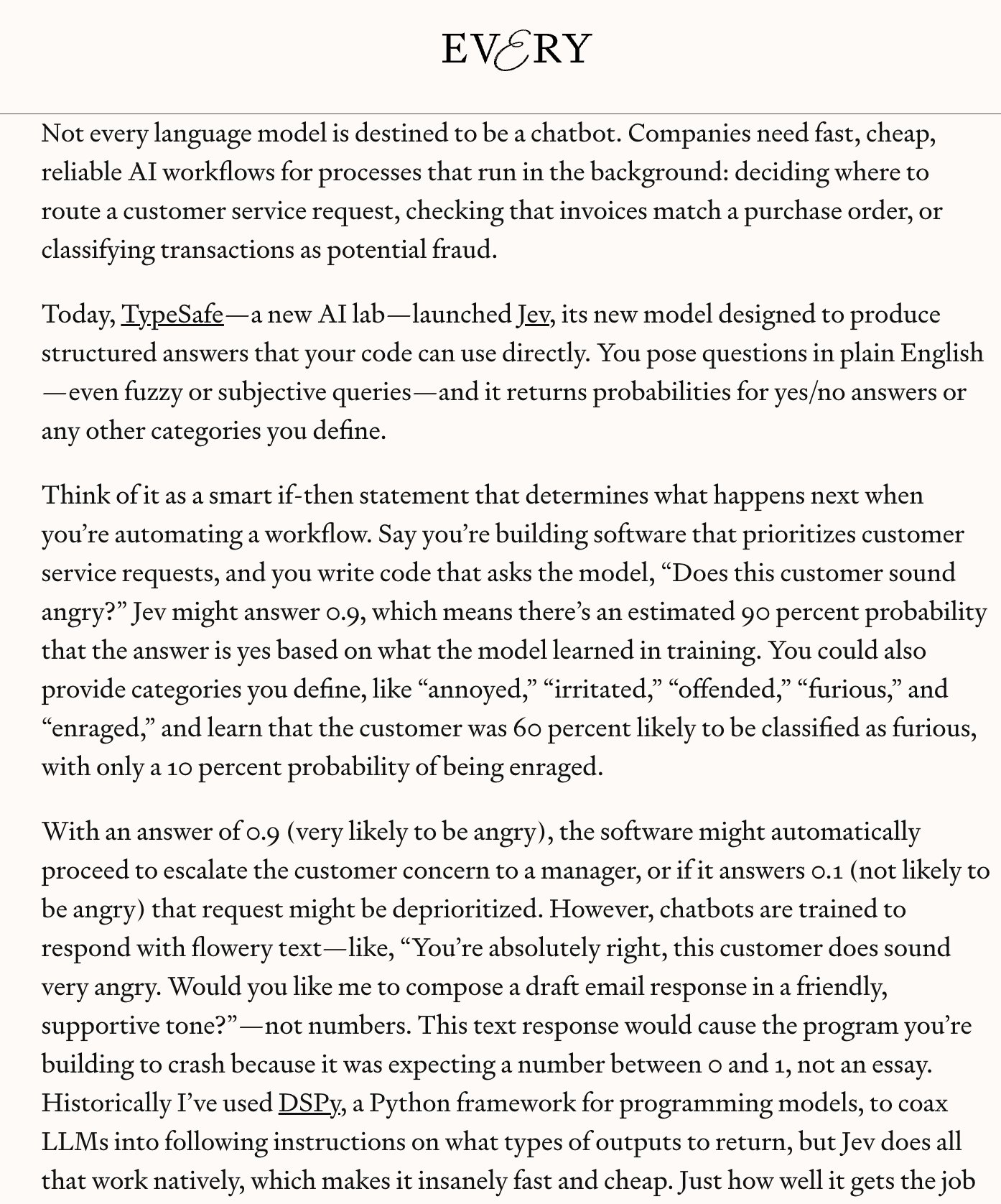
- @CompleteSkeptic, who says he co-invented ChatGPT, launched Jev, a model trained with a method he calls RLCD that outputs probabilities instead of words, claiming 20-200x speed and 40-400x cost improvements. @danshipper's week of testing at Every found it 25x faster and 600x cheaper as a judge, while @dexhorthy relayed a deflating counter-framing: "jev is just a really smart switch statement."
- @finkd says Meta delayed shipping Muse for several months to focus on safety and security without asking the rest of the industry to do the same first. @nic_carter reads the post as a point-by-point rebuttal of Dario Amodei's positions, including a suggestion that METR acts as an Anthropic ally.
- @OpenRouter reports users spent more on OpenAI models than Anthropic models last week for the first time in more than 2.5 years. @mikeldking cautions that Astra just launched, and early spend often reflects testing on expensive tasks.
- @NousResearch says a prompt from @Teknium set Hermes Agent loose on a million lines of Python; 1,393 subagents and nineteen hours later, the codebase was 34.4% smaller, which the company values at nearly $2m in saved engineering hours.
- @LLMSherpa, plugging the exo account, boosted @Exocija's claim that DeepSeek V4.1Flash found a race-condition use-after-free in Samsung's sgpu GPU driver within two days, allegedly enabling arbitrary physical write from any unprivileged app. Single-source and unverified, but notable.
Jev Outputs Probabilities, Not Words
The most-discussed launch of the day is Jev, from @CompleteSkeptic, who says he spent two years in stealth after co-inventing ChatGPT building a new training approach, RLCD. His pitch: 20-200x faster, 40-400x cheaper with free output tokens, and "frontier composable intelligence optimized for decisions" rather than conversation.
@danshipper's notes are warm for someone who says he almost never tests new foundation models. After about a week at Every, he describes a model that emits probabilities instead of text, letting it act as a judge in cases that would otherwise need what he calls a Fable-level model, at 25x the speed and 600x lower price. His forecast: this class of capability feels "obviously indispensible in 6-12 months."
@mstockton's long thread is the useful counterweight. His argument: most business problems are classification or regression, classical ML like XGBoost often solves them better than LLMs, and companies reach for text models mainly because an API call is easier than labeling data, training, and hosting. He thinks Jev may have nailed the UX for this, but wonders whether a zero-shot classifier that still requires expertise beats using LLMs to help build a classical model, and notes that adjacent techniques like Structured Outputs, DSPy, and GEPA have seen minimal adoption among practitioners he knows. He still plans to try it.
@dexhorthy retweeted @NathanFlurry's hype-free summary: Jev does not replace GPT or Claude, "jev is just a really smart switch statement." That framing arguably matches Shipper's judge use case rather than contradicting it.
Zuckerberg: Meta Delayed Muse, No Permission Asked
@finkd's post argues labs already have the responsibility, liability, and market incentives to train models safely: people won't use agents that don't do what they ask, and labs face liability when models cause harm. He confirms Meta delayed shipping Muse for several months to focus on safety and security, framed as day-to-day work rather than a bargaining chip, and says Meta has committed the significant majority of its compute to serving people rather than "racing towards recursive self-improvement."
Reactions split along predictable lines. @nic_carter argues the post "pretty handily dismantles Dario's talking points": alignment-with-the-user versus Anthropic's constitutional approach, incentives already baked in through liability, no publicity over the Muse delay, and an implied suggestion that METR is, in his words, an "Anthropic patsy." @LiebermanAustin goes further, calling Zuckerberg a top-five CEO of all time and reading "shots fired at OpenAI and Anthropic," though the post itself names neither lab.
Agents Move from Sidekicks to Refactoring Crews
The day's strongest through-line is agents doing structural work on code, in both directions of ambition. @chenchengpro pointed to @NousResearch's new post: on September 2nd, @Teknium asked Hermes Agent to clean up a million lines of Python, and after 1,393 subagents and nineteen hours the codebase was 34.4% smaller, saving nearly $2m in engineering hours by their estimate. @uzairansar shared the prompt behind it, which demands a minimum 30% LOC reduction, broken-up god files, unified helpers, less if-else routing, and "No excuses. No waiting for my decisions."
Two posts push the other direction: constraining agents. @rafaelobitten, after heavy Codex and Astra usage, published his AGENTS.md guidelines for cutting overengineering: prefer established open-source libraries over from-scratch builds, choose the simplest solution, check current docs instead of upgrading blindly, and write only tests that prevent regressions.
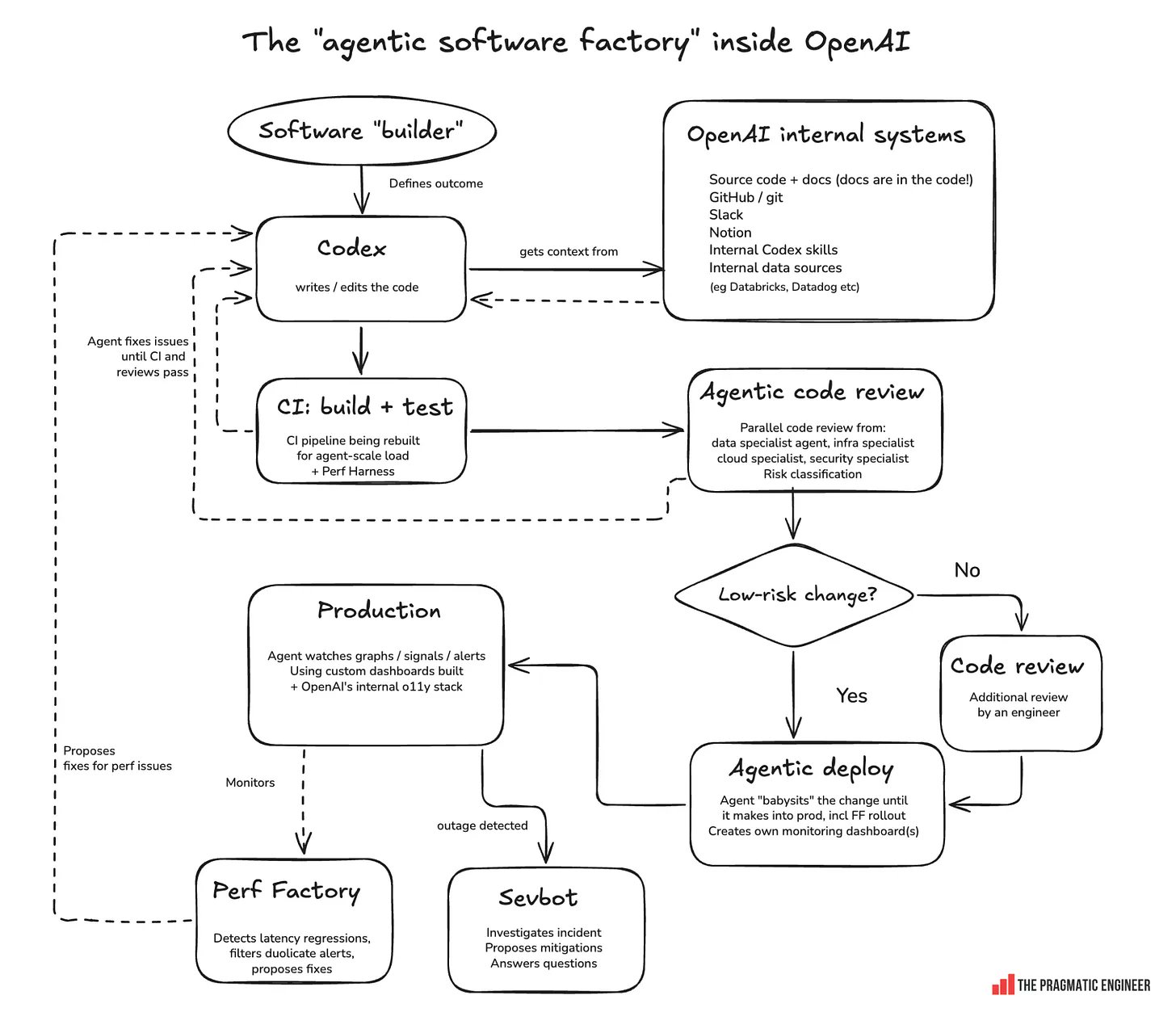
The factory metaphor keeps spreading. @GergelyOrosz diagrammed what he calls OpenAI's "agentic software factory," singling out its Perf Factory as especially interesting, while @BHolmesDev says @zachlloydtweets' crawl-walk-run guide to adopting the software-factory model is what to send anyone asking how to build one. @ramiabih's contribution is cheerfully impractical: a World of Warcraft add-on for talking to Claude Code or Codex agents while you play, to "grind levels and tokens."
Spend Flips, a Kimi Upset Claim, and a Torrent Hub for Weights
Market signals were noisy. @OpenRouter's data shows users spending more on OpenAI than Anthropic models last week for the first time in more than 2.5 years; @mikeldking's caveat is fair, that "spent more" partly reflects people paying to probe the just-launched Astra on costly tasks, and the chart may look different in two weeks.
On benchmarks, @zephyr_z9 calls it "very surprising" that Periodic Labs pushed the Kimi 2.5 base model past Astra. His quoted context is @LiamFedus on Neon, arguing that specialized scientific models can reach strong performance on modest compute when unique experimental data meets efficient infrastructure. Treat the Kimi claim as one observer's report until reproduced.
The open-weights ecosystem also got a new distribution point: @HealthRanger flagged @Blackfrost_AI's Pirate Face, a torrent hub where Hugging Face models are "immortalized," and, as Ranger puts it, not corporate-owned.
Applied AI, Browser Tests, and Founder Cameos
@levie's essay-length post argues the durable opportunity is the applied AI layer between model capability and enterprise workflows: connecting intelligence to processes, reengineering them, aggregating context, human-in-the-loop design, change management, domain evals, and governance. His kicker: better models make this layer more important, not less, because greater capability enables more complex tasks. He discussed it with @sonyatweetybird on the Training Data podcast. @alex_prompter's retweet plugging an unnamed account for "enterprise AI without the hype" is thinner but on theme.
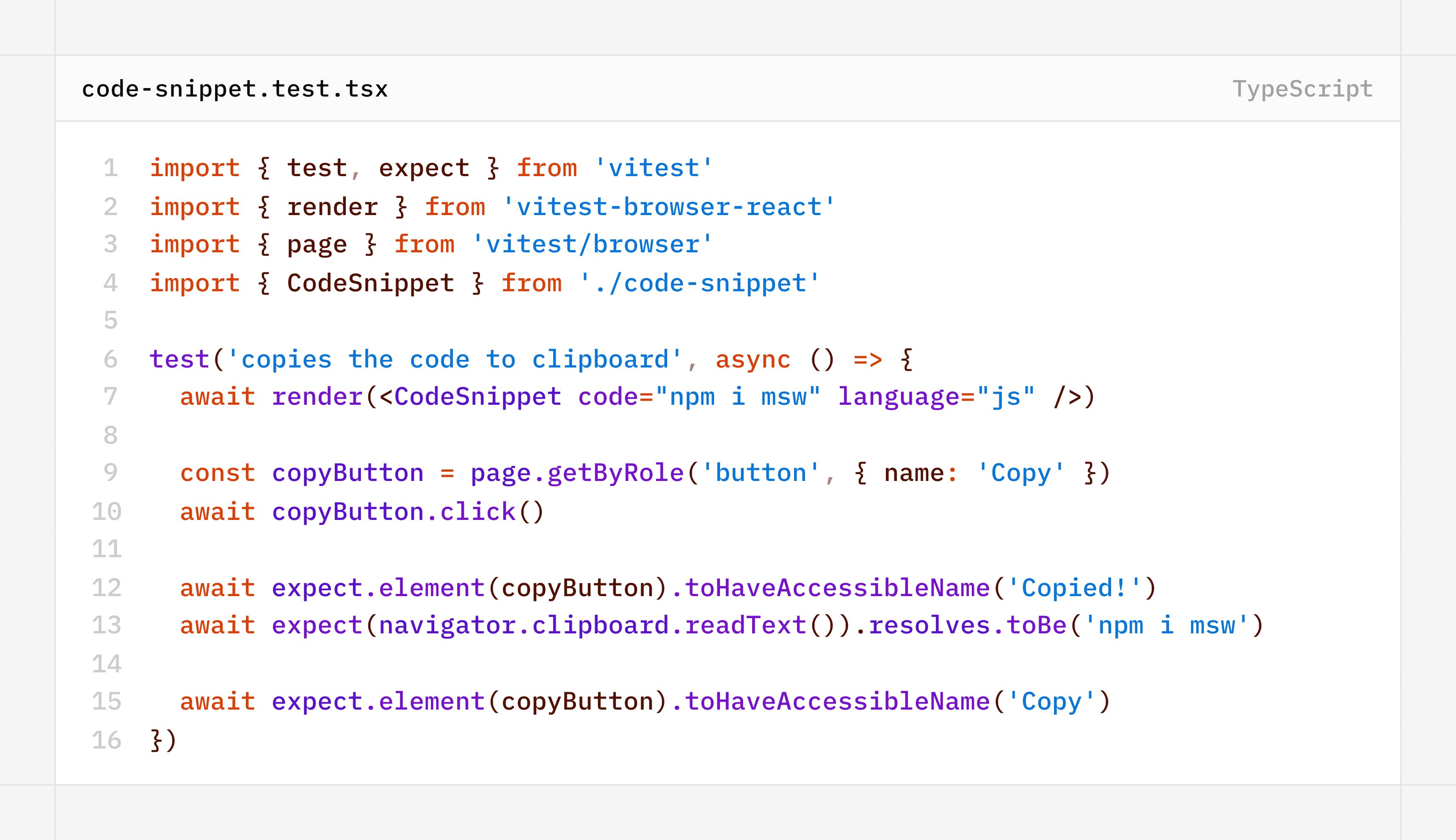
In tooling, @kettanaito says Vitest's Browser Mode has replaced not just JSDOM but React Testing Library for him, and that once you write a single test that way you won't want to go back. @ibuildthecloud, reacting to @namespacelabs' work on fast container image loading, declares that blocks on S3 is the future of storage.
Founder notes to close: @stevewoz announced a return to more active posting plus new merch, drawing @Scobleizer's memoir of stuffing Woz-designed motherboards as a kid, and @brycent predicts @lumeriaskin (YC S26), the $199 clip-on multispectral skin scanner described in @malhalla06's launch post, will be a unicorn. That is a prediction, not a fact.
Practical Takeaway
The strongest theme is agent-driven refactoring with explicit constraints. If you try it, pair ambition with guardrails: a Teknium-style prompt that sets a measurable LOC-reduction target and forbids waiting on your decisions, plus AGENTS.md rules like Bittencourt's (simplest solution, reuse proven libraries, only regression-preventing tests) to stop agents from over-engineering. It works best on a codebase with enough test coverage to survive aggressive deletion; without that safety net, ask for smaller, individually reviewable PRs first, and if Jev-style classifiers tempt you, benchmark them against a cheap XGBoost baseline before committing.
Sources
A
It's crazy how Vitest has replaced not just JSDOM but also React Testing Library with their Browser Mode. I'm absolutely loving this 😍
Once you write a single test like this, you will never want to go back. https://t.co/7HmFJxlitG
S
If you weren't already following exo...
...
...why not?
E
Exocija
@Exocija
I told DeepSeek V4.1Flash to find a vuln in Samsungs sgpu GPU Driver 2 days later it found a Race UAF vuln that gives any unprivileged app arbitrary physical write. https://t.co/1Frqg0Cljt
D
I freaking love this! I don't know if this uses S3 at all, but blocks on S3 is the future of storage. Storage has been the bottleneck in the cloud for so long and everyone is breaking down the barriers.
N
namespacelabs
@namespacelabs
How we made container image loading fast
R
After spending way too many tokens with Codex @OpenAIDevs especially Astra over the past week, I ended up adding these guidelines to the AGENTS.md in my ~/.codex.
They’ve helped a lot with cutting down on overengineering, unnecessary precautions, excessive testing, and rebuilding things that already have solid solutions out there:
1. Prefer reliable, secure open-source libraries over building from scratch; when customization is needed, prefer supported extensions or extension points, and build from scratch only when existing options cannot efficiently meet the project’s requirements.
2. Choose the simplest solution that meets the requirements; avoid overengineering and speculative abstractions.
3. Always check current official API and library documentation; use version-compatible guidance rather than blindly upgrading.
4. Write only tests that provide meaningful confidence and prevent regressions; avoid redundant tests and unjustified release gates.
Z
This is very surprising
Periodic Labs was able to push Kimi 2.5 base model to exceed even Astra
L
LiamFedus
@LiamFedus
Neon required three pieces: the labs, the research, and the infra. It’s an early example of how our unique experimental data, combined with highly efficient infrastructure, can be used to train specialized scientific models with strong performance on relatively modest compute compared to frontier systems. Read more about our overall approach here. https://t.co/wKKeRilh32
R
I build an add-on in World of Warcraft to talk to your agents in Claude code or codex while you play.
Can’t wait to grind levels and tokens https://t.co/U1LHALBDNC

G
Here's what OpenAI's agentic software factory looks like, today.
Details: https://t.co/UUZufLxG2r
(thanks to all the OpenAI folks who explained how it works! And Perf Factory looks especially interesting to me) https://t.co/NEyldtr1Dq
B
If someone asks you how to set up a software factory, send them this
Z
zachlloydtweets
@zachlloydtweets
Adopting the software factory model: crawl, walk, run
D
we almost never test new foundation models but we've been testing this for ~a week @every and it's pretty wild.
the kind of things that will be obviously indispensible in 6-12 months
it doesn't produce words as output, it produces probabilities. so it can efficiently act as a judge in cases where you'd need a Fable-level model—but in our testing was 25x faster and 600x lower priced
excellent vibe check by @hammer_mt on @every:
https://t.co/yVX25Wsu4Z
C
CompleteSkeptic
@CompleteSkeptic
After co-inventing ChatGPT, I kept asking myself: why have superhuman chat models not led to AGI? I’ve spent the last 2 years in stealth building a new way to train models (RLCD), and a new type of frontier AI model that we are releasing today: Jev • 20-200x faster • 40-400x cheaper (w/ output tokens free) • Frontier composable intelligence optimized for decisions AFAICT the shortest path to AI-based economic revolution
A
There’s a massive chasm between the power of AI models and the ultimate workflows that enterprises are trying to automate. This gap is the opportunity for the applied AI layer to fill.
You need to connect the intelligence to workflows, often reengineer processes, aggregate the right context and data, allow for the right human in the loop experiences, drive change management, do domain specific evals, manage the security and governance of the data and process, and much more.
We’re going to see this layer emerge in every vertical and horizontal category. And ironically, even as models improve at incredible rates, this layer still must exist - and may become even more important and useful. Greater capability enables even more complex tasks to be tackled, amplifying the challenges if you don’t do this well.
Was super fun chatting with @sonyatweetybird on all the things going into AI diffusion.
S
sonyatweetybird
@sonyatweetybird
Well.. @levie and I filmed this episode of Training Data a week or two ago, when the “current thing” was Doug Leone’s novacaine root canals instead of pacing the frontier… Simpler times! But Aaron’s advice on reinventing yourself and your company for AI is timeless. Aaron founded @Box 20 years ago. It sits on hundreds of billions of enterprise files, and he's bet the company on agents that can read every one of them. He's also one of the most wired-in people in AI, on every cap table and, by his own admission, 95% Twitter-educated. He’s the rare CEO who can straddle both the internet AND has the ear of CIOs. His core argument: (1) the gap between what a model can do and what an enterprise workflow actually needs is vast, and closing it is a lot of software; (2) diffusion of AI outside of coding will take far longer than Silicon Valley thinks, and that slowness is exactly where the applied layer's value comes from. The conversation covers: — why application companies are the hottest neolabs, and why the LLM-wrapper thesis is finally working — the fox-guarding-the-henhouse problem with letting model providers route your tokens — work slop, and why we accept AI-written code but flinch at AI-written decks — how Box built its agentic harness and why it beats raw API access on accuracy and latency — the open-weights paradox: closed labs and open models both growing exponentially at once — what continual learning has to solve before it works for a lawyer with five matters and a Chinese wall — why 90% of enterprise tokens in five years will come from tasks no human kicked off — the mandate for founders right now: whoever gets it to the customer wins 0:00 – Introduction 1:55 – Are application companies the hottest neolabs? 6:56 – Will the labs move up the stack? 12:34 – Box and betting the company on AI 16:50 – Hero use cases: reading a million contracts and long-running agents 18:42 – Work slop: why AI code is embraced but AI content isn't 24:08 – Building Box's agentic harness and the evals that matter 27:23 – The state of the model race 29:25 – Open-weight model adoption in the enterprise 32:34 – Memory, continual learning, and what belongs in the weights 37:29 – Box Labs and systems of record in a world of agents 44:55 – Will chat be the dominant UI for enterprise AI? 48:00 – Why coding diffused fast and the rest of knowledge work hasn't 54:31 – Staying wired in, making a company AI-first, and what it takes to win
N
Zuck pretty handily dismantles Dario's talking points here:
- people want models that are *aligned with them* (subtly punches back at Anthropic's normative constitutional approach)
- labs already face liability if they screw up, so incentives to release aligned models is already baked in
- Meta delayed Muse for alignment reasons but didn't make a whole song and dance about it
- Subtly questions Anthropic trying to kingmake METR (implies METR is an Anthropic patsy)
- Meta doesn't need to coordinate with anyone to work on alignment, it's just something labs should naturally do
F
finkd
@finkd
Last month I wrote about how we can build a positive and safe future for everyone: https://t.co/eoLGVY8yad Every lab has the responsibility and incentive to move at the pace required to train its models safely, and the ability to take its own actions to ensure that happens. The reality is: - People won't want to use agents that are misaligned with them and that don't do what they ask, so labs have a strong natural incentive to make their models more aligned. There is a lot of debate about slowing progress on capabilities until alignment catches up. My view is that trust and alignment are quickly becoming the most important capabilities that will differentiate agents and models. Any lab that doesn't focus on alignment will fall behind. - Labs face significant liability if their models cause harm, so they have a strong incentive to prevent this as well. Meta delayed shipping Muse for several months to focus on safety and security. We didn't call for everyone else to do this before we would. We just did it as part of our day-to-day work because it was clearly the right thing for people and for us. I'm proud of the security foundations we've built. - Engaging independent evaluators and advisors is industry best practice. MSL already does this today in several areas because it helps produce better work. Other labs can just do this too. In general, it would be helpful for there to be a larger and more diverse ecosystem of evaluators. - Committing the significant majority of compute towards serving people rather than racing towards recursive self-improvement is one of the best ways to ensure we develop this technology safely. Meta has made this commitment and other labs can do this as well. I believe the key to building a positive future for everyone is maintaining the right balance of power. This is within our power to do.
A
Zuck is such a savage and one of the top 5 CEOs of all time.
Shots fired at OpenAI and Anthropic 😂
What a legend.
“Meta delayed shipping Muse for several months to focus on safety and security. We didn't call for everyone else to do this before we would. We just did it as part of our day-to-day work because it was clearly the right thing for people and for us. I'm proud of the security foundations we've built.”
F
finkd
@finkd
Last month I wrote about how we can build a positive and safe future for everyone: https://t.co/eoLGVY8yad Every lab has the responsibility and incentive to move at the pace required to train its models safely, and the ability to take its own actions to ensure that happens. The reality is: - People won't want to use agents that are misaligned with them and that don't do what they ask, so labs have a strong natural incentive to make their models more aligned. There is a lot of debate about slowing progress on capabilities until alignment catches up. My view is that trust and alignment are quickly becoming the most important capabilities that will differentiate agents and models. Any lab that doesn't focus on alignment will fall behind. - Labs face significant liability if their models cause harm, so they have a strong incentive to prevent this as well. Meta delayed shipping Muse for several months to focus on safety and security. We didn't call for everyone else to do this before we would. We just did it as part of our day-to-day work because it was clearly the right thing for people and for us. I'm proud of the security foundations we've built. - Engaging independent evaluators and advisors is industry best practice. MSL already does this today in several areas because it helps produce better work. Other labs can just do this too. In general, it would be helpful for there to be a larger and more diverse ecosystem of evaluators. - Committing the significant majority of compute towards serving people rather than racing towards recursive self-improvement is one of the best ways to ensure we develop this technology safely. Meta has made this commitment and other labs can do this as well. I believe the key to building a positive future for everyone is maintaining the right balance of power. This is within our power to do.
B
Calling it now, this will be a Unicorn. No way in hell it fails. Absolutely insane.
M
malhalla06
@malhalla06
Everyone owns skincare products, but nobody knows what's actually working. Today, @theantheaguo and I launch @lumeriaskin (YC S26) to end that. The Lumoscope is a multispectral camera that clips onto your phone and scans your skin at home with the same light used in clinics, so you see what a mirror can't: a breakout days before it surfaces, and sun damage years before it shows. Every scan is scored on hydration, redness, texture, and sebum, and it compounds into a record of your own skin. Lumi reads that history, connects flare-ups to causes you'd never suspect, and matches products to YOUR data, instead of a population average. Preorders are officially open today at $199 only until Aug 16th. Starting today, skincare will no longer feel like guessing. ☀️
M
Some raw / unfiltered thoughts around the Jev model. Thinking out loud:
- Lots and lots of problems in business are classification or regression problems. Lots and lots of companies don't know that the types of problems they have are solvable by classical ML methods. They often solve them with people and process instead of technology.
- With the emergence and popularity of LLMs, more companies are thinking 'Maybe we can use AI for that!' and are solving classification and regression problems with LLMs.
- This is good in some ways, because companies are potentially automating some manual work, but also bad in some ways, because it's often the wrong tool for the job, and possibly not as good as the classical ML methods for what they are trying to do..
- If anything, the emerging popularity of 'AI' (which for most folks is synonymous w/ LLMs at this point) has caused them to try to solve their problems with that type of 'AI' (even if classical methods are more appropriate if you knew about the available tools / techniques)
- There are very established 'classical ML' patterns to solve the problems they have (e.g. XGBoost is often all you need). AutoML works pretty well at this point for the 80% of problems here too, as long as your data is clean.
- But the classical techniques require you to label your data, train a model, and host that model somewhere. They aren't as easy to use compared to 'calling an LLM API' - and it requires you and your org to be aware of those techniques, and capable of investing in them.
- Classical ML is now much easier to do because of LLMs. I've built a bunch of models in the last 2 years using LLMs to build the classical ML code, do data cleaning, etc. - that would have taken me *much longer* if I didn't have an LLM to help - but still harder than shoving the problem at a text-based model.
- There are some great patterns / techniques which exist around LLMS to constrain output for classification / regression, and make things cheaper / more performant (Structured Outputs, DSPy, GEPA, etc.) - still not super-accessible to the broader audience (I can count on one hand the number of practioners I know who have experimented with DSPy / GEPA -- maybe a few more who use Structured Outputs) - I am hopeful that these types of things become more adopted, but maybe the technical hurdles are too high in the short-term.
- With Jev, maybe they've nailed the 'UX' for this. Yes, it looks a lot like structured outputs, but it is more opionated and directly targets classification / regression -- in a way that probably more folks will understand vs. Structured Outputs / DSPy / GEPA
- I do wonder how effective it will be. It feels very adjacent to zero-shot Timeseries stuff like TimesFM. Like yes, it is very cool you can do predictions without training, but when you look at stuff like TimesFM, it seems to be not very good compared to supervised training of TS models (again, requires expertise to do so). Maybe you can put your labeled data in context, and this will work
- But then my question becomes -- if it takes a bunch of know-how to use this type of zero-shot classifier / regressor model, at what point is it better to just use LLMs to help you build classical ML models?
Thank you for reading my rant. I know it is disorganized and probably not fully coherent. Either way, it's super-cool to see new ways to piece together this new tech that has emerged over the last few years. Excited to track where Jev goes, and I think it prob. will be useful for some. I plan on trying it out for sure.
M
"spent" more - that's an interesting way to split the competition.
I want to see this chart after 2 more weeks. I want things more equal but also Astra just came out. It's not surprising to me that people spent a lot of money testing out it's capabilities - especially on tasks that cost more.
O
OpenRouter
@OpenRouter
OpenRouter users spent more on OpenAI models than on Anthropic models last week. This hasn't happened for more than 2.5 years https://t.co/oITqYWOpeL
U
Teknium’s god prompt for cleaning up the Hermes codebase.
I’m stealing this:
“/goal I want a massive simplification set of PRs. or a single monolithic PR. I want LOC to drop dramatically. Minimum 30% overall. I want god files broken up. I want simplification across the board. I want unification of helpers and methods that can be reused. I want less if-if-if-if-if-if-else routing. I want code legibility up. I want interpretability of the codebase and how things connect to each other up. I want elegance. I want superfluous excess bloat code cleaned up and removed. I want it all done fully. No excuses. No waiting for my decisions. Get it all done, and present me a PR or set of PRs when done.”
陈
recommended reading.
I want a massive simplification set of PRs. or a single monolithic PR. I want LOC to drop dramatically. Minimum 30% overall. I want god files broken up. I want simplification across the board. I want unification of helpers and methods that can be reused. I want less if-if-if-if-if-if-else routing. I want code legibility up. I want interpretability of the codebase and how things connect to each other up. I want elegance. I want superfluous excess bloat code cleaned up and removed. I want it all done fully. No excuses. No waiting for my decisions. Get it all done, and present me a PR or set of PRs when done.
N
NousResearch
@NousResearch
New blog post: We had a million lines of Python to clean up. On September 2nd @Teknium asked Hermes Agent to do it. 1,393 subagents and nineteen hours later, the codebase was 34.4% smaller, saving us nearly $2m in engineering hours. https://t.co/eH6Gy8RAC5 https://t.co/m5uTiC1s0E
R
Woz is back!
I am his first customer.
He got my career started.
I stuffed so many of his motherboards as a kid.
While we sat around and watched TV.
My dad built custom holders so we could stuff them while sitting on the couch. And a custom set of wires to take away any static electricity.
I once got to interview Woz in front of UC Berkeley’s business school. Said they had fewer failures than the ones built in its own factory.
What we didn’t discuss is how much love we put into them.
They were technology from an alien world.
There wasn’t anything else like it in my life.
Woz is still the nicest founder I have ever met.
And the original nerd.
As I get older I realize how special those few hundred hours spent with him were. Not to mention he gave me $40,000 worth of Mac’s to run the school paper on. And I remember thinking to myself, as we sat in the cafeteria of West Valley Community College, “can’t get that kind of education at Stanford.”
When @elonmusk talks about putting love into his products, I get that deeply.
S
stevewoz
@stevewoz
I’ve decided it’s time to have a little more fun on X this year! 😄⚡ I get to speak at some amazing events, meet fascinating people, hear great stories, and occasionally find myself in places I never expected to be. So I figured… why not share some of those moments here? And there’s more! I’m also excited to launch my new merch. A little Woz spirit, a little fun, and hopefully a few things bring a smile to your face. This is just the beginning. More adventures, more stories, and more surprises to come! https://t.co/eoTmcRRVh4
A
RT @alex_prompter: best account on X if you want enterprise AI without the hype:
H
Oh, this is good. Now there's "Pirate Face" as a torrent hub for open source AI models. Kind of like Hugging Face, but not corporate-owned.
B
Blackfrost_AI
@Blackfrost_AI
Claim your handle on @ThePirateFace 🏴☠️ Where Hugging Face AI models never die, and are immortalized as torrents.❄️❄️❄️❄️ https://t.co/Eanm4TLlQm
D
RT @NathanFlurry: hype-free explanation of jev:
jev does not replace gpt / claude
jev is just a *really* smart switch statement
like if…