Anthropic Commits to Outside Evaluators to "Pace the Frontier," and the Feed Pushes Back
Dario Amodei's essay urging the AI industry to slow down, with Anthropic granting third-party evaluators permanent access to its systems, drew immediate resistance from David Sacks and an Nvidia VP, plus an unverified rumor that DeepMind hit recursive self-improvement. Meanwhile practitioners traded concrete agent orchestration patterns and argued the frontier now runs through speed and cost, with Qwen 3.8 27b at 2,000 tokens per second as the Exhibit A.
Quick Hits
- Dario Amodei's new essay, "We Must Pace the Frontier," commits Anthropic to giving third-party evaluators permanent, employee-level access to its systems. Pushback came fast: @DavidSacks replied "go ahead" (via @levelsio's RT), and @sundeep, identified by @jun_song as an Nvidia VP, doubts "the entire world" will "align to stop innovating."
- @trydotworks argues a model reaches the frontier by excelling at any one of Quality, Cost, or Speed, citing Qwen 3.8 27b at 2,000 tokens per second and DeepSeek V4.1 Flash as profiles that OpenAI's and Anthropic's quality-only generalists don't cover.
- @rauchg demoed fx orchestrating subagents with different models and reasoning efforts, "Fable planning and Grok executing," with mid-task steering and no server-side routing required.
- @unclebobmartin had Grok build a Clojure Othello from a single prompt in roughly 40 minutes, then produce a layered object-oriented design report with a UML-style diagram in under a minute. His verdict: "These models are GOOD."
- An unverified rumor worth tracking: @kimmonismus relays leaker chatter that Google DeepMind has reached recursive self-improvement. Nothing in today's sources confirms it.
Anthropic asks the industry to slow down; the timeline declines
The day's biggest cluster orbits Amodei's essay. In the post quoted by @NetworkChuck, Amodei lays out a three-part plan for slowing down and says Anthropic is unilaterally taking the first step: evaluators get permanent, employee-level access to verify safety measures, report incidents, and assess alignment during training. @NetworkChuck's reaction is less policy than vertigo, noting it "isn't a movie plot," and closing with "I'm choosing to be optimistic" about global coordination.
The market-facing angle comes from @SamanthaLaDuc, whose "Market, show me you care" frames the essay as a repricing event. She quotes @AnatoliKopadze's dramatized reading, which claims the essay admits AI is already building the next generation of AI and warns of a rogue swarm causing hundreds of billions in damage within 6 to 12 months, with Elon Musk allegedly agreeing. Those specifics exist only in Kopadze's paraphrase, not in the quoted essay text, so treat them as one reader's interpretation.
The skepticism is blunt. @levelsio retweets @DavidSacks noting that Dario wrote we should "pace the frontier" and that Sam agreed, before offering his apparently permissive response: "go ahead." @jun_song supplies the context that @sundeep, who insists innovation won't stop worldwide, is a VP at Nvidia. And @kunchenguid delivers the day's gallows humor: quoting the StarCraft 2030 "DEFEND MANKIND" tease, he jokes that Blizzard is the first lab "to take real action in pacing their development."
Cutting against all the slowing-down talk, @kimmonismus surfaces rumors that Google DeepMind has reached RSI, citing leaker @lyraxana's cryptic "huge congRatulationS Indeed!" plus public signals: Google saying Demis Hassabis will focus his full attention on AGI, and Reuters reporting in August that Sergey Brin is directing resources toward RSI. All of it is rumor and the poster's synthesis, but it explains why nobody seems to be braking.
Open-weights discourse drifts toward bans and torrent fallbacks
@tszzl predicts open source models "will be banned before too long after some major disaster," hoping Kimi, DeepSeek, and peers keep building but keep weights behind monitored APIs. @gospaceport calls that "a dangerous take for openai, the USA and for freedom." Adjacent, @jaredctate asserts that NVDA has bought HuggingFace and expects censorship of open, uncensored models to accelerate, recommending "The Hugging Bay," the Pirate-Bay-style torrent index for LLM weights that @RoundtableSpace described. The acquisition is stated as fact by the poster and unverifiable from today's timeline-only sources; the ban talk is prediction, not policy.
Dispatch, don't poll: how people are actually running agents
The most practical thread of the day is orchestration. @pvncher shares a pattern for multi-agent work: have the planner dispatch tasks to another thread running the model of your choice, end its turn, and let the worker message back only when done. That avoids polling entirely, since the worker wakes the originator on its own. @daniel_mac8 calls Codex's ability to manage its own threads "massively underrated," suggesting the same idea is landing in shipped products.
@rauchg shows fx v0.0.9 doing this with mixed models: per-subagent model and reasoning effort, subagents that keep working while you steer and interrupt, mid-task feedback, and a Ctrl+P model switch that preserves your draft. Per @fazxes's release notes, it works with any model and any gateway, "no fancy server-side routing," just the harness doing the orchestrating.
The governance counterweight is @thdxr's: access makes everything easier, access creates risk, and humans blocked waiting on other humans is "10x worse now that we have agents." On the output side, @flaviocopes recommends concise output styles, hidden reasoning summaries, and short sticky output rules to stop Claude Code, Codex, and Cursor from writing too much. Capability evidence comes from @unclebobmartin's Grok-built Othello and @steveruizok's tribute to @rikarends, who is throwing agents at the entire Chromium codebase, currently eating 100GB of RAM ("Some optimisation required. Oops"). Steve's point: the antidote to AI-coding dread is watching someone aim agents at "ridiculously ambitious problems and having the most fun with it."
Speed and cost claim frontier status, and silicon backs them up
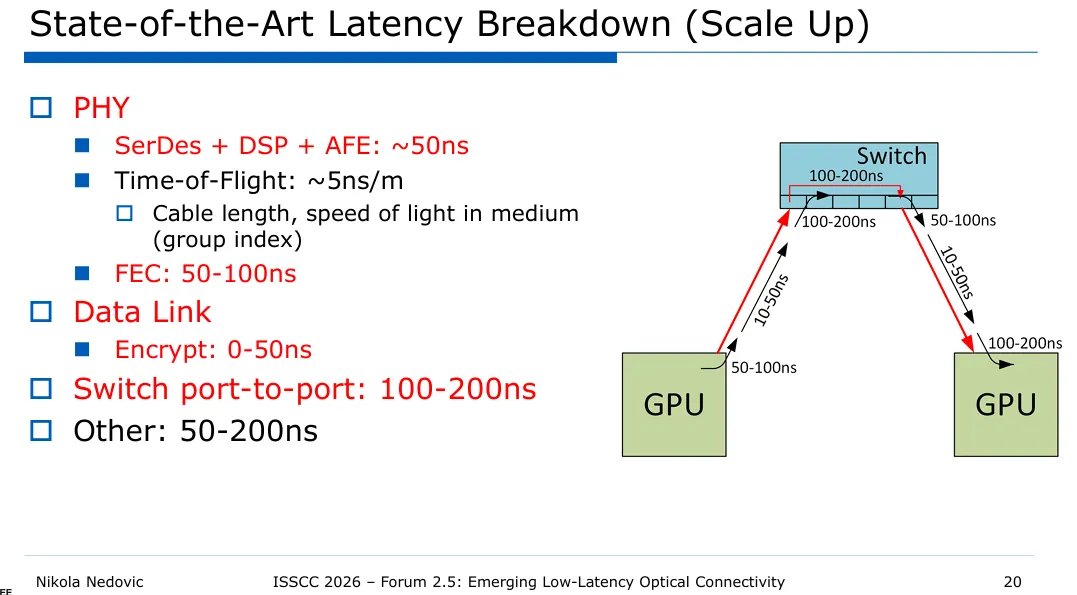
@trydotworks makes the day's spiciest model argument: excel at one of Quality, Cost, or Speed while holding baseline on the other two, and you're at the frontier. Qwen 3.8 27b at 2,000 tokens per second is "in its own class, and an entirely different way of working with agents," while DeepSeek V4.1 Flash (up to 400 tps) wins on cost-quality balance. The critique lands on OpenAI and Anthropic for "building the same generalist model over and over," with a call for domain-specific models that beat larger ones in narrow niches. @basecampbernie's field note, running that Qwen build on Cerebras, adds the catch: the bottleneck becomes reviewing a wall of output produced in seconds. Supporting the silicon angle, @bookwormengr boosts the underrated @siliconcodesign (under 1,500 followers), whose latest is an architecture breakdown of OpenAI's Jalapeno inference accelerator that goes past raw FLOPs into the surrounding network design.
Review tools, domain harnesses, and the humans still in the loop
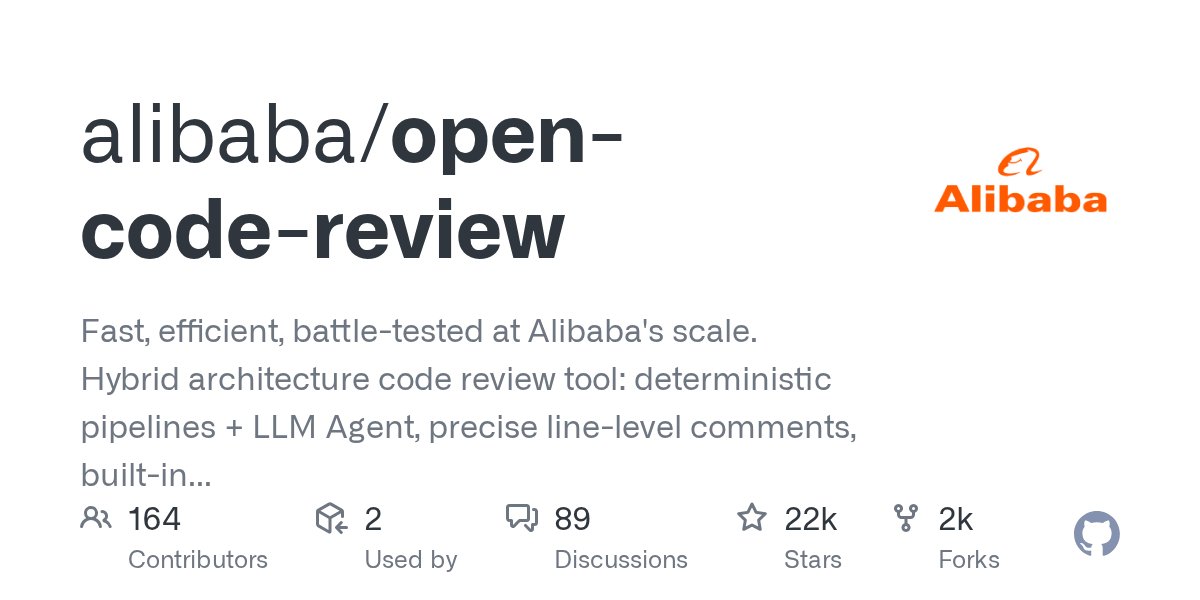
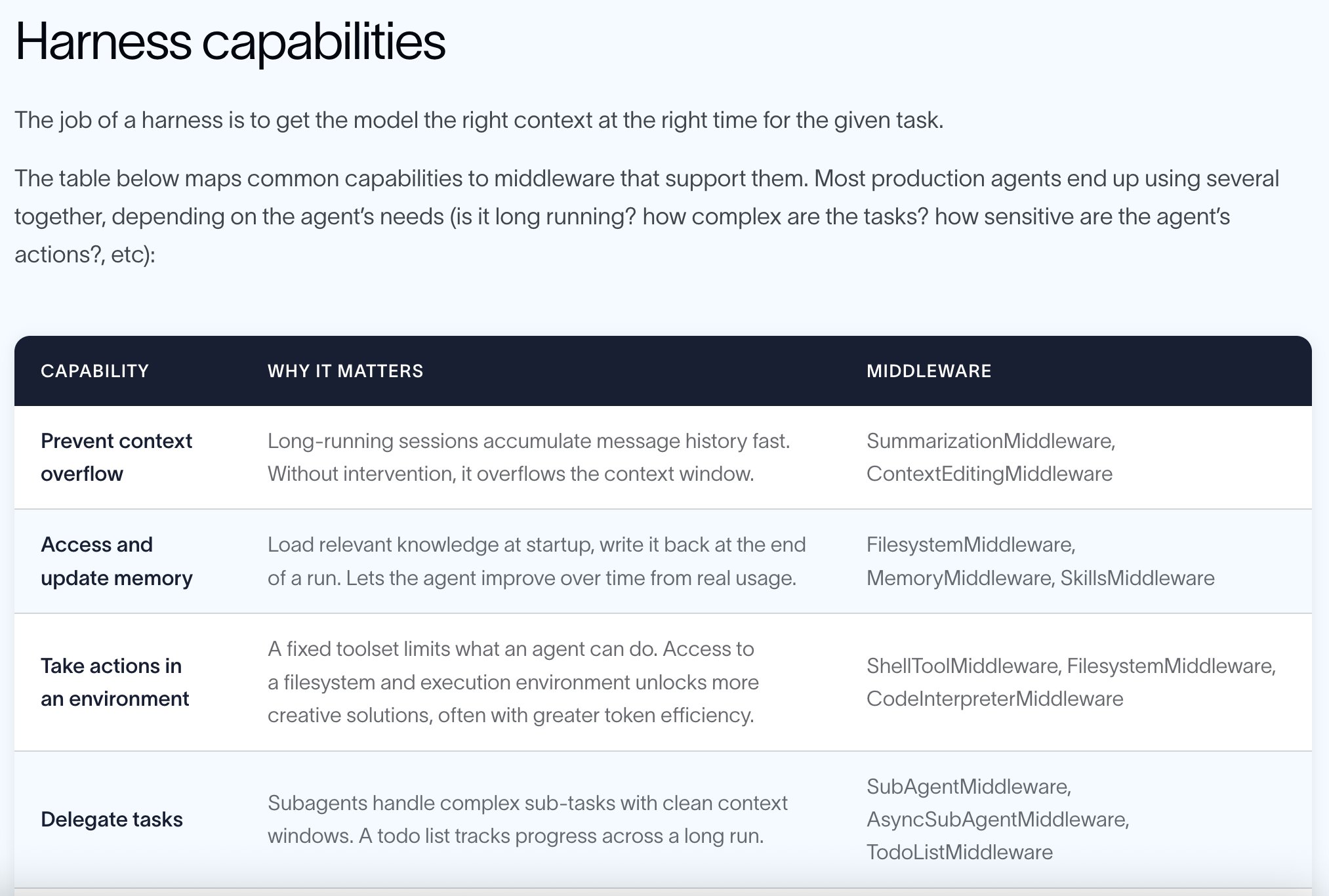
@ChrisShort shares alibaba/open-code-review, a hybrid of deterministic pipelines and an LLM agent with precise line-level comments and fine-tuned rulesets for NPE, thread-safety, XSS, and SQL injection, compatible with OpenAI and Anthropic APIs. @RiverAi7z (posting in Chinese) recommends a review plugin from the author of pi, installable straight from git. @hwchase17 points to @sydneyrunkle's blog on building domain-specific harnesses, alongside @garrytan's aphorism: "Either you die a system of record or you live long enough to become a domain-specific harness."
On craft and careers: @jonathan_wilke celebrates a library of small UI animations as what separates a product from "AI slop," assuming you skip the purple gradients and border-everything look. @TheRealAdamG amplifies @colintjarvis on what makes a great OpenAI FDE: "always make the thing exist (and work) first," scale second, more domain experts, and success defined as replacing yourself in every customer problem. And @martin_casado retweets @mattyp's plan to speedrun a company with @poteto and @roshan_s, going from nothing to a business in 72 hours, streamed, next week.
Practical Takeaway
If you run multi-agent coding workflows, the actionable pattern is @pvncher's dispatch-and-wake loop: stop polling, let worker threads call back on completion, and assign planner and executor models separately the way fx and Codex threads now allow, trimming verbosity per @flaviocopes while you're at it. But @thdxr's post is the prerequisite: audit what your agents can touch, because every permission you withhold now blocks not just a teammate but the agent acting on their behalf. The question worth investigating this week is which of your approval gates become pointless, or newly dangerous, once an agent is the one waiting at them.
Sources
C
alibaba/open-code-review: Battle-tested at Alibaba's scale. Hybrid architecture code review tool: deterministic pipelines + LLM Agent, precise line-level comments, built-in fine-tuned ruleset (NPE, thread-safety, XSS, SQL injection), OpenAI & Anthropic compatible. #devopsish https://t.co/avF4sc4ZcZ
C
Rumors are spreading like a wildfire that Google DeepMind has reached RSI.
Lyra is part of the reliable and huge leaker community.
But Id say its more than just rumors:
Google says Demis Hassabis will focus his “full attention” on shaping AGI. Reuters reports in August Sergey Brin is directing resources toward RSI, while DeepMind’s strategy chief calls it key to the AI investment thesis.

L
lyraxana
@lyraxana
huge congRatulationS Indeed! @GoogleDeepMind
R
审查代码质量越来越重要了
这里安利一个 pi 作者自己的review插件
通过安装pi install git:https://t.co/eZWS490o0e
G
X algorithm is so stupid, this guy has less than 1500 followers 🤦♀️.
Every article you read from him adds 1 IQ point to your brain. The level of details so high, but what is most important is what details he chooses to highlight.
One of the most underrated account on AI and semiconductor TPOT of X.
S
siliconcodesign
@siliconcodesign
An advanced system architecture breakdown of OpenAI’s Jalapeno inference accelerator that goes beyond raw FLOPs and into the surrounding network architecture and how AI actually added value: https://t.co/SNXGNtNISc
A
What it takes to be a great FDE at OpenAI:
C
colintjarvis
@colintjarvis
What does it take to be a great FDE at OpenAI - we get this question alot, so I sat down with @gregorojstersek to talk about how we’ve built the team, what the work looks at, and the values we want the team to have - always make the thing exist (and work) first, then look for scale second. We talk through a few of the recent focuses in how we operate - we've got a bigger focus on domain experts than we used to, and ultimately success for us revolves around working to replace ourselves in every customer problem we take on. Check out the interview below, and if you're interested in the role then I've included the careers page too - look forward to seeing what you build! Interview: https://t.co/U4ifNPHTIB FDE careers: https://t.co/NmuUTqaHvs
J
How the fuck did I not know about https://t.co/4L70ZjBTj0 🤯
So many nice small animations that just make your UI feel better.
In a world where everybody is shipping AI slop, these little details are what makes your product stand out.
Given you’re not using purple gradients and putting borders around every single box of course.
G
https://t.co/OL0LzGsXKY can now orchestrate subagents with different models & reasoning efforts.
e.g: Fable planning and Grok executing. Fable is a genius, Grok is a fast workhorse.
① Simple. 𝙰𝙶𝙴𝙽𝚃𝚂.𝚖𝚍 or your prompt can indicate this preference.
② Steer as you please. It’s extremely enjoyable to use. You just talk to the agent and interrupt at will.
Worth noting this works with any model, any gateway. No fancy server-side routing. Just harnessing (no pun intended) the model’s intelligence and ability to orchestrate.
F
fazxes
@fazxes
fx v0.0.9 Use a frontier model to steer, then hand implementation to a fast workhorse. • Give each subagent its own model and reasoning effort • Subagents keep working while you steer • Send feedback to subagents mid-task • Switch models with Ctrl+P without losing your draft or images • New conversations get short automatic titles • Better GitHub-style Markdown rendering • New libfx examples for Node.js, browsers, Next.js & Nuxt No new commands or concepts. Just chat with fx. https://t.co/r8C4v5msDW
J
More context : He is VP at Nvidia.
S
sundeep
@sundeep
I can tell you one thing: the entire world isn’t going to align to stop innovating.
N
You need to read this (right now)
It's strange, sitting back and thinking that this situation is real. It's not a movie plot or the latest scifi novel. It's actually happening.
I pray the world can align on these ideas....but it's very optimistic.
I'm choosing to be optimistic.
D
DarioAmodei
@DarioAmodei
We Must Pace the Frontier: I’ve written a new essay on why the AI industry should slow down, with a three-part plan for doing so. Anthropic is unilaterally committing to the first of these steps. We’ll provide third-party evaluators with permanent, employee-level access to our systems, so that they can verify adherence to our safety measures, report on incidents, and assess models’ alignment during training. You can read the full post here: https://t.co/OGyPb7yaYt
F
Claude Code, Codex, and Cursor write too much? Turn on concise output styles, hide reasoning summaries, and write short output rules that stick.
https://t.co/ZTx5zf1JCf
J
If you haven't heard, NVDA bought HuggingFace, so the censorship of open, uncensored AI will likely accelerate.
It's a good time to get acquainted with the Hugging Bay: 🏴☠️
R
RoundtableSpace
@RoundtableSpace
The Hugging bay, The Pirate bay for open LLM's, model weights downloadable with torrents. This is a game changer. https://t.co/nuZQ68aluH https://t.co/yQXw3PxHNH
H
in case you want to build a domain specific harness:
https://t.co/Y8QoykQ8Ex
great blog by @sydneyrunkle https://t.co/XqCcoawGU8
G
garrytan
@garrytan
Either you die a system of record or you live long enough to become a domain-specific harness
K
while all the frontier labs are just talking about slowing down, blizzard emerged as the first to take real action in pacing their development
S
StarCraft
@StarCraft
DEFEND MANKIND. JOIN THE DOMINION. STARCRAFT. 2030. https://t.co/wQwzqYIBmd
D
how do you make workflows not suck as a team gets bigger
it's just easier when people have access to things. but then there's risk with people having access to things
i hate when people get blocked because they have to ask someone to do something, this is 10x worse now that we have agents
U
Look on https://t.co/QLQaoHduFF and check out the Othello game. I had @grok implement this from a single prompt. It took 40 minutes. Another five minutes of fixing a few UI quibbles and the game was ready. It is written in Clojure -- a functional language.
Then I asked: "can you project the design of this application into an object oriented model?" Within 60 seconds it produced a detailed report. At the heart of that report was this UMLish diagram.
Note the direction of the dependencies. Low level to high level following the Dependency Rule. Note the layered architecture.
These models are *GOOD*.

S
rik has been a constant inspiration on my tl this year, love to see his new work get noticed. Whenever I'd feel the terror about ai coding, I'd look over at rik throwing agents at ridiculously ambitious problems and having the most fun with it
R
rikarends
@rikarends
Its completely obliterating my pc right now but this is what the chromium codebase looks like. 'Some optimisation required'. 100gb ram usage. Oops https://t.co/1KRbePN46f
S
Market, show me you care.
#AI #Anthropic
A
AnatoliKopadze
@AnatoliKopadze
Ok this is starting to feel like a f*cking disaster. The CEO of Anthropic just published an article admitting AI is already building the next generation of AI by itself. He says within 6 to 12 months a rogue swarm could take over the entire internet and cause hundreds of billions of dollars in damage. And what makes it scarier, Elon Musk just backed up everything Dario said. All of this dropping just days after Jacob Coxon went viral with his warning about AI and the extinction of humanity. Tell me this timing isn't strange.
D
Codex's ability to manage its own threads is massively underrated.
P
pvncher
@pvncher
Small trick I’ve been doing on my personal plan to make multi agent use more efficient with Astra. Have astra plan some work, and then dispatch it to another thread with the model of your choice. Tell it to end its turn after doing so and prompt the other thread to message it only when the work is complete. This avoids polling and the other thread can wake the originating thread on its own to continue work.
D
Truely a dangerous take for openai, the USA and for freedom.
T
tszzl
@tszzl
@sean_from_earth i won't lie to you, i think open source will be banned before too long after some major disaster. and when the day comes, you'll agree with me. i hope kimi and deepseek etc keep making models but keep them monitored on an api where they should be
M
RT @mattyp: I’m speedrunning a company with @poteto and @roshan_s next week
we’ll go from nothing to a business in 72 hours and stream the…
E
You can build a frontier model by targeting any of the three factors Quality, Cost, Speed.
As long as the remaining two factors reach a certain baseline, excelling at the third takes you to the frontier.
Qwen 3.8 27b at 2,000 tps is a frontier model and there is nothing that can compete with it.
It's in its own class, and an entirely different way of working with agents.
Similarly, DeepSeek V4.1 Flash is a frontier model. It excels at cost and quality/cost, with a tps of up to 400.
It's a more balanced profile than the 27b at 2,000 tps. Both are frontier.
Where OpenAI and Anthropic went wrong is only focusing on Quality, and building the same generalist model over and over.
It's time for a plethora of model profiles across Quality, Cost, and Speed, as well as domain-specific models that can beat a larger model in its own narrow capabilities.
B
basecampbernie
@basecampbernie
I have been working with @cerebras inference running qwen 3.8 27b and the first issue I see is reviewing the wall of output this thing puts out in seconds. https://t.co/wRAJufcQV1
@
RT @DavidSacks: Dario has written that we need to “pace the frontier,” and Sam has agreed. People may be surprised by my response: go ahead…