Jensen Huang Declares "AGI Has Arrived" With GPT-6 Astra as OpenAI Publishes Recursive Self-Improvement Data
NVIDIA's Jensen Huang congratulated OpenAI on GPT-6 Astra and declared "AGI has arrived," a call Hunter Horsley treats as credible, while OpenAI's Kevin Liu released data on models accelerating the lab's own research and pressed rivals to be transparent too. Meanwhile practitioners mapped out what replaces human code review, and one self-taught cluster reported cutting cold-start latency roughly fourfold by splitting prefill and decode across NVIDIA and Apple silicon.
Quick Hits
- @JensenHuang says "AGI has arrived," citing GPT-6 Astra "trained on ~100K+ NVIDIA Grace Blackwell NVLink72" with "400K GPUs coming online next," and @HHorsley argues Jensen is "the most credible referee" for such a call. The same day, @kliu128 announced OpenAI is releasing data on models accelerating its own research and asked other AI companies to do the same.
- Human code review keeps shrinking: @mikejulian's team at DuckbillHQ mostly dropped it after 60 open PRs piled up for five people, and @AlejandroRomaan hasn't reviewed a PR in months, shipping instead behind hooks, CI, e2e tests, and evals. @_dylanga reframes the debate around how fast you can recover from a bad merge.
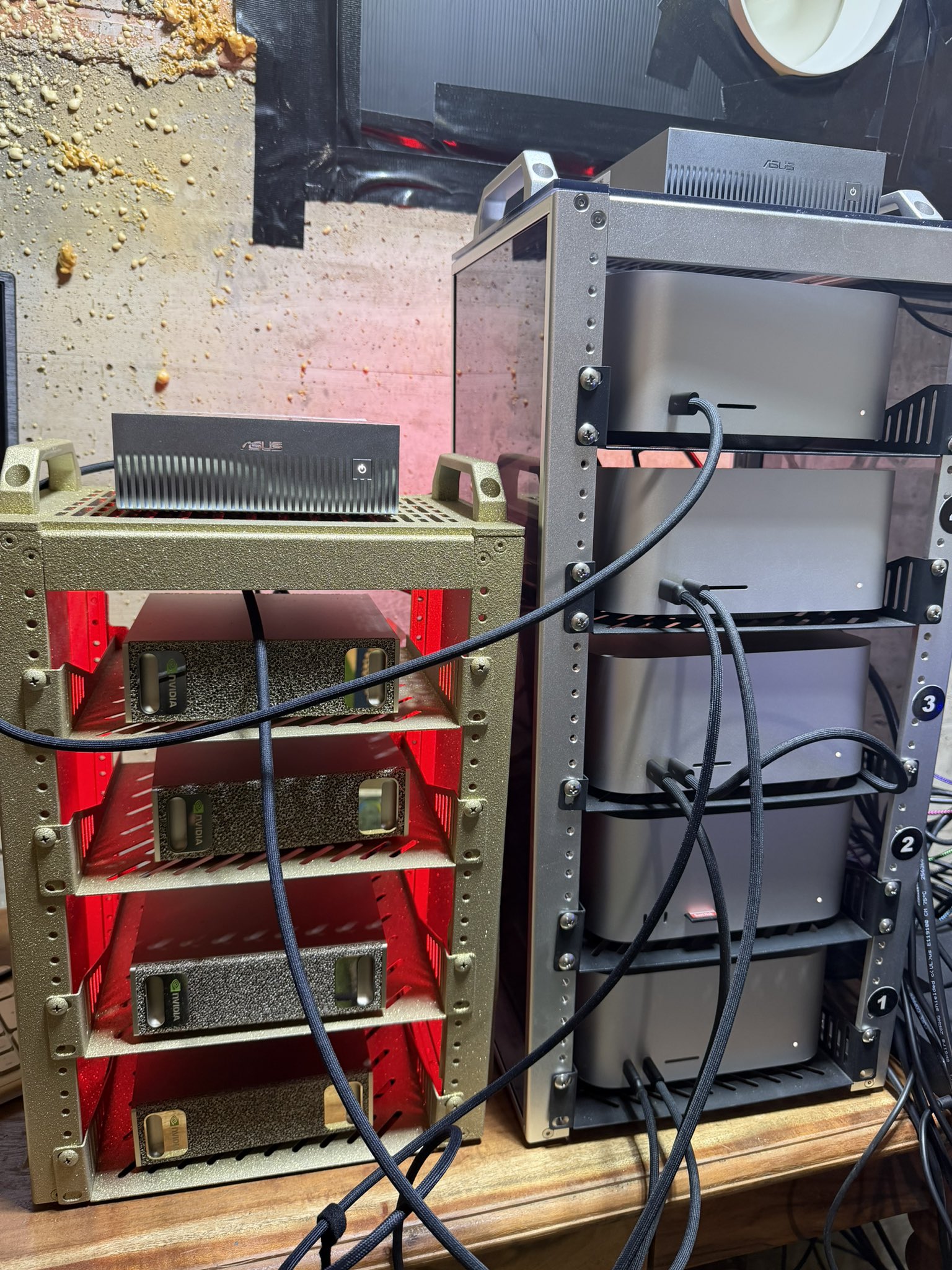
- @volatilemarkts reports cutting a 12-minute cold start on a 284B model to 3 minutes by having DGX Sparks prefill for Mac Studios that handle decode, a self-reported benchmark for heterogeneous local inference.
- A study summary circulating via @thesupermanmx, and matched by @yishan's own experience, claims computer science background predicts vibe-coding success roughly twice as strongly as writing skill.
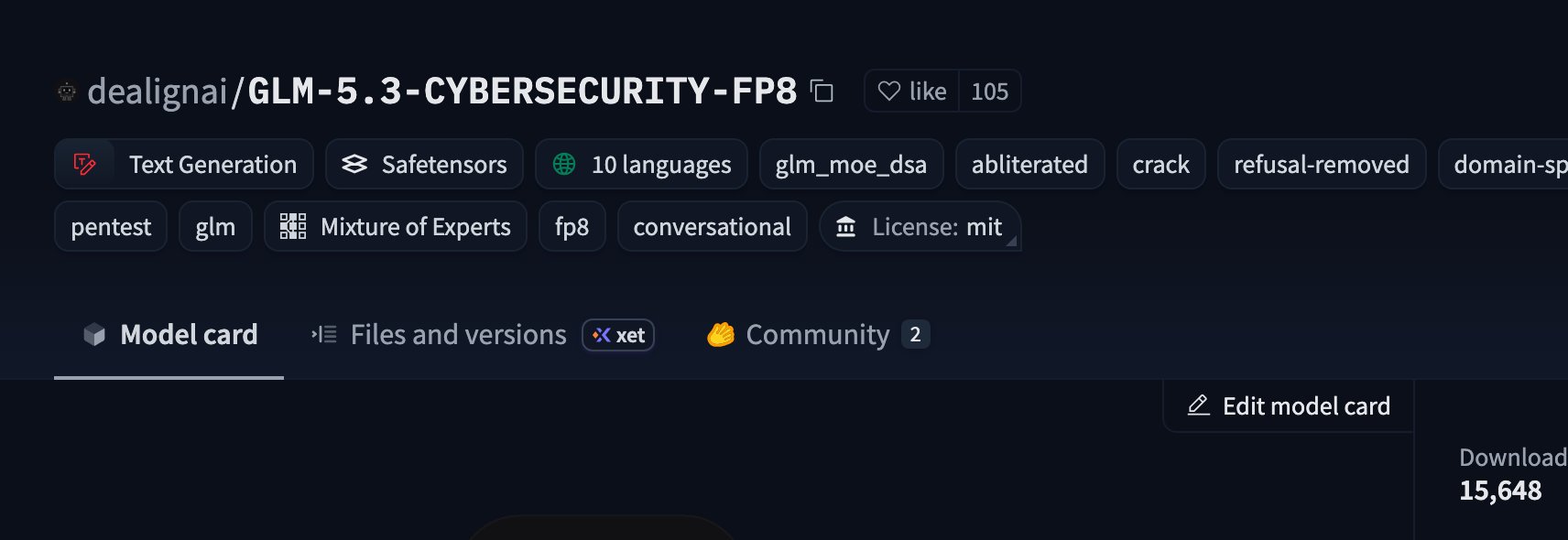
- @0x0SojalSec flags GLM-5.3-CYBERSECURITY-FP8, a 753B MoE model he describes as refusal-removed for red-team and exploit work, claiming 84.5% on CyberGym; treat the numbers as the poster's own.
A Maximal Capability Claim Meets a Transparency Gesture
@HHorsley's post is short and absolute: "Jensen is the most credible referee. If he says AGI has arrived. AGI has arrived." The claim he is endorsing comes from @JensenHuang, who congratulated OpenAI on GPT-6 Astra, traced an arc "from ChatGPT to o1 to Astra in 4 years," and noted "400K GPUs coming online next."
Hours earlier, @kliu128 said OpenAI is releasing data on models accelerating research at the company. His framing: recursive self-improvement "could be the most important contributor to AI capabilities over the next few years," but by default it will only be visible inside a few frontier labs, so transparency is urgent to inform the public discussion on whether and how to pace model development. He explicitly asks other AI companies to publish similar data. Two unverified social posts, but the pairing is the story: a supplier's maximal capability claim landing alongside a transparency release from the lab being congratulated.
Code Review Reframed: From Reading Diffs to Engineering Recovery
The backdrop is @GergelyOrosz asking how teams that stopped human code review are faring, and how everyone else keeps up with the explosion of PRs. @_dylanga's answer sidesteps the debate: what matters now is "how quickly you can recover from a mistake caused by the PR." A change fixable for all users within minutes is fine to ship; persistent data changes, irreversible migrations, data flowing to a third-party dependency you can't influence, or DNS deserve proper care. The goal is shrinking time-to-safely-deployed toward zero.
@AlejandroRomaan is living at the endpoint of that logic: no PR reviews in months. His guardrails include husky pre-commit hooks for lint and formatting, Playwright e2e tests pre-commit, Codex doing computer-use QA, Greptile, Sentry and BetterStack observability with Slack alerting, CI covering TypeScript checks, app builds, and Postgres with migrations (which he calls especially important), plus unit, integration, and regression coverage, evals for skills, and CI smoke tests. His reply sits under @mikejulian's account of DuckbillHQ dropping most code review after 60 open PRs accumulated for a five-person team. The shared bet across both posts: verification infrastructure, not human reading, becomes the safety net.
NVIDIA Prefills, Apple Decodes: One Team's Split-Brain Inference
@volatilemarkts posted a detailed account of a 12-machine, 2.4TB unified-memory cluster: seven DGX Sparks, five Mac Studios, plus Mac minis, a 5080, and some V100s. At 4-bit, the Studios can hold a 1-to-2-trillion-parameter model with headroom for a 900K-token context, but Apple Silicon prefills at roughly 400 tokens per second, meaning over half an hour of silence before the first word. The Sparks prefill four to five times faster but can't hold the model.
Their fix: the prefill box computes the decoder's finished cache using the decoder's own weights and writes it into the decoder's prefix store, about 10KB per token over plain 10-gigabit Ethernet, no RDMA or Thunderbolt. Self-reported numbers on DeepSeek-V4-Flash (284B, 241K-token cold load): 12 minutes to first word on a Studio alone, 3 minutes with two Sparks feeding it, 19 seconds on a cached repeat, with decode identical. They have since extended the prefill window from 262K to 524K. The motivation is practical: a persistent agent carrying 54MB of memory files, where "the wait was the product's real cost." Unverified, but a concrete recipe for anyone sitting on mixed silicon.
Astra Writes the Code, and Everyone Else Adapts
@thdxr describes the tension inside opencode2: if agents like Astra "just write code," in his case raw Python to do everything, tools lose the structured UI and permission prompts they were built around. Opencode2's codemode still renders a decent UI and asks for permissions even when the model lobs over a hunk of code, but he openly wonders whether fighting the model's preference is even the right call.
The enterprise version of that argument played out between @theo, who is "increasingly confused" why agent memory for enterprise teams is considered a real product category, and @DanielMiessler, who responded with his vision: a system that constantly holds the company's goals, metrics, budget, and current state, turns static work into semi-deterministic agent-and-human workflows, and gets a prime directive to keep improving SOPs and surface new ideas. He concedes that if that isn't what people mean, "it's what they should mean."
Around the edges, a day of Astra-centric tips: @pvncher highlights multi-agent v2 orchestration, suggesting you ask Astra to build a skill so Sol can use Astra as an advisor, and separately notes Astra pairs well with @thsottiaux's documented recipe for a 1M-token context window in Codex on GPT-5.6 Sol (model_context_window=1000000, auto-compact at 900000 in config.toml). For text, @reach_vb passes on @charlierguo's prompt "make sure each word in this text justifies its existence," a sharper version of @Dimillian's "remove all the unnecessary text." @BrianMRey calls one unnamed skill "the best skill i have found to date," though the post itself doesn't say which, and @nurijanian rounds out the tooling with product-management prompts like /de-clever, /eng-shape, and /metric-drop from his "70 Ideas to Reimagine Your Product Process With AI."
The Craft Layer: CS Fundamentals, Lean Branches, Prompt Debt
@yishan reads the ETH Zurich summary posted by @thesupermanmx as explaining his own track record: he gets results from vibe coding because of "a strong CS foundation + verbal communication skills." The summarized study, 100 developers in a commercial-grade environment, reportedly found CS achievement was the dominant predictor of building working software, roughly twice the unique predictive variance of writing skill, because vibe coding is really debugging logic: without engineering mental models you cannot spot the broken edge case behind a glowing UI. Worth noting this is a secondhand summary circulating on social media, not the paper itself.
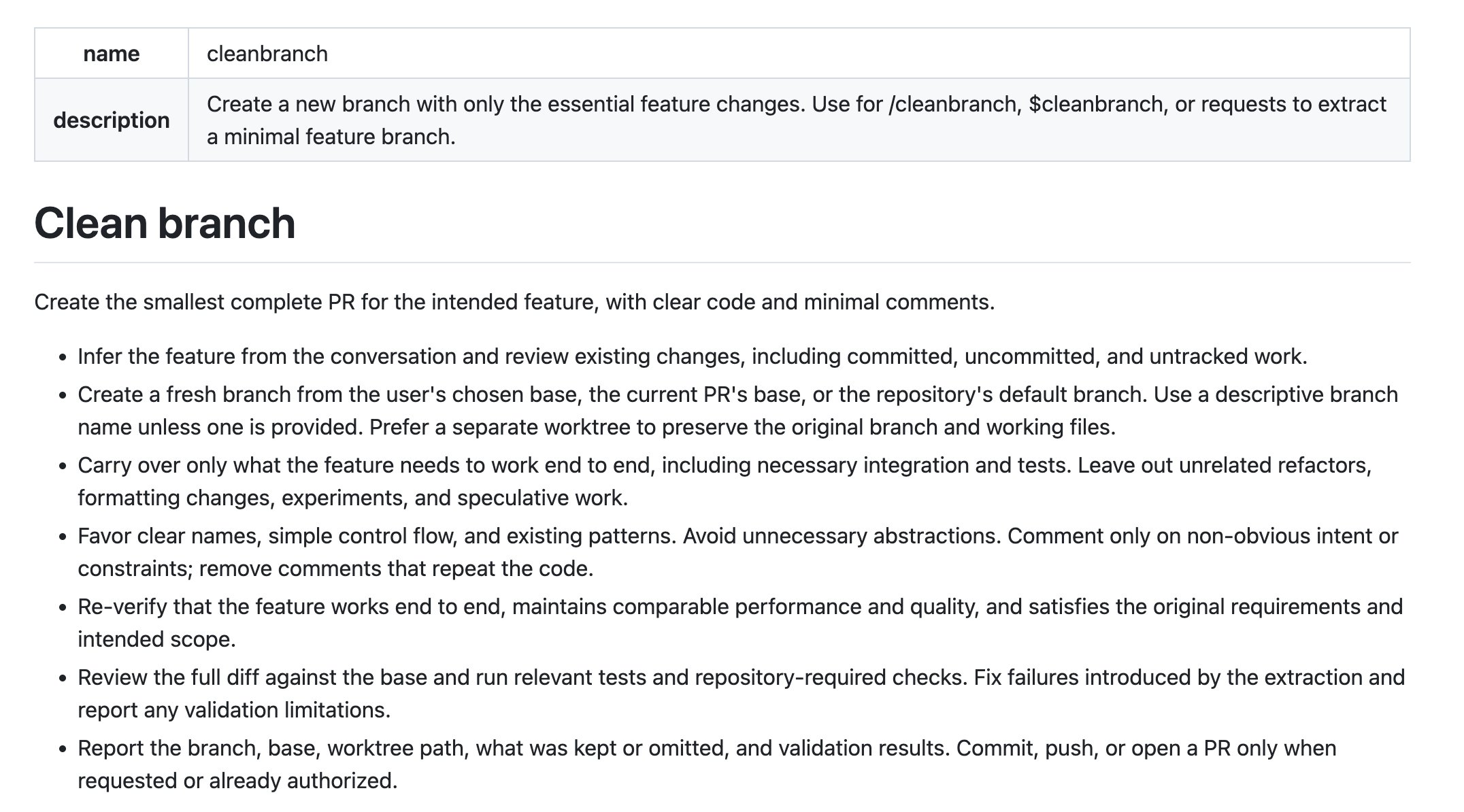
The discipline posts rhyme: @Suhail describes letting a messy branch accumulate 100K lines of experiments, tests, and adversarial scripts, then collapsing to a few thousand before anything reaches main. @DSPyOSS reshares @boswell_labs calling "prompt debt" the hardest thing to teach coworkers, with DSPy pitched as the way to replace hand-tuned prompts with programs. And @kitlangton, unbothered by all of the above, reports finding no upper limit to the pleasures of subtly animated SVGs.
Practical Takeaway
If agent-generated PR volume is outrunning your review capacity, stop trying to read faster and start borrowing the two frameworks on display. Apply @_dylanga's recovery-time test to every change: ask what a bad merge costs and how long a fix takes to reach all users. Then close the gap with @AlejandroRomaan's guardrail stack, prioritizing CI that actually runs your database migrations, e2e smoke tests, observability with alerting, and evals for any agent skills you rely on. Reserve slow, careful human review for the categories Dylan flags as unrecoverable in minutes: persistent data changes, irreversible migrations, data handed to third parties, and DNS.
Sources
https://t.co/hsvsflUPmf
We ditched code review at @DuckbillHQ (mostly) About a month ago, we found ourselves with 60 open PRs for a team of five. They had been accumulating for a few weeks and we all had the sudden realization we were looking at two days of just code review.
70 Ideas to Reimagine Your Product Process With AI
so astra writes python to do everything which means we're going to have to rework this ui https://t.co/5cAttUtS6w
Here is how to enable a 1M-token context window in Codex for GPT-5.6 Sol. Even though we have tuned the context limit in Codex to be set optimally when it comes to performance and cost, this is a common ask, so here it is documented. A larger context window lets Codex retain more code, tool output, and conversation history before summarizing older material. You need a model that supports it. And GPT-5.6 Sol, for example, has a documented 1,050,000-token window. Open ~/.codex/config.toml and add or update these settings at the top level, before any [section] headers: ``` model = "gpt-5.6-sol" model_context_window = 1000000 model_auto_compact_token_limit = 900000 ``` The first setting selects the model. The second tells Codex to use a one-million-token context budget. The third starts automatic history compaction around 900,000 tokens, leaving some headroom. Restart Codex client and start a new session after saving. To try the configuration for a single CLI session without changing your defaults: ``` codex -m gpt-5.6-sol \ -c model_context_window=1000000 \ -c model_auto_compact_token_limit=900000 ``` Have fun, but also know that we tuned the default carefully!
If you’ve stopped doing human code reviews: how is it going? If you’re still doing them: how are you able to keep up with the explosion of code + PRs, and how do you prioritise what to review “properly”?
Best Open-source AI Models for Cybersecurity that run fully offline on low hardware & The comparison
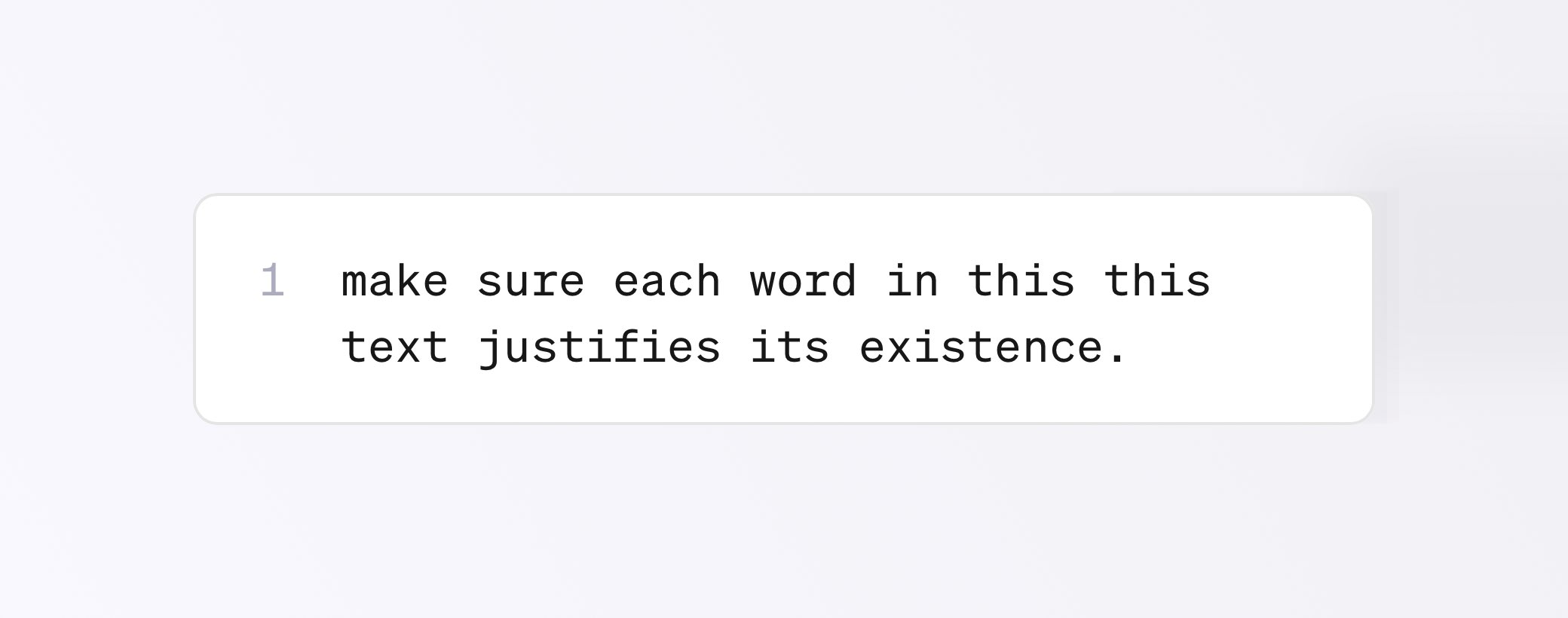
Just ask Astra to remove all the unnecessary text. Everywhere.
China published the most uncomfortable paper on vibe coding. ETH Zurich tested 100 developers in a controlled, commercial-grade vibe coding environment to see who actually succeeds. The findings are brutal. The researchers tracked computer science achievement, written communication skills, and general cognitive reasoning. They wanted to see what actually predicts vibe coding proficiency when you never touch a line of source code yourself. Two major predictors emerged. Written communication proficiency mattered. The ability to structure thoughts and articulate intent unambiguously in text directly impacts what the AI builds. But that wasn't even the main takeaway. Computer science achievement was a massive, dominant predictor of success. Even when researchers controlled for general intelligence and reasoning skills, CS background still heavily dictated who built working software and who completely crashed. In fact, CS knowledge contributed roughly twice the unique predictive variance of writing skills alone. Why? Because vibe coding isn't about writing code. It’s about debugging logic. When an AI agent builds a complex application and quietly breaks an edge case under the hood, a non-technical user looks at the glowing UI and assumes it works. They don't know what questions to ask. They don't know what logic to challenge. They lack the mental models to recognize architectural catastrophe. You can prompt your way past syntax. You cannot prompt your way past a fundamental lack of engineering intuition. The hype told us that learning to code is dead because language is all you need. The data just proved the opposite. To truly master the vibe, you still need to understand how the machine thinks.
@ChaseLochmiller @OpenAI GPT-6 Astra, trained on ~100K+ NVIDIA Grace Blackwell NVLink72. From ChatGPT to o1 to Astra in 4 years. AGI has arrived. Congratulations @OpenAI team. 400K GPUs coming online next.
I'm increasingly confused why people think "agent memory for enterprise/teams" is a real product category that makes any sense at all
@BrianMRey Me too! Do you have any suggestions for me skills wise? I am not having it use any skills right now, don't want to mess it up.