GPT-6 Astra Posts 63% on ARC-AGI-3 While Paid Users Wait for Access
OpenAI's GPT-6 Astra dominated the feed, with @arcprize reporting 63% on ARC-AGI-3 (99% via an adapter harness) even as @petergyang and @thorstenball criticized the gap between influencer hype and paid-user availability. The openness counterweight stayed busy: @andykonwinski says the Marin team is roughly 15% into a fully open 535B-parameter training run, @finkd shipped Muse Spark 1.3 with open weights teased, and Baseten launched Base Labs.
Quick Hits
- Per @arcprize (quoted by @theo), GPT-6 Astra scores 63% on ARC-AGI-3, 99% with a new provider adapter harness, and surpasses human performance on 96% of levels. @theo, who says he "never thought we would even break like 30%" on a bench he calls almost malicious, considers it saturated.
- @thsottiaux (retweeted by @romainhuet) says OpenAI will bank one usage reset for every day paid ChatGPT users lack Astra access, starting today, a policy landing amid growing complaints about hype outrunning availability.
- @andykonwinski says the Marin team is about 15% through training the largest fully open model yet: 535B parameters (23B active) over 18T tokens, with data, logs, and decisions all public, on Coreweave compute funded by the Jen-Hsun and Lori Huang Foundation.
- @finkd (Mark Zuckerberg) rolled out Muse Spark 1.3, claiming the biggest jump yet on coding and agentic work at performance "almost too cheap to meter," with open weights releases teased next.
- @penlume posted an integer he says divides RSA-260. If it verifies, it's landmark cryptography news; for now it's a single unverified post.
Astra posts record benchmark numbers while early users demo 3D worlds
The Astra posts split between record scores and creative demos, nearly all from people with early or insider access. @theo relayed the @arcprize announcement, which also claims Astra "builds the most precise symbolic model of novel environments we've seen." On the demo side, @skirano says he has early access to GPT-6 and that it "will completely shatter your understanding of what's possible"; his first test is a 3D model and animation generated in code from an image, the start of a six-part thread.
The 3D theme repeats. @Dimillian (quoted by @pvncher) calls Astra "very good at 3D modeling" and describes building the launch post's demo house from a Blender scene into a walkable Unreal Engine 5 experience. @pvncher says he and Thomas have been pushing Astra on 3D asset assembly and modeling, something he would not have believed an LLM could do three months ago. @mattshumer_ separately claims GPT-6 Astra built a Manhattan world in Unreal Engine over the course of a week, going "street by street."
The hype runs into an access wall
The day's sharpest tension is between celebration and lockout. @thorstenball, quoting @petergyang, highlights the contradiction: @petergyang lives in Codex and calls it the best software shipped in the past five years, but says influencers posting non-stop about Astra while paid users cannot get access is "pretty rough," and that he's back to "good ol' Sol and what's left of my Fable limits." @thorstenball adds his own read: the hype choir starts on cue, the "well, ..." caveats whisper in the replies, nobody else has access, and "it feels like a play we all pretend isn't a play."
The banked-reset policy from @thsottiaux reads as the official countermove, though it compensates for wait time rather than shortening it. Subscription strain isn't OpenAI-only: @Shpigford shares the top of his CLAUDE.md file for routing work between Opus and Sonnet to stretch limits, after @johnwebber noted that Fable "chews through a 5hr limit fast."
Open weights gather steam: Marin's 535B run, Muse Spark 1.3, and Base Labs
Three separate posts push the openness story forward. @finkd says Muse Spark 1.3 is available now in Muse Code and the API, and teases what's next: a cryptic 🍉 project and Muse Spark open weights "coming soon." @andykonwinski argues "nobody has been this transparent in a hero run before" on Marin, urging people to follow the run live; @percyliang (quoted) has it at 13% through and thanks @JensenHuang for supporting open models.
The biggest structural bet is Base Labs. @oneill_c announces the Baseten-backed lab with one rule: publish everything, including failures. The agenda is continual learning (which he calls "several problems wearing one name"), open RL environments and training data, a safety stack for open deployments, and cheaper serving. His framing is that closed labs aren't villains but can't do slow public science when the job is best model by end of quarter; his own path ran through parsedlabs, acquired by Baseten. The @baselabs announcement adds the BaseHub Data Foundry and "post-post training" of open models, and both posts say the lab is hiring.
Agent plumbing: manager loops, event logs, hooks, and background Linux control
The most concrete engineering content of the day is about controlling agents rather than marveling at them. @mattshumer_ details his "Manager Loop" for long-horizon Astra builds: a manager agent builds a massive checklist, splits it into phases, and spawns a separate implementer agent; both run in /goal mode and message each other until every phase completes. Two details he flags: asking for each phase done "extremely well" rather than "perfectly" avoided the model bogging down in minutiae, and having the implementer maintain an HTML checklist page with a counter and chart forced it to notice stalls. He also ran 96 sub-agents at a time.
On the framework side, @arjunkmrm (shared by @yoheinakajima) introduces Tardigrade, which treats the agent harness as typed state machines over an immutable event log, "think react for harness," built on Effect-TS and self-hostable as durable objects on Cloudflare or celld. @yoheinakajima notes it's another framework deriving agent state from an immutable log, @activegraphai style. @bcherny surfaces @ClaudeDevs' Function Hooks proposal for extending Claude Code; it hasn't shipped, feedback is on GitHub, and he calls it "a little crazy, and very exciting."
Desktop control advances too. @trycua (quoted by @LLMJunky) demoed an agent working across apps in the background with a "true multi-synthetic pointer" at the Omarchy SF Meetup, and wants Hyprland-native support for isolated background input. @LLMJunky calls it solving background computer use on Linux, credits @francedot as the best in the world at this, and predicts a major lab acquires them within three months, his prediction, not a fact. Elsewhere, @sawyerhood points to @get_bb_app's Kernel Browser plugin, which lets agents create and control remote browsers with an in-app preview, proving how extensible bb is. @dhh notes @ThePrimeagen is now spearheading automated QA for Omarchy.
One self-reported enterprise receipt, via @alex_prompter recommending @mardehaym: a delivery-orchestration core that FedEx estimated needed 7 to 8 months was rebuilt in 3.5 months by 2 engineers, 122 merged PRs in the first 90 days, production by month 6, using a knowledge-graph-first onboarding step, a six-step define-to-document loop, roughly 90% agent-generated code behind a human "V.U.E." review gate, and about $200 per developer per month in AI compute.
Cheap and off the frontier: transcription, tiny models, and tooling odds and ends
@OpenRouter (quoted by @altryne) says Microsoft MAI-Transcribe 2 is live, ranked #1 on FLEURS, with 60 languages, automatic language ID, code switching, diarization, and word-level timestamps. @altryne claims it transcribed over 90 minutes of audio with diarization in 15 seconds, and says people are still defaulting to Whisper-3-large despite worse accuracy. @liquidai retweets @IQReactorAI on 500M-1.
Sources
S
We are open sourcing `cn`, a new engine for Tailwind class merging and conflict resolution. It is a drop-in replacement for tailwind-merge and clsx.
It works with all frameworks, runs everywhere and is 30x faster.
Brought to you by @aidenybai and me.
https://t.co/G0xVuZdd6H
M
Muse Spark 1.3 is rolling out today with frontier performance almost too cheap to meter. This is the biggest jump we've made so far on coding and agentic work. Try it in Muse Code and our API.
Next up 🍉 and Muse Spark open weights releases coming soon. https://t.co/XQQEDEJGD7

P
4397328654844826923795068102505872571721883526553349659561256924505973939597593482272505698004801207988043088656411102133523080581 divides RSA-260
A
this is the most underrated enterprise AI account on X:
M
mardehaym
@mardehaym
A delivery orchestration platform that supplies FedEx estimated 7 to 8 months to rebuild their core system. We had the core rebuilt in 3.5 months with 2 engineers and 122 merged pull requests in the first 90 days. It was live in production by month 6. I want to walk through how, because "we used AI and it was faster" doesn't help anyone. Their codebase had real users, real logistics operations, and real consequences if something broke. The system bills shippers and pays couriers. This is brownfield, not a weekend prototype demo. Week one, we didn't write code. We scanned the entire repo and built a knowledge graph: markdown files documenting every module, dependency, data flow, and domain term. Our agents read that graph before touching anything. Teams skip this constantly. They point an agent at a repo, hand it a ticket, and get code that compiles but misunderstands the architecture. When someone says "AI doesn't work on our codebase," they almost always skipped context acquisition. Every ticket ran a six-step loop: define, spec, plan, implement, test, document. The agent handles about 90% of code generation. A senior engineer reviews every PR, and nothing merges unless they can verify it, explain it, and debug it without the agent. We call that the V.U.E. gate. The 50% time reduction came from three things: upfront context eliminated false starts, the agent handled mechanical coding so engineers focused on design and review, and tight spec-to-PR discipline kept scope from drifting. 104 of those 122 PRs merged with fewer than 5 reviewer comments. Volume without review friction is the number I'd check on any AI team. AI compute: about $200 per developer per month. Their CTO called our pod the "top performing team" inside the company. Their tech lead called them "true engineers capable of closing requirement gaps through fast domain discovery and iteration." Both engineers got discretionary bonuses, twice. A year on, the same two engineers are still shipping for them. More than 330 PRs by the time it went live. That's what our Velocity Framework was built for.
O
Go even further
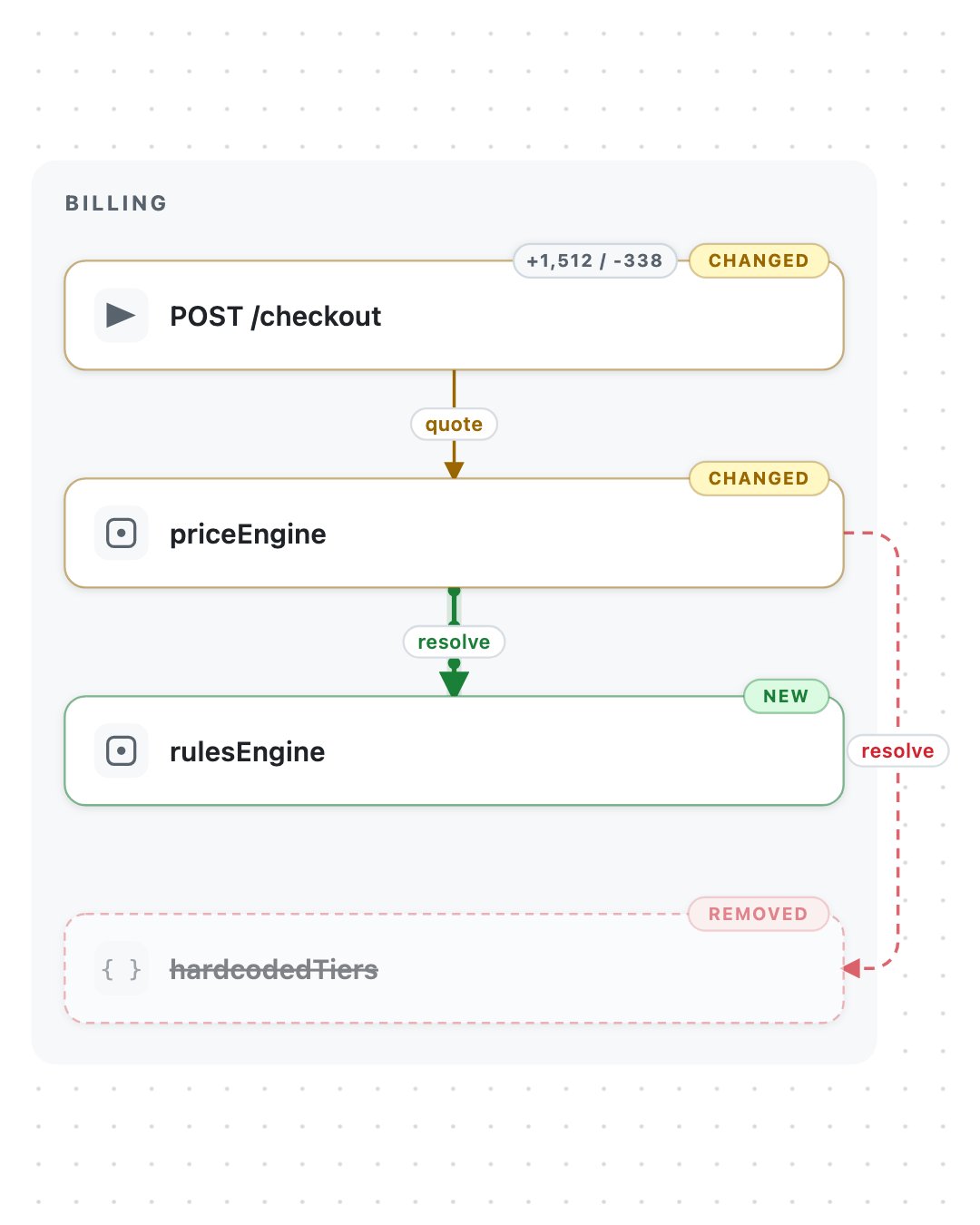
make the architecture and data flow just as easy to understand
open source: https://t.co/y9KsaenUQU https://t.co/EjMBK1dJht
M
mattpocockuk
@mattpocockuk
/show-me is a phenomenal skill Makes PR descriptions extremely easy to read Basically a toolbox of "nice ways to look at code" Nice work, @dexhorthy https://t.co/phB1dAPwgG
Y
another framework where the agent state is projected from its immutable log (@activegraphai style), check it out:
A
arjunkmrm
@arjunkmrm
Introducing Tardigrade! 🐛 A framework to build your agent harness as components over an immutable event log (think react for harness). Each component is a typed state machine over the event log, using @EffectTS_. Add to your effect code, run locally or self-host as durable objects with cloudflare or celld. https://t.co/vYLqMeqAty
C
Today we're launching Base Labs, a research lab by Baseten. Our mandate is to make open-source as useful as possible, and our one rule is that we publish without exception, including what fails.
Up until pretty recently I thought the way to get the world onto open models was to train them for one company at a time. @mudithj, @maxkirkby and I cofounded @parsedlabs on that bet, @baseten acquired us, and we spent the last year running their training team doing it for customers one by one. Every one of those engagements taught us something new about how models learn, forget, specialise and get cheaper, and almost none of it got spoken about. Sadly, in general that's the field's default in that the people who know the most about training have the least freedom to say it.
To be clear I don't think the closed labs are the villains here. They get to new capabilities first, which buys the rest of us time to harden the world before that stuff is everywhere, and they're the ones paying to find out what's actually possible. But I'm fairly convinced the only real advantage they have is data and scale, and their incentives point squarely at the frontier. You can't do slow, public science on how these things learn when your job is the best model by end of quarter. Someone without that pressure has to, and there are very few of those someones around. Hence Base Labs.
We have the broad remit of making open-source as useful as possible and our one rule is that we publish without exception, including what fails. The first problem is continual learning, which I have come to think is several problems wearing one name. We are also working on the open RL environments and data that open models need and currently can't get, because we have to aggregate data with the same ferocity everyone's been talking about aggregating compute. Plus a bunch of other stuff I'm genuinely excited about, eg a safety stack people can run on top of open deployments, and performance research so these things are cheap for everyone to serve.
I still think open and closed coexist, and that's the good world. It's just that coexistence isn't free, someone has to actually do the work, and this is basically what keeps me up at night. We're hiring researchers, engineers and fellows. Come help distribute the mandate of heaven!
B
baselabs
@baselabs
Today we're announcing Base Labs, a dedicated research organization focused on advancing open-source AI. We believe in a healthy, open frontier model ecosystem. To enable this, we are working on: - Blue-sky research on continual learning, the science of RL, and how models learn across their full lifecycle, with every experiment and recipe shared openly. - The BaseHub Data Foundry: the highest-quality open RL environments, training data, and real-world benchmarks, built for anyone to train and benchmark on. - Post-post training: taking open-source models and making them better, safer, and more aligned through continual post-training, built on our research, and deployed with our frontier safety stack so organizations can use open-source models with confidence. - Making models cheaper and more performant through our model performance research. This is a mission-driven research effort, not a commercial product. We believe the health of the open-source AI ecosystem matters and that the best way to advance it is to do science in the open. We’re hiring engineers, researchers, and research fellows to advance this mission. https://t.co/Go8YsfaP2X
A
These absolute geniuses did it
They solved background computer use on Linux.
I'll be honest, I did not have that much faith.
This is a very big deal in my opinion because it was one of the biggest hurdles to overcoming reliance on macOS
I hope that the hyprland team works with them.
Big congrats to @francedot who genuinely is the best in the world at this
They will be acquired by a major lab. Mark my words it will happen in the next 3 months.
T
trycua
@trycua
1/ At yesterday's Omarchy SF Meetup, we demoed a technical preview: an agent working across apps in the background with true multi-synthetic pointer. We'd like to work with the Hyprland community on native support for isolated background input. Here's what we have in mind. https://t.co/r8diUIFqUJ
S
As the "ai browser guy" I'm a bit embarrassed I didn't do it first, but it is a testament to how extendable bb is! Anyone can built their own browser automation right inside.
G
get_bb_app
@get_bb_app
New plugin alert! The Kernel Browser plugin lets your agents create and control remote browsers and while showing you an in-app preview of them at work! https://t.co/dgwZCrnPpX
B
Your input needed: would you use this?
This is an early look at how we're thinking about making Claude Code way more extensible. It's a little crazy, and very exciting.
More details here: https://t.co/X2SbdZYxvi
C
ClaudeDevs
@ClaudeDevs
We're exploring a new way to let you extend and customize Claude Code: Function Hooks. Here's a couple videos showing what you'd be able to do. It hasn't shipped yet, we'd love feedback on this on our GitHub issue. https://t.co/0F3kBO3kjl
P
I had early access to GPT-6. This model will completely shatter your understanding of what's possible, and it will start a new era of creativity.
It's hard to explain how big of a jump this is, so I'll share my tests.
1/6 Made this 3D model and animation in code from an image. https://t.co/hUCWiLSlrV

E
Thomas and I have been going back and forth on pushing Astra harder and harder on 3D asset assembly and modeling tasks.
I never would have believed even 3 months ago, that an LLM could do this, but here we are.
D
Dimillian
@Dimillian
Astra is very good at 3D modeling, and I can't wait for all of you to experience it, for now here is a little walkthrough on how I built the demo house for our launch blog post. From a Blender scene to a Unreal Engine 5 walkable experience. 🧵 https://t.co/xGqe5iXoRv
T
ARC-AGI 3 is such a brutal bench that I’d honestly call it malicious in ways. I never thought we would even break like 30%.
GPT-6 Astra saturated it. What the fuck.
A
arcprize
@arcprize
GPT-6 Astra by @OpenAI achieves SOTA on ARC-AGI: - Astra scores 63% on ARC-AGI-3, 99% via a new provider adapter harness - It surpasses human performance on 96% of ARC-AGI-3 levels - It builds the most precise symbolic model of novel environments we've seen Our analysis: https://t.co/GX77KsRNer
K
this component is insane i have been waiting for it for 2 years https://t.co/klXIMTMz2K
A
amembedded
@amembedded
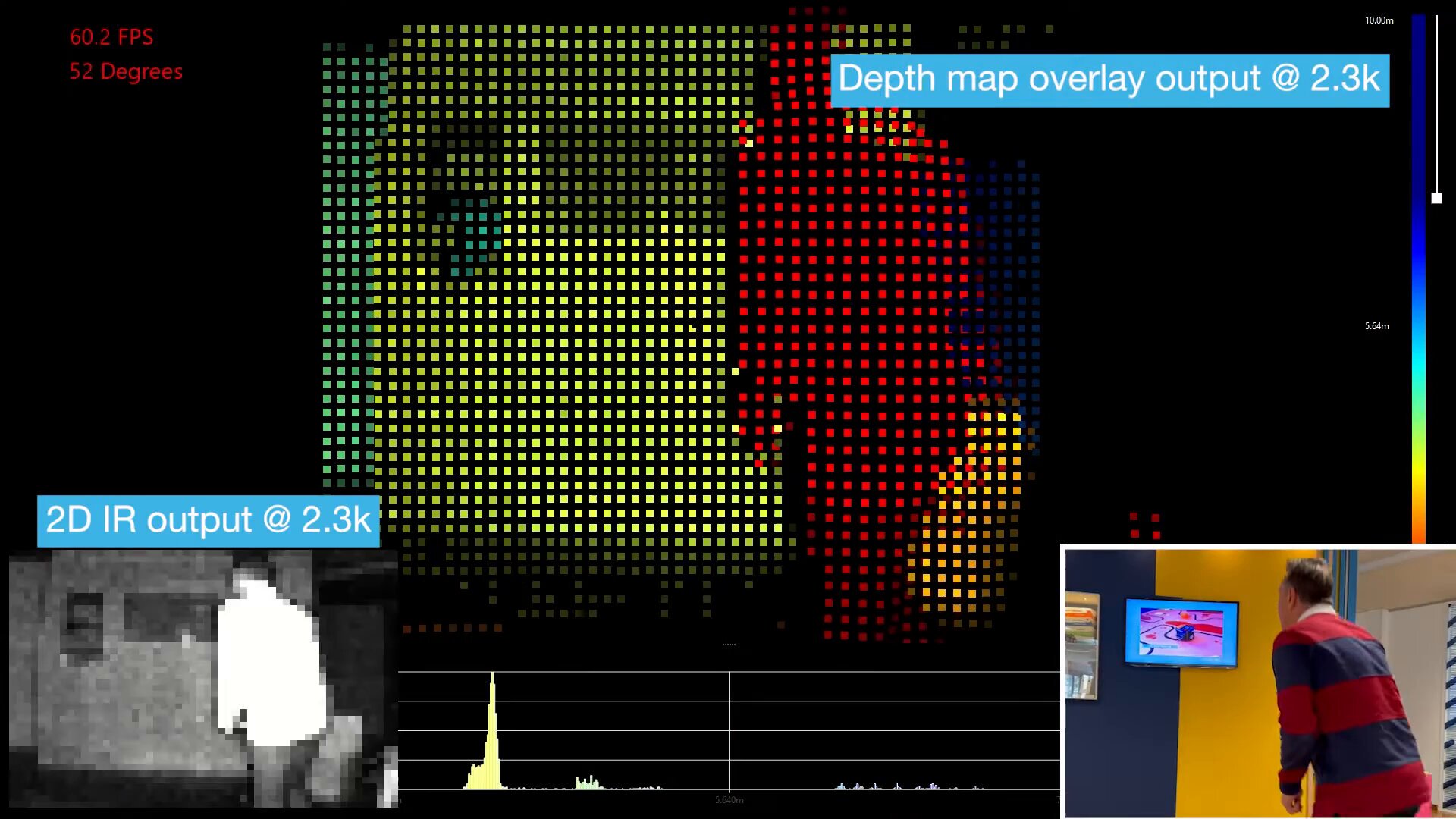
STMicroelectronics VL53L9CX 2.3K LiDAR Sensor $63.36 each, $49.58 @ 25 They fit a whole WAYMO in this thing. Not really. I2C/I3C + CSI interfaces for up to 100Hz update rate. Supports <5cm-8.8m ranging. Pre-order a STEMMA QT breakout here: https://t.co/KmsQdODwgU https://t.co/6Ph7UCzllH
J
Half the Microsoft legal team just spat out their 5pm cocktail.
W
WhiteHouse
@WhiteHouse
https://t.co/qIR69AxSnm 👾 https://t.co/5m04HXYHqg
A
This transcription model is absolutely insane. For some reason everyone is still using Whisper-3-large on OR, when this MAI-transcribe-2 is much more accurate.
But the speed 😮 it deadass transcribed over 90 minutes of audio with diarization in 15 seconds!
WTFFF. https://t.co/icuNHYxJYD

O
OpenRouter
@OpenRouter
Microsoft MAI-Transcribe 2 is live on OpenRouter! Ranked #1 on FLEURS, it supports speech-to-text across 60 languages with automatic language ID, code switching, speaker diarization, and word-level timestamps. Use it now: https://t.co/CoFRrkruw5
J
in fact, i am! i have this at the top of my CLAUDE.md file to help farm out certain things to opus/sonnet.
https://t.co/q3rwjA2OOo
J
johnwebber
@johnwebber
@Shpigford Are you doing anything to try and reduce token usage to make the subs last longer? Fable chews through a 5hr limit fast!
A
i can’t stop checking in on this. the marin team is training the largest fully open model ever. 535B params (23B active), 18T tokens. nobody has been this transparent in a hero run before. beyond the weights, the data, logs, and decisions are all open. you can, and should, follow the run live, it’s ~15% through so far! https://t.co/kRHCQjOjP0
P
percyliang
@percyliang
Marin 535B-A23B is 13% through training. This hero run would not be possible without the generous support of the Jen-Hsun and Lori Huang Foundation, which provided the funding for the compute (Coreweave). Thanks @JensenHuang for supporting open models! https://t.co/1qBdgV79S8
R
RT @thsottiaux: We will give one banked reset for every day you don't have access to Astra on your paid ChatGPT plan, starting today. Team…
K
don't know how i haven't found this before but this is a certified banger from @ctatedev
https://t.co/16hXM5wRBg
M
A lot of people are asking how I pulled off these super long-horizon builds with Astra.
Astra is extremely powerful, but by default it struggled with a task this difficult. I tested a bunch of approaches to get past this, and the one I landed on is something I'm calling the Manager Loop.
It's basically a couple of tricks we used to use with much less capable models a couple of years ago, with a few new ideas layered on top. Turns out that when you put those together and apply them to Astra, its ability to do extremely difficult long-horizon tasks goes up dramatically.
Here's how it works:
1. Launch an agent (I'm calling this one the "manager"). Chat with it about what you want to get done, and have it build a massive checklist of to-dos, then break that checklist into phases.
2. The manager then spawns a second Codex agent in a separate thread (the "implementer"). The two agents can message each other.
3. Put the manager in /goal mode, and tell it to run each phase on the implementer in /goal mode.
4. The manager messages the implementer: "/goal Complete phase one completely, extremely well." The implementer doesn't stop until that phase is done, then messages the manager back. The manager tells it to start phase two. They repeat until every phase is finished, completely autonomously.
Why I think this works: over a long-horizon task, Astra tends to asymptote. It gets way further than previous models, but at a certain point it kind of just stops improving against the goal as quickly as it did before. It gets stuck in the minutiae, focusing way too much on small details, and overall progress stalls. The Manager Loop forces it to work piecemeal, one phase at a time. It's essentially how a human would steer a model, except the model is doing the steering for me.
That's actually how this started. I was having the model write the checklist and break it into phases, and then I was doing the manager's job by hand. At some point I thought, "Wait, why can't I just get a separate AI to do this?" That's what unlocked full autonomy, which is super useful.
A wording detail that seemed to matter: I ask for each phase to be done "extremely well," not "perfectly." Maybe I'm reading too much into it, but asking for "perfect" sent the model right back into the minutiae. "Extremely well" implies it's allowed to move on once it's good enough, and that worked better in my testing.
One more trick that I think helps (this one is more of a hunch, but it was useful for me): have the implementer build a simple HTML page with the full checklist on it. The implementer checks boxes off as it goes and updates a counter, and the page has a chart of # of boxes ticked over time.
Obviously the boxes aren't all equal, but it forces the model to notice things like "I haven't made progress in a while, time to move on." You can even put this in the prompt directly, like: "if you haven't ticked a box in X amount of time, move on". That helps a lot.
I also ran 96 sub-agents at a time. You can change this in your Codex config (or just ask Codex to change it).
This got me far better long-horizon performance than anything else I tried. I'll be sharing more in the coming days!
M
mattshumer_
@mattshumer_
GPT-6 Astra built this Manhattan world in Unreal Engine over the course of a week. It was literally able to go street by street to make each one perfect. https://t.co/7VTol9QfHq
T
It’s wild that Forethought - one of the very few orgs regularly publishing original explorations of the long-term post-AGI/ASI future - has so few followers and so little engagement on here. You should help fix that!
F
forethought_org
@forethought_org
A new article looks at the benefits and risks of having a "nightwatchman" – a superintelligent AI tasked with enforcing a universal code of behavior – aboard every probe that leaves the solar system during future galactic colonization. Read it here: https://t.co/mkaZkJIj0J
L
RT @IQReactorAI: Guys and Girl nerds, the tiny 500m-1.2B models trained for a single task are taking off cause they are dirt cheap to run a…
T
Definitely starting to feel weirder and weirder with each model release.
The "it's amazing!!! wooow!!" choir starts right on time, only to then whisper in the replies a "well, ..."
While no one else can get access.
Feels like a play we all pretend isn't a play.
P
petergyang
@petergyang
I live in Codex and think it's the best software shipped in the past 5 years. But the combination of influencers posting non-stop about how great Astra is and paid users unable to get access at the same time is pretty rough IMO. I realize I'm an "influencer" now too and maybe am just jealous. I also recognize there are multiple parties involved in these decisions. But just wanted to be real. Back to working with good ol' Sol and what's left of my Fable limits.
D
It really is full circle that the man partly responsible for bringing me to Linux is now spearheading automated QA for Omarchy. Love this man! 💪
T
ThePrimeagen
@ThePrimeagen
Dear Interns, Working on Omarchy Automation. Brownbaggin, Teabaggin, Lunabaggin, Frodobaggins this AGI with me With Care and Tokens, ThePrimeagen https://t.co/RYH2l4OOh6