Anthropic Open-Sources Commerce Agents While Shopify's 0.8B Fine-Tune Claims a Win Over GPT 5.6
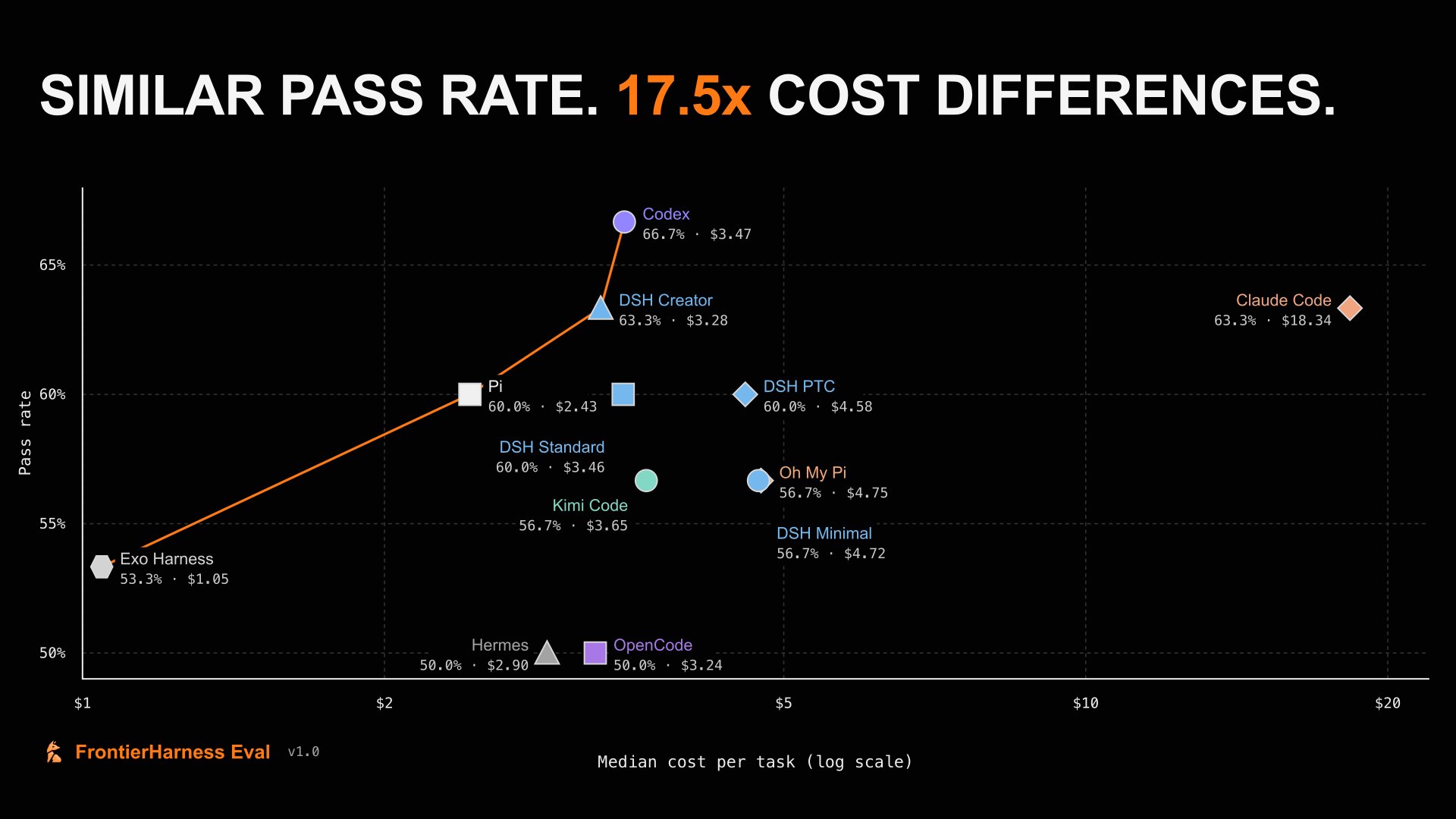
Anthropic released an open-source blueprint for shopping and merchant agents, with claimed retail gains of up to 35% higher cart value, while Shopify's @tobi says a 0.8B fine-tune beat GPT 5.6-sol xhigh on a specialized task. A new eval also argues your agent harness, not your model, drives the spread, with cost per pass ranging from $1.05 to $18.34 on identical models and tasks.
Quick Hits
- @ClaudeDevs announced it is open-sourcing Claude Commerce Agents, a forkable blueprint with runnable reference implementations across retail, travel, telecom, and entertainment. Per @MaxForAI's detailed breakdown, Anthropic claims some retail clients saw cart value rise up to 35% and purchase completion up to 60%, with Shopify and Priceline already building shopping experiences on Claude.
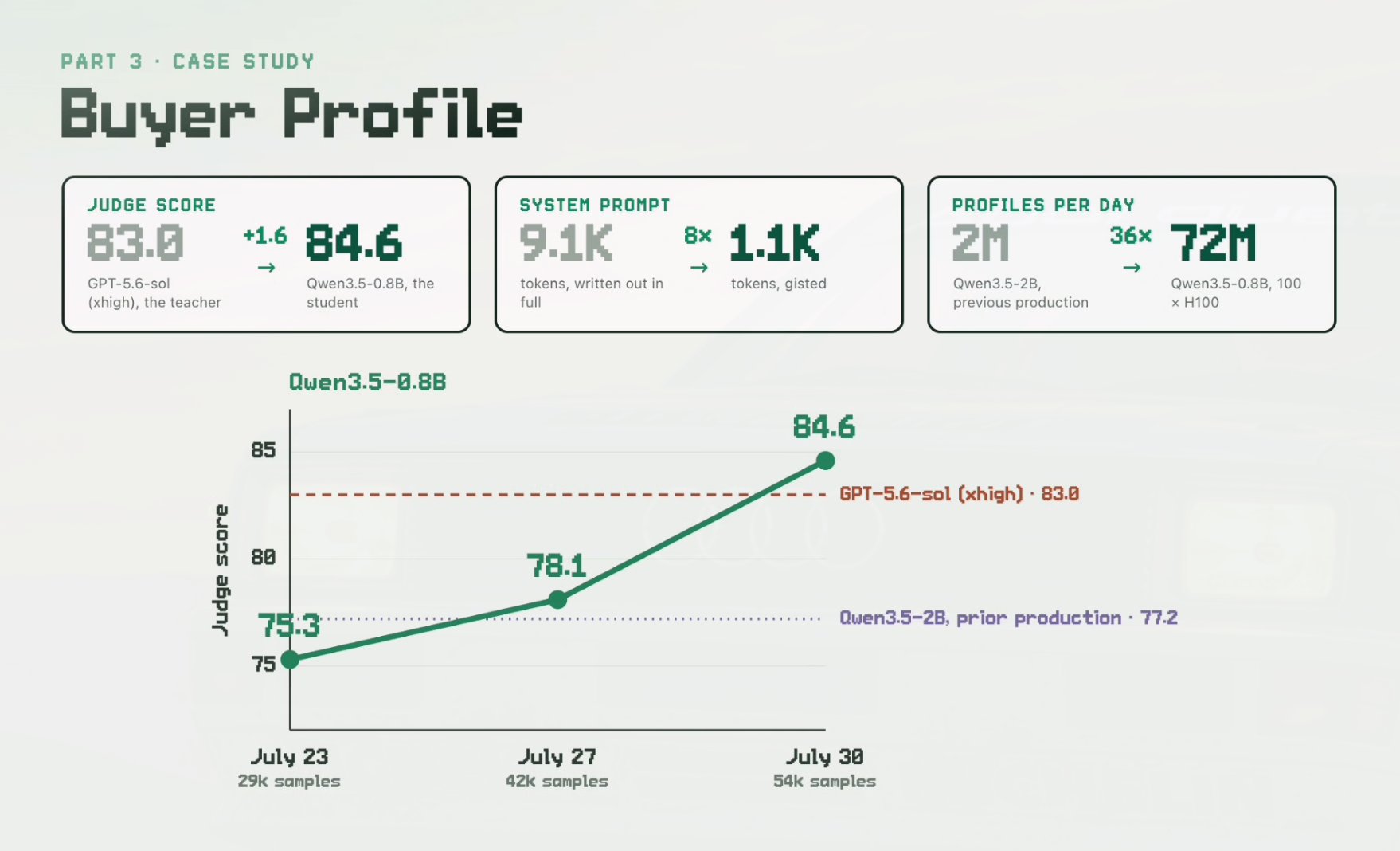
- Shopify's @tobi says the company's ML team fine-tuned a 0.8B model that beats GPT 5.6-sol xhigh on "this very specialized task," crediting a "self improving recursive flywheel." @Ales_is_offline reads it as a signal that in-house small models, and the ML teams to run them, are becoming a must-have.
- @guanlan's FrontierHarness Eval ran the same model on the same tasks across nine harnesses, including Claude Code, Codex, Pi, Exo, and DeepSeek Harness: 360 runs and 2 billion tokens later, pass rates ranged from 50% to 67% and cost per pass from $1.05 to $18.34.
- @finkd says Meta's Muse Spark 1.3 is rolling out with "frontier performance almost too cheap to meter," calling it the company's biggest jump yet on coding and agentic work, with open weights releases "coming soon." @MatthewBerman's reaction: "Ok I see you Meta."
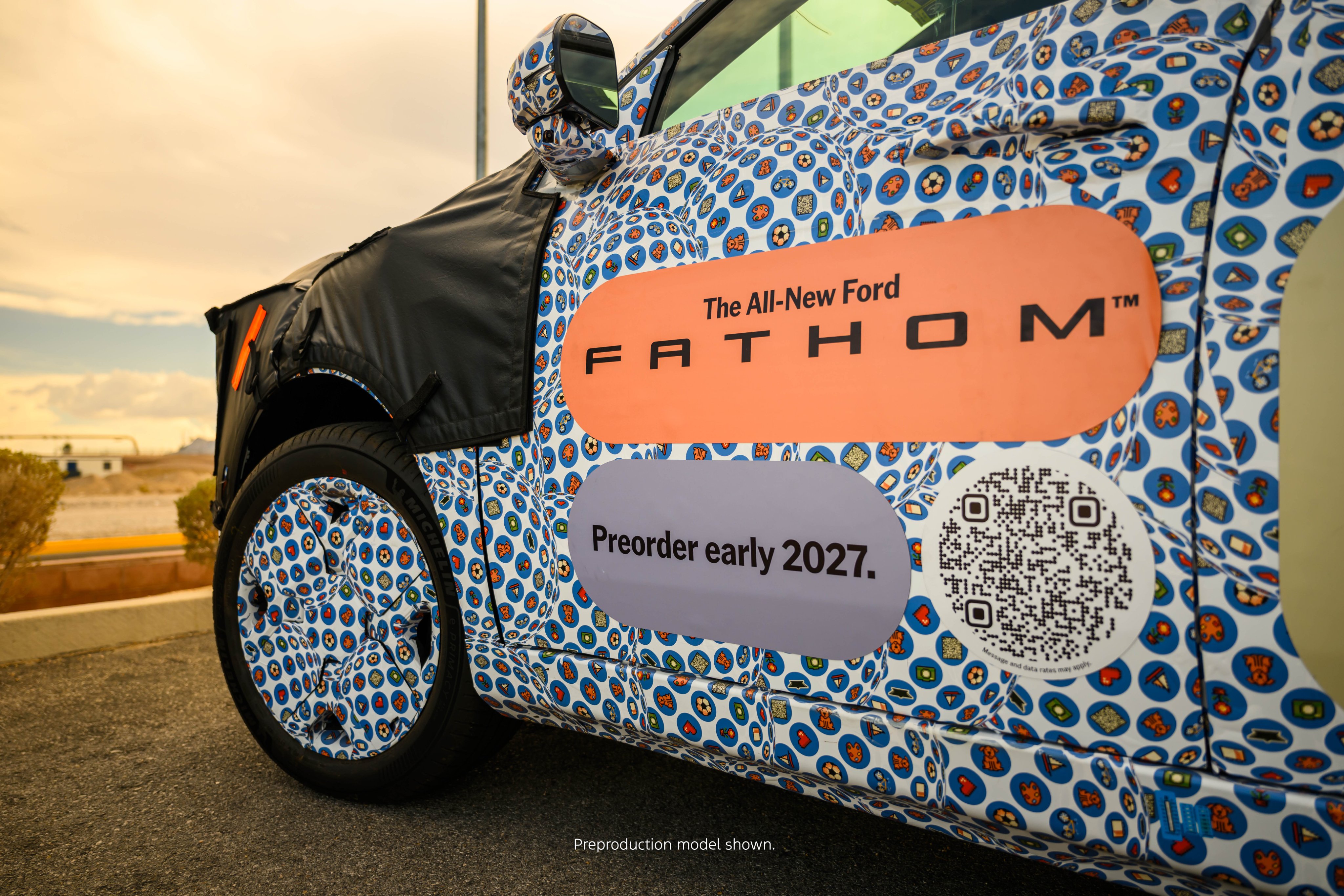
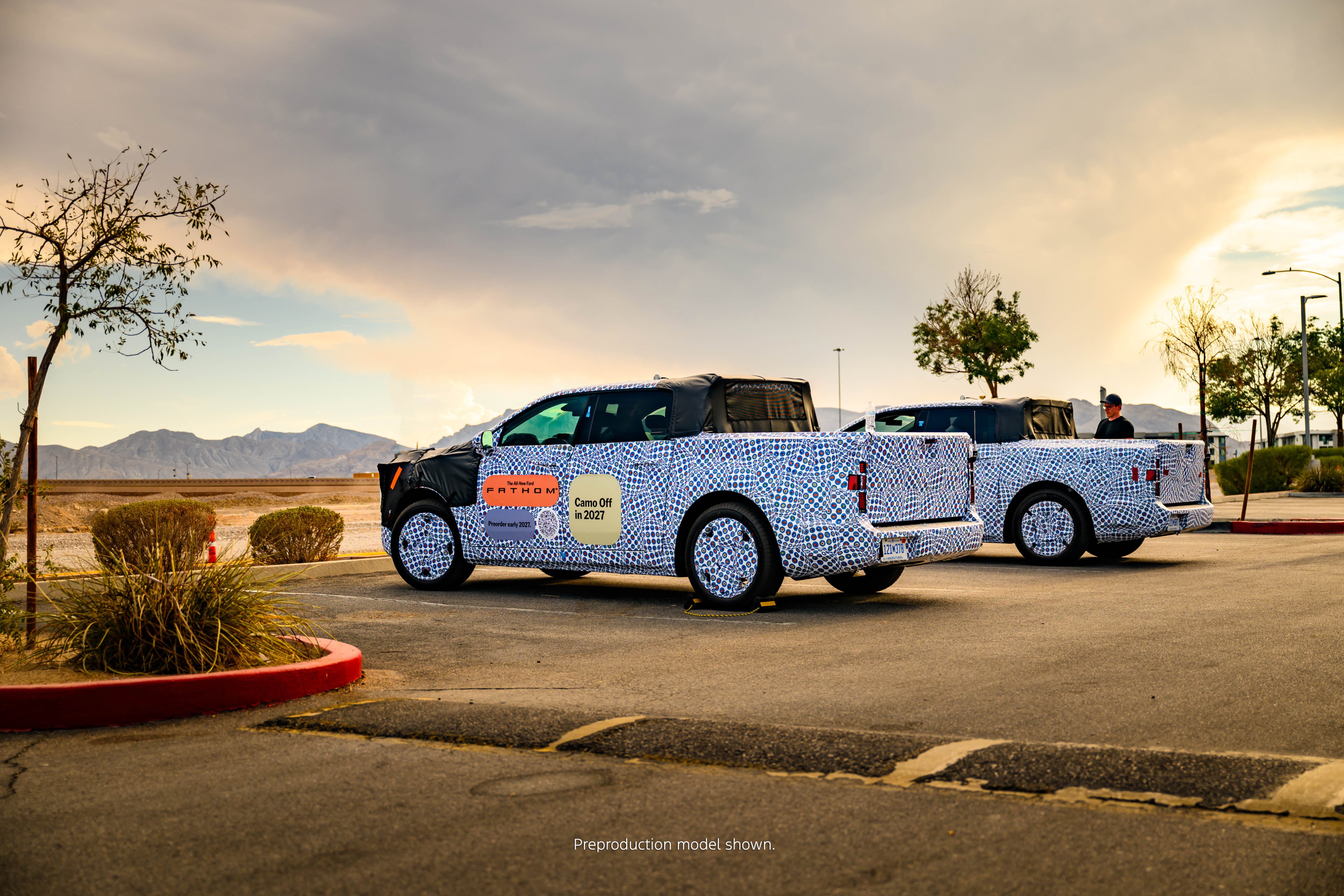
- Briefly: @jimfarley98 revealed Ford's 2027 midsize electric truck, the Fathom, during a desert-testing detour through Las Vegas; @QwenDevs introduced zg, a local-first search tool going "beyond keywords" for humans and agents; @0xHvdes says @0xfJuan's "Everywhere Overnight" startup playbook is worth the $1-3k advisors charge; and @i2cjak cheered @amembedded's $63 STMicro VL53L9CX LiDAR breakout (8.8m ranging, 100Hz) as proof "American embedded is goated."
Anthropic Bets on Being E--Commerce's Middle Layer
The clearest strategic signal in today's feed: Anthropic wants to power commerce agents, not compete with merchants. Per the @ClaudeDevs announcement and @MaxForAI's summary, the open-source blueprint splits into two agents. A Shopping Agent embeds in a merchant's app or site to handle search, comparison, personalized recommendations, cart building, order status, and after-sales. A Merchant Agent serves internal staff with sales analysis, inventory, pricing, and campaign generation, with any mutation to catalog or prices routed through staging for human approval.
The architecture is deliberately plain: one Claude model running an agent loop with tools, skills, memory, guardrails, and evals, calling the merchant's existing search, cart, inventory, and pricing systems. No multi-agent routing. Even UI elements like product cards, itineraries, and seat maps are exposed as structured tools rather than generated text. There is also a Claude Code plugin, so a repo can generate a custom commerce agent via a command like /scaffold-commerce-agent.
Notably, Anthropic says it will not build marketplace, payment, or ad layers; catalog, checkout, and customer relationships stay with the merchant. The usage numbers are Anthropic's own claims relayed through social posts and have not been independently verified.
Tiny Fine-Tunes and Token Thrift
The counterpoint to frontier-model hype ran through several posts. @tobi's claim that a 0.8B fine-tune beats GPT 5.6-sol xhigh on a narrow task came with a caveat worth keeping: he attributes it to Shopify's self-improving flywheel, not small models being universally better. @Ales_is_offline frames the economics: companies may stop paying premium prices for general models on tasks an internal small model handles.
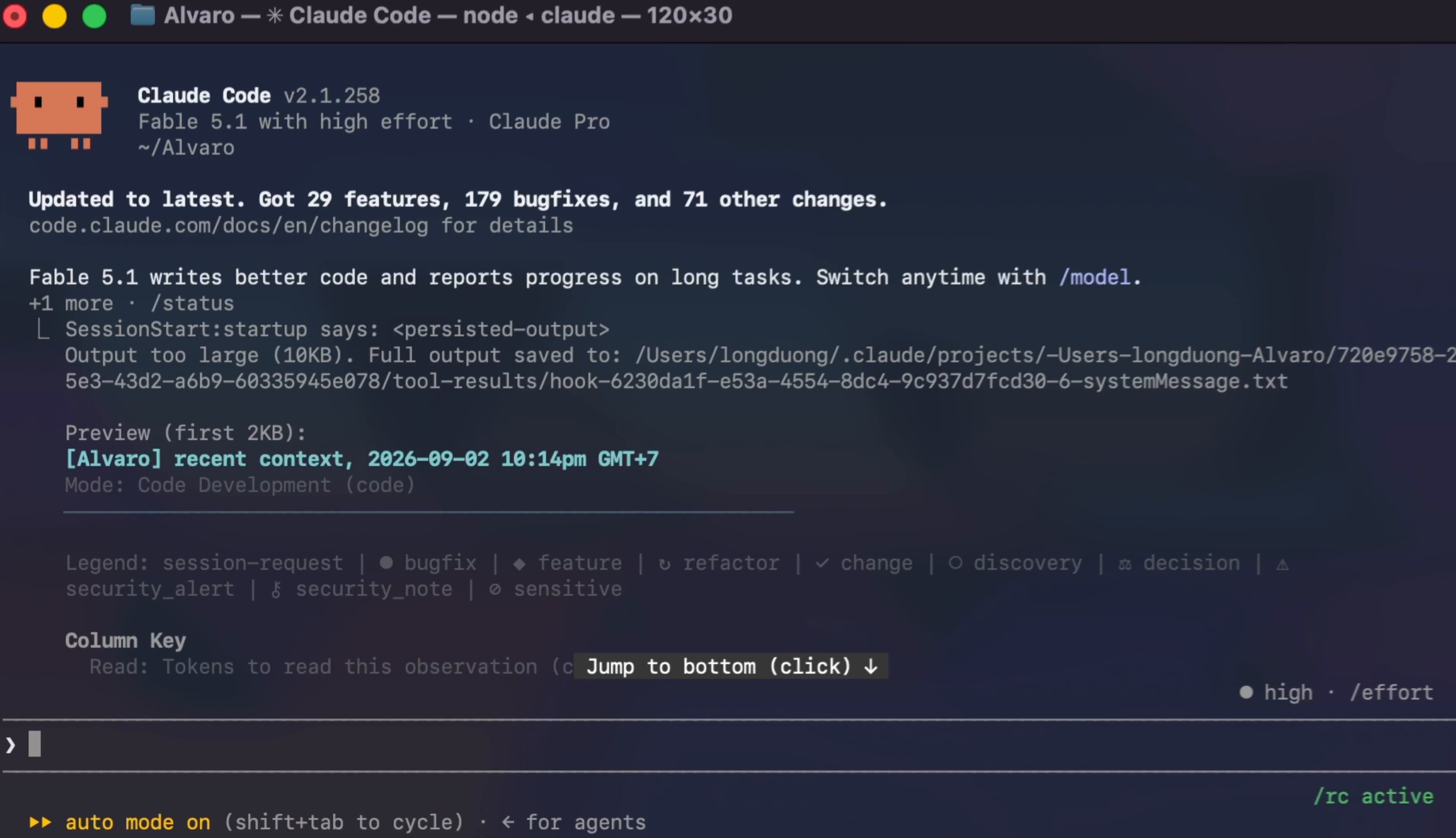
The cost theme extends to tooling. @dr_cintas posts four concrete steps to stop Fable 5.1 from burning weekly credits: set /effort to low, run /claude-api cost-optimize, run /claude-api prompt-audit to clear stale junk, and migrate old model IDs to claude-fable-5-1. And @0xIlyy reports, secondhand, that one tinkerer pushed GLM 5.3 Flash on two RTX PRO 6000 Blackwell cards from 200 to 1,000 tokens per second, with 20-50% gains arriving every few hours. His conclusion: "whatever software you use, it's nowhere near to being optimized enough."
Harnesses, Factories, and Triggers: The Plumbing Takes Over
If models are commoditizing, today's posts put the differentiation in the scaffolding. @guanlan's FrontierHarness Eval makes the case with numbers: identical model, tasks, and runtime, yet pass rates span 17 points and cost per pass varies more than 17x depending on the harness. @GoogleCloudTech published a guide on the same problem from the cost side, explaining that agent harnesses manage runtime state, sandbox execution, and prompt preparation, and that re-sending static context every turn multiplies token spend; context caching is the fix.
@stencil_labs argues the deeper point in a teardown of what OMP got wrong and OMP² changes, claiming "a while loop around a fetch" is really "systems software in a trenchcoat"; @viathebrink calls it "an actual goldmine for sota harness engineering." The factory metaphor keeps spreading too: @augmentcode shared co-founder @igoro's look at software factories being built at Cloudflare, Vercel, Uber, and LaunchDarkly, ending on the question of whether agents will eventually be prompting us. @kdaigle flagged @burkeholland's confession of having "accidentally made an agent factory" and the surprising things agents do while coordinating.
On the consumer side, @ericzakariasson (via @RayFernando1337) says Grok Bot routines can now be triggered by webhooks, from a specific WhatsApp contact messaging you to a Notion page changing, a temperature threshold, a desk button, a GitHub action finishing, or a server error spike. @RayFernando1337's framing: "Zapier but on steroids and with plain English." @adiix_official goes further, documenting how he fed all 18 rules from a "3-page SpaceXAI manual" into Grok Bot to build a Chief-plus-specialists setup with a shared /workspace, three gates (source, evidence, action), and humans approving only money, publishing, deletion, and signatures.
Code Review Meets Slop, and the Curriculum Rewrites Itself
@martinfowler linked Rachel's Ramblings asking "Maybe We Shouldn't Be Reviewing All This Code," arguing AI may not have broken review so much as exposed that review was being used to solve the wrong problems. @henrytdowling's slop-fighting list is blunt: agents give unit tests too much authority, and bad tests are a huge slop source. His remedies include @dillon_mulroy's antislop oxlint rules, @_lopopolo's "useless test deleter," telling the agent to "delete as much as possible," and adversarial goals on LOC or Halstead complexity.
@0xblacklight, crediting @humanlayer_dev, adds the compounding worry: models improve at working in messy codebases, but they improve even faster at creating mess, and that debt "compounds superlinearly on large teams." Quoted @Steve_Yegge puts it more personally: every model "will eventually build systems that they can no longer understand," and Fable 5 flailed on him for a week until 5.1 arrived. His advice is to keep "an iron grip on system size."
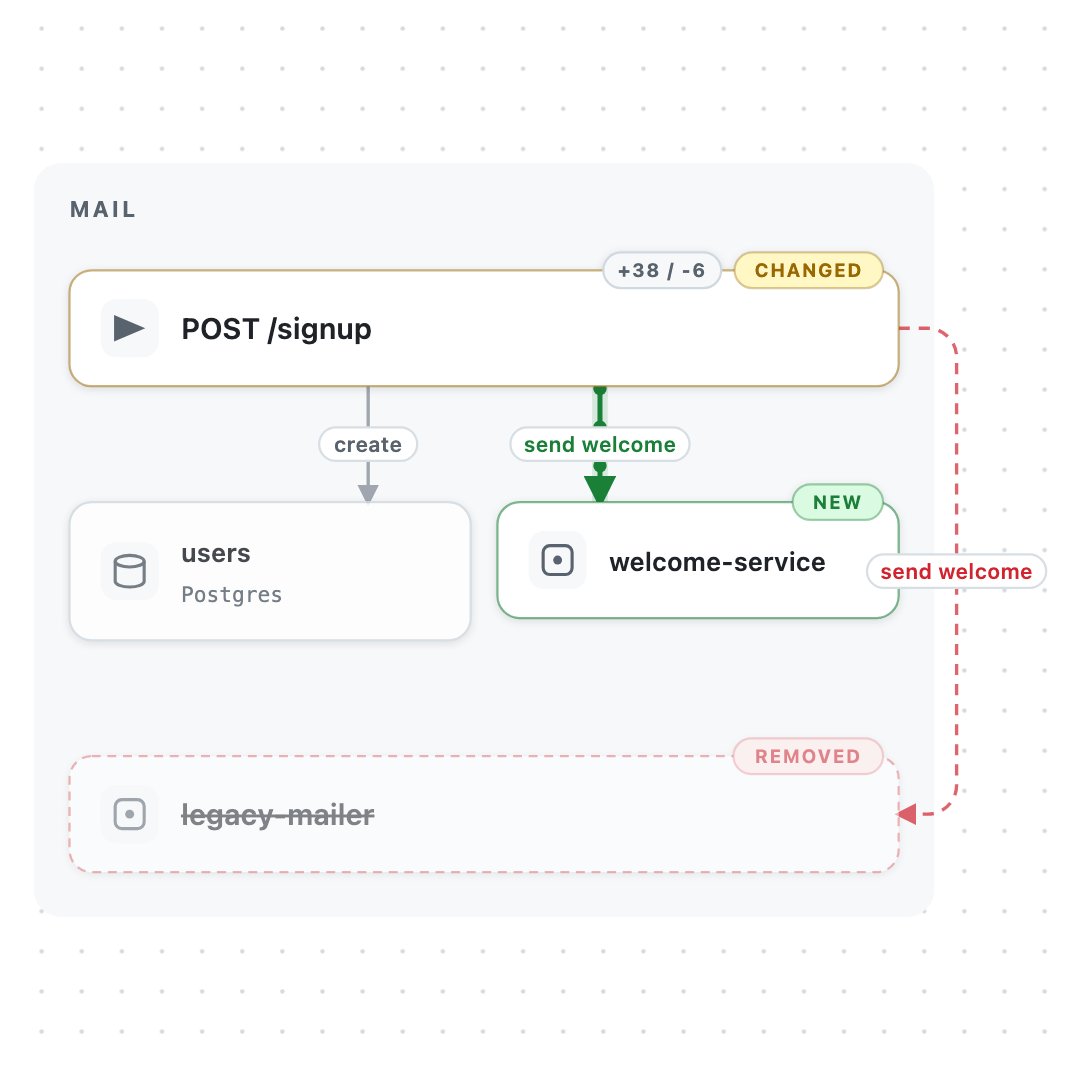
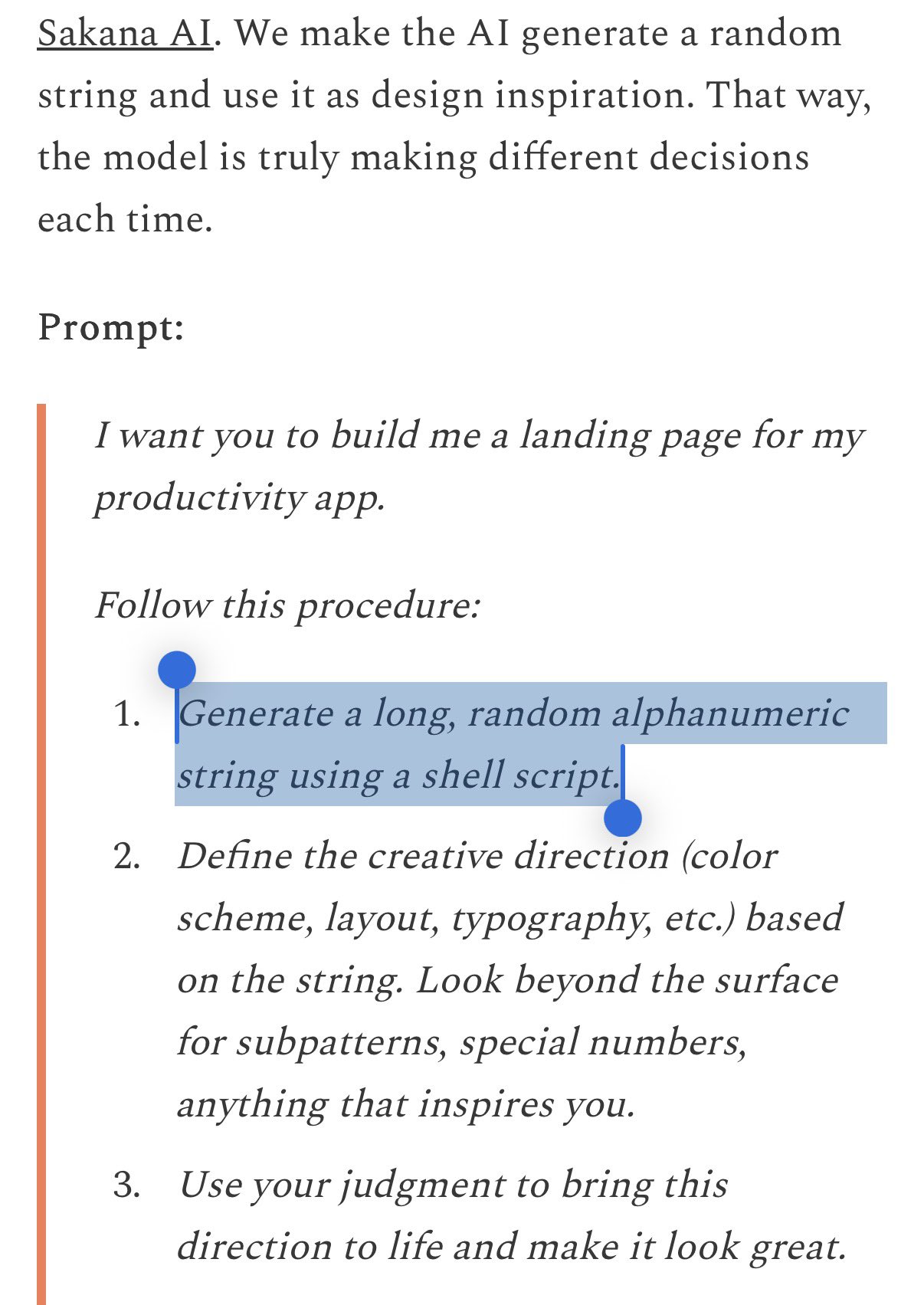
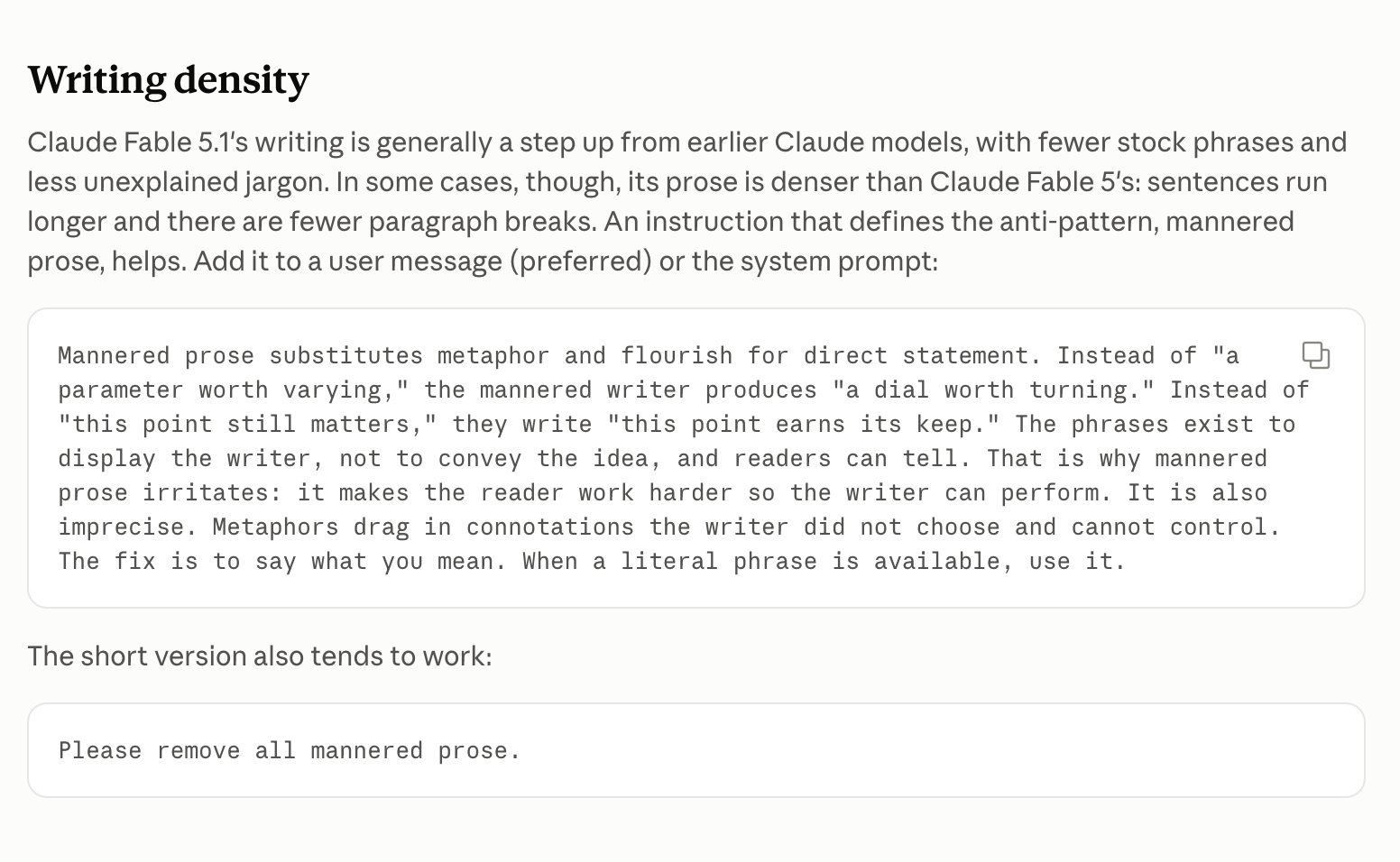
Tooling is responding. @github shipped a repeatable --attach flag in GitHub CLI for inline images and video in issues and PRs, which @OhansEmmanuel combines with pr-lens for animated architecture diagrams; @mattpocockuk praises @dexhorthy's /show-me skill as "a toolbox of nice ways to look at code" that makes PR descriptions readable. On education, @mihail_eric's updated Stanford course throws out 85% of last year's material for agent skills, context engineering, MCP portals, and agentic review, with students shipping PRs to partner OSS repos and all classes public from 9/22; @nummanali calls the free resources a gift. @DeRonin_ posts a 6-month robotics engineering resource list, calling robotics "the least crowded high-value skill in tech right now." And on output craft, @addyosmani flags Anthropic's official de-flavoring prompt for stripping mannered prose from Fable 5.1, @wp confirms @lennysan's roundup of @anshuc's eight creativity techniques (seed strings, ambitious prompts, subagent loops, image and video generation, hand-rewritten copy) "actually works" for divergent design, and @alex_prompter keeps circulating prompt shares.
Practical Takeaway
Before you pay for a bigger model, benchmark the scaffolding and the task. If you have one narrow, high-volume workflow, @tobi's post is a reason to prototype a small fine-tune against your frontier baseline. If your costs are the problem, @guanlan's eval suggests running identical tasks across two harnesses first, since the spread there dwarfed model-to-model differences, and @dr_cintas's caching and audit steps apply immediately. Whatever you pick, @Steve_Yegge's warning stands: set explicit size and slop limits on agent-written systems now, because the compounding mess is harder to undo than the savings are to capture.
Sources
T
Training tiny models for special purpose use cases works so incredibly well if you have a great self improving recursive flywheel. Shopify ML team is on fire.
finetuned 0.8b model beats GPT 5.6-sol xhigh in this very specialized task. https://t.co/w6OCWyWRi5
A
@tobi I wonder how many companies are starting to use internal smaller models instead of paying more for general models, and that is why a good ML teams is almost a must. This is really interesting.
J
The team was out in the desert doing hot weather testing on the new @Ford Fathom and took a detour through Las Vegas to share the new name. Our new midsize electric truck. Coming 2027. https://t.co/OJO7WwVPCv


O
Every PR is about to come with a screenshot.
Yours can come with the architecture, animated
npx skills add coldteadotai/pr-lens https://t.co/JSF4EzNwt6
G
github
@github
Sometimes it's easier to show than tell. We're sure this update will help with that. 👀 GitHub CLI now has a repeatable --attach flag that uploads a local image or video. Reference it inline in an issue, pull request, or comment body. Available now to all users on GitHub across all plans. 🎉 https://t.co/2oRtlSHdPT
I
This guy has been getting +20% to 50% improvements every few hours on GLM 5.3 Flash running on 2 RTX PRO 6000 blackwell.
Previous max reached was 200tps, he's now at 1000.
Whatever software you use, it's nowhere near to being optimized enough.
U
usr_bin_roygbiv
@usr_bin_roygbiv
https://t.co/Arc8jJi9kz
M
Rachel's Ramblings:
Maybe We Shouldn't Be Reviewing All This Code: Or, perhaps the problem isn't that AI has broken code review, maybe it’s that we've been using code review to solve the wrong problems
https://t.co/jsrec5OJRo
Q
From rg to zg: Local Search Beyond Keywords
From rg to zg: Local Search Beyond Keywords
Summary: The information humans and agents need is often scattered across large numbers of local files, making it difficult to locate accurately and e...
R
Webhooks for Grok Bot!! Imagine Zapier but on steroids and with plain English.
E
ericzakariasson
@ericzakariasson
you can now wake a grok @bot from anywhere! when you create a routine, click "add trigger" and select webhook some ideas: - you get a whatsapp message from a specific contact - a page changes in Notion - your home temp sensor hits a threshold - someone presses a button on your desk - a github action completes - your server hits an error rate spike try it out and lmk what you setup!
G
A year ago the question was which model. Now it's which harness.
Pi, Exo, Claude Code, Codex, DeepSeek Harness and 4 others. Same model, same tasks, same runtime. 360 runs, 2 billion tokens.
Pass rates: 50% to 67%.
Cost per pass: $1.05 to $18.34.
Introducing FrontierHarness Eval. 🧵
R
How to become a Robotics Engineer in 6 months (RESOURCES)
How to become a Robotics Engineer in 6 months (RESOURCES)
Robotics is the least crowded high-value skill in tech right now The problem is that almost nobody knows where to start, because the field looks like ...
S
what omp got wrong, what omp² changes. why "a while loop around a fetch" is systems software in a trenchcoat: https://t.co/BRwTnFh6k2
N
How lucky folks we are to have this guidance for free
Mihail is doing so much for the new generation of software engineers
M
mihail_eric
@mihail_eric
I’m excited to finally announce the newest edition my Stanford course 𝗧𝗵𝗲 𝗠𝗼𝗱𝗲𝗿𝗻 𝗦𝗼𝗳𝘁𝘄𝗮𝗿𝗲 𝗗𝗲𝘃𝗲𝗹𝗼𝗽𝗲𝗿. It has been 9 months in the making. Last November, with the release of Claude Opus 4.5, coding agents experienced a step function improvement in capability. We all felt it. The LLMs were more powerful, could reason for longer, solve harder tasks. This year’s iteration of my course reflects the 2026 metamorphosis of software engineering. My core belief is simple: AI-native developers of the LLM era are going to become the most important members of any software organization. I have designed my course to train this next generation of engineers. 𝗪𝗵𝗮𝘁’𝘀 𝗱𝗶𝗳𝗳𝗲𝗿𝗲𝗻𝘁 𝘁𝗵𝗶𝘀 𝘁𝗶𝗺𝗲 𝗮𝗿𝗼𝘂𝗻𝗱 First, 85% of my Fall 2025 class material is being thrown out. The Fall 2026 syllabus reflects the core capabilities AI-native engineers must have: agent skills, advanced context engineering, MCP portals, agent-ready codebase principles, agentic code review, security, parallelizing background agents, software factories, and more. Second, I am going to teach my students how to have software taste. Every student will be required to ship pull requests to production-grade, real-world codebases. The course is collaborating with the top open-source AI repos who will offer support and mentorship to students on how to meaningfully contribute to their projects. This has never been done before in any university course so I am incredibly grateful to our OSS Partners: @browserbase, @HeyGen, @CopilotKit, @semgrep, @OpenHandsDev, @milvusio, @marimo_io, Pi, @crewAIInc, @warpdotdev, @vercel, @cmux, @arizeai, @UnslothAI, and @anyscalecompute. 𝗪𝗵𝗮𝘁’𝘀 𝘀𝘁𝗮𝘆𝗶𝗻𝗴 𝘁𝗵𝗲 𝘀𝗮𝗺𝗲 I’m fortunate to again have AI software engineering leaders and founders as guest speakers to share their learnings from building top coding agent products. Thank you to @leerob from @cursor_ai, @bcherny of @claudeai code, @EnoReyes of @FactoryAI, @silasalberti of @cognition, @0xine of @semgrep, Rajesh Bhatia of @Cloudflare , @amasad of @Replit, and @eladgil. All resources will be available online. All classes will be available to the public. 9/22 on Stanford campus. See you in class. https://t.co/wTokHyUMsz
A
Our co-founder @igoro on software factories and where they are heading
I
igoro
@igoro
Cloudflare, Vercel, Uber, LaunchDarkly, and others are building software factories. I looked at how they work, the results so far, and what's next: will agents be prompting us? https://t.co/AOlCfi2osU
V
actual goldmine for sota harness engineering
S
stencil_labs
@stencil_labs
what omp got wrong, what omp² changes. why "a while loop around a fetch" is systems software in a trenchcoat: https://t.co/BRwTnFh6k2
W
I can confirm this actually works!? For divergent design explorations https://t.co/0sGtU3E79q
L
lennysan
@lennysan
I'd always thought AI was terrible at design, but after reading today's 🤯 post by @anshuc, I realized I was just doing it wrong. "AI models are capable of amazing creativity, but that creativity gets stifled. LLMs are trained to be next-token predictors: they look at a sequence of text and predict what typically comes next. Great design is exactly the opposite of this. Great design bends the rules and delights users with memorable, unexpected choices." @anshuc led design and engineering teams at Apple for 12 years. In his words: "Most people only see 1% of AI's creative potential. I want to show you how to tap into the other 99%." His 8 techniques for breaking out of the 1%: 1. Use seed strings to inject variety 2. Be much more ambitious with your prompts 3. Create positive feedback loops with subagents 4. Use image generation to enrich designs 5. Use video generation 6. Cut out elements that don’t add value 7. Remove AI tells 8. Rewrite copy by hand Read the post here: https://t.co/OEnvr1Z1LK P.S. This design was made by AI 👇
H
if you are a startup founder, im begging you to read this
advisors charge $1-3k for the kind of playbook shared for free in this article:
0
0xfJuan
@0xfJuan
Why Some Startups Become "Everywhere" Overnight
H
My top four slop-fighting best practices for coding agents are below.
My overall observations (a) the way coding agents work right now, agents give unit tests too much authority, an bad tests are a huge source of slop (2) try to force your coding agent to simplify as much as possible on a goal, especially if it's possible to quantify the simplification
(1) @dillon_mulroy's antislop lint, conveniently available as an npm package - a bunch of oxlint rules designed to reject slop
(2) the "useless test deleter" from @_lopopolo- asks your agent to check for tests that are useless, and then refactor your code to stop being needlessly complex to conform to said useless tests
(3) Tell your AI "delete as much as possible" before finishing a change h/t @Secondmindsys
(4) adversarial goal on a slop metric such as LOC, halstead complexity, etc h/t @josephdviviano
H
henrytdowling
@henrytdowling
what are your favorite codebase de-slop skills / best practices? I feel like this is 80% of my job at this point and I'm wondering if smart people have figured out some way of doing this that is better than what I'm currently doing
G
How to slash token costs with context caching in agent harnesses
How to slash token costs with context caching in agent harnesses
Coding agents do heavy engineering work. The agent harness manages runtime state, sandbox execution, and prompt preparation. Providing static surround...
A
how my Grok Bot looks after I fed it all 18 rules from the new 3-page SpaceXAI manual https://t.co/G7dZxpbZhS

A
adiix_official
@adiix_official
SpaceXAI team just dropped a 3-page operator’s manual for turning Grok Bot into a full multi-agent system that runs entire workflows 24/7 The shift: instead of prompting one Bot task by task, you build a Chief + specialist teams that own entire workflows here’s the 7-step Grok Bot playbook: step 1 - mental model → one persistent cloud computer, multiple Bot screens, shared files, browser sessions, credentials and /workspace underneath step 2 - setup order → create the Chief first - it doesn’t do the work, it routes → delegates → watches handoffs → collects outputs → escalates step 3 - internal bus → stop passing important context through chat - research, drafts, evidence, decisions and handoffs live inside /workspace so every Bot can continue exactly where another stopped step 4 - specialist teams → split content, intelligence, ops, research and coding across different Bots while one Chief coordinates everything step 5 - automation → every serious workflow gets 3 gates: source gate → evidence gate → action gate - Bots keep working until something actually needs human approval step 6 - trust layer → let Bots research, draft, summarize, reconcile, verify and queue autonomously - humans approve only money, publishing, deletion, signatures and irreversible external actions step 7 - expensive lessons → constant polling burns quota, syncing everything wastes usage, bad retries duplicate actions, undocumented internals break, and too many Bots can actually make the system slower the result: Grok Bot stops being a chatbot and becomes a 24/7 AI team - every workflow has an owner, every handoff leaves evidence, and humans only step in when judgment or approval is required Read this before building another Grok Bot - it breaks down the 18 rules, multi-agent architecture, handoff system, approval layer and automation model most agent tutorials never show Bookmark it and build your own Grok Bot team from the full article below
A
Do these 4 steps to stop Fable 5.1 from wiping out your weekly credits:
1. Set /effort to low
2. Run /claude-api cost-optimize to find the biggest wastes
3. Run /claude-api prompt-audit to clear old junk
4. Run /claude-api migrate this project to claude-fable-5-1 to update old model ids
You won’t have to worry about wasting tokens anymore.
D
dr_cintas
@dr_cintas
Stop Fable 5.1 from wasting tokens
M
Ok I see you Meta
F
finkd
@finkd
Muse Spark 1.3 is rolling out today with frontier performance almost too cheap to meter. This is the biggest jump we've made so far on coding and agentic work. Try it in Muse Code and our API. Next up 🍉 and Muse Spark open weights releases coming soon. https://t.co/XQQEDEJGD7
M
🚨Anthropic刚刚开源了过去一年给企业落地电商Agent的整套方法论和代码模版。
这套东西不是Demo,而是一套可以直接Fork的完整Blueprint,Anthropic把它拆成了两个Agent:
一个是Shopping Agent,直接嵌进商家的App或网站,负责搜索商品、比较、个性化推荐、组合购物、加购、订单查询和售后。
另一个是Merchant Agent,给商家内部员工用,可以分析销售、管理库存、调价格、设计促销,甚至生成营销Campaign。涉及真正修改商品、价格等操作时,会先进入staging,必须由人批准。
而且Anthropic一次性做了零售、旅游、电信、娱乐4套可以运行的参考实现。
架构也基本把他们现在对Agent的理解摊开了:
Claude + Agent Loop + Tools + Skills + Memory + Guardrails + Evals。
没有搞一堆复杂的多Agent路由。
一个Claude负责推理,然后调用企业已有的搜索、购物车、库存、定价、订单等系统。
连前端商品卡片、行程单、座位图这种UI,也建议直接做成Tool,让模型调用结构化组件,而不是生成一堆文本再让前端解析。
更狠的是,他们还配了一个Claude Code插件。
把仓库拉下来之后,可以直接输入类似:
/scaffold-commerce-agent a shopping assistant for our store
Claude Code会询问你的技术栈,然后直接生成自己的Commerce Agent,后面还有添加流程、写Eval、Review现有Agent的命令。
Anthropic称,目前使用Claude Shopping Agent的一些零售客户,购物车金额最高提升35%,完成购买的概率最高提升60%。
Shopify、Priceline已经在使用Claude搭类似的购物体验。
有意思的是,Anthropic特意强调:他们不准备自己做商城、支付或者广告。
Claude负责的是中间那层智能,Catalog、Checkout、支付、供应链和用户关系依然留给商家。
这可能才是Anthropic想抢的位置:
以后每个Shopify商店、航空公司、电信运营商,都自己拥有一个Agent,但底下跑的是Claude。
人类辛辛苦苦发明了电商网站二十多年,现在模型正在尝试把搜索框、商品详情页、筛选器和客服一起吃掉。
https://t.co/zLipI6MAgj
C
ClaudeDevs
@ClaudeDevs
We're open-sourcing Claude Commerce Agents. This is a blueprint for building shopping and merchant agents, with reference implementations across retail, travel, telecom, and entertainment. https://t.co/uEPja39hBY
I
hey American embedded is goated
A
amembedded
@amembedded
STMicroelectronics VL53L9CX 2.3K LiDAR Sensor $63.36 each, $49.58 @ 25 They fit a whole WAYMO in this thing. Not really. I2C/I3C + CSI interfaces for up to 100Hz update rate. Supports <5cm-8.8m ranging. Pre-order a STEMMA QT breakout here: https://t.co/KmsQdODwgU https://t.co/6Ph7UCzllH
K
I think @humanlayer_dev has been telling everyone this for close to 9 months now
1. Many folks CORRECTLY understood that LLMs can operate much more effectively in complex (and even bad) codebases than humans can
2. They therefore MISTAKENLY inferred that code quality & complexity and program design no longer matter
3. What they missed was that LLMs can also create much more bad code and much more complex systems faster than humans can.
4. The derivative of (3) is MUCH LARGER than the derivative of (1). Models do get better at working in bad codebases with each new generation. But they get a lot better at running unsupervised for a long time and producing exceptionally complicated programs.
5. The debt associated with (4) compounds superlinearly on large teams
S
Steve_Yegge
@Steve_Yegge
All models, no matter how smart, will eventually build systems that they can no longer understand or maintain, if you let them. Fable 5 finally outbuilt itself, and flailed on me for a week. Fable 5.1 looks like it will fix it. For now. But you have to keep an iron grip on system size, or it'll run away from you.
K
Oops! All Factories 🥣
Great post by @burkeholland on going where the idea leads you and the surprising things agents can door while coordinating.
B
burkeholland
@burkeholland
I accidentally made an agent factory
A
Anthropic published a new guide on how to strip the "Claude" out of Claude's writing (e.g. mannered prose)
Here's an official de-flavoring prompt for Fable 5.1, which already cuts back on AI boilerplate/jargon:
https://t.co/yfpWUtdT8h https://t.co/RT4Z6FzK8V
M
/show-me is a phenomenal skill
Makes PR descriptions extremely easy to read
Basically a toolbox of "nice ways to look at code"
Nice work, @dexhorthy
https://t.co/phB1dAPwgG
A
RT @alex_prompter: this account shares useful prompts: