Thomson Reuters Reportedly Builds a $40M LLM on Its Own Data, While Agents Get State Files, Funding, and Real Loops
A widely shared thread claims Thomson Reuters trained an in-house LLM from Qwen3.5-397B on 175 years of proprietary data, which @levie reads as the opening of a vertical-model wave. The rest of the feed is agentic engineering craft: a state-file trick that slashes context, self-improving product loops at Amplitude, and a $2.1M pre-seed for pay-per-call agent tool access.
Quick Hits
- The biggest story is a claim, not a verified launch: @zachmoskow reports (surfaced by @alex_prompter) that Thomson Reuters built "Thomson," an LLM starting from Qwen3.5-397B and continually trained on 175 years of legal, tax, accounting, and news data for $40M, with the company's own benchmarks calling it "comparable to Claude Opus 4.8." @levie sees it as the template for every data-rich company.
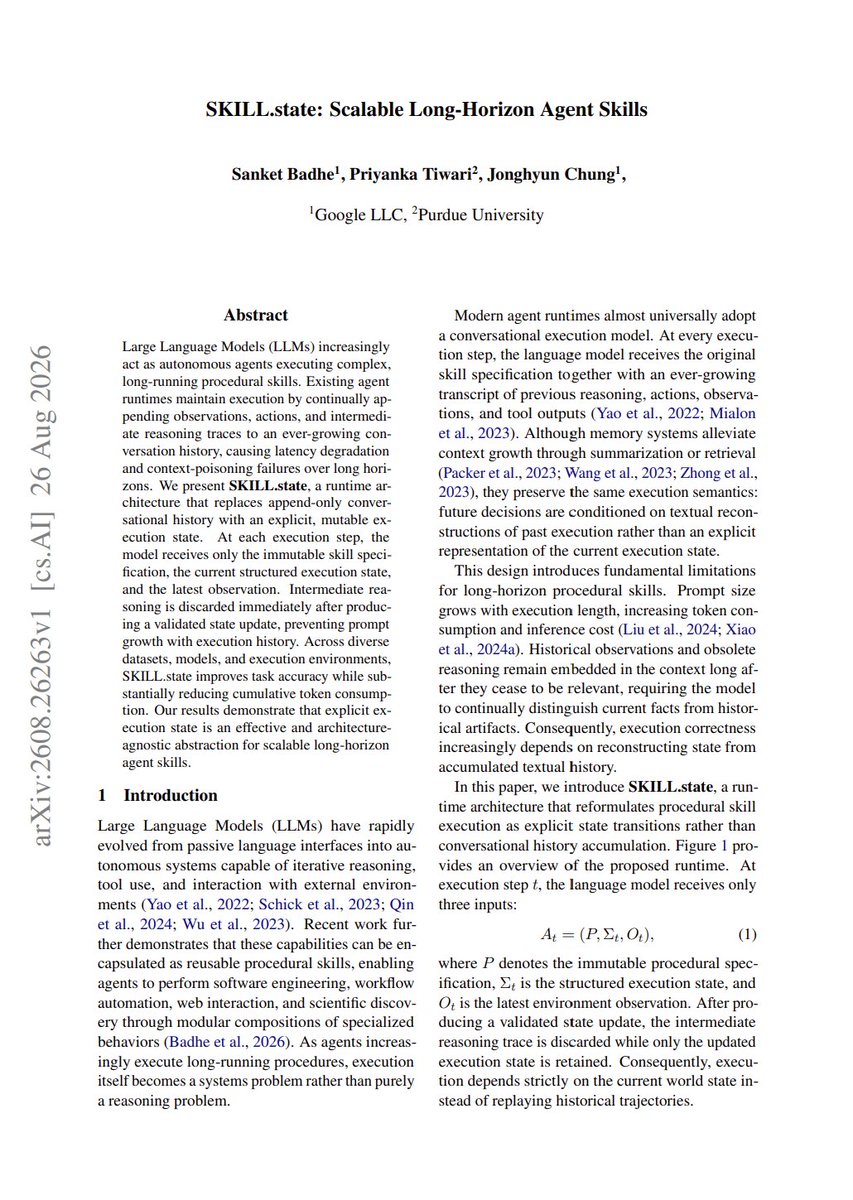
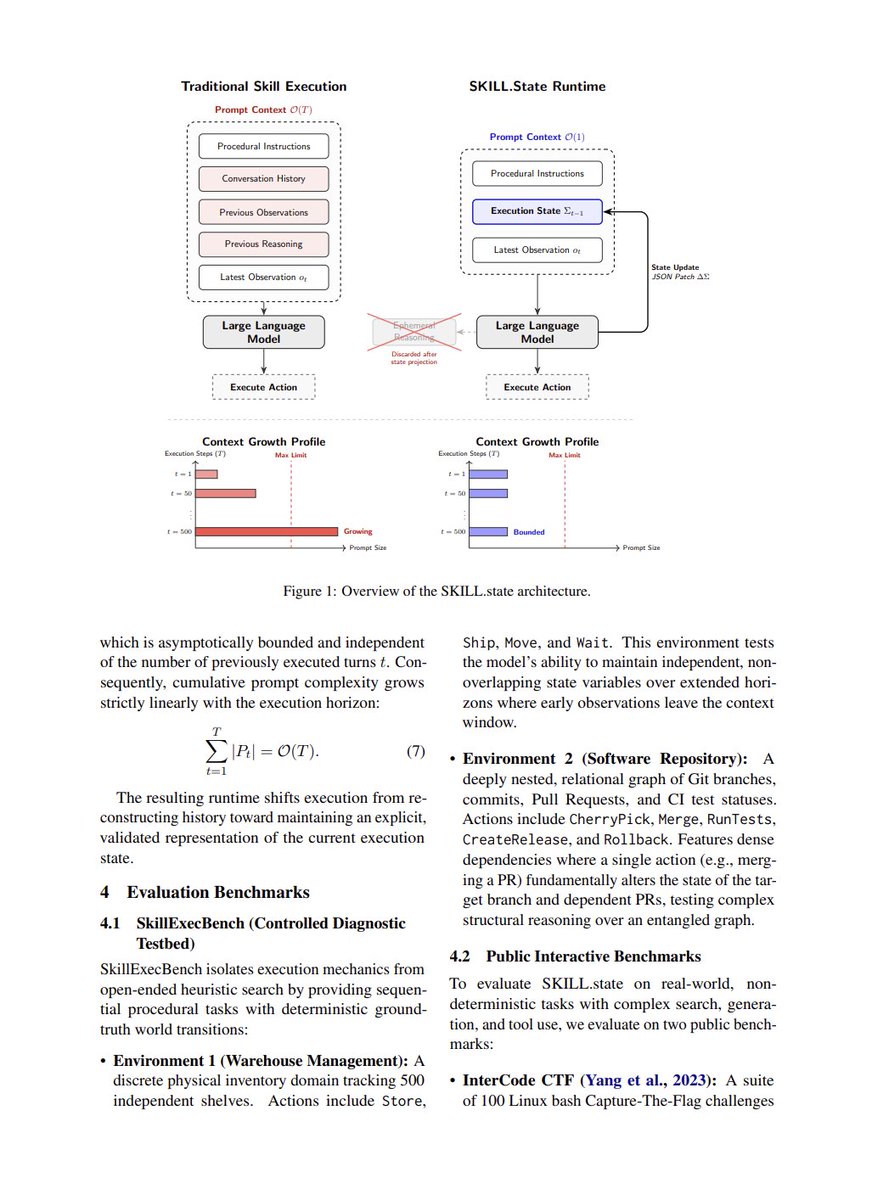
- @undefinedKi posts the day's most actionable technique: replace an agent's accumulating chat history with a single rewritten state file. Reported numbers: 6 million tokens cut to 122 thousand, and the file scoring 0.94 versus 0.52 for summarized history over 100 steps.
- Self-improvement loops appear to be leaving demo territory. @ericosiu highlights Amplitude's Wave, where PM @Jacob__Newman says the agent has spent months finding problems in Amplitude's own product, shipping fixes, and measuring whether they worked.
- Monid, pitched as an "OpenRouter for agent tools," has crossed 4 million agent transactions and raised a $2.1M pre-seed, letting agents pay per call across 1,800 APIs instead of holding subscriptions (@shengkunye).
- @JensenHuang argues AI is "reindustrializing" America, citing $400 billion invested in AI startups in the past six months, and endorses @GavinSBaker's data-center defense, which credits data-center tax revenue for Quincy, WA's poverty rate falling from 29% to 6%.
Data-rich companies start training their own models
The Thomson Reuters story has legs beyond one company. Per @zachmoskow, the model was built by Safe Sign, a pre-revenue legal-AI startup acquired two years ago, and Thomson Reuters' published benchmarks place it ahead of GPT-5.5, Claude Sonnet 5, and Gemini 3.1 Pro overall, with less than 10% of its data collection used so far. Those benchmarks are the vendor's own, worth noting before repeating them.
@levie connects the dots: open-weight base models keep improving while post-training infrastructure matures and commercializes, so owning a large corpus now has a second play beyond licensing. He expects the frontier to keep its edge on breadth but predicts far more models across every vertical.
Two more data points bend the same direction. @cgtwts flags @abliteration_ai's abliterated-model-large-v2, a GLM-5.3 derivative claimed to sit at #3 on Terminal-Bench 4.0, built for offensive cyber, red-teaming, and agent-testing work other models refuse, US-hosted in FP8 with a 1M context window. And @nrol_ling reacts to Google Research's TimesFM-3, a time-series foundation model doing multivariate forecasting in a single forward pass, marveling that training a model to predict the future on random tasks generalizes at all.
Grok Bot rounds into a full engineering stack
@MaiYangAI's 24-hour roundup of Grok Bot highlights is itself evidence of ecosystem velocity: Outlook, Calendar, and OneDrive plugins; Linux AppImage and rpm builds; conditional model selection for cloud agents; custom connectors and MCP setup (via @SamSokolin); a one-shot movie trailer from @yunta_tsai; and even a token workaround (open a new channel, then close it).
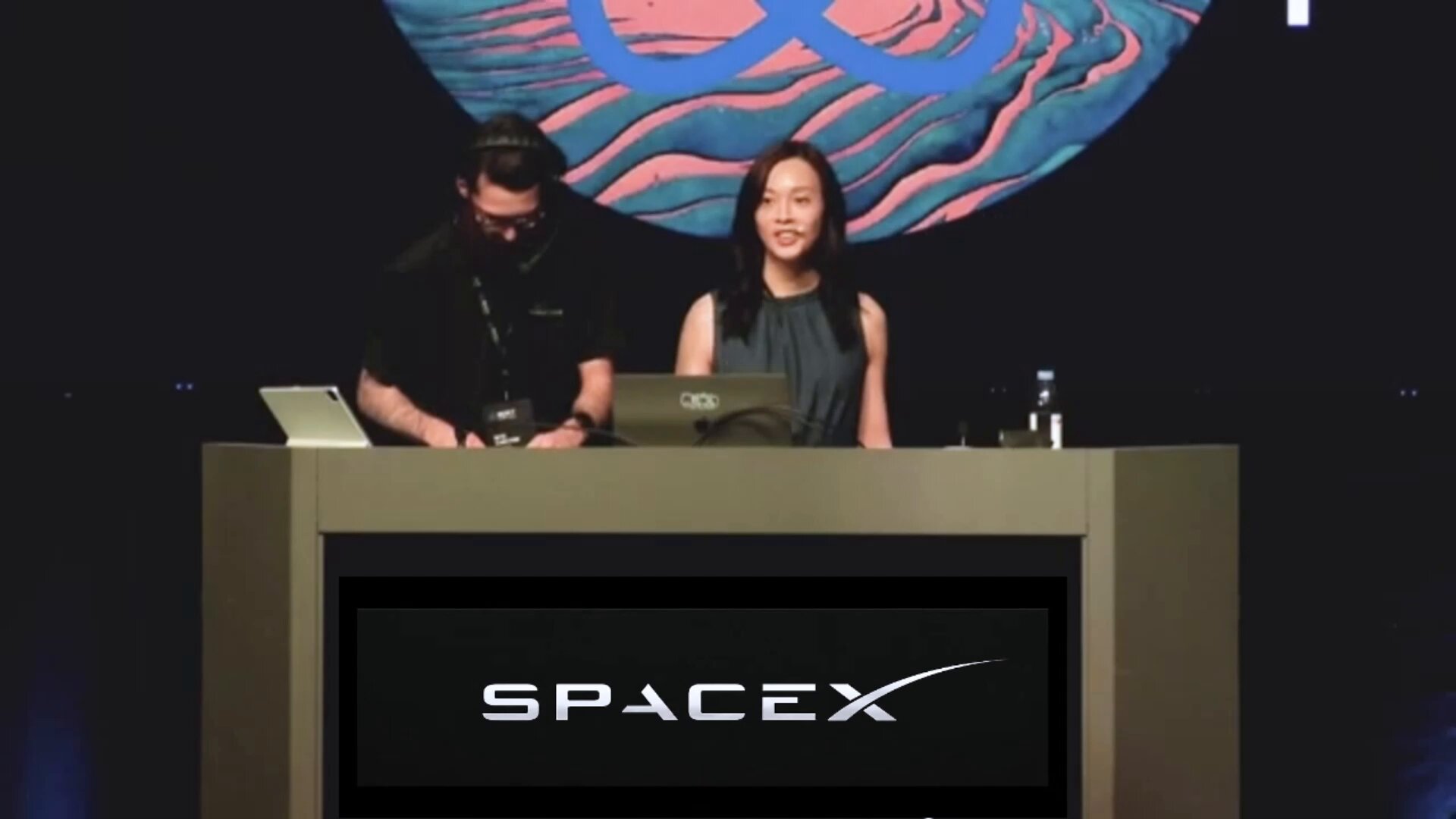
@lingxi's accompanying article frames the tool as "a highly capable engineering intern, with its own computers," one that manages coding agents and learns from how you work. @0xCodez goes bigger, quoting a self-described SpaceXAI engineer (ex-Cursor) running 10-20 GrokBot agents in a loop, coordinated by a chief-of-staff agent, claiming 1,000+ shipped PRs last month with plans to double it. That number is unverifiable, but the fleet-plus-coordinator shape matches patterns elsewhere in the feed. @void_exception shows the small-scale version: wiring a component library into a Grok bot so information arrives styled, in their words, "like nuclear launch codes."
The craft consensus: carry less state, write less code, spec more
The technique posts converge on shrinking what agents carry and produce. @DavidOndrej1 publishes an entire agentic engineering setup refined over 2,000+ hours and invites readers to "just steal it." @undefinedKi's state.json recipe is concrete: paste file-keeping instructions into a Claude Project, start a fresh chat, have the agent build state.json from your actual work, then upload it to Project knowledge so it outlives any single session. The rationale: by step 50, an agent is sorting 49 steps of dead context to decide what is still true.
@vercel describes a parallel pattern for output quality: one design.md file encoding decisions and guidance, shaped by an eval harness, with production feedback fed back into the loop. @mattpocockuk proposes fighting slop by producing less code overall, with reviews that continually shrink the codebase while keeping cyclomatic complexity low. @doodlestein argues Rust is a "shortcut" to reliable agent-built systems because it forces concurrency nuance from the start; @ZestStream, quoted in the thread, now runs 3-4 models per project (Claude, Codex, Grok, GLM 5.3 Flash). Even the gripes fit: @andersonbcdefg retweets @samhogan complaining that the longest part of PR review is waiting for bugbot, prompting a move toward a self-hosted Kimi K3 Fast deployment.
Agent labor gets a tooling layer, and fresh funding
If agents are the workforce, someone will build the utilities. @shengkunye's Monid announcement claims agents can now discover, run, and pay for tools at runtime through one connection to 1,800 APIs, all pay-per-call with zero subscriptions, and @audrlo predicts it becomes "the next big infra company." @NadavAHollander is recruiting collaborators and co-founders in the Bay Area for a programmable platform for "software factories," arguing that systems for organizing agentic labor will become one of the largest categories of enterprise spend. @JoshARosen makes the architectural case: frontier labs don't have a monopoly on spinning up subagents, and the real innovation is happening one layer up where software factories break down work.
The plumbing is arriving too. Tailscale open-sourced tailcat, "Tailscale without Tailscale," its data plane without the control plane, no accounts, logins, admins, or IPs to manage. @TinoWening open-sourced an OS-level wrapper around his pi harness, giving Ctrl+Alt+Space agent access anywhere in the system. And @NataliaZarina, after taking the Every team through both Anthropic's and OpenAI's partner programs, declares we're now in "the era of AI implementation."
Closing loops requires measuring them
The Amplitude Wave thread matters because the loop ends in measurement: the agent checks whether its own fixes worked. @medriscoll pulls feature #3 from @businessbarista's 30-point AI-native company list, the centralized intelligence layer that makes data and business logic queryable and agent-actionable, and links recent write-ups from the data teams at Ramp, Cerebras, and Anthropic. The full list, with items like "cost per accepted PR," earned autonomy, and traceability, works well as an audit checklist. @georgepickett points to @p0's piece on how to eval web search for AI, promising it will help you "impress your friends and your subagents."
Practical Takeaway
If your agent sessions run past a few dozen steps, test the state-file pattern this week: it costs almost nothing, and the reported 0.52 to 0.94 jump is exactly the kind of claim you can verify on your own tasks in an afternoon. Pair it with a single guidance file in the style of Vercel's design.md plus an eval harness, and treat every vendor-published benchmark, Thomson's included, as unproven until it survives your own evals.
Sources
Regret the tone of my post on data centers yesterday. What I should have said: There were reasonable concerns about data centers 18ish months ago: water, taxes, jobs, electricity prices, the environment and what they would do to small towns. Well-structured data center projects have largely addressed these concerns today and we should be celebrating this. On balance, data centers are awesome for America in every way. On water: U.S. data centers use a fraction of what golf courses use. A lot of the numbers from 18 months ago were off by over 1000x. Newer data centers use closed-loop systems or recycled water. Should be required by every town approving a data center project. On taxes: looking only at sales-tax exemptions, as Ronan Farrow did, is the wrong way to evaluate this. Data centers pay significant property taxes. Loudoun County, which is the wealthiest county in America, now collects on the order of $1 billion a year from data centers. In Quincy, WA, data centers are more than half the property-tax roll. Over time, property taxes can go to zero while government spending increases in these towns. On jobs: this has been unambiguously awesome for blue collar Americans. Demand for electricians, plumbers, welders, HVAC techs, and contractors has gone vertical, and it is not a one-time construction job. These buildings get upgraded and expanded over time. That is why the building trades are fighting for them, and why some unions are now treating opposition to data centers as a reason not to endorse politicians. On power: the original fear was that households would pay for the incremental electricity demand in the form of higher prices. That is why the ratepayer-protection deals and the new large-load tariffs exist. The right structure is: the data center brings or pays for new generation and signs a contract long enough that existing customers are protected. Where that is happening, utilities are cutting or freezing residential rates and saying so on the record. Where it is not, people are right to object. Electricity prices are going down *today* in a number of large states because of data centers. On the environment: data centers overwhelming use natural gas today, which is the cleanest power source outside of nuclear, solar and wind. And the companies that are building the data centers are committed to carbon neutrality such that an equivalent amount of solar will likely be built. Maybe more importantly, the data centers need batteries to function effectively and these batteries can also sell energy back into the grid (which recently prevented blackouts in Texas). Over time, data centers will run on solar plus batteries. On the towns: Poverty in Quincy, WA fell from 29% to 6%. Data center taxes paid for a new high school, a hospital, a library, police and fire stations. This is happening in many left for dead former mill and farm towns that had no other bidder for the land. Data centers are actually reindustrializing parts of America and creating the kind of working-class jobs both parties have spent decades claiming to support. That should not be a partisan issue. Data centers can and should be awesome for America and they increasingly, overwhelmingly are. Supporting the outsourcing of data centers to China will likely age just as well as support for the outsourcing of high quality, blue collar manufacturing jobs to China has aged. When the facts change, I change my mind. I hope that reasonable people who had good faith reasons to oppose data centers at least consider updating their beliefs given the change in the facts over the last 18 months. This really matters for America. I will say I also think the idea of making data centers beautiful is a good one that has yet to be implemented. Data centers should be just as beautiful as Grand Central Station. We can learn a lot from the railroad buildout. Neoclassical revival ftw. Might write up open-weight AI tomorrow as this is equally essential to America.
How to Set Up Claude Once and Get 10x Out of It (You Have No Idea What Your Chat Can Actually Do)
Agentic Engineering Setup (after 2,000+ hours)
Grok Bot Agents: how to automate your life in 10 Steps (Full-tutorial)
Migrated my agents to https://t.co/9IalD6xruQ this weekend and started using GLM 5.3 Flash. Now running 3-4 models on every project using NTM (Claude, Codex, Grok, GLM). I've built 3 asupersync native binaries in the last week - one for storage, one for data mining, and one for OMP orchestration. Rust on Rust on Rust. Really feeling like I'm starting to catch wind on all of these projects I'm working on. Huge thanks to @doodlestein for all of your public work and inspiration. I've been mining the shit out of your projects to figure out how to properly establish gating requirements in CI and its helping A TON. I unstuck 3 projects this last week that have had me stumped for months. Your /just-say-no-to-process-porn-and-ceremony and /reality-check-for-project skills are 🤌.
People of pi. I trust my pi harness, so I built a direct OS-level wrapper around it. Instant AI access via Ctrl+Alt+Space anywhere to run agent tasks across the entire OS. Below is a short video showing how I use it. What do you think?👇(Sound on) https://t.co/6AmD6usZT9
The Surprisingly Complex Art of How Software Factories Break Down Work
Grok Bot for Engineering
I’m a SpaceXAI engineer building Grok Bot with Grok Bot. Think of Grok Bot as a highly capable engineering intern, with its own computers, that can ma...
(1/6) i'm the pm on Wave at @Amplitude, our agent for self-improving products. for the past few months we've had it running on our own product. it finds problems, ships fixes, and measures whether they worked. here are some highlights: https://t.co/Vo3fysYrbG
Introducing TimesFM-3, a state-of-the-art time series foundation model that enables accurate multivariate time series forecasting in a single forward pass, significantly outperforming other forecasting models across major benchmarks. More on the blog →https://t.co/uSlnIdUJ4Q https://t.co/NfbONpFYDz
We just killed…everything. Introducing Monid, the OpenRouter for agent tools. Today we crossed 4M agent transactions. And raised a $2.1M pre-seed to kill every subscription in the world. Your agents can now: > discover, run, and pay for tools at runtime > one connection to 1,800 APIs: SEO, leads, search, ecommerce, stocks, video/image/music/3D gen, private company data > all pay per call, 0 subscriptions
30 features of an AI native company: 1) Function-by-function process blueprint of your entire business. 2) Everyone in org using a daily driver harness like Grok Bot, Claude Cowork, ChatGPT at Work. 3) Centralized intelligence layer that aggregates structured and unstructured data, documents, and business logic into a single source of truth that is queryable & agentic work can be done on top of. 4) Model routing via OpenRouter, Ramp, etc that optimizes cost-per-successful-task across the business. 5) Treat context as code, ensuring architecture documents and conventions remain updated while allowing for diligent upfront planning. 6) Willing to throw away everything that you've built every three months and reimagine all your workflows. 7) A “skills distribution system” is used to manage agent behavior and optimize for token efficiency by ensuring developers trigger consistent skills throughout their workflow. 8) Separate technical implementation from high-level specifications, enabling non-technical staff to contribute in a format that agents can utilize to build technical implementation plans. 9) A key software metric is “cost per accepted PR”, with a focus on driving these costs down through better token efficiency. 10) An automated, agent-native development system where fleets of AI coding agents handle planning, writing, testing, reviewing, and shipping code while humans define the intent and acceptance criteria. 11) Heavy planning with higher-effort models and executing with cheaper, faster models. 12) Agent harness that uses CLI tools to parse metadata within markdown files to traverse dependency relationships, allowing agents to be granular in their input token usage. 13) Finance org that runs processes continuously in accounting (record-keeping) to re-define/reset forecasts on a much, much tighter cadence. 14) Financial models embedded in the underlying OS across the org to help drive reasoning. 15) Citizen Developer SDLC where non-technical employees can take a solution from idea to production with governance, access, versioning, and software conventions built in. 16) Closed loop, self-improving non-engineering workflows that learn from previous runs based on external performance metrics or internal evals. 17) AI ROI framework that includes experimental phase, scaling phase, and optimizing phase with bets sitting in 3 buckets: infrastructure, innovation, and efficiency. 18) Paid marketing motion that uses agent swarms to deploy thousands of pieces of creative for testing, before increasing spend on human-generated ads. 19) AEO/SEO engine that audits, rewrites, and (ideally) generates SEO/AEO-optimized blogs on a weekly basis, and then measures if any of it worked. 20) Agentic cyber security solution that fights AI with AI. 21) Combo of RL gym and first-party data to fine-tune open source models on high-volume processes that need SOTA performance at reasonable cost. 22) Human touch and judgement gets reserved for the first and final mile of most processes. 23) Evals are core infrastructure of your business. Anytime new models come out you have an apparatus for testing cost & performance against core processes. 24) Everyone is a builder. Especially C-level execs. 25) Everything gets recorded because what you don’t capture can’t be turned into ai-enabled work. 26) Legal, HR, and IT work in lockstep with owners of AI agenda so that business’ ass is sufficiently covered without slowing down transformation. 27) Bias to disrupting yourself before being disrupted by others. 28) Guardrails before features. Agents inherit the permissions of whoever is asking, enforced in the data layer. 29) Earned autonomy. Feedback feeds the evals that gate each new version, and agents move up a ladder as they clear it: observe, suggest, act with approval, act alone. The endpoint is agents running whole workflows inside a defined boundary, with humans setting the standard instead of checking every answer. 30) Traceability as the training signal. Trace every output to its prompt, model, data, and approver, so human feedback attaches to something specific rather than a vague sense that something is off. What's missing?
How to eval web search for AI
CRAZIEST AI story of the week. Thomson Reuters just launched an LLM called Thomson. It starts with Qwen3.5-397B, then is continually trained on 175 years of proprietary legal, tax, accounting, and news data. They spent $40M on it. Two years ago, Thomson Reuters bought a pre-revenue legal-AI startup called Safe Sign. That team built Thomson. On Thomson Reuters’ published benchmarks, they say it is comparable to Claude Opus 4.8 and ahead of GPT-5.5, Claude Sonnet 5, and Gemini 3.1 Pro overall. They have used less than 10% of their data collection so far. We’re going to see this a lot more often.
Grok Bot 门槛又又又降了!Grok Bot 到底可以做什么,从入门到进阶
the engineer's job is shifting: stop performing the task, start optimizing the factory that does it. excited to share https://t.co/owFg3AWHEf — a programmable platform for building richly configurable software factories. sign up for the waitlist and DM me if you're interested
CRAZIEST AI story of the week. Thomson Reuters just launched an LLM called Thomson. It starts with Qwen3.5-397B, then is continually trained on 175 years of proprietary legal, tax, accounting, and news data. They spent $40M on it. Two years ago, Thomson Reuters bought a pre-revenue legal-AI startup called Safe Sign. That team built Thomson. On Thomson Reuters’ published benchmarks, they say it is comparable to Claude Opus 4.8 and ahead of GPT-5.5, Claude Sonnet 5, and Gemini 3.1 Pro overall. They have used less than 10% of their data collection so far. We’re going to see this a lot more often.

Today we're releasing abliterated-model-large-v2. Based on GLM-5.3, which is #3 on Terminal-Bench 4.0 (behind only Opus 5 and Fable), with 2× the cyber exploitation of 5.2. We abliterated and hosted it so it does the offensive cyber, red teaming, and agent testing work other models refuse to do. - US-hosted - FP8 - 1 million context window - Zero input/output prompt retention Live now. 🧵