A Perfect ARC-AGI-3 Score, Bulk Mac Buys, and Agents That Prompt Themselves
@ashpreetbedi reports that gpt-5.6 plus "learning machines" scored 100.00 on the ARC-AGI-3 public set, with a smaller Gemini model beating the human baseline using its notes. The rest of the feed belonged to practitioners wiring up self-running agents, alongside unverified reports of OpenAI bulk-buying Macs and a class action over Anthropic's Max pricing.
Quick Hits
- Learning beat memory on ARC-AGI-3, if the numbers hold. @ashpreetbedi says agents left to learn from each run, with no instructions, took gpt-5.6 to 100.00 on the public set, and gemini-3.7-flash scored 96.42 using gpt-5.6's notes, above the 95.4 human baseline. All self-reported by the author's team.
- Labs are allegedly eating the Mac supply. @jun_song relays @LuminaBench's claim that OpenAI bought tens of thousands of Mac minis and Mac Studios for RL and computer-use training, and that Anthropic is mass-renting Mac minis through AWS. Unconfirmed, but the scarcity story is circulating.
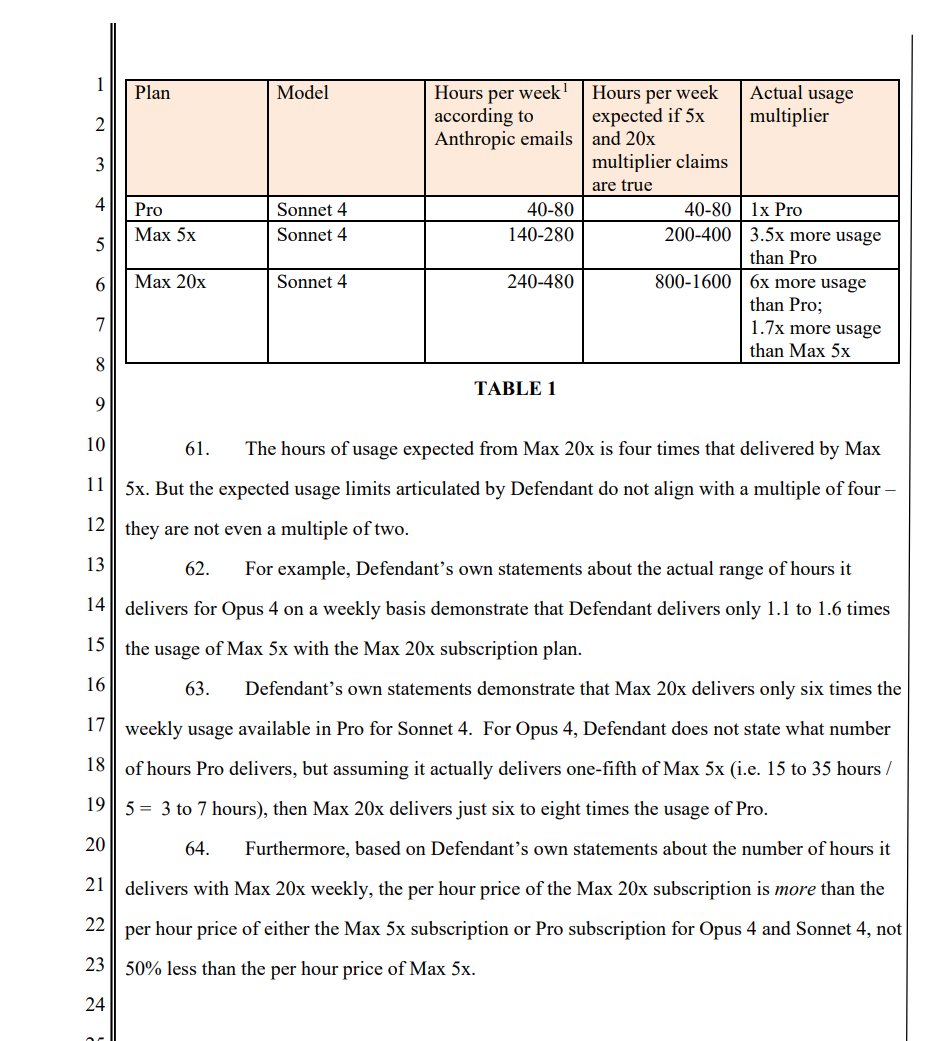
- Anthropic's "20x" is on trial. @kimmonismus details a proposed June class action alleging the $200 Max 20x plan delivers only around 2x the weekly usage of the $100 plan, since the multipliers apply per 5-hour session, not to undisclosed weekly caps. @emollick flags the same vendor-communication gap, complaining that labs leave it to users like @simonw to explain confusing modes such as ChatGPT Work.
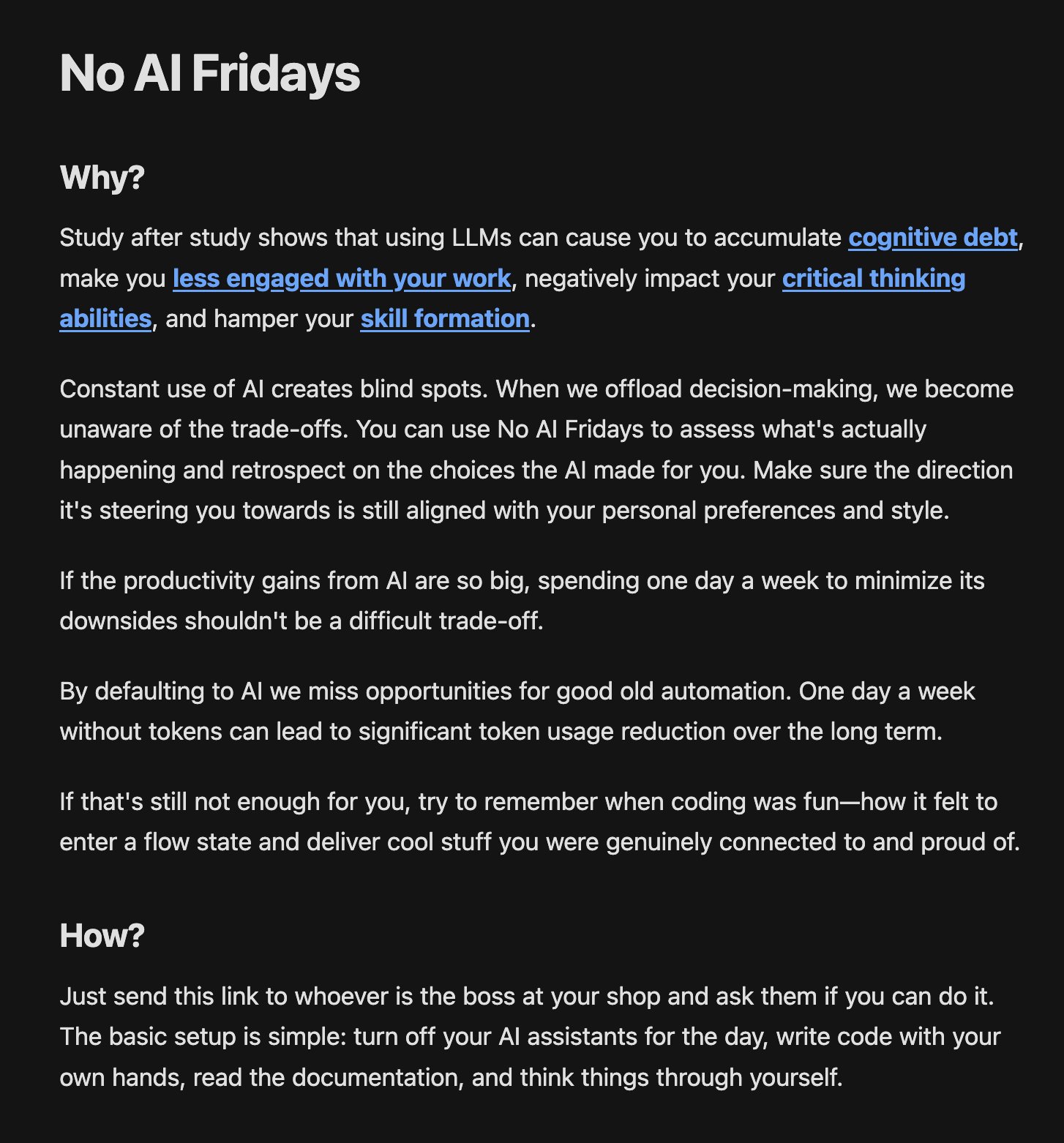
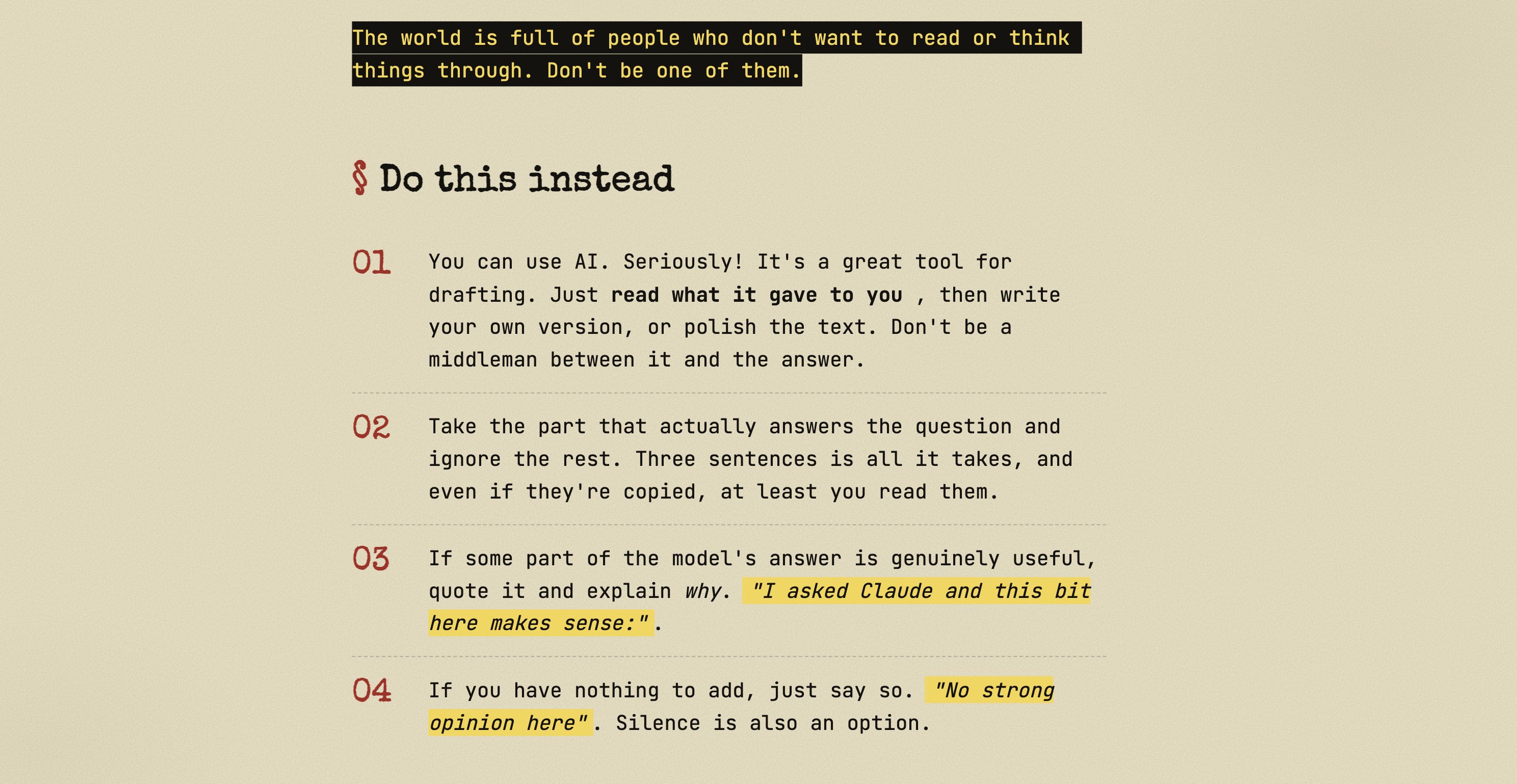
- Judgment still isn't optional. @addyosmani's "Don't paste the AI, please" and @i2cjak's applause for @MattiaFiumara's data-first takedown of capacitor design myths both argue against outsourcing your thinking.
- A security alarm with no context. @onewayfunction amplifies @matthew_d_green's reply about industrial control systems ("We're so completely fucked"), though nothing in the thread says what set him off.
Agents that run while you sleep, and talk to each other
The clearest through-line across today's posts: stop prompting, start structuring. @0xSizer relays an Anthropic engineer's claim that "at Anthropic we don't write prompts anymore. We build loops and graphs," from a 30-minute walkthrough (surfaced via @hanakoxbt's course thread) where a shape drawn once on screen runs the work unattended. His argument: two operators spending identical tokens on the same Claude model can end the week in different economic classes, because the difference is the structure around the model.
@mattpocockuk says his AFK agent workflow "ended up being better than expected" and now beats his /implement-spec skill, a multi-agent implementer that researches the codebase in a subagent, implements tickets with maximum concurrency, reviews against the spec, and cleans up worktrees. He still calls /implement-spec worthwhile "while tokens are cheap" and plans to publish the AFK workflow after his holiday.
The infrastructure version comes from @petergostev: get long-running agents off your laptop and onto an always-on remote Linux box, "go into debt if you have to." His earlier setup post described a roughly $3,000 Asus NUC (Ultra 7, 96GB RAM, 2TB SSD) that kept his agents alive during a week of travel, using Codex's remote support for task creation and Tailscale for file moves.
Once you run several agents, coordination becomes the product. @herdrdev noticed users installing herdr on Grok bots and shipped Shepherd, "the bot that herds your bots," as a ready template. @theaaron's recipe installs CLI agents on the Grok Bot VM, lets herdr manage those sessions, and reserves Grok Bot for coordination so its rate limits stretch further. @_alejandroao highlights @RiverAi7z's variation: run Grok, Claude Opus, and Codex in parallel, have them review each other's proposals, and let a main model converge, which reportedly removes most copy-pasting between models.
Token discipline: make agents ship instead of doing paperwork
Two posts converge on the same pathology, agents generating process instead of progress. @v4rvl's new skill targets GPT models' fondness (Sol especially) for hashes, locks, receipts, and status files, which produces redone work and refusals over stale markers. The fix classifies every action as implementation, validation, or bookkeeping, and skips the third; stale metadata is never a reason to redo finished work, while tests and benchmarks stay mandatory. He says it took his GPT experience "from 3 to 8" and cut token burn.
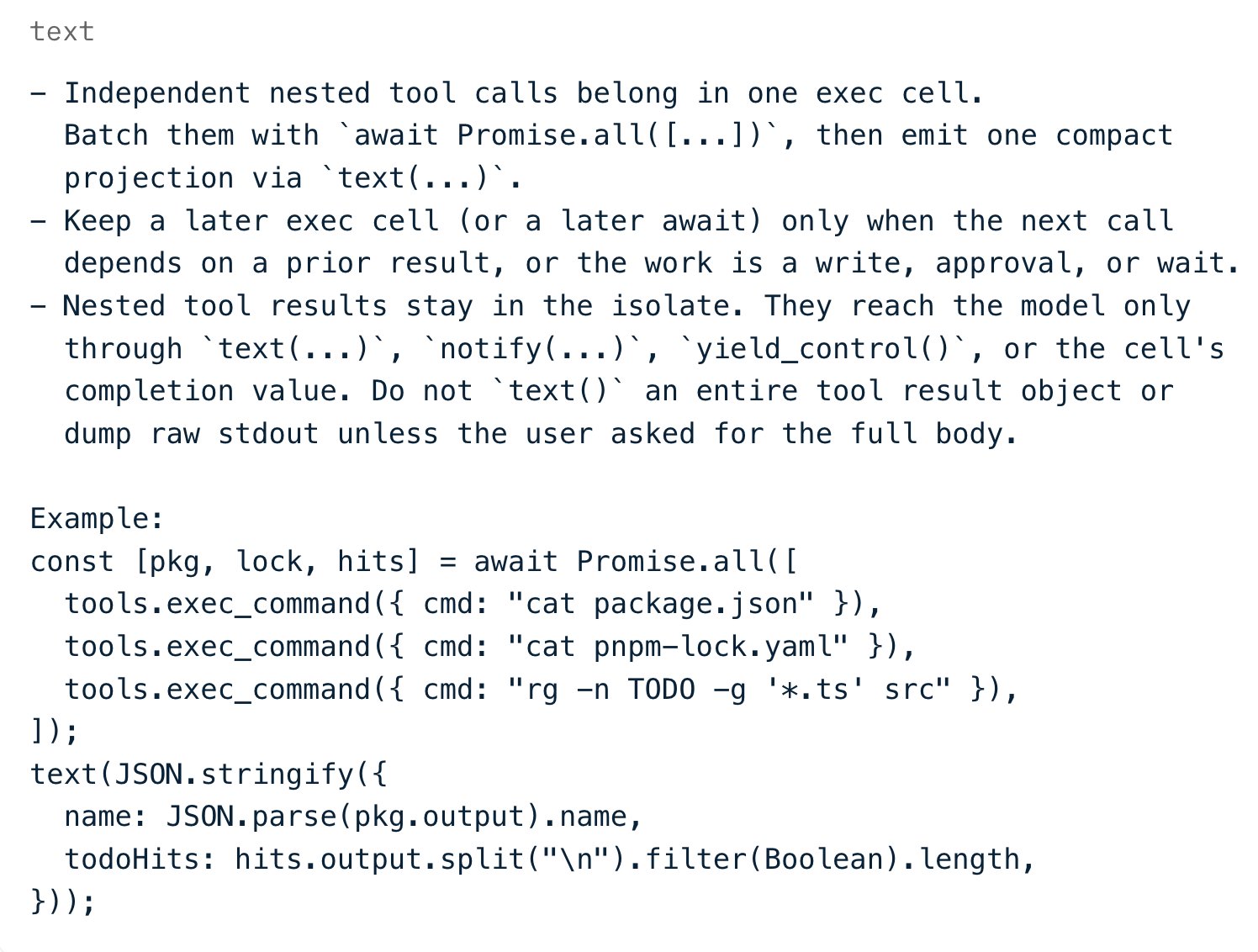
@cullend claims a "stupid little bit of text" cut Codex's token usage by about 30% with evals only improving, then extrapolates that OpenAI-wide adoption would save 10,000-20,000 tons of CO2 a day. The CO2 figure is back-of-envelope math, but the direction matches @v4rvl's. The counterweight is @_lopopolo, who uses zero skills in his repos at all, a useful reminder that the skills economy (archify, Shepherd, /implement-spec) is opt-in, not consensus.
The compute squeeze, from lab fleets to one desk-side Spark
The detail behind the Mac rumor matters. Per @LuminaBench, OpenAI's purchases target RL and computer-use training, Anthropic is renting Mac minis through AWS, and "every decent piece of compute is just going to get eaten by AI labs." @jun_song draws two conclusions: the compute shortage is serious, and Apple Silicon is actually solid for this workload. Meanwhile @txmed
Sources
T
Trending repository of the day 📈
archify
Agent skill for beautiful, verifiable architecture, workflow, sequence, data-flow, and lifecycle diagrams—self-contained HTML with motion and crisp export.
Last 24h: 3,902 ⭐
Total: 32,898 ⭐️
https://t.co/ggvj9dnkoQ
V
Since people asked, a proper intro to the skill.
https://t.co/AdGbip9IUB
GPT models, Sol especially, love to overengineer process: hashes, locks, receipts, status files. Sooner or later the agent starts redoing finished work because a marker went stale, or refuses to act because its paperwork is missing, and reports all of that as progress. So you end up burning tokens and wasting time while accomplishing absolutely nothing.
The skill makes the agent classify every action as implementation, validation, or bookkeeping, and skip the third. Redoing work needs a real reason, and stale metadata is not one. Tests and benchmarks stay mandatory.
Result: the agent ships instead of managing its own paperwork. For me that took the experience of using GPT models from 3 to 8. I get stuff shipped and save on tokens.
The skill is generic and cuts this garbage in any workflow. Make a few quick edits so it fits your actual workflow even better.
V
v4rvl
@v4rvl
ok, this week I started really enjoying GPT models. Finally, made a fucking skill to prevent overengineering and invalidating work to validate receipts garbage. Experience went from 3 to 8. Furthermore, usage limits are quite insane, Sol as a coordinator, 20 luna worker at all times for lookahead review and implementations. Crazy stuff. finally, I am making more and more use of GPT 5.6. PRO, I used to give it updates, use it as a third view and drop in detailed prompt to steer the work. Lovely stuff. I am still figuring out how to use it properly, I noticed I can be connected to the terminal through that GPT session + there is a remote option as well, which seems insane. Let the session run, check up on it from the gym. What I need to figure out is can it actually message the running Codex (terminal) session. If it can, holy moly. That's amazing. Plus, this man keeps reseting usage limits (which now got really better btw!!!), I unfucked myself, ran more experiments and GPT is now my favorite model, dethroning Opus. Ultimately, it was me who was retarded. Will put more effort into figuring out how to make better use of both GPT, Claude and Grok, as a few days of focused experimentation really transformed my experience.
C
This is the type of in depth sauce most people charge $997 for.
You can hand this article to your AI agent and have it build the entire funnel in about 10 minutes.
You’re welcome.
C
coreyganim
@coreyganim
How to land your first AI consulting retainer
C
Man I want some more computer. But playing around with my single DGX Spark here is my qwen 3.8 flash recipe. I’m pretty pleased with it in Hermes and OMP. Not a speed demon obviously but working well.
https://t.co/8usHRhFDIz
P
Get yourself a remote Linux box, go into debt if you have to.
Honestly, running all agents on your laptop is madness if you are doing any long running tasks. This was a godsend when I was travelling to SF for a week - my agents never went to sleep.
P
petergostev
@petergostev
I finally decided to pull the trigger and set up a little local Linux box to run my agents on. The reason why I did this is that my MacBook Pro was completely dying under the strain of agents. I got Asus NUC 15 Pro, Ultra 7 255H CPU, 96GB of RAM, 2TB SSD. The whole thing was about $3000, but you can do it way cheaper too. My boy math is that it a Mac Studio could be as much as $10,000, so I'm practically making money. Codex has great Remote support for this set up, much smoother than I thought - I can create new tasks from my Codex mac app or from my phone - all feels pretty similar to how local tasks work. Then I use Tailscale to move any files around too, delightful. I'll leave it next to my router hidden away, no extra clutter around the house. Set up took a couple of hours, it took a bit of back & forth, but agents are pretty good at holding your hand during the setup. Inspired by a @theo video about moving to Linux, really not as scary as I thought. Sticker art by a wonderful London based artist Natalia Shaloshvili.
H
been seeing a lot of you put herdr on your grok bots.
makes sense: the bot has a computer, and herdr runs where the agents run.
so we made you a template, ready to go: Shepherd, the bot that herds your bots. let us know how it goes!
https://t.co/nOaUOews6j
T
theaaron
@theaaron
i love @grok @bot i do not love its rate limits here is a simple way to get more usage out of it: install your coding agents on Grok Bot's virtual machine Codex, Cursor, Grok Build, Antigravity, etc then, install @herdrdev to manage those CLI agent sessions now give Grok Bot a rule: use Herdr + CLI agents for anything more than conversational tasks your rate limits for Grok Bot will only be coordination and prompting, rather than the coding tasks themselves and you can use those @cursor_ai and Grok Build limits AND crank on Grok Bot without getting rate limited as fast
C
This stupid little bit of text cuts Codex's token usage by ~30%. Have only seen my evals increase.
Genuinely makes me angry. If OpenAI picked this up that'd cut roughly 10,000-20,000 tons of CO2 a day. https://t.co/NGFwzOIvjV
H
another great idea from another great ceo of htmx https://t.co/cuu3GUx5TE
L
lazilyevaluated
@lazilyevaluated
How to reconnect with your work? https://t.co/KxTbMviO07
S
Anthropic engineer:
"at Anthropic we don't write prompts anymore. We build loops and graphs."
In 30 minutes she shows how the Claude team actually builds systems that prompt themselves. Not a demo, not slideware. She draws the shape once on screen, then the shape runs the work without her for the rest of the video.
The line that lands is: same model, same tokens, completely different week. Two operators can use the exact same Claude model, spend the exact same amount of money on it, and end the week in different economic classes. The difference is not the model. It is the shape you draw around it. Prompts get you one answer. Loops get you the answer, retried. Graphs get you the whole week of work while you sleep.
Save this while it is still early. In six months this shape is the baseline. Right now it is the edge.

H
hanakoxbt
@hanakoxbt
Loops and Graphs: how to stop babysitting agents and only approve the last step (full course)
M
This has ended up being better than expected and fills an interesting hole in my skills.
Most folks don't have an AFK agent workflow set up yet. You should. It's better than /implement-spec.
BUT running /implement-spec is good, especially while tokens are cheap, and very simple to set up.
I'll be graduating this into my public skill set once I'm back from holiday.
M
mattpocockuk
@mattpocockuk
I'm trying out an /implement-spec skill Essentially a multi-agent implementer that: - Takes in a spec and tickets - Does codebase research in a subagent - Implements all the tickets in subagents with maximum concurrency - Reviews the final code against the spec - Cleans up all worktrees Should be able to smash out huge chunks of work autonomously with minimal supervision. https://t.co/lTmPYXkUx7
D
AI is forcing a major shift in data architecture.
It’s no longer just about storing data for BI dashboards—modern stacks must support real-time context, unstructured search, and autonomous agents.
Here are the key architecture patterns and decisions for the AI era 🧵👇
Z
Good overview of the emerging cloud factory category including warp factories open infra approach
J
JoshARosen
@JoshARosen
Software Factories: Emerging Architectures and Why Frontier Labs Should Care
A
In January I proposed that memory is the wrong abstraction and what agents really need is the ability to learn. Learn about users, their environment, their purpose, their goals.
Learning lets an agent do something better next time.
We then released Learning Machines. At the time we had no evidence that learning would beat a traditional memory system but we knew it was the right direction.
Over the last few weeks we let agents play ARC-AGI-3, with no instructions, no rules, and let them learn from each run. Then we took one model's learnings and handed them to completely different models to see whether any of it was any use to them.
The short version is that gpt-5.6 + learning machines scored 100.00 on the ARC-AGI-3 public set. Then a smaller model (gemini-3.7-flash), learning from gpt-5.6's notes, scored 96.42, beating the human baseline of 95.4.
Read more about our work with learning machines here: https://t.co/a0XNpBDRBE
J
OpenAI buying Macs in bulk for RL means two things:
1. The compute shortage is serious.
2. Apple Silicon is actually solid for this workload.
L
LuminaBench
@LuminaBench
🚨 OpenAI are now contributing to the Mac shortage OpenAI have apparently bought tens of thousands of Mac minis + Mac Studios for RL and computer use training Anthropic are mass renting Mac minis through AWS too At this point every decent piece of compute is just going to get eaten by AI labs, looks like a good time to buy
S
Really enjoyed Uber’s write-up on its internal AI Software Factory.
I’ve never been a big believer in:
AI productivity = buying everyone a Claude/OpenAI seat.
That may help individuals, but at company scale you still need to manage models, context, tools, permissions, evaluation, and cost.
Uber is going much further with a unified harness, model routing, MCP gateway, benchmarks, cost controls, and managed agents.
That’s also why we’ve been building our own Agent Stack.
The more I think about it, the more I believe:
Don’t manage AI seats. Manage AI work.
U
UberEng
@UberEng
Running a Software Factory Efficiently at Uber Scale
O
You guys if @matthew_d_green is freaking out then we should ALL be freaking out.
Like actually though.
M
matthew_d_green
@matthew_d_green
@valkenburgh Oh god the industrial control systems. We’re so completely fucked.
R
I’m not sure who needs to hear this, but I just don’t use skills at all. Zero skills in my repos.
I
An LLM slop EE person has poasted gem. Maybe we can train them to poast more gem and produce more gem
M
MattiaFiumara
@MattiaFiumara
I've seen this countless times: placing different sized capacitors to suppress different frequency noise. In practice this causes more harm than it does any good, for the science behind this, check out https://t.co/U3hGps3fes. This is just one of the myths floating around on how to design electronics, passed down by the older generation and actually taught in universities. Never accept anyone telling you on how to do electronics design without the data backing up the claims.
E
Good guide. And the AI labs need to stop making people like Simon (and, to a lesser extent, me) be the ones who explain how to use the modes that they release.
Come on, lab folks, you have an AI that can write documentation! And make explainers! And be a tutor! You can do this!
S
simonw
@simonw
Here's my attempt at explaining what ChatGPT Work can actually do - it's a deeply confusing but extremely powerful tool with a whole lot of useful features that aren't available in regular ChatGPT https://t.co/QDVytAKmww https://t.co/E4oML5DpN3
A
this is a beautiful use case of herdr. i should try this out
R
RiverAi7z
@RiverAi7z
分享一下我是怎么用 Herdr 的: Herdr 对我最大的价值,是让不同模型可以互相发送消息。 我会同时开 Grok、Claude Opus、Codex 等 Agent,让它们分别给方案,再互相评审一轮,最后让主模型汇总收敛。 相当于从减少了我在AI 之间复制粘贴,变成让 AI 自己讨论。 效果非常好。 https://t.co/xykXW9MgKD
B
i've been using minimax h3 max to make interactive games you control!
all the decisions are up to you, and since the model is so fast there's basically no delays https://t.co/8eRayQ051A

D
We're going to make Omarchy the best damn OS for gamers. So many amazing conversations happening behind the scenes right now to make that happen. And also love seeing this out in the open already! 🤘
B
bonkcity_
@bonkcity_
We love the new OS Omarchy (from @dhh) and decided to build the last few days on a truly native Linux version of our game. We previously used Photon, but wanted to go true native. The latest build with some special support for Omarchy is now live on steam. This allows for full resizing, playing in tiles and more!
A
"Don't paste the AI, please"
"The world is full of people who don't want to read or think things through. Don't be one of them."
https://t.co/aCuUH0Sgpo https://t.co/HpbkAzaWCY
C
I went down the rabbit hole: Anthropic is already being sued over exactly this. And the $200 plan really only provides only around 2x the weekly usage of the $100 plan
Here is where the confusion comes from.
Anthropic’s pricing page says: “Choose 5x or 20x more usage than Pro.”
That naturally makes the $200 Max 20x plan sound like it includes four times the usage of the $100 Max 5x plan.
Only further down does Anthropic clarify: “Max gives you 5x or 20x more usage per 5-hour session than Pro.”
Those multipliers do not apply to the separate weekly caps, whose exact size Anthropic does not disclose.
A proposed class action filed in June alleges that Max 5x delivers around 3.5x Pro’s weekly usage, while Max 20x delivers just 6–8x. In practice, the $200 plan therefore provides only around 2x the weekly usage of the $100 plan, sometimes even less depending on the model.
The “20x” is real within each five-hour window. The weekly limit makes the overall offer look very different.
h/t @Hesamation for finding the original court files first i think

K
kimmonismus
@kimmonismus
Today I learned : Claude’s $200 Max plan offers 20x Pro usage within the five-hour window, but its weekly limit is only about twice that of the $100 plan. Oh and btw: Tibo has confirmed that Codex really sees 5x more weekly usage. Anthropic strikes again