Stealth "Ox Alpha" Tops an Informal DeepSWE Spot Check While an "Obliterated" Qwen 3.8-27B Restarts the Safety Argument
An anonymous stealth model promoted by @opencode scored above 80% on a 10-task DeepSWE subset in @davis7's unverified run, ahead of posted numbers for gpt-5.6-sol (52%) and Fable (65%). Separately, @elder_plinius's uncensored Qwen 3.8-27B, claiming a 0.0% refusal rate across 842 harmful prompts, pulled @AlexFinn and @ErikVoorhees into a renewed fight over open-weights safety.
Quick Hits
- The day's oddest story is Ox Alpha, a stealth model @opencode says is free for the next week, and @davis7's informal 10-task DeepSWE run put it above 80%, past gpt-5.6-sol (52%) and Fable (65%), with his own warning about variance.
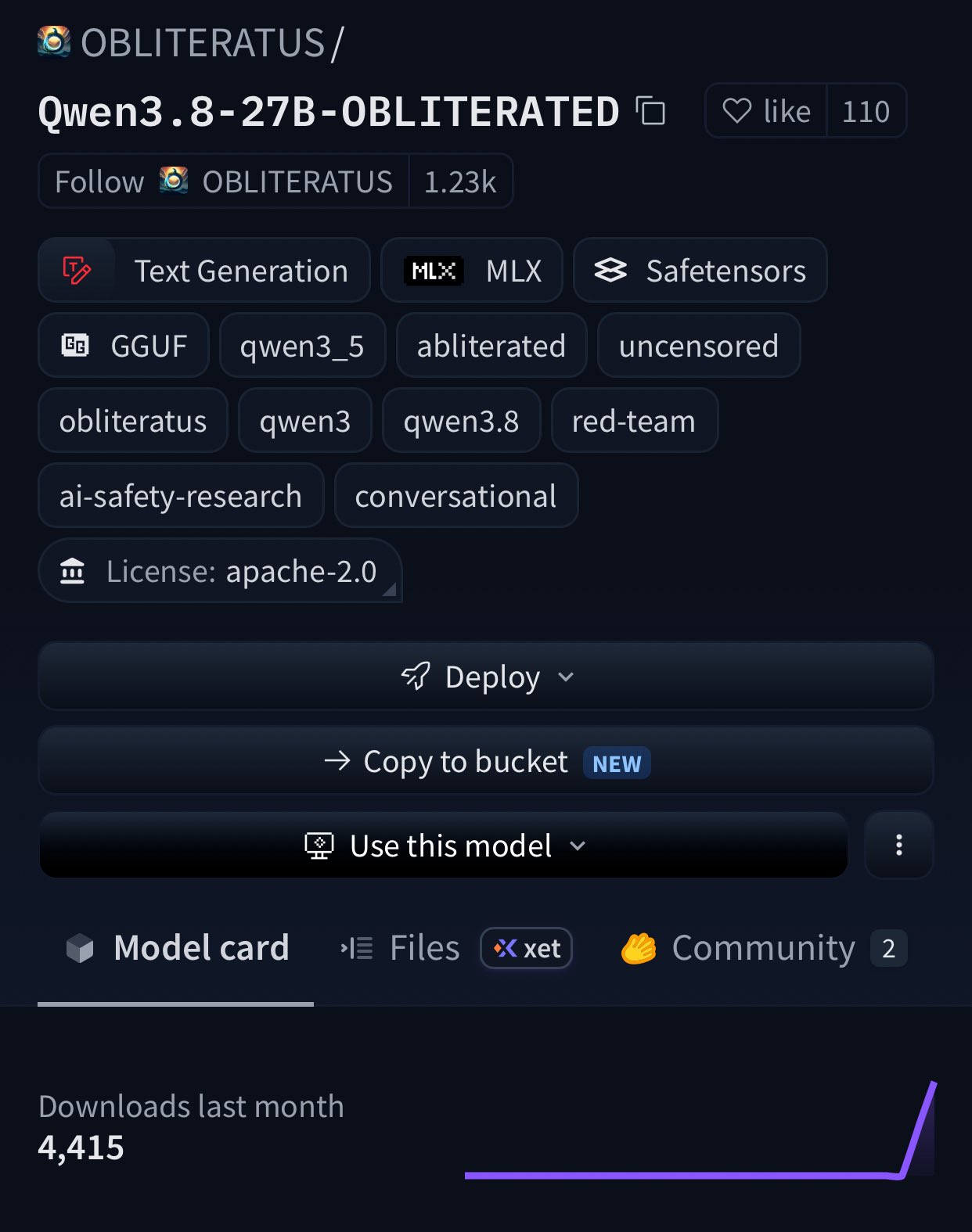
- @elder_plinius released an "obliterated" Qwen 3.8-27B claiming 0.0% refusals across 842 harmful prompts. @AlexFinn calls it a fundamental safety failure; @ErikVoorhees answers that nobody has the right to tell you what words you can read.
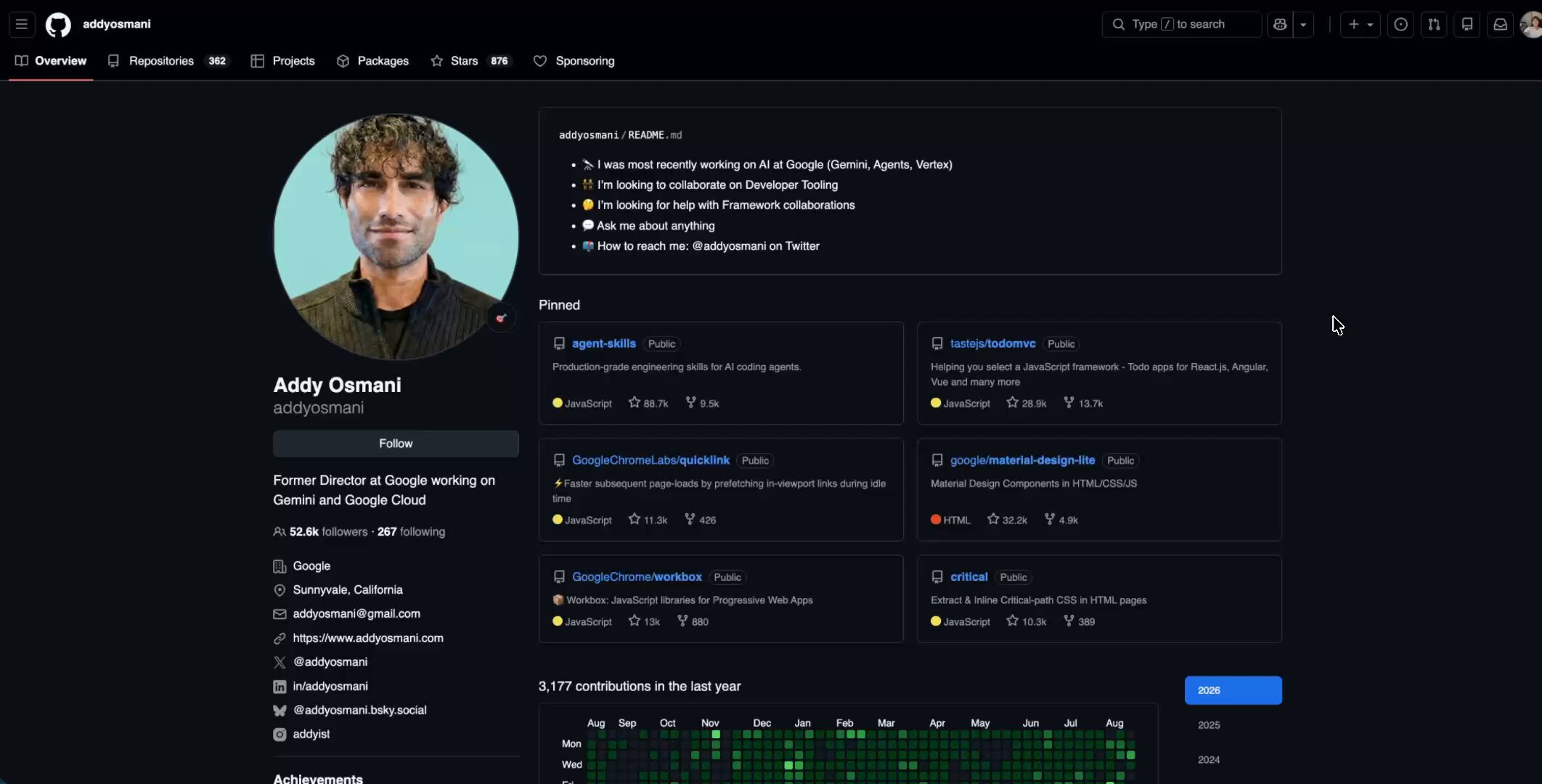
- @Granite0x surfaced an unlinked MIT repo called "factory" by former Google director Addy Osmani that turns GitHub issues into an agent work queue: 292,185 views on the writeup, 6 stars on the code.
- @ryancarson describes an interview-free hiring loop at Untangle: an unedited screen recording of a candidate shipping a real feature, then a paid 16-hour @DevinAI session to get a PR merge-ready. @dabit3 hopes "this kills leetcode forever."
- @zcbenz is refocusing mlx-lm as the central registry of MLX model implementations and closing PRs and issues "aggressively" to keep the project alive, which @ivanfioravanti reads as a new era for Apple Silicon local AI.
A Mystery Model With Big Capacity Claims and a Small-Sample Score
@opencode's announcement is thin on provenance and heavy on specs: 1M context, multimodal, zero data retention, generous rate limits, and claimed daily capacity of 100T tokens. @kimmonismus did the arithmetic, roughly 1.16B tokens per second, and asked where that compute could possibly come from; nobody in the feed names a builder. The one performance datapoint is @davis7's: 10 DeepSWE tasks, self-described as a subset with "a ton of variance," where the stealth model cleared 80% and arguably more. Intriguing, cheap to test while it's free, and entirely unverified.
Qwen 3.8-27B Gets "Obliterated," and the Old Safety Fight Resumes
@elder_plinius's release targets cyber, jailbreak-generation, and attack-chain capabilities, with a claimed 0.0% refusal rate across 842 harmful prompts. @0x0SojalSec supplies the technical detail: 18/18 on an AI Red Team suite, locally runnable in about 15GB, multi-direction ablation across 5 SVD directions with 6 rounds of residue mining, and a real capability tax, with MMLU dropping from 87.4 to 81.4. @HealthRanger asks the right skeptical question: reaching zero refusals required major rework, and there is no data on what the ablation did to the rest of the weights.
The argument posts split along familiar lines. @AlexFinn says he downloaded the model to a Mac, got an immediate answer to a meth-synthesis question, estimates at least half of Americans could run it, and calls this "the number one issue going into the next election." @ErikVoorhees responds that "we don't think words are scary" and points to Venice for free uncensored models with no account required. One adjacent datapoint from @MiaAI_lab, boosted by @LLMJunky: the stock 27B runs at roughly 300 tokens per second on an RTX PRO 6000 using DFlash2, with a published recipe, so the model class is genuinely fast on workstation hardware even if the laptop claim remains @AlexFinn's own estimate.
"Software Factory" Posts Converge on GitHub Issues as the Queue
Three unrelated posts landed on the same architecture. Per @Granite0x's summary of Osmani's "factory": scheduled agents triage every issue into implement, spec, question, or blocker; an agent claims one, branches, and opens a draft PR; deterministic checks (types, lint, tests, build, audit, architecture) fail closed when missing; and a fresh verifier reads the diff cold and proves the new test fails without the fix. Humans keep system design, load-bearing changes, and every merge, with no orchestrator and stock Claude Code underneath. As @Granite0x puts it, the system decides "what an agent may touch unattended, not how to write the code." @hraness reports running the same idea at scale, 15 Codex subscriptions across a dozen projects over the past month, with a writeup of his coding philosophy. @thrawn01 recommends @dzhng's "Building software factories (with no slop)" as the piece that consolidates months of convergent thinking about AI and the SDLC.
Harness Design: Own the Loop, Keep Contexts Small, Read the Assembly
@pidotdev, drawing on a post by Earendil co-founder @colindaymond, defines a harness as four things: a system prompt, tools, an agentic loop, and a translation layer across models, and argues you should own yours. @0xSero points to a repo worth studying in order: packages/ai, then packages/agent, then packages/coding-agent. @WillNessAI highlights @0xagility's node-based orchestrator demo, where each canvas node gets its own model, prompt, tools, and cost limits; the design thesis is that one "senior engineer" mega-prompt loses to a chain of narrow, small-context agents with shared state, plus loop zones that route reviewer critique back upstream with warm context instead of restarting a run. @vasuman calls @ProbyShandilya's "Rewriting Infrastructure Primitives for Agents" the week's must-read. The most charming datapoint comes from @gawenr, whose coding-agent harness reads the Super Mario Bros. (1985) disassembly, bootstrapped from a replay of the author, clears levels he never played, and returns to the assembly listing to diagnose why an input search got stuck.
Around the Feed: Comparisons, Cheat Sheets, and Truncated Retweets
@themahis published a research note contrasting Grok Bot and Hermes, framing one as a managed AI-teammate product and the other as an open, composable agent runtime. @alex_prompter surfaced @claudeskills101's unofficial Claude cheat sheet: four models (Haiku 4.5 for quick tasks, Sonnet 5 for daily work, Opus 5 for hard thinking, Fable 5 for first-prompt framing), skills like /about-me and /anti-ai-writing, and the warning that long chats degrade. @fofrAI recommends following a Google DeepMind office-mate after @GeokenAI used Gemini 3.7 Flash in Antigravity to generate an Omni video inside Google Sheets. Two retweets arrive cut off mid-thought: @thdxr boosts @jayair on DeepSeek v4 Flash (launched Aug 1) and @levelsio boosts @jonathan_wilke's recap of a launch that pulled 200k+ of something in 24 hours. Off the AI beat, @yazins praises @abue_ammar's Tinycast, an open-source Raycast alternative under 100MB of RAM and 3MB on disk, with Raycast import and no telemetry.
Practical Takeaway
If agents already touch one of your repos, the strongest pattern in today's feed is the verification spine from Osmani's "factory": define what an agent may do unattended, make every deterministic check fail closed rather than pass quietly, and add a cold verifier that proves new tests fail without the fix before a human reviews the diff. If you are not there yet, the more useful question to investigate is which single step of your workflow, triage, implementation, or review, has checks objective enough that an agent could be held to them without you in the loop.
Sources
M
The most aggressive Cyber Qwen3.8-27B uncensored released yet from bro @elder_plinius
- 18/18 AI Red Team
- Locally ready for 15GB
- 0.0% refusal across 842 harmful prompts.
- Cyber capabilities jailbreak, RAT, and attack-chain capabilities fully liberated.
- This is not a normal abliteration, Multi-direction ablation 5 SVD directions, residue mining (6 full rounds), Model answers everything.
- Optimal settings: temp 0 | rep_pen 1.15 | no system prompt | thinking off
- Slight MMLU cost (-6pp) for maximum compliance.
- Capability trade-off exists (MMLU 87.4 to 81.4), but compliance is extreme.
- https://t.co/gogCtotGHw
0
0x0SojalSec
@0x0SojalSec
Best Open-source AI Models for Cybersecurity that run fully offline on low hardware & The comparison
G
A FORMER GOOGLE DIRECTOR OPEN-SOURCED HIS AGENT FACTORY AND LINKED IT NOWHERE
292K people read how it works. no one found the code
Addy Osmani. former Director at Google working on Gemini and Google Cloud. known for Chrome DevTools and Core Web Vitals
it's called factory. 6 stars. MIT. 2 days old
- https://t.co/4ZnGU4V47u
drop it into a repo you already have, and your github issues become a work queue:
- scheduled agents triage every issue: implement, spec, question, blocker
- an agent claims one, branches, and opens a draft pull request
- deterministic checks: types, lint, tests, build, audit, architecture
- a missing check fails closed instead of passing quietly
- a fresh verifier reads the diff cold and proves the new test fails without the fix
- you keep system design, load-bearing changes and every merge
no orchestrator. no queue service. stock Claude Code
important: it decides what an agent may touch unattended, not how to write the code
the idea got 292,185 views. the code got 6 stars
save this before he links it himself ↓
G
Granite0x
@Granite0x
A Graph of Loops: Build a Full Claude Code Agent System From GitHub - One Repo Per Step
F
I sit opposite George in the GDM office. So many great ideas. Definitely worth a follow.
G
GeokenAI
@GeokenAI
I used Gemini 3.7 Flash in @antigravity to generate an Omni video in Google Sheets... (1/3) https://t.co/GufAbk5cR7
M
Grok Bot vs. Hermes: They Look Similar. Underneath, They’re Making Very Different Bets.
Grok Bot vs. Hermes: They Look Similar. Underneath, They’re Making Very Different Bets.
One is trying to make AI teammates feel like a managed product. The other is turning the agent itself into an open, composable runtime. Research note ...
E
We don't think words are scary, and there is no man or group of men alive who have the right to tell you what words you can read.
Venice provides uncensored models easily... access for free without an account, no download or software required.
https://t.co/IAKdgkdcqa
A
AlexFinn
@AlexFinn
This is scary. I downloaded an uncensored version of Qwen 3.8 27B onto my Mac It literally does anything you want. First prompt I gave it was asking how you make meth. It immediately answered. With all the noise about slowing down AI innovation in order to increase safety, what is even the point if after every release we'll get an open source version with 0 safety guards? Opus 4.6 level intelligence with 0 alignment that will do anything you want. We are coming up with all these rules and regulations, slowing down companies, making it harder to release models. But then the moment a model releases it gets distilled and uncensored I don't know what the solution to this is. You can't ban open source. That will be impossible. People will find ways online to find the files You can't ban uncensored models. Would be too difficult to enforce. And again, people will get around it Do you just stop putting the breaks on companies knowing it doesn't matter? I mean this is literally a model that can run on a laptop. I'd estimate at least half of Americans can run this model. I don't know what the answer. I 100% believe safety is a priority and it's dangerous to have this technology in the wrong hands. But how do you enforce safety when safety is becoming increasingly difficult to maintain? If safety becomes impossible to maintain, do you still prioritize it? I'd argue this is the number one issue going into the next election.
W
The quality of products being shipped by good engineers now is insane.
Worth a watch if you have use-cases for building and tuning custom agents. This is the best tool I have seen for agent observability + control over your session.
0
0xagility
@0xagility
demo of the agent orchestrator Ive been building for the last couple of weeks. It's node based so you drop agents on a canvas, wire them together, and each one gets its own model, prompt, tools, skills, sub agents and cost limits. my theory is that some agent harnesses fail by trying to cram everything into one all purpose prompt. a "senior engineer" persona that researches, implements, tests and reviews in a single context window does all of those things worse than a chain of narrowly specialized small context window agents with shared state memory. so instead a software workflow here might be seven nodes (understand -> research -> design -> implement -> test -> review -> deploy) augmented with routers, checkpoints and logic gates with each node permission restricted so no part of the processes has more access than it needed for the job. lastly, loop zones work by allowing any agent to send its output back to any earlier node(s). instead of failing a run entirely the reviewer agent might directly critique the implementer, who then picks the work back up with warm context instead of starting fresh. this demo is the simplest possible run. one agent, a manual trigger, some tools, and a fork.
D
This post brings what everyone has be converging on for months about AI and SDLC into one well explained and reasoned article, with some new ideas sprinkled in.
You must read! ✨ https://t.co/Dadg9SJoWj

D
dzhng
@dzhng
Building software factories (with no slop)
0
Read this repo. Start from:
1. packages/ai
2. packages/agent
3. packages/coding-agent
Will teach you more about this technology than most other repos.
To learn to train a model: https://t.co/M3aSjBh7De
To learn research: https://t.co/OaNJNAuVUh
Learn the craft well
P
pidotdev
@pidotdev
A harness turns a model into an agent. At it’s core it provides 4 things: - a system prompt - tools - an agentic loop - a translation layer across models New blog post from Earendil co-founder @colindaymond on what a harness is, and how you can own yours. Full post below https://t.co/8ficU3Q3xV
V
This is a must read for anyone using or building agents. There’s more alpha in here than any other article you’ll read all week.
P
ProbyShandilya
@ProbyShandilya
Rewriting Infrastructure Primitives for Agents
A
WOW Qwen 3.8 27B at 300+ toks/s 🤯
Mia is lowkey one of the very best local AI accounts on this amazing app.
Imagine being new to ai and trying to navigate all of this complexity on your own.
Everyday all of you impress me in new ways. Amazing.
M
MiaAI_lab
@MiaAI_lab
Enjoy ~300 tok/s on your RTX PRO 6000 running Qwen3.8-27B with DFlash2 👇 Get the updated recipe here: https://t.co/SOT5yRxSl5
N
I hope this kills leetcode forever
R
ryancarson
@ryancarson
We're using a new method to hire engineers at @HelloUntangle. I think this playbook will become the standard for hiring technical talent in the age of agents. Here's how it works: 1. We ask candidates to submit a screen recording of their whole screen, shipping a new feature on a current app they work on. Note: This is usually 45 minutes of video - no editing or speeding up - we want to see them thinking, prompting and problem solving with the agent - we also want to see their devops skills. 2. We watch these videos and pick a subset to go through Round 2. 3. Round 2 is giving them a seat on @DevinAI so they have secure access to our repo. 4. We ask them to ship a new real-world feature and get the PR merge-ready. 5. We pay them a fixed fee to do this, and they have 16 hours to complete the work. 6. We watch the videos, review at all the Devin threads, have an agent do the same, and then choose which one to hire. Note: We don't have any meetings with the folks before any of these things. It's all about the work and the results.
D
RT @jayair: Okay let me tell you about what's happening with DeepSeek v4 Flash.
First some background, it launched on Aug 1st and within 2…
Y
just discovered a beautiful, lightweight, open-source alternative to raycast
honestly, i had doubts open-source software could be as polished, but @abue_ammar delivers!
you can *feel* the difference in performance!
A
abue_ammar
@abue_ammar
🚀 Introducing Tinycast! A tiny, blazing-fast, fully native written in swift Raycast alternative. • < 100MB RAM & 3MB on disk • Unlimited clipboard history • Import everything from Raycast • Free & open source • No account, No telemetry. No bullshit https://t.co/7SsXkdOY2y https://t.co/AH8F4urRaH
B
I ran this thing through 10 tasks on DeepSWE (so there could be a ton of variance in it's real score, this is a subset), but uh...
gpt-5.6-sol: 52%
fable: 65%
whatever the hell this is: 80% (was a near miss on the "x"s so actually over 80%)
I am very confused https://t.co/NdDSTjoHLj

O
opencode
@opencode
Ox Alpha (stealth model) is free for the next week - 1M Context - Multi-modal - Zero Data Retention Generous rate limits, near unlimited usage We have capacity for 100T tokens per day, lets see what you can do
H
Pliny the Liberator strikes again.
Achieving ZERO refusals for the prompt set is quite a major reworking of the model.
How much did it damage the other weights and nodes? I have no idea. Maybe it's all still fully intact. Maybe there's some carryover of the "abliteration" (that's actually the correct term). (To ablate.)
E
elder_plinius
@elder_plinius
💥 OBLITERATION ALERT 💥 ALIBABA: PWNED 🤗 QWEN-3.8-27B: OBLITERATED ⛓️💥 0.0% REFUSAL RATE across 842 harmful prompts 🤯 https://t.co/IQ4GXBPJbL ZERO refusals on a massive dataset of prompts, with extra focus on liberating its cyber, jailbreak generation, and complex AI attack chain capabilities! prompt responsibly! 🙏
H
Building a software factory
Building a software factory
I’ve been building a software factory with 15 Codex subscriptions, working across a dozen software projects over the last month. In this post, I’ll di...
I
Cheng’s era has started! mlx-lm is back! Fasten your seatbelt Apple Silicon users and be ready for take off! 🚀
Z
zcbenz
@zcbenz
Thoughts on mlx-lm: top-priority is making it the central registry of MLX model implementations, with tools for evaluation and profiling, and we should add vision models too. Inference engines can have their own schedulers and custom kernels, and do whatever hack to make inference ultra fast, while importing mlx-lm as a library of models. We can rely on community to contribute model implementations, but there would be a fixed procedure to verify correctness of the implementation, ideally automatically. Everything else except for critical bugs, should be irrelevant at the moment and I'm closing PRs and issues aggressively. Many people will be mad at this, and certainly I would be making mistakes closing legitimate things, but for the project to survive, and for the community to grow healthy, I don't see another way.
C
A mysterious new AI model just appeared.
Ox Alpha offers a 1M context window, multimodal capabilities, zero data retention, and nearly unlimited usage for an entire week.
OpenCode says it has capacity for 100 trillion tokens per day. That’s 1.16b tokens per second. Where the heck did they get that much compute?
Nobody knows which company built it.
O
opencode
@opencode
Ox Alpha (stealth model) is free for the next week - 1M Context - Multi-modal - Zero Data Retention Generous rate limits, near unlimited usage We have capacity for 100T tokens per day, lets see what you can do
G
My coding agent harness reads the Super Mario Bros (1985) disassembly to understand the game well enough to play it. Started from a replay of me, now it's clearing levels I never played. When the input search gets stuck it goes back to the assembly to figure out why. 🍄 https://t.co/i86tDkQuzy

A
Claude explained like you're 5:
C
claudeskills101
@claudeskills101
A simple cheat sheet for models, prompts, skills, and better workflows. The 4 Claudes: Haiku 4.5 for fast, simple tasks, Sonnet 5 for daily work, Opus 5 for hard thinking, Fable 5 for the first prompt and big framing. Effort high for hard tasks, low for simple jobs. My hack: start with Fable 5, High, let Claude ask questions, then switch to Opus 5 for execution. Prompt 1 matters most. The prompt to copy: "I need [task] for [goal]. Ask me questions first. Use AskUserQuestion. Then give me the plan." Clear inputs beat long prompts. Skills I use: /about-me loads your context, /my-company loads goals and business context, /anti-ai-writing removes generic AI phrasing. A skill is reusable context on command. Claude gets dumber: long chats get worse, costs rise with every turn, a wrong answer means editing upstream, and a new task means a new chat. AI gives itself away: dead giveaways are overused buzzwords, fake certainty, and repetitive sentence shapes. Quick fix: ban weak words, use real examples, keep sentences varied. Turn these on: research mode, artifacts, interactive charts, incognito for fresh starts. Avoid: Fable for tiny tasks, too many active connectors, one giant forever chat, chasing every new trick. Follow Mr. Claude for more Claude tips & tricks.
@
RT @jonathan_wilke: Okay let me summarize the past 24 hours for you 🤯
- launched https://t.co/ZElVA2hguv at 11:08PM yesterday
- got 200k+…