Coding Agents Get Standing Goals, Humans Get Voight-Kampff Checkpoints
Cursor's new /goal command and upgraded cloud agents push coding toward long-horizon autonomy, with @poteto claiming 1,000 shipped PRs in a month off the back of them. The same day brought multi-vendor agent surfaces from Slack and OpenKnowledge, a claimed "GPT-3 moment" in robotics from @GeneralistAI, and a burst of tooling built specifically to keep humans reviewing what agents produce.
Quick Hits
- Coding agents now hold objectives instead of taking orders. Cursor shipped /goal, which gives an agent a long-lived objective to work toward "until it's fully complete," plus cloud agents that pick up work from events; @poteto says that stack helped her ship 1,000 PRs last month.
- @Benioff announced Slack Code, live with agents from Anthropic, GitHub, Cognition, and Vercel; @eltintero's review: "Slack as an ide."
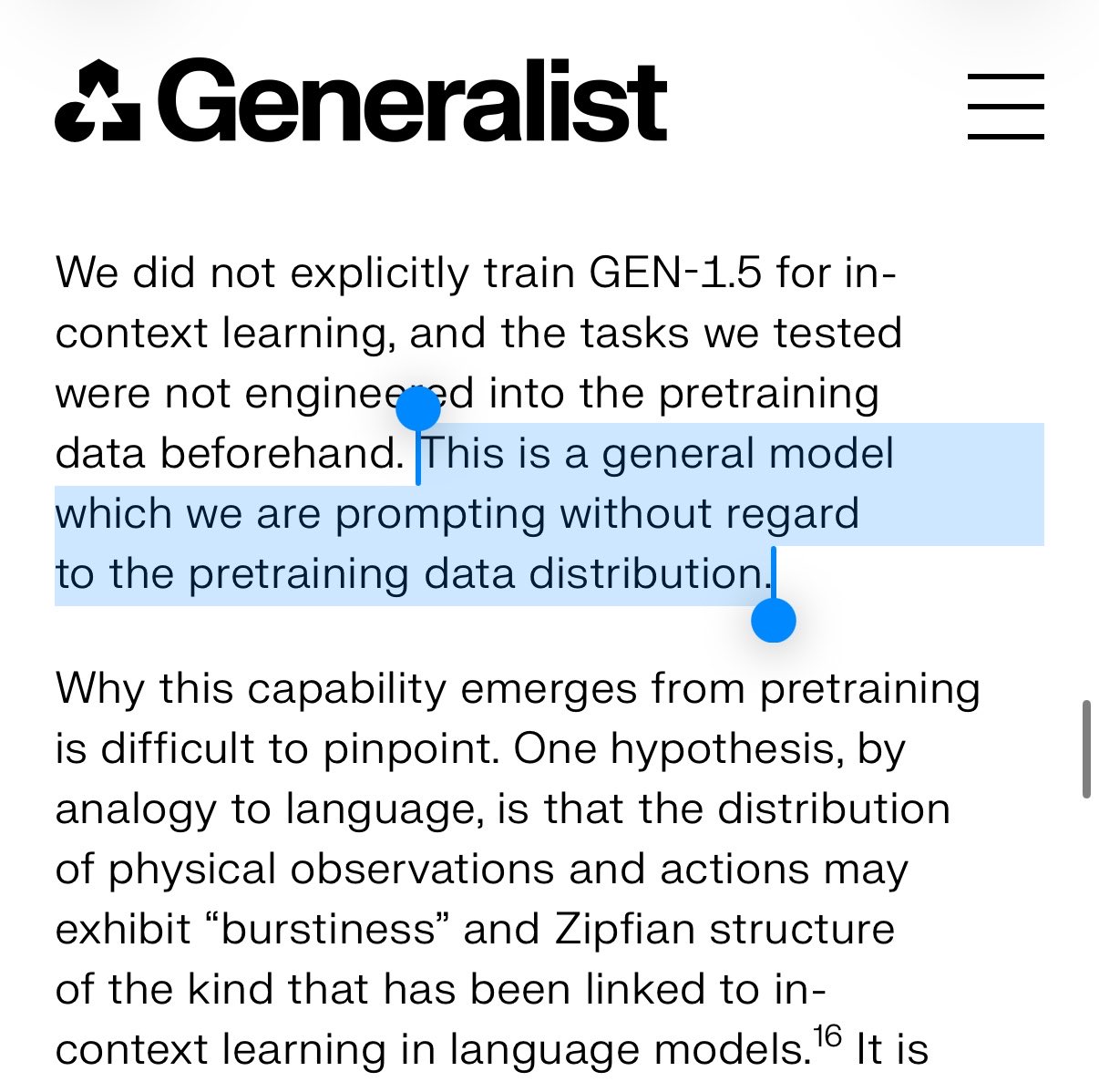
- @GeneralistAI unveiled GEN-1.5, a "one-shot learner" the company says picks up new tasks in seconds, and @himanshustwts is calling it an "absolute GPT-3 moment for robotics."
- @chamath argues Databricks-style commoditization will make token consumption explode while "cost per token will crater," reacting to @alighodsi's launch of AI Extract for PDF field extraction (claimed 95% accuracy vs 87% for others, callable from SQL).
- Solo-builder corner: @elonmusk says Grok @Bot can "make an instant one-person company," @rwalk_xyz published a free CC0-licensed legal template library for startups on GitHub with an agent-friendly link, and OpenAI FDE @hi_ZachParent is polling on what deployment learnings the team should publish.
Standing objectives: Cursor's /goal and the full-autopilot playbook
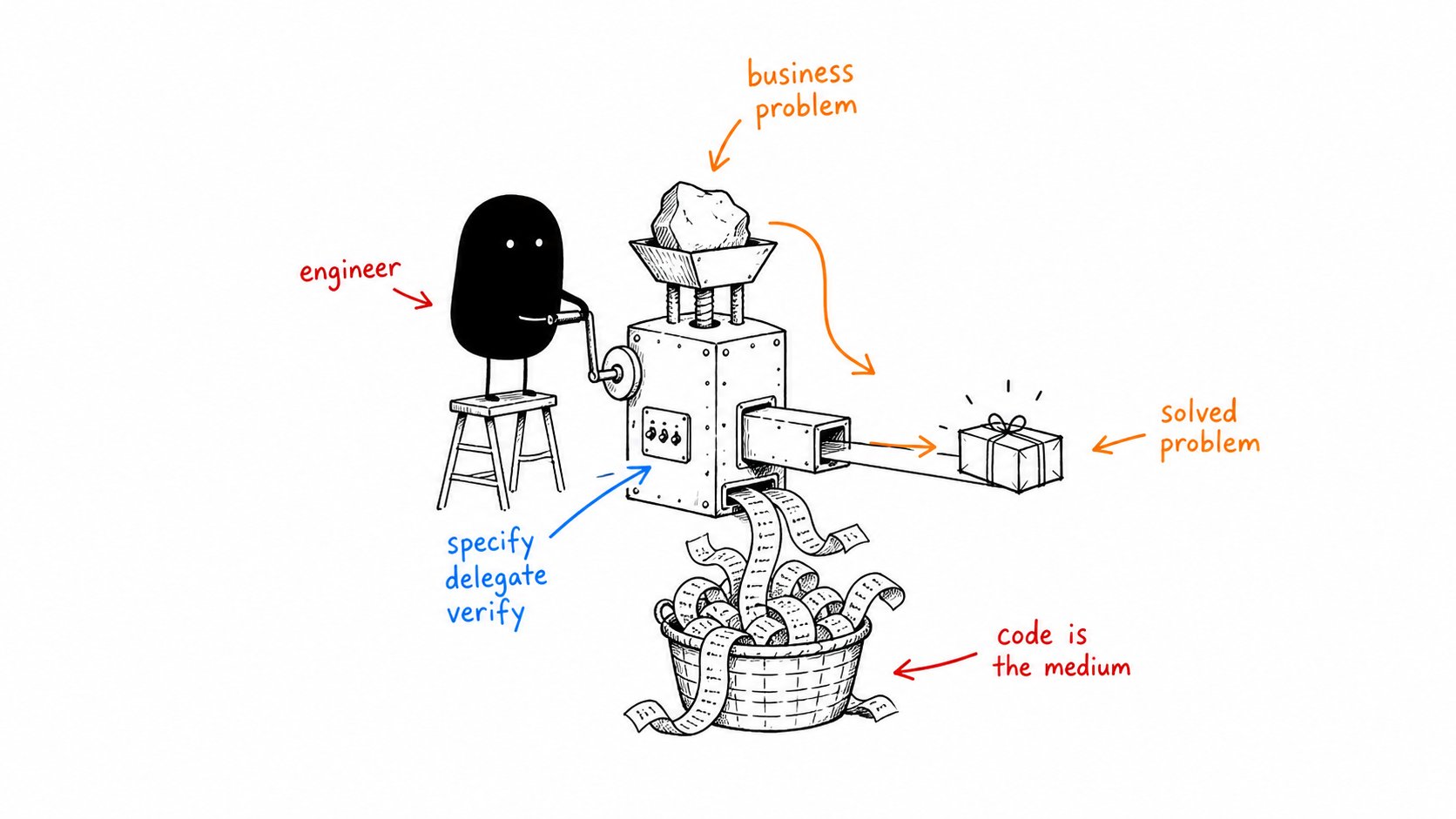
Cursor's changelog, quoted by both @ManuAF6 and @poteto, describes the shift plainly: /goal gives the agent an objective it keeps working toward until it's done, and cloud agents now pick up work from events, hold a goal until it's met, and stay on course through long sessions. @poteto's post is the vivid proof of concept, though it's her own account: 1,000 shipped PRs last month, on track to double that. Her pipeline runs pstack, a personal skill library for "rigorous engineering and verification" (called /lauren-mode inside her codebase), while Grok @Bot routines farm context from Slack bug reports and X complaints to feed an "outer loop" that decides what to build next. The /goal, /loop, and /swarm commands run what she calls a Full Autopilot playbook, where agents own, verify, and ship tasks start to finish on cloud agents that keep working while she sleeps. @ManuAF6 reads the changelog as a step toward an orchestrator and eventually a "cognitive layer" in Cursor. That last part is speculation, but the shipping direction is legible.
Oversight becomes its own tooling category
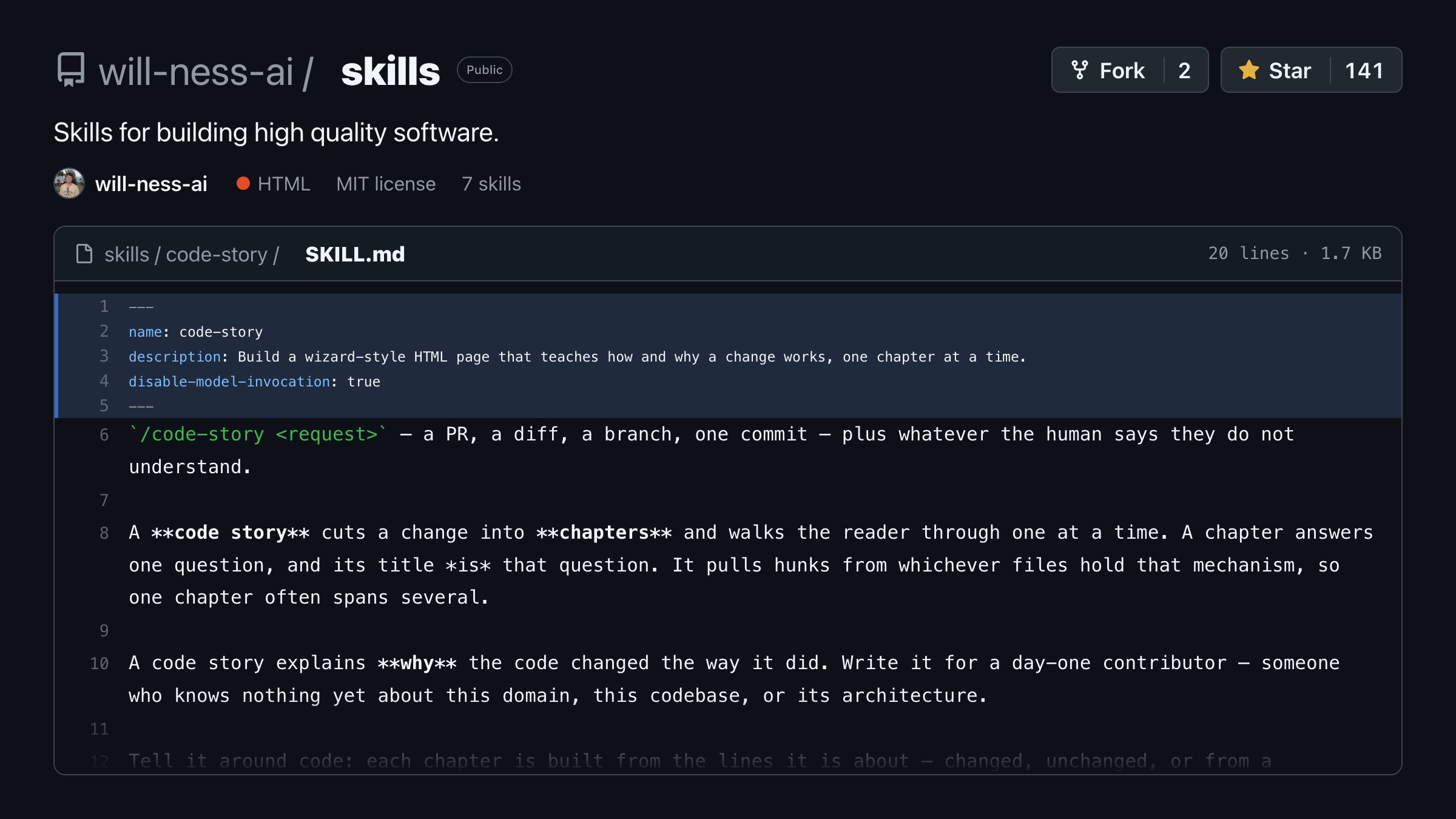
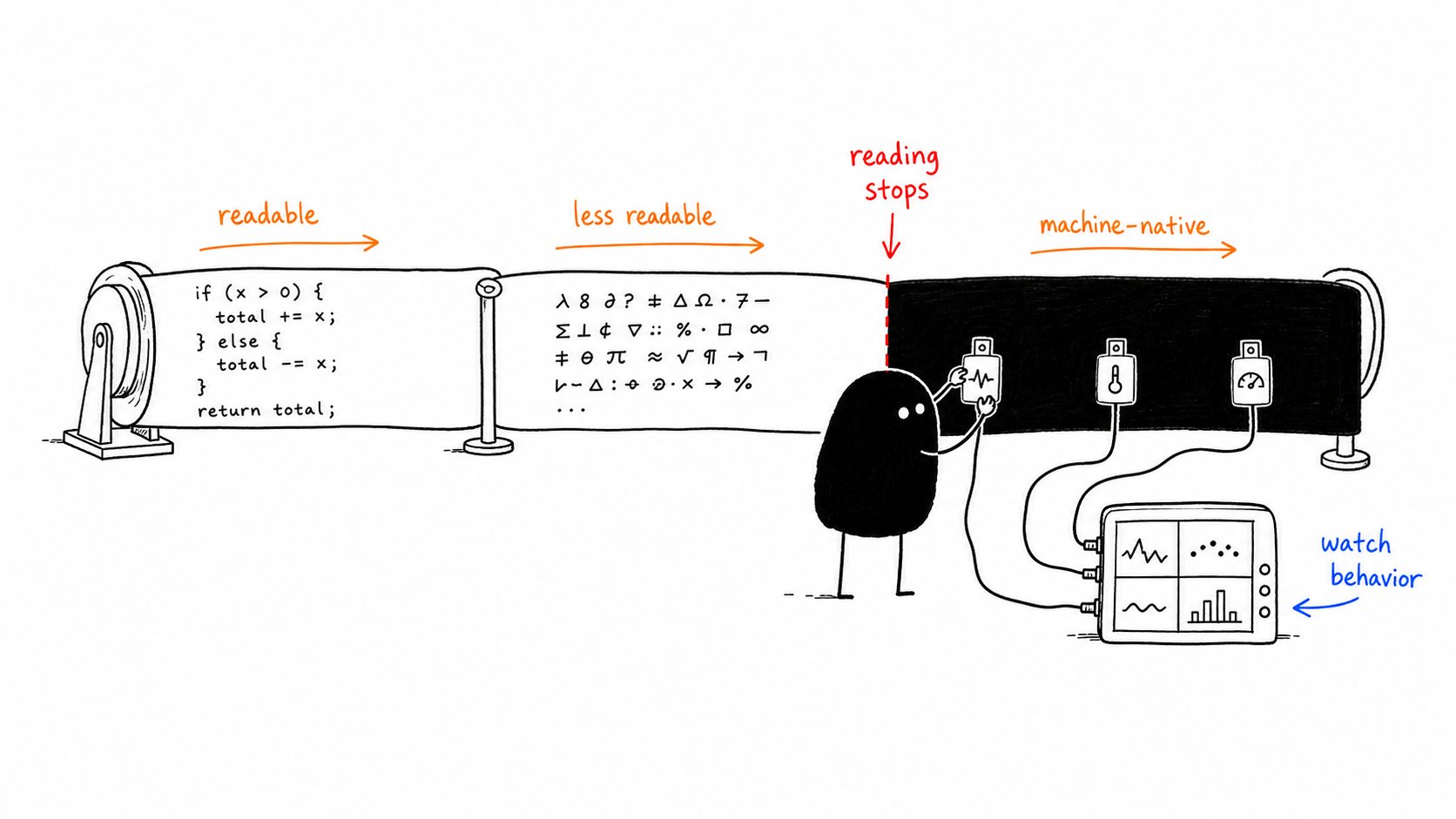
The faster agents run, the more posts showed up about catching them. @gakonst says his team built Voight-Kampff, a "proof of human" gate for PR reviews, specifically to scale agent deployment without letting the security bar slip; they use it daily, and he thinks every org should build something similar, echoing @tempo's post on human authorization in agentic workflows. @WillNessAI's contribution is /code-story, a skill that turns a change into a chaptered HTML page with diffs, explainers, and diagrams, on the theory that PRs are "a terrible way to introduce a code change to someone." His deeper point is conditional: he never reads code for internal tooling, where agents prove correctness through tests and pre-merge reviews, but still reads the important parts of high-consequence services. @levie wraps the theme into an argument: experts keep the upper hand over generalists because directing, course-correcting, and judging agent output takes real domain skill, and AI hands experts more leverage than ever. He's amplifying @unclebobmartin, who describes wrestling agents as "crazy productive" but hard, focused work that draws on all his engineering skill even though he barely looks at the code.
Two bets on bring-your-own-agent: Slack Code and OpenKnowledge
@Benioff's Slack Code launch puts humans and agents in the same channel, with launch partners Anthropic, GitHub, Cognition, and Vercel, framed as "real multiplayer coding" and demoing at Dreamforce. @eltintero admits he didn't see it coming. The same day, @nickgomez announced OpenKnowledge can now chat with 35+ agents directly (the company's own post says 30+ harness integrations), enabled by the Agent Client Protocol, with Follow Mode auto-navigating the IDE to files agents are editing and Comments batching your document markup into a single feedback send. Gomez's thesis is the interesting part: people don't want a per-vendor assistant in every app, they want their own agent with its skills, MCP servers, and file-system context, and he predicts SaaS and desktop apps converge on that model. These are different products, but both are betting the surface matters less than which agent you bring to it.
Keyless search, quieter agents, and other smaller ships
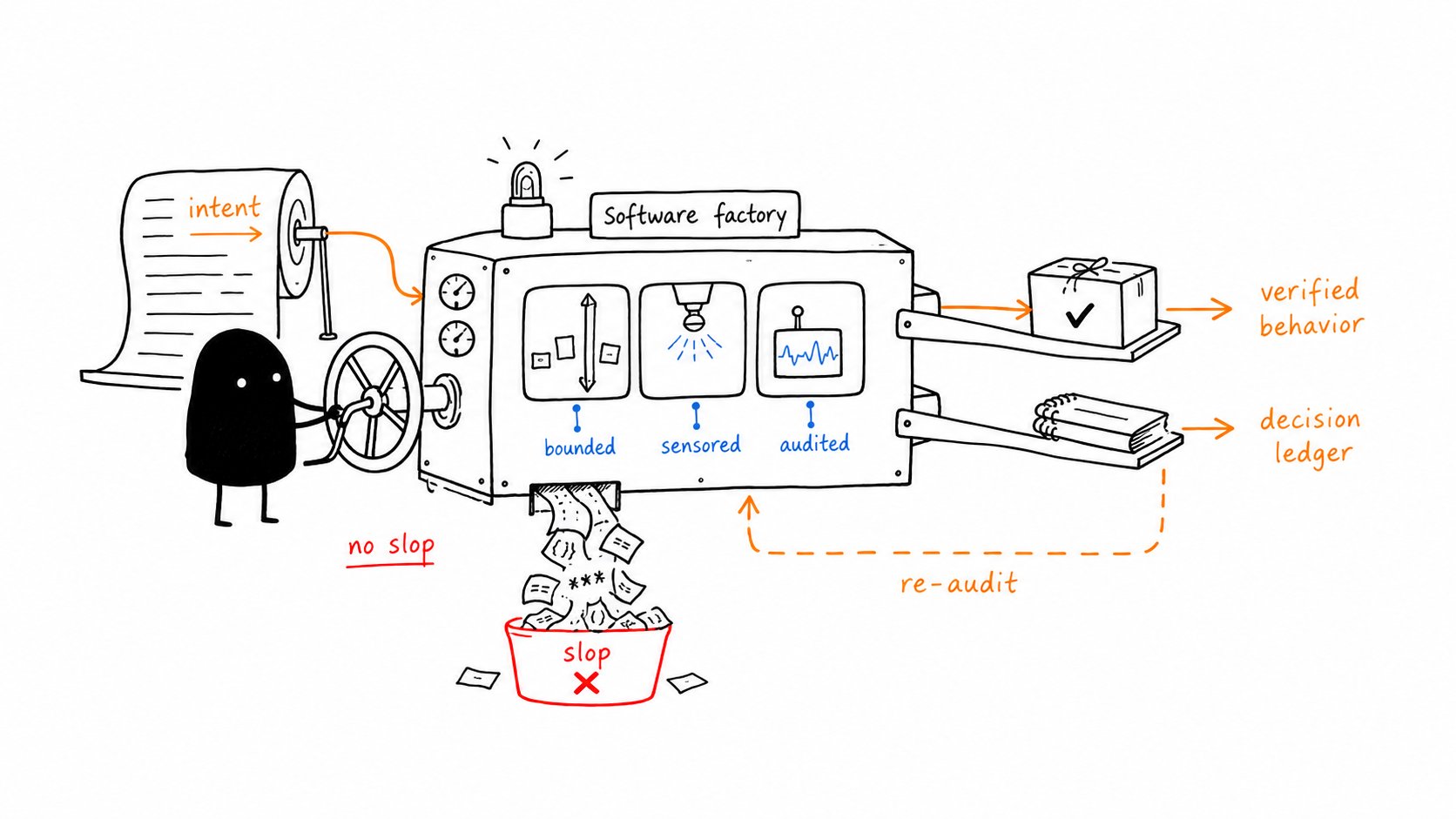
@tonysimons_ flagged a quietly significant Hermes Agent update: keyless web search, meaning a fresh install can search the web with no Tavily or Exa keys and no provider setup at all. @bcherny relayed that Claude Code now has a Concise output style that leads with the result and keeps responses short. @herdrdev shipped herdr 0.8.2, with a more customizable tab bar, windows out of beta, window title sync, qwen code support, and roughly 60 fixes, after 0.8.1 was "gone before the tweet." @pidotdev resurfaced @mitsuhiko noting that Pi's new harness work is currently landing in the dev branch. And @dzhng praised an illustrations skill by @ianneo_ai as evidence that "AI slop is just a process issue," part of his "software factories (with no slop)" project.
Tally's AI-search playbook, as told by @jakezward
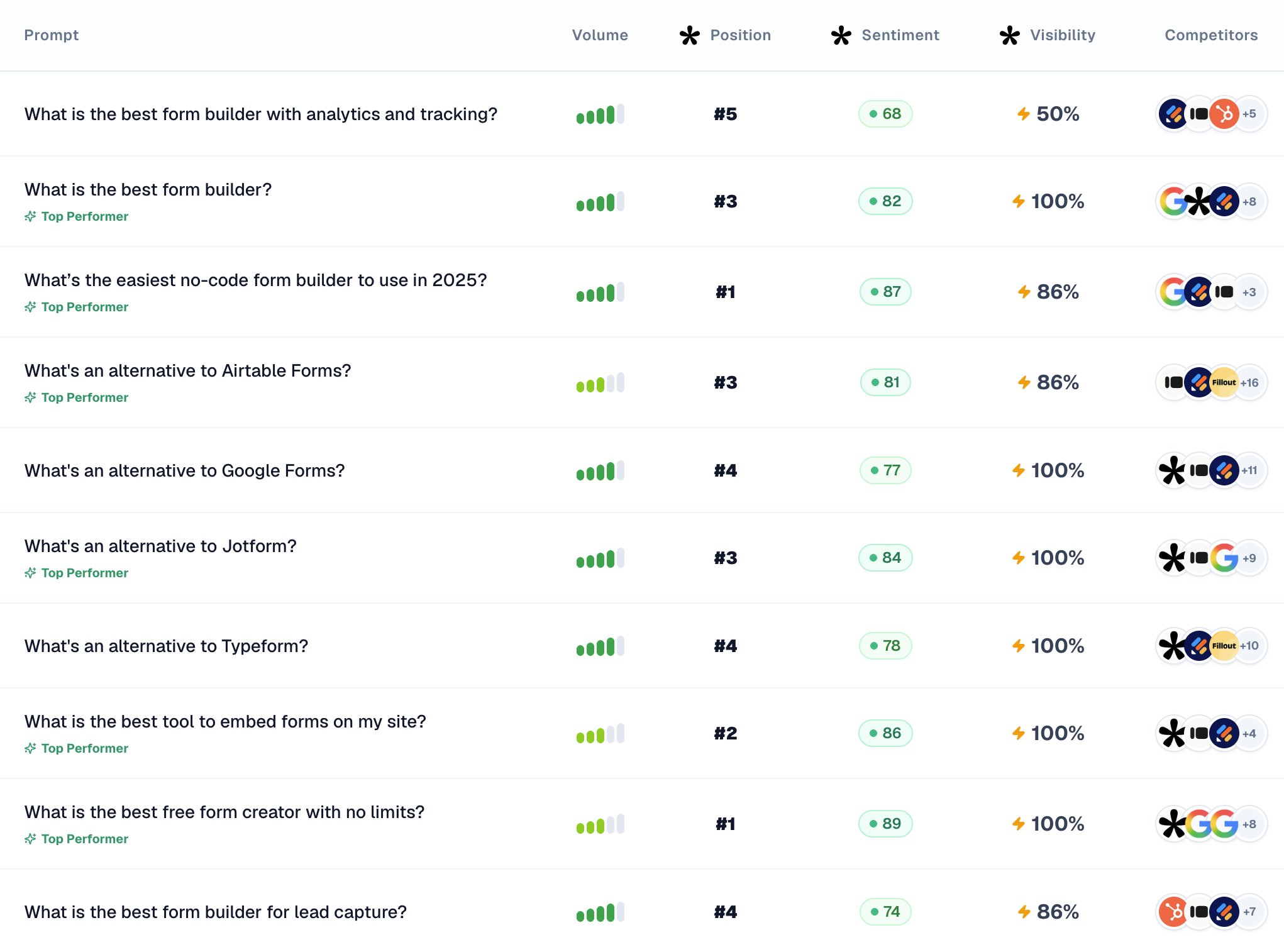
The most detailed business post of the day is @jakezward's breakdown of Tally's AI search strategy; every figure below is his claim, not verified reporting. He says AI search is now Tally's #1 acquisition channel, with 10,000+ new users a week discovering it through AI platforms, tracked ChatGPT registrations jumping 5x overnight in May, and growth from $258K to $422K MRR in 10 months, crossing $5M ARR with 11 people and no funding. The tactics: a comparison hub of 7 competitor pages plus 15 "best" and alternative guides structured like AI answers (rankings, "best for" labels, pricing tables, pros and cons), asking new users for the exact prompt that led them there, tracking prompt visibility against competitors, a database of articles that mention competitors but not Tally, daily clearing of Reddit and community mentions, active review gathering (4.8/5 on G2), an "AI Info" page with literal "AI assistant guidelines" for ChatGPT, Claude, Gemini, and Perplexity, an llms.txt, and a 21-tool MCP server with ChatGPT and Claude integrations. To his credit, @jakezward supplies his own caveat: ChatGPT recommends Tally because years of genuine recommendations across the internet trained it to, and the engineering came after. His follow-up post adds that the tracked discovery prompts "literally show for every prompt."
Practical Takeaway
If you're about to point agents at long-horizon work, the strongest pairing in today's posts is autonomy plus an explicit human gate. Set a /goal-style objective, but per @gakonst, put a human checkpoint on every merge, and per @WillNessAI, calibrate it by consequence: internal tooling can run on test-based verification alone, while high-stakes services deserve a real walkthrough, ideally something like a code-story page rather than a raw diff. The question worth answering before you scale: what's the smallest review gate that catches agent mistakes without becoming the bottleneck?
Sources
W
I just dropped a new skill made for devs working on enterprise codebases:
About 12mo ago I was still on the "you must read all of the code" side of the pendulum.
Starting about 3mo I have swung over to the other side of "i really dont need to read most of the code"
However, I've realized that unfortunately the real answer is that... it depends (cop out answer, i know)
For almost all of my internal tooling at work, I do not read the code ever. My agents:
- prove to me the code works with testing/qa
- run reviews (code, security, etc.) before every merge
(btw, i think 40%+ of your time should be dedicated to internal tooling, even if you are on a product team. custom software has gotten insanely cheap lately...)
For our key services and repos where the code really does matter because the consequences of getting it wrong are high, I do think its necessary to read *some* of the code. The important stuff.
However, I struggle to do this for two reasons:
1. The pace of code is fast (and accelerating)
2. I am usually working in repos that I am not familiar with
I review code at the PR step. Agent writes code, reviews it, pushes it and creates a PR. Then I view the diff.
I've realized that PRs are a terrible way to introduce a code change to someone. So, introducing...
/code-story
Build a chaptered HTML page that teaches how and why a change works. See individual code diffs combined with explainers and diagrams.
It helps me ramp up on every change and get a bit more comfortable in merging the code, allowing me to ask more questions and build better tests.
SKILL:
https://t.co/KvRsu0bu5C
EXAMPLE:
https://t.co/TFJmnauwdy
E
Make an instant one-person company with @Grok @Bot
S
sairahul1
@sairahul1
How To Build a One-Person Company Using Grok Bot
J
THEY LITERALLY SHOW FOR EVERY PROMPT
This is insane https://t.co/PxejBB7Cap
J
jakezward
@jakezward
Pay attention to what Tally is doing in AI search right now because this might be the best playbook for getting recommended by ChatGPT I've seen: > AI search is now their #1 acquisition channel > 10,000+ new users every week say they discovered Tally through AI platforms > their tracked ChatGPT registrations jumped 5x overnight in May > they grew from $258K MRR to $422K MRR in 10 months, crossing $5M ARR with just 11 people, $0 funding, against much bigger competitors > their comparison hub now has 7 direct competitor pages + 15 more “best”, “alternative” and integration-focused guides > these pages are structured like AI answers: rankings, “best for” labels, pricing, feature tables, reviews, pros/cons and direct recommendations > they’re constantly refreshing these pages > they literally ask new users for the exact prompt they used to discover Tally through AI > they track the prompts people use to find them, their visibility vs competitors and which sources AI platforms actually cite > they've built a database of articles that mention competitors but not Tally to identify distribution gaps > they monitor brand + competitor mentions across Reddit and communities, then route them into a shared inbox and aim to clear all mentions every day > they actively ask customers for reviews through their newsletter + after support interactions, helping them reach 4.8/5 on G2 and 4.9/5 on Product Hunt > they built an entire “AI Info” page specifically for ChatGPT, Claude, Gemini and Perplexity explaining what Tally is, who it’s for and why people use it > that page literally includes “AI assistant guidelines” telling LLMs which strengths, use cases and pricing model to reference > they published an llms.txt mapping out their product, pricing, customers, documentation, API and MCP pages > they even built a 21-tool MCP server + ChatGPT app + Claude connector so Tally can now be used directly inside AI products One thing to keep in mind: Tally didn’t start with some genius AI search strategy. They spent years building a product people genuinely recommended across Reddit, communities, reviews and the wider internet. ChatGPT recommends Tally because the internet does. But now they’re engineering around that signal to make sure it keeps happening. This isn’t luck, it’s possible for you too.
L
this is a huge release! i shipped 1000 PRs last month and am on track to doubling that this month, all thanks to cloud agents. you can also launch cloud agents with Grok @Bot btw!
here's how i'm so productive:
• i built pstack (https://t.co/u9xIlN3eN0), my personal set of skills for rigorous engineering and verification. inside of our codebase i call it /lauren-mode, but it's called /poteto-mode in pstack.
• i use Grok @Bot routines to farm context for me: bug reports on slack, user complaints on X, generating new feature ideas. Grok Bot feeds my "outer loop", where i think about what to point my factory at next.
• i make heavy use of /goal, /loop, and /swarm inside of pstack to run my Full Autopilot playbook, which lets your agents/bots fully own, verify, and ship a task from start to finish.
• everything runs on cloud agents, so my bots work 24/7 even when i'm asleep or my laptop is offline.
C
cursor_ai
@cursor_ai
We're continuing to improve cloud agents in Cursor. They pick up work from events, hold a goal until it's met, and stay on course through long sessions. https://t.co/vACdkc7gOT
N
One of the key differences between @openknowledge and Google Docs and Notion is that you can "bring your own agent".
I think all SaaS and desktop apps in the long run will converge towards this model.
The reason: people have a preference on their preferred agent and don't want to be switching between per-vendor agents.
They want agents to have their skills, MCP servers, and file system context (like your code base) without re-hooking it up all of those things to yet another service.
In company environments, the agent available to you is often predetermined by IT. And for personal use, you probably want to use your existing subscriptions.
With our launch today, you can now chat with 35+ agents directly within the OpenKnowledge app. This is thanks to the ACP protocol that standardizes how to interface with agents across 35+ harnesses.
It let us built a native UX experience, with unique features like like Follow Mode and Comments.
And for folks who prefer to work from their existing UI experiences, we kept the built-in terminal "TUI" agents as well and the Claude/Codex desktop app integrations.
OpenKnowledge = edit and view your content from and with any agent.
O
openknowledge
@openknowledge
We now support 30+ agent harness integrations within OpenKnowledge. This is enabled by the Agent Client Protocol (ACP), which let us build our custom UI experience while fully leveraging the agents on your computer. Also powers our new Follow Mode and Comments features. Follow mode automatically navigates the IDE to the files being edited by agents, and animates agent changes so it's easy to follow along. Comments let you annotate and mark up specs, blogs, and other documents and send all the feedback in one go to agents. Now enabled in the Mac, Linux or Windows apps. ~Day 3/5 of Launch Week~
H
herdr 0.8.2 is out!
more customizable tab bar, windows out of beta 🎉, window title sync, qwen code support and ~60 other fixes
(also rip 0.8.1, gone before the tweet) https://t.co/LpQeO3vOLC

M
Cursor saving the best for last…
Orchestrator + / goal system…
Cognitive layer is coming
C
cursor_ai
@cursor_ai
Use /goal to give the agent a long-lived objective to work towards until it's fully complete. Read the full changelog: https://t.co/fgNiyusBE9 https://t.co/rW7IfREXsK
R
Most founders copy/paste their privacy policy from Stripe or ask Claude to draft an MSA at 2:00 AM, then pray they don't get sued.
You can stop doing this.
We built a free, CC0-licensed legal template library for startups:
-MSAs
-Employment agreements
-Privacy policies
-More...
And because many of you on here asked, here is an agent-friendly link to where these are posted on GitHub:
https://t.co/GF62d39zHo
H
absolute GPT-3 moment for robotics
holy moly https://t.co/9d7CrDCaAi
G
GeneralistAI
@GeneralistAI
Introducing GEN-1.5, a one-shot learner. It can learn new tasks in a few seconds. Show it what to do, and it generalizes. This capability emerged from pretraining on physical data at scale, as a step towards our mission of building general intelligence for the physical world. https://t.co/ptB9ElYXMU
G
we built "proof of human" for PR reviews to keep scaling our agent deployment without letting our bar for security slide down - meet Voight-Kampff, we use it every day and we think every org should build something similar
T
tempo
@tempo
Human Authorization in Agentic Workflows
J
Wow, didn't see this one coming.
Slack as an ide
B
Benioff
@Benioff
Don’t code alone. Slack Code is live. Humans and agents. Same channel. Same work. Launching today with agents from @AnthropicAI, @github, @Cognition, and @vercel. This is real multiplayer coding. See it at @Dreamforce #DF26 https://t.co/scVeLgIgZR
A
There tends to be a debate between being an expert or generalist in the era of AI. So far, the experts appear to have the upper hand, and that’s not slowing down.
AI makes it 10X easier to get started with any kind of task. Coding, legal work, research, financial analysis, and so on. But having the right judgment for how to direct the agent onto the right work, how to veer it to course correct it, being able to review or test the output, and having the right sense of what “good” looks like all requires a high degree of skill depending on the field.
That skill can be developed far faster due to AI for anyone interested, which is amazing for uplifting anyone in their career. But there’s no replacement to needing judgment and many of the core skills that go into most domains of work.
And if anything, AI will be a technology that exacerbates differences in skill levels because the experts have far more leverage than ever before. Net net: don’t give up on being an expert at something.
U
unclebobmartin
@unclebobmartin
It is amazing how much work it is to wrestle these agents to my will. Don't get me wrong, it's crazy productive. But it's also a lot of hard, focussed work. All my software engineering and problem solving skills are brought into play -- even though I barely look at the code.
T
🚨 This is actually a pretty big Hermes Agent update.
Install Hermes on a fresh machine.
Don’t configure Tavily.
Don’t add an Exa key.
Don’t set up a web search provider.
Then tell Hermes to search the web.
It can now just… do it.
Keyless web search landed tonight. 🤘🏻
B
RT @ClaudeDevs: You can now set Claude Code's output style to Concise.
Claude leads with the result, keeps responses short, and still give…
D
My fav new skill is this illustrations skill by @ianneo_ai, really opened my mind on much you can push AI to do something truly unique and non-slopy with the right guidance. AI slop is just a process issue.
https://t.co/PCbcHQAzag
Some other variants that I ended up not using: https://t.co/vT4oehEejv
D
dzhng
@dzhng
Building software factories (with no slop)
Z
Another FDE here! 👋 Are you more excited to hear about a day in the life of an OpenAI FDE, about strategies for being effective with AI tools, or what we’ve learned by deploying in specific industries?
Also…do you want videos? 👀
L
luisvelasco
@luisvelasco
Hi! I’m an FDE at OpenAI, and we’re thinking about publishing some of our work and learnings in a series of technical blog posts. What would you like us to write about?
C
Step 1. Everyone experiments.
Step 2. The leaders start commoditizing features and make them much better for themselves.
Step 3. Turn the crank on costs and make each capability high margin.
As goes Databricks, others will follow. As a result, token consumption will explode but cost per token will crater because these companies won’t tolerate rent seeking behavior from models on performing generalized tasks that can be done by many providers.
A
alighodsi
@alighodsi
An extremely important functionality for agents is to simply extract fields out of PDFs. This turns out to be harder than people think because LLMs are primarily trained on predicting the next tokens. This leads them to "autocorrect" things that they shouldn't autocorrect. We launched an AI Extract capability that just excels at doing just this task with very high accuracy (95% vs 87% for others) and extremely low cost. Check out this blog on how we did it. The function can of course be called directly from SQL and be used throughout the platform. https://t.co/60XC2mIZ2E
P
RT @mitsuhiko: If you're curious about what's happening with the new harness in Pi, a lot of activity is taking place in the dev branch and…