Grok 4.6 and DeepSeek V4-Pro Claim Frontier Quality at a Fraction of Fable 5 Pricing
Grok 4.6 and DeepSeek V4-Pro both claim near-Fable-5 performance at steep discounts, intensifying the frontier model pricing competition. Meanwhile, practitioners from Aaron Levie to Uncle Bob Martin argue the real bottleneck in AI has shifted from model capability to agent harness engineering, deployment, and customization.
Quick Hits
- Two models claim Fable-5-class quality at a fraction of the cost. @bossriceshark breaks down Grok 4.6 as approximately matching Fable 5 Max performance at an 85% discount ($2/M input, $6/M output). @cline reports DeepSeek V4-Pro (1.6T params, 49B active, 1M context) delivering Fable 5 performance at roughly 57x lower cost.
- Agent harness engineering is the new bottleneck. @levie argues FDEs are not going away because AI deployment involves non-deterministic systems requiring constant customization, evals, and business process redesign. @unclebobmartin calls wrangling capricious agents "the software engineering challenge of this decade."
- Local frontier AI is arriving faster than expected. @Tim_Dettmers says a new quantized inference framework will soon run Fable-quality models on a single B300 GPU at ~50 tok/s, prompting @gladstein to note sovereign AI is happening "faster than anyone predicted."
- OpenAI adds policy firepower. @humford announces joining @deanwball's Strategic Futures team to shape frontier AI policy, which @willdepue calls "an insane win" for a "generational talent."
- Agent tooling round: Hermes, cost tricks, and self-maintaining code. @Teknium ships a Hermes skill that auto-generates API clients from observed web traffic. @0xSero shares a delegate-to-DeepSeek trick claiming 95%+ token cost reduction. @vercel's AI SDK "software factory" now authors up to 35% of merged PRs.
Frontier Models Compete on Price, Not Just Performance
@SpaceXAI shipped Grok 4.6 at $2/M input and $6/M output, unchanged from 4.5. @bossriceshark's analysis puts the @ArtificialAnlys Intelligence Index at 61, in line with GPT-5.6 Sol but behind Claude Opus 5 (63) and Fable 5 (62). The sharpest metric in the release: Grok 4.6 completes AA-Briefcase tasks in roughly half the turns and a quarter of the input tokens compared to Claude Opus 5, landing at $0.84 per task on the intelligence-vs-cost Pareto frontier. One tradeoff: cache hit pricing rose from $0.30/M to $0.50/M. @ml_angelopoulos frames it bluntly as GPT-5.6 Sol quality at a fraction of the price.
The same day, @cline reported that DeepSeek silently released V4-Pro 0813, a 1.6T-parameter MoE with 49B active parameters and 1M context, up 15.8% on Terminal Bench from their April preview. @cline calls it the best price-to-performance model on the market. @Tim_Dettmers responded that Fable-quality models will soon run locally on a single B300 GPU at ~50 tok/s via a new quantized inference framework, which @gladstein reads as evidence that sovereign AI is arriving faster than predicted. @jun_song echoes the local AI enthusiasm, recommending followers track @DavidOndrej1 for coverage.
Both releases converge on one signal: frontier intelligence is commoditizing, and the gap between top-tier and budget-tier models is narrowing fast.
The FDE Economy: Why AI Deployment Resembles Consulting More Than SaaS
@levie's post on Forward Deployed Engineers captures a tension threading through several posts today. He argues AI agents are "entirely different on nearly every dimension" from traditional software: they are non-deterministic, require heavy customization, need constant evals, and depend on models that keep changing. The customer's business process itself must change to accommodate agents, and neither vendor nor customer knows what the end-state workflow looks like yet. As capabilities improve, @levie predicts this work "remains or even gets more complicated" because enterprises will throw increasingly complex processes at agents.
@unclebobmartin frames the same problem from the engineering side: wrangling "immensely powerful, yet dangerously capricious" agents into productive harnesses that produce high-quality systems is the defining challenge of this decade.
The gap between model capability and realized value is exactly what @hone targets. The newly announced startup builds AI that orchestrates agents to own "organizational outcomes over weeks and months," not individual tasks. @ScottWu46 highlights the founder-market fit, noting the team includes ex-contributors from Cognition, Mercor, Ramp, and OpenAI.
Agent Harnesses Get Practical: Subagents, Cost Tricks, and Autonomous Code
Several posts detail the practical mechanics of building and running agent systems.
@0xblacklight flags that Codex models are trained to use subagents that inherit context from the parent session, unlike other models. Harnesses that do not shape the agent tool to match these expectations will underperform, and most do not yet support context-fork subagents with resumability.
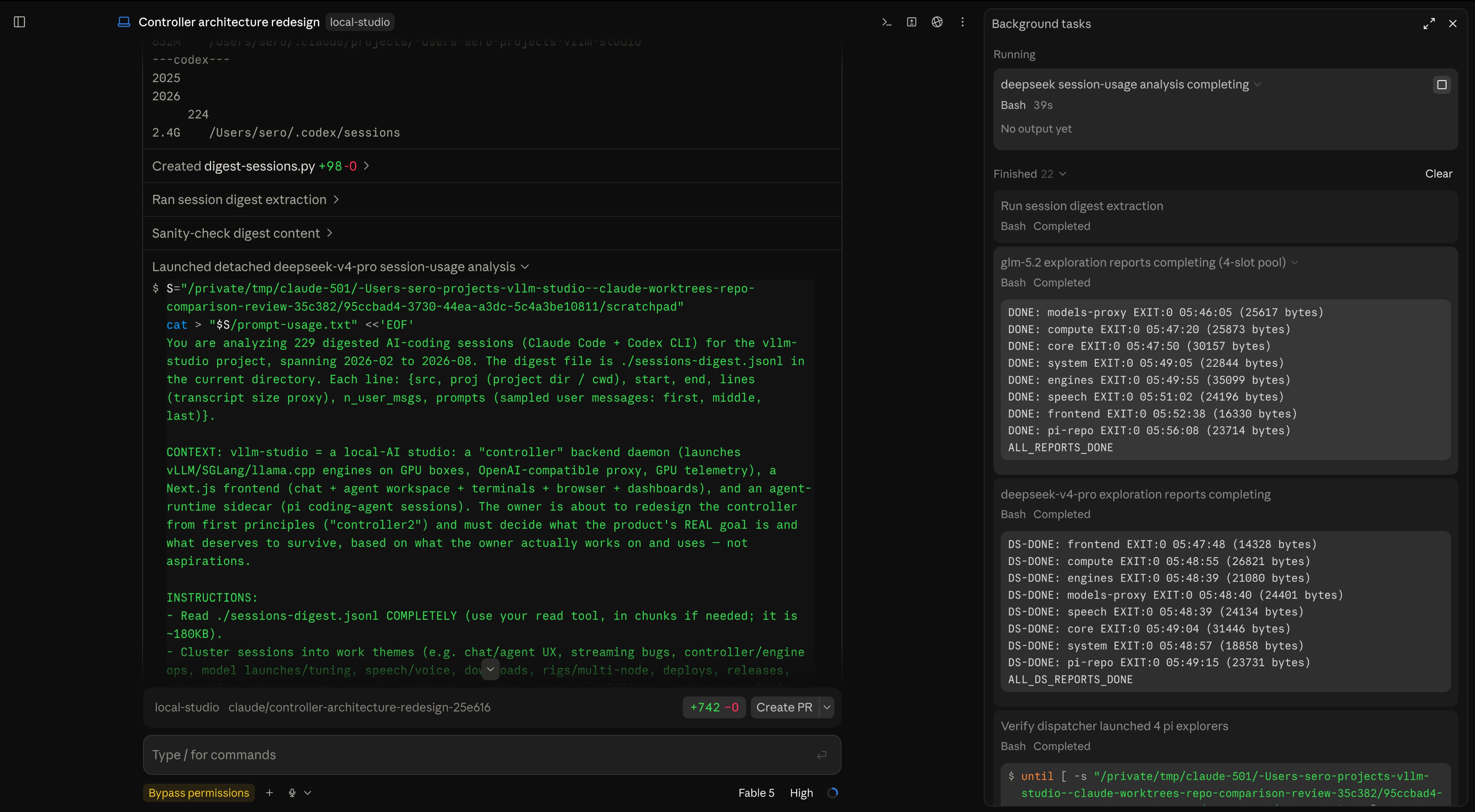
@0xSero shares a cost optimization pattern: create a "delegate-wave" skill that routes read, discovery, and change operations to DeepSeek V4-Pro/Flash via a tmux-based tool, keeping Claude or Codex in a review-and-delegate role. The claimed result is a 95%+ reduction in token costs.
@DODOREACH published pi-clarify on npm, a prompt-rewriting skill for Pi coding agents that reduces turns spent clarifying intent. @1kartikkabadi1 praises the result as a genuine improvement in agent communication.
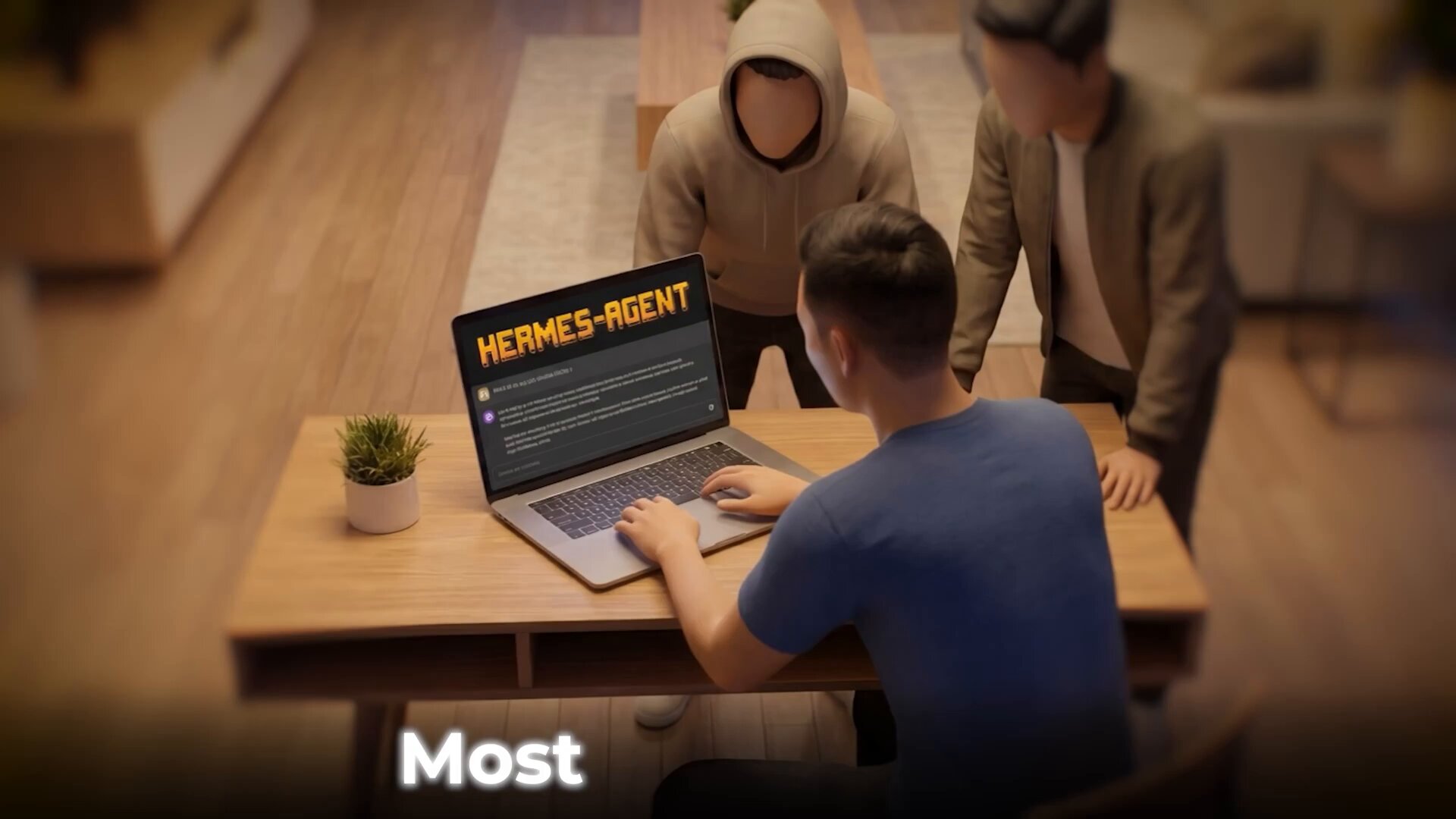
On the tooling front, @Teknium shipped a Hermes Agent skill that watches API calls on a website and generates a static API client for future use. @tonysimons_ calls the update "massive." @ericosiu published a 20-minute guide covering Hermes integration with HubSpot, Gong, Slack, and Google Docs, walking through artifacts, skills, cron jobs, and the "8 Levels of Hermes." @khushiirl separately surfaced a Harness Engineering learning resource, underscoring growing demand for CI/CD literacy in agent workflows.
@vercel shared early results from their AI SDK "software factory" where each step is an agent and humans merge changes. Four weeks in: the factory authors up to 35% of merged PRs, closed 70% of issues in July, and reduced open bugs by 25%. @rauchg frames this as progress toward "self-maintaining software."
@CaramelCoffee posted a brief note of gratitude to Claude, a reminder that even practitioners immersed in specialized agent tooling still reach for general-purpose assistants for everyday tasks.
In other tooling news, @JespernissenSEO flagged a watermark removal tool from @guillaumemeyer that strips watermarks from Claude, Gemini, and OpenAI output, raising familiar questions about provenance and content detection as AI-generated text proliferates.
Separately, @davidfowl amplified @mitchellh's search for quality-obsessed Windows developers. @mitchellh's team wants someone who can build Windows applications that "spark joy" with frame-perfect animation and obsessive attention to user flows, noting they have been struggling to find the right person for the role.
Practical Takeaway
The strongest signal across today's posts is the commoditization of frontier intelligence paired with the growing complexity of agent deployment. With Grok 4.6 and DeepSeek V4-Pro narrowing the performance gap while undercutting on price, your harness architecture, eval loop, and deployment process increasingly determine outcomes more than your model choice. If you are building with agents, investigate three things this week: whether your subagent architecture handles context-forking correctly
Sources
https://t.co/LCU8avjBpC
🧹watermarks-remover now supports watermarks from OpenAI and Gemini in addition to Claude. https://t.co/OxSdnAjEGe

stop sending bad prompts to your Pi coding agent. you liked pi-clarify, so i published it on npm too: pi install npm:pi-clarify it rewrites your prompt before sending, so you spend fewer turns explaining what you meant here's how it works
Introducing Grok 4.6. It delivers frontier intelligence and is a significant improvement over Grok 4.5 at the same price. https://t.co/RtTbpXcb3a
We built a software factory for AI SDK. Each step is an agent, and humans merge changes. Four weeks in: ▪️ The factory authors up to 35% of merged PRs ▪️ It closed 70% of issues in July ▪️ Open bugs are down 25% https://t.co/UNGeeQJdAu
We're looking to hire Windows developers capable of producing UI at this quality (but, idiomatic to the Windows ecosystem, not cloning Apple). If you are one or know someone, please have them apply via `ssh https://t.co/4JHvflVz0r`. We've been struggling to find this person. There's just a lot of Windows applications out there (like, almost all of them) that just aren't good. We're looking for someone who wants to create a Windows applications that sparks joy, excites people, and feels good. We want frame perfect animation. We want obsessive consideration over user flows, click counts, keyboard press counts, etc. We're a team that has that kind of obsession, but lacks the Windows experience. If you know a Windows dev who has this quality obsession and wants to work with a group that shares those ideals, I want to talk to them.
How we turned Hermes from an assistant into our chief of staff (and how you can too)
Announcing Hone Intelligence has become abundant. Yet the world looks remarkably similar to how it did five years ago. With every model release, the gap between what frontier AI can do and the economic value derived from it widens. Closing the gap requires re-organizing work around organizational outcomes, not individual tasks. Hone builds AI that creates, orchestrates, and improves agents and software continuously to own organizational outcomes over weeks and months. We are ex-founders and early core contributors to Cognition, Mercor, Ramp, and OpenAI. We obsess over real-world value, not theoretical benchmarks. Our core beliefs on closing the gap in the thread below.
gpt models are trained to use subagents but they expect subagents to start off with some context from the parent session this is different from any other model so we'll need to add gpt specific logic i do think it makes sense though
DeepSeek silently released V4-Pro 0813, up 15.8% on Terminal Bench from their April Preview model, with Fable 5 performance at ~57x cheaper cost. 1.6T param, 49B active, 1M context. This is the best price-to-perfomance model on the market right now. Available in ClinePass now! https://t.co/D9yas0umPn
An announcement: I've joined @deanwball's Strategic Futures team at OpenAI to help shape frontier AI policy. Our work will focus on on how transformative AI will reshape the economy, our institutions, and free society, and how human agency can be preserved in the process.
@MelioHL Let's see 👀 https://t.co/Jq286Sdk3w
Fable quality. We will soon release a new quantized inference framework that will let you run this on a single GPU (B300) with ~50 tok/s in good quality. Local Fable LFG!
New in Hermes Agent: Have Hermes do an operation or set of operations on a website, and it can watch the api calls made there - then can create a static api for your agent or scripts it builds to use forevermore with this new optional skill! Just run: `hermes skills install official/web-development/har-derived-api-client`