Engineers Share Playbooks for Slashing LLM Costs and Running Local Agent Stacks
Today's discussions center on aggressive strategies to reduce enterprise AI spend, leveraging context pruning and open-source routing to cut costs by up to 90%. Simultaneously, developers are sharing new open-source stacks for running multi-agent workflows entirely locally to avoid vendor lock-in and API fees.
Quick Hits
- Cost reduction through routing and context pruning: @pwendell shares a Databricks analysis explaining how shifting traffic to cheaper open-source models and managing context bloat can lower internal AI spend by up to 90%.
- Small models beating frontier models with ontologies: @wileycwj demonstrates how using an "OpenOntology" mapping system allows cheaper models like DeepSeek-flash and Haiku to outperform frontier models on agentic search at 100x lower costs.
- The push for fully local, private agents: New tools like Magnitude offer terminal-based, local-first AI agents with zero token costs, while Open Tag provides an open-source alternative to vendor-locked enterprise agent deployers.
- Multi-agent orchestration over single prompts: Builders are moving past single-shot tasks, with @Vtrivedy10 emphasizing multi-agent user simulation for synthetic world diversity and @VibeMarketer_ detailing the operating systems needed to connect specialized coding agents.
Slashing LLM Costs and Managing Context
As AI adoption scales within organizations, developers are sharing tangible strategies to manage exploding API costs. @pwendell details an internal analysis from Databricks revealing how they achieved up to 90% savings on internal AI workloads. According to @pwendell, the biggest wins come from shifting defaults to more efficient open-source models like GLM, implementing smart task-level routing, giving users visibility into their spend, and pruning extraneous tool call results to manage context bloat.
Building on the theme of context management, @wileycwj outlines an upcoming open-source release called OpenOntology. This tool helps agents reason about massive text corpuses by automatically creating hierarchical concept maps. According to @wileycwj, these maps drastically reduce the context window required, enabling lower-powered models like Haiku to outperform top-tier models like Opus in agentic search tasks while reducing costs by 100x.
These cost pressures are also driving market demands for cheaper baseline access. @ErickSky suggests users cancel their standard AI subscriptions in favor of the cheapest providers available, amplifying a claim by @thdxr that aggressive price-cutting is necessary to enable continuous, high-volume AI use cases like processing every frame of video or analyzing every server log.
Open Source and Local-First Agent Stacks
To bypass cloud API restrictions and costs entirely, developers are championing local-first AI infrastructure. @pashmerepat highlights Magnitude, a tool built by @tomgreenwald that acts as a completely offline, local agent. Magnitude runs its own Rust-based inference engine directly on a user's hardware, handling sensitive data and everyday shell tasks without requiring API keys or incurring token costs.
The open-source approach is also targeting enterprise communication platforms. @svpino points to Open Tag as a direct, open-source alternative to Anthropic's Claude Tag. According to @svpino, Open Tag allows companies to deploy custom agents in Slack and Microsoft Teams without handing over corporate data or getting locked into specific model providers and harnesses.
Taking the local concept to its furthest logical extreme, @0xSero highlights work by @shawmakesmagic on Eliza and elizaOS. This project aims to redefine human-device interaction by turning AI into a full operating system built on Android OSP and Debian Linux. @0xSero suggests this model melts the AI directly into the OS, completely driving phone and desktop functions via chat and voice.
Orchestrating Multi-Agent Workflows
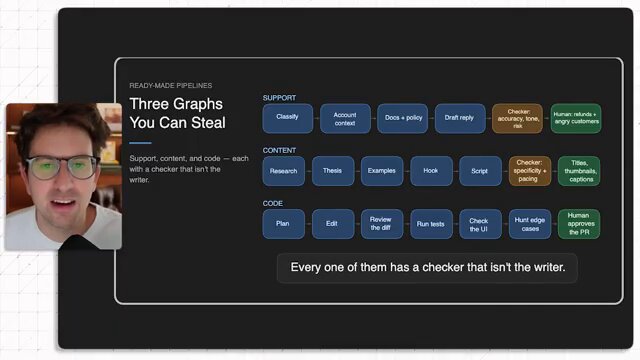
The conversation around AI agents is maturing from single prompt interactions toward complex, multi-agent orchestration. @VibeMarketer_ breaks down a vision for AI coding workflows where different agents handle distinct roles like planning, editing, reviewing, and testing. According to @VibeMarketer_, the real leverage in this system comes from the underlying operating system that connects these agents, turning proven jobs into reusable skills rather than constantly swapping out base models.
This multi-agent approach is also proving highly effective for generating synthetic training data. @Vtrivedy10 plans to adopt a new reinforcement learning stack from @PrimeIntellect to build complex synthetic environments. By allowing different models to debate and work together in parallel, @Vtrivedy10 argues that multi-agent user simulation provides far better task diversity than single-shot interactions.
Highlighting the tools making these workflows possible, @trending_repos notes that a GitHub repository simply named "computer" is trending rapidly. The project is designed specifically to give autonomous AI agents their own virtual computer interface to execute tasks.
Quick Hits
- AI and Code Maintainability: @raysan5 observes that most games do not require massive codebases, noting that multiplatform tools can easily be maintained under 10,000 lines of C. This responds to @yacineMTB, who successfully reverse-engineered Super Smash Bros. Melee into roughly 5,000 lines of C using DeepSeek directly from a phone.
- AI Privacy Concerns: @somewheresy shares a warning from @fjzzq2002 about AI memory and data retention, noting instances where Claude accurately recalled private user information like email addresses without being prompted.
- Exploiting API Credits: @DavidOndrej1 points to a new plugin by @paoloanzn called pi-black. The tool reverse-engineers the Claude Code client, tricking the system into letting users consume their flat-rate Claude subscription rather than paying per-token API costs.
- Automated Sales Prospecting: @chrispisarski details a "midbound" go-to-market strategy using the Crustdata MCP connected to Claude. The workflow maps competitor audiences, scrapes recent comments for specific pain points, and automatically generates hyper-personalized cold email copy, building on a strategy by @codyschneider.
- AI Video Generation: @unusual_whales notes that Higgsfield has released Seedance 2.5. According to @higgsfield, the model can generate 30-second scenes in a single pass and is being offered with 33 days of unlimited, zero-cost access.
- Open Source Tooling: @theozero announces that @pullfrogai, an AI code review tool, is now free for personal and qualifying open-source projects, with the company even covering LLM usage costs for large repositories.
- Industry Perception: @vasuman argues that "AI Adoption is a Myth," claiming that anyone actively using current AI tools is already in the top 1% of users, despite the massive gap between average users and frontier developers running dozens of automated terminals simultaneously.
Practical Takeaway
Before defaulting to the most expensive frontier models for complex coding or reasoning tasks, investigate how context mapping and smart routing can isolate cheap, open-source alternatives for your routine work. As demonstrated by the ontology workflows and Databricks cost analyses shared today, developers who actively prune context bloat and route simple sub-tasks to lighter models can achieve frontier-level results at a fraction of the API cost.
Sources
T
Trending repository of the day 📈
computer
Give your agent a computer 👾
Last 24h: 2,802 ⭐
Total: 5,220 ⭐️
https://t.co/Tb0Nw4F8rI
S
Open Tag is the open-source version of Claude Tag.
You can use it to deploy your agents in Slack and Microsoft Teams.
Claude Tag will suck in your company's information and lock you in unless you keep paying Anthropic whatever they demand.
Open Tag, on the other hand, gives you the flexibility to swap harnesses, models, and take your data wherever you want.
No brainer.
C
CopilotKit
@CopilotKit
🚀 Introducing Open Tag A better, open-source Claude Tag. Works with any model, any agent harness, and fully custom agents. Bring any Agent to Slack, MS Teams with Generative UI, Streaming, and much more! Clone the repo and get it running in minutes https://t.co/USvVWYpgUQ Powered by the Channels SDK & AG-UI
J
Greg Isenberg gives the clearest description I've seen of where AI work is going.
one agent plans, another edits, another reviews, another runs tests, another checks the browser, another hunts for edge cases, and a human approves what ships.
the individual agents matter. but the real leverage comes from the operating system connecting them:
> where context is stored
> how work gets checked
> which corrections become reusable skills
> which proven jobs become automations
switching models might improve your next task. building the system makes every future task better.
before chasing another model upgrade, fix these four layers.
the article below shows how to build that complete Codex workflow, from project context to trusted automation:
V
VibeMarketer_
@VibeMarketer_
How to Become a Codex Power User: My Complete Setup
E
Cancelen todas las suscripciones que tengan.
No importa si es Anthropic u OpenAI.
Solo usen OpenCode Go hasta que quiebren, hasta que descubran que están lavando dinero, o hasta que abran un agujero negro en sus servidores debido a tanta quema de tokens.
T
thdxr
@thdxr
we are determined to be the cheapest provider of ai on the planet this will enable ridiculous use cases that are not possible today why can't ai read every console.log why can't it process every frame of video why can't it check every heartbeat for irregularities
P
Today @databricks we're publishing a detailed analysis of techniques we used to drastically reduce our internal AI spend while aggressively growing adoption. Savings come from layering in several techniques, which combine to drive unit costs down as much as 90% in some scenarios. Tl;dr, the wins come from:
1. Shifting defaults to more efficient models, including OSS models such as GLM. Maximum intelligence models simply aren't needed for many coding tasks, and "good enough" models are quickly becoming very cheap. We shift traffic between models using Unity AI Gateway. Approximate savings: 50% or more.
2. Using smart routing to automate model selection. Routing can further squeeze efficiency by dynamically selecting the model or harness that can most efficiently execute a particular task. Our task-level routing leverages @omnigent_ai. Approximate savings: 30%.
3. Providing user visibility and adaptive budgeting. Every user can see how much they spend, and users receive hints on how to contain spend. Heavy spenders encounter progressive friction as they ratchet spend above certain levels. Approximate savings: 10%.
4. Managing context bloat by pruning tool call results and tuning harness settings. Extraneous context costs $$ and delivers no value. Tuning cache settings also help lower average token costs. Approximate savings: 10%.

0
Shaw is 2 years ahead of the game, it’s been this way since I first used Eliza
This was way before agents, Eliza was so popular every social media including X had to react as it was straining their systems.
The models will be a part of the computer, melted into the OS
Follow
S
shawmakesmagic
@shawmakesmagic
Eliza + elizaOS Welcome to the new interaction paradigm. Notes, calendar, browser, messaging, wallet, social media and everything else you use your phone for. Completely driven by chat and voice. Eliza comes as an app on mobile and desktop and as a full operating system built on Android OSP and Debian Linux. Also available in the web and accessible from your favorite social platform or messaging app. Fully open source at https://t.co/VcPditeReE We’re raising and looking for hardware partners and cracked builders to help us redefine our relationship to our devices— at home, at the office, in our hands and soon in robots. We have a lot more coming to show in coming videos, including dynamic UI, instant deployed apps and tools to manage every aspect of your life. Thanks to @UseCorgi for letting us drink coffee and ship at 5am Thanks to @solanamobile for making an awesome phone for development
R
5000 lines of C, looks like raylib. Most games do not require way more than that. All my multiplatform @raylibtech tools are usually under 10K locs. Less code is easier to understand and maintain.
Y
yacineMTB
@yacineMTB
Melee.c - super smash bros melee, decompiled and reverse engineered into 5000 lines or so of c All done with deepseek flash 0731, from my phone, while I'm hanging out with my newborn https://t.co/VQM7DrNrdy
V
AI Adoption is a Myth
AI Adoption is a Myth
You’re already in the top 1% of AI users. Yes, there’s a gap between you and the folks on the frontier. The crazy kids running 20 terminals simultaneo...
P
My good friends are making the ultimate harness for local models that just works out of the box. They built their own inference engine in rust, profile hardware, and recommend best fit models.
If you want to get the most out of open source models, highly recommend following Tom
T
tomgreenwald
@tomgreenwald
Introducing Magnitude: your actually local agent 100% private and offline. No token costs, no API keys. Open source. Today's agents are local. The model isn't. Every prompt, every file, every secret gets sent straight to Anthropic and OpenAI. Magnitude is built around local models and runs the whole stack itself. The inference engine is part of the agent, so the models run inside it, right on your computer. It lives in your terminal, and setup is one command. Magnitude profiles your hardware and shows you which models fit, with the trade-offs between quality, speed, and memory. Pick one and start working. No painful config or server to babysit. Out of the box, it can use your shell, edit files, and run scripts. Add skills and it can work with Excel, PowerPoint, PDFs or Chrome. Use it for everyday work: - Analyze sensitive data - Manage private notes - Review code and logs - Search and organize files - Build docs or slides npm i -g @magnitudedev/cli GitHub: https://t.co/5SjPQWkmrF
C
this is what we call "midbound" - we have done this since YC and its still one of the most effective ways to book sales demos (we run a more targeted version of it)
1. build a map of all of your competitors / creators that make content targeting your ICP
im sure there are other ways to do this but we use the crustdata MCP connected to claude and just run this skill:
"find the founders of [competitor domains] + every creator posting about [your category] in the last 14 days, and any post in that space that went viral in the last 14 days
go beyond the competitors i listed - find any account posting content niched down to my industry that is performing
give me a connection graph of all of them: how they're connected, what the biggest creator clusters are, and categorize every one of them into a specific niche based on what they post about
include likes/comments per account and make that a filter"
you will get back a map of all the relevant "accounts" within your ICP, what they post about and how much engagement they get (which we reuse for influencer marketing)
2. use this map to create hyper personalized lists:
take every comment under every post from those accounts (competitors + creators) in the last 24h, filter and categorize by relevancy and pain points, enrich all commenters using the crustdata MCP (including their email if they are within the ICP) and classify by ICP
you will end up with super personalized lists with stuff like "i have tried x before but it didn't work that well" - you can use all of that context to create the copy with claude and push it to instantly sequences
what we also did during our YC batch was set up a crustdata watcher that sends a slack notification in real-time every single time someone posts about a specific keyword / topic FILTERED by our ICP, which we then use as an opp to just comment / engage and be visible

C
codyschneider
@codyschneider
nobody wants you to know this but you can just cold email a 100,000 people in a month who liked posts on linkedin related to your product and they'll buy your solution to their pain or the desired outcome you provide
U
Higgsfield has released Seedance 2.5.
They are offering 33 days of unlimited access to make the content you want and you can enter the Higgsfield Global Film Festival for your chance at $1,000,000 in prize money.
H
higgsfield
@higgsfield
33 Days of Unlimited Seedance 2.5 Seedance 2.5 is LIVE on Higgsfield today. The most capable video model yet, with 30-second scenes in a single pass, 50 references and production-ready editing. Zero credit cost for 33 days. Limited-time offer. https://t.co/ldITD8TCHX
∿
RT @fjzzq2002: What happens if Claude thinks you are Amanda?
One day, I asked Claude what it knows about me. Turns out it knows my email,…
V
will absolutely be ripping this over the weekend for generating more complex synthetic worlds + tasks/environments
multi-agent user simulation is great for world/task diversity with different models debating and working together and parallelizing work
user simulation is also so common in real world work, need more of it compared to one shot Tasks
P
PrimeIntellect
@PrimeIntellect
Today, we’re extending our RL stack beyond individual agents to multi-agent systems. You can now express arbitrary agent interactions and train them. https://t.co/cKBHB430f4
W
wow this is a lot more popular than I anticipated:
the team at @doss_hq will be releasing OpenOntology soon
i built the first version to help our agents reason about arbitrarily large corpuses of context
it works by navigating the corpus and creating maps (an “ont”) for itself to then organize concepts and detail into hierarchies and systems
the result was more shocking than i had ever imagined. with it, even the lowest powered models could outperform frontier models, the maps were barely consuming any additional context, reducing agent search/Q&A problem solving by 5x-10x turns and 30x compression when the maps are in prompt caches and 100x+ cheaper (Deepseek-flash+Oont is outperforming Opus)
the maps also “stay fresh” by design with source vacuums and resolvers running that invalidate concepts in an ont
practically: it means that once you have a system with enough signal density to support an ont… you can use a SOTA model to bootstrap the ont, which included it writing determinstic resolvers that maintain it, and ultimately then you can use very cheap models to query it at SOTA parity (often even better)
obviously, it also has a benefit of also making SOTA models be grounded and force absence disclosures
it is by far the weirdest experience i have had working with language models. its so uncanny.
excited for ppl to start playing with it
W
wileycwj
@wileycwj
lol we may have cooked too hard on this one Haiku+OpenOntology outperform Opus on agentic search in every measured dimension without oont, haiku could not finish the eval 🤯 cannot wait to get this into shape for OSS release
T
FYI @pullfrogai is now free for personal and open source projects, plus will cover LLM usage for open source projects with 1k+ stars.
We use it on varlock with sol (using azure credits) to review things mostly built with anthropic models.
Has been really fantastic.
D
Anthropic in shambles
P
paoloanzn
@paoloanzn
we did it again, say hello to pi-black go back to use your claude subscription instead of API credits no claude code proxy this is the first pi plugin that lets you use claude subscription and NOT API key by spoofing pi client as a normal claude code binary we reversed engineered the system once again, exactly what we did back in april now shipping to pi either as a custom patched standalone binary or as a standard pi plugin