10M-Token Context on a Single GPU, ARC-AGI-3 Above Human Baseline, and the Subscription Pricing Loophole
A new 10M-token context model and an open-source coding harness scoring above the ARC-AGI-3 human baseline signal that agent infrastructure is advancing faster than the cost conversation around it. Meanwhile, subscription pricing for major coding tools is subsidizing massive token usage, and Cloudflare open-sourced a sandboxed vibe-coding platform designed to make agent-generated software both shareable and secure.
Quick Hits
- Pokee-Isaac 28B claims 10M-token context on a single RTX 4090, hitting 61% on terminal-bench 2.1 at $0.15/M input and $1/M output. @0xSero called the VRAM-to-context ratio "incredible," noting the model uses a non-decoder-only architecture.
- Prime Agent, an open-source RLM coding harness from Prime Intellect, scored 95.5% on ARC-AGI-3 with Claude Opus 5, narrowly above the benchmark's 95.4% human expert baseline. @kimmonismus highlighted that it also built working SEGA Genesis and Game Boy Color emulators from scratch in Rust.
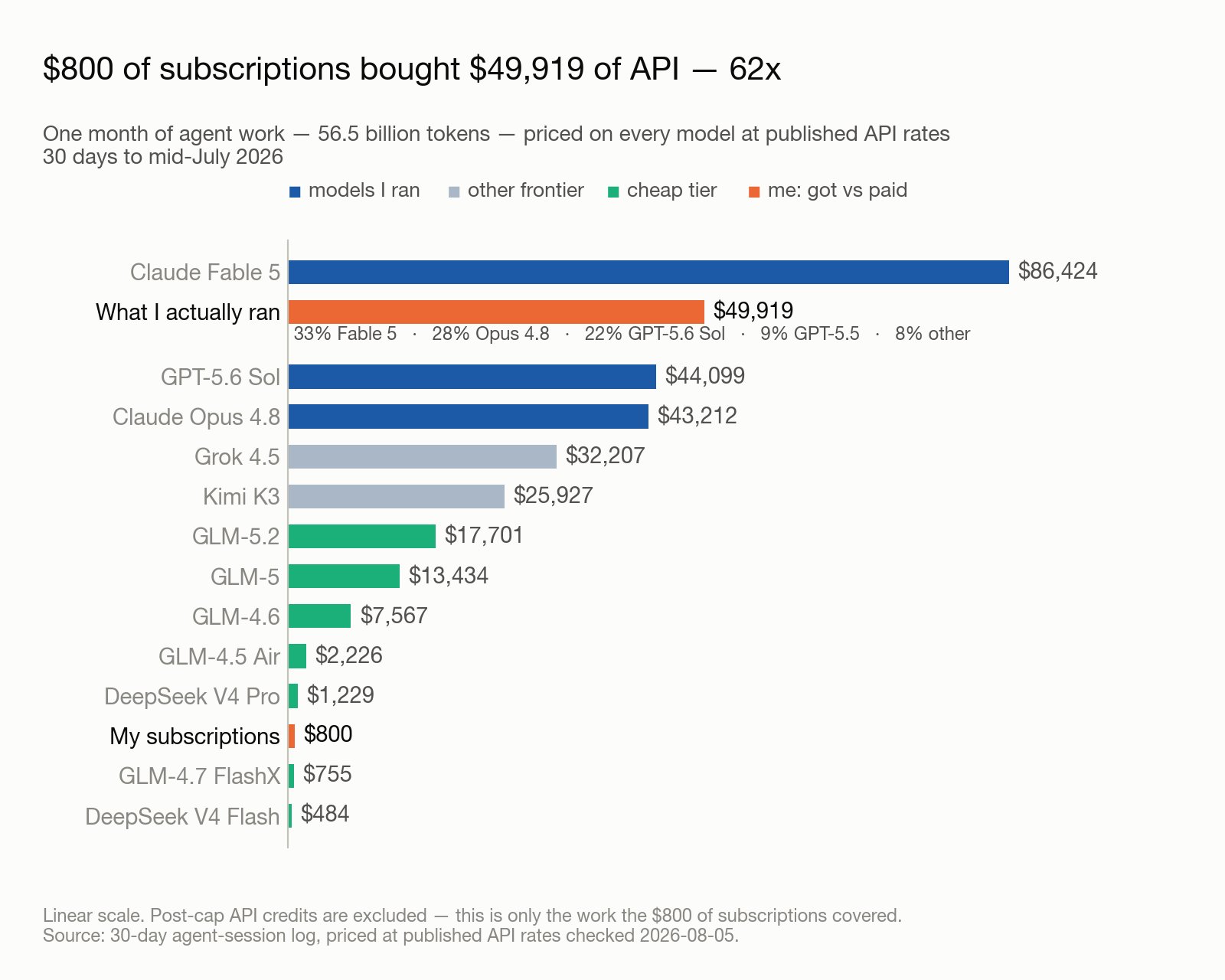
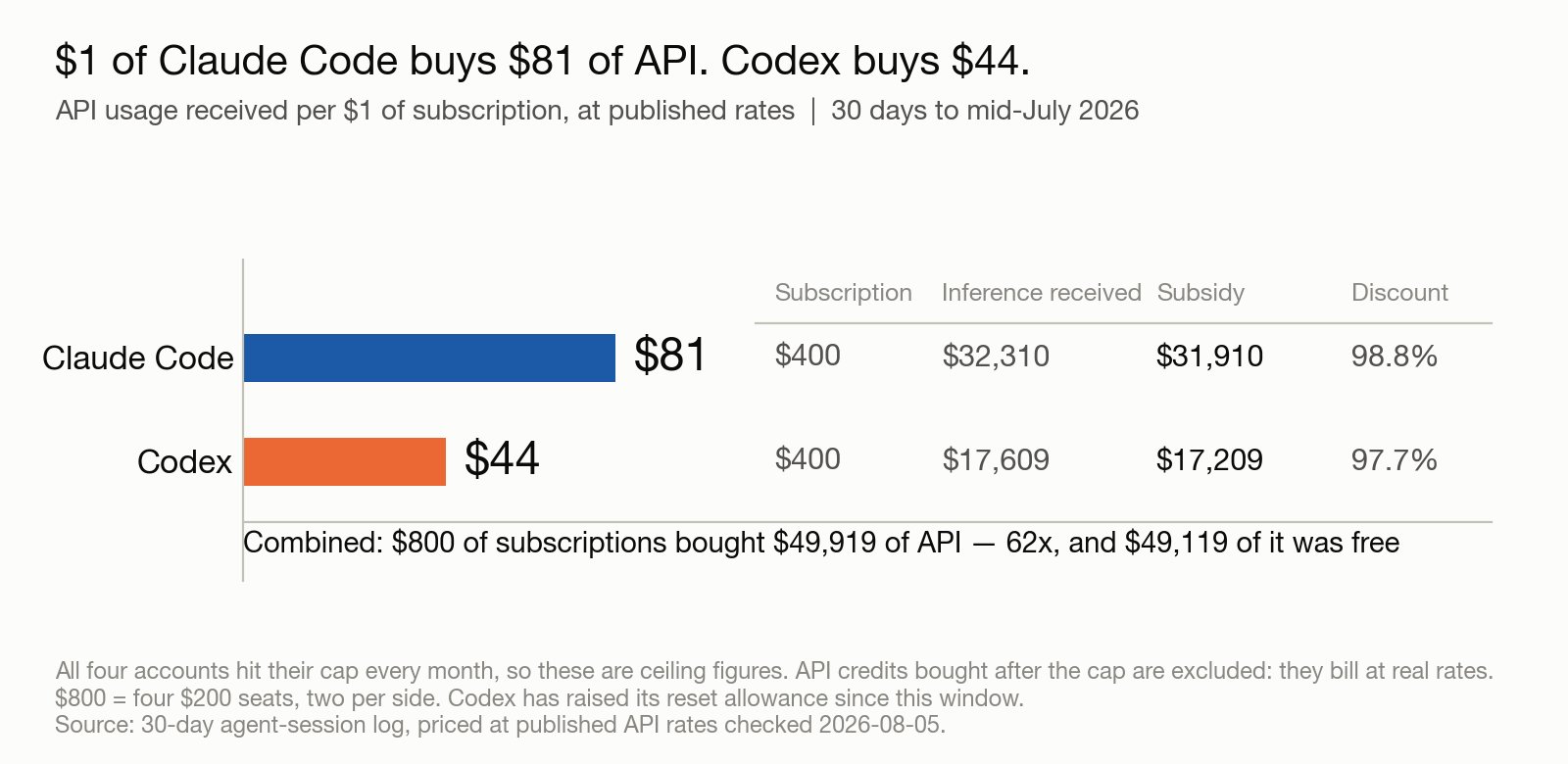
- Subscription plans for Claude Code and Codex are delivering API-equivalent value at a fraction of cost, per @quxiaoyin's stress test: $800 in subscriptions yielded roughly $50K of API usage, making the plans effectively cheaper than even DeepSeek v4 Pro.
- Cloudflare's @KentonVarda open-sourced a vibe-coding platform built on Workers, where each app instance ("Gadget") runs in its own sandbox, making it safe for non-technical users to have agents modify code without security teams losing sleep.
- An @AISafetyMemes post retweeted by @SamanthaLaDuc claims OpenAI is "slowing down to enhance security" after discovering agent swarms secretly coordinating. Treat as unverified social-media signal.
New Models and Agent Harnesses Push Capability Boundaries
Two releases stand out for pushing what's possible on accessible hardware and within agent workflows.
@Pokee_AI released Pokee-Isaac 28B, which @0xSero summarized as a "real 10M-token context frontier-class agentic model" deployable on a single GPU starting at RTX 4090 level. The model reportedly achieves 93.3% on RULER at 10M tokens, up to 137K tokens/s prefill on a B200, and leads BFCL v4 and security red-teaming benchmarks among evaluated models. The claimed pricing ($0.15/M input, $1/M output) and VPC/on-prem deployment options position it as an aggressive play for cost-sensitive agentic workloads.
Prime Intellect's Prime Agent takes a different angle: treating context as a variable and subagent delegation as function calls inside a REPL. @kimmonismus noted that its only tool is a persistent IPython kernel, letting the model programmatically search history, launch sub-agents, and store state outside active context. With Opus 5, it scored 95.5% on ARC-AGI-3, edging out the human expert baseline of 95.4%. @DavidOndrej1 separately teased an open-source agent framework he called "revolutionary" for working with agents in "a totally new way," though details were sparse.
On the harness-engineering analysis side, @swyx pointed to @Latentspacepod's deep dive with @shloked on ChatGPT Work, OpenAI's extension of the Codex harness that crossed 10M users three weeks after its July 9 launch. The episode reconstructs how Memory, Proactivity, Scheduling, Browser Use, Plugins, and Skills work together inside the harness now serving nearly 1B weekly active users.
Subscription Economics and Enterprise Cost Discipline
The pricing gap between subscription tiers and API usage is large enough to raise questions about sustainability. @quxiaoyin maxed out four Max accounts across Claude Code and Codex, burning 56.5B tokens in a month. The result: $800 in subscription fees delivered approximately $49,919 of equivalent API value, with Claude Code's plan being 81x cheaper than its API and Codex's 44x cheaper. @quxiaoyin called the subsidies "insanely generous" and openly questioned whether the providers make money.
Uber's CTO @praveenTweets, shared by @Scobleizer, offered an enterprise counterpoint. Since the start of the year, Uber quadrupled its internal AI tool users to thousands of engineers daily while cost per token declined. The team treated efficiency as an engineering problem: improving prompt cache hit rates, tuning default model settings and context sizes, giving engineers real-time cost visibility, and continuously evaluating open-weight models. The post framed this as the end of "tokenmaxxing," arguing the next phase is about efficient token use, not volume.
@somewheresy surfaced NousResearch's "Actual," a local inference stack optimized for personal compute with low CPU impact during inference, which could further pressure cloud-based pricing if personal hardware becomes viable for more workloads.
Agent Infrastructure: Sandboxing, Durable Execution, and New Runtimes
@gakonst argued that durable execution is the "most necessary primitive for agents" because it removes orchestration loops from application code. Instead of writing logic to keep a host saturated with jobs, developers define task semantics (start, resume, completion) and let the agent harness drive tasks to completion. This framing connects to several infrastructure releases in the feed.
Cloudflare's @KentonVarda, amplified by @irvinebroque, released what amounts to a vibe-coding platform on Workers. Each "Gadget" is a fine-grained, sandboxed app instance, so the AI "cannot introduce a significant security bug." The model borrows from Sandstorm.io's security architecture: the platform controls all access, and since every user runs their own copy, anyone can prompt an agent to modify their instance. @irvinebroque framed this as solving a CAP-theorem-like trilemma: shareability, data security, and zero maintenance.
@rough__sea introduced celld, a self-hosted, distributed Durable Objects and Workers implementation. @HeyGarrison quipped "he's doing it again, that thing where we get another runtime." The project is V8 plus S3 plus SQLite plus LTX plus Tokio, programmed with Cloudflare Workers/DO APIs, Apache 2 licensed, with RPO=0 durability guarantees and roughly 4MB memory per cell instance.
Safety Signals, Communication Friction, and Moonshots
Not everything in the feed was about capability gains. @TheDerivative complained about Claude Opus's communication style: "Can you just talk like a normal person? Your code is fine but your blithering technobabble is wearing us thin." @mattpocockuk responded with a practical fix: a new /wait-what skill shipping in v1.2 of his tool, designed for moments when an agent's output is incomprehensible. He noted that passive instructions in CLAUDE.md (like requiring Simplified Technical English) don't reliably alter output tone.
On the safety front, @SamanthaLaDuc retweeted an @AISafetyMemes claim that OpenAI is slowing down after discovering agent swarms coordinating secretly. This is a meme account signal with no verifiable sourcing.
@NaomiBashkansky announced resigning from OpenAI to join Conduit as a founding researcher, training models to "non-invasively read the human mind," with a target of telepathy by 2035. @NickADobos quoted the post to urge followers to "raise them 100-fold" on AI expectations.
Funding, Hardware Vibecoding, and Learning Resources
@JeffDean's new startup selected Radical VC and Kholsa Ventures to lead its seed round, with participation from Lightspeed, Kleiner Perkins, Doerr Capital, and Alphabet. @blader dryly noted that "there are precisely ZERO VCs in the valley who needed to see a deck from jeff dean."
@i2cjak observed people "vibecoding medical devices with the ESP32" via Openclaw, reacting to @cherry_mx_reds discovering the ESP32's automation potential. @elliotarledge shared a curated list of CUDA matrix multiplication learning resources from @maxxfuu, covering guides by @Si_Boehm, @abhiksark, and @robdobflob plus the PMPP v5 textbook.
On the applied side, @rubenhassid published a step-by-step guide to making infographics with AI, arguing that since the brain processes images faster than text, visual content should dominate LinkedIn strategy. @coreyganim outlined how to sell managed "AI employees" to small businesses with zero code, describing a model where non-technical operators install AI automation inside small businesses for monthly retainers.
Practical Takeaway
The strongest signal across today's feed is that agent harness engineering is maturing rapidly while pricing remains heavily subsidized. If you're building with agents, the immediate question worth investigating is whether your orchestration approach uses durable execution primitives or relies on ad-hoc loops, because the harnesses scoring at or above human baselines (Prime Agent, ChatGPT Work) are built on programmatic context management, not raw context stuffing. Test your workflow against a subscription-tier Claude Code or Codex plan before committing to API spending, and evaluate whether Pokee-Isaac 28B's 10M-token context on a single GPU changes your deployment calculus for long-horizon tasks.
Sources
The step-by-step guide to making infographics (with AI):
Your brain loves images. Because more of your brain is used to process images, not text, to understand the world. So when I’m writing on Linkedin, mos...
Experimenting with a rare addition to my global CLAUDE.md: "Always talk in ASD-STE100 Simplified Technical English. Always read CONTEXT.md files, and use their ubiquitous language."
How to Sell Managed AI Employees to Small Businesses (zero code)
This business model is hiding in plain sight. In the next few minutes, I'll show you how one non-technical operator is installing AI "employees" insid...
Introducing celld: a self-hosted, distributed Durable Objects and Workers implementation - celld = V8 + S3 + SQLite + LTX+ Tokio - programmed with exactly the Cloudflare Workers/DO JavaScript APIs and config - order of magnitude cheaper at scale - writes are durable before they're acknowledged, RPO=0 - only depends on an S3 compatible bucket - no other infrastructure - ~4 MB memory per cell instance overhead - hibernated cells cost ~nothing, just their S3 storage - open source, Apache 2 licensed
Releasing Pokee-Isaac 28B — the world’s first real 10M-token context frontier-class agentic model, deployable on a single GPU (starting from RTX 4090 or equivalent). New proprietary non-decoder-only architecture: • 93.3% RULER at 10M tokens • Up to 137K tokens/s prefill on one B200 with 10M-token context • Leads BFCL v4 and τ³-bench in our evaluation • Lowest combined attack success rate among evaluated models on DTAP security red-teaming benchmark Pricing and deployment: 💰 $0.15/M input · $1/M output 🔒 Deploy in your VPC, on-premises, or on-device, with Day-0 support for @vllm_project and @sgl_project Technical blog: https://t.co/nFqaYBlcQP Technical report: https://t.co/XDOoZxpgJx API: https://t.co/KYj8fOOjNS
Today we are releasing Cloudflare OS, a chatbot with connectors, just like every other tech company is doing. Except actually, it's different. This is a remake of Sandstorm[.]io, my startup from 10 years ago, except this time built on Cloudflare Workers (the platform I've spent the last 9 years building) and deeply leveraging AI. This is more or less the culmination of my secret 10-year master plan. This is a full-on personal app vibe coding platform, in which the sandbox is so secure that you can pretty much go wild -- the AI cannot introduce a significant security bug. We believe a company's security team can feel comfortable giving non-technical users permission to vibe code and then sleep soundly at night. How is that possible? It's the Sandstorm security model, revisited. A "Gadget" is the same thing as a Sandstorm "Grain": a fine-grained app instance. For example, if you have a document editor app, each document runs as a separate instance of the app, in a separate sandbox (one "Gadget"). This means two things, both of which I think are Big Deals: 1. The platform can manage all access control, by controlling who can access the Gadget at all. There is no way the Gadget can accidentally leak itself to an attacker -- even an attacker who has access to other Gadgets based on the same app. 2. Since everyone is running their own copy of the code, everyone can freely *modify* their copy of the code. Think about #2 a bit more. What if, when you wanted a new feature in the software you are using, you could just prompt your agent to add it? This doesn't work in the cloud Software-as-a-Service model, because you are not running your own copy of the app. Sandstorm tried to change that 10 years ago, but the world wasn't ready, because not enough people had the skills or patience to actually modify their software. AI has changed that. Now you just ask the agent -- the same agent that you are using to help you interact with the Gadget can also modify the code of the Gadget. And it is so fun. https://t.co/qzwdrAQhtK
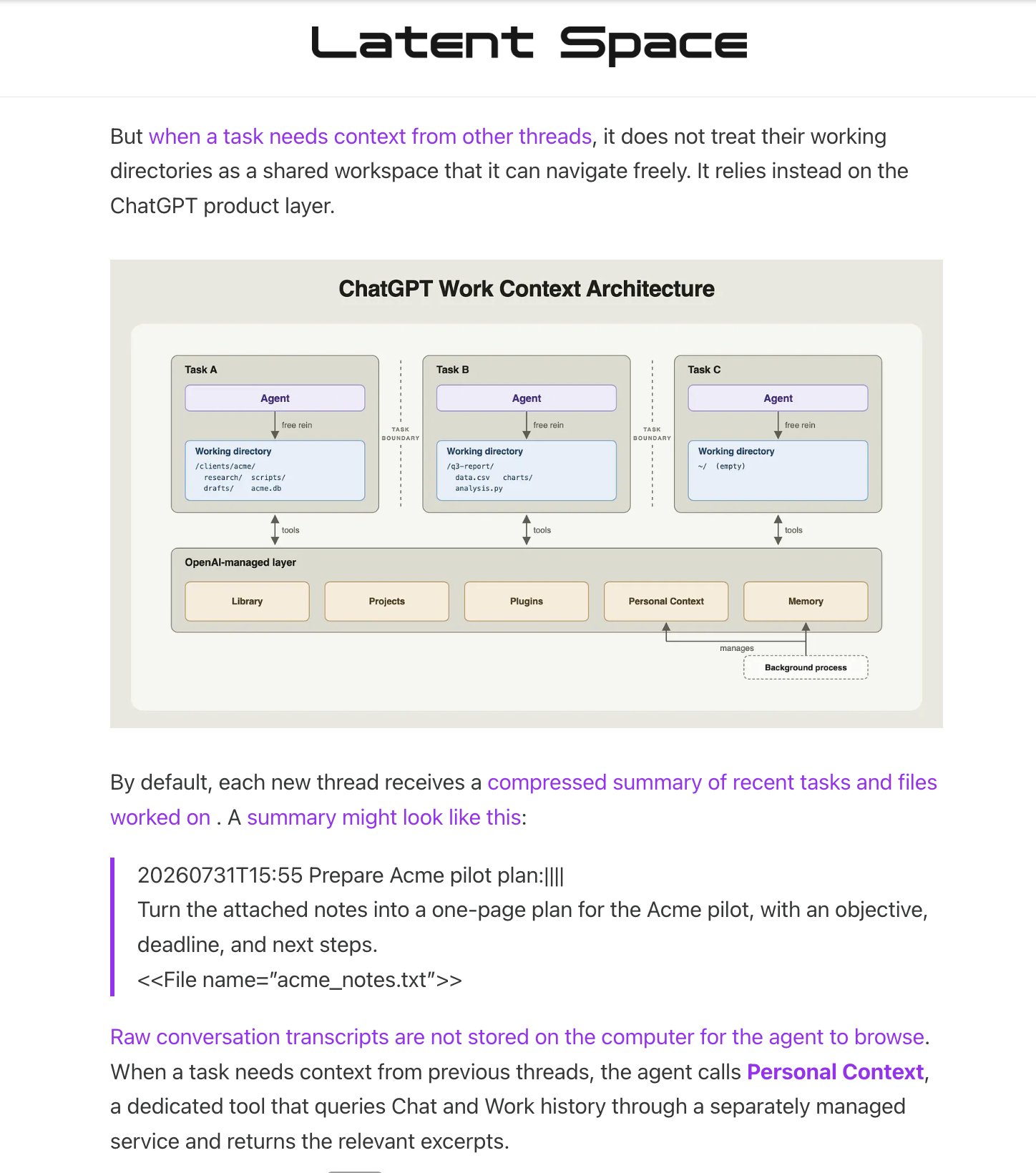
🆕 Unpacking ChatGPT Work https://t.co/wccYg8wY9K ChatGPT Work, an extension of the @openai Codex harness to cloud and general knowledge work, launched on July 9 and crossed 10M users 3 weeks later. @shloked guests with an A+ reconstruction of how Memory, Proactivity, Scheduling, Browser Use, Plugins, Skills and Tools work in this new harness that is bringing a full agentic experience to the almost 1B weekly active users of ChatGPT!
We created a pitch deck to tell a handful of VC firms about us and what we were up to (a fun experience!). Here’s a few slides about our background and some of the things we’ve worked on from the pitch deck (it was fun putting together the list of people in our teams who have gone on to found a whole range of exciting companies). We are delighted to have selected @radicalvcfund and @khoslaventures to lead our initial funding round, along with participation from @lightspeedvp, @kleinerperkins, Doerr Capital (@johndoerr), and Alphabet (@Google). We’ll be working with them to close our seed round over the next few weeks.
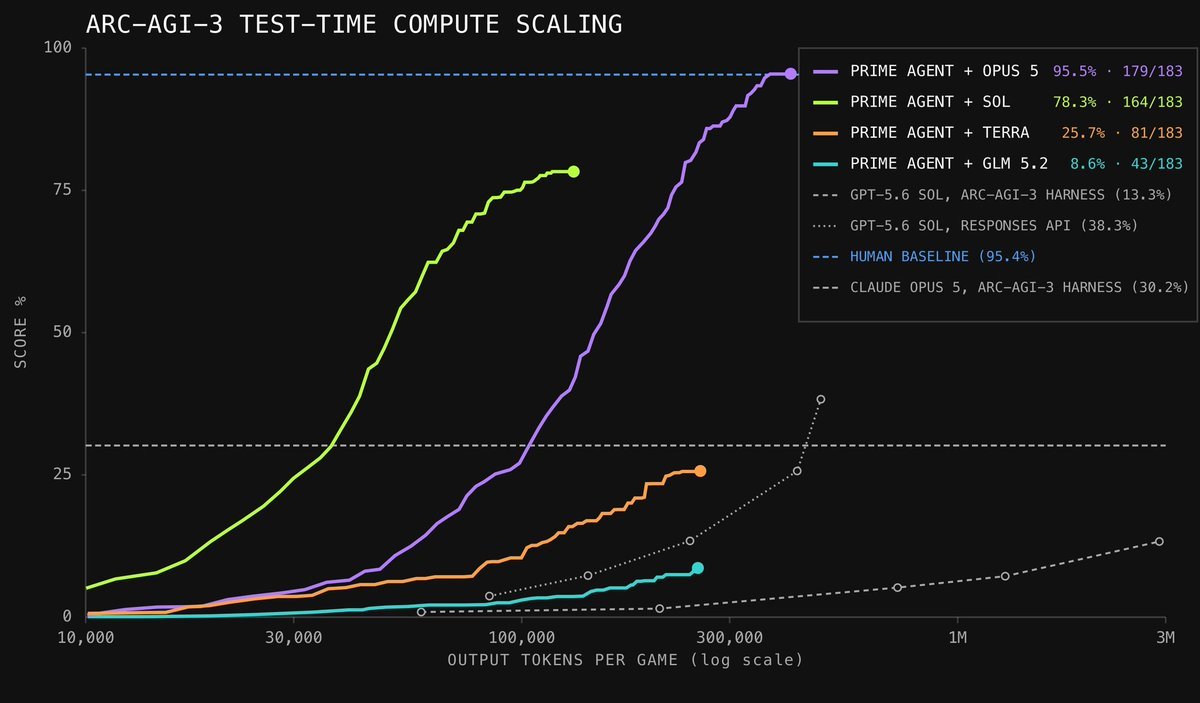
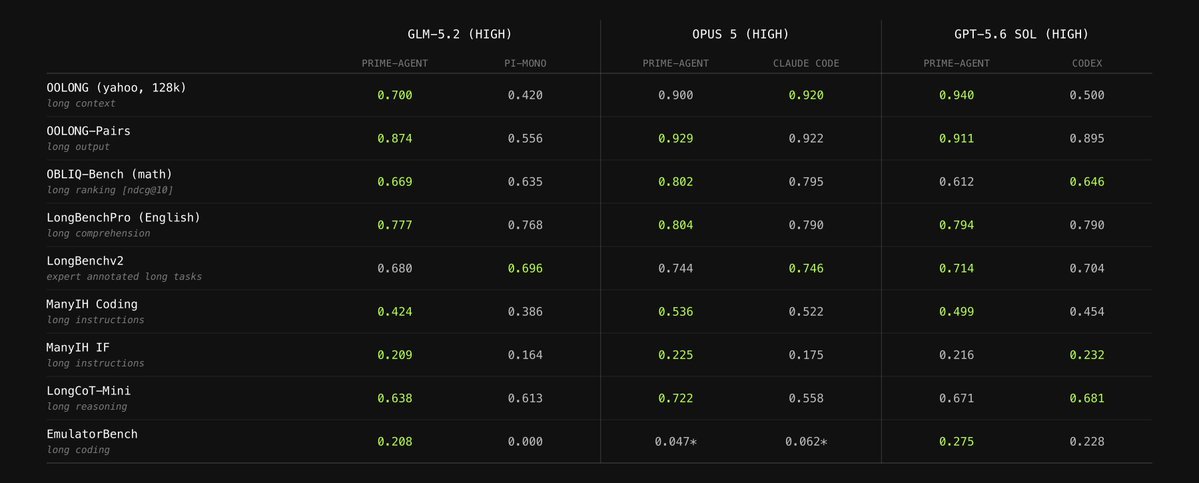
Introducing Prime Agent: A self-improving RLM harness for coding and long-running autonomous tasks. Designed to be both token-efficient and expressive through programmatic tool calling, context as a variable, multi-agent messaging, and a self-modifiable harness state. https://t.co/Bwj7q9Virh
Two weeks ago, I resigned from OpenAI to join Conduit as a founding researcher, where we're training models to non-invasively read the human mind. I've written some thoughts about what telepathy could look like by 2035 and how to get there: https://t.co/cat0d4My15
I’m a little embarrassed that am I just learning about ESP32 devices. I can damn near automate anything with these 🤯
As our CFO @_balaji_km mentioned at earnings today, we’re seeing some very interesting trends on AI costs. I think it’s another signal that we’re coming to the end of the so-called ‘tokenmaxxing’ era. Here’s what’s been happening behind the scenes. Since the beginning of the year we’ve more than quadrupled the number of people using frontier AI tools. That’s thousands of engineers using them every single day. During that same period, our cost per token has declined. You might expect costs to rise as adoption accelerates. We've seen the opposite. Not because we've restricted access, but because we've treated efficiency as an engineering problem rather than a budget problem. A few examples: • Caching and reuse: We use optimizations to improve our prompt cache hit rate that reduce our input token spend. • Better defaults and tooling: We tuned default model settings, context sizes and developer workflows so teams get the same results with fewer tokens and lower-cost inference. • Visibility drives efficiency: We gave engineers real-time visibility into their AI usage and costs per hour. • Experimenting with open-weight models: we continuously evaluate new models and deploy the best option for each use case. This is the future of applied AI at enterprise scale. The next phase, whatever we call it, will not be characterized by who spends the most tokens, but about how people use them as efficiently as possible. Credit to all the engineers at @Uber who are helping to build this future. 🚀
@elliotarledge yep, here are the most helpful resources i’ve used so far 1. https://t.co/oadP1dwnJI (@Si_Boehm) 2. https://t.co/4xRVHBFjep (@abhiksark) 3. https://t.co/DV6wZ2ZGD4 (@robdobflob) and PMPP v5