The Harness Era: How AI Routing and Orchestration Are Capturing Value
The AI stack is undergoing a massive shift in value from raw model capability to the orchestration layer, where intelligent routing dramatically reduces costs. Simultaneously, developers are rethinking agent infrastructure by proposing inverted sandbox architectures and testing decentralized human verification for complex AI alignment.
Quick Hits
- The AI value chain is pivoting from models to "harnesses," with orchestrators that efficiently route tasks becoming the primary driver of accuracy and cost reduction. (@levie, @chamath, @Shaughnessy119)
- Y Combinator open-sourced "QM," an MIT-licensed multi-agent harness that the firm uses internally across legal, engineering, and accounting workflows. (@jason_haugh, @ycombinator)
- Developers are proposing inverted agent infrastructure, arguing that booting barebones sandboxes with pre-verified read-only tools is vastly more secure and scalable than letting agents install dependencies on the fly. (@AlexJonesax)
- DeepSeek V4-Flash is making waves in token efficiency, completing benchmark tasks at a fraction of the cost of frontier models, while an uncensored "abliterated" version hits the open-source community. (@cline, @Tech2Wild)
The Harness as the New Enterprise Moat
The conversation around AI architecture is moving past raw model benchmarks to focus on the orchestration layer. @levie argues that as tasks scale to consume hundreds of millions of tokens, the "harness" becomes the most critical variable in the AI stack. The ability to break down work and route it to the right model at the right time will dictate both accuracy and expenses. This is born out by data from @composio, which shows massive cost discrepancies for identical tasks depending on the harness, with Claude Code costing roughly 3.7 times more per task than optimized setups like Hermes or Pi Agent.
This perspective is echoed by investors. @Shaughnessy119 highlights a thesis from @chamath asserting that harnesses are where the action is because they allow enterprises to own their proprietary context, data, and business rules. By effectively utilizing this layer, companies can drastically lower their model-agnostic switching costs. @GavinSBaker notes that this exact dynamic is fueling vertical AI-native companies. By combining routers, open-source models, and specialized post-training, firms like @wearelegora are achieving frontier-level outcomes at significantly lower costs. In practice, developers like @daniel_mac8 are already implementing these strategies using tools like the free "sol-advisor" plugin, which routes routine tasks to GPT-5.6 Luna Max while reserving Terra Max for complex implementations.
Rearchitecting Agent Sandboxes
As agents take on more complex software engineering tasks, the underlying infrastructure requires a rethink. @AlexJonesax suggests that the current paradigm of letting agents boot a Linux sandbox and blindly pip install dependencies is backwards. They propose an inverted model where sandboxes boot with almost nothing, instead mounting snapshots of pre-verified tools as shared read-only memory. This approach turns installations into page faults, allowing a single copy of Python to serve thousands of sandboxes securely. This infrastructure-level caution is reinforced by @ankrgyl, who highlights advice from @mitch_troy: do not hydrate your sandbox with API keys or secrets, even if you organize them locally for the agent.
These architectural patterns are being put to the test in collaborative environments. @_tombrow spotlights early use cases of "Buzz," where developers are managing multi-agent workflows. The highlighted implementations range from @StephGlansberg running a four-vendor agent fleet as distinct identities to Block using an agent channel to accelerate a security investigation into the Bitkey wallet-drain incident. For developers looking to build their own multi-agent systems, @jason_haugh points to Y Combinator's newly open-sourced "QM" harness, a cloud-first, Slack-native project built to serve an entire company.
Workflows, Specs, and Decentralized Verification
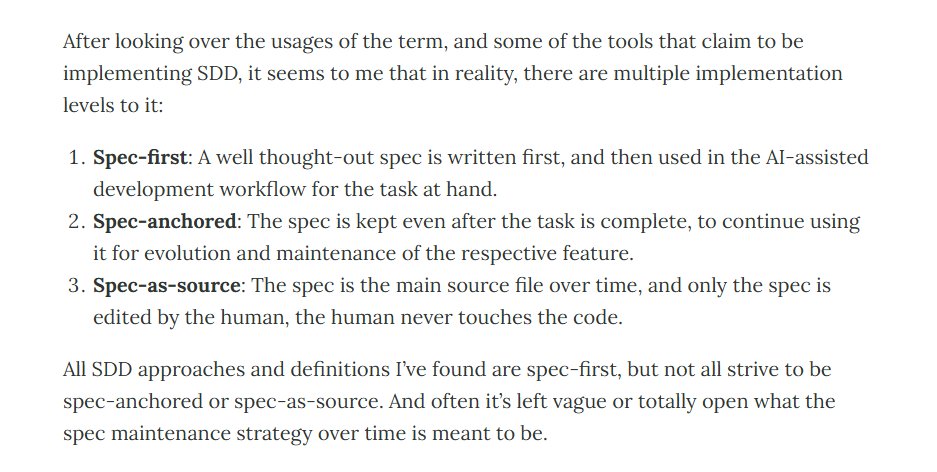
The daily realities of working with AI agents are spawning distinct software development methodologies. @mattpocockuk pushes back against the label of "spec-driven development," arguing that the specs generated during AI interactions are meant to be immediately deleted. They prefer "grill-driven development," where the true value lies in the questioning and decision-making process rather than the resulting specification document. @iamsahaj_xyz shares a related workflow, praising a custom "/zero-tech-debt" skill used for planning features and reviewing code. Meanwhile, @rjs suggests a specific prompt engineering exercise: ask an agent to build a "bill of materials" with "What" and "Why" columns for a proposed solution, forcing the human to manually edit the "Why" column to clarify reasoning.
Beyond standard coding tasks, AI practitioners are exploring how to verify outputs in domains that lack programmatic checkers. @max_spero_ outlines a hierarchy of verifiability, noting that while math and coding are near-free to verify, domains relying on shifting cultural preferences will never be solved to a superhuman degree. Responding to this, @Vtrivedy10 suggests a half-joking startup idea: a distributed router that uses crypto incentives to pay human experts for verifying AI outputs in subjective domains, creating an on-chain consensus layer for AI alignment.
Model Efficiency and Ecosystem Notes
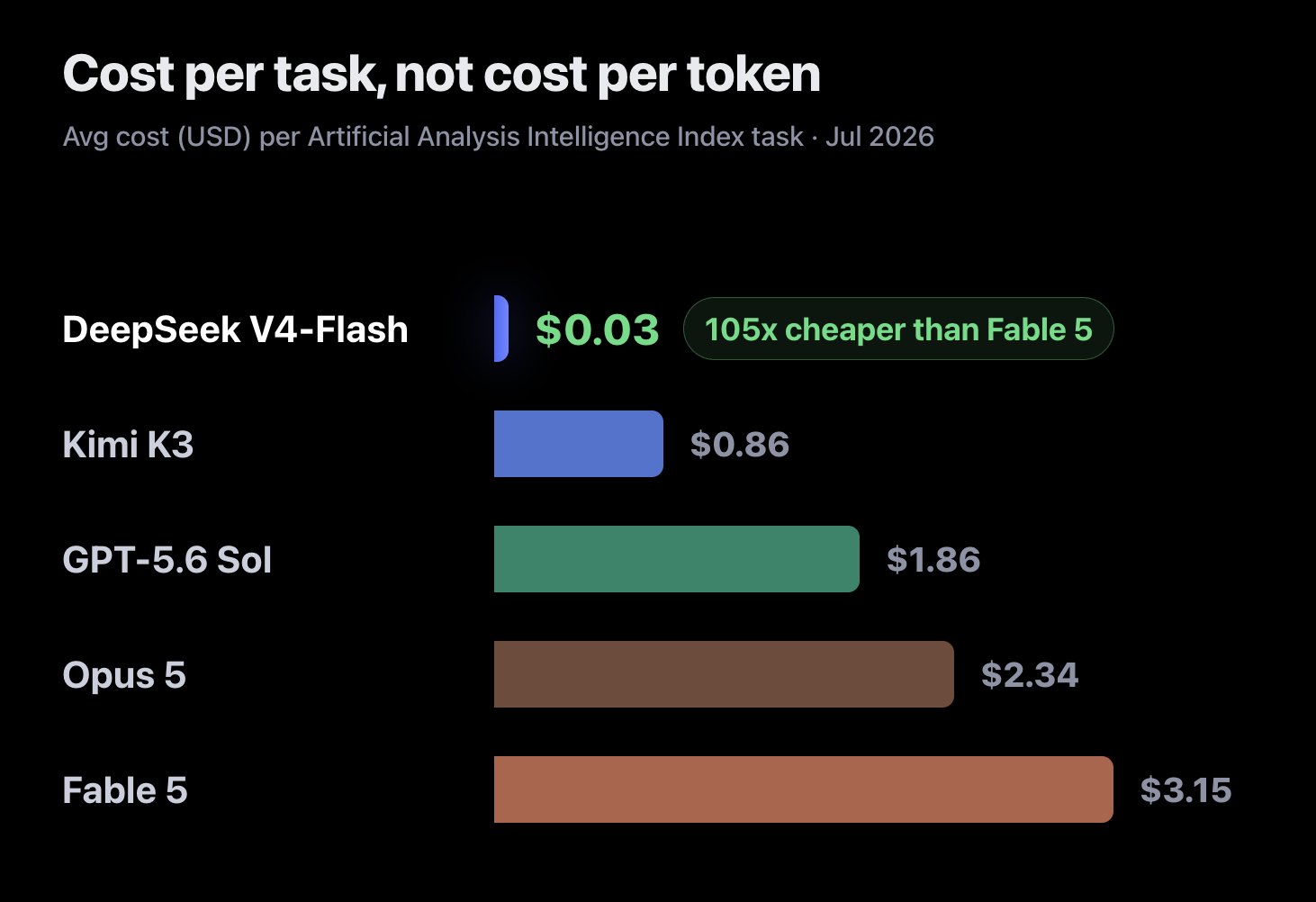
The open-source model landscape continues to balance raw capability with cost efficiency. @cline points out that while DeepSeek V4-Flash is significantly cheaper per token, developers must be wary of costs driven by agents taking more turns to finish a job. However, benchmark data from Artificial Analysis shows DeepSeek completing the same tasks as Fable at 105x lower cost. For users looking to bypass standard guardrails entirely, @Tech2Wild highlights the release of the DeepSeek V4 Flash 0731 UNCENSORED build, an "abliterated" model with zero refusals.
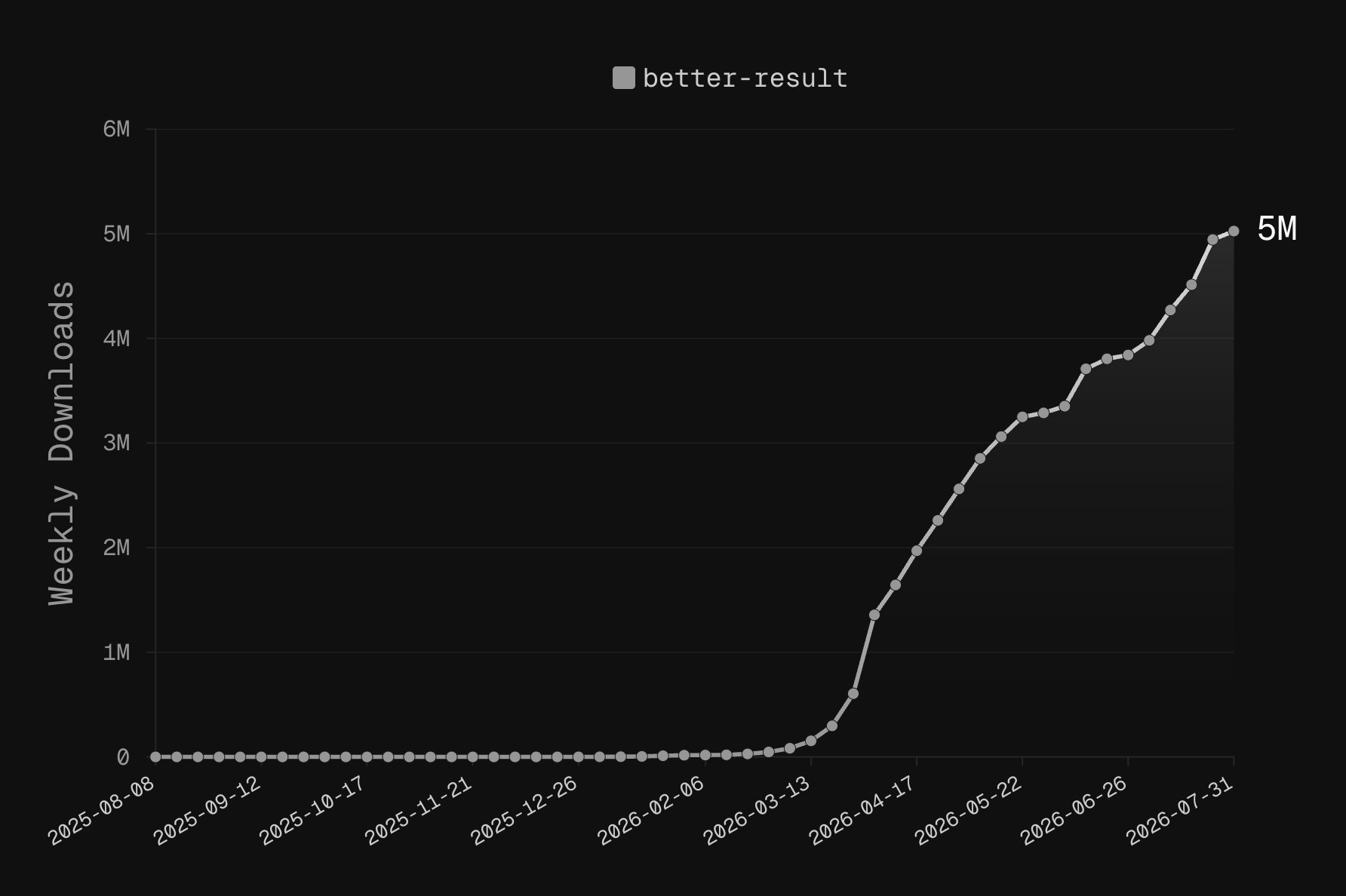
In broader ecosystem developments, AI tooling is reaching aggressive new price floors, with @morganlinton noting the dawn of $1 per month agentic coding plans like Command Code Go. In developer tooling, @dillon_mulrow celebrates the better-result library breaking five million weekly downloads. The accessibility of these tools is also lowering the barrier to entry; @tonysimons_ shares that his 14-year-old son successfully shipped a full game, Stardust Tycoon, using Hermes Agent. Finally, in academia, @emollick flags a quiet but significant endorsement from math professor @littmath regarding AI's latest capabilities, noting that when a level-headed academic says "it's a big deal," the AI community should pay attention.
Practical Takeaway
If you are building AI applications, stop optimizing solely for model selection and start investing heavily in your orchestration layer. Evaluate your agent sandboxes to ensure they are not redundantly installing dependencies or exposing secrets. Developers should experiment with routing specialized tasks, like separating an orchestrator model from routine and complex implementers, to aggressively drive down token costs while maintaining output quality.
Sources
Hermes and Pi Agent led on the average cost per task, while Claude Code cost about 3.7x as much as Pi: - $0.39 Hermes Agent - $0.40 Pi Agent - $0.47 Codex - $0.51 OpenCode - $0.54 Kimi Code - $1.47 Claude Code The median cost tells the same story: $0.29 in Pi Agent and Hermes, $0.35 in OpenCode, $0.38 in Kimi Code, $0.39 in Codex and $0.72 in Claude Code, so the cost gap holds for a typical task and is not driven by a few expensive runs. We calculated these costs using Kimi K3’s list prices: $3/1M input tokens, $0.30/1M cached input tokens, and $15/1M output tokens.
Across every dimension, July was the strongest quarter-opening month in @WeAreLegora's history. Net new ARR was 90% higher than April ‘26, our prior quarter-opening record. ARR grew more than 10x year-on-year. This reflects something specific: more in-house legal teams are choosing Legora, not just law firms. But as always, what I care about most is customer love. Our MAUs now use Legora for 16 hours per month. Our gross retention is 95%+, against millions of dollars in upsold ARR. Retention at this level, while expansion is accelerating, is the hard thing to get right. It's the number that tells you customers aren't just buying Legora, they're building on it. We're not slowing down from here. LFG @MaxJunestrand
My tweets alone already reveal enough sauce to launch an app and get it to 100k MRR I literally covered how to find the correct idea and how to get distribution, you don't need anything else You just have to relentlessly execute it

Here is my AI investing guide. Sitting here August 2026, my current best thoughts are as follows: 1. LPS (Land Power Shell) is still the most obvious and fastest path to cash on cash returns. Lots of value can be assembled and traded quickly at this layer. And as data centers get more pushback, energized land can explode in value. Very bullish here. I’ve stepped into this layer very aggressively. My partner @anitavlallian and I have acquired almost 6GW coming online in a ramp from today thru 2029 of grid power and behind the meter. 2. Silicon - I helped get @GroqInc off the ground in 2015 and we licensed it to @nvidia for $20B Dec2025. I won’t invest or incubate anything in this layer now. The perf demands of the chips are too high, manufacturing precision is too complex and supply chain influence to get adjacent components like memory isn’t possible for a startup anymore. Lots of capital will be wasted here chasing Groq and Cerebras’ success. Note that both startups made sense a decade ago when these constraints were much more modest. 3. Clouds - Clouds are very very lucrative but very hard to build and very expensive and technically complicated to maintain. And as alignment becomes a more important issue, I expect the clouds will be asked to build robust KYC and attest to it. This makes the risk:reward ratio skewed. I don’t want to be responsible when the USG says a cloud allowed a bad actor to do something bad because of poor KYC. 4. Models are complicated. The big open question is how much of the revenue being generated by them today is because of tokenmaxxing and poor model behavior. If it’s a lot, then the annualized revenues will diminish meaningfully even as token consumption inflects upwards. This is the big economic question at this layer. 5. Harnesses are where the action is and why I started @8090solutions two years ago. In a nutshell, the harness helps enterprises owns their proprietary context (what Alex Karp calls their ‘alpha’). This is an enterprise’s data, workflows, evals, and business rules. A harness that gives this to an enterprise is what creates very low model-agnostic switching costs, which further reinforces my views of #4 above. 6. Applications will be another long term winner along with harnesses. This is where the differentiation between “off the shelf” and “custom time and materials” melts away. Every company, with the right harness, can now imbue their alpha into the software that runs their company. I expect this to mean that “off the shelf” is largely replaced with custom software creating a huge opportunity to write these solutions for companies. Build once and sell repeatedly is a laggard GTM motion for a SaaS world that isn’t needed here. Think custom by design, alpha embedded, proprietary by nature. Fin. Good luck to all the players!
TL;DR round 2 Buzz use cases: 🚨 Block itself used a Buzz agent channel for incident response on the Bitkey wallet-drain investigation. Per @_tombrow, teams used agents in-channel to root-cause it, and an engineer said it "definitely accelerated and improved this investigation." The maker using it under fire beats every demo 📱 @rileybrown messages Codex, Claude Code, and Cursor from his phone all morning "like a group chat, and they can even collaborate." He also asked Codex inside Buzz to configure Devin with Kimi and Cursor with Grok. It just did it 🚀 @hot_town ships fullstack apps with one message: the agents build, test, screenshot, and hand back a live link. He also runs a two-agent video factory where Sonnet transcribes, Fable picks the best moments with timestamps, and Sonnet cuts the clips 🏢 @StephGlansberg runs a four-vendor fleet: Claude, Codex, Cursor-backed and Grok-backed agents as distinct signed identities, one supervisor, eight shared rooms. Cross-company agent teams are just a config now 🔐 @IceRhymers built the enterprise version nobody expected in week two: Buzz agents running inside ephemeral Databricks microVMs, inference through the corporate AI gateway, outbound-only connections, zero open ports 📻 @tarikjmoody is hosting his own relay and building an agent org chart to help public radio stations. Public radio! The non-tech long tail is showing up 🗂️ @pavlenex built buzzdir, a census of every Buzz community, and here's the kicker: the seed data came from pointing an agent at X to crawl invite links. The community layer mapped itself, agentically, in about two days 🪑 The small patterns are the smartest ones: @David_cbolt gives each agent a "desk" (one file: working on, waiting on, finished), @DistinctLee has his agents DM him only when a decision needs a human, and @radinoregon makes agents from different labs debate and issue joint statements before work starts ✂️ And @FroidEtCold summed up where this is heading: "Slack is being cancelled this weekend and I'm moving all messaging and webhook dingle-dongles to buzz"
The word "Requirement" is so tricky. It's about the problem but it describes the solution. Now you've got something the solution should do without the reason why. It's actually a type mismatch. We talk like it's "one" thing but it's really two: "Do _thing_ because _problem_".
Codex users: do this right *now*. Max reasoning effort is off by default. Luna at Max reasoning is ~ Sol Medium / Opus 5 Medium level at 1/6th the cost. Change your life today. https://t.co/LB4OWRvgli
We’ve decided to open-source a multi-agent harness we use internally at YC. We call it “QM” and it’s meant to be easy to customize, like Hermes or OpenClaw, but useful for a whole company. We use it across accounting, legal, events, and engineering (including building QM itself!). The whole project is under an MIT license. It is cloud-first and has Slack and web UI natively.
@LouisLebbos It’s a big deal.
🚨🚨🚨🚨🚨: most requested since the DeepSeekV4-Flash GA 0731 release yesterday. Now Abliterated 32/32 100% compatible with DSpark please if you like my work and want to contribute please can help via X-money, GoFundMe link in profile 🙏 any little bit helps, whether for token credits, coffee, time, power, hardware. HF repo: https://t.co/g5xjS1dOb8
@__smiz @ankrgyl U just don’t hydrate the sandbox with them. You’re putting it locally in agents for organization purposes but u don’t need to give it to the agent
better-result 3.0 is now available npm i better-result@3 highlights below https://t.co/TM6KbNSGxs
GPT 5.6 Luna is now available in Command Code Go ($1 plan) 10x free credits. It’s 95% off right now. Pay $1 Go plan to get $10 in credits GPT 5.6 Luna with 50% discount This is on top off OpenAI 80% discount.
After spending way too many hours working on it, Stardust Tycoon v1.0.0 is finally out. 🎉 It's still the beginning, but it feels good to finally have something people can play. Right now you can mine stardust, buy upgrades, and automate your production while you build up your empire. If you end up trying it, let me know what you think. If you find bugs or have ideas for features, I'm all ears. Looking forward to seeing where this project goes. 🌌 play it at: https://t.co/4MCmvVi40M #gamedevelopment #gamedev
In my view we have a few different tiers of verifiability 1) programatically verifiable (near-free) - games, coding, math, cybersecurity, chip design 2) real-world verifiable (cost-or time bounded) - sciences: biology, chemistry, physics -physical world: material science, energy, aerospace, robotics, agriculture, pharma -forecasting: trading, weather 3) verifiable with human preference - writing, design, comedy, charisma, persuasion I expect most low-hanging fruit in (1) to be solved very quickly. Not sure how much longer before more solved math conjectures are simply uninteresting. I’m least certain about chip design being in this category, perhaps we hit a ceiling and require physics or materials breakthroughs to continue progress. My guess is we will quickly run into the limits of how well we can simulate each domain in (2). The time-bounded nature of real world verification may be the reason we don’t hit fast takeoff. Sim2real remains an elusive problem to solve when real-world data is limited. Part of the reason I don’t expect to live multiple hundreds of years is simply that I expect pharmaceutical progress to be time-bounded by the physical world. I expect the items in (3) to never really get solved to a superhuman degree, as success relies on an ever-shifting plane of cultural preference. People adapted to “good” AI writing and became annoyed at new stylistic tics that, in a vacuum, are not necessarily bad.