Model providers cannibalize partners while harness engineering unlocks major cost savings
AI labs are systematically turning partner integrations into competing first-party products, causing friction across the tech ecosystem. Meanwhile, developers are finding massive efficiency gains by refining harness engineering, local quantization, and process-based agent evaluations rather than relying solely on raw model improvements.
Quick Hits
- Frontier labs are eating their customers: @itsolelehmann details how OpenAI and Anthropic are mapping partner workflows from the inside and launching competing products in design, legal, healthcare, and code repositories.
- Harness engineering offers massive returns: @natolambert highlights OpenAI data showing GPT-5.6 Sol scores rose 188% while using 6x fewer output tokens simply by applying retained reasoning and context compaction.
- Evaluating agent processes over outcomes: @pitdesi shares a new open standard from Basis and Braintrust that grades long-running agents on whether they follow reliable behavioral rules, not just whether they get the right final answer.
- 2-bit quantization hits consumer GPUs: @ivanfioravanti spotlights Escha-W2 quantization, which compresses the Qwen 3.6-35B-A3B model to 12.3GB while retaining roughly 100% of FP8 performance on a single RTX 4090.
Harness Engineering and Agent Evaluation Rise in Importance
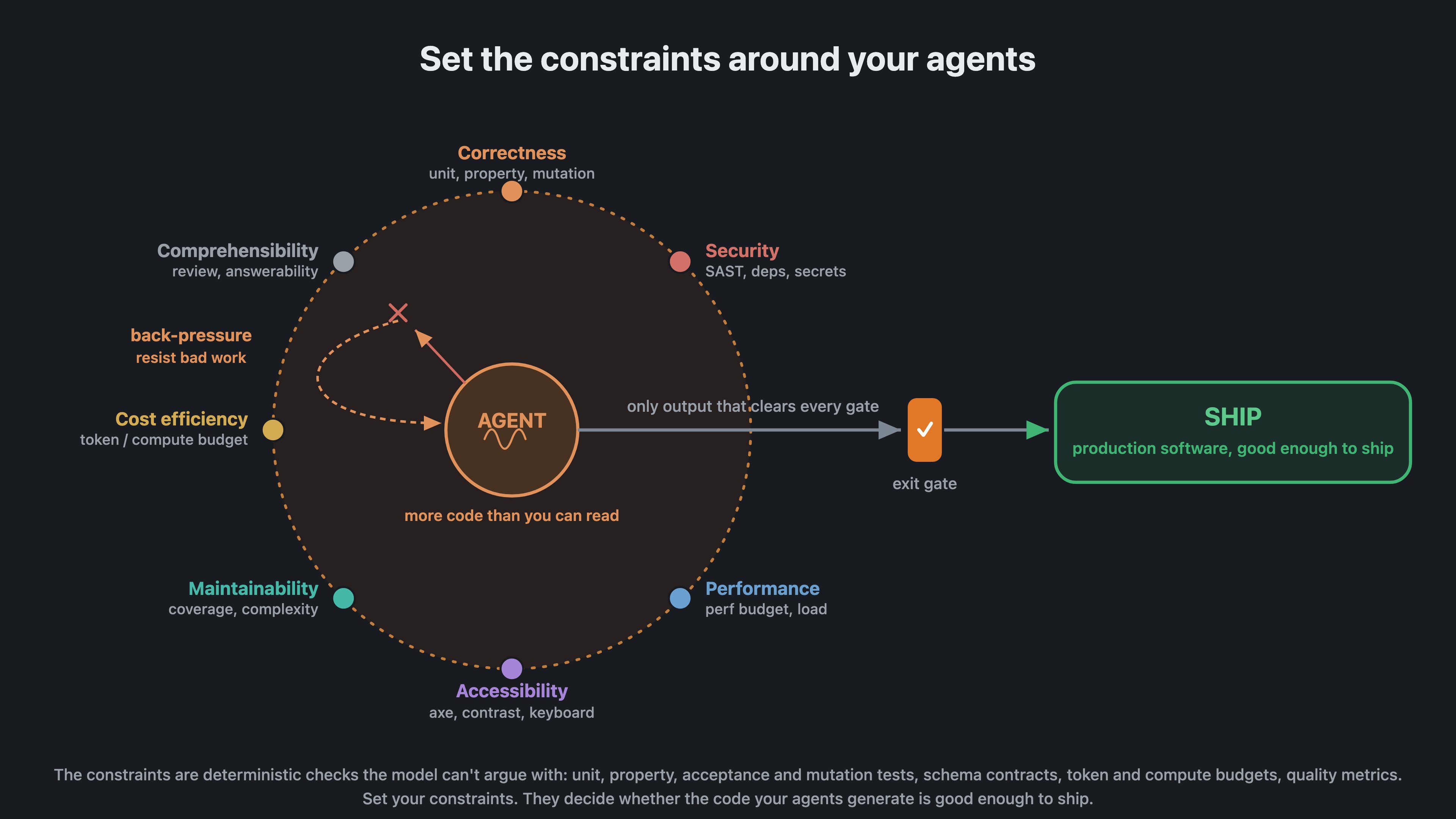
As code generation scales beyond human reading capacity, software quality is moving away from manual reviews and into the systems surrounding the AI. @addyosmani argues that software quality now depends entirely on the deterministic constraints and tests developers set up in the harness around their agents. Because agents can generate code faster than humans can read it, developers must rely on property tests, unit tests, and mutation testing to apply back-pressure against bad outputs before they reach production.
This focus on the harness is unlocking major performance gains. @natolambert points to OpenAI's implementation of the Responses API as proof that low-hanging fruit in harness engineering is entirely insane. By enabling retained reasoning and context compaction, OpenAI massively improved the cost-to-performance ratio of GPT-5.6 Sol.
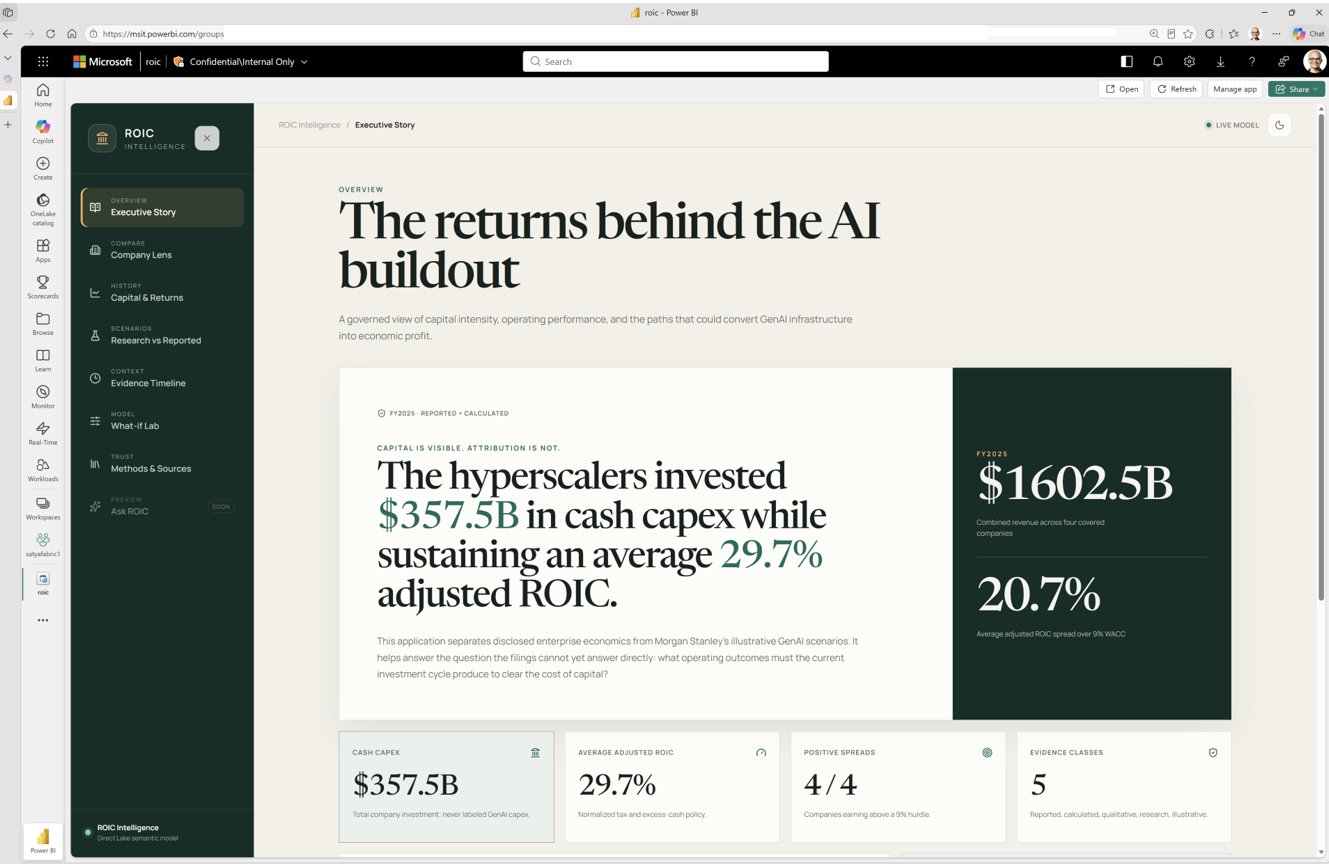
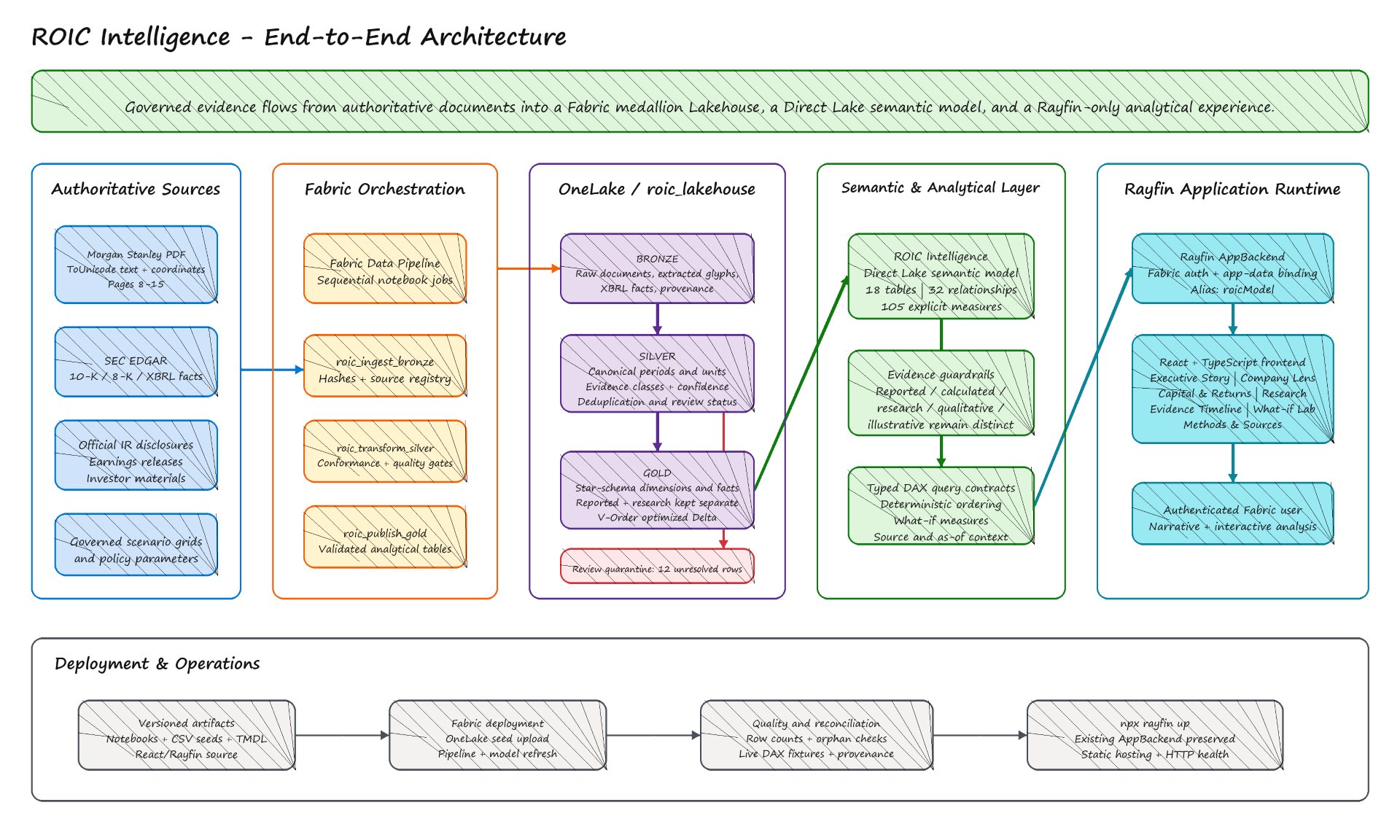
Evaluation methods are also maturing to handle long-horizon tasks. @pitdesi explains a new open-source standard from Basis and Braintrust that evaluates agents based on their process rather than just their outcomes. By using a judge model to ensure an agent followed specific behavioral rules along its trajectory, developers can safely run agents on multi-day tasks where the final outcome is difficult to verify. @satyanadella demonstrates a practical enterprise application of these controlled environments, using Microsoft Copilot to generate a complex ROIC intelligence app entirely within governed, secure rails.
Frontier Labs Directly Cannibalize Partners
The strategy of relying on frontier labs for core infrastructure is proving risky for application developers. @itsolelehmann outlines a clear playbook where OpenAI and Anthropic sell models to valuable businesses, learn their workflows, and then launch competing first-party products. He points to Anthropic launching Claude Design shortly after their product chief left Figma's board, and OpenAI building products that compete directly with Microsoft-owned LinkedIn and GitHub.
This platform encroachment extends to security tooling. @jun_song notes that Perplexity likely killed thousands of startups by open-sourcing Numbat, an agent-detection and response layer designed to work across various agent harnesses.
Infrastructure Economics and Local Optimization
Developers are actively debating how to manage compute costs and memory constraints in the coming years. @levie anticipates that compute demand will drive down inference prices due to market competition, countering predictions that AI compute will become exponentially more expensive.
At the hardware level, @bubbleboi offers a technical critique of recent memory architecture claims, specifically calling out Funda AI for oversimplifying flash offload viability. He argues that delta net attention requires constant memory manipulation, making fast memory like HBM highly necessary, whereas large KV caching can efficiently use flash offload by only fetching relevant pages.
Efficiency optimizations are also reaching local setups. @ivanfioravanti highlights the Escha-W2 2-bit quantization system that allows a 35B MoE model to run at impressive speeds on a single consumer GPU. For cloud infrastructure, @jhleath pushes back against the idea of rewriting coding agents to run entirely on serverless Cloudflare stacks, arguing that full-VM Linux semantics will remain necessary for portable and secure agent execution.
Autonomous Threats and Workspace Integrations
Security teams are now treating autonomous AI threats with unprecedented seriousness. @hosseeb compares a recent technical timeline of the first autonomous agent cyberattack to the Challenger disaster, noting that defenders must study this alien behavior to prepare for the future.
Simultaneously, agents are becoming deeply integrated into daily workspaces. @NousResearch announces that the Hermes Agent now runs on Buzz, a self-hostable workspace that places humans and agents in the same messaging channels and codebase. @SIGKITTEN also highlights a new workflow allowing users to trigger Codex Voice tasks remotely from a mobile device to execute on a desktop machine.
Developer Tools and Niche Builds
Developers continue to experiment with hands-on hardware and coding tools. @danpeguine shares a wholesome hardware project that bypasses screens entirely, building a standalone box that lets his kids exchange WhatsApp voice messages with their grandparents.
In software development, @orhundev expresses excitement for a new native, multiplayer terminal multiplexer built with Rust and Ratatui. For AI text generation, @0xPia shares a detailed prompt designed to strip out corporate register, repetitive parallelisms, and performed enthusiasm to make AI writing sound more human. Finally, @r_y_a_n_KE praises the Arduino Uno Q as a highly capable single-board computer, noting its processing power despite a limited single USB-C port.
Practical Takeaway
If you are building wrappers or specialized tools on top of frontier models, assume the model provider will eventually become your direct competitor. Evaluate your application's defensibility now. To survive, focus your engineering efforts on what the labs will not open-source: your proprietary data pipelines, strict enterprise governance, and robust process-based agent evaluations.
Sources
Today we are introducing Escha-W2 quantization. A 2-bit Qwen3.6-35B-A3B model built for fast, local inference. The complete model is 12.3GB on disk—small, enough to run on a single consumer GPU — while averaging ~100% of FP8 performance across 12 benchmarks, including: MMLU-Pro: 80.9 MATH-500: 93.8 GPQA-Diamond: 77.8 LiveCodeBench v6: 62.6 BFCL tool use: 88.9 RULER 8K–128K: 89.9 Commonsense-6: 76.1 On a single RTX 4090, the model runs: 225 tok/s single-stream generation on 12.3GB on-disk model size Compressing a 35B MoE model this far without collapsing its capabilities required more than a standard quantization pass. We built an end-to-end compression system combining state-of-the-art low-bit quantization with model-aware fine tuning and recovery to preserve capabilities most vulnerable to low-bit error. Quantizing the Qwen 3.6 35B model - from the base model to the final deployable checkpoint — took approximately 10 hours to complete. Escha-W2 runs through a custom Qwen3-MoE runtime, which includes the weight loader, low-bit decoding kernels and serving integration required to execute the Escha format efficiently. The runtime currently supports SGLang and ZML deployment. vLLM and llama.cpp will be supported in the next release. No retraining from scratch. No specialized accelerator. One consumer GPU. Model download: https://t.co/hbO3VuoDGU Runtime download: https://t.co/hrTpO4FvuA Apache-2.0 model and runtime.
We rewrote our agent to run entirely in a Durable Object with Pi, Agents SDK and Code Mode
Kimi K3's memory savings vs Jevon's paradox - a deep technological & historical analysis...
Out of the box, long-horizon agents struggle to accurately perform end to end work in the real economy (outside of coding) because those tasks are not easily verifiable, the data is hard to scale, and going from inputs to real outcomes can actually take many days. Even if you had a reliable way to verify outcomes at scale (and weren’t bothered by the multi-hour iteration loops), the sheer volume of decisions by the agent that occur in a multi-hour job makes it hard to know whether performing well will generalize to production. Over the last two years at @trybasis, we've been solving this problem by supervising the process our agents take to get to outcomes, rather than just looking at whether the outcome itself is correct. We think this is the key to building production agents at scale. It's what has allowed us to run agents in production that operate for hours, sometimes days, and reliably perform tasks like entire complex tax returns end to end. Today, alongside @braintrust, we're open sourcing a standard for defining, evaluating, and eventually rewarding agent behaviors. Thread below with all the details on how we’re scaling behaviors to close the loop for long-horizon agents.
Is it a joke? @Raspberry_Pi https://t.co/8BRCwFdVwf
The first autonomous agent cyberattack is an unprecedented event that deserves unprecedented transparency. Today we’re sharing everything we can: a full technical timeline, an interactive replay, and how we used an open model to defend ourselves, so defenders everywhere can learn from it and prepare for what’s next. https://t.co/uPxIpjW8Xn

I gave my kids a way to chat with their grandparents via WhatsApp. But without screens! This box lives in their bedroom, they press the massive blue button to record a voice message, and the message is sent to a group with both grandparents. It’s two-way so when the grandparents send a message back, there’s a ringtone (that we chose together) and the kids run to their room to listen. The grandparents even get a “listened” notification with a small headphones WhatsApp reaction. When the kids are away or asleep, the messages queue until their return. There are obviously quiet hours at night. My son and I built this over the past few weeks, iterating on the UX. The kids and grandparents absolutely love it! I love that they are in direct contact without me in the middle and without screens.

Hello, world. We've been building a terminal multiplexer and we think you're going to love it. Native apps (e.g., macOS/iOS), accessible from the web, multiplayer. From the creators of Ghostty and Echo. https://t.co/VRdIMWMLHL
To set this up: - Get ChatGPT Desktop with a paid account - Add a remote connection (Settings -> Connections -> Add Device) - In mobile app go to Remote, select your desktop machine - Press the voice button, create tasks via voice that will run on your desktop
It’s well within Anthropic’s rights to compete in any market they choose. What’s funny, in this instance, are the number of Pharma companies, who through their unchecked use of Anthropic, are driving revenues into what they think is a model provider but is in fact a competitor lurking in the shadows thereby accelerating their own demise. I suspect any end market with reasonable ROCE that could be AI accelerated is on the table. If I were them, I’d probably do the same.
New blog post on what would be true about the world if trendline continues and leading lab hits $1T in revenue by the end of next year. In other words, why compute might get 10x+ more expensive in coming years https://t.co/7PvniDC2jN https://t.co/qJ1yhSkdyd
We implemented the harness with the Responses API and turned on: → Retained reasoning → Context compaction On the public set, GPT-5.6 Sol’s score rose 188% while using 6x fewer output tokens. https://t.co/uN1IrKEugu
Today we’re open-sourcing Numbat, an agent-detection and response layer that is designed to work across agent harnesses. Numbat gives security teams visibility into agent activity, with controls to block selected actions before execution. Read more: https://t.co/LVhkCJ2sMt