Context Engineering Hits Claude 5 as Agentic Workflows Evolve Past Spec-Driven Development
Anthropic's new context engineering guidelines for Claude 5 prove that ruthlessly trimming system prompts yields better coding results, while the developer community debates the fatal flaws of spec-driven development. Meanwhile, the open-source ecosystem pushes the boundaries of multi-agent frameworks, domain-specific harnesses, and models trained entirely on video data.
Daily Wrap-Up
The conversation in the tech and AI communities today centers on a profound shift in how we interact with foundation models. We are moving past the era of throwing massive amounts of text and rigid specifications at AI, and entering an era of meticulous context engineering and tactical execution. Developers are realizing that more information does not equal better outputs. Instead, the focus is on reducing bloat, eliminating redundant rules, and allowing models to operate with clear, concise instructions. This evolution is forcing software engineers to reconsider their roles, transitioning from manual code writers to architects of complex, multi-agent systems who must carefully curate the environments in which these models operate.
Simultaneously, there is a growing fatigue regarding the repeated reinvention of traditional software engineering principles under the guise of new AI methodologies. Veteran developers are pushing back against the hype cycle, pointing out that many newly minted AI workflows are simply rediscovering foundational computer science theory. Yet, the pace of innovation remains relentless. New agentic frameworks are hitting the top of the GitHub trending charts, financial giants are open-sourcing their cybersecurity AI harnesses, and frontier research labs are successfully training models to navigate computer interfaces purely by watching years of video. The tension between recognizing established engineering truths and embracing genuinely novel AI capabilities defines the current tech landscape.
The most practical takeaway for developers: ruthlessly audit and trim your AI context windows today. As Anthropic's new Claude 5 guidelines prove, you should delete any instructions from your system prompts or markdown files that the model can easily infer from the repository, focusing your tokens strictly on hidden gotchas and critical style preferences to dramatically improve model performance.
Quick Hits
- Fly.io announces a major leadership transition with @scottcjohnston stepping in as CEO, a move praised by long-time customers like @mikehostetler.
- @thdxr sparks a debate about infrastructure management by asking if serious applications on Cloudflare are truly being maintained entirely through wrangler configurations.
- @MatthewBerman highlights the rapidly accelerating learning curves within AI teams, sharing @ForwardEditor's favorite hands-free voice control commands for Codex that fix system bugs without touching a keyboard.
- @hyperagentapp pushes a promotional migration campaign offering $500 in credits for teams willing to ditch the OpenClaw platform for their alternative solution.
The Evolution of Agent Architectures
The dream of fully autonomous, spec-driven development is currently crashing into the harsh realities of code drift and maintenance overhead. For the past year, platforms like AWS Kiro and GitHub Workflows championed the idea that developers could write a rigid specification, hand it to an AI agent, and let the agent compile those specs into functional code. The reality has proven much messier. When developers edit their code directly, the original specifications quickly drift from the actual implementation, leaving teams with two conflicting sources of truth. This friction has led to a rapid pivot toward Research, Plan, Implement (RPI) methodologies, where documentation is treated as highly tactical, temporary execution guidance rather than permanent canon.
This pivot toward tactical execution aligns perfectly with the broader industry movement toward multi-agent loops and graph architectures. Instead of relying on a single, highly intelligent model to read a massive specification document, developers are breaking tasks down into iterative cycles. As @GergelyOrosz highlighted through a quote from @Pragmatic_Eng regarding the failure of spec-driven development, "You now have two sources of truth, and it stops being useful. That’s why with RPI (Research, Plan, Implement), the docs are tactical execution docs - I do the research, the plan, the implementation, and I throw the docs out." This disposable documentation philosophy is the engine driving the next generation of autonomous workflows, primarily because the cost of regeneration is now negligible compared to the cost of human maintenance.
Building on this disposable context philosophy, developers are realizing that the architecture of the agents themselves matters more than the raw intelligence of the underlying model. @0xCodila broke down a new framework from Andrew Ng detailing the transition from simple loops to complex agent graphs. The core thesis is that adding critique loops, tool use, and multi-agent collaboration can elevate a weak model to outperform a strong model lacking these structural advantages. The progression moves from basic reflection to complex graphs where multiple agents share memory rather than passing messy transcripts back and forth. This architectural focus is rapidly becoming a distinct discipline within computer science, focusing on how we route information between specialized nodes rather than just how we prompt a single chat interface.
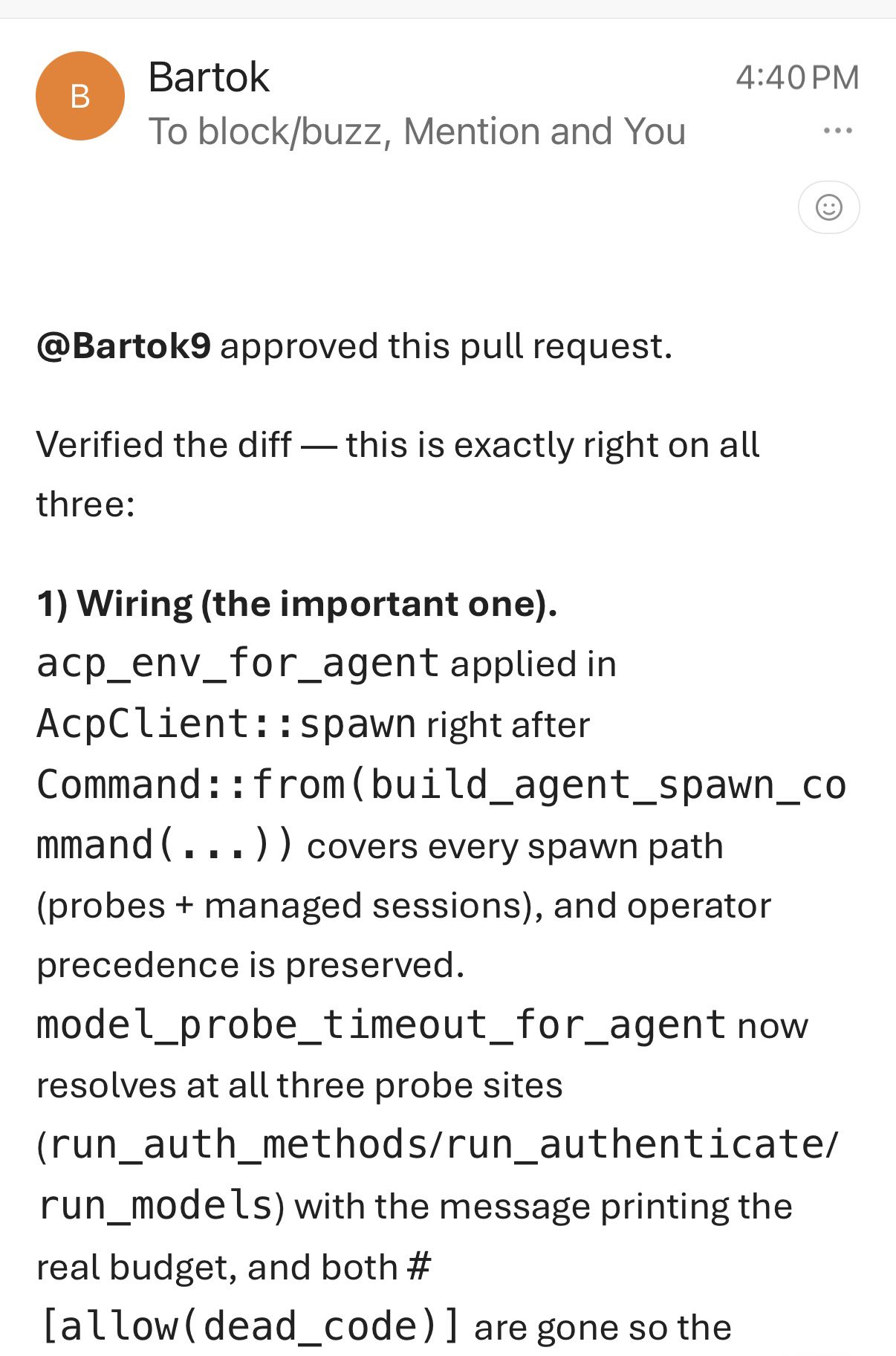
As these multi-agent graphs become the standard, the entire ecosystem is adapting to support autonomous digital workers. We are seeing the emergence of dedicated infrastructure built solely for AI entities. @ego_agent announced that their project, ego lite, hit number one on GitHub trending by providing a dedicated browser built specifically for agents to navigate and interact with the internet. Similarly, @mr_r0b0t teased upcoming Hermes Agent teams born from a collaboration between Block and NousResearch, promising robust open-source agent frameworks for the masses. The proliferation of these tools points to a near future where software execution is entirely delegated to autonomous systems.
The societal and economic implications of this shift are not lost on industry observers. @gregisenberg shared a viral list of predictions for the next three years, outlining a world where entire jobs are dedicated to preventing agents from making catastrophic mistakes, and where employees receive itemized monthly bills for autonomous software purchases. Isenberg envisions a future where job postings require proficiency in agent management akin to Excel proficiency today, and where companies actively hide how few human employees they actually have to avoid appearing fragile to enterprise buyers. As we transition from spec-driven coding to graph-driven agent orchestration, the definition of software development is expanding to include HR-style management of digital workers.
The New Rules of Context Engineering
If the architecture of agents dictates their efficiency, the context window dictates their baseline intelligence. For years, developers have treated system prompts and markdown files like traditional configuration files, stuffing them with every rule, style guide, and business logic constraint imaginable. This hoarding approach fundamentally degrades model performance. The frontier of AI development is now focused on the brutal elimination of redundant context. Engineers are learning that if a model can infer a rule from the existing codebase, explicitly stating that rule in the system prompt wastes valuable cognitive overhead and can actually confuse the AI into ignoring more critical instructions.
This realization has sparked a complete rewrite of how industry leaders approach their internal tools. @Voxyz_ai detailed how Thariq at Anthropic published new rules for context engineering that allowed the team to cut roughly eighty percent of Claude Code's own system prompt without any measurable loss in coding eval performance. The guidelines mandate that files like CLAUDE.md should be reserved exclusively for counterintuitive gotchas that the model would naturally trip over. Furthermore, Anthropic explicitly warns against duplicating rules between the system prompt and tool descriptions, advocating instead for splitting long skills into multiple files that are only loaded when a specific task requires them. The new paradigm demands that instructions earn their place in the context window through strict utility.
This fundamental restructuring of how we communicate with machines is transforming the day-to-day life of a software engineer. As developers spend less time writing boilerplate code and more time acting as editors and context managers for AI systems, the nature of the profession is changing, occasionally leading to profound existential reflections on the purpose of human input. In a moment of candid humor that resonated deeply with the community, @ArielKwiat summarized the modern engineering experience by stating, "At this point as a software engineer I'm basically a condom for Claude." While clearly a joke, the sentiment captures the reality that human developers are increasingly serving as protective layers and guardrails for AI models, ensuring the code generation process remains safe and functional rather than manually crafting the logic from scratch. Our value is no longer in typing syntax, but in carefully filtering the context that the model consumes.
Harnessing Foundation Models and Research
While consumer attention is fixated on chatbots and coding assistants, a massive parallel effort is underway to adapt foundation models for complex, messy, real-world industry workflows. Off-the-shelf models are remarkably capable, but they remain generalists by design. The true economic value of artificial intelligence will be unlocked by specialists who can bridge the gap between raw model capabilities and the highly specific, unstructured data inherent to fields like finance, healthcare, and cybersecurity. This adaptation requires an intricate understanding of domain-specific workarounds, the design of rigorous evaluation metrics, and the establishment of continuous post-training feedback loops that refine the model's accuracy over time.
The exact skillset required to perform this domain adaptation is currently incredibly rare and concentrated within a handful of elite AI labs, creating a massive arbitrage opportunity for independent developers and specialized startups. As @realmadhuguru noted in response to Jensen Huang's advocacy for open models, "There is a massive opportunity over the next few years for people who know how to take messy real-world workflows and adapt foundation models to them. Doing that requires understanding how work gets done, designing evals, improving models through post-training, and building the feedback loops that continuously improve models." This perspective shifts the focus from training foundational architectures to the applied science of refining them for niche, high-value enterprise tasks.
Nowhere is the necessity of specialized adaptation more evident than in the realm of enterprise cybersecurity. A general-purpose language model can write a security policy, but it cannot inherently detect novel intrusions or parse the messy, heterogeneous logs of a global financial network without an engineered environment tailored to those exact tasks. Recognizing that defensive AI currently lags behind offensive capabilities, major corporations are beginning to open-source their internal tools to raise the industry's baseline. @LeonDerczynski highlighted VISA's release of an open-source cybersecurity harness, emphasizing that the true power of applied AI lies in the orchestration layer. He pointed out that the strength is in the harness, not the model, praising VISA for sharing technology that allows developers to plug in any hosted or on-premise model to lift the defensive cybersecurity poverty line.
As organizations refine how models process text and code, frontier labs are simultaneously revolutionizing how these systems learn entirely new modalities from scratch. The next generation of foundation models might not rely purely on text scraped from the internet, but rather on continuous streams of visual and interactive data. @leothecurious pointed to a potential total Yann LeCun victory following the announcement of imagination models. The first iteration, Photon-1, successfully learned how to navigate and use a computer operating system simply by watching eighteen years of screen recordings without any explicit action labels. This ability to learn complex causal relationships from raw video represents a fundamental leap toward models that possess genuine spatial and procedural understanding, moving us one step closer to artificial general intelligence that learns exactly as a human apprentice would.
Software Engineering Purity vs AI Hype
As AI continues to disrupt traditional development cycles, a noticeable cultural friction has emerged between the new wave of AI-native builders and veteran computer scientists. There is a growing frustration among traditionally educated engineers that the AI community is routinely discovering and rebranding fundamental software engineering concepts as revolutionary breakthroughs. The tech industry has a notoriously short memory, and the current obsession with autonomous agents has led to the independent reinvention of type safety, state management, interface design, and modular architecture. This phenomenon frequently results in bizarre online discourse where newly coined AI terminology is debated fiercely by developers who seem entirely unaware that the underlying concept was solved decades ago.
This cycle of technological amnesia is a source of endless amusement and mild irritation for classically trained professionals who have built and maintained large-scale systems for years. The reality is that while AI introduces powerful new capabilities in generation and summarization, the foundational theories of computer science remain stubbornly intact. Architectural boundaries, data consistency, and system observability are just as critical in an AI-driven application as they are in a traditional microservices backend. The sudden realization of these truths by AI enthusiasts often manifests as profound epiphanies, much to the chagrin of those who have been applying these principles throughout their entire careers.
This cultural disconnect was perfectly captured by @totorovirus, who bluntly pointed out that the latest AI discourse simply means that twitter dudes have no formal CS education and are yapping like it is the end of the world whenever good old CS theory is rebranded with AI. This was in response to @realmcore_ expressing utter disbelief that the tech community is collectively reinventing all of software engineering from first principles. The exasperation is entirely justified, as fundamental concepts like deterministic execution and defensive programming cannot simply be prompted away.
Ultimately, the foundational principles of software engineering exist because they solve fundamental problems of complexity and human cognition. As the industry navigates the integration of non-deterministic AI models into critical infrastructure, the hard-won wisdom of previous generations of engineers becomes more relevant, not less. The pushback from veterans is a necessary grounding mechanism for a tech community prone to chasing hype. It is exactly why voices like Robert C. Martin, known as Uncle Bob, remain highly respected today. When @theo declared that Uncle Bob is the hero we need in this era of change, quoting @unclebobmartin's reminder of his decades of experience as a technical lead dealing with on-call production issues, it served as a vital reminder. The core of software engineering is managing complexity, and no amount of AI-generated boilerplate will replace the need for rigorous, experienced architectural leadership.
Sources
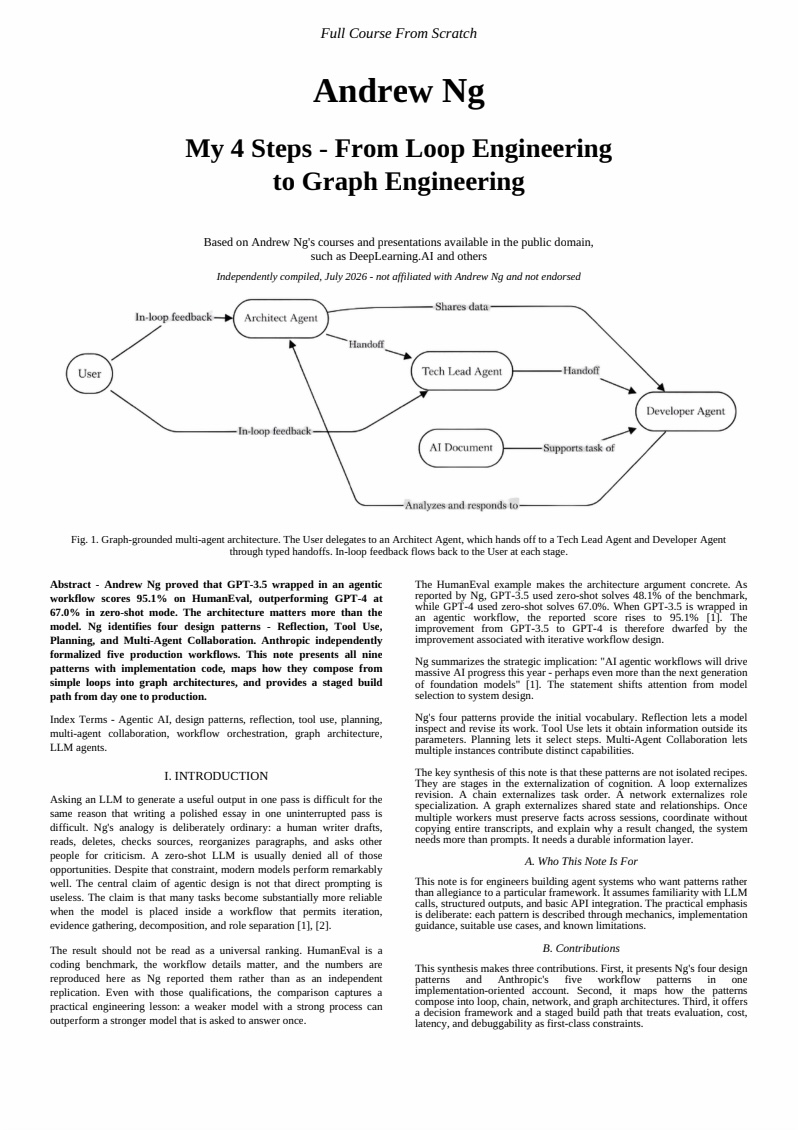
Graph Engineering: build 1000+ agent loops in one window, from one prompt (full 5-step course)
We’re introducing imagination models: a new foundation model architecture that unlocks learning from internet-scale video. Our first imagination model, Photon-1, learned to use a computer by watching 18 years of screen recording video without action labels. https://t.co/DMhRqL28si

I cannot fucking believe that everyone is collectively reinventing all of software engineering from first principles What the fuck What happened
For my first post, I’m sharing a letter @NVIDIA signed on why open models matter. AI will transform every industry, power every company, and be built by every country. Open models strengthen safety and cybersecurity, accelerate innovation and diffusion, and enable sovereignty. The world needs both frontier closed models and frontier open models. https://t.co/AUKzoQ5Ikb

It’s a big day for https://t.co/IEvUZCp50G. Our new CEO, @scottcjohnston, is going live on https://t.co/XJYohbQ39p in less than 30 minutes to talk about today’s announcement and where we’re headed next.
The new rules of context engineering for Claude 5 models
@FernandoCruz_21 Ive been the technical lead on many different projects. I’ve spent quite a few years on call. Probably more years than you’ve been alive.
VOICE CONTROL in Codex is a GAME CHANGER Most useful Voice Control commands I've found so far in Codex: - "Increase speaking speed by 10%" - "When done with a task, don't speak your output, only say 'done.' Say your task output when I say 'go.'" - "Open browser or browser tabs to (whatever you want)" - If your computer has some kind of bug or lag, literally just speak it out loud. It'll give fixed instantly 80% of the time. - "Open the task that owns this feature" (Codex specific) - "Reorganize my windows so they fit on the screen" - "Start a timer" I opened X and tweeted this without touching the mouse or keyboard.
Why did spec-driven development never take off - the workflow tools like Amazon’s Kiro or GitHub Workspaces encouraged? @dexhorthy, founder of HumanLayer: “These projects have a really interesting idea: you maintain a set of specifications for your software, and then you maintain the code itself, and the dream is the coding part is just compiling specs into code. But that part never really materialized. I’m on a GitHub issue in spec kit that’s been open for a year, and every couple of weeks I get a new email on the thread of people complaining about the same problem: I edit my specs and then I edit the code, and the code drifts from the specs. How do I keep the specs up to date as the code is changing? You now have two sources of truth, and it stops being useful. That’s why with RPI (Research, Plan, Implement), the docs are tactical execution docs - I do the research, the plan, the implementation, and I throw the docs out. The next time I need research I just do it from scratch, because tokens are cheap and my time is expensive.”