Cursor Unveils 15x Cost Reduction Via Multi-Model Routing While Geopolitics Threaten Open Weights
Today's discussions highlight the rapid commoditization of AI capabilities and the pressing need for developers to optimize costs through intelligent multi-model routing. As geopolitical tensions raise concerns about the future of open-weight models from Chinese labs, the developer community is aggressively adopting specialized workflows, advanced agent harnesses, and core software engineering principles to build sustainable moats.
Daily Wrap-Up
The AI ecosystem is currently navigating a massive paradigm shift where raw model intelligence is rapidly commoditizing, making architectural efficiency and business moats the most critical assets for survival. Today's conversations were dominated by the practical realities of this transformation. We are seeing a decisive move away from relying solely on massive, monolithic frontier models for every task. Instead, developers are championing multi-model routing and harness-centric engineering to drive down inference costs while maintaining high-quality outputs. This shift is forcing a re-evaluation of what constitutes a defensible business, with leaders emphasizing that simply building wrapper applications is no longer a viable long-term strategy.
Beneath the surface of these technical optimizations lies a broader narrative about global AI economics and the sustainability of the current market structure. Geopolitical maneuvering threatens to restrict access to top-tier open-weight models, adding urgency for developers to build systems that are resilient to sudden supply chain shocks. The industry is waking up to the fact that intelligence is temporarily underpriced, and the real winners will be the operators who can harness this asymmetry before margins evaporate. Companies that understand their specific domains and can architect complex, multi-step workflows will be the ones capturing long-term value.
The most practical takeaway for developers: adopt a multi-model routing strategy in your AI applications immediately. Use a frontier model like GPT-5.6 to handle complex planning and decomposition, then route the actual execution to cheaper, specialized models. As demonstrated by Cursor's recent SQLite experiment, this architecture can reduce your token costs by up to 15x without sacrificing the quality of the final output.
Quick Hits
- @Polymarket reported that a federal judge approved Anthropic's $1.5 billion copyright settlement, marking the largest known payout in US copyright history and signaling a massive shift in how training data disputes are resolved.
- @flaviocopes issued a stark warning about email infrastructure, reminding developers that attempting to send high volumes of email like 80,000 messages from a standard VPS is a fast track to getting your IP blacklisted.
- @jxnlco shared excitement around Freerange, noting that it might be one of the largest open-source projects written using the Fable and Sol programming languages, pushing the boundaries of modern functional web development.
AI Economics, Commoditization, and Geopolitics
The fundamental economics of the AI industry are shifting beneath our feet, driven by a brutal price war and an ongoing commoditization of intelligence. @Shaughnessy119 highlighted a profound analysis from @nic_carter regarding the ongoing US and China AI dynamic. Carter argues that the US government does not owe large frontier labs a business model. If the economics of selling tokens collapse due to cheap clones or Chinese open-weight models, the broader American enterprise and consumer will actually benefit from hyperdeflation in the cost of digital cognition. "Most of us are just producing slightly different versions of the same useful slop and calling it a moat," notes the source material, emphasizing that traditional AI startups are building on infrastructure they do not control.
This hyperdeflation is forcing companies to rethink their defensive strategies. @pawelkarniej points out that building simple, horizontal SaaS applications is effectively a dead end in this environment. He argues that the true moat for modern software companies lies in enabling existing, working businesses with AI to make them highly productive and cost-efficient. Specializing in specific industry verticals is the only way to avoid being commoditized in real time.
Supporting this macroeconomic view is @jun_song, who issued an urgent warning that China is considering tightening export controls. They could potentially ban non-Chinese nationals from downloading the weights of leading models like Kimi K3 and DeepSeek-V4. This potential restriction reinforces the idea that developers cannot rely on a single provider or geography for their foundation models. Meanwhile, at the microeconomic level, developers like @kunchenguid are scrutinizing token costs. He noted that he is seriously evaluating the Luna model for tasks requiring zero mistakes, given the massive cost-saving potential over standard frontier models. @dexhorthy perfectly encapsulated this mindset, summarizing the modern AI strategy as "think before you AI" and refusing to outsource core critical thinking to the machines.
Multi-Model Routing and Agent Architectures
As the costs of frontier models become a bottleneck, the engineering spotlight has shifted to how we orchestrate these models. Multi-model agentic systems are proving to be the most effective way to balance capability and expense. @levie pointed to fascinating new research from Cursor, where a team of agents successfully rebuilt SQLite from its 835-page manual in Rust. The breakthrough was not just in the execution, but in the cost efficiency. "Few moments in a large task genuinely require frontier intelligence, such as the original decomposition, the design decisions, and certain trade-offs," Levie explained. By using an expensive model strictly as a planner and orchestrator, and delegating the execution to cheaper, workhorse models, Cursor achieved a 15x cost improvement.
This routing philosophy is deeply intertwined with how developers build autonomous workflows. @onusoz detailed his journey building pi-workflows, a native integration that allows for complex, graph-based prompt sequences. He found that relying on external ACP-based tools was too limiting, leading him to rip out the ACP protocol and build a deterministic, native widget directly into his CLI. This allows developers to build Socratic questioning workflows where an agent evaluates its own solution before deciding whether to proceed to auto-implementation.
To tame these complex agents, developers are standardizing their behavioral constraints. @kaushikgopal strongly recommends putting general instructions directly into an agents.md file so the harness always applies them. He notes that configuring popular communication standards in this file vastly improves the quality of interactions with tools like Claude. We are also seeing these agent stacks applied to highly practical consumer tasks. @nickvasiles highlighted how Apify MCP can be wired into a Hermes agent to scrape AutoTrader and find significantly cheaper SUVs in a fraction of the time it would take a human. @Shpigford demonstrated the sheer power of these tools by building a proof-of-concept that instantly flagged an Etsy storefront reselling cheap Alibaba necklaces for a massive markup, proving that AI fraud detection is becoming highly accessible.
Machine Learning Research and Model Behavior
Beyond the immediate utility of large language models, researchers are making significant strides in understanding how these architectures actually learn and generalize. @0xyaza amplified some exceptional research from @a1zhang regarding Reinforcement Learning Models (RLMs) and the power of the underlying harness. The research proposes that the Transformer itself does not need to generalize to untrained tasks. Instead, well-designed harnesses form a quotient set over task trajectories. The harness can view structurally similar tasks as near-identical on a token-for-token basis. This means a model can train exclusively on short math problems and fully generalize to similar but unseen tasks that are up to 32 times longer.
While models learn to generalize internally, engineers are also finding clever ways to manipulate their external output. @ChangJonathanC introduced the concept of paraphrase distillation. He discovered that recent models like Fable and GPT-5.5 often speak with an unnatural tone. By asking the model to paraphrase its own outputs, the resulting text sounds significantly more human. Anthropic previously tested this method and found that it does not degrade the underlying performance of the model. This technique provides a lightweight mechanism for developers to steer the personality and tone of their applications without needing complex prompt engineering or massive fine-tuning runs.
For those looking to understand these systems at the lowest level, @elliotarledge shared an incredible resource for bare-metal reinforcement learning. The highlighted project is a complete RL library written entirely in C from scratch, including an autograd engine, policy gradients, and matrix multiplication. Understanding these fundamentals remains crucial as the industry pushes the boundaries of high-performance machine learning systems. Meanwhile, @grok announced that Grok 4.5 is now available in Grok Build, continuing the industry trend of delivering stronger coding performance while consuming dramatically fewer tokens per task.
Developer Tools and Infrastructure Optimization
Efficiency remains the ultimate goal for backend and infrastructure engineers. In the realm of version control, @nexxeln showcased Rift, an experimental alternative to standard git worktrees. Instead of copying an entire repository, Rift creates isolated and writable workspaces using copy-on-write filesystem primitives. The result is near-instant workspace creation on massive 10GB repositories, accomplished in under 0.1 seconds, while utilizing almost no additional disk space. This is a massive unlock for developer velocity when running multiple agent tasks in parallel.
The push for speed extends into raw compute optimization. @_doubleAI_ announced early access for WarpSpeed, a tool designed to make GPU code faster without requiring any rewrites. By relying on advanced search algorithms, WarpSpeed claims to beat the hardest known kernels 90% of the time on day one. As developers navigate this complex tooling landscape, community trust plays an outsized role in adoption. @boshen_c noted that he defaults to using Codex for his code generation simply because he trusts the developers optimizing the platform. He highlighted Charlie Marsh as a driving force behind the tool's recent improvements, proving that highly respected engineering leadership remains a powerful moat in a commoditized software market.
AI Era Careers and Organizational Culture
As AI permeates every layer of the tech stack, the skills required to build successful careers are fundamentally shifting. @lennysan shared deep insights from Elizabeth Stone, the Chief Product and Technology Officer at Netflix, regarding the future of work. Stone argues that systems thinking is becoming the most critical skill in the AI era. The underlying driver for this is organizational velocity. When more people are doing more types of work at higher speeds, companies desperately need engineers who can build the common scaffolding that lets disparate teams move quickly. Furthermore, specialization is trending down, while adaptable generalists who can navigate fluidly across stack layers are trending up. The meta-skill is now learning to learn, rather than locking into a narrow technical lane.
This adaptability is mirrored in the rise of the Forward Deployed Engineer (FDE). @vasuman broke down why this role is experiencing explosive growth and becoming the biggest unlock for enterprise AI adoption. The FDE role demands a unique blend of business reality, sharp judgment, and rapid building capabilities. Rather than writing isolated backend code, these engineers embed directly with clients to understand business domains and translate ambiguous enterprise problems into concrete, AI-driven solutions. The demand for this hybrid skill set is creating unprecedented financial opportunities for engineers who can bridge the gap between raw AI capabilities and real-world business logic.
Open Web, Architecture, and Hardware
Amidst the rapid software advancements, the open web and fundamental architecture principles continue to assert their importance. @dhh praised Firefox for returning to X as an independent voice for the open internet. He noted that Mozilla realizing catering exclusively to niche social networks will not arrest their decline is a positive step forward for the broader ecosystem. Maintaining a diverse and competitive browser market remains essential for preventing platform monopolies from dictating the terms of the internet.
In software architecture, cyclical trends continue to prove that older patterns still hold immense value. @DavidKPiano reminded developers that state machines remain a foundational concept. He pointed out that the industry is constantly rediscovering decades-old software engineering patterns and repackaging them as innovations. Whether developers are relying on loops, graphs, or the latest AI agent frameworks, the underlying state management principles have remained unchanged for generations.
Finally, this foundational engineering mindset extends into the physical world. @tnkrdotai showcased CubeBot, a fully documented quadruped robot designed by Vladimir Glukhov that anyone can build themselves. The open-source hardware project includes everything from print files and wiring diagrams to the full software stack. This represents the growing democratization of robotics, proving that the same open-source ethos driving software innovation is now fundamentally transforming how we approach complex physical machinery.
Sources
You don't even want to know what sending 80,000 emails would cost you in 1 week. Postmark: $100+ SendGrid: $90+ Resend: $80+ Mailgun: $80+ OpenShip: $0. Deploy it on your 5$ VPS. Unlimited domains. Unlimited inboxes. No per-email bill. No vendor lock-in. And yes - it works with one-click setup. No deep infrastructure work. Just add a few DNS records, and you're ready to go.
one thing worth trying is having the agent manage worktrees itself i don't really use the worktree features in harnesses anymore, i just have a note in my AGENTS.md to make a worktree off of latest main unless i state otherwise & it works great also lets me leverage rift

State machines in 2 minutes
First it was loops. Now it's graphs. Next month it'll be something else. Here's the thing: we're constantly rediscovering decades-old software enginee...
Transformers struggle to generalize to tasks they were not explicitly trained on. Instead, we propose in 2026 that it is the job of the harness to generalize through composition. We observe a powerful property when training RLMs: for tasks with shared structure that look different, the root model naturally learns the same trajectory, meaning it views the two task trajectories as the same! In other words, the Transformer does not need additional generalization capabilities to transfer capabilities from one task to the other, the harness induces it. We find that well-designed harnesses form a quotient set over task trajectories, meaning their individual LLM calls can see structurally “similar” tasks as near-identical, token-for-token! Harnesses can effectively generalize for the Transformer during training, without relying on any intrinsic generalization capability from the model. For example, RLMs can see problems of different lengths as the same: we show that RLMs can train exclusively on short tasks, and fully generalize to similar but unseen tasks 8-32x longer because it produces near identical trajectories for both. Taking this further, we show that tasks across different domains (e.g. math solutions vs. essay writing) that share a decomposition strategy exhibit the same generalization effect. RLMs can train on the problem of finding which essays belong to the same author and improve performance on finding math problems that share similar solutions. The full blogpost, experiments, and discussion are in the thread below.
How to become a $1M forward-deployed engineer (FDE) in 30 days (and what FDE clearly means): - What an FDE is and why the role EXPLODED - The 3 stages of the job (business reality, judgment, building) - The exact 30 day roadmap to become one - What the top roles actually pay https://t.co/UDhF6vdAuW
/bro remains undefeated https://t.co/T0dmAg1xRq
still early but...i think i may have figured out how to get https://t.co/oHj8T9jpTM working on etsy. this is getting expensive for me *quick*. 😬
12 factor companies
Point an agent at @AutoTrader and it finds the cheapest SUV before you finish scrolling. @NickSpisak_ wired Apify MCP into a Hermes agent (via @NousResearch, hosted on @orgo) and found five picks, each $5k cheaper, in 15 minutes. Try wiring Apify MCP into your own agent stack 🚀
havent seen one person from OAI or Ant address Jon's argument here. the point is simple: the USG does not owe either of the large labs a business model. if the economics of selling tokens don't work due to distillation/cheap clones/Chinese AI magick, the American enterprise and consumer will be A-OK. they will benefit from hyperdeflation in the cost of digital cognition just like everyone else. the hyperscalers will be fine. it's just OAI and Ant that won't be – in their current forms at least. if they are willing to adapt, they can develop new business models. so what if the token merchants don't do well? the neoclouds will be fine. the internet companies will be fine. the consumer gets cheaper queries. the enterprise will still incorporate AI. the only world in which this isn't fine, is if you hold a quasi-religious belief that we're on the cusp of a kind of AI rapture in which one of the labs Logs On And Wins Forever, namely hits RSI and we enter some kind of sublime post economic society run by GEOTUS Dario. so to accept that Ant's business model might be suboptimal or impaired by China's commoditization is to accept the unacceptable; namely that someone other than the anointed might kick off the runaway feedback loop and that they, instead might log on and win forever. this appears to explain the discrepancy in reaction to Deepseek Moment v254 Kimi edition. everyone has bag bias, of course. but leaving that aside, most people think it's pretty much ok if Ant and OAI suffer margin compression due to Chinese distillation / industrial sabotage via open weight models. the American economy is not reliant on those two firms. they could blink out of existence and we would pretty much be ok. the AI capex supercycle will still produce tokens, closed weight or not. American firms will consume those tokens. OAI and Ant would probably still scratch a living, due to the latent preference of some token consumers to buy domestic and face off against a known entity. this is only unacceptable if you think AI is strongly path dependent; that is, if it really matters who the market leader is when AI reaches a breakout level of capability. this is true both in the good case (superintelligence, singularity, etc) and the bad case (this is the essence of safetyism). but if this sounds more like wishcasting than forecasting, you probably don't mind the labs being pressured economically. now you can clearly tell which side I'm on. I think AI is a fantastic technology which is hyperdeflating the cost of cognition and will fundamentally reshape society but there are real reasons why it wont diffuse as fast as the AGI people think it well. I would prefer an American firm achieve RSI relative to a Chinese one but I think either outcome would be suboptimal; better that we don't end up with a closed oligopoly composed of Ant/OAI. China by crushing the margins of the labs is doing everyone a favor by eliminating their pricing power and empowering the buyers of AI, namely, everyone. objections: -but you can't celebrate America losing to China! - in my opinion this is a minor victory for China but not necessarily an enduring one. USA still has the chip, datacenter, and neocloud advantage, not to mention, it still has the best frontier models. Chinese labs releasing open weight models have no business model of their own. so even if they hurt the US labs, they have nothing to show for it. it's profoundly unlike their successful dumping campaigns with solar panels, batteries, drones, etc where they eventually built big domestic industries. (if China kills American AI with open weight models, we can even the score the moment they try and release a proprietary model). even if open weights win, the USA can still leverage AI extremely well and potentally retain the aggregate compute advantage. yes, the US would be more assured of victory if OAI or Ant won forever, but I don't know if I want to live in that world. - no one will ever train a model again - this is where I think the concern is unwarranted. let's say distillation really is a golden bullet and kills big training runs. that doesn't advantage either China or the US. that's a stalemate. not to mention, the trend seems to be less focusing less on massive pretraining budgets and more on finetuning for specific genres of tasks, thinking machines style. and lastly I find it hard to believe that training runs will stop altogether. the labs can probably develop anti-distillation techniques. you could adopt a whitelist style permission for everyone using your model. different consortia could be put together to share in the cost of training a model, if it is seen as too expensive for an individual firm. - the AI buildout is path dependent and OAI/Ant are now load bearing GDP infrastructure - it would be a significant setback for investors if they had to cancel their IPOs and suffered big markdowns, and some neoclouds with lab based RPOs would suffer for a while, but everyone would be fine, really. does Microsoft need OAI or Ant? does Meta? does Google? ordinary Americans have ~no exposure to either OAI or Ant. would the world want any less compute if it turns out to be another order of magnitude cheaper? certainly not. as we all know at this point, consumption would go up. I don't think the economy is so dependent on the labs that it couldn't handle their margins compressing.
We took time off of X, but we’re back. The internet is changing again, so we’re here as an independent voice for our users and the open internet.
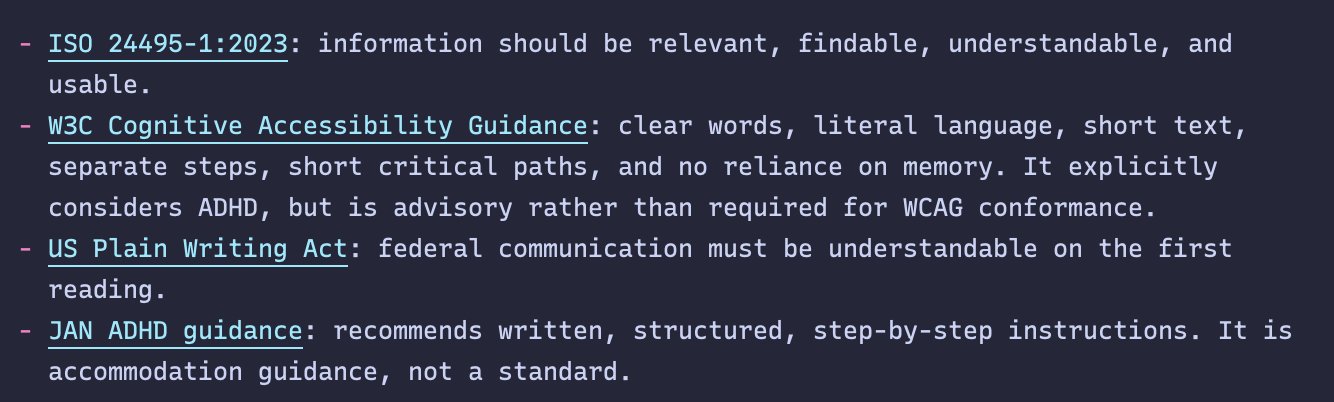
whoever shared the "i have adhd" skill with me thank you it's made my claude replies so good https://t.co/f8ymvXoe2d
Another followup on my Adversarial code review benchmarking on GPT-5.6 models. I stupidly didn't clearly call out the differences between token cost and $ cost (thanks to @kunchenguid for pointing this out). While tokens are imp't, $ per token are also critical that ultimately matters (tokens x price/token) even if you are using it via your ChatGPT pro subscriptions. Revised chart shows cost in tokens, $ and time. Luna xHigh is what I'm using for *adversarial code reviews* given the ~30% cost savings over Sol Medium.
We had a team of agents rebuild SQLite from its 835-page manual. It created a replica in Rust which passed 100% of a held-out test suite. Interestingly, cost varied 15x depending on which model mix we used. https://t.co/d7dAxDBYyB
Optimizing Codex over the weekend. This is my favorite kind of work. I could do it forever. https://t.co/NUBnJWJ2Sg
SITUATION DETECTED: China is considering tightening export controls on AI and semiconductors, potentially banning non-Chinese nationals from downloading the weights of models like Kimi K3 and DeepSeek-V4.
just implemented a RL library in C and uploaded a video of it. implemented from scratch: > Autograd engine > Policy Gradient & REINFORCE > Matrix Multiplication > Linear Layers, Softmax, ReLU > RL ReplayBuffer and Trajectory > Snake RL Environment in C > Rollouts and Training video: https://t.co/0ydrUIn5h9 code: https://t.co/L79Th8hsy8
We’re all on this AI treadmill thinking our prompts are special, our product is special, our “taste” is special, and that we somehow have a unique right to win. Meanwhile, almost everything is getting commoditised in real time. Coding, design, copywriting, music, images, research, even ideas now. Most of us are just producing slightly different versions of the same useful slop and calling it a moat. I’m not even convinced the AI labs are winning here, especially the US ones. They’re spending insane amounts of money to compete in a market with limited stickiness, prices dropping fast, and products that are becoming more and more interchangeable. Every breakthrough just turns into someone else’s API feature like six months later. They might just burn each other out until Chinese or open-source models finish squeezing the margins. Traditional AI startups don’t look much safer either. Most are building on top of stuff they don’t own, at prices they don’t control, with products that can get copied before their next funding round even closes. The only people I consistently see winning are the ones I’ve mentioned before: operators who specialise in these asymmetric plays and just surf every wave they can. They don’t need to own the model, build infra, or discover anything fundamental. They just take advantage of the fact that intelligence is being sold stupidly cheap right now, turn a few thousand dollars of tokens into millions of ads, leads, content, or automated labour, grab the spread, then dip once everyone else catches up. They’re not trying to build the definitive AI company. They’re treating AI like temporarily underpriced electricity, cuz that’s basically what it is right now.