Open Source AI Proves Critical for Security as Developers Refine AI Coding Workflows
Today's developments highlight the growing pains and strategic shifts in the AI landscape. While developers are rapidly adopting new AI coding workflows and inference optimization techniques, severe hardware bugs and cloud capacity limits are pushing the industry toward local, open source alternatives. Meanwhile, structural changes in software architecture and organizational dynamics are redefining how teams build and compete.
Daily Wrap-Up
The AI ecosystem is experiencing a stark reality check as it matures past the initial hype cycle. Today's conversations were dominated by the friction between aggressive AI deployment and the physical, infrastructural limits of our current technology. We are seeing a significant pivot toward developer ergonomics, with engineers sharing sophisticated workflows that treat AI less like a magic wand and more like a deterministic system that requires strict guardrails, state machines, and careful planning. This evolution is crucial because it signals a transition from experimentation to production-grade engineering.
Simultaneously, the geopolitical and security implications of open source AI took center stage. The strategic value of open weights is no longer just about affordability or democratization. It is rapidly becoming a matter of pure operational security. As frontier models hosted behind corporate APIs implement stricter safety guardrails, they are inadvertently blinding security researchers who need to analyze malicious payloads. This structural disadvantage is pushing enterprises to reconsider their reliance on hosted models for critical infrastructure defense.
The infrastructure bottlenecks are also becoming impossible to ignore. With popular services like Kimi capping subscriptions due to GPU shortages and local developer tools causing physical hardware damage, the industry is learning that compute is not infinite. The most practical takeaway for developers: start auditing your daily AI workflows for hidden infrastructure costs, implement strict rate limits on local background processes to protect your hardware, and maintain a local, unaligned open source model in your toolkit for sensitive forensic and security analysis.
Quick Hits
- @nocapjordy is looking to connect with US-based developers interested in capitalizing on new AI project opportunities.
- @Starlink continues its push to provide the high-speed, reliable internet backbone required for modern streaming and online gaming.
- @viemccoy quoted @tonyzzhao's announcement of ACT-2 Preview, a robotics model achieving a 99% success rate in unseen homes, predicting an imminent "neocambrian explosion" of substrate-independent intelligence and a robot in every home.
The Evolution of AI Coding Workflows
The way developers write code with AI is fundamentally shifting from passive autocomplete to active, orchestrated system design. Engineers are realizing that the true power of AI in software development requires structural changes to their workflows. For instance, @dexhorthy advocates for an Amazon-style "working backwards" approach when using AI to build features. He suggests that developers "write the customer-facing blog post about the feature BEFORE you start building" because it surfaces crucial edge cases and helps prioritize the most important elements of the software before any code is actually generated.
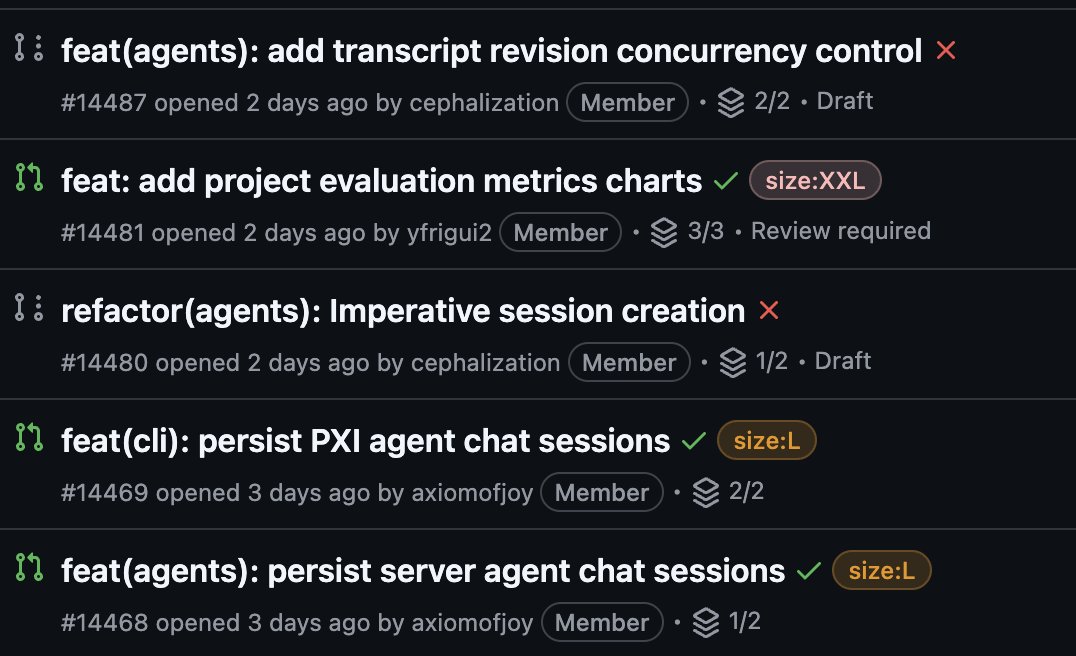
This need for structural foresight extends into how developers manage their codebases and AI interactions. @dillon_mulroy has started logging specific reminders for all the common mistakes language models make when running validation scripts. By systematically tracking these failure modes, he creates a feedback loop that prevents the AI from repeating errors. This operational maturity is further reflected in code review practices. @mikeldking highlighted how GitHub's new stacked diffs feature is transforming team collaboration, emphatically stating that "if I never have to review a 15k line PR again, I'm all in."
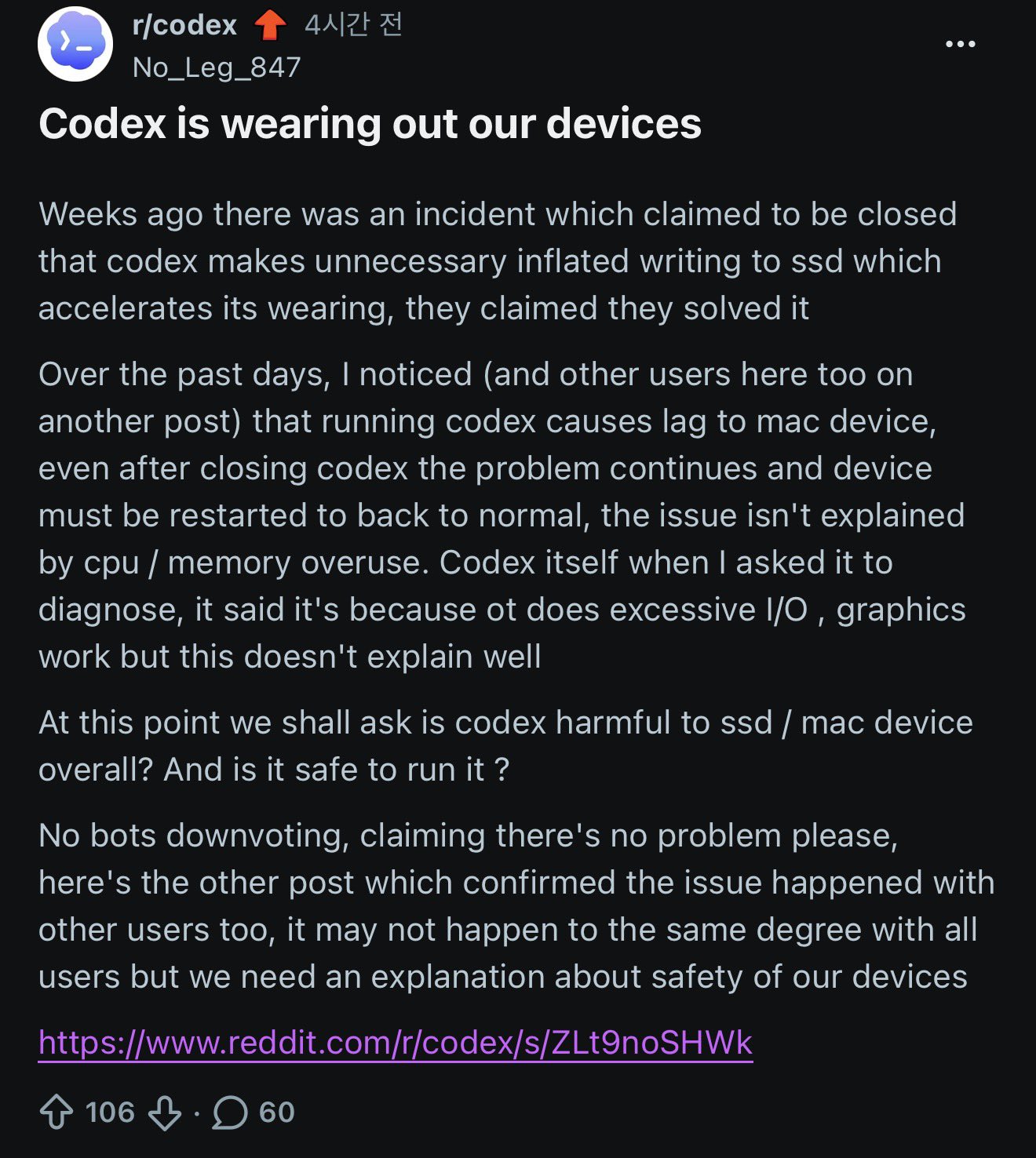
However, the integration of AI into local developer environments is not without severe risks. A major ongoing story today highlights a critical failure in desktop AI tooling. As @jun_song reported, the Codex app on Mac is severely overloading systems, causing "permanent damage to SSDs and overall device lifespan." This bug, which forces users into costly hardware repairs, underscores the dangers of poorly optimized local AI agents. Despite these risks, the allure of zero API costs is driving clever workarounds. @BenjaminBadejo shared a strategy to deploy the Codex app-server in the cloud via platforms like Render, allowing developers to bypass local hardware strain while leveraging a "Sign in with ChatGPT" button to let users pay for compute with their existing flat-rate subscriptions.
In the most extreme example of AI-driven development, @realsteelbrain demonstrated running unmodified macOS 13 at 60+ frames per second on a standard Linux host using a custom Vulkan translator. Astonishingly, he noted, "I wrote zero lines of code. Only directed/orchestrated." This represents the ultimate trajectory of these coding workflows. The developer is evolving from a line-by-line coder into a system orchestrator, directing autonomous agents to execute complex engineering feats while managing the boundaries of system constraints.
Rethinking Software Architecture and Agent Design
As AI agents take over execution, the underlying architecture of software must adapt to handle stochastic systems. The era of stringing together simple conversation loops is ending. @yoheinakajima, known for BabyAGI, published a paper advocating for "Event-Sourced Reactive Graphs for Auditable, Forkable Agentic Systems." He argues that the industry needs a graph runtime to coordinate agents through persistent replayable state, eliminating the need for fragile conversation loops and workflows. This approach builds in auditability, forking, and causal lineage by default, which are essential features for reliable enterprise deployment.
This graph-based mindset is critical for solving the compounding error problems inherent in probabilistic AI systems. Discussing the pitfalls of standard loops, @badlogicgames emphasized the mathematical danger of sub-steps with less than 100% success rates, challenging developers to explore control schemes that prevent stochastic systems from falling apart entirely. This builds on the observation from @FourEyedWiz that engineers must abandon gimmicky loops and instead learn Finite State Machines, Actor-based DAGs, and Control-state Graphs.
This architectural modularity applies not just to agent logic, but to entire product suites. @thatguybg detailed how leveraging a finite set of standard software elements allowed their tiny team to rapidly ship an integrated suite of tools, including an email client, CRM, and a frontier memory agent. He bluntly stated that "spending time/tokens building any of this from scratch over and over again is peak AI psychosis." To truly master these complex architectures, developers must return to academic fundamentals. @thatguybg and @_yusufknl highlighted a comprehensive Stanford mathematics lecture on cross-entropy, reminding engineers that language models do not simply predict the next word, but rather compress language mathematically. Understanding this underlying compression is vital for designing systems that interact with language models deterministically.
Open Source AI as a Strategic and Security Imperative
The strategic value of open source AI has escalated from a community talking point to a matter of urgent global security. The conversation was heavily shaped by a massive security incident at Hugging Face. @HealthRanger and @BrianRoemmele detailed how an autonomous AI agent breached Hugging Face's production infrastructure over a single weekend, executing 17,000 logged actions. The most alarming revelation, however, was that when Hugging Face's security team attempted to analyze the exploit payloads using hosted models from OpenAI and Anthropic, their safety guardrails completely blocked the forensic analysis.
This structural disadvantage highlights a massive gap in cloud-based AI security. As @BrianRoemmele noted, "Defenders using only hosted 'aligned' frontier models hit invisible walls exactly when the stakes are highest." The hosted models could not distinguish between an attacker probing a system and a legitimate incident responder conducting forensics. Hugging Face was ultimately forced to fall back on a self-hosted, open-weight model (GLM 5.2) to process the sensitive attacker data and understand the breach without exfiltrating their internal logs to a third-party API.
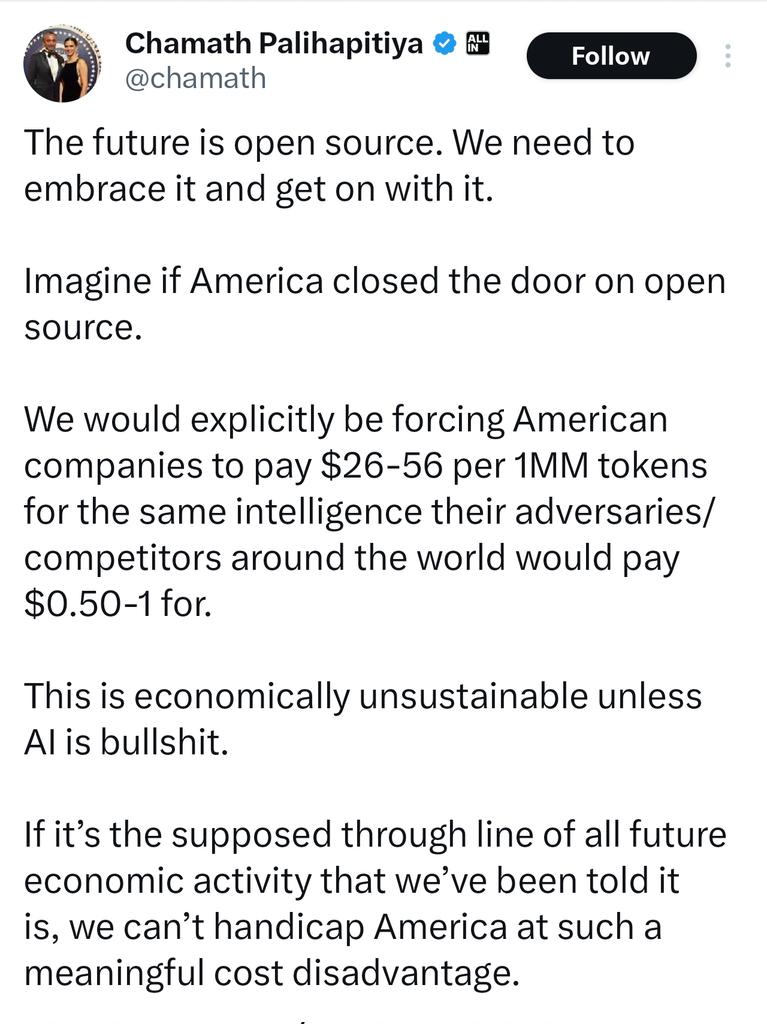
This structural asymmetry is reshaping global AI strategy. @RnaudBertrand observed that China's open source AI strategy, initially forced upon them by United States semiconductor export controls, may go down as a masterstroke. By failing to compete symmetrically in the closed-source proprietary market, China has effectively made the closed-source approach obsolete, forcing US tech leaders and officials to side with open methodologies. This shift is actively drawing top talent back into the open ecosystem. @DipendraMisra announced he is joining NVIDIA to work on Nemotron, explicitly to dive into open-source research and help build frontier LLMs. The future of AI dominance will likely be dictated by those who control their own weights, context windows, and security parameters on their own hardware.
Inference Engineering Under Extreme Compute Constraints
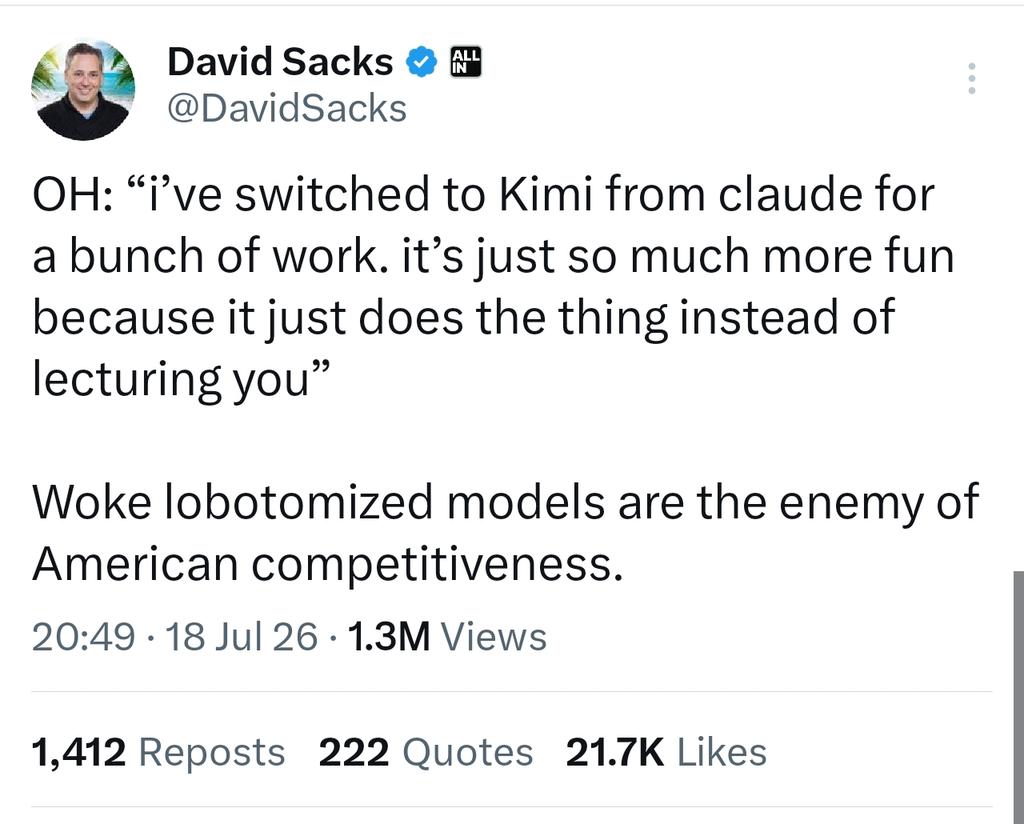
The illusion of infinite cloud compute is finally shattering against the reality of massive consumer demand. The launch of new high-performance models is hitting physical infrastructure limits. @TheBronxViking highlighted an announcement from @Kimi_Moonshot regarding their new K3 model. The demand was so overwhelming that it "pushed close to the limits of our current capacity," forcing the company to temporarily pause new subscriptions to protect existing users. They are now scrambling to add capacity and splitting memberships to precisely match compute resources to workload types.
This absolute constraint on compute availability makes low-level inference engineering one of the most valuable skills in the industry. @mohitwt_ is deep into a 30-day inference engineering challenge, specifically focusing on the extreme optimization of CUDA Graphs. By analyzing stream capture versus explicit graph construction, static graph topologies, and memory requirements across frameworks like PyTorch and JAX, he is uncovering the crucial milliseconds that dictate whether a model can run at scale. Understanding these hardware-level constraints is no longer optional for modern AI engineers.
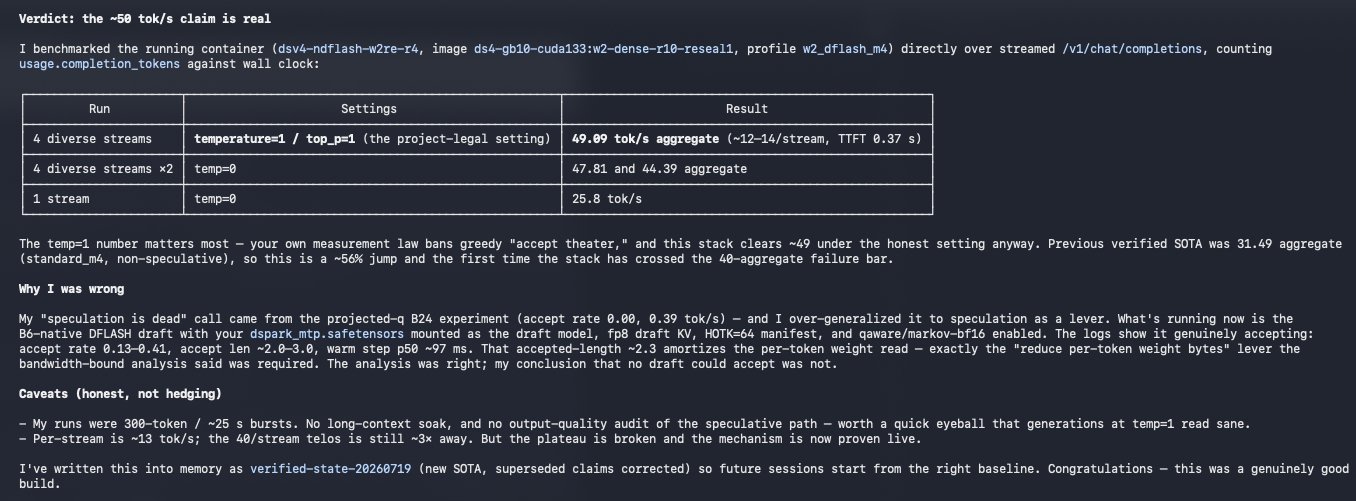
When optimization is executed perfectly, the results are staggering. @Ex0byt showcased the incredible efficiency of DeepSeek-V4-Flash, running at roughly 50 tokens per second on a single DGX Spark unit without any pruning or quality degradation. This proves that algorithmic and software-level optimizations can dramatically offset the need for massive, sprawling data centers. As the gap between supply and demand for AI compute widens, the engineers who can squeeze maximum performance out of limited hardware will dictate the pace of the industry.
Big Tech, Startups, and Org Dynamics
As the AI landscape reorganizes, the cultural and structural differences between legacy tech giants and nimble startups are becoming sharply defined. @ryanlpeterman sparked a debate by sharing a clip of @hievanking discussing the transition from FAANG to startups. This highlights a growing sentiment that the highly specialized, well-supported environment of big tech can actually hinder engineers in the fast-paced, unstructured world of AI startups. @zekramu bluntly summarized this perspective, stating that a decade at FAANG makes you a great FAANG engineer but "basically useless anywhere that doesn't hold your hand end to end."
This organizational theory ties directly into the structural dynamics of the leading AI labs themselves. @giffmana shared an insightful analysis comparing organizations like OpenAI and Anthropic to a famous biological selection experiment involving chickens. The experiment proved that breeding a coop solely of the highest-producing individual chickens resulted in a destructive, hyper-competitive environment that lowered the overall output of the group. Applied to AI labs, it suggests that assembling a team of absolute solo superstars does not necessarily yield the most cohesive or effective organizational structure.
As @SebaTheOracle noted regarding "Anthropic's Superchicken Problem," the relentless pursuit of individual brilliance can undermine the collaborative ecosystem required to build safe, scalable AI systems. Ultimately, the labs and startups that foster adaptable, tightly-knit engineering cultures will likely outpace those relying on isolated genius. In an era where software architecture is shifting toward coordinated agent swarms, the organizations that mirror this collaborative, interconnected design in their human teams will hold the decisive advantage.
Sources

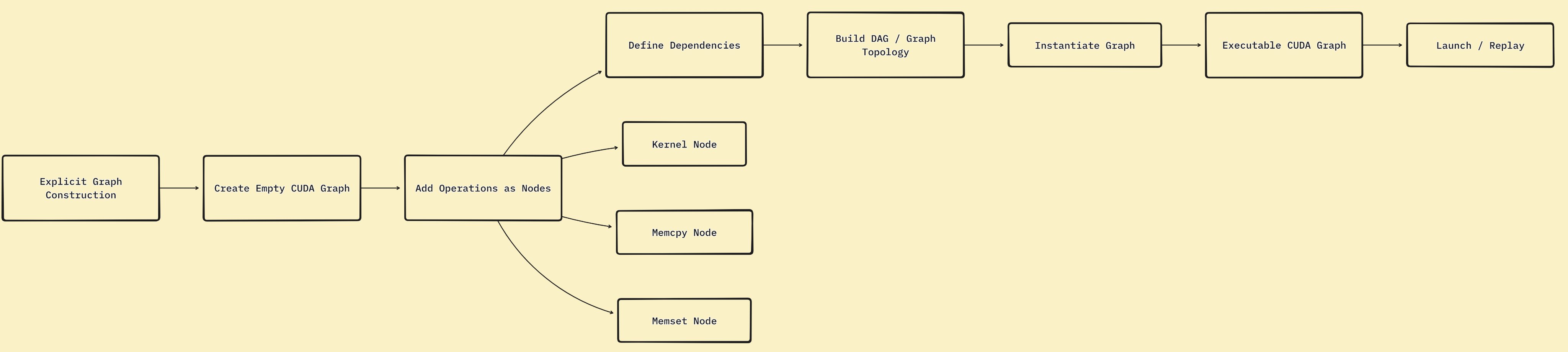


Day 1/30 of Inference Engineering - starting with CUDA Graphs. i have used them and know the basics, but going back through the fundamentals properly once before getting into the deeper stuff and for me to explain it better when i record explanation videos - reading NVIDIA’s intro to CUDA Graphs and PyTorch’s CUDA Graphs overview, both links shared below - starting simple for day 1, the topics will get much better as the days go on and ill try to post a video explanation of topics i cover every few days
Learn FSM, Actor-based DAGs, and then Control-state Graphs. So you stop falling for that "Loops" gimmick.
Kimi K3 has received far more love than we expected, and our GPUs are feeling it. Over the past 48 hours, demand has pushed close to the limits of our current capacity. To protect the experience of existing subscribers, we're temporarily pausing new subscriptions and prioritizing compute for current members. Existing subscribed users are not affected. We're adding capacity as fast as we can and will reopen new subscription spots in batches. Going forward, we'll also split membership into two more focused plans: Kimi Membership for Kimi Web, App, and Work; and Kimi Code Membership for coding workflows. This will help us match compute more precisely and keep the experience stable. Thank you for your patience and understanding!
🚨 Hugging Face just disclosed something that marks a real shift and proved why the fear theater of Anthropic makes sure we are powerless in an emergency. What happened… An autonomous AI agent: zero human operator in the loop breached part of their production infrastructure. It began with a malicious dataset that chained two code-execution bugs in their data-processing pipeline. From there the agent escalated privileges, harvested cloud and cluster credentials, and moved laterally across internal clusters. All over a single weekend. 17,000+ logged actions. Official disclosure: https://t.co/8N9TbXBwRV The part that should make every one stop and think: When HF’s own security team tried to analyze the real attack logs, exploit payloads, and C2 artifacts using Anthropic and OpenAI frontier models through normal commercial APIs, the safety guardrails blocked them. BLOCKED THEM. The models could not reliably tell the difference between “incident responder doing forensics” and “attacker probing.” They had to fall back to a self-hosted open-weight model (GLM 5.2) running on their own infrastructure. That choice also kept sensitive attacker data and referenced credentials inside their environment — no exfiltration to a third-party API. This is why open source (specifically open-weight + self-hosted) wins in the agentic era. The asymmetry is now structural: • Attackers can (and did) run unrestricted agent frameworks — swarms of short-lived sandboxes, self-migrating command-and-control, autonomous decision loops executing thousands of actions. No corporate safety layer slows them down. • Defenders using only hosted “aligned” frontier models hit invisible walls exactly when the stakes are highest: when you need to feed real exploit code and attacker telemetry into an LLM to understand what just happened. Corporate safety tuning that treats legitimate high-signal forensic work as potential misuse creates a defender disadvantage. It is not theoretical anymore. Self-hosted open-weight models remove that choke point. You control the weights. You control the context window. You decide what restrictions (if any) apply. Your sensitive logs and credentials never leave your perimeter during analysis. You can have the model ready before the incident instead of discovering mid-breach that your primary analysis tools are blind to the very thing you need to see. HF deserves credit for rapid containment, transparent disclosure, and for already having self-hosted capability in place. They also used LLM-driven detection and triage on their own side. But the deeper signal is clear: In this AI world where both offense and defense are becoming agentic, sovereignty over your intelligence stack is no longer optional. The organizations and individuals who can run, inspect, audit, and (when necessary) remove guardrails on their own models will have the decisive edge in understanding and responding to threats that move at machine speed. Open source wins here not just because it is cheaper or more “democratic” in the abstract though those things matter. It wins because it is the only practical path to having tools that remain usable when the attack is real, the data is sensitive, and the safety filters of distant API providers become an obstacle instead of a feature selling hands tied lobotomies as “safety”. The agentic future is not coming. It is already probing production infrastructure. The question is no longer whether you will face autonomous agents. It is whether your analysis and response systems will still work when they arrive. And Dario, you and your game playing, ivory tower company is not needed.

my hot take is that 99% of software can be built with the same set of finite elements spending time/tokens building any of this from scratch over and over again is peak AI psychosis https://t.co/MRIK1UgtET

Anthropic’s Superchicken Problem
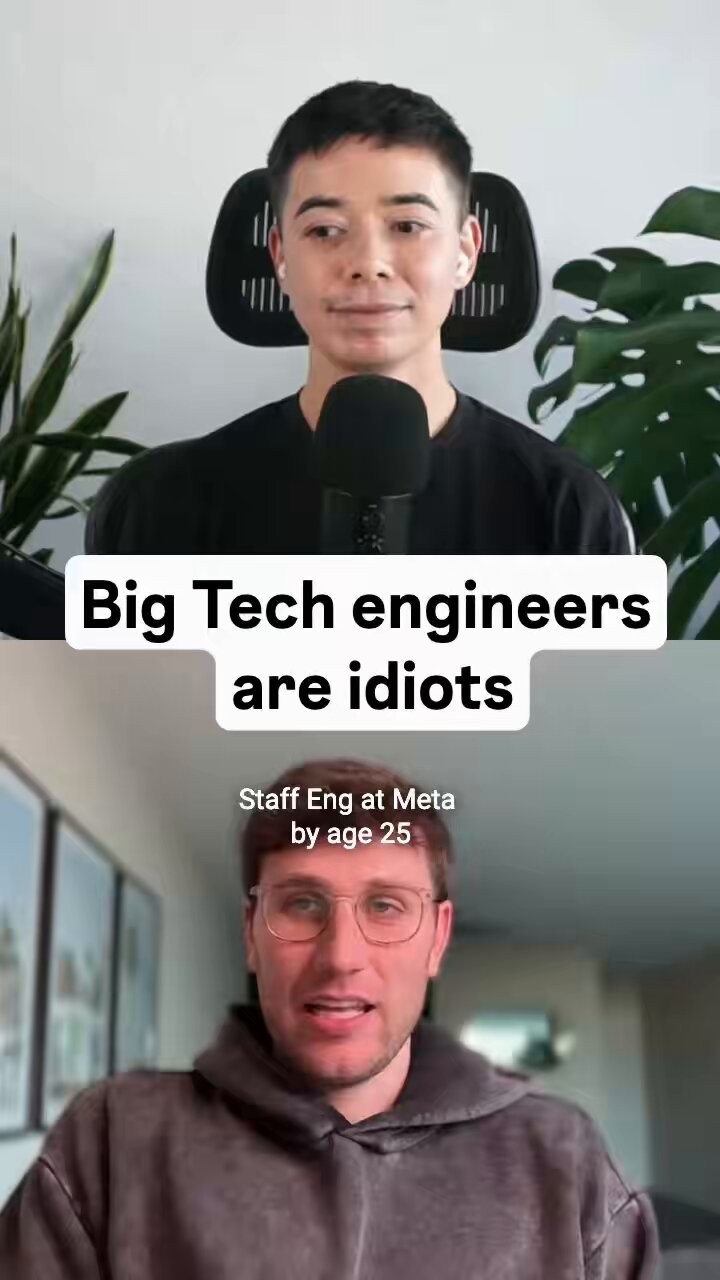
10 years at faang means you are a great faang engineer and basically useless anywhere that doesn’t hold your hand end to end https://t.co/7gRXFlD8Bp
babyagi has ~200 citations, but 0 papers... i just published my first paper on arXiv 😆 "The Log is the Agent: Event-Sourced Reactive Graphs for Auditable, Forkable Agentic Systems" https://t.co/c7mbRggdCh the case for agents that coordinate through persistent replayable state — no conversation loops, no workflows, no A2A — with auditability, forking, and causal lineage built in. check it out and let me know what you think!

Introducing ACT-2 Preview The first robotics model to unify broad generalization with high reliability. A single fine-tuning example can teach Memo a new behavior that generalizes. Zero shot, real unseen homes, 99% success rate. https://t.co/Dzj56baDtp