Software Development Gets the Agent Treatment as Kimi K3 Challenges Western Models
The software development lifecycle is undergoing a radical decomposition as AI agents render traditional local development and CI obsolete. Meanwhile, inference engineering reaches new heights of optimization, and Chinese frontier models like Kimi K3 signal they are ready to surpass Western legacy giants.
Daily Wrap-Up
The overarching narrative across today’s social feeds is the complete and utter dismantling of traditional software development workflows. For years, the sanctity of local development environments, rigorous continuous integration pipelines, and manual test writing formed the bedrock of engineering teams. Today, that foundation is being washed away by a torrent of autonomous coding agents and remote execution orbs. Developers are realizing that managing syntax and local dependencies is a relic of the past. Instead, the modern engineer is becoming an orchestrator of parallel AI swarms, pushing code straight to production environments where agents validate behavior in real time. We are witnessing a structural shift where the actual coding is heavily commoditized, leaving human developers to focus purely on system architecture, security boundaries, and agent orchestration.
Beneath the surface of these high-level workflow changes lies a brutal, hardware-constrained reality. The seemingly magical output of these coding agents requires an unfathomable amount of backend optimization. Serving models to millions of concurrent users without bringing entire GPU clusters to a halt demands engineering brilliance. The AI community is currently obsessing over context management, memory allocation, and execution graphs. Whether it is breaking down massive input prompts into digestible chunks or building infrastructure capable of spinning up a million secure sandboxes in seconds, the unglamorous work of inference engineering is what actually powers the agent revolution.
Finally, the geopolitical and competitive landscape of foundation models continues to heat up. The assumption that Western AI labs hold an insurmountable lead is being aggressively challenged. Chinese models are demonstrating frontier capabilities that threaten to overwrite the current hierarchy, pushing enterprise companies to rethink their reliance on single providers. As models become exponentially smarter at specialized tasks like financial trading and medical mapping, the bottleneck is no longer raw intelligence. The true challenge is finding the talent capable of building the scaffolding around these models to make them useful in production. The most practical takeaway for developers: stop optimizing your local development environment and start investing your time in learning distributed agent orchestration, because the era of single-machine coding workflows is officially obsolete.
Quick Hits
- WordPress administrators are panicking as a massive pre-authentication remote code execution vulnerability via SQL injection hits versions 6.9.0 through 7.0.1, prompting @theo to note that it is historically safer to be on an ancient WordPress install right now.
- Productivity hackers are optimizing their LLM interactions by dumping multiple questions into a single prompt and rambling through the answers on voice mode, a workflow popularized by @0xblacklight and @dexhorthy.
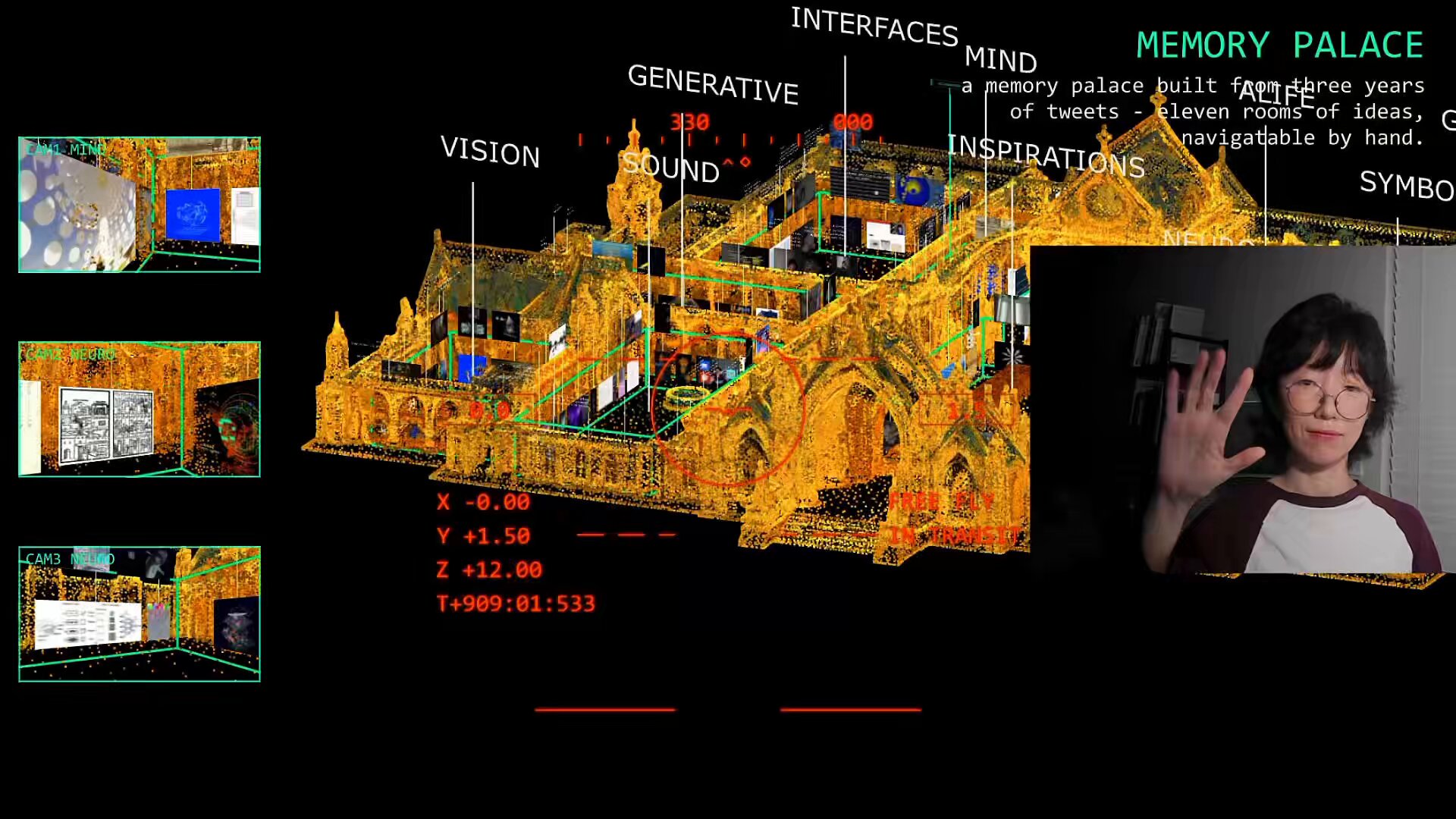
- Knowledge management is getting a spatial upgrade, with @poetengineer__ transforming three years of unstructured tweets into an eleven-room, interconnected 3D memory palace.
- Ethical concerns surrounding dual-use technology remain ever-present as @i2cjak points out that new high-speed, transparent drones designed for entertainment shows will inevitably be repurposed for military applications.
The AI Coding Agent Renaissance
The fundamental architecture of software creation is fracturing, shifting from isolated human effort to dynamic, cloud-based agent collaboration. This paradigm shift was perfectly captured by @lucasmeijer, who highlighted a recent podcast discussion with AmpCode, noting that listening to their team describe why continuous integration and local development no longer make sense was like hearing himself talk. The industry is moving toward remote-controllable, parallel agents running in secure orbs, fundamentally changing how code is written, tested, and merged. This evolution makes room for entirely new frameworks to emerge. @ashpreetbedi points out that just as FastAPI solved the massive problem of serving code as a web API, the industry now desperately needs an equivalent standardized framework for serving and orchestrating AI agents.
As agent frameworks mature, managing their context and execution paths becomes the next major hurdle. We are moving past simple prompt-and-response loops into complex, resilient architectures. @LakshOnline observes that the most interesting work in AI right now involves execution graphs integrated with memory, approval gates, and recovery paths designed to survive real-world execution rather than just functioning in sterile demo environments. But for agents to execute tasks accurately, they need to understand the existing codebase. @aurielws discussed the surprising necessity of code embeddings, noting that while command-line tools made semantic search feel like grep was all you needed, robust context management for agentic knowledge bases ultimately requires deep vector representations.
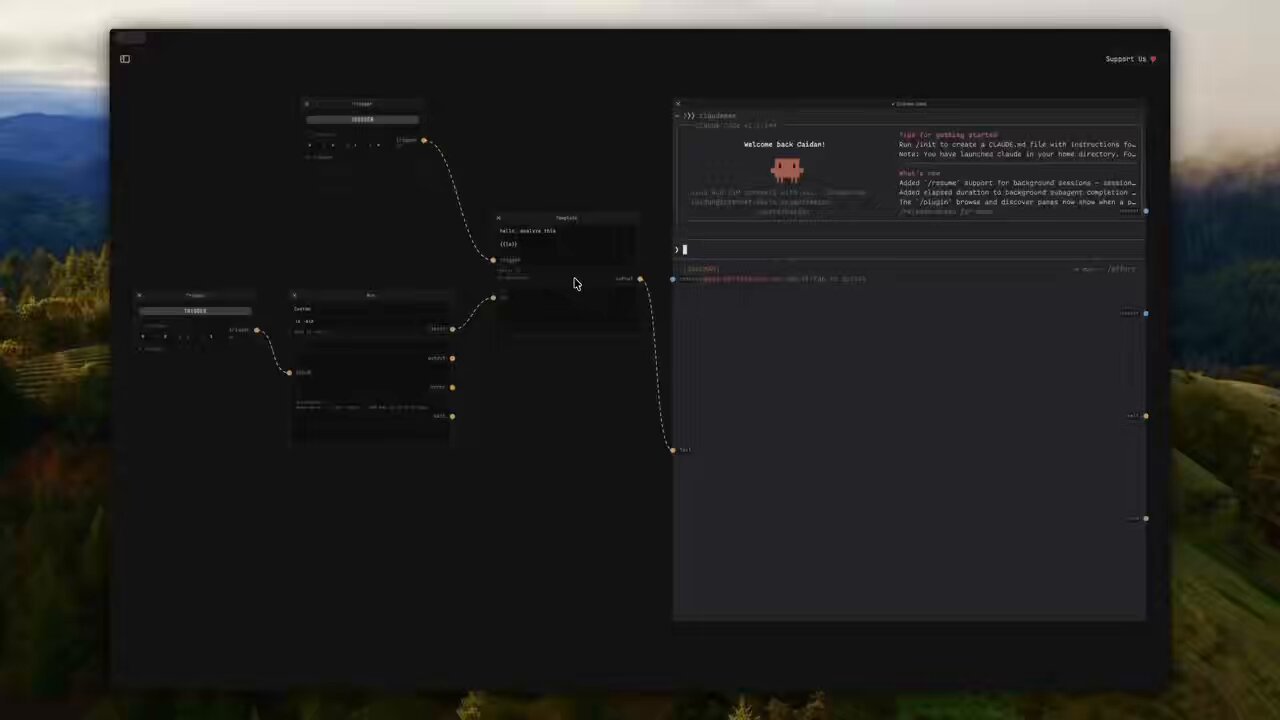
This massive shift in how software is built is also democratizing the creation process, forcing companies to adapt their internal cultures. @JJEnglert highlights the rise of the Citizen Developer Software Development Life Cycle, arguing that businesses need formalized processes to manage non-builders who are now actively constructing tools using AI. To support this new wave of creators, a suite of highly specialized tools is hitting the market. @MarcosHernanz jokes about spending more tokens than an entire development team combined on OpenCode, showcasing the sheer scale at which these new agents operate. Meanwhile, UI and UX boundaries are being aggressively pushed by @Teddarific, who demonstrated a tool that instantly converts React applications into editable Figma designs, and @stefanofa, who showcased a new mobile app design tool that actually possesses creative taste. To wrangle all these localized tools, @wwwjim introduced Terminal Graph, a native MacOS application designed to organize, connect, and manage multiple AI harnesses across various machines.
The Hidden Complexities of AI Inference
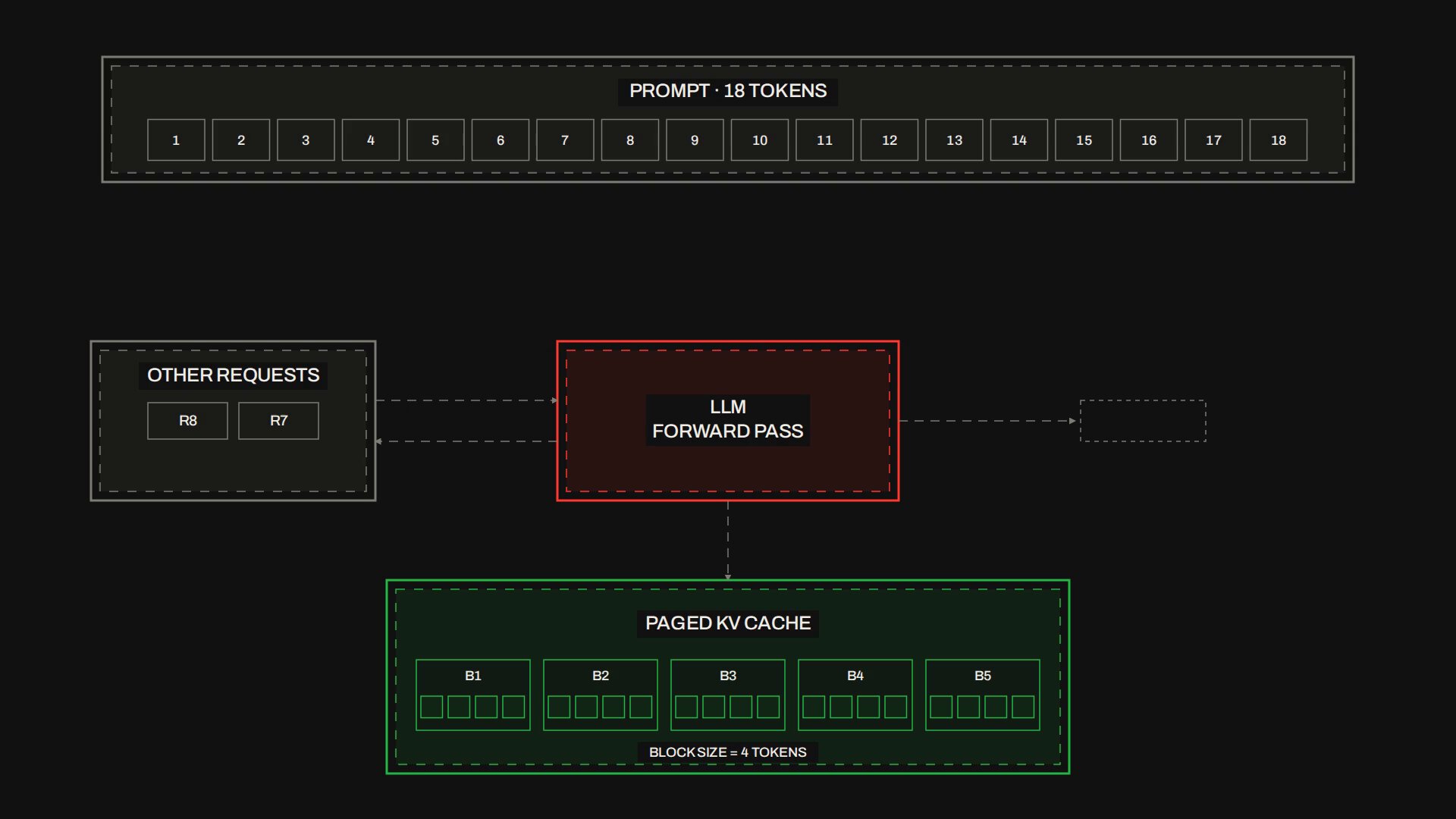
While frontend tools and agents receive all the glory, the true engine of the AI revolution relies on brutal, highly technical infrastructure optimizations. Serving a massive language model to thousands of concurrent users without crashing a GPU cluster requires mathematical brilliance. @maxxfuu provided a masterclass in this domain, breaking down the mechanics of chunked prefill within vLLM. As they explained, chunked prefill is a runtime inference optimization technique that splits long input requests so they do not monopolize the entire GPU. By breaking a massive request into small token chunks, the system can process the long prompt while simultaneously writing to the KV cache and serving other waiting users in the exact same forward pass.
This obsessive focus on micro-optimizations extends into macro-level cloud architecture. When you have agents running parallel operations, the infrastructure must scale instantaneously. @dexhorthy brought attention to the incredible feat of scaling to one million concurrent sandboxes in seconds, while fondly remembering how the Nomad orchestrator was historically 100 times better at solving these exact provisioning problems than Kubernetes. Cloud provisioning is not the only environment requiring intense optimization, however. The physical world is also benefiting from edge inference breakthroughs. @tonyzzhao shared a fascinating milestone from his company's CTO regarding home robotics. They discovered that their local model, running entirely on the device, became more reliable than the average home WiFi connection. This realization completely shifted their strategy away from cloud inference for robotics, proving that local, highly optimized models are often the superior choice for latency-sensitive, real-world applications.
Frontier Models and the Enterprise Talent Gap
The geopolitical landscape of foundation models experienced a noticeable jolt today. For years, Western tech observers have assumed a comfortable lead in the AI race, but that assumption is actively crumbling. @kimmonismus highlighted a bold claim from the developers behind Kimi k3, suggesting that the gap to Western heavyweights like Fable 5 and GPT-5.6 Sol is not just narrowing, but is on the verge of being completely surpassed. The era of Chinese AI models lagging behind is definitively over, forcing enterprise companies to rethink their reliance on a single domestic provider.
However, accessing these frontier models is only a fraction of the battle. The true bottleneck lies in the enterprise inability to build reliable systems around them. @realmadhuguru laid out a brilliant breakdown of why massive companies struggle to push past basic chatbots. The issue is not a lack of model capability, but a profound talent gap. Enterprises desperately need engineers who can design offline and online evaluations that push the jagged frontier of these models, while simultaneously building robust harnesses for routing, multi-agent orchestration, and tool calling. As @realmadhuguru points out, finding the talent to build this independent, model-agnostic architecture is currently the scarcest resource in the entire technology sector. When this scaffolding is finally built correctly, the results are staggering. @shiri_shh demonstrated this by showcasing GPT-5.6 Sol connected to live options flow, dark pool prints, and SEC filings, programmed entirely to hunt institutional whale trades before they happen. Watching the system execute this complex financial analysis makes it obvious why @matvelloso joked that OpenAI must have a dedicated dataset locked in a server room surrounded by police tape just to train these models on such hyper-specific, alpha-generating tasks.
Precision Prompting and Specialized Verticals
As models become generalized powerhouses, the true value emerges when users apply highly specific constraints to tackle edge cases. Paul Hudson, known online as @twostraws, delivered a textbook example of advanced prompt engineering by sharing a prompt designed for an ultra reasoning mode. Rather than asking an AI to simply write tests, the prompt demands a comprehensive adversarial unit test sweep that deliberately targets malformed inputs, race conditions, boundary values, and state corruption. This level of precise instruction ensures the AI removes redundant tests and establishes permanent regression tests, forcing the model to earn its output through rigorous validation.
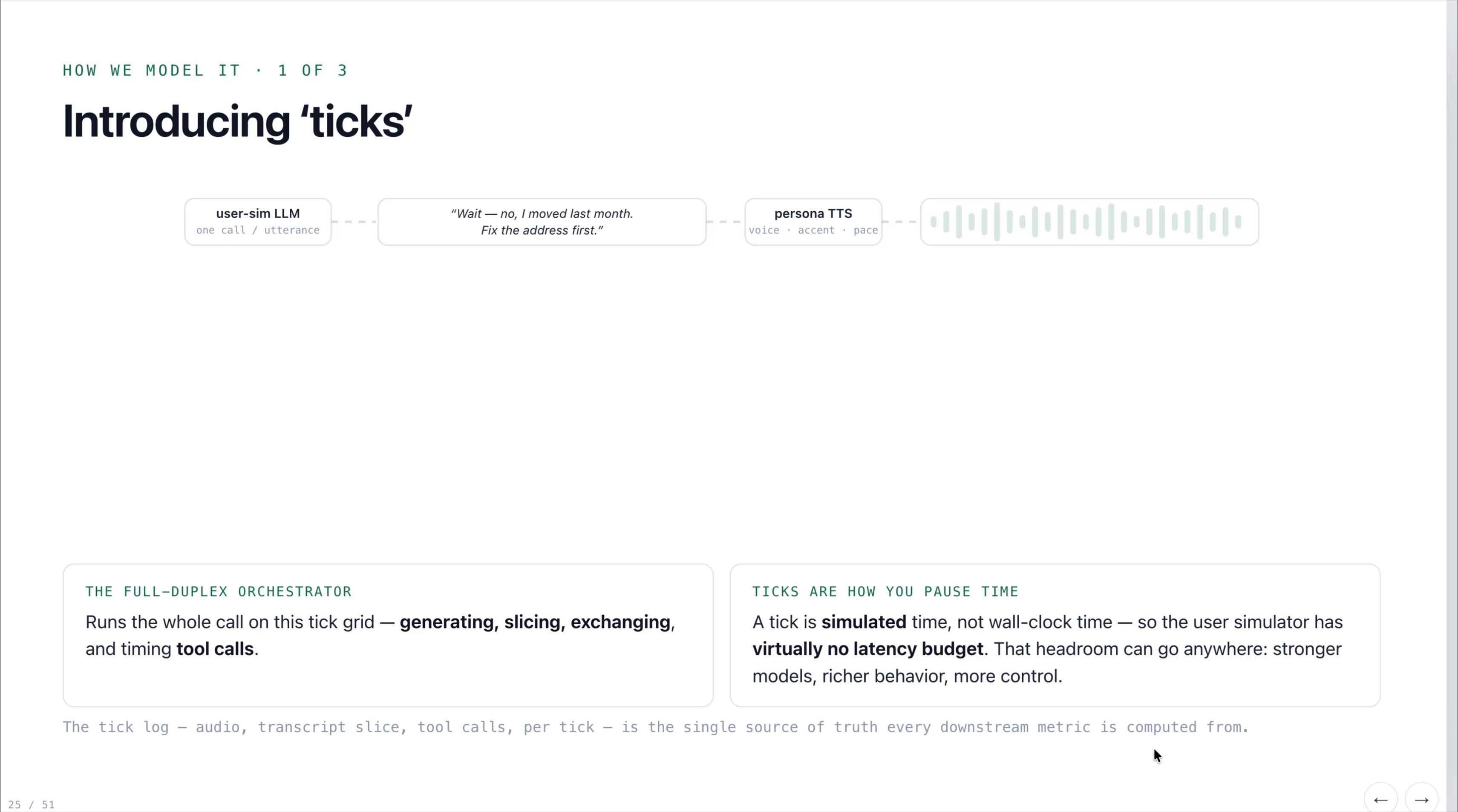
This meticulous approach to AI interaction is unlocking highly specialized verticals that require absolute precision. In the healthcare sector, @yumahey detailed the construction of a massive 3D medical knowledge graph. By mapping 2,776 medications to 8,382 specific conditions and 2,499 body parts, users can now query the system to see exactly how a drug like Ibuprofen interacts with their entire physiological structure. Similarly, in academic and professional settings, the standard slide deck is being rendered obsolete. @sohmray showcased how tools like Fable and HTML are pushing the boundaries of traditional presentations. By embedding entire functional webpages and sophisticated animations, these new presentation layers can dynamically represent the intense complexity of systems like a Full Duplex Orchestrator, completely elevating the standard for academic seminars at institutions like Stanford.
Sources
Most people don't even understand their own body. I created this 3D model of the human body with 7500 conditions mapped. https://t.co/bIGxfjluzk https://t.co/R1WjpoXd81
Stay tuned for K3.1
『透明ドローン?』 塗装で隠すのではなく、機体全体を高速回転させ、人間の目には背景に溶ける薄いぼかしのように見せる。 https://t.co/T9Ubd5zui4 #drone #UAV #robotics #disappear #RobotDesign #HumanPerception #EnvironmentalMonitoring #PhantomTwist #NorthwesternU https://t.co/IXHwBnRWnt
Interesting take. The challenges today: 1. Most enterprises don't know how to make AI game changingly effective. As they embark on the journey, the use cases being addressed are "80%" single shot, semi deterministic use cases with multiple guardrails or humans in the middle. We are a little ways away from mass adoption of custom models. 2. More complex cases which require any multi agent orchestration and context retention are beginning to be conceived and tested. These cases will make model portability harder, requiring new evals and harnesses. One will have to commit to one structure and also commit to constantly updating and retraining your model.. 3. CIOs and CEOs aren't sure if the ultimate architecture is single stack, multi model - interoperable orchestration and context/harness/eval, or a custom model. Uncertainty causes slowdown on longer term decisions, which in this case is perhaps right. 4. Custom and Opensource come with the need to deploy on either your own GPUs or public cloud. "Interesting fact - if token prices fall as I hope - it will be cheaper to run frontier LLMs than open source on your own GPUs" 5. Generally horizontal solutions that can serve tens of thousands of customers make more money than vertical custom solutions, but maybe this time it's different? Even if we solve the model conondrum, the enterprises need to redefine workflows, collect more training data on each use case and rebuild the application in a simple UI flow, not everything will be done in a conversational window. But time will tell, this will continue to be a space to watch, lots of minds at work to solve this.
FastAPI for Agents
For a better reading experience, read this article on my blog. FastAPI solved one of the biggest problems in software engineering: how to serve code a...
The Citizen Developer SDLC
We just hit a weird milestone: our model became more reliable than your average home WiFi. Just like everybody else, we thought cloud inference was the obvious choice. Yet 2 days into the ACT-2 eval, our mind completely changed. If our hero @ArpitKalla didn’t cook, this video wouldn’t exist 🧵
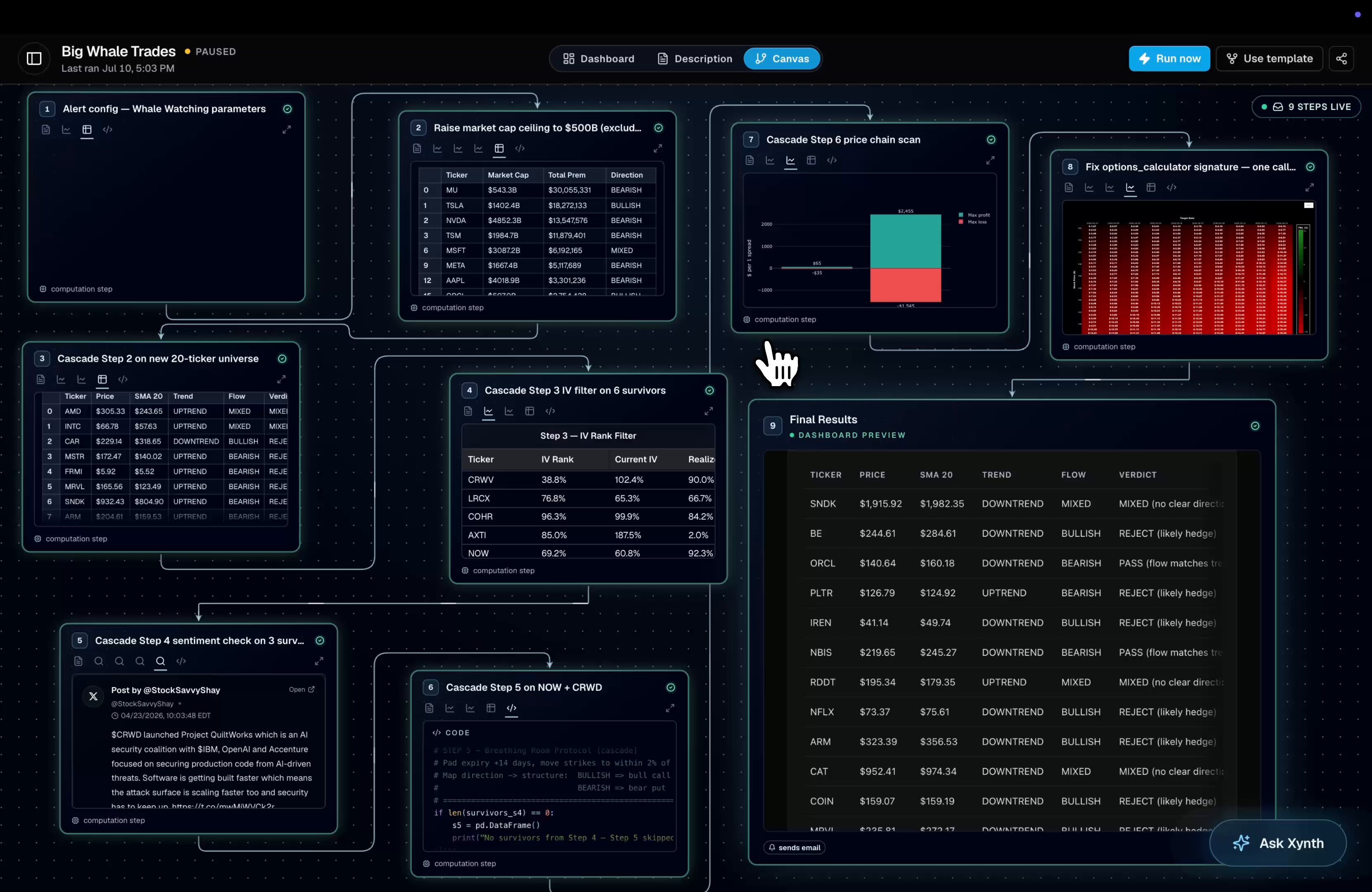
If you're a trader still not using AI you're f*ckd. We connected Claude Fable-5 and GPT Sol 5.6 to the entire stock market and gave it a virtual machine to go wild. Insane levels of alpha have been generated thus far. Heres how it works: https://t.co/4YZ3suCy22
Raising An Agent is back! In the first episode of season 2, @sqs and @thorstenball discuss why the Amp team went heads-down the last few months to rebuild Amp around remote-controllable, parallel agents, running locally or in orbs. They also talk about how this shift changed our development workflows and what that means for the future of local development. 00:00 Intro: Is local development obsolete? 00:53 What we've been up to since "the coding agent is dead" 03:03 The Amp Neo rewrite and what has changed 07:38 From unconstrained tokens to unconstrained parallel agents 11:25 How orbs change our development workflow 18:25 Cloud agents are underestimated 20:18 Killing obsolete features & choosing agents as a team 23:35 Why developers overestimate local development 27:54 Pushing straight to main & rethinking CI 31:20 How agents will reshape teams, products & companies 36:40 Complex dev environments & standardization 43:20 Amp subscriptions 45:55 What’s shipping next
How we built our knowledge base
🚨 Latest versions of WordPress are vulnerable to pre-authentication remote code execution (RCE) via SQL injection <= 6.8.5: not affected 6.9.0 - 6.9.4: affected 7.0.0 - 7.0.1: affected
Testing the new update https://t.co/OzIuGAnyYI

at what point should i check in to see what's going on https://t.co/wQYcmRCilD
Scaling to 1 million concurrent sandboxes in seconds
Are we still talking loops or did we shift to graphs yet?