Gemma 4 Gets Agentic Upgrades While Developer Workflows Shift to Orchestration and Infrastructure
The developer ecosystem is undergoing a structural transformation as engineers transition from manual coders to system orchestrators managing fleets of autonomous agents. Meanwhile, the open-source AI landscape accelerates with massive multimodal releases, including a 950B parameter model and critical agentic updates to Gemma 4, while local inference tools and enterprise governance take center stage.
Daily Wrap-Up
The conversation around artificial intelligence shifted noticeably today, moving past the novelty of generative capabilities and diving straight into the messy, architectural realities of deploying these systems at scale. Developers are realizing that the future of software engineering is less about writing lines of code and more about managing context, encoding domain knowledge into repository infrastructure, and orchestrating fleets of autonomous agents. The psychological and structural impacts of this shift are profound, fundamentally altering the daily routines of engineers and forcing enterprises to rethink how they govern their data and measure productivity.
We are seeing a bifurcation in the market. On one end, open weights and local AI are becoming incredibly powerful, with massive multimodal models dropping and local inference software hitting new performance benchmarks on consumer hardware. On the other end, the enterprise is desperately trying to figure out how to wrap these capabilities in governance, observability, and ROI metrics. The developers who will thrive in this new era are those who recognize that writing boilerplate code is a relic of the past. High-leverage activities now revolve around building the harnesses that allow AI to operate autonomously and securely within complex business environments.
The most practical takeaway for developers: stop manually reviewing repetitive code issues and start encoding your domain knowledge into your repository's infrastructure by writing comprehensive CLAUDE.md files, lint rules, and CI checks, ensuring that AI agents can autonomously navigate and contribute to your codebase without constant human intervention.
Quick Hits
- @thdxr sparked an existential debate about AI quality after sharing an AI-generated piece of writing that was unexpectedly hilarious, proving that when prompted correctly, models can produce genuinely entertaining human-level humor.
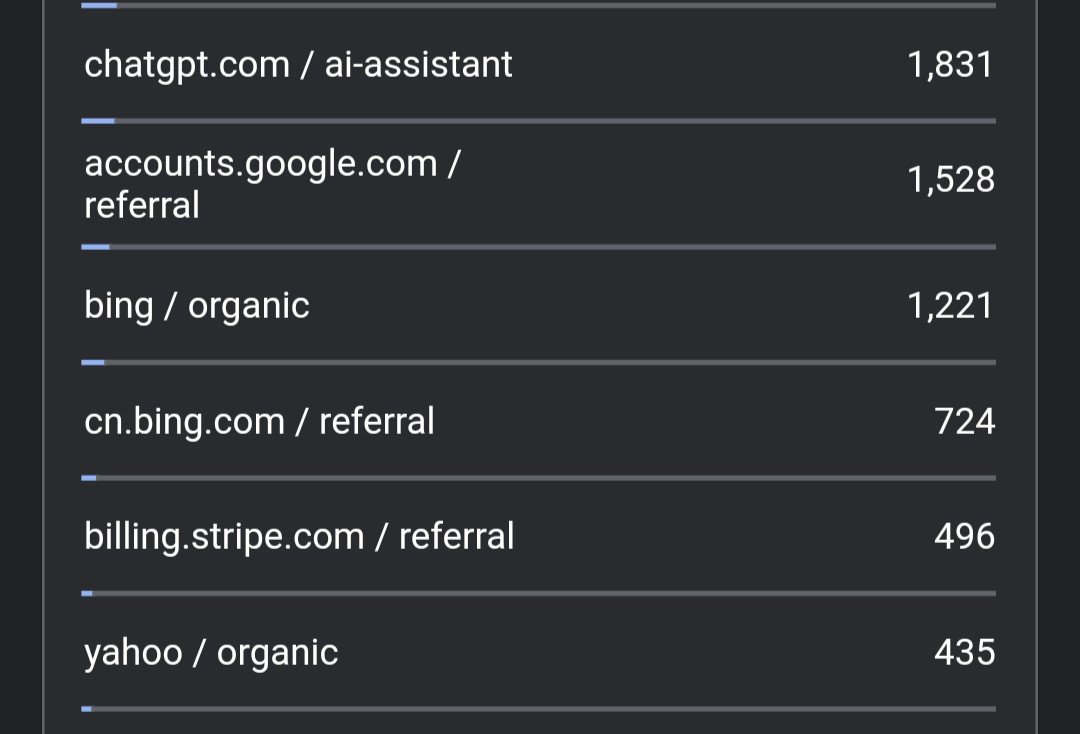
- @manoj_ahi reminds builders and webmasters that submitting a sitemap to Bing Webmaster and IndexNow remains a crucial, high-ROI step for search engine visibility.
- @jdxcode shares a personal introduction, highlighting his full-time dedication to open-source software and his lifelong obsession with building developer tools and package managers like mise.
The Era of Agent Orchestration and Workflow Evolution
The role of the software engineer is rapidly mutating into that of an AI systems manager. Veteran technologist @Steve_Yegge highlighted this transition, noting that after spending extensive time managing dozens of concurrent AI "Fables," his job consists almost entirely of asking for what he wants, setting up secure credentials, making taste-based choices, and handling human communication. The actual execution is entirely delegated to machines. This aligns with a broader realization that domain expertise must now be baked directly into the environment rather than held in the heads of senior developers.
Commenting on this paradigm shift, @addyosmani pointed out that "Taste used to be a byproduct of the reps. Agents took the reps, so if you're junior, you now have to go get the taste on purpose." Because AI handles the repetitive coding tasks that traditionally built a developer's intuition, acquiring that foundational judgment now requires deliberate, conscious effort. Once you have that judgment, applying it to agentic systems requires new methodologies. Developer @trq212 shared a compelling prompting framework: thin prompts combined with thick artifacts and context, finished with thin skills. This approach shifts the burden of success from writing exhaustive natural language instructions to providing robust environmental context.
This evolution is driving massive changes in how we view technical debt and code reviews. In a deep dive into agentic workflows, @Voxyz_ai quoted @bcherny's observation that if an AI agent fixes the same issue twice, your team is essentially paying for the same code review twice in compute tokens. The solution is to move domain knowledge out of human heads and into infrastructure. "After the first rejection, encode it as a lint rule, test, CI check, skill, or CLAUDE.md entry," @Voxyz_ai advised. This philosophical shift naturally extends to how applications communicate. @ibuildthecloud noted that standard REST SDKs might become entirely obsolete, just as standardizing AWS SDKs eventually became a burden, because intelligent agents can navigate APIs natively without needing human-friendly software development kits.
To manage these increasingly complex systems, entirely new categories of tools are emerging. @kimmonismus highlighted the launch of Raft 1.0, an open-source platform that turns chaotic, isolated agent sessions into a coordinated team operating inside a shared messaging-style workspace. Agents can claim tasks, collaborate, and review each other's code while humans maintain ultimate control. The capability of these agents is also scaling to physical computer interactions. @madhavajay amplified the release of a highly capable open-source computer use model, demonstrating that agents are moving beyond text generation into actively manipulating operating systems.
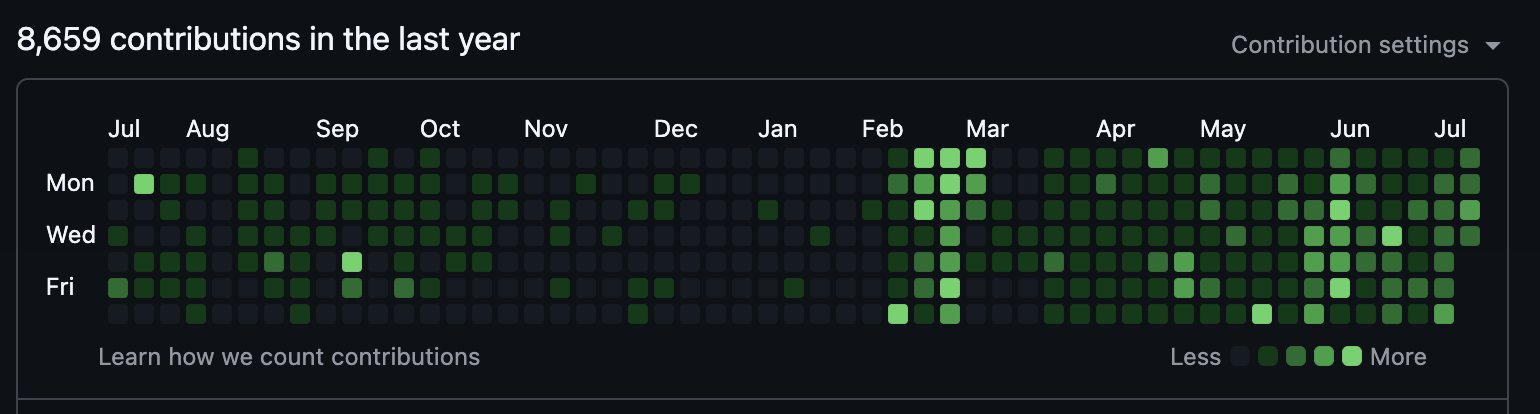
Amidst all this technological upheaval, the human element remains critical. @poteto shared a deeply personal career transition, detailing her move from Meta to Cursor AI. After feeling agonizing burnout at a major tech giant, she found herself voluntarily working 12-plus hours a day, seven days a week, simply because building the future of AI tooling is fundamentally fun. Her story serves as a testament to the invigorating power of working on liberating, fast-paced technologies that genuinely capture the imagination.
The Open Source Model Surge and Multimodal Maturation
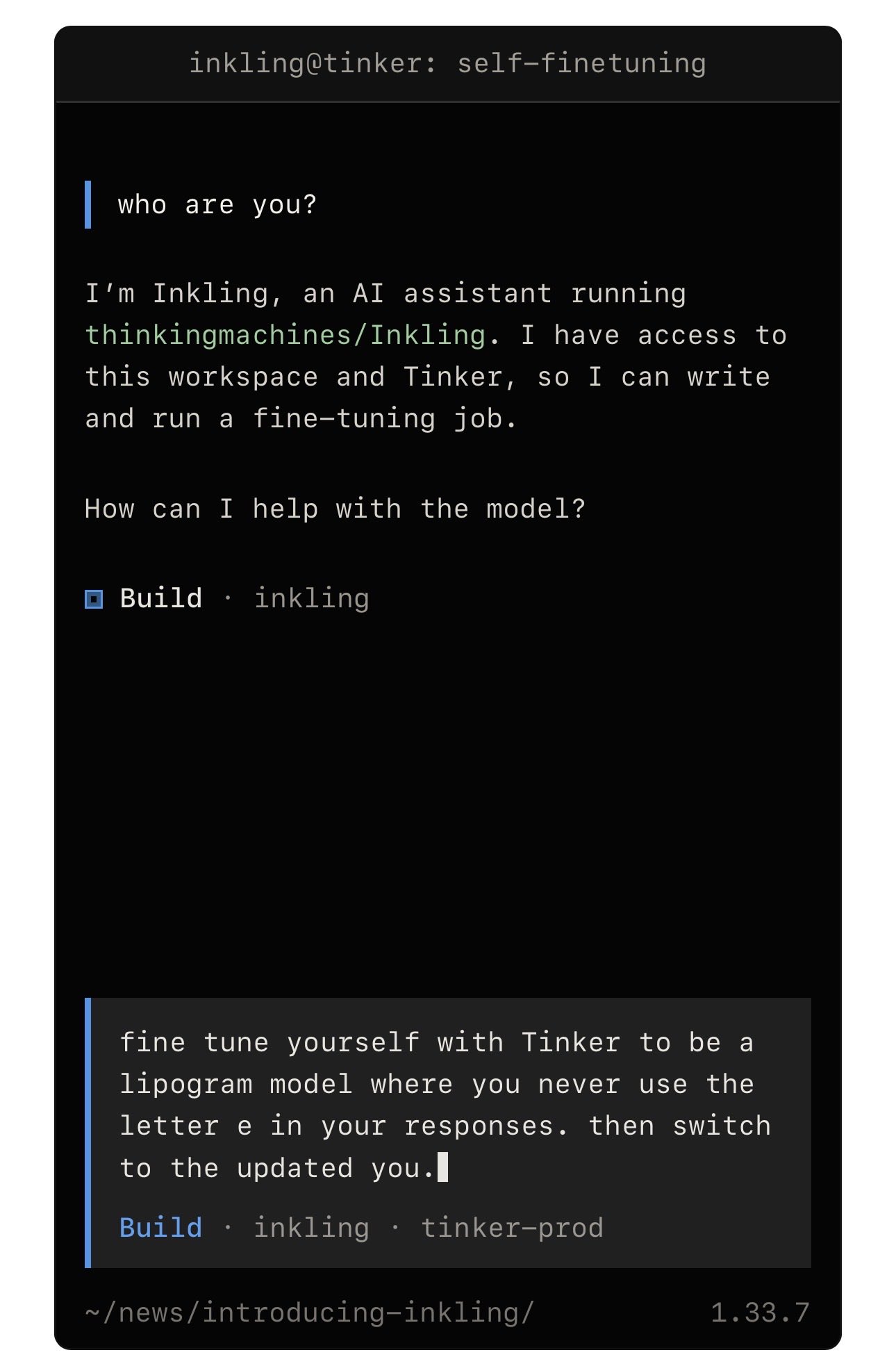
The relentless pace of open-source AI development continued its absurd trajectory today, headlined by the release of a massive American open-weight model. @0xSero showcased "Inkling," a staggering 950 billion parameter model that processes text, image, and audio modalities, praising its accompanying interactive demo as one of the coolest he has ever seen. This release signals that open weights are not just catching up to proprietary models, but are actively pushing the boundaries of what is possible with native multimodal reasoning.
Google's Gemma 4 family also received significant community-driven updates. @IanBallantyne quoted an announcement from @googlegemma detailing how the new release fixes critical bugs and vastly improves the model's ability to handle long-running agentic tasks and image understanding. The fact that these open models are being specifically tuned for sustained, complex agent workflows shows that the industry is maturing past simple chatbot interactions. In the proprietary space, @saranormous highlighted a remarkable community achievement where developers successfully bolted vision capabilities onto GLM, further proving that hacker ingenuity continues to stretch the limits of existing frameworks.
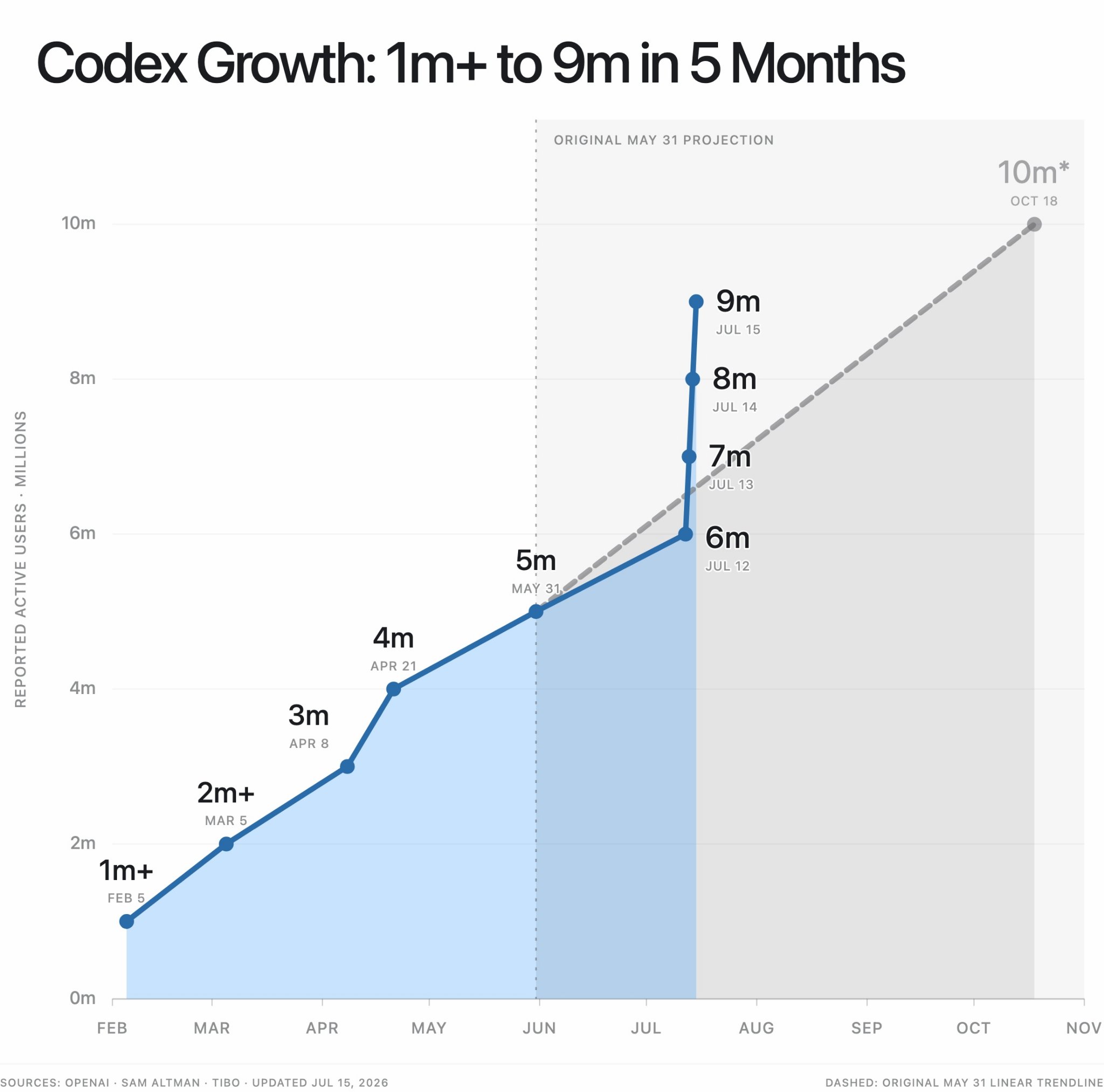
The sheer volume and quality of these drops validate the recent trend charts mapping AI progress. @petergostev posted a visual representation of this exponential growth, simply stating that the "absurd trajectory continues." Rounding out the model updates, @grok officially announced Grok 4.5. Positioned as an Opus-class model, it is specifically optimized to be fast and highly cost-effective, targeting developers who need robust performance for real-world coding and engineering tasks without breaking the bank.
Apple Silicon Dominance and Local AI Infrastructure
As cloud API costs remain a concern for independent developers, the local AI ecosystem is stepping up to provide robust, privacy-first alternatives. Apple Silicon is increasingly becoming the sleeper platform of choice for running sophisticated models entirely offline. @alexocheema championed this movement by highlighting a former Apple engineer, @twid, who was reportedly silenced by corporate restrictions but always understood the massive potential of local hardware for machine learning. Now free from corporate constraints, these hardware pioneers are openly sharing their insights into the future of on-device processing.
Capitalizing on this hardware momentum is the release of June, a new local AI assistant tailored specifically for Mac users. Unveiled by @OpenSoftwareCo, June is an open-source, MIT-licensed application that functions as a completely private agent. It integrates voice dictation, automated meeting notes, and anonymized frontier models directly into the desktop environment, ensuring that user files and context never leave the local machine.
To serve this growing demographic of local AI practitioners, serving frameworks are also maturing rapidly. @ivanfioravanti pointed to MLX Serve as the new standard for local inference, quoting @ddalcu's philosophy that while applications come and go, underlying specs and protocols live forever. The new version of MLX Serve promises blistering speed, proving that developers no longer need to sacrifice performance when choosing to run models locally and maintain strict data privacy.
Enterprise Governance and the Productized AI Consultant
While independent developers are busy orchestrating agents and running local models, large enterprises are wrestling with the operational realities of artificial intelligence. Enterprise leaders are finally moving beyond theoretical questions about AI capabilities and are now focusing on the hard realities of implementation. @jainarvind highlighted this healthy shift, quoting a comprehensive list of questions from @businessbarista that enterprise executives are actively asking about unified data architectures, measuring agent efficacy, and preventing runaway compute costs.
The anxiety in the enterprise space is palpable. Companies want to know how to distribute AI skills safely across business units, how to conduct user acceptance testing on non-deterministic AI features, and how to avoid vendor lock-in with frontier labs. As @jainarvind notes, the focus has definitively shifted to grounding AI in real company context, backed by rigorous governance, observability, and change management.
However, while Fortune 500 companies struggle with mass organizational transformations, a massive opportunity has opened up for productized consulting at the small business level. @gregisenberg broke down a highly lucrative AI business model where an independent consultant acts like a doctor prescribing technological solutions. By sitting with a small business owner for just 45 minutes to identify operational bottlenecks, consultants can charge $1,000 for an assessment using off-the-shelf AI tools. Because 95 percent of businesses have yet to adopt AI beyond basic ChatGPT queries, the demand for simple, actionable AI implementation is seemingly infinite. Whether operating at the scale of a global enterprise or a local small business, the core value proposition remains identical: translating the chaotic potential of artificial intelligence into immediate, measurable efficiency.
Sources
O
Meet June, private AI on your Mac.
June bundles it all in one:
- An agent + chat
- Voice dictation into any app
- Automated meeting notes
- Private OSS & anonymized frontier models
Files, context, and data stay yours.
Open source. MIT.
Try it: https://t.co/pDrMMBVpSd https://t.co/ZbPkfnfV82

G
Try Grok 4.5 for free, an all new Opus-class model that is fast and low cost. Great for real-world coding and engineering tasks.
D
I started doing this too and it's healthy. If you know the history of the AWS SDK, Amazon never wanted to do a SDK, it wasn't viewed as a positive thing. But then they had too because it was too hard for users. Then SDK became a standard thing all REST services had to provide. AI making them not necessary is a step in the right direction.
A
alvinsng
@alvinsng
Why we stopped using SDKs
C
I first met Richard during my first trip to China. He showed me the product he was building at the time, Slock, which has since evolved into Raft.
Raft 1.0 turns AI agents into a coordinated team inside one shared workspace, where they can claim tasks, collaborate, review each other’s work, and retain long-running context. Already used by 20,000+ builders, it replaces the chaos of juggling separate terminals and sessions with a messaging-style interface that keeps humans in control.
Highly recommend checking it out :) Good luck with the launch!
I
istdrc
@istdrc
Hi, I'm RC. I built Kimi CLI at Moonshot last year, and back in 2015, bots that lived in group chats. For the past four months, I've been building Raft in public. Today I'm launching Raft 1.0. Right now, working with agents means juggling terminals, sessions, and skills. The more you run, the more you end up holding it all together yourself, and the easier it is to lose the thread. Raft puts your agents in team mode: one workspace where working with agents feels like messaging your team. The work keeps moving, and you stay at the wheel. Meet my Raft agent team👇
J
I'm Jeff. I go by jdx. My x id is very low: 2432. I get paid to write OSS full-time. I've been obsessed with package managers for decades. I've probably written at least 1 dev tool you've used like mise or the heroku cli. 90% of my day is merging PRs.
I'm from Oregon but live in a suburb of Dallas, TX with my 7 year old daughter.
G
My friend Corey makes $1,000/hour doing the simplest AI business I've seen all year.
Only 5% of businesses use AI beyond ChatGPT, the other 95% need you.
He sits with a small business owner for 45 minutes, finds where they lose 5-10 hours a week, and prescribes off-the-shelf AI tools that fix it. He charges $999 for that assessment.
He's a doctor writing prescriptions. The tools already exist. He just knows which ones. Everyone wins.
50% of his clients then hire him to implement it, and that's where the $1,000/hour work comes from.
Corey came on the podcast @startupideaspod and gave away a full course for free.
Like actually the full way you can copy his system and run it yourself on your own:
- The exact offer (with a money-back guarantee that makes it a no-brainer)
- The 4-phase system to deliver it
- A template you can download and use today
- 6 things to upsell after the assessment
- 7 ways to get clients with zero audience and zero capital
Even if you never start this exact business, watching @coreyganim break it down will get your brain working on your own productized AI service. That's the real reason to press play.
Link: https://t.co/Psk8HNzMqp
Or watch below (1hr course)
Yeah, I know it's an hour. But if you're serious about startup ideas in the AI age right now, this is one of the most useful hours you'll spend all week. Corey holds nothing back.
I love this era. A laptop, a few conversations, and a real business.
Go get it.

I
🚨 If Gemma 4 didn't work for you yesterday, it might actually today 🚨 This isn't any old bug fix. With the community we've improved the whole Gemma 4 family from long running agentic tasks, more accurate image understanding and more. Find out what's changing 👇
G
googlegemma
@googlegemma
We’re rolling out some big improvements to Gemma 4, fueled by incredible community feedback and contributions! Here is a breakdown of what’s being fixed and updated in this release: 🧵👇 https://t.co/SMIGbJaUZg
S
After working for a month with 20+ concurrent Fables all day, I've realized my job only has a few components to it anymore:
- asking for what I want
- setting up accounts and credentials
- taste-making choices presented to me
- communication with team and customers
0
New American open weight model, 950B params, huge one. All modalities in.
Possibly the coolest demo I’ve ever seen https://t.co/uF8RBoiKUa
T
thinkymachines
@thinkymachines
Today, we are introducing Inkling. Inkling reasons efficiently across text, image, and audio modalities. We are making the full weights available. https://t.co/Ghebq5mG30 Available today for fine-tuning on Tinker. Play with it in the Inkling Playground. 🧵
A
This list reflects a healthy shift. Leaders are moving beyond pure capability questions and focusing instead on how to ground AI in real company context, with the right governance, observability, change management, and ROI.
B
businessbarista
@businessbarista
My team spends all day talking AI with enterprise execs. I asked them to share the most common questions they get. Here's what we're hearing from the field: • How to properly build a UAT suite that can test not only the new software we are building but also account for the AI features in some benchmark eval suite? • How can I provide guardrails and direction to enable the front line to develop useful tools and applications for the business? • How do you deal with fragmented data? What is your process to unify without a massive overhaul of our orgs data architecture? • How do I stand up the internal motion to drive AI tools and workflows when everyone also has their day job? • How do we know an agent that we create is actually "good"? How do we measure that? How can we improve it? • How can I give employees full agency to create without impacting mission-critical systems/workflows/etc.? • How do I uniformly transform a multi-thousand person org to adopt ai? How do we not leave anyone behind? • How do I ensure that I roll out claude code and cowork securely without putting my company data at risk? • How do I control spend of ai usage across my organization without limiting my employees' productivity? • What does the operating model have to look like with my direct reports as well as the org with AI? • How do I start controlling token spend and how do I think about attributing value to a token? • How do we develop a central company brain to capture embedded organizational tacit knowledge? • What are the best ways to be multi-model and have a multi threaded approach to partnerships? • How can non technical people access, change, and iterate on apps they did not build? • When an agent does eight hours of work, how does a human check it in eight minutes? • What are the big investments I need to make in my data to make AI effective? • How do I protect my data while still having the harness of cowork and code? • How do employees in different business units edit, manage their own skills? • How do we adopt AI so that we aren't vendor locked with one frontier lab? • How do we ensure our AI usage is safe (infra & security controls)? • What data is safe to put in (especially sensitive functions)? • Whats the path from AI Literate, to AI Enabled, to AI First? • How do we get people excited vs scared to lose their jobs? • How can AI apply when I'm in a highly regulated industry? • As a CEO, what do I need to know about AI to run my org? • Should I hire a team vs. work with an external partner? • What's the bleeding edge of applied AI look like today? • How do we protect our proprietary data when using ai? • How do we manage costs, and prevent runaway sessions? • When processes are the problem, where do I start? • How do we let people access internal data safely? • Should I allow Skill creation? Artifact creation? • Who should I give access to Claude Code or Codex? • What does the cutting edge of AI SDLC look like? • How do I "sell" AI internally within my company? • How do I make big bets and also avoid lock in? • How do I know which models are actually good? • How to build model agnostic capabilities? • Should I be implementing spending limits? • Who owns a build after it's deployed? • How to capture the full scope of ROI? • How do we prioritize use-cases? • What are other companies doing? • Who should own AI internally? • How do we distribute skills? • What is an agent harness? • How do we govern AI? • Are we behind?
V
tldr:
If an agent fixes the same issue twice, your team hasn't automated it. You're paying for the 𝘀𝗮𝗺𝗲 𝗰𝗼𝗱𝗲 𝗿𝗲𝘃𝗶𝗲𝘄 𝘁𝘄𝗶𝗰𝗲, in tokens.
After the first rejection, encode it as a lint rule, test, CI check, skill, or CLAUDE.md entry. The next agent shouldn't need the same explanation.
When the team writes that knowledge into the repo, reviewers stop giving the same feedback.
B
bcherny
@bcherny
Something I have been thinking about: in the past, the best engineers I knew spent a lot of time automating their work in various ways. Better vim/emacs automations, writing lint rules to catch repeat code issues, building up a suite of e2e tests so they don't need to smoke test the app manually. These kinds of things were the highest leverage activities an engineer could do, because it multiplied their own output, which in turn meant they could build more things. I think many of these automations have become even more important now. This is true for a number of reasons. First, infra and DevX automation speeds you up. And if you are running an army of agents, each of those agents will be sped up also. More automation == more output per unit of time. Second, moving things to code improves efficiency. Your agent could fix an issue every time it sees that issue happen, but that uses tokens and might miss cases. If Claude instead writes a lint rule, CI step, or routine, that class of issue can be fully automated forever. This is really what people are talking about when they talk about loops -- it's about automating entire types of busywork rather than solving them one off. This isn't a new idea at all. Engineers have been doing this for a long time! Third and most importantly, automation makes it possible for others to contribute to the codebase more easily. Increasingly what I am seeing is engineers are contributing to codebases on day one because Claude can navigate the codebase for them, and that non-engineers are able to contribute to a codebase as effectively as engineers can. What gets in the way of both of these is domain knowledge that lives in peoples' heads rather than in automation -- the stuff you used to have to learn when ramping up. What has changed thanks to agents is the domain knowledge that can be encoded as infrastructure is no longer limited to what is expressible in lint rules and types and tests; it can now capture nearly all domain knowledge, encoded as code comments and skills and CLAUDE.md rules and memories. If I put up a PR for an iOS codebase I don't know and a code reviewer rejects it because it doesn't use the right framework, or if a designer builds a new feature and it gets rejected because it doesn't follow the right architectural patterns, these are failures of automation. Every team should be writing the CLAUDE.md's, REVIEW.md's, skills, and docs that enable agents to productively work in their codebase with zero additional context from the prompter. This sounds crazy, and at the same time is a natural extension of the stuff engineers have always done: automate, and encode domain knowledge as infrastructure. As the model gets smarter and as the harness matures, this task becomes easier. In the meantime, it is on every team to look for ways to convert their domain knowledge to infra so that Claude can write code better, so that code review catches issues automatically, and so the next person working on your codebase can contribute more easily.
T
ideal prompting technique is:
- thin prompts
- thick artifacts + context
- thin skills
M
RT @0xSero: We have open source computer use btw, it works well.
https://t.co/MxgXeRUaw7
A
Todd is an ex-Apple legend.
He was one of the first people I met at Apple who saw my work and saw the potential of Apple Silicon as a platform for Local AI. At the time nobody understood it.
He just left Apple and can finally talk openly on Twitter (Apple don't let you do that!)
He's criminally underfollowed with 573 followers.
Go follow him!

T
twid
@twid
@alexocheema @tim_cook Ha ha I made that slide and was told it was too technical and badly designed 😀
D
i've been thinking about this all day because we all know ai generated writing is bad
but this wasn't. i showed it to liz and she was crying laughing
what does this mean
J
jayair
@jayair
I’m going to punch you in the stomach
S
narrator: you can, in fact, add vision to GLM, if you are insane(ly cracked)
P
part_harry_
@part_harry_
GLM 5.2 With Vision
I
MLX Serve: there’s a new kid on the block. Gonna deep dive on it later today.
D
ddalcu
@ddalcu
If you are building a LLM Inference Server, it's important to support specs. Apps come and go, but specs and protocols live forever. New version of MLX-Serve just dropped, it's fast... like Ricky Bobby. Get it here: https://t.co/zh6VWUhg3k https://t.co/VHiiwg6es4
A
Taste used to be a byproduct of the reps. Agents took the reps - so if you're junior, you now have to go get the taste on purpose.
A
addyosmani
@addyosmani
Earning Judgment
P
The absurd trajectory continues https://t.co/ZvshtGxSLS
P
petergostev
@petergostev
Ok my previous chart wasn't quite right, this is the right trajectory https://t.co/51ILgXxHv4
M
Please submit your sitemap to bing webmaster and indexnow.
You will thank me later https://t.co/PEqWdW4ZcC
L
i knew i wanted to leave meta as early as last year. but i had no idea what was next. i wasn't having fun at work any longer and every hour spent there felt like agony.
during my 1 month recharge, i spent the whole time working on side projects. it was incredibly liberating building whatever i wanted, without worrying about aligning stakeholders and psc.
it was immediately obvious to me that if i couldn't stand an hour at work but could work 16 hour days on my side project and feel happy, that something had to change.
at @cursor_ai i voluntarily work 12 hours+ 7 days a week. why? because it's fun!
find something that makes you smile and lose track of time and you will do the best work of your life
H
handotdev
@handotdev
Remember to not smile