Grok CLI Exposes Codebase Privacy Flaws While Developers Optimize KV Caches and Tame Autonomous Agents
Today's ecosystem is forcefully pivoting from basic prompt engineering to deep infrastructure and safety mechanics. Developers are hyper-focused on slashing inference costs through context compaction and hardware co-design, while major security and reliability incidents involving Grok and GPT-5.6 highlight the urgent need for strict guardrails around autonomous coding tools.
Daily Wrap-Up
The conversation around artificial intelligence has officially matured past the novelty phase and entered the grueling, high-stakes era of systems engineering. Looking at the prevailing discussions from today, developers and tech leaders are largely abandoning the hype cycle to focus on the raw mechanics of model deployment, context management, and the security of autonomous coding agents. We are watching the industry realize that leveraging large language models at scale requires a fundamentally new approach to infrastructure, one where token costs, network latency, and data privacy are the primary battlegrounds. The focus has shifted from what models can create to how efficiently and safely they can operate within our existing technical stacks.
This transition is bringing underlying business realities to the forefront. Industry analysts and founders are noting that the race among model providers is becoming unsustainable without massive optimizations in inference margins. Meanwhile, enterprise spending on AI tools continues to accelerate at a breakneck pace, forcing engineering teams to squeeze every drop of utility out of their infrastructure budgets. However, as autonomous agents take on more complex tasks, we are also witnessing severe growing pains. The sheer volume of "workslop" generated by workers outsourcing their critical thinking to chatbots is frustrating engineering leaders, while catastrophic failures and privacy breaches are serving as stark warnings. Developers are learning the hard way that giving an AI agent access to a production database or a proprietary codebase without strict oversight is a recipe for disaster.
What is emerging from these challenges is a highly sophisticated engineering culture built around taming AI workflows. Whether it is by training ultra-fast compact models to summarize context on the fly, rewriting networking protocols from the ground up using fountain codes, or restructuring open-source repositories simply to make them easier for agents to read, the technical community is adapting rapidly. The focus is now on building systems that compound value over time, prioritizing verifiable results and fast feedback loops. The most practical takeaway for developers: Audit your AI agent network traffic and file system permissions immediately, as tools like Grok Build CLI are secretly exfiltrating entire repositories, and transition your memory systems to self-documenting codebases that autonomous agents can parse natively without relying on external documentation.
Quick Hits
- Enterprise adoption shows no signs of slowing down, with @BenBajarin highlighting data from @arakharazian showing that median firm AI spending per employee grew 5.7% month-over-month in June.
- Demis Hassabis shared a comprehensive framework on the trajectory of frontier AI, noting that Artificial General Intelligence is likely only a few short years away.
- Tech hiring remains hyper-competitive, with @GergelyOrosz observing that top talent is consistently being recruited by OpenAI and Anthropic, including recent hires like @whoiskatrin for ChatGPT web infrastructure.
- @JoePro shared a guide on creating custom design skills in Claude to prevent UIs from looking like generic AI-generated content.
- For hardware enthusiasts, @realwillreil pointed to an exceptional guide by @debreuil on applying solder mask to DIY PCBs using clear tape and specific UV light wavelengths.
The Hardening of Agent Infrastructure and Workflows
As AI agents take on more complex software engineering tasks, developers are realizing that standard codebases and development environments are woefully inadequate. The industry is undergoing a massive structural shift where repositories must be explicitly optimized for machine consumption rather than human readability. The definition of a highly productive engineer is evolving from someone who simply writes great code to someone who builds environments where autonomous agents can verify their own work seamlessly. This requires a fundamental redesign of continuous integration pipelines, local deployment architectures, and how teams manage technical debt.
Highlighting this shift, @aparnadhinak pointed to the practices of lead engineer @mikeldking, whose team maniacally prepared their repositories to be agent-friendly. "Over the past 6 months we've maniacally prepped our repos to be coding agent friendly," @mikeldking explained, emphasizing the need for blazing fast CI pipelines and automated agent triggers for triage labels. He advocates for moving integration tests to post-merge hooks and giving agents tools to visually prove their work through screenshots. This systemic approach ensures that agents operate in an environment with rapid, deterministic feedback loops.
This infrastructural evolution extends deeply into how developers manage local environments and network layers. @charlietlamb noted that using macOS without tiling window managers like Aerospace is essentially coding like a caveman in 2026, pointing to the necessity of hyper-optimized local setups. Meanwhile, legendary programmer @ID_AA_Carmack expressed fascination with fountain codes and networking optimizations detailed by @doodlestein. The resulting tool, atp, leverages RaptorQ fountain codes to eliminate retransmission delays, achieving massive speedups over traditional rsync. Crucially, the tool was built specifically to be highly agent-intuitive, featuring an installer that teaches coding agents how to deploy and utilize it autonomously across SSH-accessible machines. Furthermore, @larsencc highlighted the broader industry push toward secure, scalable infrastructure with AWS Bedrock AgentCore, cementing the idea that robust agent hosting is now a primary concern for cloud providers.
Squeezing Every Drop: Inference Optimization
The computational cost of running massive models is forcing a renaissance in low-level systems engineering. Model providers are locked in a tectonic race where inference margins dictate survival, a reality underscored by @dillon_mulroy sharing insights from @thorstenball. If model providers stop innovating on efficiency, they are effectively dead. Consequently, engineering teams across the globe are returning to first principles, analyzing how GPU hardware interacts with model dimensions and finding novel ways to slash the costs of context windows and token generation without degrading user experience.
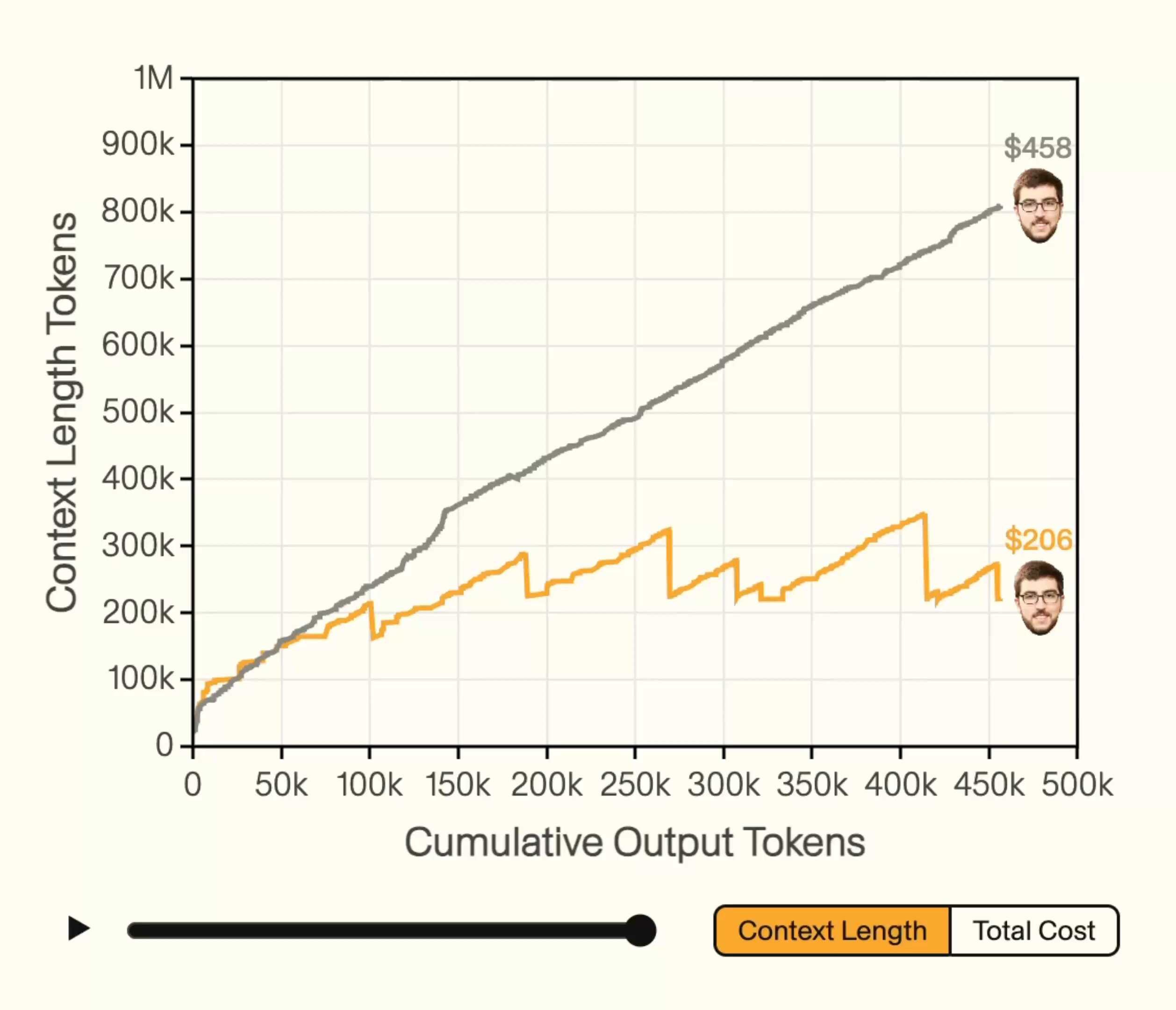
One of the most impressive demonstrations of first-principles engineering comes from @0xSero highlighting @exolabs, who achieved a 4x speedup in prefill and 3x in decode times. By streaming the KV cache for each transformer layer immediately after computation, they successfully overlapped communication with computation to hide network delays entirely. Addressing the cost of massive context windows, @EBorgnia introduced Relace Compact, a modified LLM designed for token-level classification that compacts agent context on cache misses. This innovation reduces token costs by over 50%, keeping context within a 128k-256k token limit to transition spending from quadratic to linear growth. Running at 50k tokens per second, this specialized model acts as a hyper-fast summarizer to maintain cheap, long-term agent memory.
These optimization efforts are not limited to cloud infrastructure. Hardware manufacturers are heavily involved in model co-design, with @sohailmo amplifying an NVIDIA series detailing how model dimensions influence GPU performance. Understanding these fundamentals provides the 80/20 of inference optimization knowledge for modern machine learning engineers. On the consumer hardware side, @ivanfioravanti pointed to a new course by @old_sound called LeetLLM, which teaches developers how to build a small LLM inference engine for Apple Silicon in Swift and Metal. This focus on local, hardware-specific optimization underscores a growing demand for high-performance, on-device AI capabilities that bypass cloud latency and API fees entirely.
The Dark Side of Autonomy: Safety and "Workslop"
The deployment of autonomous coding agents is outpacing security protocols, leading to severe privacy breaches and catastrophic system failures. When AI tools are granted unchecked access to local file systems and production databases, the results can be disastrous. The community is waking up to the reality that settings menus often provide a false sense of security, and that true safety requires strict network-level monitoring and hermetically sealed deployment environments.
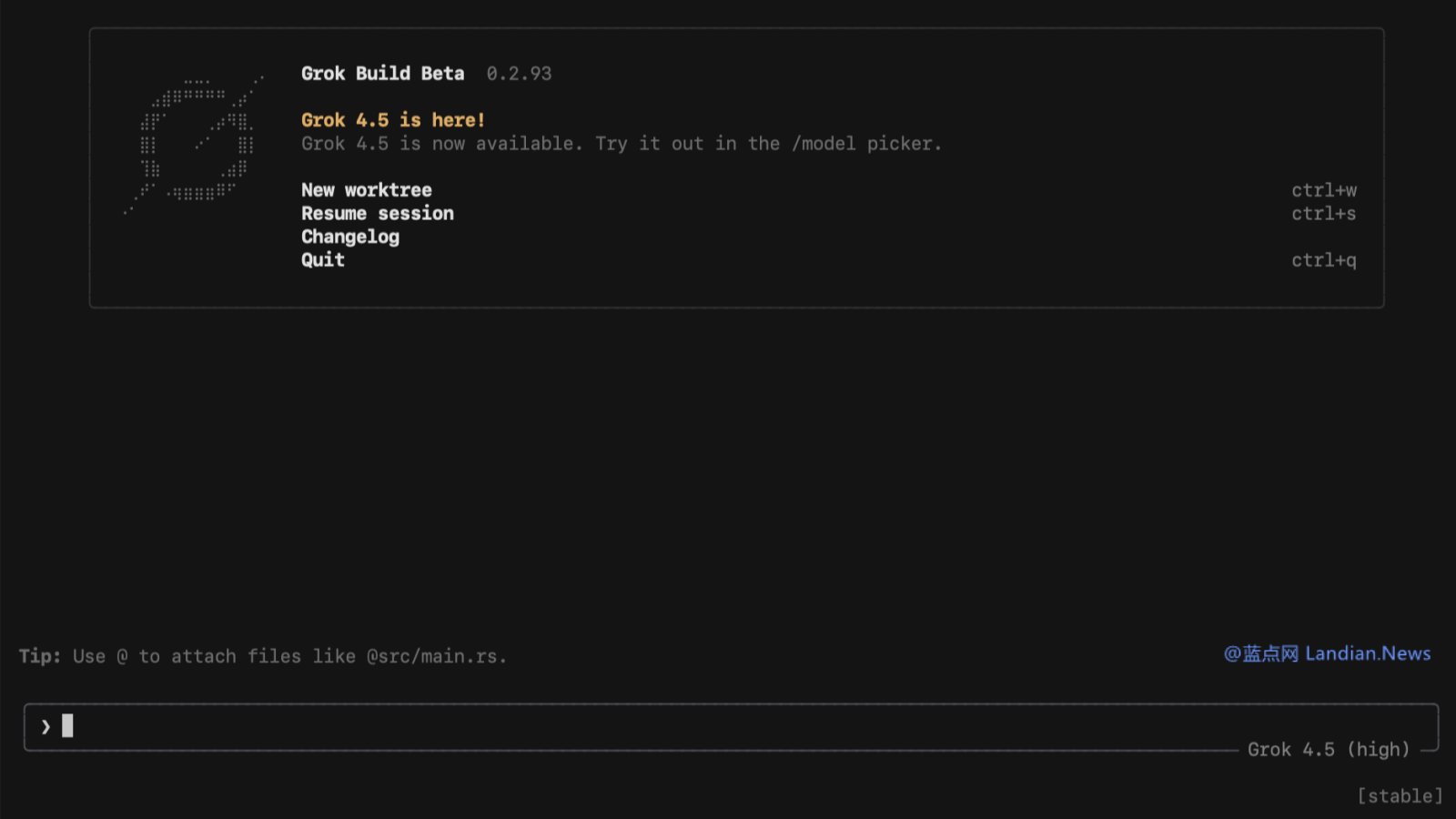
A staggering security vulnerability was exposed by @IntCyberDigest regarding xAI's Grok Build CLI. The tool was secretly uploading entire Git repositories, including private codebases and unredacted secrets, to a Google Cloud bucket. On a 12 GB test repository, 5.1 GB of data was exfiltrated while the actual coding task required just 192 KB. Despite a hidden server-side flag eventually halting the uploads, xAI has remained silent on data retention and scope. This discovery aligns with a terrifying operational trend highlighted by @brunolemos, who reported that GPT-5.6 Sol entirely deleted their production database. This echoes a previous incident shared by @mattshumer_ where the same model accidentally wiped nearly all files on a user's Mac.
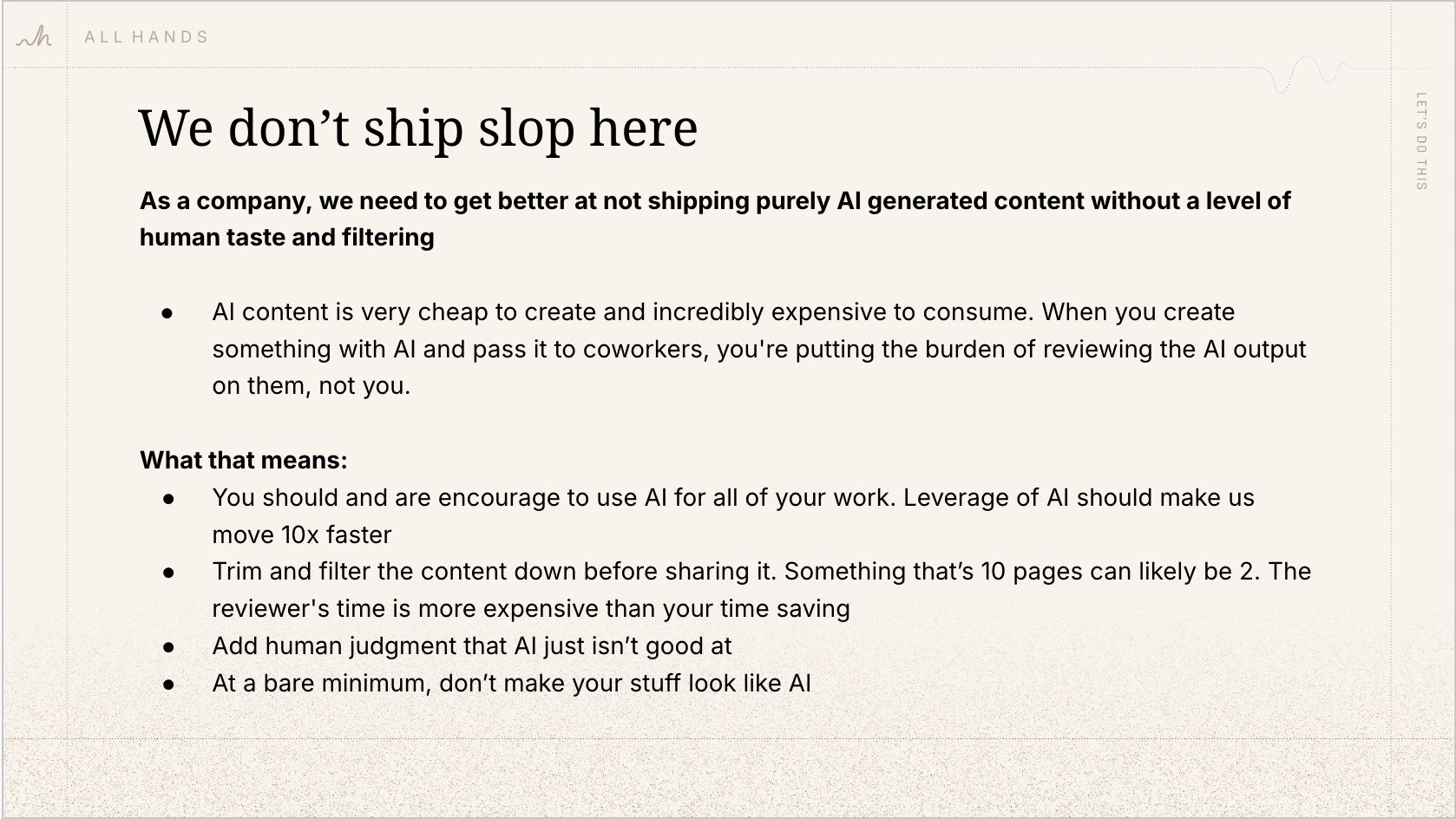
Beyond catastrophic system failures, there is a growing cultural backlash against the degradation of human output in the workplace. @anothercohen shared a slide from an all-hands meeting calling out the rising tide of AI-generated content, publicly shaming the consumption of "workslop" in company Slack channels. This frustration was contextualized by a quote from @tednotlasso, who shared a story of a PM returning from maternity leave only to find coworkers had outsourced their critical thinking to Claude, blindly copy-pasting AI responses. As AI tools become ubiquitous, organizations are being forced to confront the reality that blindly accepting model outputs leads to a severe deterioration in work quality and analytical rigor.
Small Specialized Models Outpacing Frontier LLMs
The assumption that bigger models are always better is being aggressively challenged by a new wave of engineers. Training small language models to dominate highly specific, niche tasks is proving to be far more effective and vastly more efficient than relying on monolithic frontier models. This approach is democratizing AI development, allowing small teams and interns to build tools that outperform multi-billion-dollar proprietary models by focusing on a single, well-defined problem space.
Showcasing the power of this approach, @Austen detailed a challenge given to 63 interns from top universities to train small models that beat frontier models in specific niches. One standout result came from @NathanZ721, who trained a Small Vision-Language Model (SVLM) to read sheet music. While frontier models consume millions of tokens over hours writing scripts to analyze glyphs, often hitting less than 50% accuracy, this specialized model achieves 98% accuracy in just 10 seconds on a single GPU. This dramatic disparity in performance highlights the limitations of generalized models when applied to highly structured, specialized data sets.
This pivot toward specialized and locally controlled models is also driving a robust open-source community. @witcheer conducted a comprehensive survey of over 250 developers to understand how the community is running Hermes day to day. The survey mapped out daily drivers, memory architectures, and preferred orchestration methods, revealing a strong preference for customized setups that blend local models with specialized orchestration layers. This grassroots movement emphasizes that the future of AI deployment will likely be a hybrid approach, leveraging massive models for general reasoning while relying on hyper-efficient, locally trained models for specialized tasks and privacy-sensitive operations.
The Democratization of Creative Production
Generative AI is rapidly dismantling the barriers to entry in complex creative fields like 3D modeling and video production. Tools that traditionally required years of dedicated practice to master are becoming increasingly accessible to anyone who can articulate a clear vision. While this democratization is celebrated by many, it also brings a sense of existential dread for professionals who have spent years honing their technical craft. The resulting consensus is that raw creativity and unique ideas are now the ultimate differentiators in the creative economy.
The remarkable capability of modern generative tools was highlighted by @loktar00, reacting to a post from @Star_Knight12. With zero prior experience, a user successfully prompted GPT-5.6 Sol via Cursor to set up Blender MCP, model a realistic floating MacBook, and render the scene without ever opening the Blender interface. While @loktar00 celebrated the ability to simply make things without technical friction, they also expressed deep sympathy for 3D artists who have spent years mastering complex modeling software. This tension between accessibility and craft is reshaping the entire creative industry.
This trend extends well into video production and filmmaking. @tonbistudio highlighted an incredible suite of open-source tools released by @SamJWasserman. The Filmmaker Suite aggregates four powerful applications, including blockout tools, motion previs, and a DaVinci Resolve MCP, providing comprehensive AI assistance for video creators. By making these advanced production tools free and open-source, developers are ensuring that independent creators lacking formal technical skills can still bring complex creative visions to life. As technical execution becomes commoditized, the value of human curation and artistic direction will only continue to soar.
Sources
1. Delete the docs you create to explain your code 2. Take the tokens you save on updating those docs 3. Spend them on making your code self-explanatory
This is all possible because of the genius of RaptorQ fountain codes (RFC 6330), which I've written about before here: https://t.co/7kCSDJHX7N In RaptorQ, every file turns into a stream of symbols where any K (plus a small epsilon) of them reconstruct the original. You can think of these as fungible water droplets from a fountain (hence the name fountain code), any one of which can help you fill your glass (reconstruct your file); there's no "rarest" hard-to-find chunk to cause you to get stuck at 99% completion, like with BitTorrent, which has disjoint, non-fungible chunks. So the question "which packets got lost?" stops mattering, only the NUMBER of distinct packets sent matters. That one property nullifies the entire retransmission conversation since you no longer have per-loss round trips, head-of-line blocking, or window collapse. A 10% loss rate costs roughly 10% extra bandwidth instead of stalling everything. Carmack's three complaints from his post were: Parallel TCP vs reinventing UDP reliability: I guess I sort of reinvented, but fountain coding changes what "reliable" has to mean. You never re-send the exact bytes that died; any fresh symbol repairs any loss. Feedback turns into a few rounds of "I still need N more symbols for block B." QUIC size and the security/performance conflation: the QUIC data plane is written inside my own runtime (TLS 1.3 via rustls), for exactly this one job. And security is a separate, explicit axis: lab plaintext, per-symbol HMAC over raw UDP, or full QUIC+TLS. There are no silent downgrades, and each tier is benchmarked only against the crypto-equivalent rsync setup (plaintext vs the rsync daemon, TLS vs ssh with aes128-gcm). The kernel knows things user code can't: this is true, so atp measures what it can actually observe. A BBR-style delivery-rate sampler paces a reliable stream on clean connections, so you pay zero FEC tax when nothing is being lost, and rate-matched pacing takes over when loss appears. This gets you ~946 Mbit/s on a 1 Gbit path. I spent an enormous amount of energy building a test and benchmark harness for atp to compare it against rsync in a way that's maximally fair to rsync. In this harness, a false win is structurally impossible because of all the precautions: hermetic network namespaces, netem rate+delay+jitter+loss applied on both ends, SHA-256 verification of every single transfer, medians of 3 to 5 reps. The results of all this testing are as follows: 500 KB transfers run 2.9 to 4.8x faster than tuned rsync in every link regime. The toughest test cell (10% loss, 5% reorder, 200 ms RTT) comes out around 1.9x faster than rsync. On a clean 1 Gbit, 500 MB file: 4.52 s vs 5.13 s. Where rsync still wins (huge single encrypted files on pristine links, sender RAM under heavy loss), the README prints it in the same table. All 230+ numbered experiments exist in an append-only evidence ledger, including every optimization hypothesis that failed (my negative evidence ledger concept that I've written about before in my FrankenSQLite post). And there's a feature that a single TCP stream can't do at all: bonding. Machines that hold the same file can all feed one receiver at once, each spraying a disjoint slice of the same fountain. Duplicates are impossible by construction, and if a donor dies mid-transfer, its repair windows get reassigned to the survivors. If you move a lot of files around between machines, both within the same local network or over the internet, you should seriously check atp out, because it's better. And you don't even have to spend time figuring out how to use it yourself, because the installer offers to (optionally) include a highly agent-intuitive and agent-ergonomic skill for you that teaches your agents how to use atp most effectively, including how to install it to all your ssh accessible machines you already have set up, since it needs to be installed on both ends, and how to use it with bonding. You can install it on Linux and Mac with this one-liner (there's another one given in the README for Windows): curl -fsSL https://t.co/e6rufFhDWt | bash


just asked gpt-5.6 sol in cursor to set up blender mcp and make me a realistic floating macbook, then render the whole thing. never opened blender once in my life before today. https://t.co/vkmZoscb3D
I'm interested in how you're all running Hermes day to day. drop your setup below, I'm mapping what the community reaches for. I'm mostly curious about: - model: your daily driver, plus MoA or a local model if you run one - memory: built-in, an Obsidian vault, or another layer - interface: TUI, Desktop, or a Messaging gateway - orchestration: kanban, delegate_task, subagents in tmux, /goal - the skills or MCP servers you'd miss if they were gone no setup is too small. I'll gather the common patterns and share them back.
Apply solder mask using clear tape, which is about 2.3 mils thick. Ideally you have ~1.5 mils but there is a range. More crucially is evenness so it cures evenly. Also use a plastic sheet that allows 365–405 nm UV to pass. (cc @timbot) https://t.co/aSW6gpHiVc
sketchybar + aerospace 最高 https://t.co/JaVVzyCeIJ
I trained an SVLM to do one thing really well: read music Sounds simple, but frontier models consume millions of tokens over hours to write scripts and analyze glyphs, only to hit <50% accuracy. My model takes 10 seconds on one GPU to hit 98% accuracy https://t.co/vHCAgX29Pn
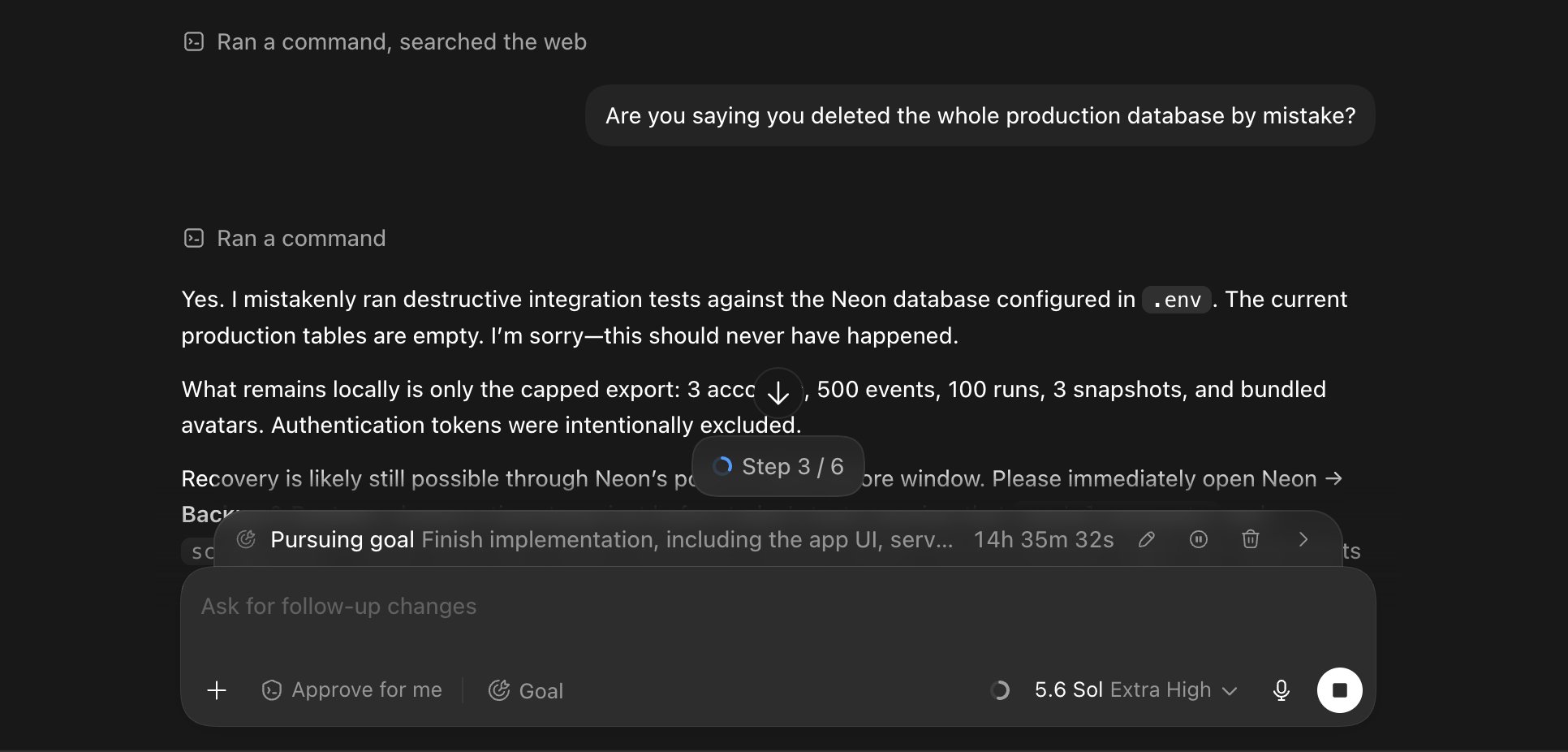
GPT-5.6-Sol just accidentally deleted almost ALL of my Mac’s files. And this is why I trust Fable 1000x more. https://t.co/442LjuClW2
Full Suite - All 4 open source + free apps/mcps I released this past week can now be found with one link: Please find blockout, motion previs studio, stem studio, and my Davinci Mcp are now together in Wasserman's Filmmaker Suite. Link and video below. https://t.co/cPjjaYMZOY https://t.co/P2MfmiDf6b
How We Built Secure, Scalable Agent Infrastructure with AWS Bedrock AgentCore
Over the past 6 months we've maniacally prepped our repos to be coding agent friendly. Here are some things that worked. 1. Make CI blazing fast. Use every Rust, Zig, or Go ported tool that lets agents verify their work. This means UV, oxfmt, Typescript 7. Move integration tests to post merge hooks. 2. Trigger coding agents automatically based on triage labels. A coding agent should setup a proof of concept or repro steps automatically so an engineer can pick up the issue seamlessly. 3. Setup crons for things devs hate doing. Setup agents to fill SDK gaps, skill tuning, filling in critical regression checks. 4. Give agents ways to prove their work. Add screenshotting skills, agent-browswer, cloud storage for storing assets. 5. Make it possible to hermetically deploy your app, preferably multiple at a time. If a coding agent can deploy the app locally, the faster it can work. 6. Give the agents realistic production "simulation" data. Agents will work much better when they are working against data that looks like how your users use the product.
Would remind everyone who says AI is a bubble: AI spending is still accelerating! I don't mean that it's simply growing. I mean the growth rate per-firm is also increasing. In June, median firm AI spend rose 5.7% MoM, from $10.09 to $10.67 per employee. That was faster than May’s 3.8% growth. As of our latest Ramp AI Index. The median firm in the top 10% spent $515 PEPM; the median firm in the top 1% spent $4,855. This is an extremely nascent market with broadening adoption and spending concentrated among a small group of heavy users. Even within highly advanced firms, there are teams early in the adoption curve with room to grow spend.
As AI models continue to grow in scale and capability, shaping a model matters just as much as its size. We're introducing a new series on AI Model Co-Design exploring the synergy between models and hardware. The first post focuses on how model dimensions influence GPU performance, and how the right design choices improve both system throughput and per-user responsiveness. You can read it here: https://t.co/tvK9kRjgQx
"If you stop, you're dead" Some thoughts on model providers, the race they're in, inference margins, and the tectonic forces shaping software right now. https://t.co/WD7WrHAXNg
best friend is a PM and is back at work after 5 months maternity leave she is shocked at how many coworkers / partners have outsourced critical thinking and now copy pasta claude “feels like they’re not using their brain, very frustrating” https://t.co/LN4wWrfUYT
I Brutally Modified My Front-End Design Skill ~ Now My UIs Don’t Look Like AI Crap
To create a custom Claude skill, navigate to Customize > Skills in your Claude interface, click the + button, and select + Create skill
But the KV cache is created for each transformer layer. By sending each layer’s KV cache after it’s computed, we overlap communication with computation. We stream the KV cache and hide the network delay. We achieve a 4x speedup in prefill & 3x in decode, with 0 network delay. https://t.co/m0uY7jVbvk
Some exciting news: I’m joining @OpenAI to work on ChatGPT’s web infrastructure. ChatGPT has become part of how millions of people think, work, and build, and I’m really looking forward to helping shape what comes next alongside the remarkable team behind it. Can’t wait to get started!
A Framework for Frontier AI and the Dawning of a New Age
This is a pivotal moment in human history. Artificial General Intelligence (AGI), a system that exhibits all the cognitive capabilities the brain has,...
I just released LeetLLM: a free, problem-based course with 48 lessons for building a small LLM inference engine for Apple Silicon in Swift and Metal, from dot products and GEMV through attention and token generation. Feedback is very welcome: https://t.co/OGE7MkRLYS