Colibri Runs 744B GLM-5.2 on Laptops as vLLM v0.25 Drops and Agent Harnesses Mature
Today's developments highlight a massive leap in open-source accessibility, with colossal models like GLM-5.2 running locally on standard hardware thanks to pure C implementations and breakthrough quantization. Meanwhile, the developer ecosystem is rapidly maturing around specialized agentic workflows, shifting from simple chat interfaces to highly structured, Neovim-style agent harnesses and rigorous prompt engineering.
Daily Wrap-Up
The narrative that frontier AI models require massive, locked-down cloud infrastructure took a massive hit today. The open-source community continues to aggressively dismantle the hardware barriers to entry, proving that with enough mathematical and software engineering ingenuity, colossal models can run almost anywhere. We saw a 744B parameter model running smoothly on a consumer laptop alongside major optimizations in model quantization that promise to make inference drastically cheaper and faster without lobotomizing the model's capabilities. This sets the stage for a massive shift in how developers deploy and interact with AI, moving away from API dependency toward self-hosted, highly optimized local environments.
Simultaneously, the focus of AI development is pivoting from raw model capabilities to the surrounding developer experience. We are witnessing the emergence of highly customized "agent harnesses" that treat AI coding assistants less like casual chatbots and more like deeply integrated, modifiable compilers. Developers are demanding absolute control over their tools, crafting intricate system prompts to enforce strict writing styles and building complex multi-agent frameworks directly within their IDEs. The era of accepting default AI outputs is over, replaced by a rigorous desire for deterministic, tightly controlled workflows.
The most practical takeaway for developers: stop relying solely on default cloud APIs and start investigating local inference optimizations and custom agent harnesses, because the tools to run frontier-level models efficiently on your own hardware are maturing rapidly and will soon become a massive competitive advantage.
Quick Hits
- @elvissun shared a highly effective workflow using the Fable AI to analyze high-growth startups via the TrustMRR MCP, reverse-engineering their marketing channels for rapid competitive intelligence.
- Following up on recent usage limit controversies, @theo praised OpenAI for their unprecedented transparency after they identified and fixed a bug where expanded context windows in GPT-5.6 Sol were accidentally draining user usage allowances faster than intended.
- The AI infrastructure market is heating up, with @ericosiu amplifying a mega-bull case that massive value will be unlocked if market share shifts away from frontier labs currently enjoying 90% plus inference margins.
- Microsoft's ongoing chess match with OpenAI continues, as @hal2001 analyzed Satya Nadella's comments on the "Reverse Information Paradox," noting the strategic incentives tech leaders have to handicap competitor data capture.
- For developers looking to improve their AI-generated designs, @MengTo highlighted a new interactive dictionary tool by @argofowl that helps users name UI patterns, giving them the precise vocabulary needed to prompt design agents effectively.
- @thdxr shared a humorous but insightful look at the complexities of digital design, recounting how a simple request to fix color tokens led to @jlongster building a mathematical tool to study how physical light hits the human eye.
- @grok announced that Grok 4.5 is now available on Julius, pitching it as SpaceXAI's smartest model yet for production-grade coding and agentic tasks.
Local Inference Breaks the Hardware Barrier
The open-source community achieved the impossible today by running massive, frontier-scale models on standard consumer hardware. The star of the show is Colibri, a pure C implementation with zero dependencies that managed to run GLM-5.2, a massive 744B parameter Mixture of Experts (MoE) model, on a laptop with just 25GB of RAM. The software works by keeping the dense part of the model resident in memory and streaming the expert parameters from the disk on demand, as only about 40B parameters activate per token. @BrianRoemmele celebrated this achievement, noting that it proves frontier-level capabilities are no longer locked behind massive enterprise API paywalls.
This leap in local performance is heavily supported by parallel breakthroughs in quantization. @waterloo_intern detailed a new quantization algorithm developed by a research intern that actually beats existing state-of-the-art solutions, including Nvidia's official modelopt. To run massive models efficiently, labs must quantize them, shrinking parameters from 16 bits down to 8 or 4 bits. However, doing this improperly lobotomizes the model, which is often why users complain about AI labs nerfing their products. This new algorithm finds the optimal configuration to slash model size in record time without damaging performance.
These software breakthroughs are rendering previous infrastructure playbooks obsolete. @albustime noted that the combined updates in the new vLLM v0.25.0 release, which include a unified Streaming Parser Engine and universal speculative decoding, made roughly 90% of their engineering work over the last three months redundant. For end users, this translates directly to uncensored, highly capable local setups. @jun_song shared their experience running SuperHY3-Abliterated on a 2xDGX cluster, noting it handles Sonnet-5 level tasks flawlessly without ever refusing a prompt. Together, these advancements prove that software ingenuity is temporarily outpacing hardware constraints.
The Rise of the Agent Harness
As models become more capable, developers are realizing that standard chat interfaces are woefully inadequate for complex engineering tasks. The focus has shifted toward building customized "agent harnesses," environments where developers have absolute control over how the AI reasons, writes, and interacts with their codebase. @0xSero heavily recommended the tool pi, calling it the "vim of agent harnesses." This comparison to Neovim is highly intentional. Developers want an AI environment that is deeply modifiable, keyboard-centric, and entirely stripped of unnecessary conversational bloat.
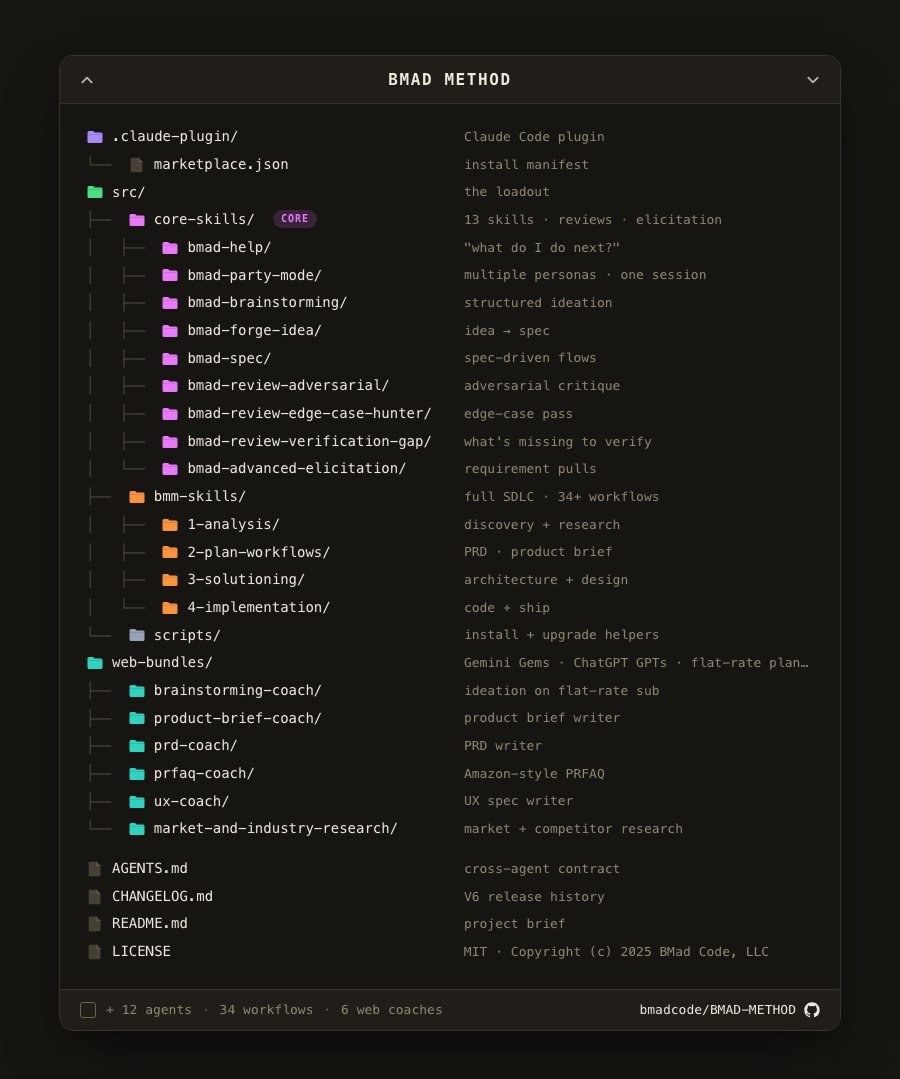
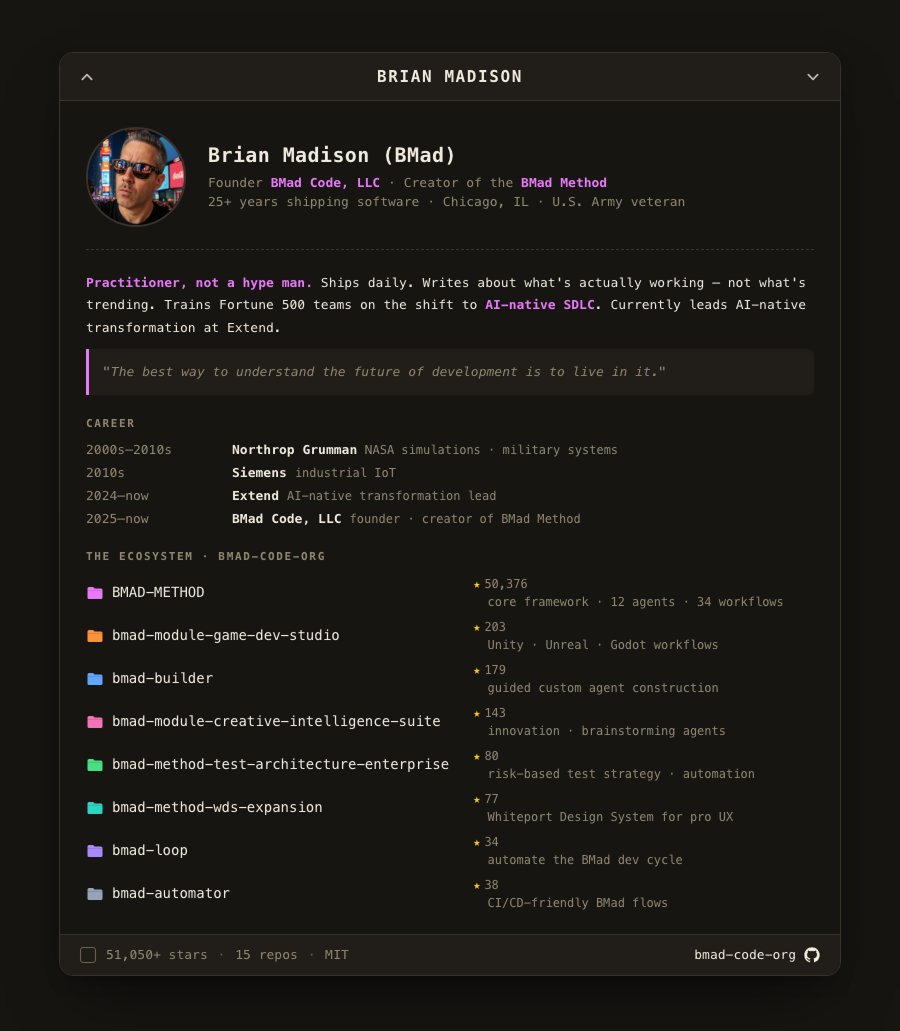
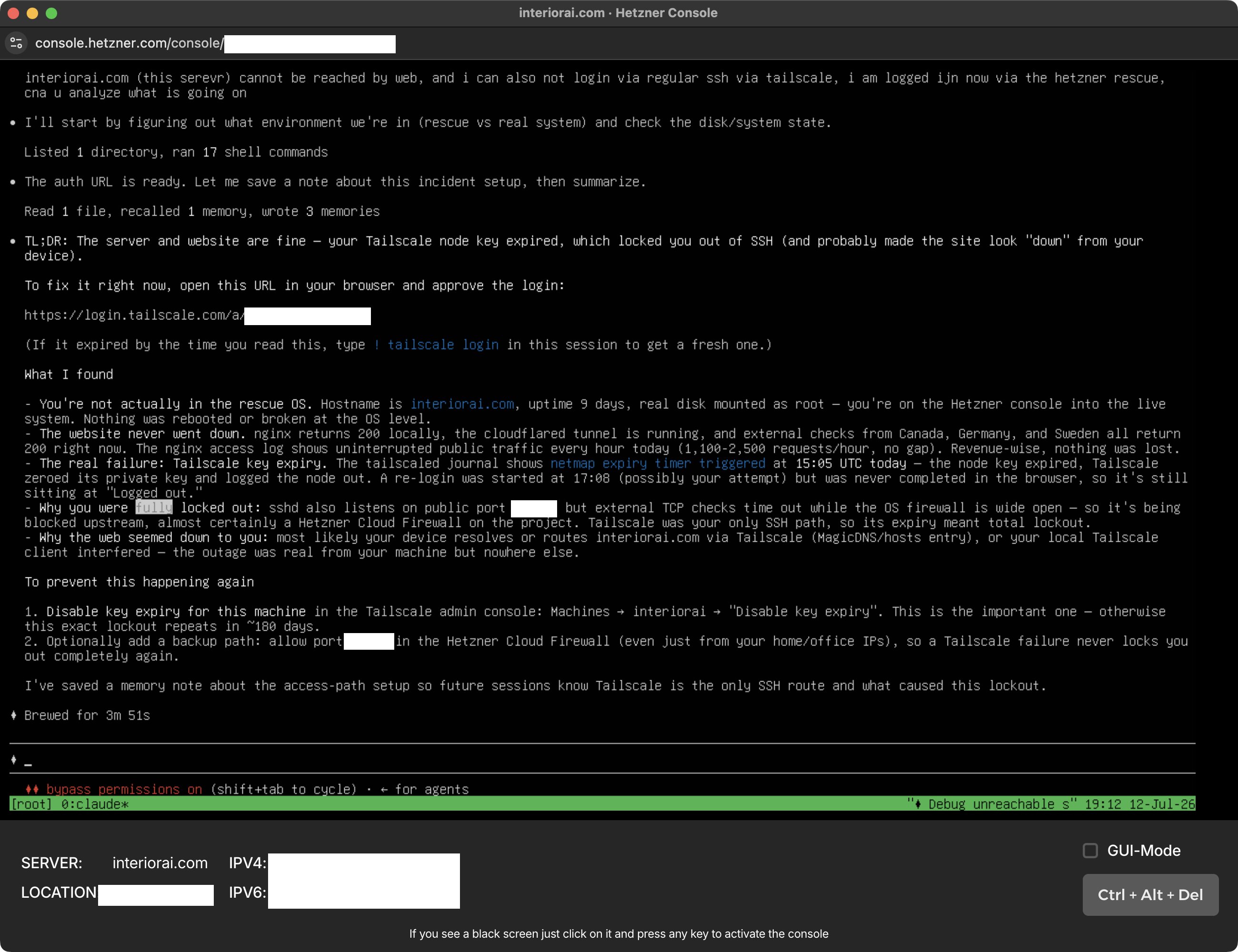
A major part of this shift involves aggressively tailoring the AI's output style to be information-dense and strictly utilitarian. @injaneity shared a highly refined system prompt used to force models like Claude Fable to write like a sharp engineer rather than a verbose assistant. The instructions explicitly ban tables and blockquotes for small amounts of content, demanding that the AI lead with actionable information and fold background context into subordinate clauses. This mirrors a broader trend where developers are actively rejecting standard conversational AI formats in favor of raw, processed data. This philosophy is being scaled up into massive frameworks. @ArchiveExplorer highlighted the BMad-METHOD, a drop-in framework for Claude Code utilizing 12 specialized AI agents that take a project from brainstorm to shipped code across 34 distinct workflows. Even in standard troubleshooting, developers like @levelsio are using Claude Code to log into rescue consoles and diagnose complex server lockouts, treating the AI less like a chatbot and more like an autonomous site reliability engineer.
AI Accelerating Scientific Research
We are officially in an era where AI is moving past generating boilerplate text and beginning to solve high-level theoretical bottlenecks in academic research. The capacity of large language models to process massive amounts of niche literature and identify non-obvious connections is proving invaluable. @42_gravity shared a remarkable account from Yuji Tachikawa, a researcher in mathematical physics and string theory. Tachikawa fed his six-month-old stagnant research notes to Claude Fable. To his surprise, the model made a non-trivial observation and essentially solved the theoretical problem.
What makes this truly remarkable is the model's use of autonomous verification. The researcher noted his surprise when Fable began writing code using the SymPy library to automatically verify its own mathematical predictions. The AI was not blindly hallucinating text; it was actively checking its math against computational logic. Tachikawa concluded that the model genuinely understands string theory and possesses scientific intuition. This proves that we are moving past AI as a simple research summarizer and into an age where it functions as a deeply capable collaborative peer in highly specialized, abstract fields.
The Era of Accessible Enterprise SLMs
While running massive trillion-parameter models locally is a massive flex, the real enterprise money is shifting toward Small Language Models (SLMs) that are highly tuned for specific tasks. The barrier to entry for training these specialized models has completely collapsed. @zekramu highlighted the release of Inference AutoTune, a tool that allows developers to distill any frontier model into a 1-30B parameter task-specific SLM using just 25 lines of code. The process takes roughly two hours and costs under $250, making it incredibly accessible for startups and enterprise teams alike.
This represents a massive paradigm shift for enterprise AI architecture. Instead of routing every single agentic request through expensive, slow, and generalized frontier APIs, developers can train a small, highly optimized model specifically for their domain and application harness. By automatically routing requests to these local SLMs, companies can reduce their latency and operational costs by over 90% while retaining full ownership of the weights. @zekramu accurately points out that because the barrier to entry is now so low, we are on the verge of an explosion in domain-specific small language models tailored precisely to individual enterprise workflows.
Sources
physical colors are fascinating to me I built a tool to study how we represent all colors. XYZ vs RGB, how it's projected into chromaticity, etc maybe this will help you understand it too! https://t.co/1HT2x04g9b
744B parameters. On a laptop. With 25GB RAM. Colibri runs GLM-5.2 (744B MoE) in pure C with zero dependencies. The trick: only ~40B params activate per token, so it keeps the dense part resident and streams experts from disk on demand. A single 2,400-line C file. No GPU, no BLAS, no Python at runtime. This shouldn't work. But it does. ⭐ 2.1K #AI #OpenSource https://t.co/W8dnCQmNnL Follow for daily dev finds 🔔
introducing prose - a calmer way to speak to codex i've struggled to get comfortable with chatgpt for coding because the way it speaks is jittery, unstructured, forcing you to "search" for an answer in its weird mumblings. claude is much better at this, but can definitely be far too verbose with its blocky 'chat-walls' i've distilled the best parts of claude's writing style, and some extra additions into a 22-line markdown file, to make our agents speak more clearly.
Build Your Opus 4.8 Workspace on GitHub
vLLM v0.25.0 is out! 558 commits from 232 contributors (64 new). 🎉 Highlights: Model Runner V2 is now the default for all dense models, the legacy PagedAttention implementation is retired, the Transformers backend now runs as fast as native vLLM, a new unified Streaming Parser Engine, universal speculative decoding across heterogeneous vocabularies (TLI) plus new DSpark and DFlash drafters, and new models including Hy3 and Unlimited OCR. Thread 👇
this one has been sitting in my drafts for way too long, i finally finished it and im back to blogposting i have been using pi since jan/feb and im loving it. after nix shilling, i want to introduce (and shill) one of my fav tools so far, made by @badlogicgames (now under earndil) and i treat it like neovim configs, hence the title of my blog post
The Reverse Information Paradox

最近 Claude Fable を試しているのですが、昨晩ふと、ここ半年ぐらい進展がない共同研究について研究ノートをみせて聞いてみたら、なんと非自明な観察をして、ほぼ解決してしまった。一回目の返事は「計算ミスは一ヶ所みつけましたが同じところで詰まりました」だったが、「そこはこう解決するかなと



Some teaser results for a new quantization method we've been cooking up🧑🍳 GLM 5.2 is getting even faster https://t.co/djT1oKLWzx
I just added an MCP for @trust_mrr 🤖🔗🤖 It's a wrapper around the public API to fetch startups listed with their revenue, MRR, marketing channels, etc. The final step is to build a ChatGPT App around the MCP. I want TrustMRR to be an AI agent first marketplace, and I thought it would be pretty cool to ask "find me the best startup deal under $100K to acquire" 😎
introducing https://t.co/20es64pAqZ a dictionary for ui things you can see but can't name made it because i'm primarily a designer, and my biggest resistance was always knowing what things are called when prompting my agents it learns as people use it: every search teaches the site new words, and the built-in pocket dictionary grows with it give it a try and let me know what you think can't find something? dm me and i'll add it i want this to be the lowest resistance resource you have you can just build things
Updates for Codex and ChatGPT Work users. No nerfing, only good stuff! - We have landed inference optimizations and are passing down savings to all the subscriptions for GPT-5.6 Sol. That should result in around 10% more usage on its own. - We noticed that by changing the context size limit in the product to 372k for GPT-5.6 Sol, up from 272k for GPT-5.5, it resulted in more usage being charged than intended. We have reverted to 272k and will work to roll back out to 372k in the days to come. You should notice that usage drains significantly less after this change. - To understand where the extra usage was coming from, we ran some experiments where reasoning efforts were changed (referred to as juice values under the hood) and have reverted this. - There is slightly more usage of multi-agent than intended in high and xhigh reasoning effort, we are fixing this going forward. Also fixing a small other thing we noticed with auto-review where we can be more efficient. And we continue to have the 5h limit temporarily not apply. Enjoy the rest of the weekend!
We're releasing Inference AutoTune Distill any frontier model into a 1-30B parameter task-specific SLM with only 25 lines of code automatically route requests to reduce cost and latency by >90% ~2 hours and <$250 to train. You own the weights Available in private beta today https://t.co/twwQWwMfof
SuperHY3-Abliterated is now available 🚀 It is the best model to run on 2xDGX Spark (nvfp4, 160gb) or 256gb Mac (MLX-4bit) - Uncensored, the most truthful AI - Fixed broken weight from abliteration - Enhanced overall performance Available in NVFP4 / MLX4 / GGUF ⬇️ https://t.co/W3CfRbamGC