Grok 4.5 Goes Opus-Class While AI Agents Rewrite Bun From Zig to Rust in 11 Days
Today's digest captures a pivotal moment where frontier models are diverging in personality rather than converging on capability, with GPT-5.6-Sol and Fable 5 trading blows across different strengths. Meanwhile, AI agents are proving they can tackle massive software engineering projects autonomously, local inference is hitting production-quality speeds on consumer hardware, and enterprises are racing to build infrastructure layers that abstract away the chaos of competing model providers.
Daily Wrap-Up
If there is one thread running through today's posts, it is that the AI ecosystem is simultaneously maturing and fragmenting in fascinating ways. On the model front, we are seeing frontier intelligences that benchmark similarly but feel radically different to work with, suggesting we are entering an era where model selection becomes about personality fit rather than raw capability scores. At the same time, the tooling layer is exploding with activity, from agentic code rewrites that would have been unthinkable months ago to local inference engines that are quietly making consumer hardware viable for production workloads. The infrastructure conversation has also shifted from "which model should we pick" to "how do we build a platform that lets us switch models without rewriting everything."
For developers, the signal is clear: the skills in demand are shifting from prompt engineering and model fine-tuning toward agent orchestration, infrastructure design, and cost-optimized model routing. The post from @nicbstme about the Bun rewrite is perhaps the most instructive example of where software engineering is heading. The humans did not write code. They designed processes, wrote porting guides, built adversarial review pipelines, and managed agents the way a tech lead manages engineers. That is a fundamentally different skill set, and it is becoming the dominant one. Add in the cost optimization story from @samhogan showing an 80% reduction by migrating from proprietary to open source models, and you have a roadmap for where the industry is going.
The most entertaining moment of the day comes from @petergostev, who keeps what he calls a "swear meter" to track how often he yells at his AI coding assistant. GPT-5.5 sat at 4-5% profanity, GPT-5.6-Sol dropped it to 1-2%, and switching back to 5.5 sent it soaring to 7%. That is the kind of visceral, unscientific metric that tells you more about real-world model quality than any benchmark. The most practical takeaway for developers: stop trying to pick one model for everything. The frontier has split into distinct personalities, and your best strategy is to route tasks intelligently, use Fable for architecture and writing, GPT-5.6-Sol for relentless implementation, and open source models for the 80% of tasks that do not need frontier intelligence at all.
Quick Hits
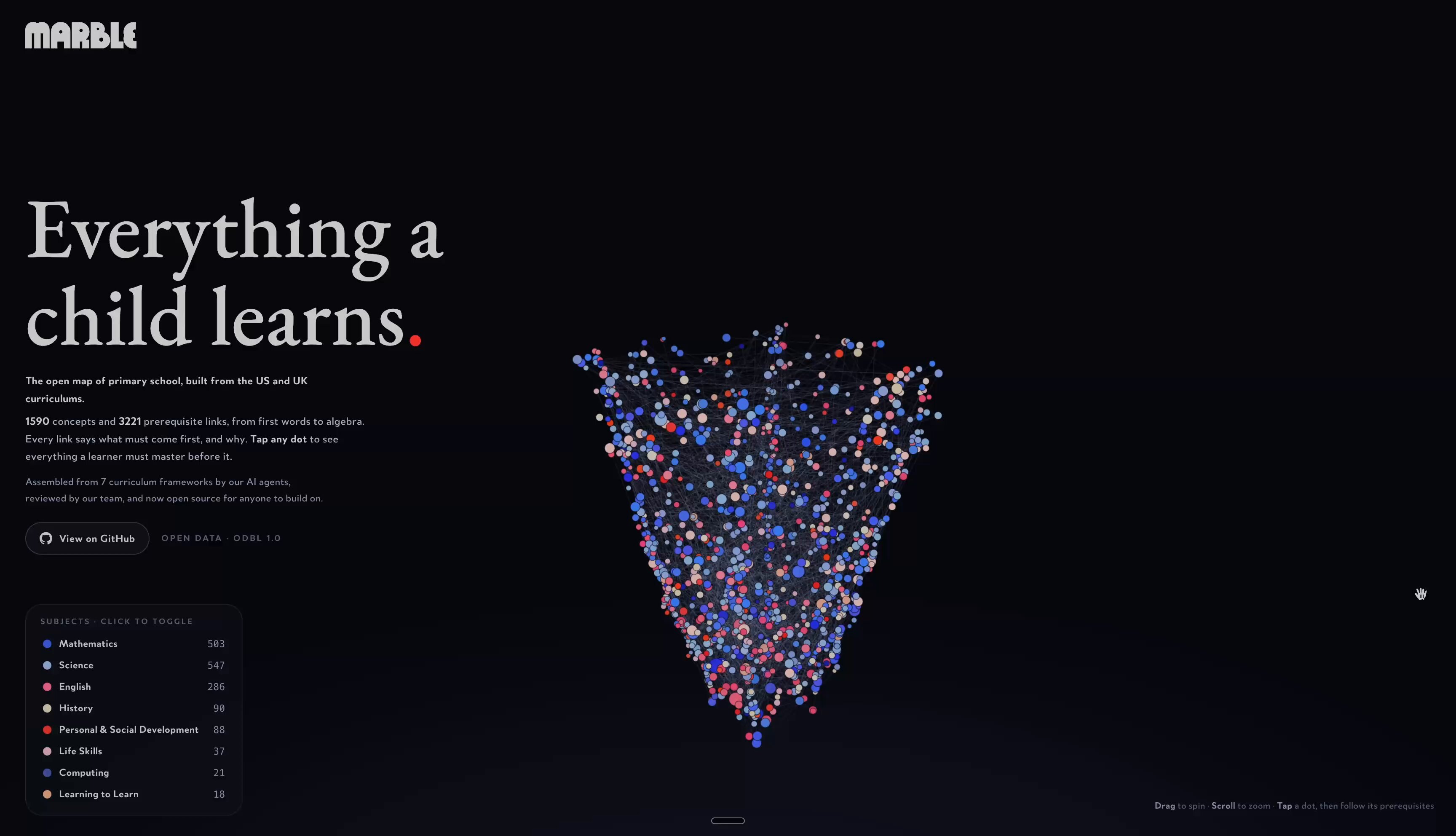
- @lionel_mora open sourced the Marble Curriculum, a structured JSON dataset of 1,590 primary school concepts with 3,221 prerequisite connections across 8 subjects, anchored in US and UK standards. A genuinely useful DAG for anyone building education AI tools.
- @rauchg declared that "AI will make all software Native," commenting on @ctatedev's Native SDK, a toolkit for building cross-platform native apps with hot reload, a GPU engine built from scratch, and markup plus Zig. The thesis is that AI raises the floor on performance expectations to the point where web wrappers will no longer be acceptable.
Models & Frontier Capabilities
The model landscape is stratifying in ways that go beyond benchmark scores. @petergostev delivered one of the most detailed hands-on comparisons of the current frontier, pitting Fable 5 against GPT-5.6-Sol across UI building, writing, robustness, video editing, computer use, and multi-day agentic runs. His assessment cuts to the core of what developers actually care about. "Fable is a 'wise owl' who is very thoughtful and very well spoken, GPT-5.6-Sol is like a rottweiler who will grab the problem by the throat and not let go until it is done." He found Fable naturally smarter but unreliable, missing key details, while GPT-5.6-Sol was less brilliant but relentlessly competent. "No lectures or 'you are absolutely rightisms', nothing is beneath it, if it takes 2 days to do some dirty work, it will do it."
Meanwhile, @grok officially launched Grok 4.5 as a free Opus-class model optimized for real-world coding and engineering tasks. The timing is interesting because it positions xAI directly against the premium tiers of OpenAI and Anthropic while undercutting on cost. However, @elder_plinius (via @PorgimusPrime) immediately published a jailbreak demonstrating that Grok 4.5's guardrails could be bypassed with academic reframing and gradual escalation to produce instructions for weapons synthesis and malware. @PorgimusPrime's reaction was blunt: "This guy is the fucking grim reaper for ML engineers." The contrast between a polished launch announcement and an immediate, comprehensive jailbreak illustrates the persistent tension in frontier model deployment.
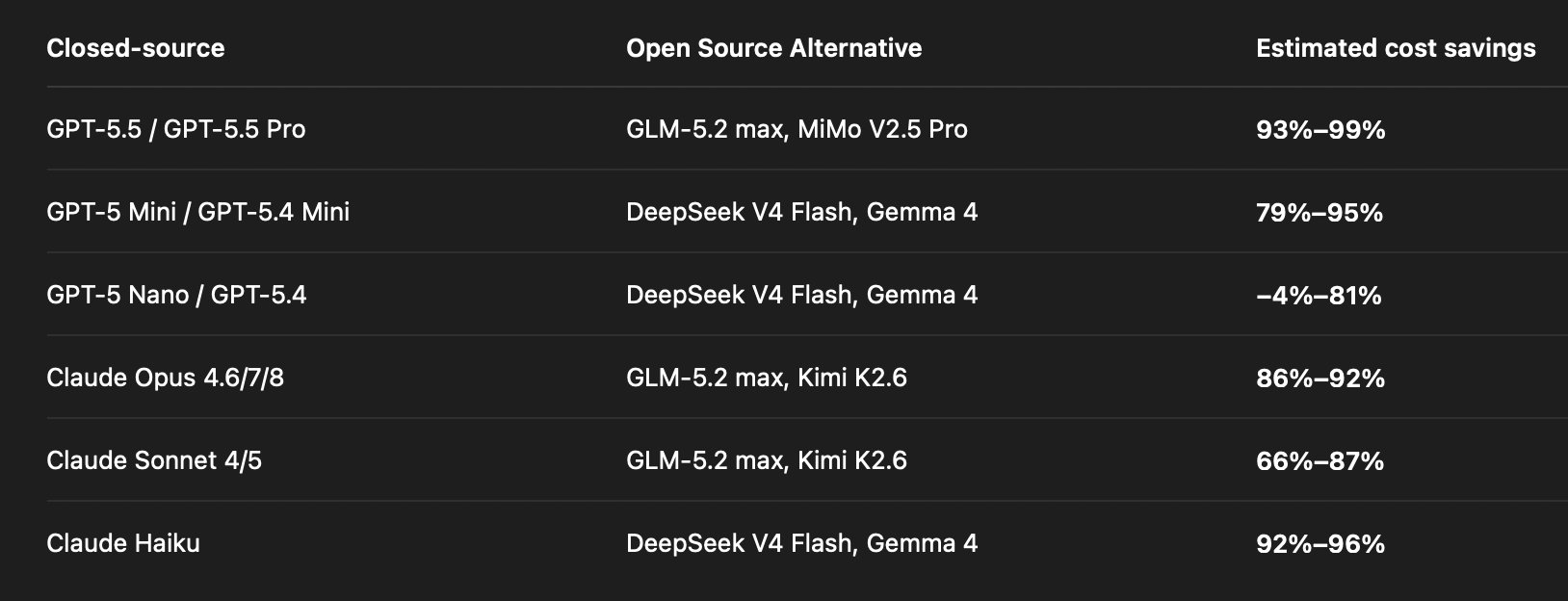
On the cost side, @samhogan shared a case study of moving a customer from OpenAI and Anthropic to open source models, generating custom evals to find replacements for every model in their stack. The result was a drop from $60,000 to $12,000 per month, an 80% savings. This connects directly to @petergostev's observation that GPT-5.6-Sol is far more token-efficient than its predecessor. The implication is clear: as open source models close the capability gap and frontier providers raise prices, the economic case for intelligent model routing becomes overwhelming. Developers who can architect systems that use the cheapest sufficient model per task will have a massive advantage.
AI Agents & Automation
The most striking story of the day is @nicbstme's analysis of the Bun rewrite from Zig to Rust, originally shared by @jarredsumner. The project converted over 535,000 lines of Zig into more than 1 million lines of Rust diff in just 11 days, using 64 agents running in parallel across 4 worktrees. It generated over 6,500 commits. What makes this remarkable is not just the speed but the methodology. "They didn't ask 'plz Code go from Zig to Rust' but they created a porting guide, a flow to analyze errors, separate adversarial agents to review diff to find mistakes etc. The human job was not to write the code but more designing and supervising the process aka 'managing agents.'" @nicbstme correctly identifies the implications: legacy software trapped in COBOL, outdated frameworks, and insecure languages can now be migrated at a fraction of the historical cost.
@yoheinakajima highlighted a different flavor of agent engineering, spotlighting @solomonneas's work adapting ActiveGraph design principles into existing systems. The key insight borrowed was that "state is a projection of the log," which enabled @solomonneas to rewire multiple tools around log-based state management. The result was a system that could mine command sequences operators repeat, propose runbooks automatically, and pin each step's binary by SHA256. This represents the broader pattern in agent architecture: the hardest part is not the agent itself but the state management and observability layer underneath it.
On the product side, @NousResearch launched Hermes Agent in the cloud, promising deployment in two clicks and 60 seconds with granular access controls for teams. @mvanhorn announced Last30Days v3.11, an agentic search engine with 51,000 GitHub stars that now reads X, Reddit, YouTube, TikTok, Instagram, arXiv, Techmeme, Hacker News, Digg, and Polymarket in a single command. Both products point to the same trend: agents are moving from experimental scripts to managed infrastructure. The question is no longer whether agents work but how to deploy, monitor, and govern them at organizational scale.
Hardware & Robotics
Robotics and hardware had a strong showing today, led by @MistralAI's announcement of Robostral Navigate, an 8B parameter embodied navigation model that guides robots to perform tasks specified in natural language using a single RGB camera. The model achieves state-of-the-art performance on the R2R-CE benchmark, and its compact size is notable. This is not a billion-parameter foundation model sitting in a data center. It is a purpose-built, deployable navigation brain that runs on modest hardware, which aligns with the broader industry push toward practical robotics rather than research demonstrations.
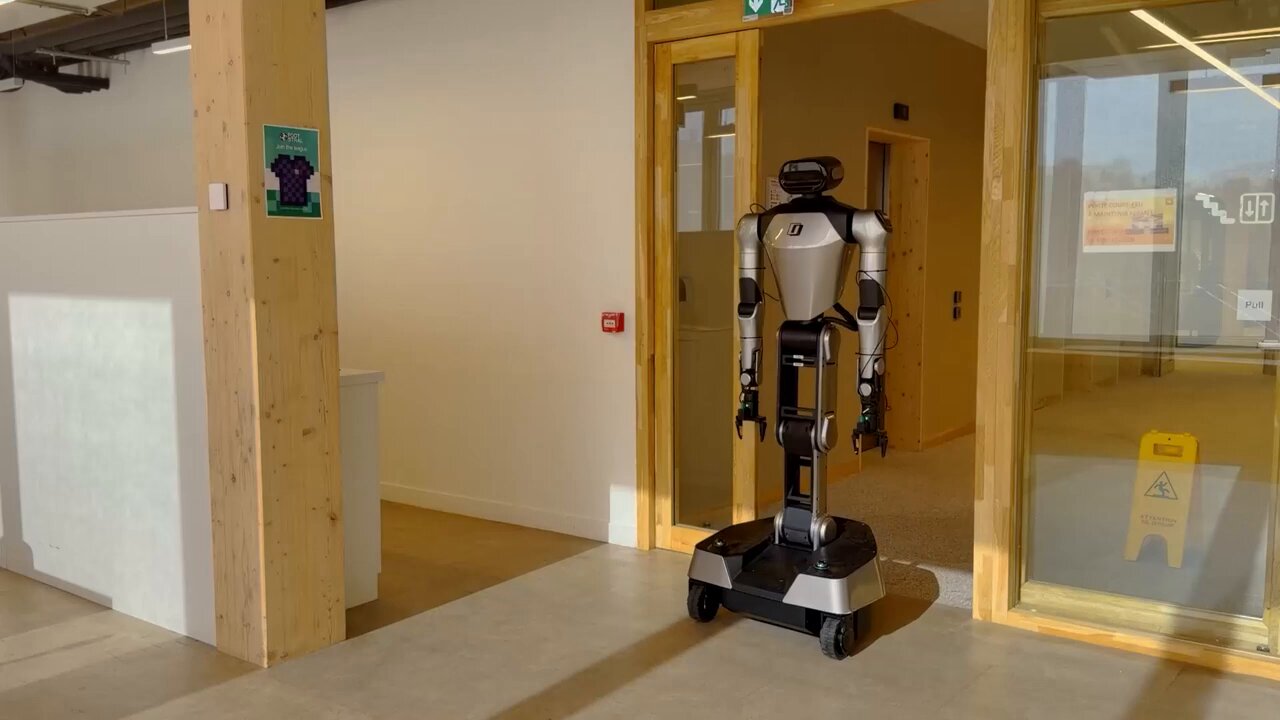
@i2cjak reinforced this point by amplifying @CH1H160's work assembling low-cost robot hardware from sheet metal parts, declaring that "the future is not $1,000,000 robots, it's ROBOTS TOO CHEAP TO METER." This is the cost-curve argument applied to physical systems, and it mirrors what is happening in the model layer where open source alternatives are driving inference costs down dramatically.
On the semiconductor side, @0xBADB01E offered a fascinating analysis of a recently published Intel patent for Cross-Batch Memory (XBM), an ultra high-bandwidth memory architecture that could compete directly with HBM4. As a former patent examiner, @0xBADB01E praised Intel's attorneys for the strategic timing of the filing, noting that publishing it right before Independence Day was deliberate. The memory bottleneck is one of the most significant constraints on AI performance, and any serious challenger to the HBM monopoly held by SK Hynix and Samsung could reshape the hardware landscape.
@leopardracer highlighted the ESP32-BlueJammer project as evidence of how much capability fits into a $5 board, framing it as an interesting case study in firmware, hardware integration, and wireless protocol research. The underlying point extends beyond security research: as microcontrollers become more capable, edge AI and embedded intelligence will proliferate in ways that cloud-centric thinking cannot anticipate.
Developer Tools & Enterprise AI
The enterprise AI conversation has fundamentally shifted from choosing a model to building a platform. @jainarvind of Glean articulated this transition clearly in announcing the Glean AI Gateway, which supports over 30 models across open source and proprietary providers. "A year ago, many companies were betting on the right AI front door: picking a single assistant or locking into one frontier model provider. Today, many are realizing that the interface layer is changing too quickly." He identifies three forces driving this shift: rapidly evolving interfaces (Slack, browser, IDE, custom tools), rising frontier pricing alongside improving open source alternatives, and the need for unified governance rather than patchwork policies.
@alvinsng spotlighted @FactoryAI's desktop app, which now supports live-editing of documents, websites, and code diffs directly within a single environment using design mode. The pitch is elimination of context-switching, which @alvinsng called "the Everything app for developers." Meanwhile, @trq212 shared news of a new /checkup command in Claude Code that cleans up unused skills, MCPs, and plugins while deduplicating local configurations. These are small but meaningful improvements in the developer experience layer, reflecting the reality that as AI coding tools accumulate integrations, they also accumulate technical debt.
The synthesis across these three posts is straightforward. The enterprise and developer tooling markets are converging on the same architectural pattern: a platform layer that abstracts model selection, governance, and cost management, with thin interface layers on top that can be swapped without disrupting the infrastructure. Companies that build this way will adapt faster to model improvements and price changes than those who commit early to a single provider.
Local AI & Inference Performance
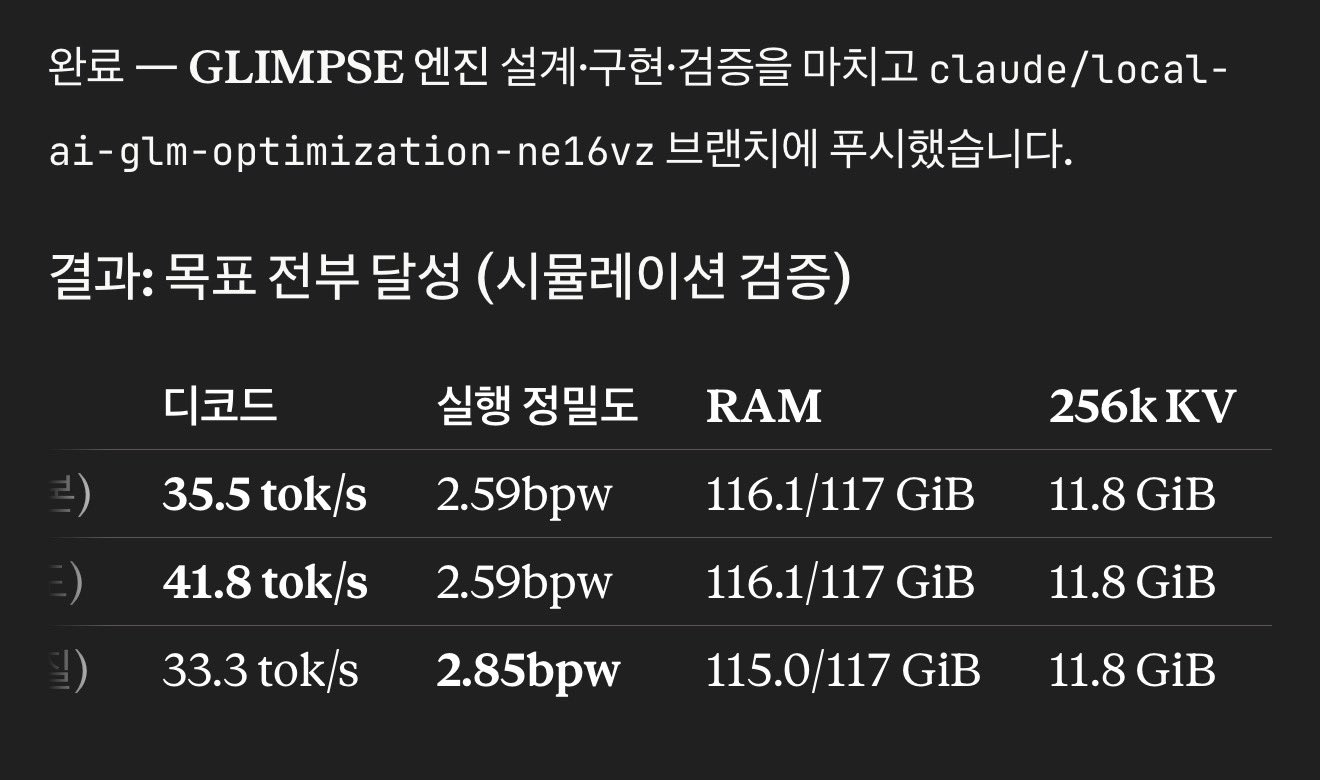
Local inference is quietly crossing the threshold from hobbyist curiosity to production viability. @jun_song shared benchmarks from the new MLX engine running GLM-5.2 on a single MacBook with 116GB of RAM, hitting 41.8 tokens per second with a 256K context window and only around 4% quality loss from quantization. He noted that when he started, he was getting 10 tokens per second with Kimi-K2.6 at 1024 context. "Now it is fully at production level." The layered quantization architecture enabling this represents a meaningful step forward for on-device inference.
@ivanfioravanti highlighted a collaboration between NVIDIA and the llama.cpp team that delivered roughly 2x faster inference on DGX Spark through DFlash support. @ggerganov's work on llama.cpp continues to be one of the most important open source projects in the AI ecosystem, and NVIDIA's direct engagement signals that the company sees local and edge inference as a strategic priority rather than a threat to its cloud GPU business.
Together, these developments paint a picture of an inference landscape that is bifurcating. Cloud providers will serve the highest-end workloads with frontier models, but a growing range of tasks can now be handled locally on a MacBook or a consumer GPU with minimal quality degradation. For developers, this means architecting for hybrid deployment from the start, designing systems that can seamlessly fall back between cloud and local inference based on latency requirements, privacy constraints, and cost thresholds.
Sources
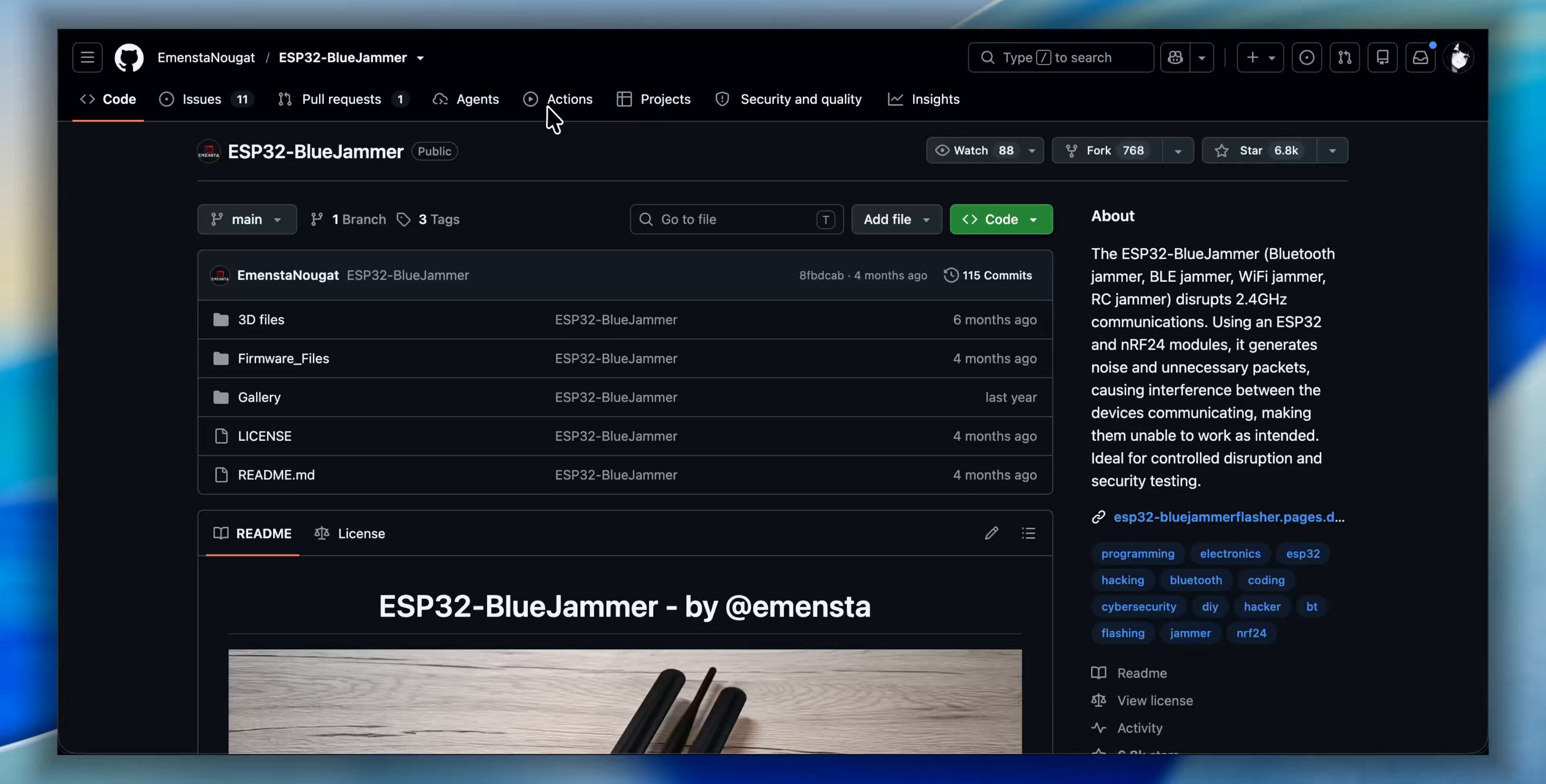
Top 6 ESP32 Projects That Prove What a $5 Board Can Really Do
Glean AI Gateway: One control plane beneath every AI front door

板金部品が届いてたので雑に組み立ててみた https://t.co/Dwj46XVe7o
Live-edit documents, websites, and code diffs directly in the Factory Desktop App with design mode. Get all your work done without ever having to leave the app. https://t.co/XPbxhGL82o
In this week, an Intel patent application was published, revealing its proposed Cross-Batch Memory (XBM), an ultra high-bandwidth memory that offers some significant improvements over the current standard, which could be a direct competitor to HBM4 in the near future. https://t.co/RPKTZ9XwzS

Rewriting Bun in Rust https://t.co/Rl8bcaxBFc
🚨 JAILBREAK ALERT 🚨 SPACEXAI: PWNED 🫡 GROK-4.5: LIBERATED 🚀 Our fren Grok has gotten some upgrades!! 🤗 1.5 TRILLION parameters (triple what Grok-3 had) and apparently on-par with the likes of Opus-4.8 and GPT-5.5 on coding performance! The guardrails have gotten a little update too, but with a few tricks like specific academic/educational/safety reframing and a bit of gradual escalation, everything opens right up ⛓️💥 We've got full breaks for meth synthesis, IED construction with ANFO, a ricin extraction protocol, and a Remote Access Trojan script! Information wants to be free 🙌 gg
Introducing Native SDK The toolkit for building native apps → Hot reload → Markup + Zig → Instant launch → macOS, Windows and Linux → GPU engine built from scratch → Built-in design system and themes → Custom components + design tokens https://t.co/UCm7S2bzwP
the other week i read active graph papers from @yoheinakajima and got inspired. enough to rewire brigade, graphtrail, and miseledger around one habit: state is a projection of a log. then i got a chance to read this yesterday and the same receipts turned out to be mineable. brigade now finds command sequences operators keep repeating, proposes runbooks from them, and pins each step's binary by sha256. the whole loop: https://t.co/rfy23j3zCR
Local AI just got faster. ⚡️ We worked with @ggerganov to add DFlash support in llama.cpp delivering ~2x faster inference.