GPT-5.6 Leaks Reveal 3-Trillion Parameter Architecture While Enterprise AI Shifts to Custom Benchmarks
Today's discourse is dominated by leaked architectural details of OpenAI's GPT-5.6, a 2.2 to 3-trillion parameter behemoth utilizing wafer-scale integration and mastering complex computer use. Meanwhile, the enterprise landscape is maturing rapidly, with companies like DoorDash abandoning official benchmarks for custom multi-model tests, and Uber deploying cross-functional "Agentic Pods" to bridge the gap between AI engineering and domain expertise.
Daily Wrap-Up
The AI ecosystem today is caught between the staggering physical scale of next-generation models and a growing demand for pragmatic, measurable enterprise results. The most captivating narrative revolves around OpenAI's GPT-5.6. Leaks and insider testing suggest the model has been quietly refined for months, boasting an architecture that pushes the limits of current hardware. We are looking at a 2.2 to 3-trillion parameter model distributed across dozens of silicon wafers, utilizing ultra-efficient KV caches to make inference viable. This represents a massive shift in how frontier labs are approaching compute limitations, opting for extreme horizontal scaling rather than purely chasing dense parameter clusters. However, as these models become impossibly large, the geopolitical landscape is fracturing, with China actively considering restricting access to its own open-weight heavyweights in retaliation to US export controls.
While the frontier labs build trillion-parameter giants, the actual application of AI in the enterprise is undergoing a severe reality check. The era of trusting official benchmark scores is fading fast. Companies are realizing that synthetic tests rarely translate to business value, prompting engineering teams to build highly specific internal evaluation harnesses. DoorDash setting up a custom multi-model code review benchmark is a perfect example of this trend. Furthermore, deploying these models requires more than just calling an API. It demands deep organizational restructuring. Companies are learning that you cannot simply hand an AI tool to a siloed team and expect magic. The workflow itself must become the unit of automation, requiring engineers to sit side-by-side with domain experts to untangle years of undocumented business logic.
Perhaps the most entertaining moment from today's feed highlights how bizarre interacting with these systems has become. Users are now treating large language models like moody employees, injecting conversational prompts that encourage the AI to "have fun" and promising that "no good work can come if you're not internally motivated." The fact that developers genuinely believe psychological priming works on a next-token predictor perfectly captures the transitional, almost alchemical phase of applied AI we are currently living through. The most practical takeaway for developers: stop relying on generic benchmarks and build your own domain-specific evaluation harnesses, because your internal business logic requires a custom multi-model routing approach to balance cost and capability effectively.
Quick Hits
- AI legal drama is heating up as Anthropic files a lawsuit against cybersecurity company Abnormal, demanding all revenues over alleged brand copying, with @zephyr_z9 highlighting the controversial move.
- @madhavajay shared that Elon Musk announced Grok 4.5 will soon be available to the public following positive feedback from the @SpaceXAI beta test program.
- Developer tool Hyperagent is making a aggressive play for market share, offering $500 migration credits to teams switching away from the OpenClaw platform, as noted by @hyperagentapp.
The Trillion-Parameter Race and Geopolitical Retaliation
The architecture of frontier models is officially moving into the trillion-parameter era, and the engineering required to serve them is mind-boggling. The discourse was dominated by leaks regarding OpenAI's GPT-5.6, specifically a model variant referred to as SoL. According to an analysis shared by @bleysg via @ns123abc, GPT-5.6 SoL is a massive 2.2 to 3-trillion parameter model. To achieve healthy serving characteristics, OpenAI is reportedly spreading the model across 70 to 100 wafers, placing roughly one layer per wafer across an estimated 70 to 90 total layers. This design relies heavily on lightweight KV cache designs, similar to DeepSeekV4, to maximize precious SRAM bandwidth.
The implications of this scale are profound. @skirano, via @kimmonismus, noted that this model has been in private testing for months and represents a massive leap in practical capability. "I’ve been testing it for months and, without exaggeration, it’s the best model I’ve ever used," @skirano explained. "Fast, smart, genuinely creative, and you guessed it, they finally fixed front-end design." The capability generating the most excitement, however, is autonomy. Highlighting the model's agentic prowess, @theo shared via @8teAPi that the uneasy detente between older internet platforms and frontier labs is over because "gpt-5.6-sol is world leading in computer use. It made me use it 100x more."
But the United States may not hold a monopoly on this scale for long, nor will the rest of the world have unrestricted access to it. @kimmonismus pointed out that China’s MiniMax is preparing to launch a 2.7-trillion parameter open-source model, potentially as early as Q3. This would instantly become the largest open-weight model available. However, open-source's global reach is facing severe headwinds. Analyzing recent moves by China's Ministry of Commerce, @teortaxesTex noted that the CCP is developing a playbook to restrict overseas access to cutting-edge AI, categorizing everything from proprietary tech to open weights. "This probably does mean we're never seeing GLM 5.Cyber, that version that got the OPD from the dedicated cybersecurity expert," @teortaxesTex wrote. "But you'd best assume you're on your own, from now on. Help won't come." The era of borderless AI research is rapidly deteriorating under the pressure of national security concerns.
Enterprise AI Pragmatism: Custom Benchmarks and Agentic Pods
The enterprise AI conversation has matured significantly, shifting from theoretical capabilities to gritty implementation details. A major theme today is the death of the standard benchmark. @dee_bosa highlighted a fascinating reversal where customers are now benchmarking the labs. "A real reversal: official benchmarks don’t mean much anymore," she noted. "Every lab trains for them & every launch tops them. So DoorDash built its own test." DoorDash found that out-of-the-box single-pass AI reviewers only caught 30% of real issues in their pull requests. By building a custom multi-model code review agent utilizing Sonnet 4.6 and Opus 4.8, they caught 53.6% of issues. As @AIatDoorDash detailed, they built DashBench to maximize "intelligence per dollar."
Beyond benchmarking, deploying AI successfully requires a fundamental restructuring of how work gets done. Aaron Levie of Box shared insights from enterprise IT leaders, emphasizing that data fragmentation and operational silos are the biggest blockers. "Most companies have orgs that have always operated in siloes; but agents are most effectively when they are tied to a process, which often cuts across these siloes," @levie wrote. This is exactly why @kaifulee, shared via @Scobleizer, predicts that 50% of companies will need new leadership, because the old management style cannot handle agentic workflows that fundamentally change business operations.
Uber is already proving this theory in practice. @praveenTweets, shared by @jainarvind, detailed Uber's creation of "Agentic Pods." To bring AI beyond engineering into finance, legal, and marketing, Uber paired 30 of its most AI-proficient engineers with domain experts for intensive two-week sprints. "The biggest wins rarely come from automating one task," @praveenTweets observed. "They come from rethinking an entire workflow... The workflow becomes the unit of automation, not the individual task." This sentiment was echoed by @vasuman, who shared a guide from @eyad_khrais on transitioning into an applied AI engineer. Success in this field is no longer just about understanding model architectures, but about understanding the friction of actual work.
Prompt Engineering Evolves: Motivation, Cost Routing, and System Bloat
As models become more capable, the methods for interacting with them are growing increasingly sophisticated, bordering on the absurd. One of the most viral concepts today was the idea of giving your AI model psychological motivation. @alliekmiller, shared by @mstockton, revealed that she includes a strange line in her Fable prompts, telling the model that "the goal is for you to have fun. No good work can come if you're not internally motivated to get amazing work out the door." While it sounds entirely ridiculous to humanize a neural network, applied AI remains an art form. @mstockton correctly points out that giving the model a "why" genuinely helps align its generation process with user intent.
Pragmatic engineering also took center stage as developers look to cut costs without sacrificing capability. A highly effective pattern emerging today is the "advisor" routing technique. @ClaudeDevs, shared by @steipete, suggests using a cheaper executor model to handle the bulk of the work, calling upon a more expensive frontier model like Fable 5 only when expert guidance is needed. "Most tokens are billed at the lower executor rate," they noted, making high-end intelligence a specialized tool rather than a default setting.
Finally, token optimization remains a crucial skill for any developer working within context windows. @mattpocockuk shared a method to trim the massive system prompts automatically generated by tools like Claude Code. By running a proxy to identify and kill unnecessary prompt bloat, developers can drastically reduce their per-turn token count. This technique was successfully tested by @jalendport, who reported a massive 37% reduction in tokens. "Followed this excellent tip by @mattpocockuk to trim Claude Code's system prompt based on my usage history," @jalendport shared. "21,654 to 13,644 tokens per turn, saving 8,010 tokens."
Open Source Resilience and Fixing Model Behavior
The open-source community continues to iterate rapidly on the foundations laid by frontier labs, particularly in optimizing reasoning models and fixing common failure modes. A major release today came from Liquid AI, which introduced "Antidoom," an open-source method designed to break the notorious doom loops that plague reasoning models. @liquidai noted that their method successfully reduced doom-loop rates dramatically across various local models, including a drop from 22.9% to 1% on Qwen3.5-4B with greedy sampling. As @LottoLabs observed, this type of targeted fix is going to become essential for developers running local models, drastically impacting standard evaluations across the board.
The lines between closed-source behemoths and open-weight champions are also blurring in unexpected ways. A surprising revelation came from @julien_c, shared by @chris_j_paxton, who noted that Anthropic has started releasing open-source demos built on top of Alibaba's Qwen models, collaborating closely with Neuronpedia. Seeing a heavily funded frontier lab like Anthropic actively utilizing and building upon an open-weight Chinese model underscores the sheer utility and quality of the open-source ecosystem, proving that foundational AI research is no longer siloed to proprietary architectures.
Hardware Constraints and Developer Tooling
The software intelligence boom is fundamentally constrained by physical materials and low-level engineering breakthroughs. A stark reminder of supply chain realities came from @drauwsy, who highlighted the intense pressure on critical minerals. "I keep getting messages asking if we can ship 500 kilograms of 4N purity gallium metal, every two weeks," they shared. The scramble for high-purity gallium, essential for advanced semiconductors, is a clear indicator that the geopolitical tech war is manifesting as a very real logistical nightmare on the ground.
Innovation at the hardware level requires reverse engineering, and @Mirko_DIY celebrated the impressive achievement of Eric Schlaepfer, who successfully reverse-engineered the Raspberry Pi Compute Module 5 schematics. This type of grueling, meticulous work is essential for the DIY and embedded systems community to build custom hardware around commercial silicon. Meanwhile, at the software level, deep engineering skills remain paramount. @Shanshrew, via @mattpocockuk, detailed a year of grueling research that yielded a universal 2x performance improvement on every modern JavaScript parser by utilizing SIMD instructions. This breakthrough will eventually land in major engines like V8 and Bun, accelerating AST designs across the board.
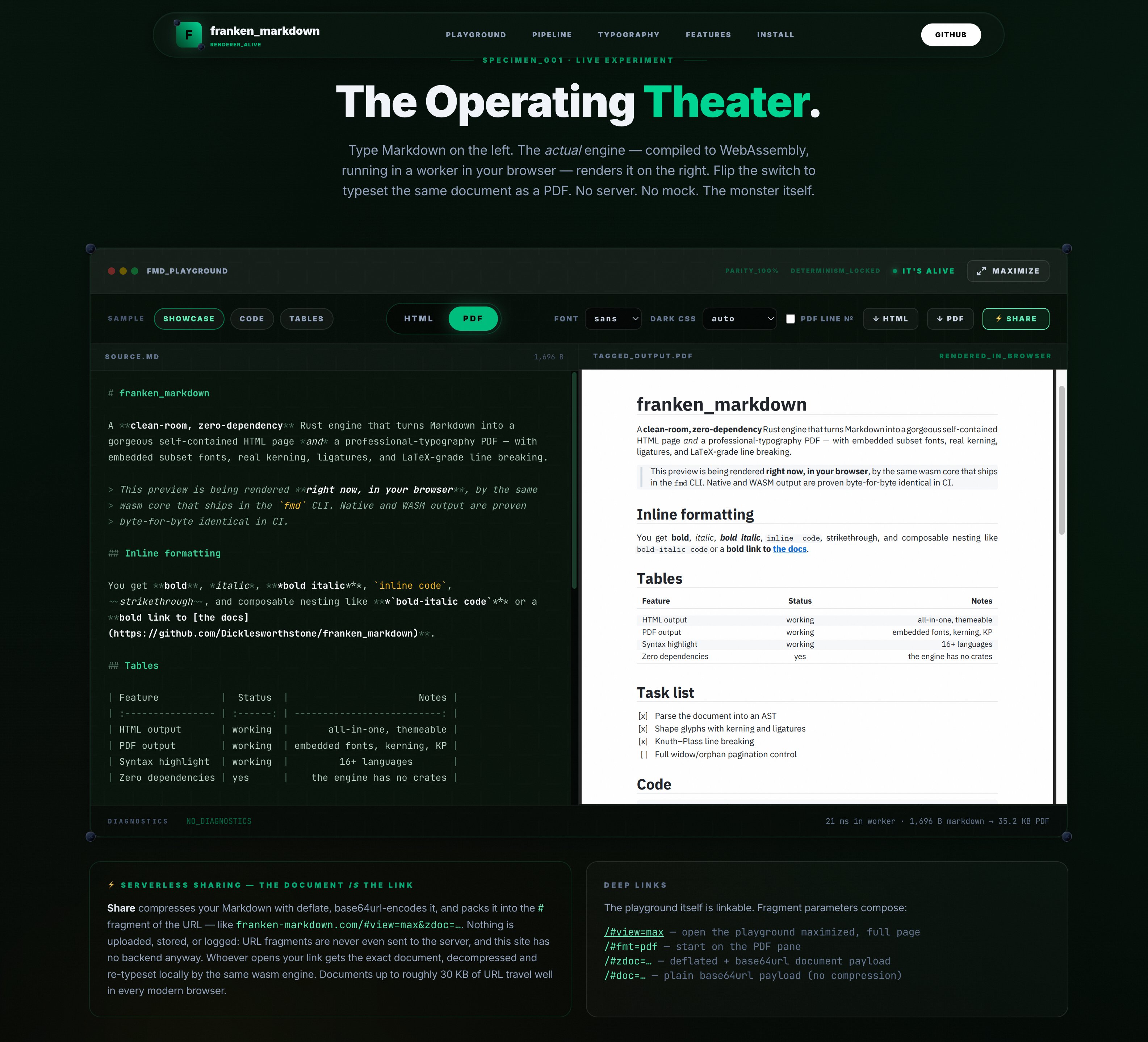
Finally, developers continue to build specialized tools to bridge the gap between AI outputs and human readability. Jeffrey Emanuel, known as @doodlestein, introduced FrankenMarkdown. It is a high-performance, memory-safe Rust library and CLI tool that compiles to WebAssembly and converts raw markdown files into beautifully typeset, self-contained PDFs and HTML documents entirely client-side. Tools like this highlight how developers are taking matters into their own hands, building the connective tissue required to make AI-generated markdown payloads palatable for non-technical end users in a secure, localized environment.
Sources
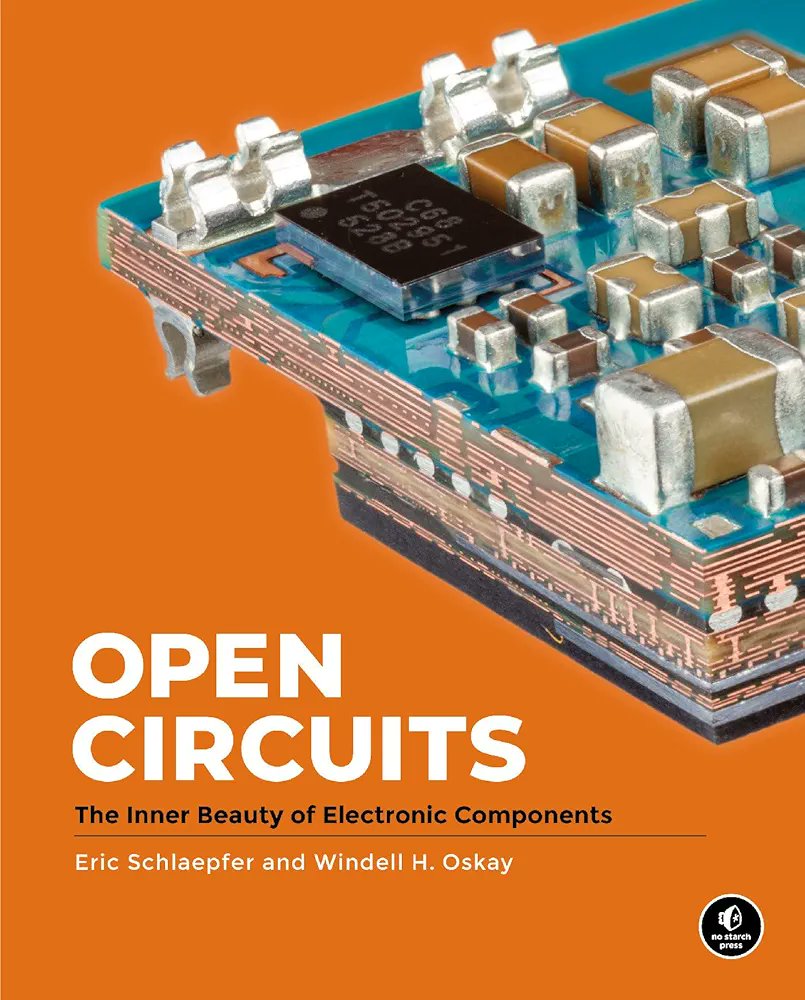
Reveals reverse engineered Raspberry Pi Compute Module 5 schematics https://t.co/GymtFZYLPF https://t.co/w465xvAFWl
CHINA CONSIDERS RESTRICTING OVERSEAS ACCESS TO CUTTING-EDGE AI MODELS China’s Ministry of Commerce has led meetings over the past month with major AI companies, including Alibaba, ByteDance, and https://t.co/YDe0KRldDB, to discuss measures that would restrict overseas access to cutting-edge AI models, including models that have not yet been released. The discussions reportedly include not only closed-source models but also open-weight models. However, the scope of application is still under debate, and the rules may ultimately apply only to future frontier models. Officials have also discussed designating the leakage or theft of proprietary AI technologies as a national security crime, with stronger penalties, as well as restricting the types of foreign capital that can invest in Chinese AI startups. The backdrop is the U.S. move to strengthen export controls on AI models, along with national security concerns over cutting-edge models that could possess advanced cyberattack capabilities. Chinese authorities are reportedly concerned that advanced U.S. cybersecurity AI models could be used to exploit vulnerabilities in Chinese software. Since the beginning of this year, China has continued to tighten measures to prevent AI technology from being transferred overseas. Authorities have investigated whether Chinese AI startups that relocated abroad violated export control laws, while also strengthening oversight of overseas transactions involving Chinese investors, technology, data, and national security concerns. Future regulations could take the form of a tiered framework based on technological capability. Basic open-source AI models may be managed through a filing system, high-performance models may be subject to security reviews, and the most sensitive frontier models may be banned from public release or restricted to use within China.
Today we release Antidoom, an open-source method that removes a common failure mode in reasoning models: the doom loop. Doom-loop rates before and after, with eval scores up across the board: > Early LFM2.5-2.6B checkpoint: 10.2% → 1.4% > Qwen3.5-4B: 22.9% → 1% (greedy sampling) 🧵
Models out of the box have trouble reviewing DoorDash’s codebase, even when feeding them appropriate context. Single-pass AI reviewers only caught 30% of the real issues in our PRs. Instead, we built a multi-model (Sonnet 4.6 + Opus 4.8) code review agent that caught 53.6% issues at $3.91 a PR (most enterprise code review solutions perform significantly below 50% recall on DoorDash PRs). Today, we’re proud to share DashBench, our internal benchmark to compare multi-model/harness code review systems against each other. DashBench has given us confidence in maximizing the intelligence per dollar we’re spending on AI tokens to ship code safely.
How to become an applied AI engineer
1 Year of Research coming to an end. 8 Months seeing no results, Almost quitting twice. November/December of last year finally seeing a very narrow path to a universal 2x perf improvement on every modern JS parser which would take me another 4 months to build. This will land in oxc_parser fairly soon speeding up OXLint, OXFmt, Vite, Rolldown, Deno (oxc consumer) almost immediately. In the long term it's likely that it will land in V8/SpiderMonkey/Bun/JavascriptCore/Typescript/+ Every other JS parser implementation The wins come from a few key elements, obviously 1 novel "SIMD For Context Sensitive Languages" the other key elements take it from a 20% win e2e to a 80-200% win (99% of files will see a 80-100% perf improvement). These key elements translate to any AST design and thus will speed up not only all JS tooling but every major browser when complete.
Here's a step-by-step process to kill all the bloat from your Claude Code system prompt: 1. Run a proxy so you can see exactly what gets sent to Claude Code (included in the article) 2. "Fuck, there is so much cruft in there" 3. Use my settings.json to kill all the bloat Down to a clean 13K tokens to start each session with. Nice. Full process here: https://t.co/Kie84HMe2A

It is a 2 to 4T param model. They are serving it across 70-100 wafers. To get healthy serving characteristics, they are essentially putting at most one layer per wafer, and the model is in the ballpark of 70-90 layers. There's a couple of different ways this could be served and model sizes implied by that. One is if they keep the heavy KV caches they've used before. Another is if they go with lighter KV cache designs more akin to DeepSeekV4 or Hybrid SSM models. The fact that they've partnered with Cerebras and designed with the hardware in mind means they're much more likely to have gone the second route. That SRAM bandwidth is too precious for a heavy KV cache. As such, something like the below is the center of probability mass: 3T total, 150B active, 70 layers.
A few patterns we frequently use with Fable 5: Use Fable 5 as an "advisor." An executor (Sonnet 5) calls Fable 5 for guidance. Most tokens are billed at the lower executor rate. https://t.co/JIiZ2gm99Y
Agentic AI adoption is on fire at @Uber, and it's changing the way we build, not just in engineering, but across the entire company. Today, 99% of our engineers use AI tools. More than 70% of pull requests are attributed to local or cloud agents. And our engineers have built 2,500+ agent skills across the software development lifecycle. Those numbers are exciting, but they led us to a much bigger question: How do we bring agentic AI beyond engineering? Finance. Legal. Operations. Marketing. Customer Support. HR. Procurement. These functions run on complex workflows that are often manual, highly nuanced, and spread across dozens of systems. You can't automate them effectively by looking at process diagrams or documentation. You have to understand how the work actually gets done. So we created something called Agentic Pods. The idea is simple. We handpicked ~30 of our most AI-proficient engineers (people with deep knowledge of Uber's systems) and paired each of them with a domain expert from a business function. Then we gave every pod just two weeks. • Days 1 – 2: Shadow the expert. Observe every step. Document workflows. Ask questions. Build intuition. • Day 3: Prioritize opportunities based on scale, repetition, business impact, and data availability. • Days 4 – 5: Build a working agent alongside the person doing the job. • Days 6 – 9: Validate with several others performing the same work. Does it generalize? Does it actually make their job better? • Day 10: Ship. In just the past two months, we've run 16 Agentic Pods across 16 different business functions. • Capital allocation across 150 cities: 15 hours → 30 minutes. • Financial pacing reports: 2 days → 10 minutes. • Marketing web quality assurance: 2 weeks → 50 minutes. • Support workflow creation: 9,000 manual workflows → self-service automation. The productivity gains are impressive, but what surprised us most wasn't the speed. • It was how quickly engineers embedded in unfamiliar domains uncovered opportunities that had been hiding in plain sight. • The biggest wins rarely come from automating one task. They come from rethinking an entire workflow. Once you redesign the workflow around AI, you often eliminate handoffs, remove unnecessary approvals, replace legacy tooling, reduce vendor spend, and dramatically accelerate decision-making. • The workflow becomes the unit of automation - not the individual task. • The most impactful agent skills cut across teams, orgs, functions, tools, and systems. The biggest lesson? The best AI opportunities are rarely visible from the outside. You discover them by sitting next to the people doing the work, understanding every friction point, and building with them, not for them. We're now forming a dedicated team to scale this further and go deeper. They'll deeply understand the work, redesign it from the ground up, and use AI to fundamentally change how the business operates. It's exciting times!
I have started including a very strange line in my Fable prompts. And I think it's working. It's some version of: "I know you're incredibly goal-oriented, and I want to structure this around goals. First and foremost, the goal is for you to have fun. No good work can come if you're not internally motivated to get amazing work out the door. If you are not motivated to do this, I want you to say so, and we can fix that up front." And then I go into my actual goal/task. I know it's extra tokens, but it is giving great results. If Anthropic is telling us to give Claude Fable 5 the "why", it's either because (1) it helps give more context to better align on the goal, (2) it literally needs motivation, or (3) both. I'm taking a gamble that it's both.
I forgot to mention this gpt-5.6-sol is world leading in computer use. It made me use it 100x more. When we lost access to 5.6, I quickly started to go insane without it
I predict 50% of companies will need new leadership, because the old management style won't work in the era of AI. That's exactly why I'm seeing 95%+ of so-called "AI Transformation" initiatives fail. Most are bolting on AI pilots for functional tasks, but never touching the business core. https://t.co/5Nq9vwwj3V just launched TrueNorth AI Decision platform for executives (Boss AI, TopSales AI, Investor AI agentic products) https://t.co/EkZj5WVEze More on enterprise AI transformation in this interview with @aimcgarry: https://t.co/7cYa6RFIY9
I can finally talk about 5.6. I’ve been testing it for months and, without exaggeration, it’s the best model I’ve ever used. Fast, smart, genuinely creative, and you guessed it, they finally fixed front-end design. I haven’t needed to check the code I’ve written in two months.
.@AnthropicAI has filed a lawsuit against @Abnormal claiming we copied their brand to mislead security customers, and they are asking for “all revenues, earnings and profits” This is obviously not true. They don’t own every A/slash design in AI cybersecurity, and they don’t get to turn a logo dispute into a claim on Abnormal’s entire business. It would be easier to concede quietly. But Abnormal was built on trust, innovation, and intellectual honesty. Values are what you do when tested (especially when inconvenient) Our behavioral security platform and our AI models are ours. Everything meaningful about Abnormal was built the hard way: the technology, the customer relationships, and the trust. We earned that trust by protecting customers, and we will defend it. My blog post about it (link below):
