Stanford Unveils Version Control for AI Agents as New Chip Architectures Target NVIDIA's Inference Dominance
Today's developments highlight the rapid maturation of AI infrastructure, led by Stanford's new "Shepherd" system that brings Git-like version control to autonomous agent workflows. Meanwhile, the hardware sector is heating up with rumors of OpenAI designing models specifically for Cerebras wafers, and independent chip architects proposing novel LPDDR-based designs that challenge NVIDIA's high-bandwidth memory dominance. On the software side, developers are finding clever ways to cut API costs and improve local inference, proving that efficiency is becoming just as important as raw model scale.
Daily Wrap-Up
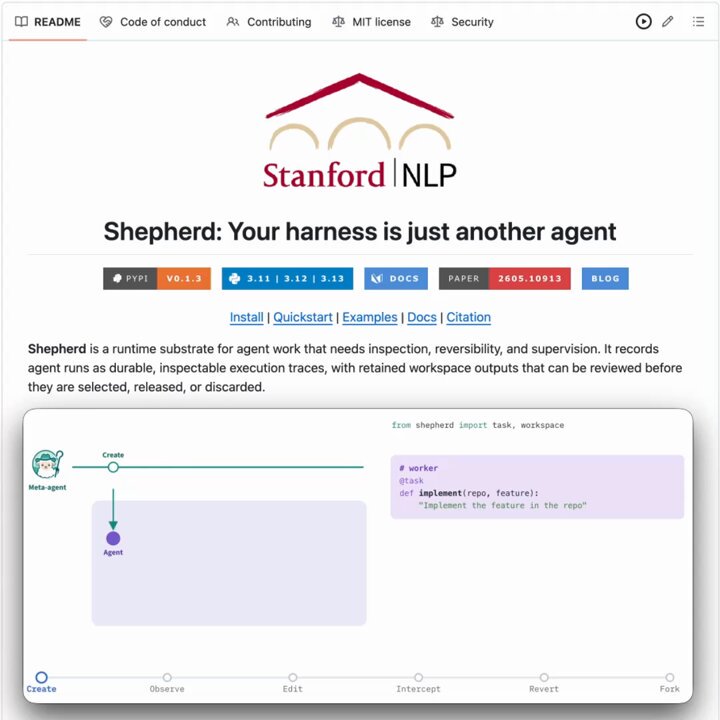
The AI ecosystem is undergoing a massive architectural shift, moving from simple chat interfaces to complex, stateful systems that require entirely new developer tooling. Today's discussions were dominated by the realization that if autonomous agents are going to write code and manage applications, they need the same robust infrastructure that human developers rely on. Stanford's introduction of Shepherd, a version control system designed specifically for live agent runs, perfectly illustrates this trend. By snapshotting the live state of an agent, including memory and the KV cache, developers can finally rollback mistakes without burning massive amounts of tokens restarting from scratch. This shift towards agent observability and state management signals that the industry is getting serious about deploying autonomous systems in production environments.
Parallel to the software evolution, the hardware landscape is facing a serious upheaval. For years, the assumption has been that pushing AI forward requires bigger, more power-hungry NVIDIA clusters relying on high-bandwidth memory (HBM). However, detailed technical breakdowns today suggest that alternative architectures using LPDDR and wafer-scale integration could drastically reduce inference latency and cost. Add in the rumors of OpenAI engineering massive multi-trillion parameter models specifically tuned for Cerebras hardware, and it is clear that the race to serve frontier intelligence at extreme speeds is forcing a fundamental rethink of silicon design.
Despite the macro-level shifts in infrastructure, the developer community remains fiercely focused on practical problem-solving and resource optimization. Engineers are sharing novel ways to manipulate token economics, such as converting long text prompts into images to exploit pricing loopholes in APIs like Claude. There is also a growing movement towards reclaiming compute independence through local AI, with comprehensive guides detailing how to run sophisticated models on everything from single laptops to multi-GPU home clusters. The most practical takeaway for developers: optimize your agent workflows for state recovery by logging your dev server output to a local file, allowing your AI agents to read the file and debug applications without needing to hijack the running process itself.
Quick Hits
- Gopuff is pushing personalized automation by using AI to learn customer preferences and build delivery carts in seconds.
- Software engineers might want to brush up on theoretical computer science, as MIT professors are demonstrating that classic Leetcode problems like 3SUM can be solved faster than the popular optimal solutions.
- A new Herdr plugin automatically polls local Git branches and checks out main when they are merged, saving developers from annoying local tracking issues.
- The open-source community is eagerly anticipating the release of Qwen's 3.7 smaller models, pushing Alibaba for concrete release dates.
- Kernel development remains a highly relevant skill for frontier lab jobs, with veterans emphasizing that low-hanging fruit still exists if you know where to look.
- PocketJS is turning heads by running standard SolidJS and Vue Vapor on a Sony PSP using QuickJS, achieving 60fps animations in just 8MB of RAM.
The Maturation of Agent Infrastructure
As autonomous agents take on longer, more complex tasks, the industry is realizing that a flat log of messages is insufficient for true reliability. When an agent inevitably makes a mistake on step ten of a deployment, restarting from scratch wastes immense computational resources and forces the model to re-process the entire context window. The solution requires treating agent state not just as a conversation history, but as a live environment that can be snapshotted and forked.
This is exactly the problem Stanford researchers are tackling with Shepherd, a runtime layer that records an agent's run as a trace of typed events. As @ _avichawla detailed, "Shepherd is a runtime layer by Stanford that records the run as a trace of typed events rather than a flat log. Each agent-environment interaction becomes a commit, similar to Git, but it tracks the live run." By utilizing copy-on-write techniques, Shepherd can fork the agent process and the filesystem together, allowing the system to revert to a previous correct step in a fraction of a second.
The impact on multi-agent workflows is profound. Because the prompt prefix remains unchanged during a revert, the KV cache can be reused over ninety-five percent on replay, eliminating the massive token costs usually associated with reprocessing early steps. To make these agent loops even more robust, developers are building specialized skills like Looper, which @ KSimback describes as a tool to "design a good agent loop with a sharp goal, checkable verification, and a second model as judge."
Improving agent observability doesn't always require complex academic frameworks, however. Sometimes it just takes better system design. @ mattpocockuk shared a brilliantly simple debugging tip: "Make your dev server tee to a local file, put a pointer to that file in AGENTS.md. Now agents can see the output of your running dev server without needing to own the process." Combine this with agent-native CLIs like the one @ realmcore_ highlighted for managing social platforms, and we are seeing the emergence of a full-stack ecosystem designed specifically for autonomous operators.
Prompting Workflows and API Hacks
While infrastructure scales up, individual developers are finding highly creative ways to squeeze more efficiency out of existing models, particularly when it comes to token economics. API providers typically charge for image inputs based on pixel dimensions rather than the complexity of the visual data. Developers have realized this creates an arbitrage opportunity. @ karankendre pointed out that because Claude prices images by pixel size, "you can literally turn long prompts into an image and save a lot of tokens." This clever hack allows developers to bypass text token limits and significantly cut API costs.
Beyond cost savings, the actual art of prompting is evolving into a more rigorous engineering discipline. Teams are moving away from isolated prompt engineering and towards collaborative, iterative refinement. @ thdxr noted that "gangprompting" with his team has fundamentally improved their collaboration, suggesting that multiple stakeholders refining prompts in real-time leads to drastically better outputs.
Maintaining brand voice and style consistency remains a major challenge for generative content, but structured recursive prompting is proving to be an effective solution. Instead of asking a model to mimic a style blindly, @ dfeinition recommends a rigorous inspection loop: "X-ray every sentence: does it fit the style of our blog? If it doesn't, rewrite until it does. Then repeat at the paragraph level, then the full draft." This methodical approach forces the model to evaluate its output against strict constraints continuously. Even in creative coding, setting strict systemic rules pays off, as seen with @ cgpov, who used Claude to help build a rules-based HTML micro-graphic generator that outputs SVGs and PNGs with the click of a button.
The Hardware and Inference Wars
The assumption that NVIDIA's dominance is unassailable is being actively challenged by deep technical analyses of how modern inference actually works. The current bottleneck in large language model inference is not always raw compute power, but rather the overhead of moving tiny amounts of activation data across chips. The prevailing tensor parallelism approach suffers from a massive latency tax imposed by NVLink and network protocols, a problem that alternative chip architectures are specifically targeting.
A viral thread by an account known as @ bubbleboi broke down why a proposed chip architecture utilizing older TSMC nodes and LPDDR could actually beat modern NVIDIA silicon on decode latency. The analysis explains that modern GPUs ship far more FLOPs than the narrow pipe of HBM bandwidth can actually utilize. By designing a system that matches LPDDR’s lower bandwidth with lower interconnect latency, engineers can balance the pipeline perfectly. The thread concludes that if you "build around LPDDR’s lower bandwidth, lower your interconnect latency, you actually can beat Nvidia on decode with a fraction of the silicon."
This hardware pivot is also evident in the high-end inference market. Rumors suggest OpenAI is preparing to launch GPT-5.6 Sol on Cerebras hardware, potentially hitting staggering speeds of 750 tokens per second. According to estimates cited by @ kimmonismus, this 3-trillion parameter model might be served across 70 to 100 Cerebras wafers, essentially putting one model layer per wafer. This implies OpenAI designed the model around the hardware to achieve healthy serving characteristics, a strategic pivot that validates the need for specialized, high-speed inference engines outside the traditional GPU ecosystem.
The Local AI and Open Source Renaissance
As cloud API costs and latency concerns persist, there is a renewed vigor in the open-source community to bring frontier-level capabilities to local hardware. Running massive models locally is no longer reserved for elite research labs. Comprehensive, free resources detailing the best software and hardware configurations for local large language models are becoming essential bookmarks for developers looking to maintain privacy and control over their compute.
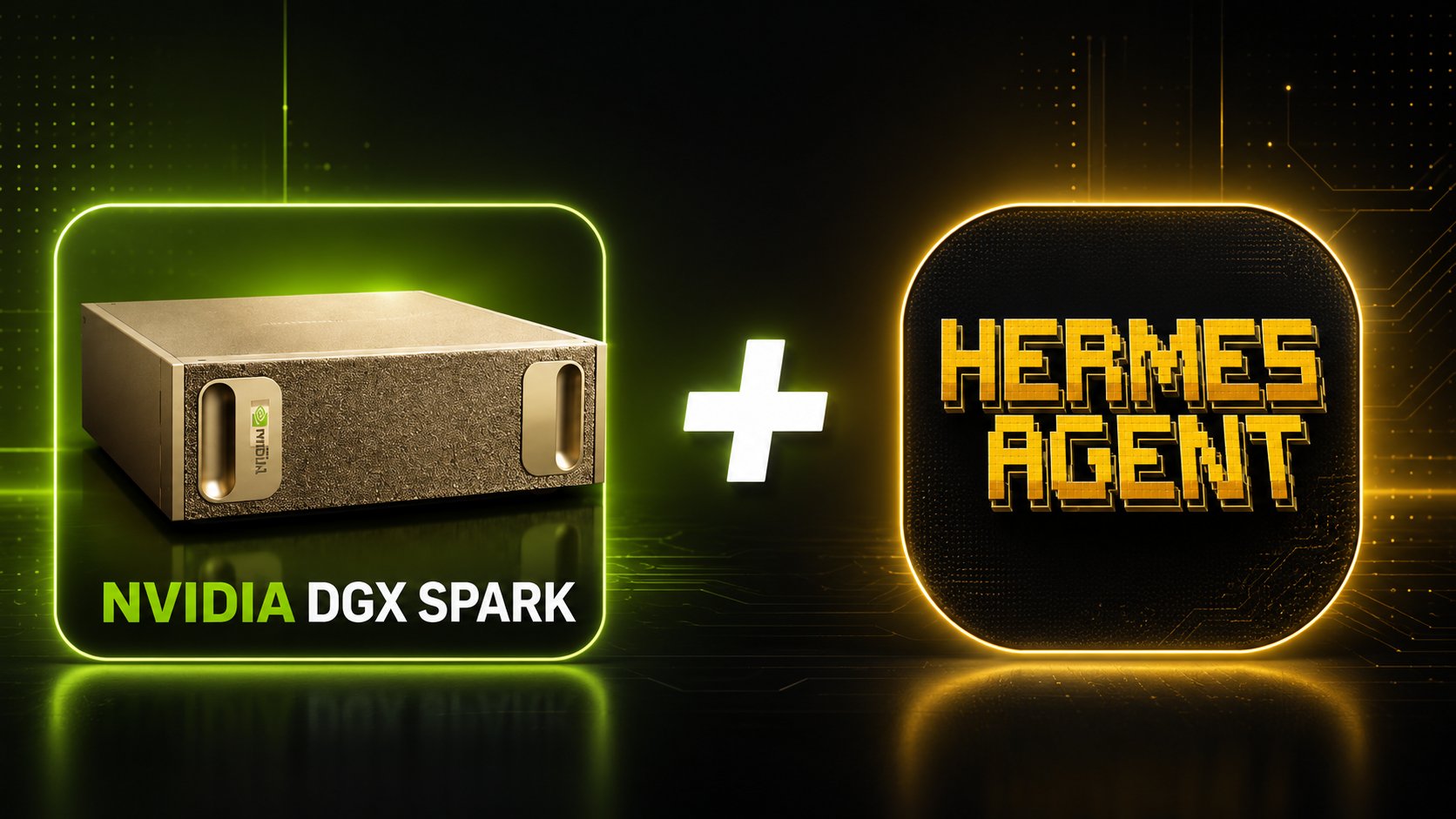
The sheer breadth of local deployment options available today means developers can tailor their environments incredibly precisely. @ TheAhmadOsman highlighted a massive 2026 guide covering everything from Mac-first workflows using MLX, to multi-GPU CUDA setups utilizing vLLM and TensorRT-LLM. This democratization of deployment knowledge is enabling highly specialized local applications, such as @ MiaAI_lab's ongoing quest to find the absolute best local model to run specifically for agentic workflows on a single NVIDIA DGX Spark.
Choosing the right underlying database architecture is also critical for these localized, specialized agents. As @ chdb_io pointed out, the right choice depends entirely on the agent's specific workload: "sqlite: great until you need columnar scans or vectors, duckdb: strong analytics, add vss extension for vectors, chDB: embedded ClickHouse. Columnar plus cosineDistance plus 70 plus ingest formats." Having these powerful, distinct tools available via a single package manager empowers developers to build highly capable, offline-first AI applications without relying on external vector databases or cloud compute.
Model Routing and AI Economics
The pursuit of ever-larger monolithic models is facing practical limitations regarding cost and diminishing returns, leading researchers to explore highly efficient routing mechanisms. Instead of relying on one massive model to handle every possible prompt, systems can now route queries to smaller, specialized models based on the specific task requirements. This approach maximizes efficiency without sacrificing output quality.
Research highlighted by @ LiorOnAI demonstrates the power of this approach. By utilizing a tiny router with only around 10,000 parameters, developers can beat individual open models on the MMLU benchmark. The router succeeds "not by being smarter than the models. By allocating work better." The system reverse-engineers architectures to learn exactly which model should answer which question, proving that intelligent task delegation is often more valuable than sheer parameter mass.
This focus on efficiency and practical application stands in stark contrast to the ongoing financial debates surrounding the AI industry. Skeptics like @ GaryMarcus continue to warn that venture capital has over-invested in the wrong types of AI, predicting severe financial consequences. However, while the debate over valuations and VC funding rages on, the developer community is quietly solving the underlying technical challenges. By building sophisticated routing systems, optimizing local inference, and pioneering agent-friendly infrastructure, engineers are laying the groundwork for sustainable, long-term AI integration regardless of how the current investment bubble resolves.
Sources
Your Agent Harness Should Repair Itself



Ryan Williams (@rrwilliams) is a professor at MIT and the winner of the Gödel Prize in theoretical computer science. I interviewed him all about his work starting by asking him a popular Leetcode question (3 SUM). In this episode: • Solving Leetcode faster than popular "optimal" solutions • SAT problems and solvers • Hot takes on famous open questions • How to pick good research direction Where to watch: • YouTube - https://t.co/OkgDPSOruN • Spotify - https://t.co/5Fpfn7Smay • Apple Podcasts - https://t.co/jOYDGtGVnt • Transcript - https://t.co/UyVvDM6DDB Thank you to the sponsor of this episode for supporting my work: • WorkOS: makes your app Enterprise Ready with easy to use APIs to add SSO, SCIM, RBAC, and more in just a few lines of code, check them out at https://t.co/y8noBzFEem Chapters: 00:00 - Intro 00:41 - Asking him a popular Leetcode question 03:54 - Doing better than the popular optimal solution 08:26 - Fine grained complexity 17:00 - A severe strengthening of P vs NP 24:38 - SAT problems and solvers 34:51 - Hot takes on famous open questions 46:57 - Simulating space with time 01:01:02 - Why he solves hard problems 01:02:35 - How to pick good research direction 01:07:14 - Technical book recommendations 01:08:31 - Advice for his younger self 01:11:56 - Outro

JUST IN: Developer claims to have found a way to cut Claude API bills by up to 70% by exploiting image-vs-text token pricing.
By far the shrewdest and most entertaining analyst of the AI bubble is Georg Zoeller, ex Facebook. Re-reading his DeepSeek reaction piece from 18 months, which holds up well. It was all so predictable: banning open source, the Red Menace, pivot to military. What has really happened is VC built the wrong AI, you’ll pay a high price for this error with your pension, and nobody will go to jail.
introducing tinyrouter i reverse engineered the routing architecture behind Skana AI's Fugu and built replication for open frontier models. it's a tiny ~10K parameter LLM router that learns which model to use and what role it should play for every question. the goal was simple: beat every individual model by routing each task to the right specialist instead of relying on a single LLM. https://t.co/pjHHk1QS9m a few interesting findings: • routing only helps when the models have complementary strengths. if every model performs similarly on a benchmark, a router has almost nothing to optimize. • on MMLU, the router beat every individual model. on math, it matched the best model because the pool had very little observable diversity. • warm-starting the router and shaping the evolutionary reward improved training, but we don't claim a real gain yet because evaluation variance was too high. more rigorous experiments are needed.
Introducing PocketJS 🕹️ import { createSignal } from "solid-js" on a Sony PSP. No forked framework. Real Solid and Vue Vapor, compile-time Tailwind design system, and 60 FPS animation in 8 MB of RAM! Bare Metal Modern Web ⚡️ https://t.co/dOSKUlwEsu
Inference Engines for LLMs & Local AI Hardware (2026 Edition)
I see a lot of influencers talking about “not reading the code” and “building software factories” but I don’t see much discourse about what software engineering teams of the future look like? Software is a multilayer game as much as everyone will try to convince you that all you need is a team of agents…
First you have to understand that modern LLM inference already disaggregates weights as models outgrew single chips years ago. You shard either by layer (pipeline parallelism) or by slicing every layer (tensor parallelism), and the two do very different things. As an example, let’s look at Llama 3.3. It has 70B of weights and at FP8 that’s 70 GB of memory which is enough to fit on a single H100. Now that H100 has 3.35 TB/s of HBM, so the fastest it can ever decode for one user is 70/3.35 ≈ 21 ms/token or ~48 tok/s while using under 1% of its FLOPs. Now if we pipeline it across 8 chips: each chip holds ~8.75 GB, which means it only needs 1/8th the bandwidth and 1/8th the FLOPs to sustain the same aggregate throughput. Now crucially the token/sec a user gets is limited by the amount of data that crosses the link. In current LLMs all that is a small amount of activations for LLama 3.3 it’s ~8 KB per token…. Yes, you read that right it’s 8 KILOBYTES we are sending over a <900 GB/s link. That’s only 9 ns of serialization time but the overhead of 224G PAM4 SerDes adds ~100 ns per link traversal with RS-FEC which is 11x longer than the payload itself. And then you have the NVSwitch adding ~300 ns per hop and you need to pay twice. That’s ~600 ns of just hardware latency wrapped around 9 ns of data making a 98% tax before software even shows up. Then NCCL’s collective stack turns 600 ns into 10-20+ us… all to move 8 kilobytes lol. For comparison 8 KB serializes over 10 Gigabit Ethernet NRZ, in just 6.6 us. Pipeline parallelism however doesn’t make a single user faster as the token still needs to visit every layer in the sequence, so per-user speed is still weights / per-chip bandwidth. To get more speed per user token you need to use tensor parallelism and have all the chips work on the same layer simultaneously. TP costs you 2 all reduce OPs per layer, 160 per token on llama 3, that’s still kilobytes of traffic but with NVLink overhead it’s a massive tax and why pipeline parallelism on most models still gives more interactivity per user. However, this gives you a huge latency lever to pull that scales tokens per second with interconnect speed instead of memory BW. The clever amongst you might have also realized that sharding doesn’t just cut memory bandwidth per chip it also cuts FLOPs per chip and is why we have such bad MFU on decode. So once you’ve sized the link for the memory, you need to size the compute for it too. This is called “balancing the pipeline”, and currently no shipping chip does it because they were all designed as standalone monsters. Remember Tokens/sec = ~aggregate memory BW / bytes touched per token. At batch 64 in FP4 you need ~250 FLOPs per byte, and Blackwell ships 1,250. Provisioned 5x more than the narrow pipe of HBM. Nobody saturates shit cause they are all building around HBM. So now it all comes full circle. Parallelism reduces memory bw pressure and thus FLOPs but increases interconnect latency pressure. Despite having HBM and GigaSERDES we aren’t actually doing more work lol. But if you really wanted to balance the pipeline you need to match the memory bandwidth, the flops, and most importantly the interconnect. So what does that look like ? Well if you build around LPDDR’s lower bandwidth, lower your interconnect latency, you actually can beat Nvidia on decode with a fraction of the silicon.

How to land a job at a frontier lab https://t.co/oHIqLgBMbC
1.5TB is creazy https://t.co/CdRbCoBXwt

It is a 2 to 4T param model. They are serving it across 70-100 wafers. To get healthy serving characteristics, they are essentially putting at most one layer per wafer, and the model is in the ballpark of 70-90 layers. There's a couple of different ways this could be served and model sizes implied by that. One is if they keep the heavy KV caches they've used before. Another is if they go with lighter KV cache designs more akin to DeepSeekV4 or Hybrid SSM models. The fact that they've partnered with Cerebras and designed with the hardware in mind means they're much more likely to have gone the second route. That SRAM bandwidth is too precious for a heavy KV cache. As such, something like the below is the center of probability mass: 3T total, 150B active, 70 layers.