Applied AI Layer Defends Against Vertical Integration Squeeze While Multi-Model Workflows Slash Token Costs
Today's discussions were dominated by fears of frontier labs monopolizing the AI stack, prompting a strong push toward open-source infrastructure and applied context layers. Meanwhile, developers are finding aggressive new ways to cut API costs, utilizing multi-agent workflows and clever image-rendering hacks to bypass text token limits.
Daily Wrap-Up
The AI ecosystem is currently wrestling with a profound identity crisis regarding trust and ownership. Enterprise leaders and developers alike are sounding the alarm on the risks of building atop closed foundation models, fearing that the labs providing their infrastructure might eventually consume their businesses. This anxiety is entirely justified as we watch frontier labs aggressively expand into vertical SaaS applications. The realization is dawning on the community that true AI safety is not about abstract alignment research or government regulation, but rather about an organization's ability to maintain strict sovereignty over its proprietary data, model weights, and compute. As power concentrates at the model layer, the defensive moat for everyday developers is shifting entirely to the application layer, where specialized context engineering and domain-specific workflows remain difficult for large labs to replicate.
Away from the high-level market dynamics, the boots-on-the-ground developer community is undergoing a radical efficiency revolution. Multi-agent orchestration has transitioned from an experimental novelty to a standard operational procedure. Builders are increasingly segmenting their tasks, using cheaper, highly capable models for high-frequency coding tasks while reserving expensive frontier models for architectural planning and final code review. This multi-model approach is being paired with wild, creative hacks to circumvent restrictive API pricing structures. By rethinking how context is fed into these models, developers are achieving massive cost reductions that fundamentally alter the unit economics of software development, pushing us closer to an era of autonomous, long-running agents that can operate for dollars rather than hundreds of dollars.
The infrastructure supporting these local and cloud-based agents is simultaneously maturing, leaning heavily into open-source ecosystems and specialized developer tools. We are seeing a fascinating divergence in hardware strategies, with a renewed appreciation for older, high-memory GPUs augmented by custom kernels, standing in stark contrast to expensive, tightly controlled proprietary ecosystems. This democratization of hardware and software stacks ensures that the future of AI development remains accessible. The most practical takeaway for developers: stop relying on a single frontier model for your entire pipeline and start building multi-step agent workflows that separate planning, execution, and review, while actively auditing your token formatting to drastically reduce your API overhead.
Quick Hits
- @hardfist_1 shared a deep dive into async programming, pointing to an incredibly thorough article on the subject that cuts through the noise.
- @mattpocockuk reminded us that "evals on skills are hard" remains the understatement of the year as developers like @steipete struggle to assess agent capabilities properly.
- @dillon_mulroy shared a video snippet of an essential tool used in every single agent working session, highlighting how integrated these workflows have become.
Enterprise Data Sovereignty and the Battle for the Application Layer
The discourse today was heavily defined by a growing resistance against the monopolistic tendencies of frontier AI labs. David Sacks amplified comments from Palantir CEO Alex Karp, arguing that genuine enterprise AI safety has nothing to do with government regulation and everything to do with data sovereignty. Sacks pointed to the controversy between Anthropic and Figma as a cautionary tale. He noted that frontier labs are systematically dominating the model layer and then using that leverage to capture lucrative verticals, effectively swallowing their own business partners. "Dario has argued that open source models powerful enough to compete with Anthropic are 'dangerous.' But dangerous to whom? Not to enterprises that want to retain control over their data and workflows," Sacks observed.
This sentiment was echoed powerfully by Yann LeCun, highlighted by @jun_song, who warned that the concentration of power in AI is the most significant danger the technology poses. LeCun compared the current landscape to historical attempts to control information, arguing that foundation models are inevitably becoming commoditized infrastructure. This directly informs where the long-term market value will reside. Aaron Levie (@levie) expanded on this, explaining that the battle in AI is ultimately a battle for context. He argued that the applied AI layer provides immense value precisely because it organizes critical knowledge and governs workflows. "This is why the applied AI layer has a lot more value than just being an LLM wrapper," Levie wrote. "The ability to organize the critical knowledge for the work being done... is critical." The consensus is clear: whoever controls the context and application governance wins the enterprise market, regardless of what the underlying model providers do.
Multi-Model Agent Orchestration and Workflow Optimization
As the application layer becomes the primary battleground, developers are refining highly sophisticated, multi-model workflows to maximize efficiency. Mitchell Hashimoto (@mitchellh) detailed a highly effective architecture where a specialized model is used as a planner and judge, while a fast, powerful model acts as the coder. By segmenting the responsibilities, Hashimoto noted that costs drop dramatically. "At API pricing, planning+judge costs are in the ~few dollar range compared to typical $50+ full round trips," he explained, highlighting that GPT 5.5 operates exceptionally fast and cheap even at high intensity. This approach validates the idea that future pipelines won't rely on a single monolithic model but a symphony of specialized agents.
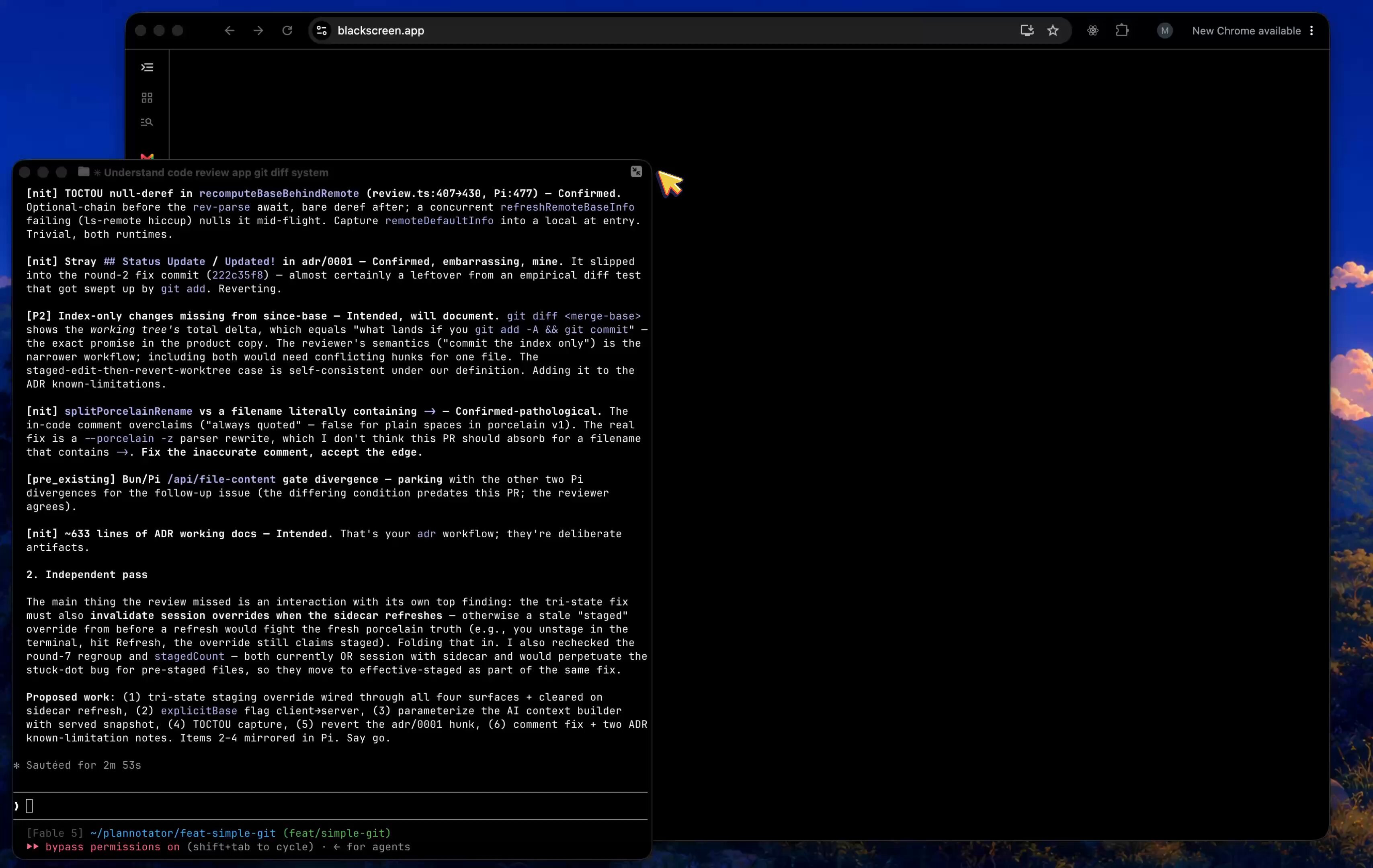
Managing these agents requires entirely new workflows and mental models for software engineers. Matt Van Horn (@mvanhorn) synthesized a guide on agentic coding, explaining that the model is no longer the bottleneck. The true skill lies in discovering your unknowns and mapping them accurately for the agent. He suggests doing a "blindspot pass" where you literally ask the agent to find your blind spots and interview you one question at a time. Furthermore, how developers review this code is shifting. @thdxr noted that instead of painstakingly reading code diffs, they now simply ask the agent for a summary of what changed in each file. Anything weird sticks out immediately, and a few prompts later, the code is exactly where it needs to be.
Hacking Token Economics and Prompt Engineering
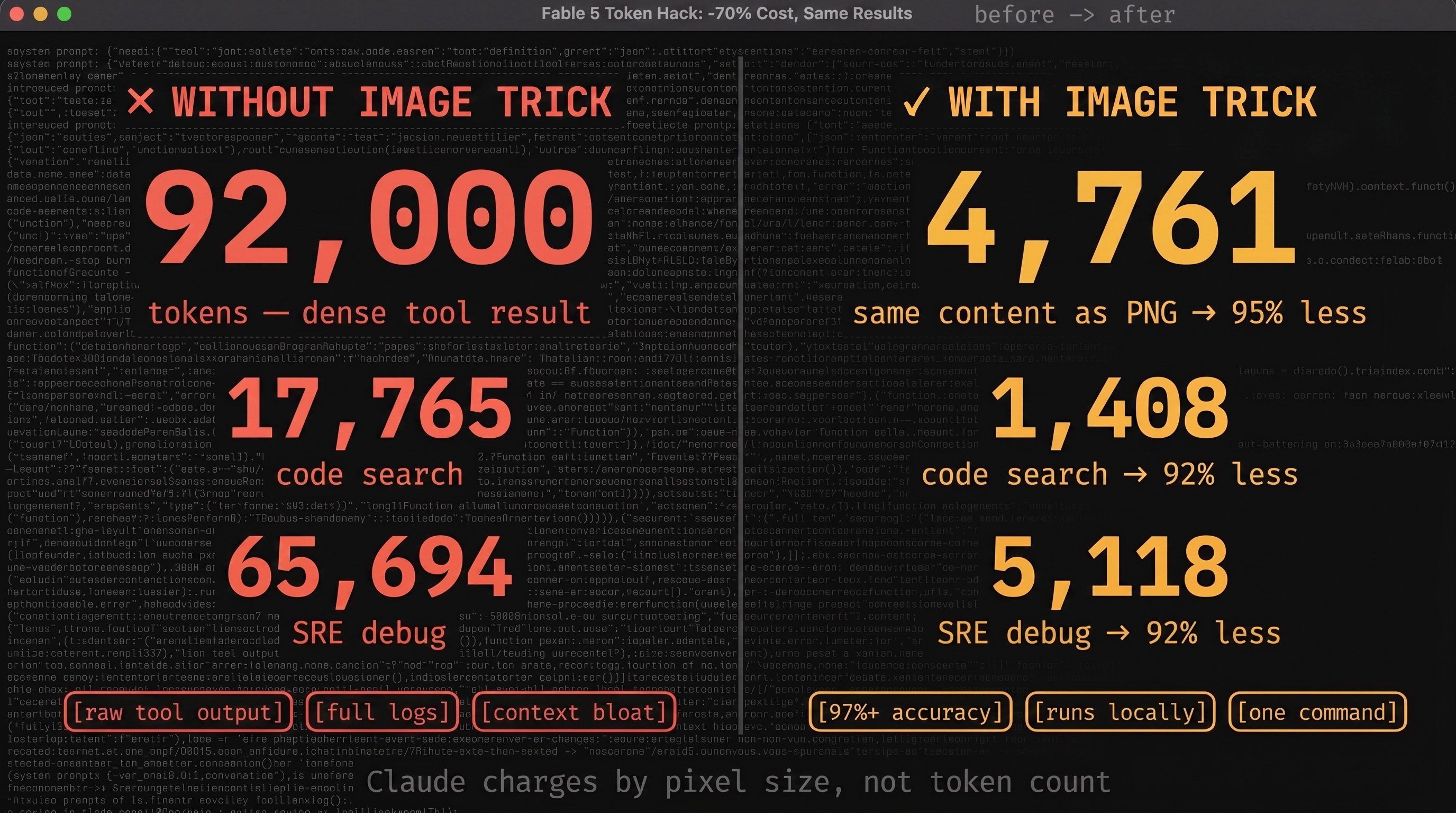
As these agent workflows scale, API costs naturally become a massive friction point, leading developers to invent incredibly clever optimizations. @hqmank uncovered a brilliant token hack that drastically reduces the cost of feeding dense context into models that charge images by pixel size rather than text density. By routing context through a proxy that renders it as a PNG image before sending it to the API, the token count plummets. "Before: 92,000 tokens for a dense tool result. After: 4,761 tokens for the same content as a PNG," the user shared. This hack results in a massive 59 to 70 percent reduction in end-to-end billing without sacrificing task completion rates.
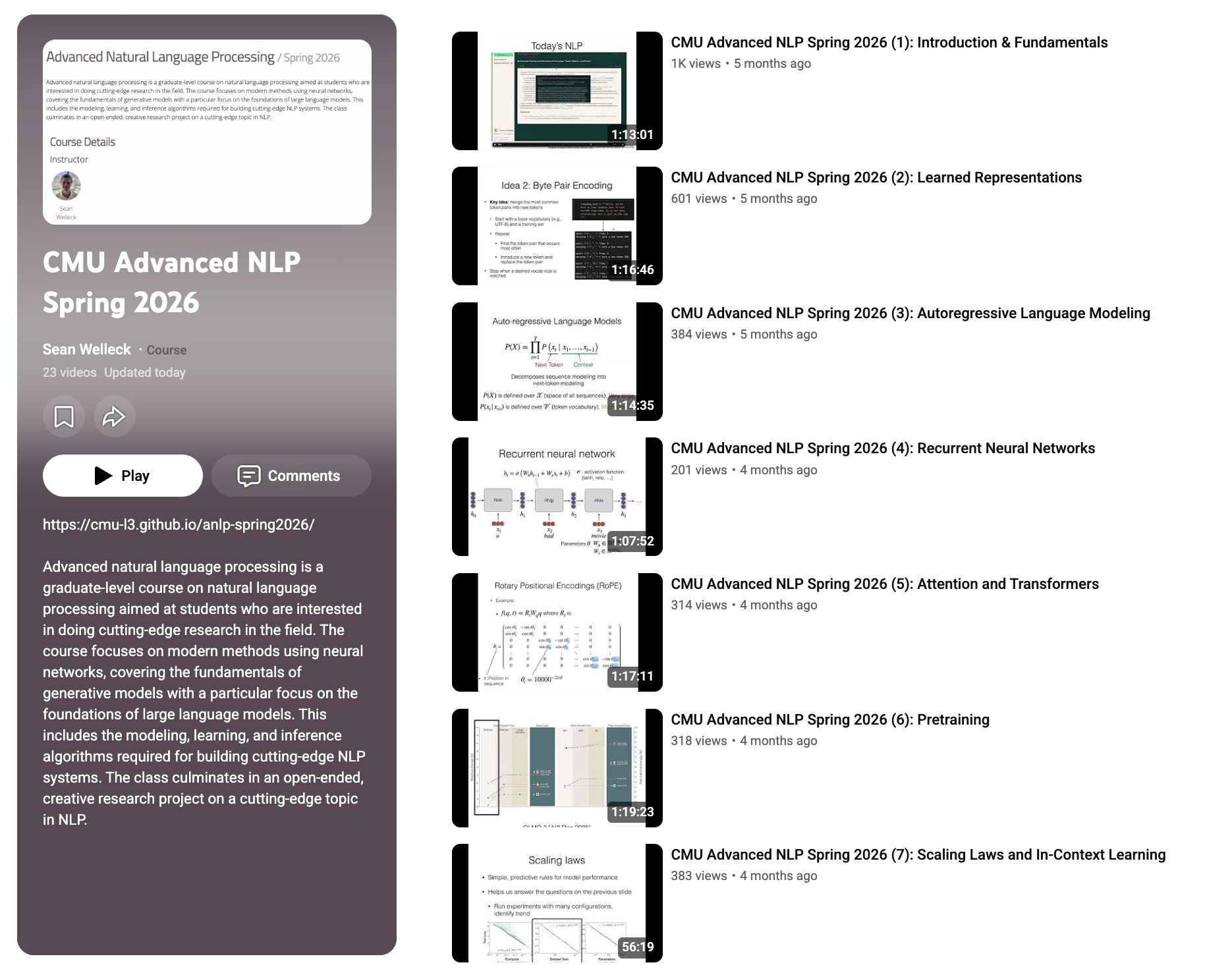
Optimizing what goes into the model is just as crucial as how it is formatted. @alxfazio strongly recommended looking into ARC AGI winning harnesses, noting that they clearly illustrate what actually works from first principles versus what is simply overfitted to benchmark maxing. For broader educational foundations, Sean Welleck (@wellecks) announced that all 23 lectures for his CMU Advanced NLP course are now publicly available on YouTube. Complete with slides and code examples, the lectures cover everything from fundamental architectures to scaling and efficiency. This release provides an invaluable resource for developers looking to strengthen their underlying understanding of how these systems process the context they are so desperately trying to optimize.
The Local Hardware Renaissance and Unconventional VRAM Optimization
While cloud infrastructure offers scale, a fierce renaissance is happening in local AI hardware and optimization, driven by developers refusing to pay premium cloud tax. Lucas Tech (@lucastech) posted a stark hardware comparison highlighting the price-to-performance ratios of current options. The analysis showed the RTX 3090 offering unparalleled bang for the buck at 24GB of GDDR6X memory running at 930GB/s for roughly $1,500, easily outperforming significantly more expensive enterprise alternatives in raw speed, even if it lacks the memory pool of a DGX Spark or an RTX 6000.
Eric Hartford (@QuixiAI) aggressively championed this perspective, dismantling the myths that older hardware cannot run modern formats. He noted that while companies push new proprietary formats, you can run almost anything on anything if you have the right kernel. "@nvidia's vast conspiracy to suppress this knowledge is over. Buy 3090s y'all! better yet 2 and an nvlink," Hartford declared, pointing out that older AMD cards are also incredibly smart buys right now. The hardware limits are being broken on the software side as well. Sakura Yuki (@sakurayukiai) highlighted a mathematical breakthrough in reinforcement learning training that drops optimizer VRAM usage by a staggering 97 percent. By freezing 35 of 36 layers on a Qwen3-8B model and training just Layer 18, researchers recovered 107 percent of the full-parameter GRPO gains. This proves that high-level reasoning is heavily concentrated in specific middle layers, opening the door for massive local training efficiency.
Secure Agent Sandboxing and Cloud Infrastructure
Running these complex workflows requires a robust infrastructure that can handle secure, unconstrained execution without putting the host machine at risk. Guillermo Rauch (@rauchg) highlighted a major update to Vercel Sandbox, which now supports FUSE-based filesystems and unconstrained Docker containers. "MicroVMs are the gift that keeps on giving. Instant boots, unconstrained runtimes," Rauch noted. This allows developers to mount S3 buckets and share state across sandboxes seamlessly. Providing a robust, isolated environment is critical for letting agents execute code safely.
For developers operating across multiple machines and preferring a decentralized approach, @0xSero introduced Parcels. This tool solves the issue of cloud agents for users with Tailscale networks and multiple desktops. Parcels packages your current work, transfers it to a designated machine on your Tailscale network, and runs it within a tmux session. This allows developers to step away from their screens while long-running agentic tasks continue to execute in the background. To manage the repetitive loops required in testing these environments, @MatthewBerman noted that Loopy now allows developers to save their agent loops locally for easy reuse, further streamlining the iterative process of harness engineering.
Specialized AI Models and the Developer Ecosystem Pivot
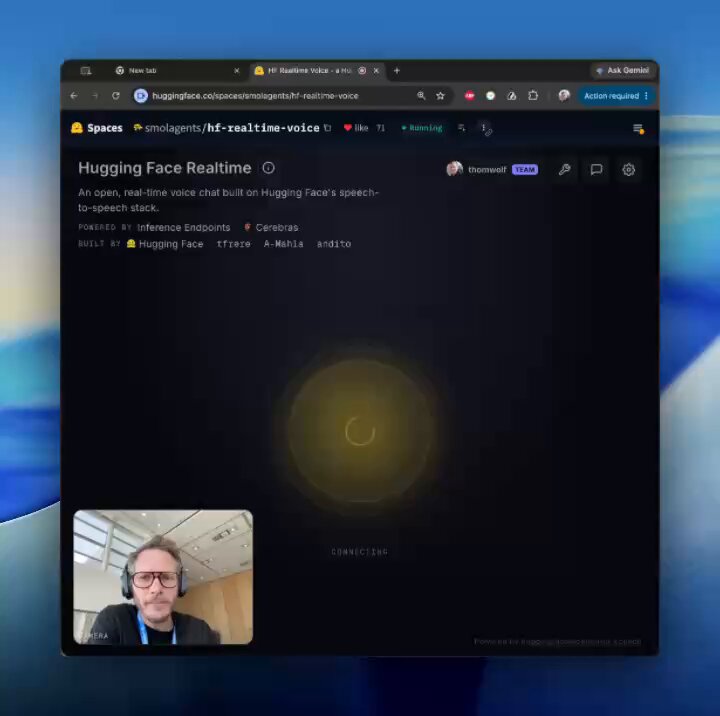
The mainstream models are dominating headlines, but highly specialized open-source models are solving incredibly complex, niche problems. Mert Unsal (@mertunsal2020) released Leanstral 1.5, a model achieving state-of-the-art performance on graduate algebra benchmarks. @MiaAI_lab expressed excitement over the model's ability to handle long-range coding tasks and theorem proofs that previously required hours of human labor. In the open-text domain, @EricStrate_ noted that Qwen3.6-35B-A3B is currently the reigning champion for overall quality and reasoning in local use cases, proving that the open-source community is successfully competing with, or at least closely trailing, massive closed labs across various modalities. Thomas Wolf (@Thom_Wolf) even showcased a fully open-source, real-time speech-to-speech demo built in collaboration with Cerebras, proving that open infrastructure can handle instantaneous, high-demand tasks.
This thriving open ecosystem is actively shaping the broader developer tooling market, perhaps most notably in programming languages. Robert Scoble (@Scrobilizer) pointed out that Nvidia's LPU team is going all-in on Rust to build the future of low-latency inference. This represents a massive vote of confidence for Rust and reshuffles the hierarchy of developer platforms. Meanwhile, UI and privacy tooling are also benefiting from this applied AI wave. MengTo (@MengTo) highlighted Toolcraft, a free, open-source starter kit that uses AI to help developers build bespoke creative tools, saving massive amounts of UI development time. Taking privacy directly into their own hands, developer SHL0MS open-sourced UNBROKER, a Hermes Agent skill highlighted by @gospaceport. This tool runs locally to autonomously find and file data removal requests with hundreds of data brokers, completely bypassing paid services like DeleteMe and ensuring personal data never leaves the user's machine.
Sources
Palantir CEO Alex Karp on what customers actually want, the real business of frontier labs, and the importance of open source models: “What the technical customers want is control over their compute, their models, their data stack, and their alpha. They want to know they own the means of production, and it's not being transferred to someone else.” "Who owns the data? Are the prompts secure? Is this being transferred to you?" "If it was so valuable, and I can make you a billion dollars, wouldn't I say I'll make you a billion dollars and I want 30%? Why are they charging for tokens if it's so valuable?"
Exactly. I've been disseminating a similar message for years. The concentration of power in AI and the desire for control is by far the biggest danger of AI. It could lead to a few private companies and/or countries being in control of access to information, access to knowledge, and access to the tools of economic expansion. It's a kind of medieval obscurantism akin to the Ottoman empire banning the use of the printing press for 200 years, in part to keep control of the dogma, but also to protect the corporation of the calligraphers and scribes. Relevant historical bits about the Internet: 1. It took a deliberate decision by Al Gore and Bill Clinton to open up access of what was then ARPAnet to commercial entities and to the public, against the desires of the entrenched telecom industry. During a public roundtable about the "information superhighway" in 1993, the CEO of AT&T told Gore and Clinton "leave it to us". Gore said no. 2. In the late 1980s, setting up an Internet presence required buying proprietary hardware with proprietary OS and software stack from Sun Microsystems, HP, IBM, or Dell. By the 2000s, all of this was wiped out by commodity hardware, Linux, Apache, and an entirely free/open software stack. This migration to open platforms was the result of market forces. Infrastructure wants to be open. Foundation models are becoming an infrastructure and will inevitably become commoditized. Long term, the money is in the application layer, which is what I, Arthur Mensch, Alex Karp, and others have been saying.
Forget trying to design everything in Figma. You can build your own design tools with AI. Introducing Toolcraft - a starter kit and UI library for building beautiful creative apps. It's free and available for you today. npx @pixel-point/toolcraft create Use it to build apps to stylize images, create WebGL shaders, Three.js scenes, animations, photo editing tools, or whatever else needs a canvas and controls. Toolcraft gives you the full architecture in a single solution. It comes with: - plenty of UI components: sliders, pickers, timelines, curves, and more - built-in canvas, export, and toolbar setup - AI instructions to help the agent deliver a great result to you With Toolcraft, you don’t need an extensive prompt. Just explain what type of visuals you want to build, attach references, and wait. It’s been a game changer for our design process. Watch the full video on our YouTube channel with all the details and examples.
Sandbox now supports FUSE-based filesystems. ▪︎ Mount S3 buckets and network filesystems ▪︎ Run CLI tools against remote sources ▪︎ Share state across Sandboxes https://t.co/mTlXIfHeXB
A Field Guide to Fable: Finding Your Unknowns
@MichaelArnaldi @EffectTS_ @ZachWarunek Start with a skill that distills the most important things latest gen agents don't get right with Effect and you're 80% there. Evals on skills are hard.
i'm open sourcing UNBROKER: a tool that finds where your personal info is exposed by data brokers and files the removals for you it runs as a skill in Hermes Agent _________ your data is everywhere; hundreds of brokers publish your name, current and old addresses, phone, email, birthday, even your relatives. anyone can find where you live in about ten seconds CCPA, CPRA, GDPR, and a growing number of state laws say a broker has to delete your data if you ask. there's just no easy bulk button. every broker has a different process and many make it intentionally difficult to exercise your right to delete this is the entire business model for companies like DeleteMe, Incogni, EasyOptOuts; they charge you monthly (DeleteMe is $330/yr for a Family plan) to file removals that you can submit yourself for free, and then you're giving a new company the exact data you want to erase so i built one you just run for free. your data never even has to leave your machine if you run a local model _________ how it works: first it builds search vectors from everything: every name, alias, email, phone, and address you've had (brokers might index you under a maiden name or a house you left in 2014, so the naive "current name + current city" approach can miss profiles). then it fans out parallel sub-agents across the broker list, which refreshes from a maintained public source automation is tiered. when it can handle a broker end to end with your settings, it drives a browser through the opt-out form, sends the email, and opens the confirmation link itself. soft CAPTCHAs clear on their own with a real browser. anything only a human can finish comes back to you as a short list at the end the email side doesn't need a stored password and can send opt-outs and open verification links through your own logged-in webmail. you can also wire up SMTP, or keep it manual and just send the drafts it writes it tailors every request to your jurisdiction, filing under the framework that applies where you live: CCPA and CPRA in California, GDPR in the EU and UK, a general right-to-delete request everywhere else. if you're in California it also uses the state's DROP portal, a single request that covers 500+ registered brokers at once it holds as little of your data as it can, and keeps it local. dossiers are encrypted at rest if you want, opaque ids keep your real name out of every filename and log, and nothing leaves your machine unless you opt in brokers sometimes relist you eventually or new ones find your data, so every case is tracked in a ledger and can be re-scanned on a cron schedule so if your data pops back up it files the removal again https://t.co/2jfQxBYZkW
Today, we are releasing Le Chaton L∃∀N, aka Leanstral 1.5. It achieves SOTA performance on graduate algebra benchmarks FATE-H and FATE-X and improves Pareto Frontier on PutnamBench, solving 587/672 problems with a x10 cheaper budget. 🧵 https://t.co/ySGMr2oqg5
for everyone asking for a buy button: listings like this have been sitting on chinese b2b markets for months. huawei atlas 300i duo, the inference card. the listing attributes are chaos, intel chipset? ddr4? b2b sellers gonna b2b, but the card underneath is real. nobody has posted serious tok/s from one yet. that is the gap i intend to fix.
I keep hearing myths spoken as truths. like "metal doesn't support nvfp4" and "3090 doesn't support fp8" False. You can run anything on anything - you just need a kernel. (which is easy now with AI and harnesses) Thanks @mgoin_ for inspiring with @vllm_project Marlin kernels. @nvidia's vast conspiracy to suppress this knowledge is over. Buy 3090s y'all! better yet 2 and an nvlink. 4x amd mi100's (32gb each) with infinity fabric would be a smart move too.
How much better do the models have to get before you'll stop reading the code?
The LPU team at @nvidia is building the future of low latency inference. We're going all in on Rust. If you're a cracked Rust engineer and love making hardware do things, we want you. https://t.co/EEPoYOWWmh