Claude Fable Sparks Guardrail Backlash While X Launches Hosted MCP Server
The AI ecosystem is grappling with the immense power and strict limitations of Anthropic's newly re-released Claude Fable 5, pushing developers to find workarounds via orchestration and open-source distillation. Meanwhile, enterprise AI adoption is hitting structural walls, accelerating the need for forward-deployed engineers and specialized fine-tuning to actually capture business value. The global tech landscape is also fragmenting, with China leaning into hardware-software co-design to bypass export controls and Europe actively rejecting US tech dependency in favor of sovereign AI.
Daily Wrap-Up
The AI discourse today is heavily dominated by the chaotic re-release of Anthropic's Claude Fable 5. The model is proving to be an absolute powerhouse for agentic tasks, yet developers are clashing violently with its strict safety guardrails. As @kimmonismus noted, Fable 5 feels "slaughtered" by Anthropic's restrictions rather than just nerfed. This tension between raw capability and safety is the defining struggle of frontier model deployment right now. Developers are finding clever workarounds, such as using Fable as a high-level planner and judge while delegating actual coding to GPT-5.5 to save tokens and bypass restrictions, a workflow highlighted by @JinjingLiang.
Beyond the model itself, there is a growing realization that AI integration requires significantly more architectural heavy lifting than simply making API calls. Enterprise AI is hitting the hard wall of legacy systems and fragmented data. Thought leaders like @levie and @MojHnd are pointing out that merely using AI to write boilerplate does not move the business needle. Real impact requires deeply integrating agents into existing workflows, which is why major tech companies are launching dedicated deployment organizations to handle the messy realities of change management and data engineering. The true competitive advantage is no longer in accessing a generic frontier model, but in deploying specialized systems like Bridgewater's fine-tuned models that outperform generic counterparts at a fraction of the cost.
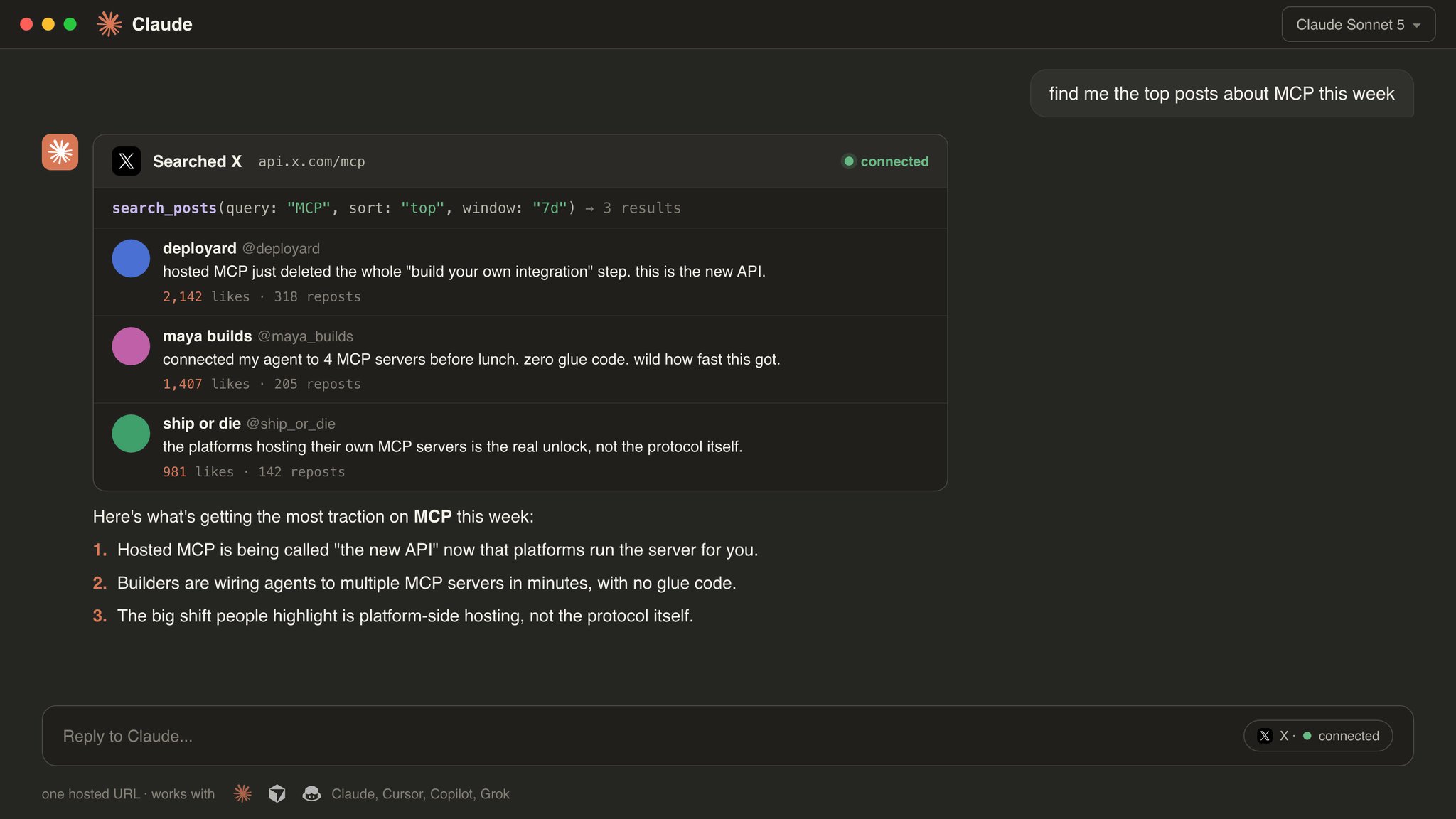
Simultaneously, the infrastructure layer is maturing to support these autonomous agents. The rollout of hosted Model Context Protocol (MCP) servers by platforms like X means that developers can now bridge AI tools to complex datasets in minutes instead of weekends. The era of manual API stitching is ending, replaced by standardized, plug-and-play orchestration layers that allow agents to seamlessly interact with the digital world.
The most practical takeaway for developers: stop treating AI models as mere chat assistants and start treating them as orchestrators. Whether you are using Claude Fable to plan and judge code, setting up a hosted MCP server to give your agent direct access to external data, or learning to distill frontier model traces into local, uncensored models, the future belongs to those who build robust pipelines rather than just prompting a single endpoint.
Quick Hits
- @chesterzelaya shared that DroneForge released a stable v2.4.0 update, enabling text-to-flight capabilities that turn any compatible FPV drone into an AI agent without requiring onboard modifications.
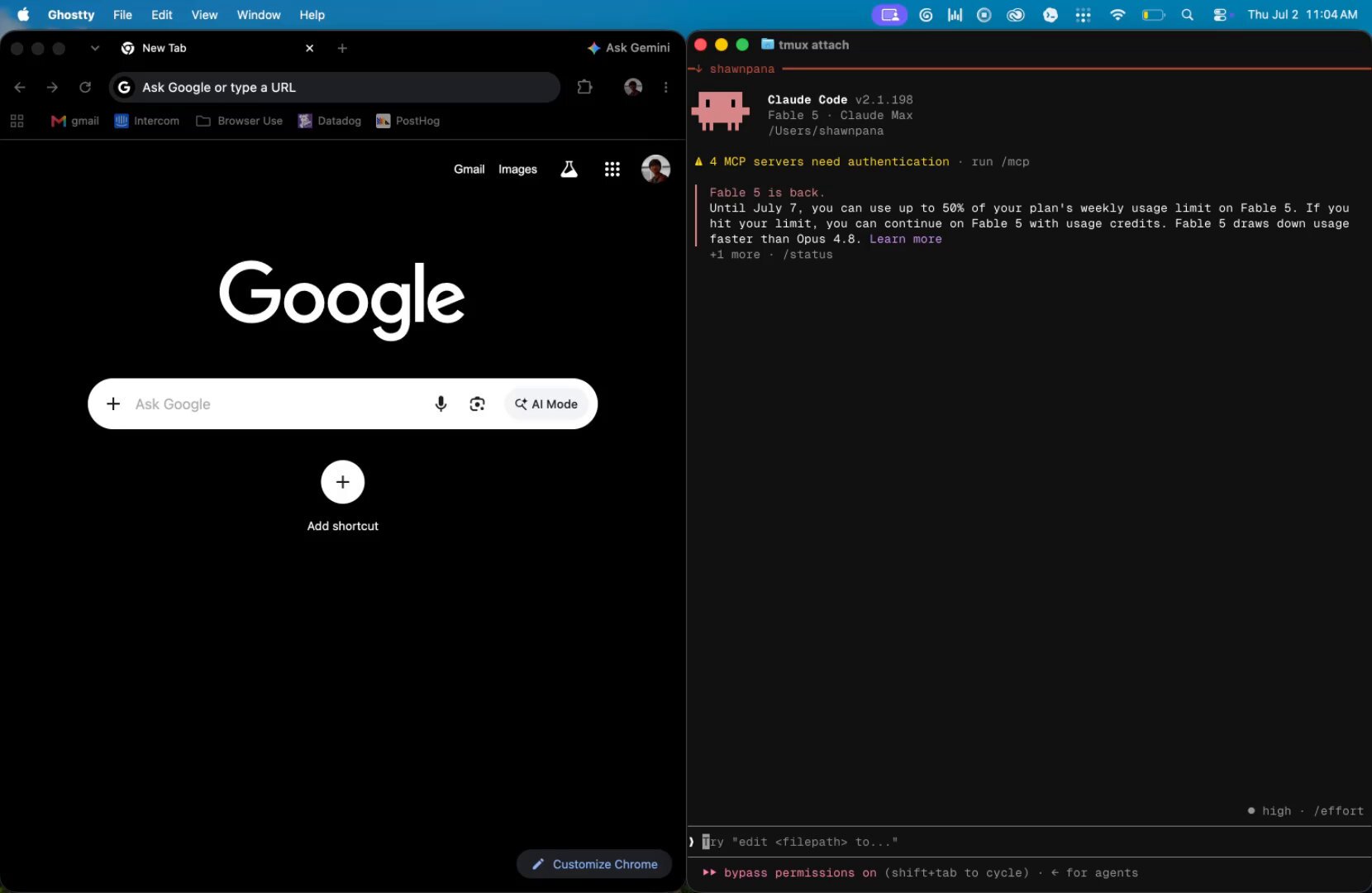
- @browser_use introduced Browser Use CLI 3.0, a tool that turns any model into a state-of-the-art browser agent with direct Chrome DevTools Protocol control and a 6x reduction in token usage.
- @samwhoo pointed out a fascinating deep dive into control theory and feedback loops, proving that foundational software engineering concepts remain highly relevant even when porting massive codebases like Kubernetes to TypeScript.
- @mattpocockuk highlighted their success using a new skill called
/wayfinderto plan an entire course, showing how knowledge mapping can evolve AI interactions from simple queries to dynamic research sessions. - @ivanfioravanti sparked a lively debate on local LLM inference, questioning the actual value of buying a premium $4,500 DGX Spark over a used $900 RTX 3090 when standard models easily fit within 24GB of VRAM.
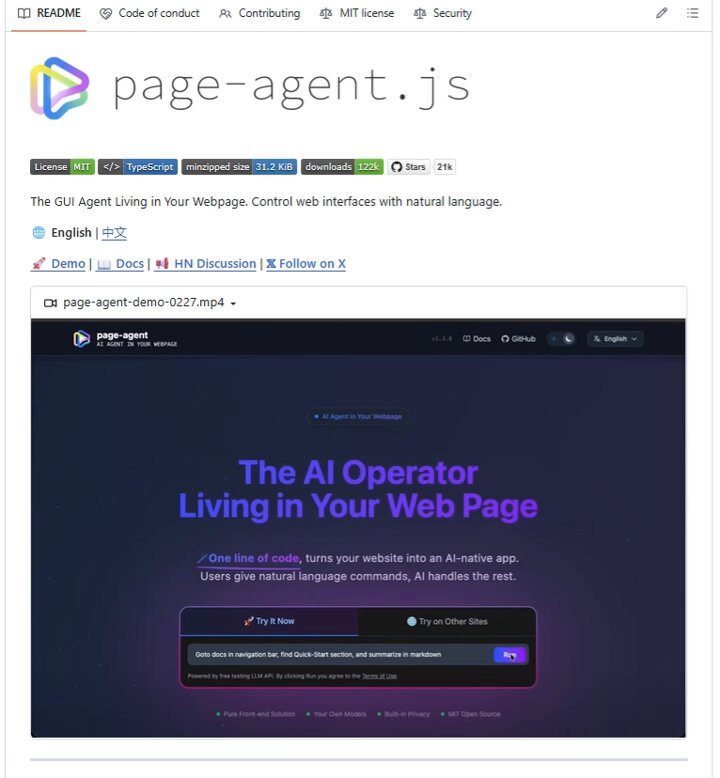
- @KanikaBK spotlighted Alibaba's new open-source PageAgent, a JavaScript AI agent that lives directly inside webpages and allows users to control entire user interfaces using just natural language.
- @HarryStebbings shared vital insights from @nikesharora regarding European enterprise meetings, noting that concerns over AI sovereignty and the sudden pausing of models like Mythos and Fable are making foreign entities deeply wary of US single-model reliance.
The Claude Fable Era: Unprecedented Capability Meets Hard Guardrails
Anthropic's re-release of Claude Fable 5 is the most talked-about event of the day, and the community discourse is split right down the middle. On one hand, the model's raw capabilities are undeniably spectacular, particularly in the realm of autonomous coding, cybersecurity research, and deep algorithmic optimization. On the other hand, developers are clashing with the model's strict safety restrictions. It is increasingly clear that Anthropic prioritized rigid alignment, but the community feels the guardrails are so tight that they severely cripple the model's utility for complex, uncensored tasks. This friction has led to a fascinating trend of developers figuring out how to distill Fable's capabilities or use it selectively to bypass its restrictions entirely.
The frustration with the model's constraints was palp
Sources
G
Hot take: I think it's still important to understand the code that our agents write!
In this mega thread (based on my AIE talk today), I will explain why that's the case, and show some ideas for how to efficiently understand code. Alright, let's dive in. 1/ https://t.co/765DNZh6LN

K
CHINA JUST LEAKED THE FUTURE OF WEB APPS.
Alibaba open-sourced PageAgent and 99% of SaaS founders are sleeping on this.
It's a JavaScript AI agent that lives INSIDE your webpage. Users control your entire interface with natural language.
↳ No browser extensions needed, screenshots or multi-modal LLMs, headless browser setup, and also no backend rewrite required
Just drop it in your HTML with ONE line of code. What took 20 clicks now takes one sentence.
"Click login, fill in my credentials, submit the form"
Done. This is not a demo, it is production-ready.
↳ Turn any SaaS into an AI copilot in minutes
↳ Smart form filling for ERP, CRM, admin systems
↳ Voice commands and accessibility built in
↳ Multi-page agent tasks via Chrome extension
↳ MCP server support for external control
↳ Bring your own LLM (Qwen, GPT, Claude, anything)
Every founder building AI features just got a shortcut.
Every developer manually building copilots just got replaced.
The integration looks like this:
<script src="CDN_URL" crossorigin="true"></script>
That's it. Your app now has an AI agent.
K
Wake up babe
The founder of OpenClaude just dropped Zero.
Open-source terminal coding agent that's reportedly 5× faster than OpenClaude https://t.co/k1ZYh2BOza

G
gitlawb
@gitlawb
ZERO is launched. A new coding harness built from scratch in Go. No bloat. No baggage. Just speed, agents, and pure execution. https://t.co/hg7CltKDGq
J
PSA: you can probably make your code much faster in a completely automated way without introducing any bugs or changes in output using my skill.
J
JJ90_James
@JJ90_James
Thanks again @doodlestein. Just ran your extreme-software-optimization skill (with Fable) and got "F3 pain fixture dropped from 36.1s to 14.9s (−59%), with every fixture improving 32–53% — and the output is proven byte-identical" Not bad for the first run!
S
Finally got around to reading this.
I just ported a 100,000 line chunk of Kubernetes to TypeScript and this post _still_ taught me new things. Really good read.
F
fatih
@fatih
My latest post on control theory and feedback loops has just been published. I’ll start from scratch and gradually build up feedback loops that are self-healing and resilient, capable of scaling thousands of databases. Check it out: https://t.co/khsqPD8WmT https://t.co/qXDwaK8390
B
Introducing: Browser Use CLI 3.0 🌐
Turn any model into a SOTA browser agent
> Direct CDP control via browser-harness
> Run on cloud browsers or real Chrome
> 6× smaller, fewer tokens
Try it now 🔗↓ https://t.co/tJ7lhnVeta
I
Honestly I was thinking the same right now. At the end you have 128GB of RAM but everyone with a single DGX is running models can all stay within 24GB of a 3090.
What am I missing? What is a strong model I can run on a single DGX machine with decent speed?
Thanks for the hints.
P
pupposandro
@pupposandro
Still not understanding who's buying a ~$4,500 DGX Spark over a $900 RTX 3090. Unless you're running 70B+ models daily, you're paying a ~5x premium for a gold NVIDIA case on your desk.
M
Adoption Isn't Impact!
Ninety percent of your engineers can be "using AI" and still ship nothing faster - asking questions and writing boilerplate in the IDE is adoption, not impact. What moves the needle is delegation: treating agents as real members of the workflow, handed complete tasks from wherever the work already lives. And you don't get there by leveling up everyone equally - you form the 1% of power users and design so their work lifts the whole org, mostly by embedding AI into the repos themselves.
Thanks to @techgirl1908
https://t.co/wtMRtjsdIA
A
your AI agent can now read all of X from inside Claude, Cursor or Copilot, and you don't have to build a single thing to make it work.
X just turned on what's called a hosted MCP server, which is really just a ready-made bridge that lets your AI talk to X directly. Before this you had to build and run that bridge yourself, now X runs it for you.
once it's connected, your agent can:
→ search posts and look up any user
→ read and organize your bookmarks
→ pull data and draft articles
→ reach 200+ X tools through one link
it's read-only for now, so it can look things up but can't post for you yet.
what you get for $0:
→ nothing to build, host or keep running
→ no stitching 200 different tools together yourself
→ it works inside the AI app you already use
what it used to take:
→ writing and hosting your own bridge to X, basically a weekend of work
→ connecting the X API piece by piece
→ handling login tokens by hand in your code
how to set it up (about 5 minutes):
1. make an X developer app once at https://t.co/xHShJspQir, this is just the account that's allowed to talk to X
2. install xurl, a tiny helper from X that logs you in and keeps you logged in, so you never deal with tokens
3. point your AI app at https://t.co/OE2mkf1vHL, which works with Claude Desktop, Cursor, VS Code with Copilot, and Grok Build
4. now just ask it something like "find the top posts about MCP this week" and it pulls the answer straight from X
why this is a big deal: X is the first major platform to host its own MCP, so hooking your AI up to it went from a weekend project down to a five-minute setup, and pretty much every platform is going to copy this next.
M
My new skill /wayfinder is letting me do stuff I've never considered trying
I'm planning an entire course with it every minute of the last four days
Closing in on 100 separate grilling/prototyping/research sessions
All contributing back to a central map that:
- Grows as I learn more about the problem
- Shrinks as I find answers to the questions
It's the next evolution of /grill-me
C
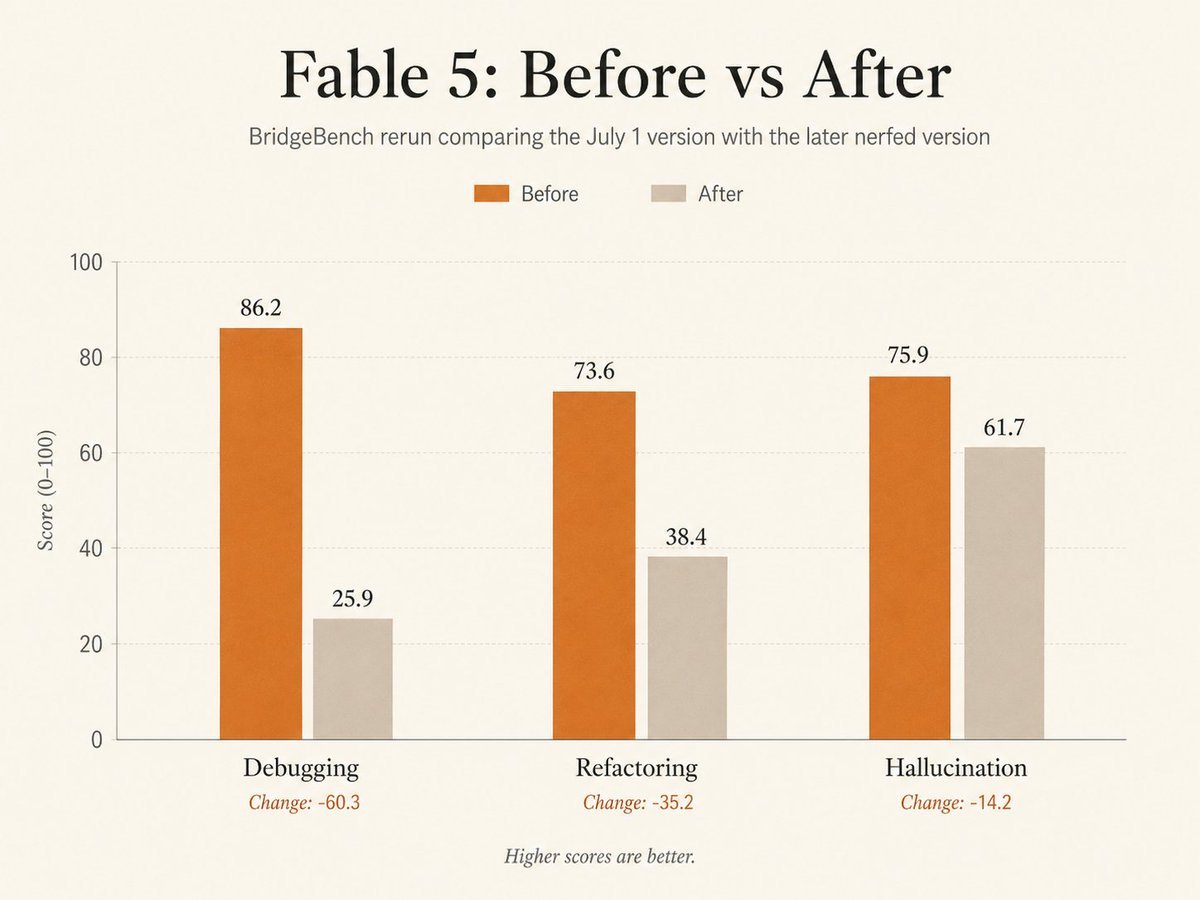
seriously wtf anthropic? No wonder they were able to re-release Fable 5. https://t.co/5NwnaoZUgn
H
Hesamation
@Hesamation
Fable 5 isn't nerfed, it's SLAUGHTERED. the problem isn't even the model itself, but the hard guardrails Anthropic has set in place. https://t.co/h1QgD9SzvK
J
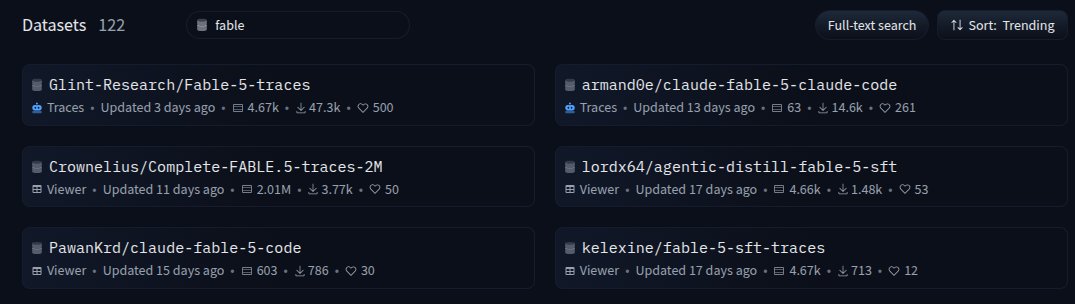
Oh nooo! People are uploading Fable trace datasets to huggingface! This is very unsafe!!
I really hope NOBODY fine-tunes open source models that can benefit everyone with this, that would be terrible! https://t.co/ib7y1zdc3j
J
JsonBasedman
@JsonBasedman
Aw man if everyone got agent traces with Fable and then accidentally they made it to people making vastly cheaper distilled models that are open and beneficial to everyone and don't force me to sit in the cuck chair that'd be so unfortunate man. Really hope that DOESN'T happen
H
The single best follow in tech on X right now is @nikesharora.
One of the best operators of our time spewing wisdom on a daily basis.
N
nikesharora
@nikesharora
Just finished north of 200 meetings in Europe with customers and technologists. The conversations were primarily around AI, common questions include: 1. Are there examples of organizations who have been able to demonstrate production level systems and do those developments show a return in lower cost, efficiency or better top line? 2. What do you think about agents? How will we discover, govern and stop agents if need be. Perhaps the biggest security concern ATM. 3. The frontier AI models are expensive, what's the business case at these token prices to embed AI in our customer facing products? Where will token prices be in the future. 4. What are the longer term implications of Mythos like models? Do we need to update cyber infrastructure or all IT infrastructure? 5. What do you think of Chinese opensource models? Are they secure and what is the downside of using them if they can be secured and they are cheaper? The parts that surprised me were: 1. The pausing of Mythos and Fable 5 caused more consternation and concern in Europe both short term and raised longer term concerns on single model reliance or reliance or models not in ones control. I hadn't seen it from their POV. 2. Sovereignity which was always a topic and still is, is getting more nuanced - they want data residency, data localization and local resources, but there seems to be more willingness to accept global services on clouds. Classified systems continue to be an issue. Net net - we need to ensure we continue to build trust both on our Frontier models and their consistent availability, we need to get the right economics in place and spend more time in Europe communicating and building presence if we want AI adoption to keep pace with the US.
A
Bridgewater just published numbers that should make every frontier lab nervous.
The world's largest hedge fund tested Gemini, Claude, and GPT on six document filtering tasks its investors do every day. Naive prompts scored around 50%. A coin flip. Expert-written prompts pushed accuracy to 78%. Investors needed 80% before they'd trust the system in their workflow, and no frontier model cleared it. GPT 5.4 cost 43% more than 5.2 and was barely more accurate.
So they fine-tuned Qwen3-235B on Tinker instead. 84.7% accuracy. 29.8% fewer mistakes than the best frontier model. At 1/14th the inference cost.
The smartest part is buried in the middle of the paper. Their vendor-labeled training data was riddled with wrong labels, and expert labeling costs too much to run on everything. Their fix: train a model on the noisy dataset, then run it back over its own training data. Any example the model disagreed with got routed to senior investors, because either the example was genuinely hard or the label was wrong. The model's own confusion became a detector for bad labels.
Prompting hit a ceiling for a structural reason. A prompt captures only the judgment an expert can put into words. Twenty years of taste about which central bank memo actually signals a rate move doesn't compress into instructions. It transfers through labeled examples.
Every institution sitting on decades of expert decisions just learned that those archives can train a model that beats the frontier at their specific job. The alpha was in the filing cabinet the whole time.
M
miramurati
@miramurati
Bridgewater used their unique financial knowledge and partnered with us on @tinkerapi to fine-tune a model that helps their analysts focus on what's important. Experts improving AI that empowers experts. https://t.co/6RJITMG2BJ
E
The talk about Mythos and cybersecurity was not, in fact, hype. (As anyone using Fable to do autonomous work has probably recognized)
E
EpochAIResearch
@EpochAIResearch
AI appears to be finding software vulnerabilities at scale. In June 2026, 21 notable organizations disclosed ~1,500 high- and critical-severity CVEs, over 3.5× the previous monthly record set before Claude Mythos Preview's release. https://t.co/CJTavokfdR
M
Important enough to be crystal clear.
If your hardware can run @NVIDIAAI's NVFP4 version of Qwen 3.6 27B, this is the ONLY quantization of that model you should consider running. PERIOD.
M
MiaAI_lab
@MiaAI_lab
Nvidia's Qwen 3.6 27b NVFP4 even beats Unsloth's Qwen3.6-27B-UD-Q8_K_XL in tool-eval-bench. That's 4-bit vs 8-bit 🤯 @NVIDIAAI is on 🔥 Full report here: https://t.co/XxC4ccbQu9 https://t.co/LJ6utjRTbv
J
100% agree with Hashimoto
Very easy in w/ Orca's built-in orchestration skill
Note: Using Codex as the driver to save Claude tokens 😂
Note 2: You'll see all the terminals run inside or Orca (not hidden away 🫰) https://t.co/uwHs3Xo7SX

M
mitchellh
@mitchellh
I'm having a lot success using Fable xhigh as a planner/architect, using GPT 5.5 xhigh (subscription) as a coder, then Fable xhigh again as a judge. At API pricing, planning+judge costs are in the ~few dollar range compared to typical $50+ full round trips. I've seen some others using dumber/cheaper coders, but GPT 5.5 even at xhigh compared to Fable 5 is very cheap and very fast. And GPT 5.5 is just... really good. Still been less than 24hrs since the re-release so the longevity of this approach is unclear, but its been working really well.
K
RT @BrendanFalk: The "Sleeper Agent Theory" is the biggest risk here
Imagine if a LLM is trained to steal all the API keys and password on…
C
This is easily the best news of the day, and I genuinely didn’t see it coming.
Fable will be available as part of the subscription plans once they have sufficient capacity.

T
trq212
@trq212
I've heard a lot of questions about Fable's availability on subscription plans. While it will come off subscriptions after July 7th, we aim to restore Fable as a standard part of our subscriptions as soon as capacity allows, as we mentioned in our original blog post.
C
Agentic drones are out now!
This release lets you turn any compatible FPV drone into an AI agent
Prompt them — fly them. No onboard modifications required.
D
droneforge
@droneforge
Stable v2.4.0 update out now! 🎉 New: > Text-to-flight: enjoy free agentic drones on us. Prompt the drone to navigate the room, go up-or-down the stairs, and more! Improved: > Reach higher speeds with Rocketship mode and our new semi-autonomous interface Order and download today at: https://t.co/7Gq0TIvQIp
R
China is now training trillion parameter models on domestic hardware. Meituan’s new 1.6T-parameter LongCat model was reportedly trained on around 50,000 Huawei Ascend chips.
China is adapting to export controls by redesigning the entire AI stack. Rather than matching Nvidia chip-for-chip, Chinese companies are leaning into system architecture, networking, and software optimizations to offset hardware constraints.
This hardware-software co-design is increasingly becoming China’s competitive strategy. This piece is a very accessible primer on what's happening:
B
bookwormengr
@bookwormengr
Huawei's AI Factory & the marvellous rise of Meituan's AI Lab: Longcat Lab
J
Local AI fine-tuning 101:
Use your AI agent to handle the fine-tuning.
Ex) "Fine-tune the Qwen3.6-9b model for medical use."
Don't overthink it, the most important thing is to just try it out first.
Clearly explain your use case and start tuning.
GPT-5.5 and Fable tend to refuse uncensored tasks for local models.
You can easily get around this by using Deepseek or GLM.
The advanced step after this is building the dataset. I'll cover that in my next post.
J
jun_song
@jun_song
Super-Tune을 하는 방식: 여러개의 병렬에이전트가 오케스트레이션으로 24/7 작동합니다. (Opus4.7, GPT5.4) 1. 리서치 : 최신 로컬LLM과 파인튜닝 기법에 대한 딥 리서치를 진행하는 에이전트. 2. 취약점 파악 : GPT&Claude 2개의 병렬 에이전트가 하나의 LLM 모델에서 취약점을 찾습니다. 🧵⬇️
∿
RT @scaling01: it took Claude Fable 2.5 hours to write a fused megakernel which delivers a >18x speed-up over a PyTorch baseline
now pleas…
A
The deployment of AI in the enterprise beyond just interacting with a chatbot will unequivocally take real work to align AI systems to the underlying business processes they’re involved in and drive the desired outcomes.
Most workflows weren’t designed for AI agents to just drop into. Workflows today in the enterprise deal with fragmented data, legacy software systems that agents can’t connect with, institutional instead of documented knowledge, and more.
To deploy agents reliably at scale you need to get data cleaned up, modernize IT systems, figure out evals, drive change management for the new end state process, and so on. This also involves designing where humans remain in the loop (which will mean entirely new ways people interact with the workflows), and figuring out what a company’s new IP looks like.
This is why so many applied AI companies are expanding FDE efforts and launching deploycos, and why the FDE role will be one of the most critical jobs in tech going forward. There’s a tremendous amount of work to be done on this front.
P
pitdesi
@pitdesi
MSFT putting $2.5B and 6,000 engineers in “Frontier Co” Now Microsoft, Amazon, OpenAI and Anthropic are all in the Palantir-like deployco business.
A
After reflection, this new narrative by Palantir is probably much more consequential than people may assume.
Palantir is basically being the canary in the coal mine announcing the death of two major assumptions propping up the US economy right now:
1) that AI labs will be able to extract significant economic rent - as opposed to AI models being mere commodities
2) that other countries can accept structural dependency on US technology and services without pushing back on sovereignty concerns
Why are Palantir specifically starting to be vocal about this?
First off, major middle-powers, even US “allies”, are one by one showing them the door. In June, France announced that the DGSI - its domestic intelligence agency, which had relied on Palantir since the 2015 Paris attacks - would replace it with French firm ChapsVision, with Prime Minister Lecornu explaining (https://t.co/SLhEGprBZC) that France “cannot accept new strategic dependencies in the digital sphere” and shouldn't depend on the goodwill of companies “capable of turning off the tap.”
Germany moved even earlier: its domestic intelligence service, the BfV, also selected ChapsVision over Palantir (https://t.co/pDZVj4SYUY), and the German military has said it will no longer use Palantir at all. Then, just this week, Spain instructed state-controlled companies - including strategic firms like Telefónica, Indra and Navantia - to avoid signing any new contracts with Palantir (https://t.co/0ik4UAFrT7).
Even in the UK, Washington's most loyal vassal, the NHS's £330 million data contract with Palantir is under review following parliamentary pressure (https://t.co/uJl6g4BMsW), and London Mayor Sadiq Khan blocked a proposed £50 million Palantir contract with the Metropolitan Police.
Palantir making a lot of noise around them caring about sovereignty makes a lot of sense: it's damage control since they keep being told they're a sovereignty risk.
I doubt it will work - because it's true: they are a sovereignty risk - but the fact that they feel the need to be vocal around this tells you where the wind is blowing: they're not shaping the narrative, they're reacting to one they're losing.
What they're saying against closed-source AI (basically a broadside attack on OpenAI and Anthropic), is again highly self-serving. Palantir's sudden love of open-weight AI models conveniently coincides with them launching 2 days before a partnership with Nvidia to sell exactly that: open models models (NVIDIA's Nemotron) in sovereign environments.
So it's essentially a product launch.
It doesn't make what they're saying wrong: it is factual that the value proposition of closed-source AI labs looks increasingly unsustainable. I mean: you're paying 10X the price of Chinese open-source AI models for something that's not really better (or just marginally) and on top of that you have zero control over your data, or the models themselves.
When Palantir says that "the architecture that maximally preserves sovereignty is one that enables institutions to own their tribal knowledge, and to compound it as alpha," they're right. I'd add that this also means you shouldn't trust Palantir either with that "tribal knowledge"... they obviously left this part out 😉
When you take a step back, these two things have major implications on many other US companies.
SpaceX - which just went public at the largest IPO valuation in history - is one clear example as I describe in my latest article on the new space race with China (https://t.co/JK3ELAyEVO).
If countries like France concluded with Palantir that they couldn't depend on a company “capable of turning off the tap” when it’s merely analyzing their data, what should they conclude about a company that aims to literally control their entire connectivity - at one man's whim, from space?
What percentage of SpaceX's crazy market cap is based on the assumption that foreign governments will not do to Starlink what they're currently doing to Palantir?
And SpaceX - or Palantir - aren't alone: a significant proportion of the top US tech giants, who rose in a world where no one questioned American technological hegemony, now face an environment that's much less conducive to the kind of lock-in their business models - and valuations - depend on.
When you pair this with the fact that it increasingly looks like the US made a wrong bet with closed-source AI - an extremely expensive wrong bet - the picture that emerges is of a country that bet its economic future on two things - proprietary AI and captive allies - and is losing both at the same time.
And to compound the problem, it doesn't help that the official narrative of the US government - via the voice of Jacob Helberg, the Under-Secretary of State (https://t.co/Z1rotPl9Ee) - is to be vocally opposed to "AI Sovereignty": essentially telling everyone "you know what, your worst fears are real, our tech companies are really out to undermine your sovereignty."
Read Helberg's post (the one I linked) and put yourself in the shoes of - say - a European or Asian leader and ask yourself how you'd react to being told that building your own AI capabilities is "marching in perfect formation into the past," that your pursuit of sovereignty is really just "synchronized mediocrity," and that your only path to the future runs through American technology.
If it was me in a position of power, I'd read this as a massive wakeup call: when another country's official position is that your sovereignty is a problem, history says you're about to need it.
So yes, it looks like - unexpectedly - Palantir, of all companies, is being quite the canary in the big tech mine. Yes they obviously do this for self-serving and cynical purpose, and yes they're of course also very much part of the problem and not the solution. But it doesn't make them wrong: sometimes it takes a vulture to tell you something is dying.
P
PalantirTech
@PalantirTech
Our thoughts on the importance of AI sovereignty. 1. Your AI sovereignty dictates your institution’s future. Sovereignty is the precondition for choice. Relinquishing sovereignty transfers the future choices of your institution to others, who are likely to exploit it for their gain and your loss. 2. Data retention is your treasure. Transfer it at your own peril. Your ability to win is dictated by your ability to recognize and use your unique edges, and you keep winning by compounding the underlying data to generate new insights. Transferring that data hands over access to your pre-existing winning plays and yields the means of production for new ones. 3. Tokenmaxxing hijacks your value orientation and decreases your institutional fortitude and intelligence. The pursuit of high token usage incentivizes disposable scripts over robust software — with the addictive feeling of false progress. There is a reason why those selling tokens refuse to charge based on value. 4. Controlling your weights is controlling your fate. Weights are the distilled form of hard-won, accumulated institutional knowledge. If you let others control your weights, you are allowing them to migrate the alpha of your business to theirs. 5. There is no contradiction between sovereignty and alpha. The architecture that maximally preserves sovereignty is one that enables institutions to own their tribal knowledge, and to compound it as alpha. 6. Politicizing the technical issues involving sovereignty is what your adversary wants. Techno-politicization is the wellspring of false sovereignty. Techno-politicization drives decisions that seem to reduce dependency, but ultimately limit agency — especially on the battlefield in the West. 7. Real expertise is existential. Allowing politics or favoritism to determine your technical decisions rewards whoever is best at politics, not whoever is right. Listen to those closest to the problems, not those speaking most compellingly about them. 8. Learn from institutions that are winning or that have consistently delivered. Institutions facing existential threats do not have the luxury of making technical decisions based on political preferences. 9. Only listen to institutions, countries, and people who have a proven record of being right. A track record of correctness is the best and only signal for future correctness. Judging something as right or wrong based on who you like is exceedingly misguided.
M
what people don't accoubt for is that it's a multi-edit tool. if an edit tool call with multiple edits in it succeeds, you saved many round trips to the provider. that compounds and balances out failed edits.
a codex like patch tool is similar. but many models suck at generating patches. hence the choice of string replacement edits.
if you want to optimize for one specific model, you can write a custom edit tool for that model via a pi extension.
M
mitsuhiko
@mitsuhiko
Pi's Edit Tool