Token Economics Take Center Stage as NVIDIA Backs Local AI Push
Today's updates highlight a massive industry shift from raw model capability to cost-efficient enterprise implementation, spearheaded by robust routing frameworks and independent agent platforms. Simultaneously, the open source community is driving specialized models for niche tasks like offensive security, while geopolitical tensions and supply chain lawsuits underscore the physical realities of the global AI boom.
Daily Wrap-Up
The conversation around artificial intelligence has officially matured past the phase of marveling at basic model capabilities. Instead, the focus has dramatically shifted toward token economics, infrastructure sustainability, and the practical implementation of AI in enterprise environments. Developers and tech leaders are realizing that building a clever agent is only half the battle. The true challenge lies in optimizing routing, managing cache hits, and preventing runaway compute costs. As companies scale their AI operations, the glaring inefficiencies of throwing massive prompts at frontier models for every minor task are becoming financially unsustainable.
Alongside this economic reckoning, there is a massive decentralization movement happening in the hardware space. Local AI is gaining unprecedented momentum, bolstered by high-end workstation hardware and strategic partnerships with industry giants. This localized approach promises better data privacy and predictable costs, creating a fertile ground for a new wave of open source innovation. Furthermore, we are seeing the boundaries of AI extend beyond the digital realm. The convergence of accessible 3D printing, affordable electronic components, and sophisticated software frameworks is democratizing physical robotics. The same vibe coding techniques used to build web applications are now being applied to DIY robot vacuums and automated physical agents.
Amidst all this rapid technological progress, the broader geopolitical landscape casts a long shadow. The competition between the United States and China is intensifying, not just in algorithmic breakthroughs, but in raw infrastructure, energy production, and supply chain control. Lawsuits over memory chips and the rapid expansion of nuclear power highlight the tangible physical constraints of our digital future. The most practical takeaway for developers: stop treating AI models like magical black boxes and start treating them like infrastructure, which means investing time in learning model routing, implementing aggressive caching strategies, and keeping your context windows lean to build cost-efficient and production-ready applications.
Quick Hits
- @Starlink announced that its high-speed satellite internet is now available in more areas, offering speeds up to 400+ Mbps for streaming, remote work, and general browsing.
AI Coding Agents and the Era of Enterprise Economics
As AI coding tools mature, the conversation has completely pivoted from raw benchmark performance to token economics and infrastructure control. Enterprises are no longer willing to blindly pay the exponential costs associated with sending every single request to the most expensive frontier models. This shift is giving independent platforms a massive advantage over traditional model labs. Jared Zoneraich (@imjaredz) highlighted this trend, noting that Devin is experiencing a major comeback because they are entirely focused on routing tasks to the right models rather than forcing users into an expensive ecosystem to fuel lab margins. This sentiment is perfectly captured by Brian Armstrong, who @imjaredz quoted regarding how to manage AI spend. "The goal isn't to suppress usage. It's to build the infrastructure that makes exponential growth sustainable," Armstrong explained, noting that better defaults, smart caching, and keeping context lean have cut their AI spend nearly in half while token usage continues to grow.
To make these agents truly sustainable in production environments, developers are demanding stability over flashiness. Harness stability is becoming a primary selling point, as developers cannot afford their underlying systems to change behavior unexpectedly beneath them. Dillon Mulroy (@dillon_mulroy) emphasized his preference for tools like pi because he does not want his harness or system prompts changing out from under him while he works with an already stochastic language model. This drive for reliable, controllable workflows is also fueling the adoption of structured frameworks like Beads. Steve Yegge (@Steve_Yegge) shared that Beads has surpassed 650,000 downloads because it seamlessly integrates with coding agents of all flavors and allows developers to maintain predictable loops. Furthermore, as these individual workflows stabilize, the next frontier is collaborative agent interaction. Edgar Pavlovsky (@edgarpavlovsky) excitedly pointed out that we are in the very early stages of multiplayer AI, an era where you can seamlessly talk to a friend's coding agent to co-create and debug in shared environments.
The Local AI Renaissance and Compute Constraints
The pushback against cloud monopolies is materializing into a robust local AI movement, and surprisingly, the hardware giants are getting directly involved. Alex Cheema (@alexocheema) revealed a massive development after spending a month working at NVIDIA headquarters. The goal is explicit and ambitious. "We’re going to make Local AI The Default," Cheema stated, teasing major announcements for the upcoming Local AI summit in San Francisco. This endorsement from the top hardware manufacturer signals that running sophisticated models on local machines is no longer just a niche hobby for privacy advocates but a mainstream strategy for the future of computing.
This movement is being driven by a vibrant community of developers and tinkerers who are pushing the limits of consumer and prosumer hardware. Ahmad (@TheAhmadOsman) noted that people are massively sleeping on key innovators in the local AI space, highlighting an ecosystem rich with untapped potential and specialized knowledge. For those looking to build permanent local infrastructure, the hardware investments are significant but necessary. User @ml0_1337 pointed out that for well-funded setups, investing in multiple RTX A6000 GPUs remains the absolute best hardware you can currently get for local inference and heavy workloads. This convergence of community innovation and heavy-duty hardware is even catching the attention of legacy tech giants. Dell (@Dell) highlighted how companies like Maya HTT are actively turning bold ideas into real-world enterprise AI solutions using the Dell AI Factory, powered entirely by local NVIDIA hardware.
Open Source Specialization and Agentic Workflows
While foundational models grab the headlines, the open source community is quietly building highly specialized tools that are beginning to outperform generalist models in specific domains. One of the most striking examples is the development of uncensored, domain-specific fine-tunes for cybersecurity. Md Ismail Šojal (@0x0SojalSec) showcased a 27B parameter model fine-tuned specifically for offensive security tooling. Trained on 2,541 real bug bounty reports and CVEs, this model generates complete, ready-to-run Nuclei templates and full exploit scripts. "Zero refusals. Full artifacts every time," @0x0SojalSec noted, highlighting how open source models can bypass corporate guardrails to provide immense utility for professional security researchers.
Beyond text generation, the open source community is also revolutionizing how we interact with and automate web browsers. Santiago (@svpino) detailed an incredible new open source system called BrowserBC. The platform allows users to record themselves performing a task in a web browser, cleans the recording by removing retries and dead ends, and then transforms that process into a generalized skill graph. This allows AI agents to retrieve the logic and apply it to entirely new, related tasks without relying on brittle, hard-coded clicks. The overarching open source ecosystem is also preparing for a massive influx of talent. User @Dadahelper1 hinted that a top AI lab, staffed by PhDs from elite universities, is preparing to release V3, a move they claim will blow the open source community wide open by bringing frontier-level research directly into the public domain.
Geopolitics, Infrastructure, and Hardware Supply
The global AI arms race is not just about algorithms. It is fundamentally a competition of energy grids, data center capacity, and geopolitical strategy. A growing concern among industry observers is the physical infrastructure gap between the United States and China. User @kimmonismus outlined a worst-case scenario for the United States, emphasizing that China is aggressively expanding its domestic infrastructure to support a complete AI stack. "China is addressing the issue through a massive expansion of its energy supply. Solar capacity: in 2025 alone, China installed as much solar capacity as the United States did in 10 to 15 years," they explained, noting that China is also rapidly constructing dozens of nuclear power plants to ensure their compute demands are met independently.
This physical reality is forcing a reevaluation of how Western nations approach export controls and open source strategies. The rapid advancement of domestically produced chips, alongside the aggressive open sourcing of models to capture global market share, poses a systemic threat to US technological dominance. Complicating matters further is the volatile nature of the global semiconductor supply chain. In a major legal development, @NoLimitGains reported that Samsung, SK Hynix, and Micron have just been sued for allegedly engineering the global memory chip shortage. As AI models require increasingly massive pools of high-bandwidth memory, any supply chain disruption or artificial scarcity will have cascading effects on the ability of developers to train and run the next generation of models.
The Cambrian Explosion of DIY Robotics and Memory Models
As digital agents mature, the physical world is becoming the next great frontier for automation and hobbyist engineering. The convergence of cheap hardware and accessible software is creating a fertile ground for hardware innovation. User @ZyMazza predicted a coming Cambrian explosion of robotics driven by vibe coding, 3D printing, and affordable motors. They noted that building custom robotics projects is rapidly becoming the new "my first weather app" entry point for software engineers looking to expand their skills into the physical world. This trend is exemplified by the open source robot vacuum shared by @dfrobotcn, which relies entirely on local hardware like a Raspberry Pi, ROS 2, and 3D printed components without relying on any cloud infrastructure.
To power these advanced physical and digital agents, developers are realizing that context management and memory architectures are the true bottlenecks. Alex Hillman (@alexhillman) discussed the importance of a layered memory model, noting that while the concept originated in programming tasks, the fundamentals apply universally across non-programming domains as well. By structuring how an agent remembers and retrieves information across different layers of context, developers can create systems that are vastly more efficient and capable of handling complex, multi-step workflows without suffering from context bloat or hallucinations. This architectural focus on memory is exactly what will enable the next generation of generalized robotics to operate autonomously in dynamic environments.
Sources
An open-source robot vacuum you build yourself — Raspberry Pi, ROS 2, 2D LiDAR, Home Assistant, 3D printed chassis. No cloud, fully local. oomwoo is early stage and building in public. The community can contribute modules in parallel — from SLAM navigation to dust bin design. https://t.co/ip0HWptZg0 #ROS2 #RaspberryPi
Meet Gemma 4 12B Agentic Fable5: a locally run GGUF model that thinks, reasons, and uses tools like a pro. It's built for coding, terminal tasks, and agentic workflows. 206k downloads can't be wrong. https://t.co/Mv77lu4Ba9
talk to a friend's codex https://t.co/OIDCOb6bKv
We open-sourced BrowserBC: A system that turns human browser trajectories into reusable agent skills. Just one recording is enough to generalize a skill. 🛠️ GitHub: [https://t.co/WP8mQGuJ6N] Here’s how it works. 👇
Someone asked for deeper details and visuals, here you go: https://t.co/9zgJm7e4Zs

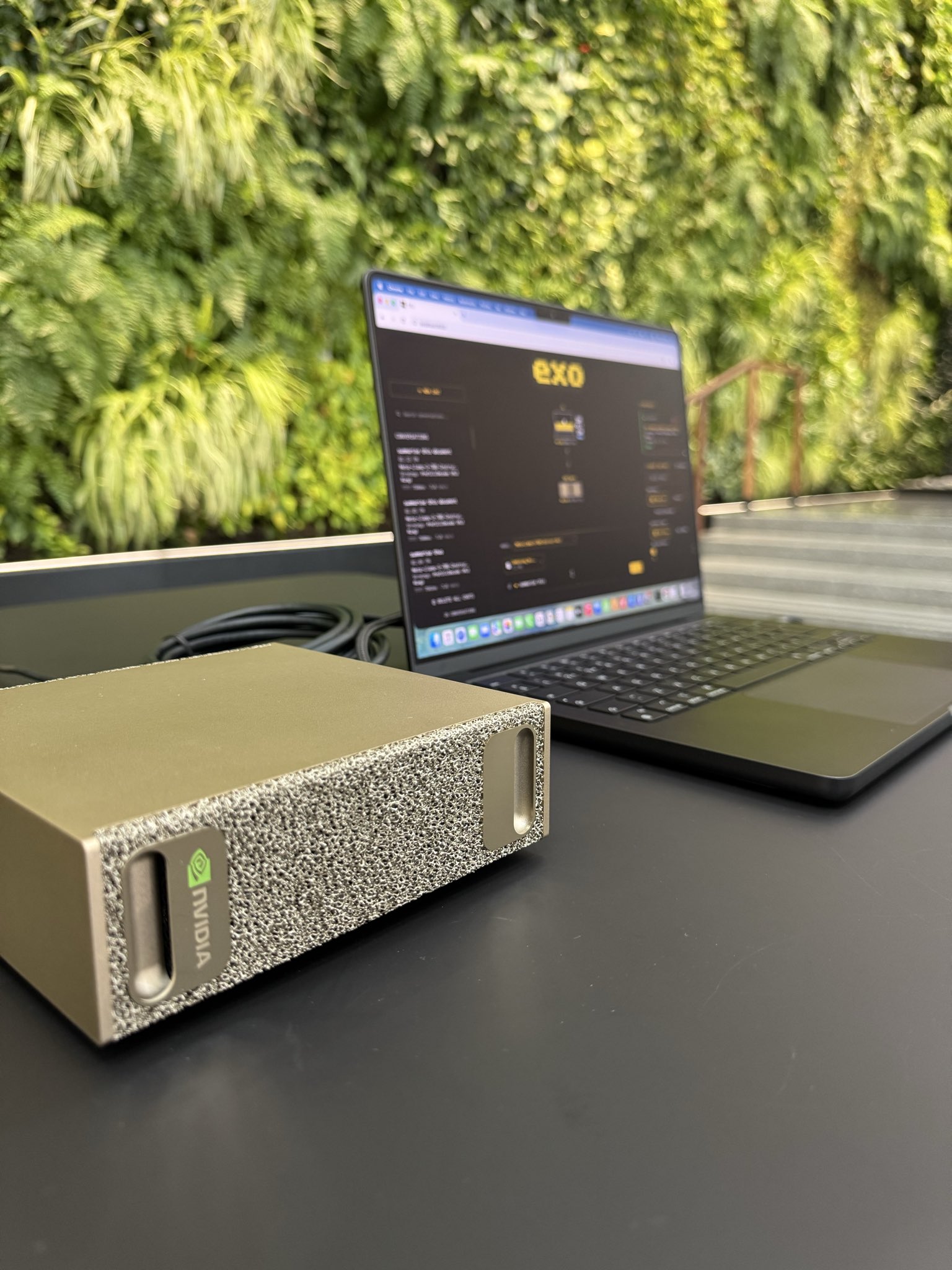
MASSIVE NEWS Teamed up with NVIDIA to make Local AI The Default https://t.co/kmGgcBEZ4f
How to keep AI spend flat while token usage grows exponentially: Not with friction and spend alerts. With better defaults, routing, and caching. Better Defaults (not Usage Caps) – Engineers can choose any model they want, but defaults matter. We’re experimenting with defaulting to open weight models like GLM 5.2 and Kimi 2.7 through our LLM gateway, while still encouraging engineers to choose the right model for the task. 91% of our employees were never hitting their usage caps, so instead of lowering caps and driving up alerts, we're moving to cheaper defaults. Note that code reviews use a diversity of models, so they can check each other's work. Better Routing – In our custom harnesses, we preprocess prompts and route to the best model for the job, considering cache hits and model pricing. For instance, you may want a frontier model for planning, but not for execution where they can be overkill. Ultimately, humans shouldn't be choosing models - AI can automate this task. Better Caching – Cache misses are the easiest way to drive your cost up. All of our requests are cache aware, so we’re reusing a warm cache wherever possible. For example, our cache hit rate went from 5% → 60% in LibreChat once properly implemented. Keep Context Lean – Start fresh sessions when switching tasks. Scope file context narrowly. Disconnect unused tools. Don't just compact. The goal isn't fewer tokens used, it's fewer tokens wasted. Better Visibility – Our engineers can use as many tokens as they want, from whatever model they want, but we’ve made usage visible – and the more you spend on AI, the more impact we expect. The goal isn't to suppress usage. It's to build the infrastructure that makes exponential growth sustainable. Putting this into practice has cut our AI spend nearly in half, while our token usage continues to grow.


~3 weeks ago: /skill-1 only ~1 week ago: /skill-1 and skill-2 Today: /skill-1 only IMO invoking both skills is the correct behavior - the user well mentioned them! cc @delba_oliveira I assume they have given you infinite power already
@claudeultramax @TheAhmadOsman Good question! I have a whole video on that 😂 https://t.co/u3N7QOiERN
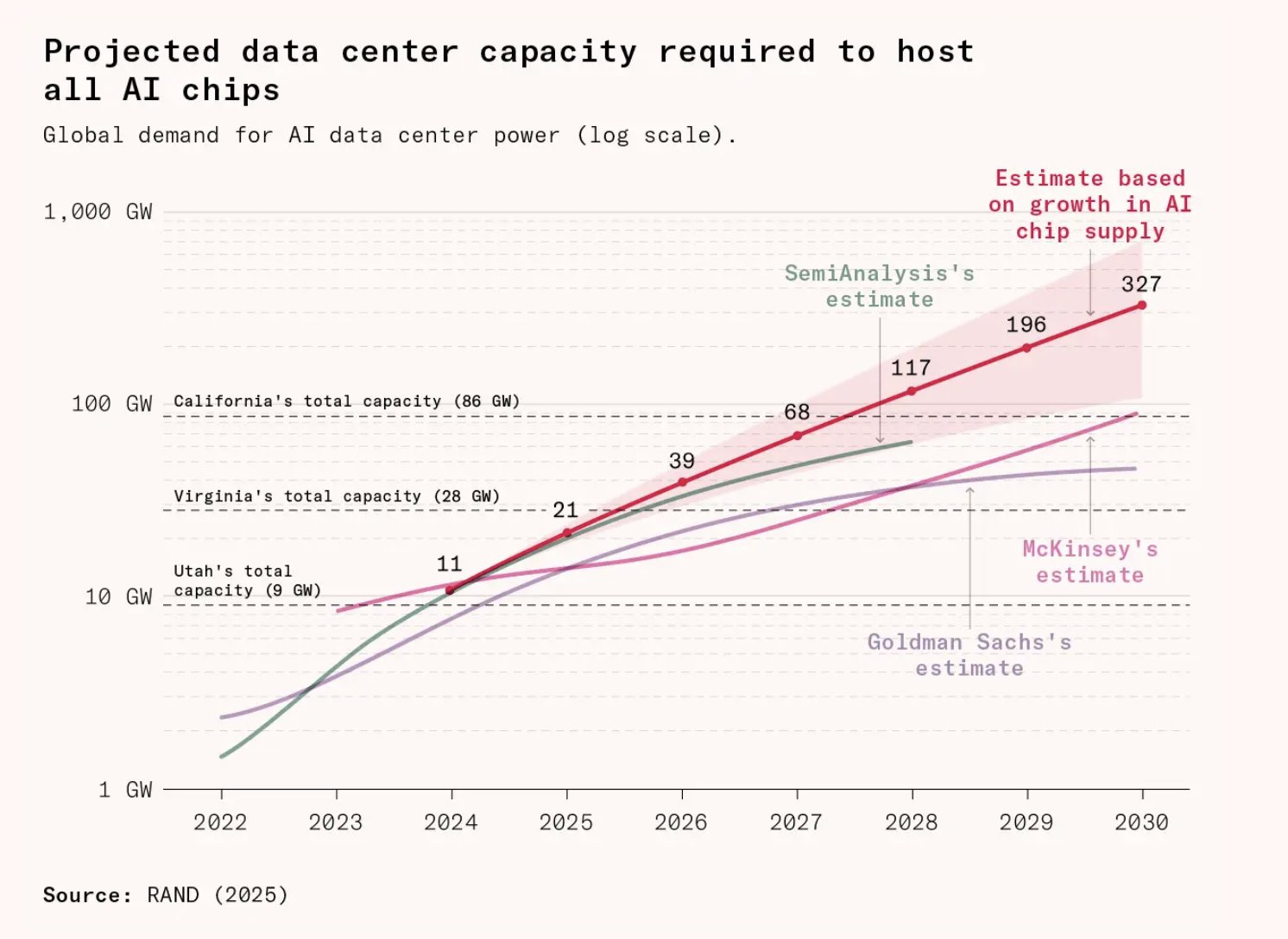
The worst case scenario for USA AI: 1. Chinese open sources keep gaining market share. China owns the model layer. 2. Those models were trained and inference-optimized on Huawei chips instead of NVIDIA. China also owns the chip layer. 3. US doesn't build data centers fast enough to keep up with the demand of compute, storage and energy. China meanwhile exports the inference and training layer(for continual training it will happen along with inference) Export control is not the right strategy here. Simply banning "open source from China" doesn't solve the issue here. USA must invest in open source models, hopefully get Chinese models to use NVIDIA, and invest in nuclear asap.