GLM-5.2 Challenges US Frontier Models as WF6 Supply Crisis Threatens Global Chip Production
Today's developments highlight a major push toward enterprise AI cost optimization and organizational integration, spearheaded by new paradigms in cloud-based assistants and aggressive routing to cheaper open-weight models. Meanwhile, the physical constraints of AI are mounting, highlighted by an impending tungsten hexafluoride shortage that threatens global semiconductor supply chains, alongside local inference bottlenecks as developers push consumer hardware to its absolute limits.
Daily Wrap-Up
The AI ecosystem is currently caught between the limitless potential of agentic workflows and the harsh, physical realities of global supply chains. The most jarring revelation today comes from the hardware sector, where a quiet but severe shortage of tungsten hexafluoride (WF6) is about to disrupt the semiconductor industry. As @Gaurab detailed, two Japanese companies producing a quarter of the world's supply are halting production on July 1 due to depleted Chinese tungsten imports. Because WF6 is an irreplaceable chemical used to deposit tungsten contact plugs in every advanced AI accelerator, this supply shock will ripple through the entire tech ecosystem. It is a stark reminder that the foundational layer of the AI revolution rests on fragile industrial supply lines.
On the software side, organizations are rapidly maturing their approach to LLM deployment, shifting from novelty to ruthless cost optimization. The era of blindly throwing expensive API calls at every problem is ending. Industry leaders are demonstrating that sustainable AI scaling requires sophisticated internal infrastructure, heavily leveraging prompt caching, context management, and intelligent routing to cheaper, open-weight models like the increasingly popular GLM-5.2. This drive for efficiency is paralleled by a paradigm shift in how we interact with these models within organizations. The conversation has moved beyond simple chat interfaces toward persistent, asynchronous entities that integrate seamlessly into company-wide systems, fundamentally altering the landscape of enterprise productivity and software prep work.
The most practical takeaway for developers: Audit your LLM workflows today to implement aggressive prompt caching and context narrowing, as these architectural choices will shield your applications from the impending spikes in compute costs and API pricing that hardware supply shocks will inevitably cause.
Quick Hits
- @samhcarter highlights that the M5 Pro hardware is currently an exceptionally good deal for developers looking to upgrade their local workstations.
- @0xSero shares @pmarca's observation that GLM-5.2 is being recognized by AI insiders as the first Chinese model to consistently match or beat American frontier models.
- @dosco notes a streamlined approach to automation, stating that simply giving a model specific skills allows it to handle the rest of the workflow autonomously.
- @MatthewBerman announces new features for the Loopy skill, including the ability to interview users to craft loops, run autonomous monitoring, and review past runs to debug issues.
- @hyperagentapp is targeting users frustrated by OpenClaw, offering $100 signup and $500 migration credits to switch to their platform for better live agent status tracking and visibility.
Enterprise AI Paradigms and the Fight Against Sprawling Costs
As AI capabilities expand, enterprises are hitting a wall regarding implementation and cost management. The models themselves are no longer the primary bottleneck; the infrastructure surrounding them is. @vasuman points out that the industry's biggest hurdle is organizational adoption and strategy, noting that "the issue with AI has not been the models for quite some time." Solving this requires a fundamental redesign of how we interact with LLMs at work.
This sentiment is echoed in a viral observation originally made by @karpathy and amplified by @GergelyOrosz, who realized that the true breakthrough is a cloud AI connected to all internal company systems that just works. Karpathy described this as the third major redesign of LLM user interfaces, stating, "The first paradigm was that the LLM is a website you go to, the second was that it is an app you download to your computer. This third one is that it is a self-contained, persistent, asynchronous entity with org-wide tools and context, working alongside teams of humans."
However, keeping these persistent entities online requires massive cost mitigation. @matei_zaharia highlighted how companies are keeping AI spend flat while token usage grows exponentially. Quoting @brian_armstrong, the strategy shifts away from usage caps toward better defaults, routing, and caching. Armstrong notes that "better routing" involves preprocessing prompts and sending them to the best model for the job, emphasizing that "humans shouldn't be choosing models; AI can automate this task." This aggressive push toward cheaper open-weight defaults like GLM-5.2 and Kimi 2.7 is a direct response to the overwhelming complexity of modern model tiers.
Developers are increasingly frustrated by the paradox of choice in model selection. @theo sarcastically laid out the absurdity of Anthropic's current lineup, which includes Fable 5, Opus 4.8, Sonnet 4.6, and Haiku 4.5, each with up to six reasoning tiers. This was in response to @georgepickett questioning how anyone chooses between combinations like "Sol low vs Terra xhigh." The industry is clearly reaching a tipping point where human developers can no longer manually parse model catalogs, making automated routing and gateway management an absolute necessity for sustainable engineering.
The Hardware Squeeze: From Tungsten Shortages to Local Inference Limits
While enterprises optimize their cloud spend, the physical hardware layer is facing unprecedented pressures. The most critical news comes from the semiconductor supply chain, where a massive bottleneck is forming around tungsten hexafluoride (WF6). @Gaurab issued a stark warning about an impending crisis. "Samsung, SK Hynix, and TSMC source 80% of their WF6 from Japan," he explained, noting that two Japanese firms producing 25% of the global supply are halting production on July 1 because their Chinese tungsten imports have been zero since February.
The downstream impact on AI infrastructure will be severe. As @Gaurab highlights, every AI accelerator depends on this gas, and with stockpiles gone and prices up over 230% year over year, building new capacity will take years. This hardware scarcity makes local, consumer-grade AI inference more relevant than ever, though not without its own bottlenecks. @ml0_1337 pointed out a harsh reality for local AI enthusiasts migrating to Mac: while memory bandwidth is decent, the raw FLOPS are lower than specialized hardware like the NVIDIA DGX Spark. They noted that at context sizes around 128,000 tokens, "prompt preprocessing becomes ridiculously slow," meaning many buyers will face unexpected despair when running large local models.
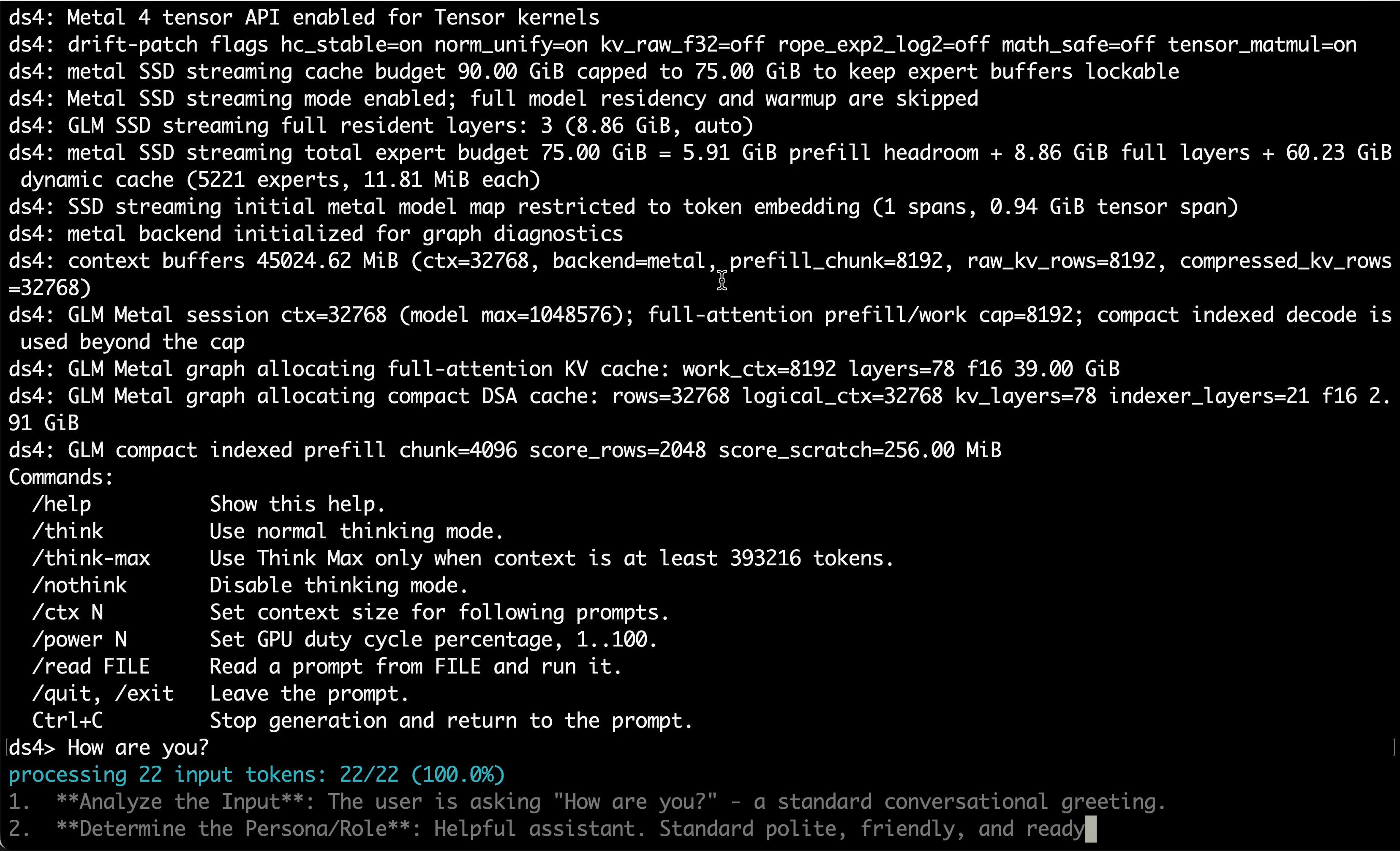
To bypass these memory bottlenecks, developers are getting incredibly creative. @antirez demonstrated an extreme optimization by running GLM 5.2 on an M5 Max 128GB computer using Q2_K routed experts (effectively around 2.6 bits) with SSD streaming. This level of tinkering is essential for anyone serious about local deployment. For developers looking to build out their own local infrastructure without relying on cloud APIs, @TheAhmadOsman shared an essential, free online resource billed as the bible for running LLMs locally. Covering everything from Mac-first workflows to cluster orchestration and tools like llama.cpp and TensorRT-LLM, it is exactly the kind of foundational knowledge needed as cloud API costs and hardware supply chains face global turbulence.
Simplifying Agent Architectures and Deployment Pipelines
There is a growing consensus that multi-agent setups are often over-engineered. Many developers are finding success by stepping back from complex, automated webs of agents and focusing on tightly scoped, highly functional workflows. @sivalabs admitted to consciously avoiding complex multi-tasking setups, preferring a minimal AI agent approach. This desire for simplicity is driving innovation in how we train and deploy models for specific tasks, particularly in web automation.
The open-source project BrowserBC, highlighted by @kimmonismus, perfectly illustrates this minimalist trend. Instead of using a massive, expensive frontier model for every step of a web agent workflow, the ViDA team records a human web flow once, distills it into a reusable skill, and delegates execution to a cheaper model. Quoting @vida_agent, they noted that "just one recording is enough to generalize a skill." The results are staggering: on WebArena-Hard, tool calls dropped by 27%, while success rates jumped from 60% to 81%. This model distillation proves that dynamic workflows do not require massive compute if they are architected intelligently.
Yet, even the most elegantly designed AI applications face a major hurdle when it comes time to deploy. @jedwards_27 addressed this exact gap, noting that while "AI can build an app in an afternoon, getting it safely into other people's hands is a whole other challenge." Their solution, the Block App Kit, represents a crucial missing piece in the modern AI stack: safe, standardized distribution. Meanwhile, hardware enthusiasts are proving that deployment can also mean literal physical integration. @dfrobotcn showcased an open-source, DIY robot vacuum built by @oomwoo using a Raspberry Pi, ROS 2, and 2D LiDAR. Operating entirely locally with Home Assistant integration and no cloud dependencies, the project underscores how accessible AI deployment has become, allowing communities to contribute parallel modules for everything from navigation to physical chassis design.
Rethinking Developer Workflows and Creative Environments
The integration of AI into traditional software development is moving far beyond mere code generation, fundamentally redefining how engineers prepare to build. @mattpocockuk outlined the three main prep activities in software development: Discuss, Research, and Prototype. He pointed out that it was inevitable AI would dominate these specific areas because they all revolve around summarizing knowledge and aiding discussion. This realization is shifting the role of the developer from a code-writer to an orchestrator of AI tools.
This orchestration extends heavily into creative software, where node-based environments are evolving to handle complex, multimodal AI tasks. @figma announced Figma Weave, a new node-based canvas specifically designed for image, video, audio, and 3D workflows. By allowing creators to visually map out complex media pipelines, tools like Weave are democratizing access to advanced AI generation, making it as simple as connecting nodes on a screen rather than writing esoteric scripts.
Pushing the boundaries of what these creative and development models can do requires relentless optimization. @SpaceTimeViking announced the release of Orinth 1.0, an uncensored model formatted in NVFP4 specifically for the DGX Spark and Blackwell architecture. By preserving attention layers at BF16 for lossless quality and implementing working DFlash, the release claims a 200% to 300% performance boost over stock configurations. This kind of hyper-optimized local compute perfectly mirrors the node-based creativity of tools like Weave, giving developers the raw horsepower needed to prototype complex ideas on their local machines before committing to larger infrastructure builds.
Sources

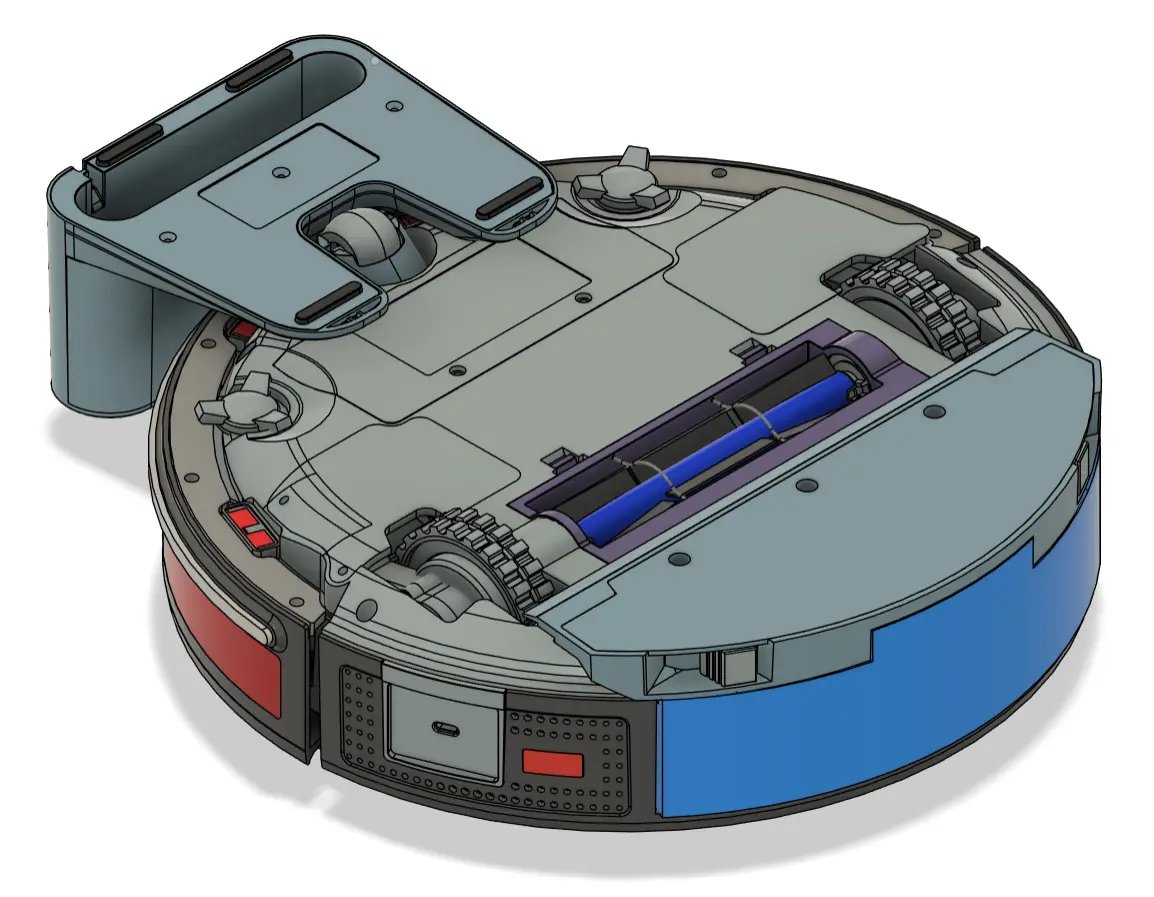
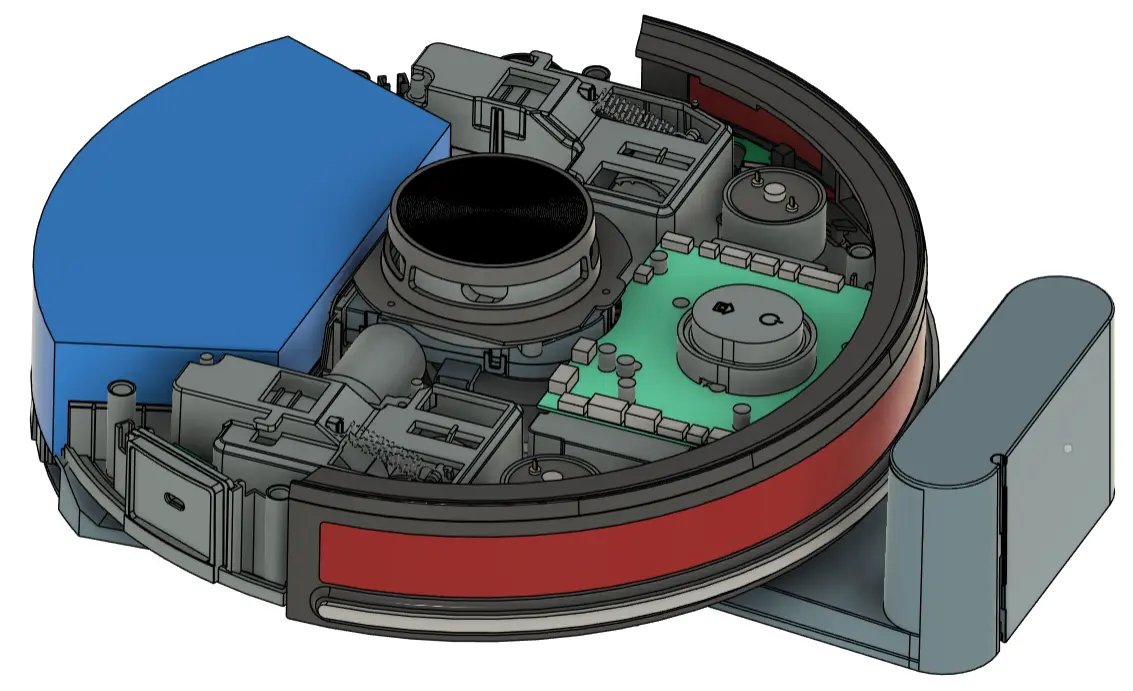
Dynamic workflows (generating harnesses on the fly) are a new form of test-time compute. But LLMs aren't great at building them. I often have to steer agents to generate complex patterns. Curious how effective Mythos/GPT-5.6 is at dynamically generating complex workflows. https://t.co/hFhMWZJSua
Inference Engines for LLMs & Local AI Hardware (2026 Edition)
Solving the AI Adoption Problem
We open-sourced BrowserBC: A system that turns human browser trajectories into reusable agent skills. Just one recording is enough to generalize a skill. 🛠️ GitHub: [https://t.co/WP8mQGuJ6N] Here’s how it works. 👇



How to keep AI spend flat while token usage grows exponentially: Not with friction and spend alerts. With better defaults, routing, and caching. Better Defaults (not Usage Caps) – Engineers can choose any model they want, but defaults matter. We’re experimenting with defaulting to open weight models like GLM 5.2 and Kimi 2.7 through our LLM gateway, while still encouraging engineers to choose the right model for the task. 91% of our employees were never hitting their usage caps, so instead of lowering caps and driving up alerts, we're moving to cheaper defaults. Note that code reviews use a diversity of models, so they can check each other's work. Better Routing – In our custom harnesses, we preprocess prompts and route to the best model for the job, considering cache hits and model pricing. For instance, you may want a frontier model for planning, but not for execution where they can be overkill. Ultimately, humans shouldn't be choosing models - AI can automate this task. Better Caching – Cache misses are the easiest way to drive your cost up. All of our requests are cache aware, so we’re reusing a warm cache wherever possible. For example, our cache hit rate went from 5% → 60% in LibreChat once properly implemented. Keep Context Lean – Start fresh sessions when switching tasks. Scope file context narrowly. Disconnect unused tools. Don't just compact. The goal isn't fewer tokens used, it's fewer tokens wasted. Better Visibility – Our engineers can use as many tokens as they want, from whatever model they want, but we’ve made usage visible – and the more you spend on AI, the more impact we expect. The goal isn't to suppress usage. It's to build the infrastructure that makes exponential growth sustainable. Putting this into practice has cut our AI spend nearly in half, while our token usage continues to grow.
ROYAL RUMBLE: M3 Ultra vs M5 Max vs Spark ⚡️ 🧵 - Model: deepreinforce-ai/Ornith-1.0-35B-GGUF:Q8_0 - Server: llama.cpp (9824) - args used i comments - Cache not used to simulate a single large context load each time Notes: - On large contexts DGX Spark on llama.cpp is strong, but again keep in mind that it's not so common starting with 128K context in first message, especially in coding sessions - In the detailed charts below for DGX Spark you see M3 Ultra because I ran the benchmark remotely, working to fix this. - I will test with MLX soon using 8bit 💪 Enjoy results and share your feedback or requests for more tests!
This is a new paradigm for interacting with Claude that is significantly more "inline" with all the other human activity org-wide. Once you do all of the under the hood engineering work to make this "just work" (e.g. across tools, integrations, compute environments, memory, security, etc.), Claude basically joins the team in a seamless way - you can talk to it as you would talk to a person and it can help with a very large variety of workloads. Imo this is the 3rd major redesign of LLM UIUX. The first paradigm was that the LLM is a website you go to, the second was that it is an app you download to your computer. This third one is that it is a self-contained, persistent, asynchronous entity with org-wide tools and context, working alongside teams of humans. It really takes a while to wrap your head around it, but it works and it is awesome.
So with 5.6 we have - Sol (low, medium, high, xhigh, max) - Terra (low, medium, high, xhigh) - Luna (low, medium, high, xhigh) Not complaining about new models but how do you choose between Sol low vs Terra xhigh. So many combinations to choose from