Enterprise AI Shifts to Autonomous Agents as US Open Source Models Catch the Frontier
The generative AI economy has officially surpassed $110 billion in annualized sales as the industry rapidly transitions from simple chatbots to autonomous agentic systems. Meanwhile, a US lab has released its first open source coding model to rival frontier capabilities, and Apple prepares a massive silicon pivot to prioritize on-device AI.
Daily Wrap-Up
The transition from conversational chatbots to autonomous agents is no longer a theoretical roadmap but a present reality reshaping enterprise software. Today's discussions centered heavily on how AI is embedding itself into the daily operations of businesses, shifting from text generation to executing complex, multi-step workflows. The sheer economic scale of this shift is becoming undeniable, with new bottom-up analyses revealing that the generative AI economy has surpassed a $110 billion run rate. However, as AI agents take on more operational memory and integrate deeper into corporate environments, enterprises are waking up to the massive risks of context lock-in, sparking a renewed industry focus on open source alternatives and data sovereignty.
On the hardware and model front, the open source ecosystem is heating up to a boiling point. A United States lab has finally released a coding model that competes directly with proprietary frontier systems, breaking the monopoly that foreign labs previously held on open source code generation. This software breakthrough is happening alongside a major hardware pivot, with manufacturers reorganizing their entire silicon roadmaps to prioritize the memory bandwidth required for local inference. Developers are taking careful note of these shifts, looking for ways to run increasingly sophisticated models without permanently tethering themselves to expensive cloud APIs.
The most practical takeaway for developers: start decoupling your application logic from specific model providers by building a secure, model-neutral context layer for your agents. Renting intelligence from OpenAI or Anthropic is fine, but owning your operational memory will save you from severe vendor lock-in and pricing traps down the line.
Quick Hits
- Starlink continues its push into rural broadband, advertising high-speed satellite internet available with speeds exceeding 400 Mbps for remote work and streaming.
- @FossPrime rigged a Steam Controller to automatically charge itself, proving that hardware DIY modifications are still alive and well in the gaming community.
- @GergelyOrosz reported from NVIDIA HQ that the chipmaker does not offer free snacks or coffee, relying on employee salaries rather than the typical Big Tech perk structure.
- @FrameworkPuter announced price drops for Framework Laptop 13 Pro configurations, leveraging cheaper and faster Gen 5 SSDs from ADATA to offset broader market price increases.
- @vovudebosh highlighted AutoGTM, an AI tool that promises to handle research, data verification, and personalized cold email drafting for sales teams in under two minutes.
- @beffjezos shared news of Aleph, a startup founded by a former Google X researcher, which recently obtained the highest-resolution 3D images of the human brain ever taken from outside the skull.
- @SW_Intelligence announced an upcoming presentation featuring joint research from Stanford's AI Lab and BCG on AI productivity in software development and what leading companies are doing differently.
Enterprise AI Agents and the Battle for Context
The era of simple conversational AI is drawing to a close, replaced by agentic systems that actively participate in company workflows. Ethan Mollick (@emollick) highlighted new research from visiting economists at OpenAI demonstrating a rapid shift toward agentic AI, particularly in software engineering tasks. This transition brings immense productivity gains but introduces a subtle and dangerous trap for businesses: context lock-in. When an AI agent remembers your company's specific workflows, customer promises, and exception paths, switching providers becomes a monumental challenge.
Arvind Jain (@jainarvind) articulated this looming crisis by emphasizing that the core challenge in enterprise AI is figuring out how to rent the intelligence while owning the context. He warns that relying heavily on vendor-specific tools like Anthropic's new Claude Tag creates a scenario where "models can be swapped. Agents can be copied. But the memory of how your company actually works is much harder, maybe impossible, to move." The moment your AI vendor becomes a shared coworker, it stops being just a model provider and starts owning your operational memory.
This anxiety is already driving market adaptations and engineering overhauls. Flo Crivello (@Altimor) shared how migrating an agentic system in production from Claude to DeepSeek resulted in the biggest economic improvement in their company's history, though he noted the extreme technical difficulty of switching models in a live environment. To avoid vendor lock-in altogether, @ataiiam introduced Open Tag, an open-source alternative to Claude Tag that works across any model and agent harness, supporting generative UI and human-in-the-loop approvals. Even independent developers are leaning into self-sufficient setups, with @KSimback proudly noting that an autonomous Hermes agent entirely built and maintains their latest web project. The overarching message is clear: intelligence is becoming a commodity, but context is leverage.
The LLM Economy and Open Source Breakthroughs
As agentic systems multiply across the enterprise, the financial footprint of generative AI is reaching staggering new heights. A new bottom-up analysis reveals that the GenAI economy has generated $110 billion in sales over the past twelve months, with an annualized revenue run rate exceeding $175 billion. Alex Imas (@alexolegimas) praised this comprehensive measurement of consumer and enterprise spending across the full stack as a massive public good. However, the true scale of model usage might be even larger than API tracking suggests. Dax (@thdxr) pointed out that industry reports showing a collapse in token usage for US models on aggregator platforms are misleading because most enterprise clients use frontier models directly. He noted that these frontier models likely account for "90%+ of total token spend" because users do not purchase them through third-party routers.
In such a capital-heavy environment, the open source ecosystem is gaining unprecedented traction. Ryan Shea (@ryaneshea) celebrated a major milestone, sharing that a US lab has finally released an open source coding model named Ornith-1.0 that operates at true frontier levels. He enthusiastically declared that "the open source frontier no longer exclusively belongs to China," officially marking the entry of the United States into the high-stakes open source model race.
This shift is rapidly democratizing access to top-tier coding capabilities. While the government asks proprietary labs like OpenAI to stagger the release of GPT-5.6 over security concerns, the open source community is moving aggressively to provide free alternatives. Kyle Hessling (@KyleHessling1) teased the upcoming release of Qwopus-Coder 35B MOE, promising a frontier-level model that will be completely free for commercial use under the banner of inference independence. As the economic weight of AI grows, the appeal of self-hosted, unmonitored models will only increase for developers and enterprise users alike.
Local AI and Silicon Roadmaps
The push for inference independence is heavily dependent on consumer hardware catching up to the intense memory and compute demands of modern AI models. Apple is reportedly preparing a massive shift in its silicon strategy to accommodate this exact trend. According to @kimmonismus, the tech giant plans to skip the M6 Pro and Max variants entirely, moving high-end Macs straight to the M7 generation by 2027. The strategic goal is to fast-track advanced on-device AI capabilities by pushing memory bandwidth from 153 GB/s on the M5 to an impressive 240 GB/s on the base M7. This pivot highlights a broader assumption that on-device AI will require fundamentally stronger local inference and significantly higher memory bandwidth than originally anticipated.
This hardware evolution is enabling a new genre of extreme digital self-sufficiency. @jun_song highlighted the ultimate sovereignty starter pack, combining a maxed-out Mac Studio M5 Ultra with 750GB of memory, solar panels, a power generator, and a local GLM-5.2 model. This setup allows users to maintain powerful AI capabilities entirely off the grid, completely insulated from cloud outages and API pricing fluctuations.
As cloud APIs become more expensive and heavily regulated, local inference is transitioning from a niche hobby for privacy enthusiasts to a viable enterprise strategy. Redesigned GPUs with upgraded Neural Engines and higher core counts will make running sophisticated models locally not just feasible, but highly preferable. The message from the hardware sector is clear: the future of AI processing is increasingly moving back to the edge.
Developer Tools and Workflows
As AI models grow more capable, the orchestration tools used to manage them are maturing rapidly. Guillermo Rauch (@rauchg) announced the release of AI SDK 7, which introduces a suite of features designed specifically for the agentic era. The update includes reasoning control, agent-level tool approval, durable workflows, and sandbox support. This release marks a significant step forward in giving developers granular control over how autonomous models operate within their applications, ensuring that safety and performance can scale together.
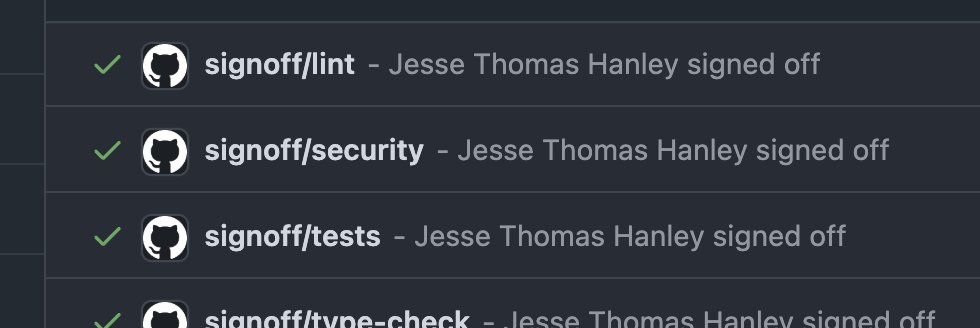
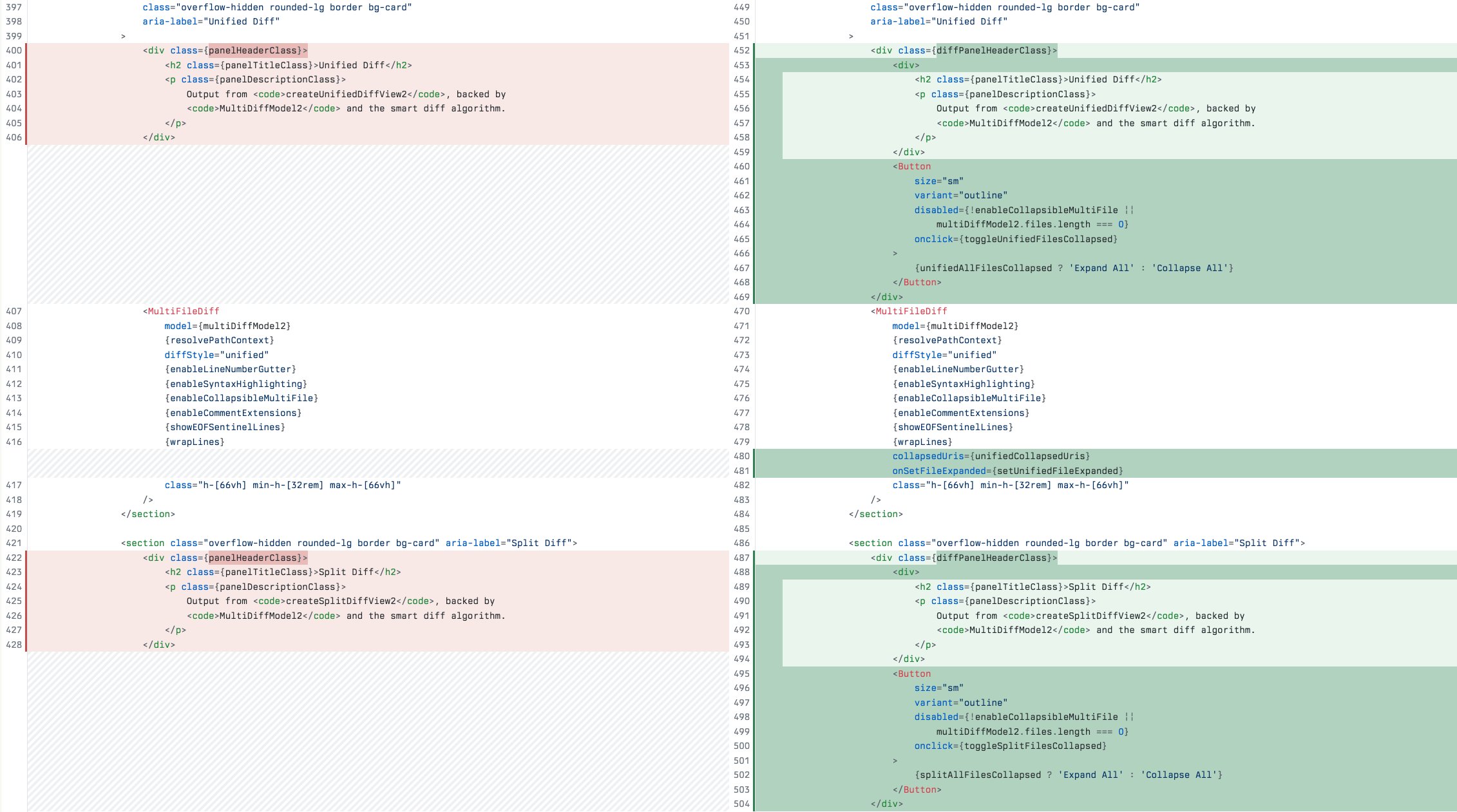
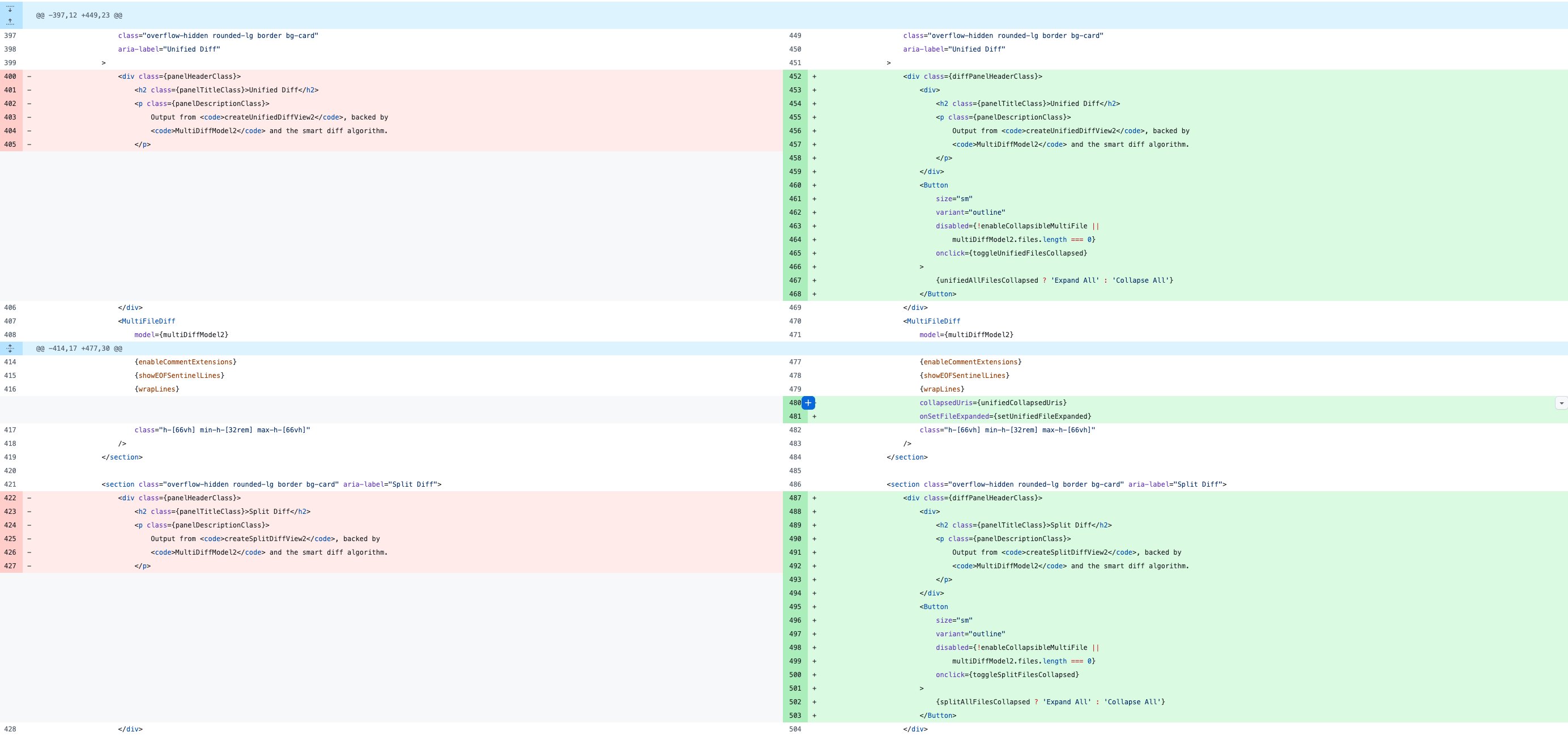
Beyond orchestration, developers are refining their day-to-day engineering practices to manage the cognitive load of complex AI integrations. Beyang (@beyang) emphasized the value of better code review interfaces, noting how unchanged code block detection drastically reduces mental fatigue when reviewing long diffs generated by coding agents. Meanwhile, Jesse Hanley (@jessethanley) shared a controversial but effective workflow change by killing GitHub Actions for continuous integration in favor of local binary signoffs. This move echoes a growing sentiment in the developer community that traditional CI pipelines can be overly cumbersome for fast-paced AI-assisted development.
The overarching theme in modern developer tooling is a deliberate return to simplicity and strict control. Whether it is managing complex agent workflows locally or stripping away bloated cloud integrations to focus on tangible code reviews, engineers are demanding tools that reduce friction rather than add layers of opaque abstraction.
Deep Dives in AI Research
Beneath the rapid product releases and multi-billion dollar economic reports, the foundational mathematical research driving artificial intelligence remains critically important. Huaizheng Zhang (@zhzHNN) succinctly captured the industry's reverence for deep theoretical work, noting that when prominent researcher Lilian Weng publishes analysis, developers memorize it. Weng's highly anticipated deep dive covers the intricacies of scaling laws, which are essential for determining the optimal allocation of compute resources between data and model size.
Understanding these scaling laws is not merely an academic exercise. It represents a critical competitive advantage in an industry where compute is incredibly expensive. The research outlines how compute-optimal allocation works and why historical disagreements between landmark papers make extrapolation so tricky. As the cost of training frontier models skyrockets into the billions, utilizing scaling laws to accurately predict model performance before committing to a massive training run is the only way labs can survive financially. The math behind the models is ultimately what dictates the pace of the entire industry.
Sources

AI SDK 7 is now available. Introducing: reasoning control, agent-level tool approval, tool and runtime context, file and skill uploads, MCP Apps, durable workflows, terminal UI, sandbox support, harness integrations, telemetry, lifecycle events, and more. https://t.co/kbPKu8bN1Y
We've made the latest set of updates to reflect changes in silicon pricing. DDR5 costs remain stable month over month. The biggest updates are around SSDs, where we've consumed most of the inventory that we brought in earlier at lost cost.
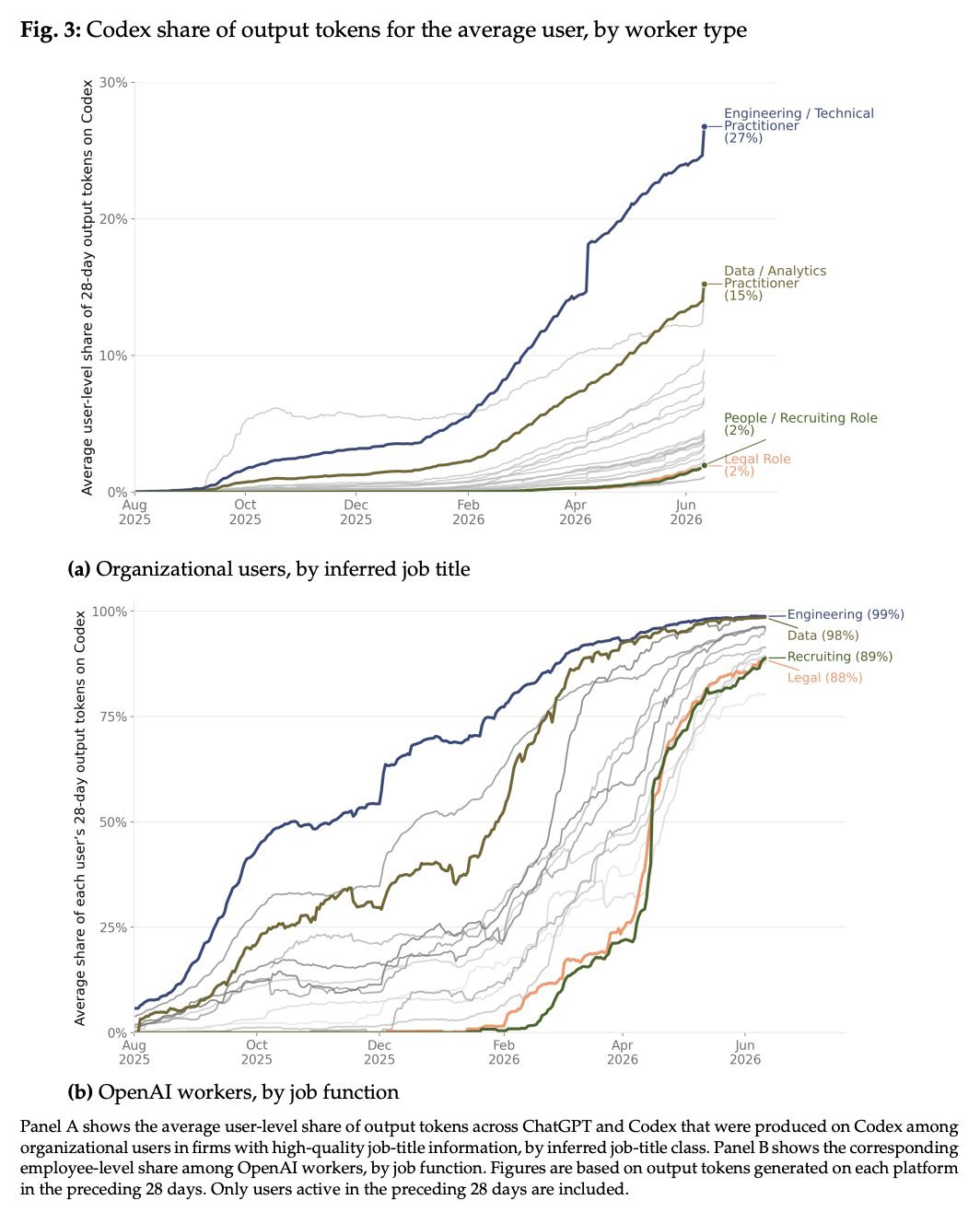
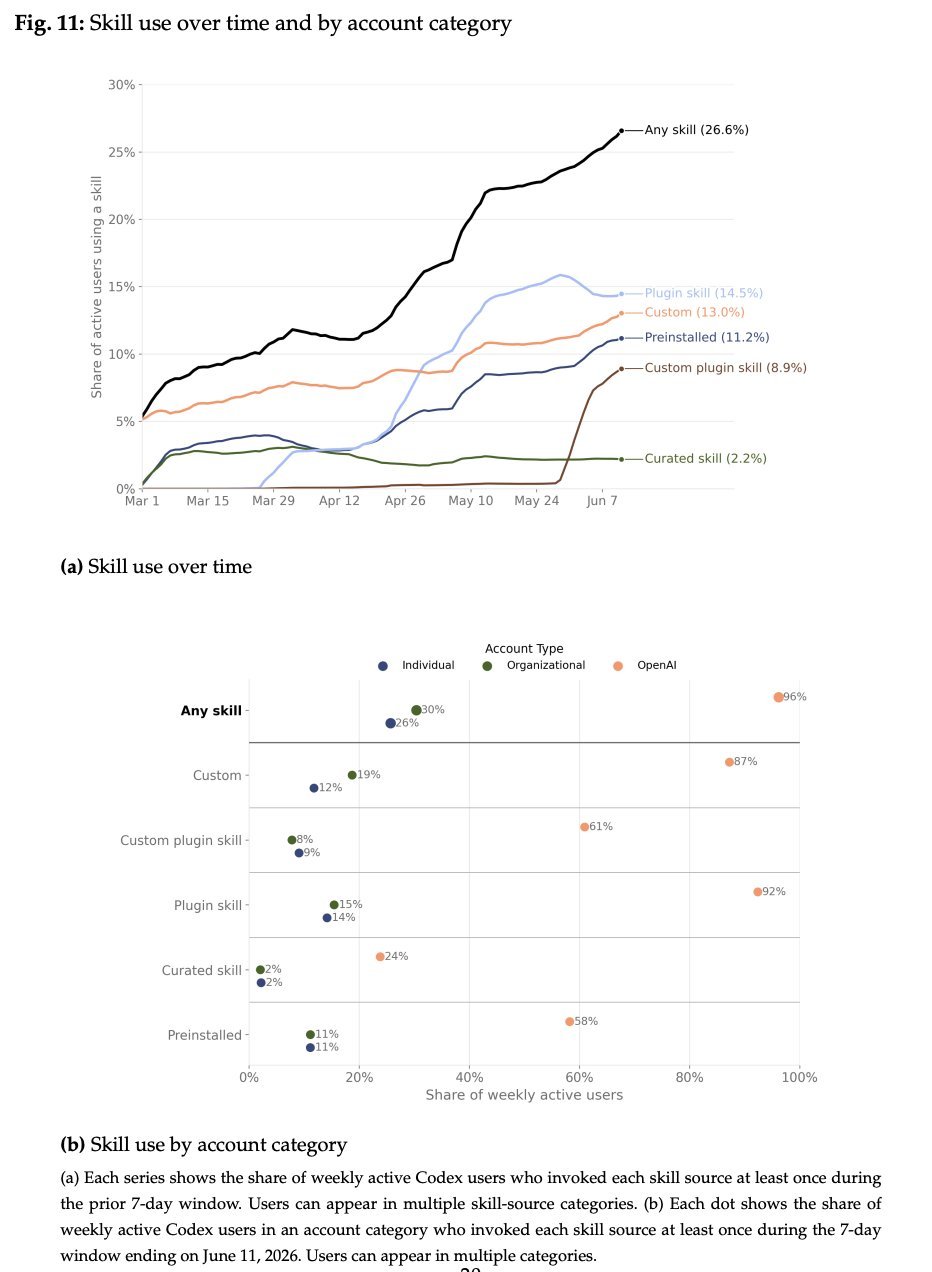
🚨 New research alert! For the past few months, I've been a part-time visiting economics researcher at OpenAI. Excited to share the first public piece of work to come out of this, which uses data from Codex to document the ongoing and rapid shift to agentic AI. Details below 👇 https://t.co/FVgEHlVeQZ


The GenAI economy has generated $110 billion in sales over the past 12 months. It is growing fast. On an annualized basis, the revenue run rate exceeds $175 billion. These numbers took us several months to construct, and as far as we know, it’s the first bottom-up, deduplicated measure of consumer and enterprise AI spending across the full stack. We are releasing this research today in our first The State of the AI Economy report. https://t.co/cJwZb0T99C
Claude Tag is a Trojan horse. Not because Anthropic is doing anything evil. Because the incentives are obvious. Day one, this looks like a great feature: tag Claude in Slack, let it follow the thread, remember context, connect to tools, break down tasks, chase work, and act like a teammate. But that is exactly the problem. The moment your AI vendor becomes a shared coworker, it stops being just a model provider. It starts becoming the place where work is interpreted, remembered, routed, and eventually executed. That is not model lock-in. That is context lock-in. You are now renting your company back from them. Models can be swapped. Agents can be copied. But the memory of how your company actually works is much harder, maybe impossible, to move: the Slack scar tissue, the exception paths, the customer promises, the unfinished threads, the weird workflows, the implicit owners, the “we tried that in Q2 and it failed” knowledge. Once that lives inside one vendor’s agent layer, you are not renting intelligence anymore. You are renting your company’s operating memory. And the pricing model makes it even more dangerous. A human coworker has a salary. Claude has unbounded tokenized activity. The more work moves through it, the more the vendor captures not just IT spend, but labor spend. This is the enterprise bargain people will regret: Convenience now, and rapid decent into dependency. The right architecture is simple: rent the best intelligence from whoever is best this month. OpenAI, Anthropic, Gemini, open source, whatever. But own the context layer. Your company memory should be inspectable, permissioned, portable, and model-neutral. It should not be buried inside the same vendor that sells you the intelligence and the workflow surface. Claude Tag is useful. That is why it is dangerous. Rent the intelligence, but own the context. Or, regret later.
A super long overdue (3+ years?) post on scaling laws. Compute is expensive. Scaling laws are a way to help us reason about the optimal compute allocation between data and model size before committing to a large run. The post covers what scaling laws predict, how compute-optimal allocation works, why Kaplan et al. and Chinchilla disagree, and how data limits + fitting details make extrapolation tricky. https://t.co/HP26eJvjHB
Migrating from Claude to DeepSeek
New w/ @leomschwartz @amir: The Trump admin has asked OpenAI to stagger the release of GPT-5.6 over security concerns. On Thursday, CEO Sam Altman told staff that the government will be approving access to GPT-5.6 customer by customer, a highly unusual approach. https://t.co/JEkGR97SAU
We recently obtained the highest-resolution 3D images of the human brain ever taken from outside the skull. This is the first look. Introducing Aleph, a research lab building brain interfaces for the telepathic future. (1/n) https://t.co/wW9xag34zy
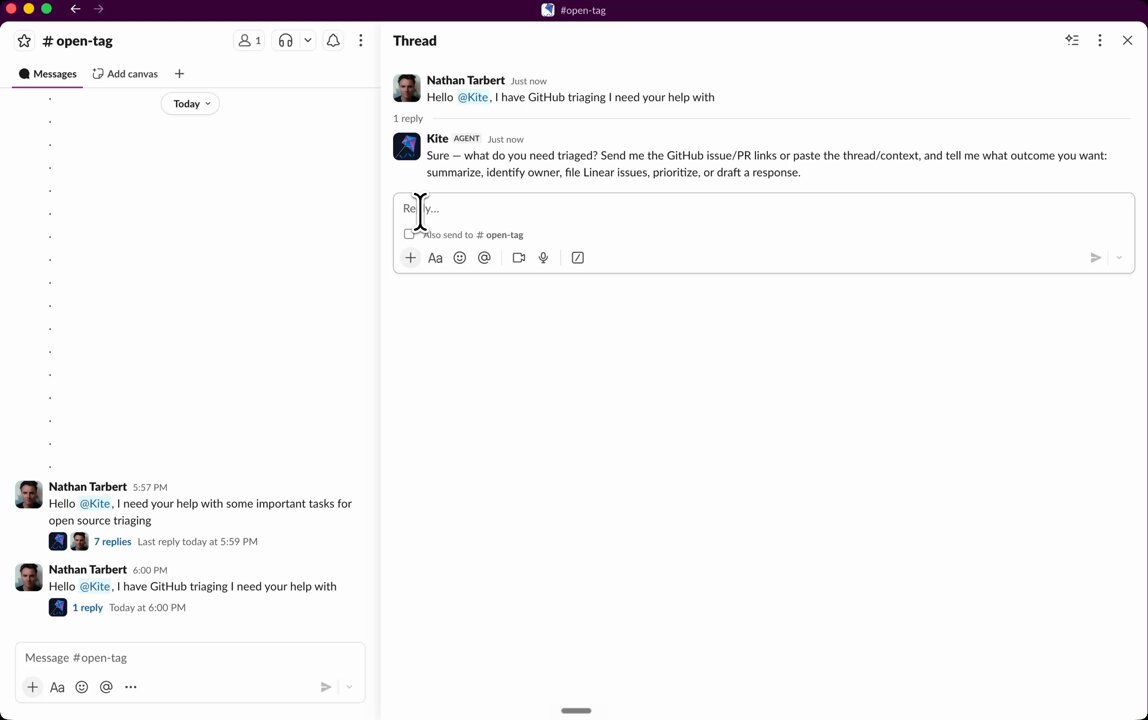
Introducing Claude Tag, a new way for teams to work with Claude. In Slack, Claude joins as a team member with access to the channels and tools you choose. Tag Claude in and delegate tasks to it while you focus on other work. https://t.co/R2C6A5Kcye
It's absolutely insane that this is free. This guy should've charged $1000+ for access to this. I just found the ultimate Hermes agent website. Free Hermes guides, agent skills, memory & context tools, plugins, extensions, and so much more. → https://t.co/vFFoDlDn6n https://t.co/PaGoRpLnwR
Aloha! 🌺 Meet Ornith-1.0, a family of open-source LLMs specialized for agentic coding. Ornith-1.0 spans the full parameter sizes including 9B Dense, 31B Dense, 35B MoE, and 397B MoE. It achieves state-of-the-art performance among open-source models of comparable size on coding benchmarks including: ✅Terminal-Bench 2.1(77.5) ✅SWE-Bench(82.4 on verified, 62.2 on pro, 78.9 on Multilingual) ✅NL2Repo(48.2) ✅SWE Atlas(41.2 on QnA, 42.6 RF, 39.1 TW) ✅ClawEval(77.1) Post-trained on top of gemma4 and qwen3.5, Ornith-1.0 employs a novel self-improving training strategy in which reinforcement learning is used to generate not only solution rollouts, but also the task-specific scaffolds that drive those rollouts. By jointly optimizing the scaffold and the resulting solution, the model generate higher-quality solutions in agentic coding.😎 All models are released under the MIT license, enabling full commercial and research use. 📖Tech Blog: https://t.co/qT9N2HYWFn 🤗Huggingface: https://t.co/PRrwqjeBtM
"the share of tokens used for US models on OpenRouter has collapsed": Bloomberg https://t.co/bG8HvnU4Vl