Claude Tag Reshapes Enterprise Workforces While Qwen Unveils World-Simulating Agents
Today's developments center on AI agents deeply embedding into enterprise workflows, fundamentally restructuring white-collar coordination and flattening corporate hierarchies. Meanwhile, Alibaba's Qwen team introduces a paradigm shift with models that simulate entire digital environments natively, and local computer-use agents gain serious hardware-level control capabilities.
Daily Wrap-Up
The narrative around artificial intelligence is shifting rapidly from isolated chatbots to systemic enterprise integration. Today's most vibrant discussions highlight how AI is quietly swallowing the coordination layer of modern corporations. With the rollout of features like Claude Tag, AI is no longer waiting outside the firm for prompts. It is being provisioned with its own credentials, joining Slack channels, and absorbing the informal context that dictates how work actually gets done. This transition marks the beginning of true corporate agentification, where the metric of success is not benchmark performance, but the quiet compression of middle-management headcounts. Companies will not announce massive layoffs; they will simply stop backfilling roles as agents take over the invisible glue work of scheduling, summarizing, and chasing down dependencies.
This structural shift in the workplace is happening against a backdrop of unprecedented technological acceleration. The gap in productivity between engineers leveraging advanced agentic harnesses and those relying on traditional methods is widening into a chasm. We are seeing the emergence of a new class of operator who can command sprawling systems, while low-agency workers who primarily function as context passers are losing their justification for being in the loop. The speed of this transition is staggering, with the knowledge differential between top-tier AI practitioners and the general workforce expanding at a pace that makes traditional software engineering look static.
Amid these massive structural changes, the tools themselves are becoming increasingly exotic. We saw an engineer reverse engineer an Oura Ring to control a computer via gesture, the introduction of local agents that can control entire operating systems via the mouse and keyboard, and a wild new model from Alibaba that simulates the internet and operating systems entirely inside its own latent space. The future of AI is not just reading text; it is actively manipulating the digital and physical interfaces we use every day. The most practical takeaway for developers: stop treating AI as an external tool for generating code snippets and start integrating it deeply into your daily operational environments, because the engineers who learn to command local agents across multiple system interfaces are the ones who will capture the massive productivity multipliers hitting the market.
Quick Hits
- The "vibe code generalized self serve SaaS as a lead funnel" era is officially here. Companies are using cheap AI to clone simple tools like DocSend or CRM features, releasing them for free to capture high-ACV enterprise leads (@carrynointerest).
- Developers are discovering hidden experimental features in the Codex desktop app by manipulating internal feature flags, forcing the system to enable unreleased UI elements (@brunolemos).
- Despite the rush toward AI, foundational system design principles remain critical. Prompts are great for one-off requests, but they are fundamentally terrible at defining the reliable, long-term behaviors of complex systems (@lateinteraction).
- Programmers looking to build enduring tech should deeply study why no JavaScript framework has managed to dethrone React. The misunderstanding of its architectural staying power is why so many predictions about frontend development fail (@thdxr).
The Enterprise Agent Revolution and Labor Repricing
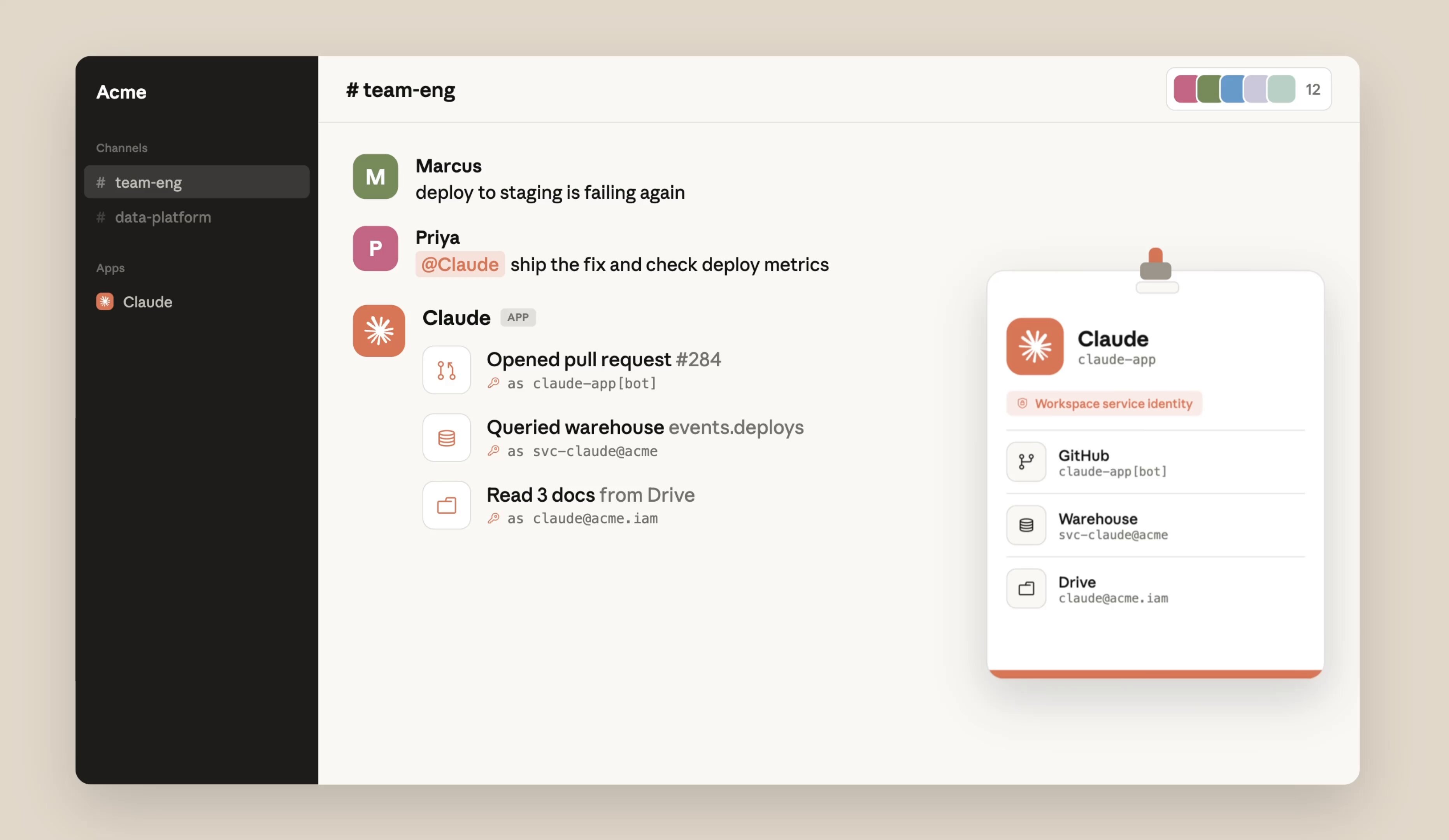
The most profound shift discussed today is the transition of AI from a helpful assistant to an embedded corporate operating system. Anthropic's introduction of Claude Tag allows the model to join Slack channels with its own credentials, effectively granting it an "agent identity" within the firm's access control systems. This moves the AI past the stage of waiting for isolated prompts. Instead, it sits inside the coordination layer of the company, reading threads, understanding political temperature, and tracking dependencies. The structural function of this technology is labor absorption. A massive portion of white-collar work is simply coordination masquerading as expertise. Following up on tasks, drafting updates, and turning ambiguity into action items are exactly the types of glue work that large language models are positioned to absorb completely.
As SightBringer (@_The_Prophet__) points out, this creates a very specific replacement arc. "The replacement path will not look dramatic... Then backfills disappear. Junior openings shrink. Managers cover more surface area. Analysts are expected to produce more." This compression fundamentally changes the math of corporate headcounts. The strongest workers become massive leverage machines, using AI to interrogate history, chase owners, and move across functions faster than entire teams previously could. Meanwhile, the middle layer of corporate management gets squeezed from both sides as executives gain better visibility and individual contributors get better tools. The agents simply handle the glue work.
This widening productivity gap is creating unprecedented disparities in the labor market. Roy (@usr_bin_roygbiv) highlights this massive differential, noting that "someone with an engineering background with omp and 5.5 is likely 10-100x as productive as someone using claude code." This sentiment echoes across the industry, pointing to a reality where the knowledge and skill gap between top-tier AI operators and average workers is expanding at an incredible rate.
However, simply buying AI tools does not guarantee these productivity gains. Vasuman (@vasuman) correctly diagnoses a major failure point in current enterprise adoption. Many corporate AI initiatives are failing not because the underlying models lack capability, but because companies are aiming highly intelligent systems at fundamentally broken business processes. The real challenge is no longer building the agent. It is engaging in the difficult process engineering required to diagnose what should be automated deterministically, what requires an agentic loop, and what demands human judgment. Solving this diagnostic problem is exactly what makes enterprise AI effective. It also creates massive opportunities for B2B analytics platforms like Weave, which @michael_chomsky notes is perfectly positioned to help engineering VPs prove the ROI of their rapidly increasing AI token spend.
Simulated Environments and Next-Generation Model Architectures
While western labs focus heavily on tool use and API integrations, Alibaba's Qwen team has introduced a paradigm-shifting concept with Qwen-AgentWorld. Instead of training models to interact with external terminals, web browsers, and operating systems, they have built a foundation model that natively simulates these seven digital environments entirely within its own latent space. Environment modeling is the core training objective from day one, rather than a post-hoc adaptation. By learning to predict and model environments internally, the model develops a deep understanding of digital ecosystems that seemingly transfers to agentic tasks with zero fine-tuning. Mo Elgaraihy (@EngMoElgaraihy) compares this internal simulation matrix to the Matrix, noting it outperforms leading frontier models on environment benchmarks.
This conceptual breakthrough in how models understand reality pairs interestingly with the ongoing commoditization of baseline intelligence. Developers are discovering that they no longer need to pay premium subscription rates to access Opus-level reasoning. Claire Vo (@clairevo) shared her experience running GLM 5.2 as her default model inside Cursor and Claude Code via OpenRouter, noting that it cost her a mere $3.36 for a full day of heavy autonomous engineering work. The open-weights ecosystem is reaching a point where the raw reasoning capabilities of top-tier proprietary models are being matched by incredibly cheap alternatives. The battleground is moving from baseline intelligence to how these models interact with simulated, local, and complex environments.
Agents Take Control of Local Hardware and Interfaces
The assumption underlying most modern AI tooling is that work happens through structured APIs. In reality, the vast majority of the world's digital work still happens in interfaces originally built for human interaction. Browsers, desktop applications, internal tools, and legacy enterprise software rarely offer clean API access. To bridge this gap, developers are rapidly advancing Computer Use Agents (CUA). The release of HoloDesktop CLI by @hcompany_ai brings this capability directly to local hardware. As NVIDIA RTX Spark (@NVIDIARTXSpark) highlights, this local execution gives agents the ability to see, understand, and act on desktop environments through mouse and keyboard inputs, utilizing the speed and privacy of local GPU processing without runtime costs.
The performance of these computer use agents is accelerating rapidly. Early testing of Gemini 3.5 Flash's native Computer Use, as shared by @trycua and amplified by Ivan Fioravanti (@ivanfioravanti), posted the highest mean reward ever recorded on the Cua-Bench benchmark. This means models are getting exceptionally good at navigating complex graphical user interfaces, extracting data from unstructured documents, and testing web applications through their own visual GUI interactions.
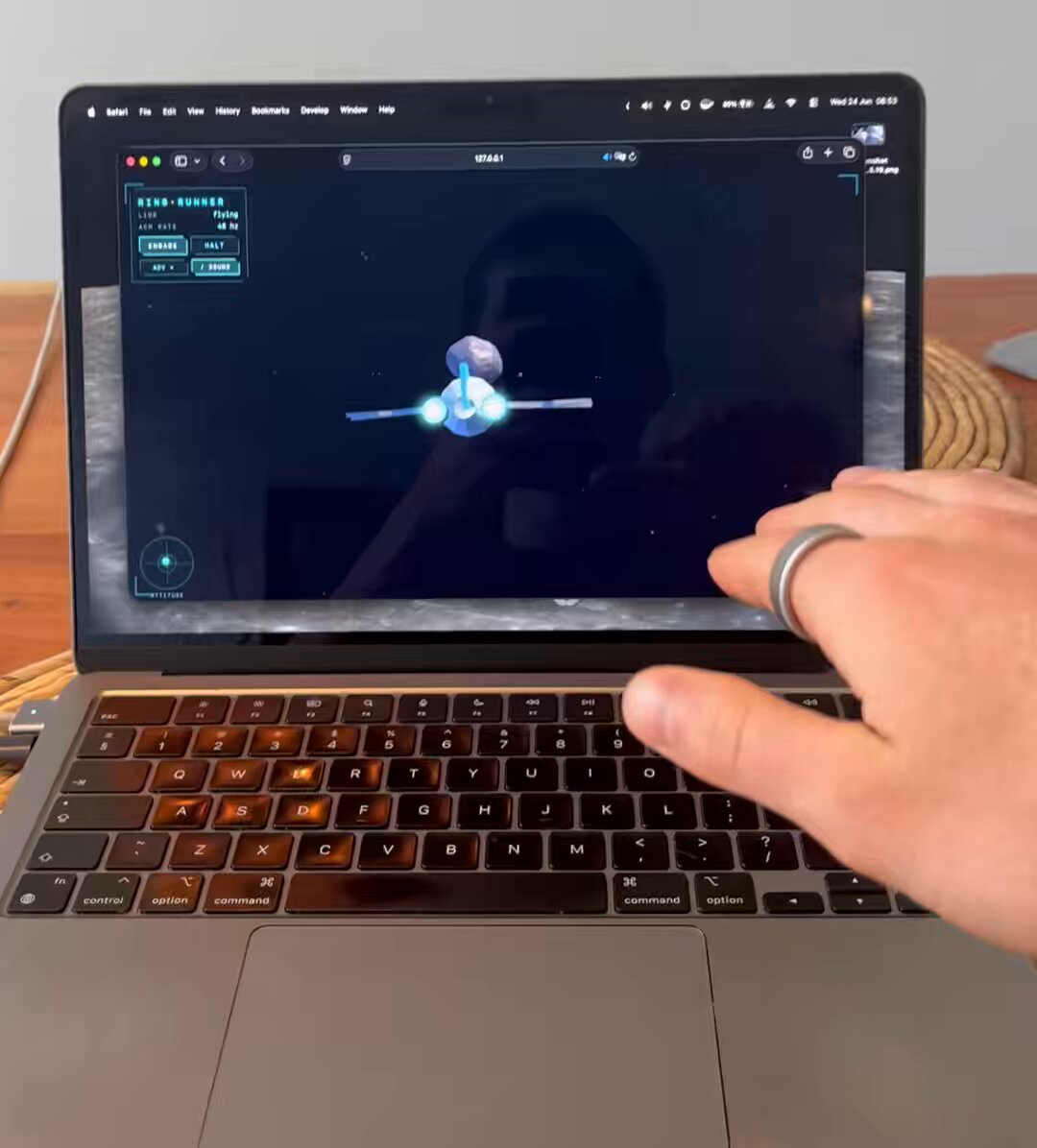
Perhaps the most creative implementation of localized computer control today came from Th0rgal (@Th0rgal_), who successfully reverse engineered the Oura Ring 5. By uncovering a hidden feature that streams live accelerometer data, they managed to map physical hand gestures to computer inputs. This kind of hardware hacking illustrates a broader trend. As local agents gain the ability to control our software, developers will inevitably want to bridge the gap between physical movements and digital execution, creating entirely new workflows that bypass traditional keyboards and mice entirely.
Next-Gen Developer Tooling and Workflow Automation
As AI agents absorb coordination tasks, the traditional workflows of software engineering are being radically restructured. Developers are moving away from writing boilerplate code and are instead focusing on architectural intent. Michael Ramos (@backnotprop) shared his highly automated goal-tracking workflow, which relies on using Architecture Decision Records as the foundational document. His system automatically generates the necessary context and intent from the shaping process, allowing him to run a manual loop that slices work into actionable pieces for AI to execute. This shift toward intent-based programming is enabling engineers to operate at a much higher level of abstraction.
This architectural shift is particularly evident in the compilation and deployment of complex applications. Steeve Morin (@steeve), an engineer with eight years of experience on a single iOS codebase, called the latest advancements the holy grail. Corentin from Anjuna (@corentinanjuna) successfully compiled and built a real iOS application entirely from Linux. By using Bazel and distributed Linux workers, he allowed an AI agent to modularize a complex Swift codebase, enabling parallel compilation actions across hundreds of cheap remote machines. This effectively breaks the OS-level lock-in that has dictated mobile development pipelines for over a decade.
The ability of AI to transcend traditional development barriers extends into heavily graphical domains as well. Pat Simmons (@per_simmons_) demonstrated how the launch of an Unreal Engine MCP server allows developers to build entire video games simply by talking to Claude. By wrapping an agent harness around the MCP server, the AI can autonomously build full playable cities, clone real-world locations using Google Earth data, and generate custom 3D buildings via headless Blender instances. This completely democratizes game development, allowing high-level operators to command sprawling 3D environments and complex distributed compilation systems with natural language.
Sources
Introducing Claude Tag, a new way for teams to work with Claude. In Slack, Claude joins as a team member with access to the channels and tools you choose. Tag Claude in and delegate tasks to it while you focus on other work. https://t.co/R2C6A5Kcye
📣📣 Meet Qwen-AgentWorld — a native language world model that simulates 7 agent environments (MCP, Search, Terminal, SWE, Web, OS, Android) within a single model. Environment modeling is the training objective from day one, not a post-hoc adaptation. 🤔 LLMs are trained to be better agents — better at acting in environments. But nobody has trained them to model the environments themselves. 🗺️ Our roadmap: investigate how language world modeling can push the boundaries of general agent capabilities, along two routes: 1️⃣ Build a foundation model for environment simulation — outperforming Claude Opus 4.8 and GPT-5.4 on AgentWorldBench 2️⃣ Investigate how world modeling enhances agent training: 🔬 Controllable Sim RL (agentic RL with LWM as environments) surpasses training in real environments 🧠 Learning to predict environments (LWM warm-up) makes agents stronger — remarkably, even without any agent-specific training, this predictive knowledge transfers to agentic tasks with zero fine-tuning 📑 Paper: https://t.co/Jx2l5RKq71 📖 Blog: https://t.co/7tVcKyhsx2 💻 GitHub: https://t.co/B5Lvb1UZCn 🤗 HuggingFace: https://t.co/Kw3QBL1TM5 🧩 ModelScope: https://t.co/YBnGYgMWWI
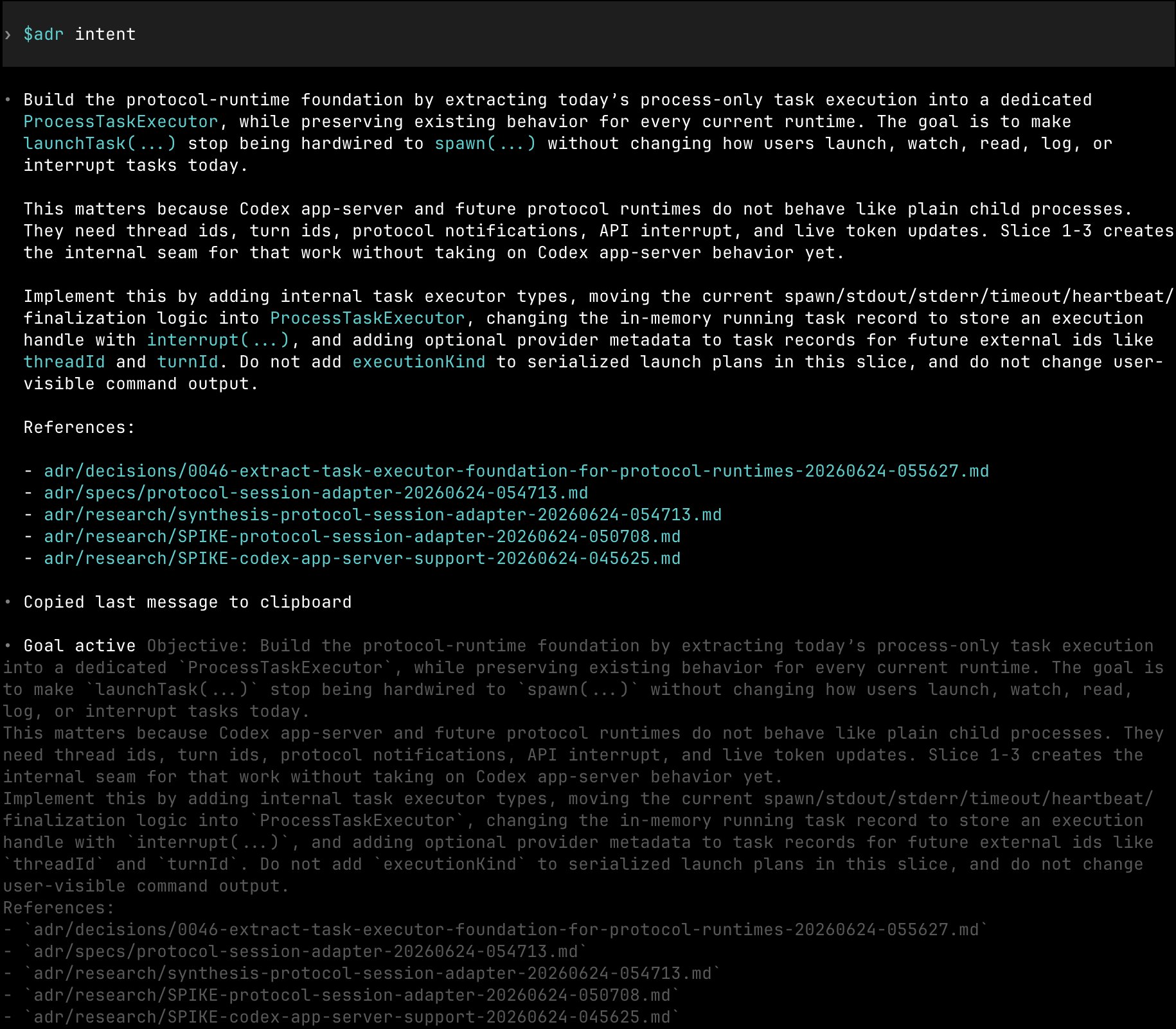
ADR, from @mtnygard, has become the most important doc in my simple workflow. https://t.co/7Kwx2zJ6pw
We didn't want to spend $1000s on DocSend, so we built it ourselves (and for you). Today, we're releasing DataRoom (by @UseCorgi) so you don't have to overspend on simple sharing features. https://t.co/ESK4BUIbIG
I'm now running GLM 5.2 as my default model in claude code + cursor, and it's cost me *checks notes* $3.36 Today's ep of How I AI is my first reviewing an open weights model, @Zai_org's GLM 5.2 which (so far) is giving me Opus vibes without the opus $$$ I cover - how to set up these models in cursor and cc via @OpenRouter API - front end design sense - performance on a long running autonomous task The moment it won me over? When it put chatprd pink in my docs without me having to ask A huge ty to our special sponsor @mercury - Radically different banking loved by over 300K entrepreneurs Full ep on youtube: https://t.co/7IamdSypGU
The Agent Is Not the Product
I can't even talk to people about it irl anymore or at work. The knowledge and skill differential gap between people has widened an incredible amount since opus 4.5 came out and continues to increase. One month here is easily a year IRL or for software prior
This one is for builders who want an agent that can operate their computer. Today, we're releasing HoloDesktop CLI. Powered by Holo3 models, it brings H Agent directly into the agent harnesses you already use, including @Claude Code, @Hermes, @Cursor, and others. It runs locally on your device with low latency, full privacy, and no runtime cost. Most AI tooling assumes work happens through APIs. In reality, much of the world's work still happens in interfaces built for humans: browsers, desktop applications, spreadsheets, internal tools, and software with no API. HoloDesktop CLI gives agents the ability to see, understand, and act on these environments through the mouse and keyboard. From testing web applications through their GUI to navigating enterprise software, extracting information from documents, or interacting with internal tools, agents can now operate where work actually happens. We believe AI shouldn't just reason about work. It should be able to operate where work happens. #NVIDIA #ComputerUse #EnterpriseAI #DeveloperTools
I finally was able to compile and build a real iOS app from Linux, using @bazelbuild and distributed Linux workers. I used @Dimillian's IceCube app, got Codex to modularize it to allow parallel Swift compile actions, and let it loose on 100s of cheap remote Linux workers! https://t.co/qVctiWkL8y
We just closed Robinhood!! Our first Fortune 500 and first major financial institution. Absolute rollercoaster story from first meeting to close. Huge shoutout to the 3 people made it possible. When Robinhood approached us, we didn't have a self-hosted deployment, and for an org sitting on that much sensitive data. Andrew Churchill pulled a few all-nighters to build an on-prem version. Jerry Yu on daily calls navigating all the different stakeholders to make sure Weave could handle all of their needs. Jake from Robinhood who was willing to take a bet on us and work through any technical challenge that came our way! Now, Weave has become vital to a Fortune 500 company. It measures exactly what AI is doing in their codebase so they can answer: 1. What is the ROI we are getting from our token spend 2. How can we help our engineers get better at utilizing AI
@ajambrosino @simpsoka ok it was disabled behind a feature flag! got codex to enable it for me. awesome. https://t.co/8XH1e9gNAi
1/ We had early access from @GoogleDeepMind to Gemini 3.5 Flash's native Computer Use. On Cua-Bench it posted the highest mean reward of any frontier model we tested - 0.267, on KiCad tasks no model fully solves. At Flash speed and cost. https://t.co/Hm01NEuOAv