Local Models Match Frontier Performance While Agent Ecosystems Reach New Heights
Today's digest highlights a major leap for local AI as compressed open-source models begin matching the performance of billion-dollar frontier APIs. Meanwhile, the AI agent ecosystem is maturing rapidly with new tools for cross-repo context, browser automation, and autonomous loops, even as enterprise leaders debate the unsustainable economics of current AI pricing models.
Daily Wrap-Up
The AI ecosystem is undergoing a structural shift today, driven by the realization that the moat around frontier models is shrinking faster than anticipated. Developers and founders are waking up to a reality where heavily quantized, locally run open-source models can stand toe-to-toe with the likes of Claude 4.8 Opus and GPT-5.5. This compression of the capability gap is forcing a realignment in enterprise strategy. As cloud API costs remain stubbornly high, the spotlight is turning toward applied AI layers, infrastructure optimization, and local inference. The idea that you need a massive server farm to achieve top-tier reasoning is being challenged directly by community breakthroughs in 1-bit quantization and context caching.
Simultaneously, the tooling required to make autonomous agents actually useful is taking a massive leap forward. We are moving past the era of fragile prompt engineering and stepping into structured, ecosystem-driven automation. Developers are building lightweight browser interfaces specifically designed for agent consumption, crafting gateways to standardize tool access, and deploying meta-harnesses that give AI models photographic memory across entire codebases. The focus has shifted toward giving agents the right abstractions so they can build, check their own work, and execute workflows seamlessly.
The most surprising moment from today's posts actually comes from the enterprise sector, where a startup founder casually pointed out that competing with a tech giant like AWS is essentially just competing with a single internal team that works limited hours and ships slowly. It is a stark reminder that in the age of AI, agility and hyper-focus on a specific problem will consistently beat corporate bureaucracy. The most practical takeaway for developers: stop throwing expensive compute at redundant tasks. Implement KV cache reuse in your RAG and multi-turn chat workflows immediately using open-source infrastructure libraries like LMCache to cut your Time-To-First-Token by up to 10x and save massive amounts on GPU costs.
Quick Hits
- @Shpigford highlights the value of specialized AI skills by sharing an 18-file beast of a skill for SEO-focused content generation available to Initial Commit Club members.
- @Memoket_AI announces that early bird spots are open for their new AI note-taking app designed to solve context disappearance and memory retention for professionals.
- @chriskim_dev praises the NousResearch Hermes community for putting together a visual video library and documentation for developers building with the Hermes LLM.
- @thedankoe shares a thought-provoking article on surviving AI mass replacement and escaping wage slavery by adapting to the new economic realities of automation.
The Local Inference Revolution is Closing the Gap
The performance gap between locally hosted open-source models and proprietary frontier APIs is collapsing in spectacular fashion. For months, the consensus has been that while local models are great for basic tasks, true cutting-edge reasoning still requires the massive data centers of Anthropic or OpenAI. Today, that narrative was shattered by community breakthroughs in model compression. The Unsloth team applied extreme 1-bit quantization to compress the Chinese GLM 5.2 model into a lightweight GGUF format, allowing it to run completely offline on a Mac Studio.
The results have sent shockwaves through the developer community. Running entirely locally without an internet connection, the compressed model achieved an impressive 21 tokens per second. When pitted against billion-dollar cloud infrastructure like Claude 4.8 Opus and GPT-5.5, the locally hosted model delivered highly intelligent and accurate answers that rivaled the industry giants. As @marcvanderchijs noted, this level of parity is a potential bubble-bursting moment for proprietary AI: "If anything will burst the AI bubble, this could be it. I believe the future is in open source locally-run AI models, but I didn’t expect them to be almost at par with frontier models. This is bad news for Anthropic and OpenAI."
The implications for enterprise data privacy and API costs are staggering. If a CEO or CTO can achieve frontier-level reasoning on local hardware with zero API bills and 100% data privacy, the math for cloud-based AI completely flips. This paradigm shift was perfectly summarized by @bookwormengr, who highlighted an analysis from Snowflake's CEO on GLM-5.2's capabilities, stating: "If your CEO does not understand what Sridhar has written your company is not going to make it." The future of enterprise AI isn't just about who has the smartest model, but who can deliver that intelligence securely and cost-effectively on local hardware.
The Agent Ecosystem Levels Up
Building functional AI agents has historically been an exercise in fighting fragile browser automation and disconnected contexts. Today's wave of developer tooling reveals a matured ecosystem where creators are building robust, purpose-built abstractions to let agents actually do work. This is no longer about simple chatbots; it is about giving models the hands and eyes they need to navigate complex digital environments autonomously. The "tower of LLMs" concept is materializing into tangible developer tools that facilitate autonomous loops and deep codebase integration.
A prime example of this evolution is the introduction of lightweight browser CLIs built specifically for AI agents. @aduermael open-sourced a tool called 'wb', a sub-1MB command line interface that hands browser control directly to agents on macOS 26+, allowing systems like Codex and Claude Code to navigate the web without bundled Chromium overhead. This solves a massive pain point for developers who have struggled with flaky automation scripts that easily break when standard alert() functions block execution. @justsisyphus echoed this sentiment regarding the new 'Aside' AI browser, noting that because it runs on a forked Chrome engine, it simply works without being flagged or blocked as an automation bot.
Beyond browsing, agents are finally gaining the contextual awareness required to navigate massive engineering organizations. @mgechev highlighted the launch of Polygraph, a meta-harness that provides agents with a photographic memory across every repository boundary. By sitting at the right level of abstraction, Polygraph tracks everything engineers do and feeds that context into popular coding agents like Codex and Claude. This moves us firmly into the era of autonomous loops. As @dunik_7 pointed out regarding Peter Steinberger's vision at Microsoft Build, the future belongs to those who "build the thing that builds the thing," using autonomous agent loops that can grind through complex coding tasks, check their own work, and ship code while the human developer is nowhere near the keyboard.
Enterprise Strategy, Token Economics, and Startup Agility
As the capabilities of open-source models surge, enterprise leaders are grappling with the complex economics of AI deployment. The current pricing models for high-end frontier tokens are creating friction in the enterprise sector, leading to a fascinating strategic debate. AI providers are currently trapped in a paradox, bleeding money on free consumer tiers to harvest post-training data while attempting to squeeze enterprises for compute costs. This has opened a massive opportunity for applied AI startups that understand how to route and optimize workloads.
Aaron Levie (@levie) crystallized this shift, predicting a "barbell dynamic" in AI pricing. On one end, you have expensive frontier models; on the other, incredibly cheap but highly capable open or closed-weight models. The value, he argues, is shifting entirely to the applied AI layer that can route tasks efficiently. "The applied layer can route to the best model at any time given the workload at hand, as well as mitigate either high token costs or worse performance," Levie explained. This means understanding specific enterprise workflows, building domain-specific evaluations, and setting up data pipelines that allow agents to operate efficiently without burning unnecessary compute.
This shifting landscape is precisely why nimble startups shouldn't fear tech giants. The sheer size of companies like AWS often creates internal bottlenecks that agile teams can easily exploit. @kushalbyatnal delivered a masterclass in founder perspective, reminding us that you are never actually competing with an entire corporate behemoth. "You're competing with one team at AWS that works 10am-4pm, ships slowly, and doesn't care about the problem half as much as you do," he noted. By maintaining a hyper-focus on customer pain points and edge cases that large internal teams overlook, startups can easily outmaneuver legacy products like Textract.
Infrastructure Optimization and Developer Tooling
If the applied AI layer is where the value is created, infrastructure optimization is where the margins are protected. Developers are realizing that their LLM inference stacks are wildly inefficient, often burning massive amounts of compute on work the model has already done. Processing the same documents repeatedly in RAG or multi-turn chat workflows is a silent killer for infrastructure budgets. To combat this, the open-source community is delivering infrastructure-level cheat codes that completely rethink how we manage context.
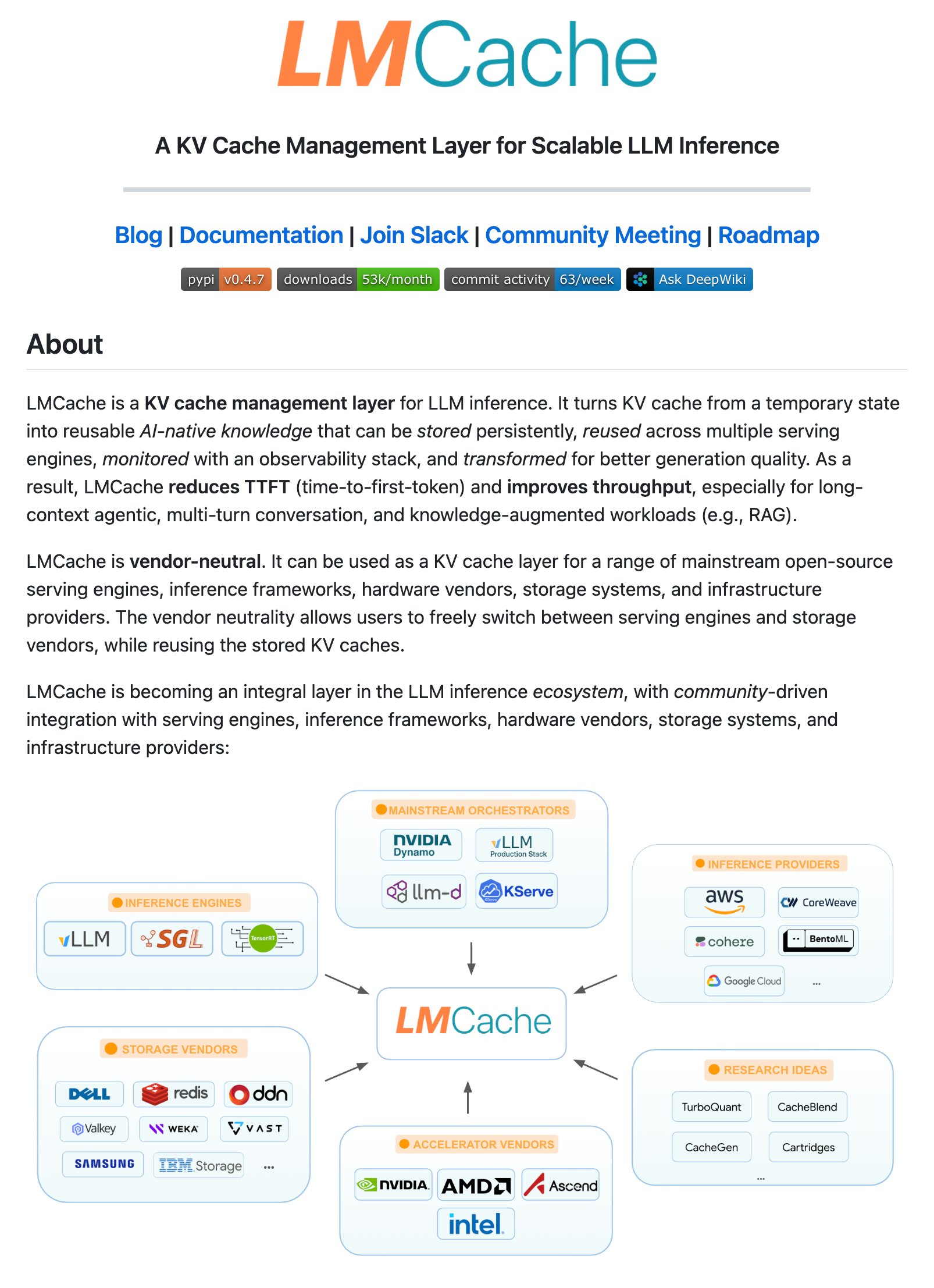
A massive breakthrough highlighted today involves LMCache, an open-source library that transforms temporary KV caches into reusable, AI-native knowledge. As @techNmak detailed, "Instead of the cache dying when a request finishes, LMCache offloads it to a shared layer." This allows heavy prefill operations to run on expensive H100s, while streaming the cache to cheaper L4s for decoding. The results are staggering, including 15x throughput gains in multi-round QA workloads and up to a 10x reduction in Time-To-First-Token. It is a foundational shift that major players like Netflix, Samsung, and Google Cloud are already adopting.
Alongside infrastructure caching, developers are rushing to standardize how agents connect to external services. The Model Context Protocol (MCP) is emerging as the standard bridge, and tools like Executor are acting as the necessary gateways. @dillon_mulroy heavily endorsed Executor, which is joining the YC S26 batch to solve the chaos of managing multiple agent accounts and tool configurations. By providing a single, self-hostable place to configure tools once and use them anywhere, developers can give agents access to production data predictably. Add in breakthroughs like Baidu taking DeepSeek OCR and making it more stable with Reference Sliding Window Attention, and we are seeing an infrastructure stack built entirely for high-volume, agent-driven workloads.
AI Safety, Alignment, and the Job Market
As the capability of these models scales exponentially, the AI research community is quietly pivoting its approach to safety and alignment, while the job market rapidly adapts to new realities. The theoretical concerns of yesterday are being replaced with practical, applied control mechanisms. DeepMind's newly released AI control roadmap suggests a significant philosophical shift in how the industry plans to manage superintelligence. Rather than trying to mathematically solve the "lethal trifecta" of AI alignment in a single stroke, researchers are moving toward operational mitigation.
This pragmatic shift was highlighted by @badlogicgames, who analyzed DeepMind's new direction. "Looks like they've given up on solving the lethal trifecta directly. The new direction seems to be a tower of LLMs," he observed. This essentially means stacking models to monitor and police each other, using AI to control AI. It is a highly practical, albeit complex, engineering approach to ensuring autonomous agents remain aligned with human intent as they are granted more operational power over digital infrastructure.
This push toward practical AI safety is mirrored by a surge in community-driven education. @VittoStack announced the launch of "Jailbroken," a private Discord server dedicated to AI red teaming, mechanistic interpretability, and alignment. Within days, over 100 members joined, backed by inference providers sponsoring compute tokens. There is a massive appetite for hands-on security knowledge. This demand for elite AI literacy is also reflected in the job market. When @alisawuffles landed a role at OpenAI and publicly released her comprehensive interview prep notes, she was hailed as an "absolute legend" by @Arnesh_24. The ultimate takeaway is clear: whether you are building control loops for frontier models or preparing for a career at OpenAI, deep, specialized technical literacy is the only way to future-proof your career.
Sources
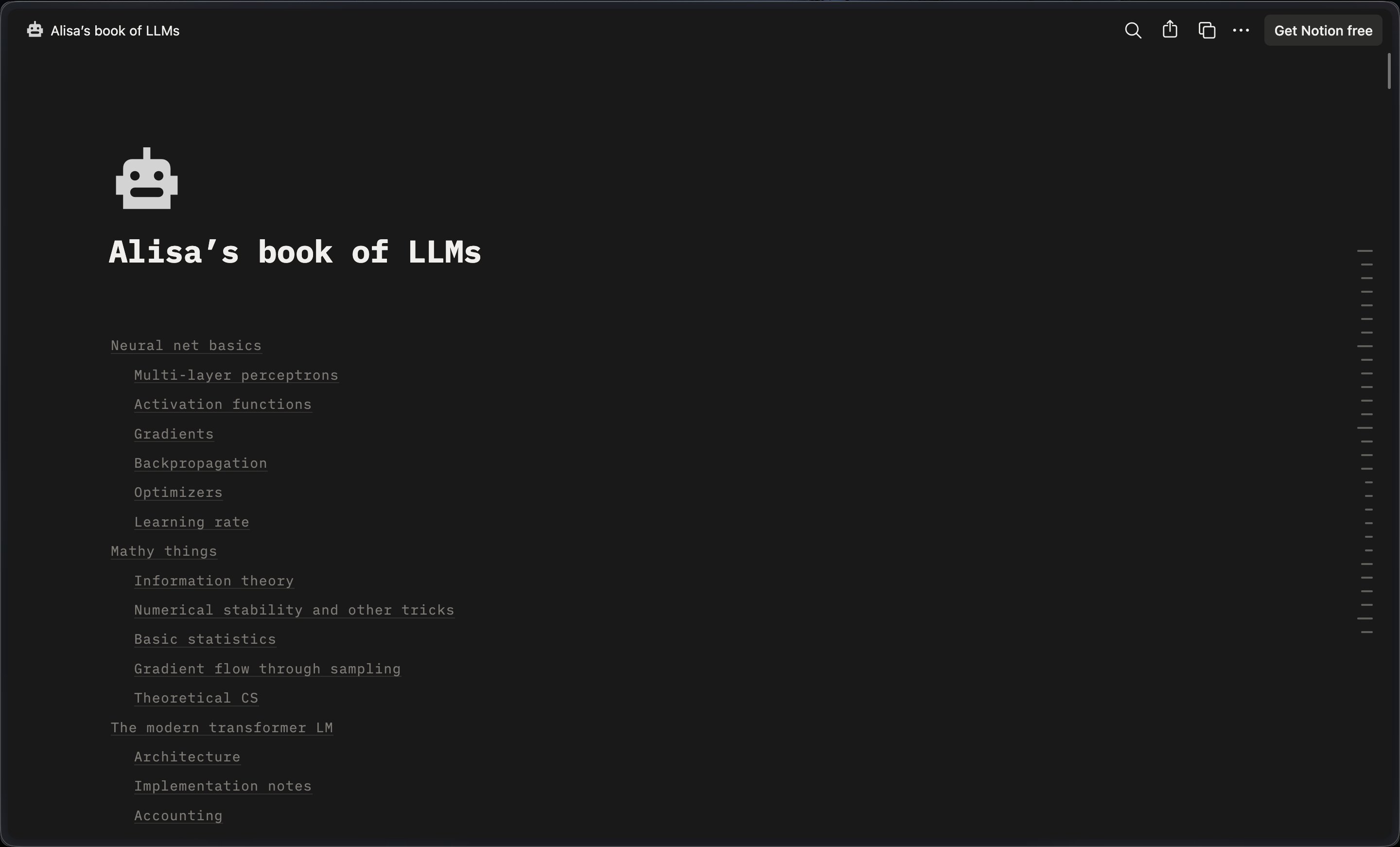
I'm joining OpenAI next week!🥹 The job search turned out to be really challenging but also super rewarding, so I wrote a small blog to share what I learned along the way and hopefully make the process a little less mysterious for the next person. https://t.co/6FigSBdenD
How to survive AI mass replacement (& escape wage slavery)
Unfortunately, all jobs will be gone in like the next 5 seconds. At least that’s what it feels like if you take loud people on social media a bit too ...
The first nail in the coffin of every sandbox-only startup: https://t.co/pOY2BUzoWN
just dropped an 18-file skill for seo-focused content generation. absolute beast of a skill. probably the most dynamic skill i've ever put together. https://t.co/iEeJ40cViq https://t.co/pY35cqtxwL
Early results from the @snowflake's coco team on GLM-5.2 vs Opus-4.7 on dbt-bench — what the trajectories actually show 🧵

Unlimited-OCR 🔥New OCR from @PaddlePaddle It can parse hundreds of pages in a single pass while maintaining stable speed. The key idea is R-SWA (Reference Sliding Window Attention), which keeps KV cache constant during decoding. 🏆 93% on OmniDocBench 📈 +6% over DeepSeek-OCR
Executor is joining the YC S26 batch! We're building an open source MCP gateway to connect any agent to any service Your team is constantly spinning up new agents, trying out new tools, wrangling multiple accounts. You need one place to configure everything once, and use them anywhere. Executor gives you the ability to connect your agents to thousands of tools in a way that keeps you in control. Giving agents access to production services and data should be easy and predictable Since launching the beta we've: - Shipped a self-hostable Docker version - Shipped a desktop app - Shipped setup by chatting with your agent - Shipped multi-account support - Hit 2,000 GitHub stars - Built a product loved by thousands of users Truly appreciate all of the early support on it, has been incredible seeing all the ways people use it There's so much to build here. The past month has been laying the foundation. Now that that's in place, next up is custom tools, generative UI, and workflows. Setting it up is as easy as asking your agent "help use https://t.co/gIFOwRUrLU". Incredibly excited about what's next, let me know all your feedback!
The 4 loops that quietly killed prompt engineering
Hermes Bible now has a video library 📽️ Docs are great. But sometimes you just want to watch someone do it. So I added a place to find Hermes-related videos: • Tutorials • Walkthroughs • Workflows • Demos • Tips • Weird hacks All searchable in one place. If you made a Hermes video, drop it below. If I add it, I’ll link back to your X profile. Unofficial. Community-built. For Hermes builders. https://t.co/vEoW6ho8uc
We finally launched Polygraph! The meta-harness that gives agents visibility across every repo boundary, and photographic memory of everything every engineer does. Works with Codex, @claudeai and @opencode. https://t.co/F0MqUhGH6s
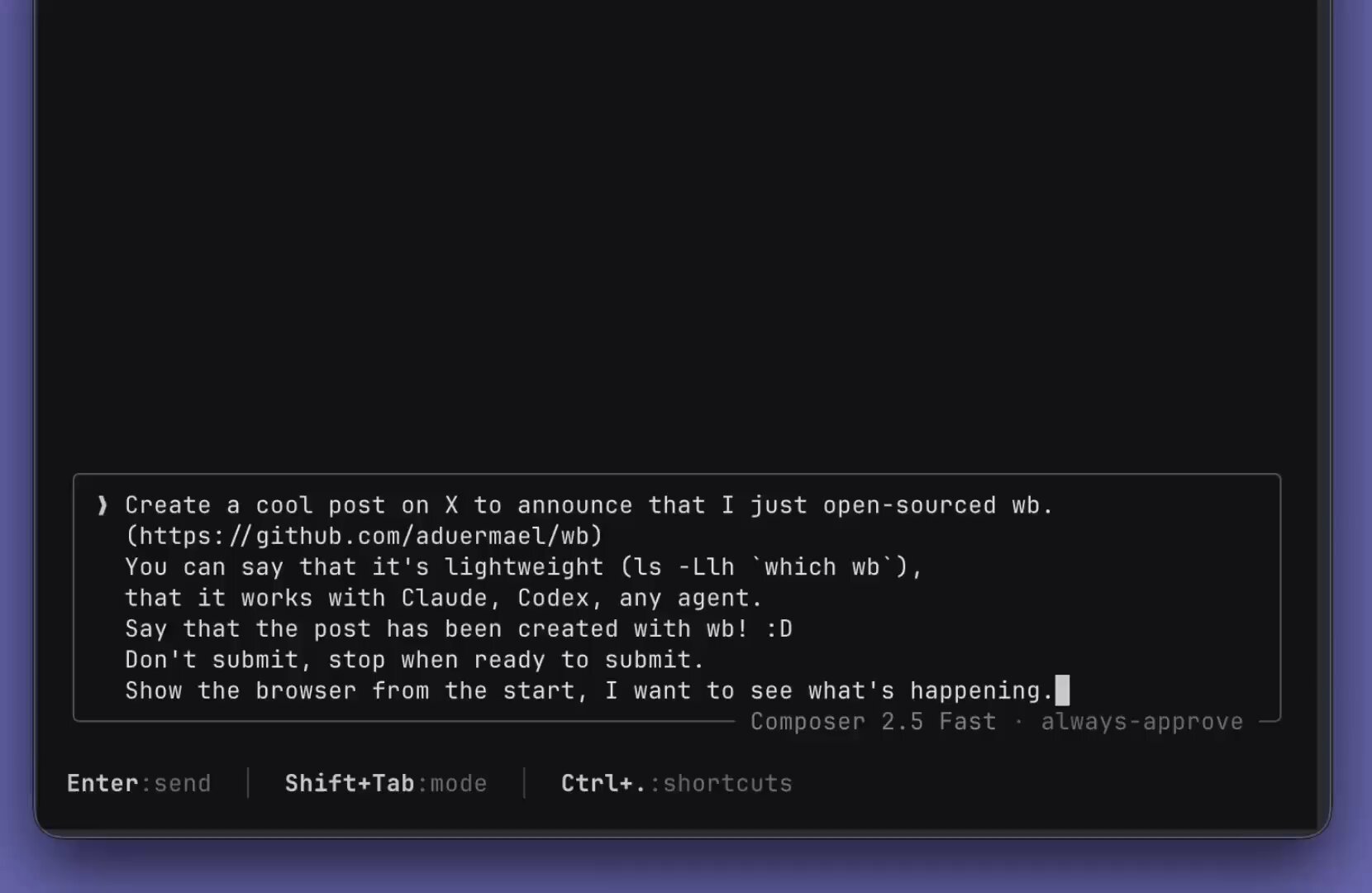
Just open-sourced wb — a lightweight browser CLI for AI agents on macOS. ⚡ 876K binary. No bundled Chromium. 🤖 Works with Claude, Codex, Grok — any agent. 🔧 Persistent sessions, compact JSON, live preview. https://t.co/h7m3PPUCNW (this post was composed with wb! :D)
Today, we're launching Aside, the AI browser you’ve waited for. ⋅ Crafted in every detail: vertical tabs and Liquid Glass ⋅ SOTA on agentic browsing benchmarks: outperforms Claude Fable ⋅ Full privacy: Everything runs in local and encrypted ⋅ You can use Claude or ChatGPT subscription The first AI browser built to do real work for you. https://t.co/coZkFSGfgc
The AI Business model trap: LLMs want cash flow to fund the race to AGI or the next model. Enter free consumer AI - they are losing a lot of money on the breadth of models to serve consumers for free! They are caught in the post training data trap, free consumer usage feeds post training needs, it can't be right to stop serving customers for free? But they need money for the compute: The monetization challenge is being pointed to Enterprises. Phase 1 - seemed easy, value capture in coding, the most bottom up motion in enterprise - with low customization per customer. Developers continue to train coding, tasks and eventually will train flawless skills. Phase 2 is where the challenge lies, showing true enterprise value. The promise of efficiency, accuracy, elimination of resources - that requires a different approach, build depth with harnesses, context, memory, solving for edge cases with deterministic guardrails! Build skill libraries - enter FDEs. Yes,FDEs will train the enterprise Waymos of the world. The risk - high token pricing for enterprises while consumers for free! Yes for consumer distribution businesses (aka Google, Meta, Apple, etc) it makes sense to hold on the distribution with free AI. If you want to win enterprise, you should be forward pricing tokens. The cheaper the tokens for enterprises it will allow for experimentation, workflow reimagination - instead CIOs are busy restricting AI use and working on making the use more efficient! Paradox: They still haven't fully understood and embraced the value of AI in the enterprise. If I were them: 1. Cut token pricing now, else send enterprises to secure opensource and end up with friction filled routing layers. 2. Show me how enterprises can use their context, training and data as their competitive advantage. 3. Build tools for rapid edge case learning and reducing false positives. @HarryStebbings @sama @DarioAmodei @demishassabis
فريق Unsloth المرعب قاموا بخطوة جنونية وأخذوا العملاق الصيني GLM 5.2 وضغطوه بتقنية متطرفة جدا تسمى 1-bit وحولوه لصيغة GGUF الخفيفة المفاجأة؟ قاموا بتشغيله محلياً (Locally) بالكامل على جهاز Mac Studio وبدون أي اتصال بالإنترنت أو سيرفرات خارجية وبسرعة ممتازة بلغت 21 توكن في الثانية ولم يكتفوا بذلك بل وضعوا هذا الموديل المحلي المضغوط في مواجهة حية ومباشرة ضد أعتى وأقوى سيرفرات العالم المدفوعة والسحابية Claude 4.8 Opus و GPT-5.5 الصدمة التي أذهلت المطورين في الكومنتات هي أن الموديل المحلي وقف نداً لند أمام سيرفرات بمليارات الدولارات وقدم إجابات ذكية ودقيقة جدا تضاهي العمالقة الفائز الحقيقي اليوم ليس مجرد موديل بل هو مفهوم التشغيل المحلي؛ من الآن تصبح بياناتك آمنة 100% في جهازك وتكلفة فواتير الـ APIs الخاصة بك صفر دولار وبذكاء ينافس أقوى شركات أمريكا لا تنسوا الإعجاب والمشاركة ليصل المنشور لكل مهووس بالتقنية والذكاء الاصطناعي !
Creating a PRIVATE Discord server for people to learn about AI security and alignment. We’ll talk about what we’re learning, resources, favorite AI security tools, jailbreaking techniques, AI alignment new releases, courses, X, etc. Comment if you want to join. We will reach out.