Multi-Agent Coding Loops and Local Inference Dominate as AI Startups Consolidate
The developer ecosystem is rapidly shifting toward orchestrated multi-agent loops capable of autonomous QA and continuous codebase mapping. Meanwhile, massive shifts in inference economics and highly optimized local models are enabling lean, hyper-profitable startups while fundamentally changing how enterprises approach their intelligence layers.
Daily Wrap-Up
The developer workflow is undergoing a structural transformation, moving decisively from passive AI autocompletion to highly orchestrated, multi-agent systems. Today's conversations highlight a landscape where software engineers act more like managers, directing teams of AI agents to map codebases, generate behavioral specifications, and autonomously test features. We are seeing frameworks that wrap these agents into continuous loops, allowing them to write, test, and fix code based on dynamically generated spreadsheets of user stories. This shift fundamentally alters the bottleneck in software development, moving the effort from writing syntax to defining rigorous constraints and verifying autonomous outputs.
At the same time, the underlying economics of artificial intelligence are shifting in dramatic and permanent ways. Massive enterprise valuations are being driven by the strategic desire to own the intelligence layer through post-trained open models rather than renting perpetually from closed API providers. However, we are also seeing immense arbitrage opportunities at the consumer and SMB level. Founders are leveraging flat-rate AI coding subscriptions to access compute at a fraction of standard token costs, enabling highly profitable micro-companies to reach massive scale with tiny, bootstrapped teams. The economics of building software have rarely been this heavily tilted in favor of small, hyper-focused builders.
On the open-weights front, uncensored and locally optimized models are proving that you do not need a massive cloud footprint to run highly capable intelligence. Hardware vendors are racing to bring this native inference directly to consumer operating systems, while developers are finding clever ways to strip out safety overhead to unlock raw model capability. The push toward local sovereignty is mirrored by a broader cultural pushback against algorithmic control, with prominent creators advocating for radical digital friction. The most practical takeaway for developers: stop treating AI tools merely as chat assistants and start wrapping your coding workflows in systematic, autonomous loops today, using tools that map your codebase and continuously test against a single source of truth to offload the tedious aspects of QA and refactoring.
Quick Hits
- @anuraggoel highlights a major shift in the tech industry, suggesting that new developer capabilities and infrastructure changes might be the first nail in the coffin for sandbox-only startups.
- @dee_hw showcases the Autonomous WorkPod, a backyard work-from-home hardware solution that now integrates solar panels to generate clean, renewable energy for isolated home offices.
- @alisawuffles announces she is joining OpenAI next week and shares a detailed blog post demystifying the challenging AI industry job search process for prospective candidates.
Agentic Coding Tools Reach New Heights
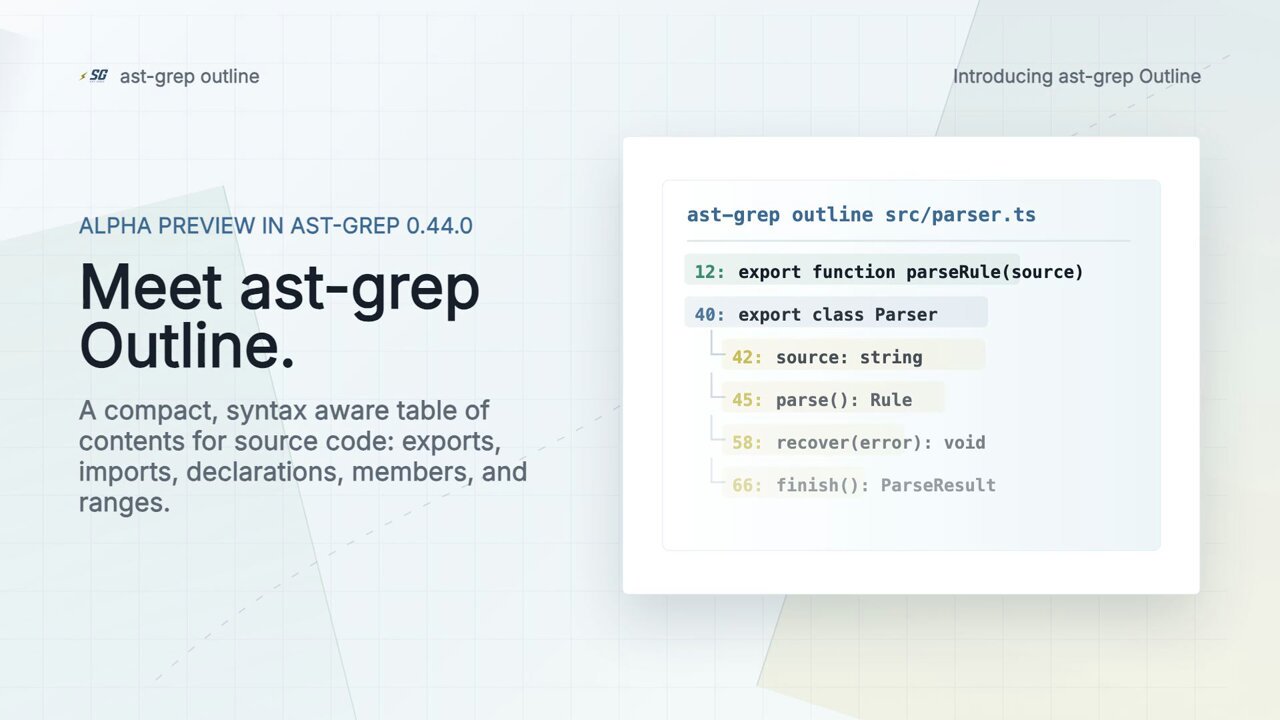
The movement toward autonomous software development is accelerating, with developers increasingly delegating complex, multi-step workflows to teams of specialized AI agents. The focus is no longer just on generating a snippet of code but on providing agents with deep contextual awareness and the ability to self-correct. Herrington Darkholme (@hd_nvim) announced a major update to ast-grep that perfectly illustrates this trend. "It gives you a fast local map of code structure, between grep and a full language server," Darkholme notes. By remaining syntax-aware and requiring no index to maintain, tools like this give autonomous agents the structural grounding they need to navigate complex repositories without hallucinating file paths or breaking dependencies.
Building on this contextual awareness, developers are beginning to string agents together into highly ambitious, continuous loops. A fascinating example surfaced from Tom Osman (@tomosman) and was subsequently expanded upon by Sleep Money Maker (@SleepMoneyMaker). They detailed a workflow inside Codex where a developer sets a high-level goal and the agent autonomously inventories the codebase, writes a spreadsheet of expected behaviors, and then enters a continuous cycle of testing, fixing, and verifying those behaviors. Sleep Money Maker iterated on this loop, emphasizing a strict rule: "Verify by running, not claiming - report real command/test output; state skips and unknowns plainly."
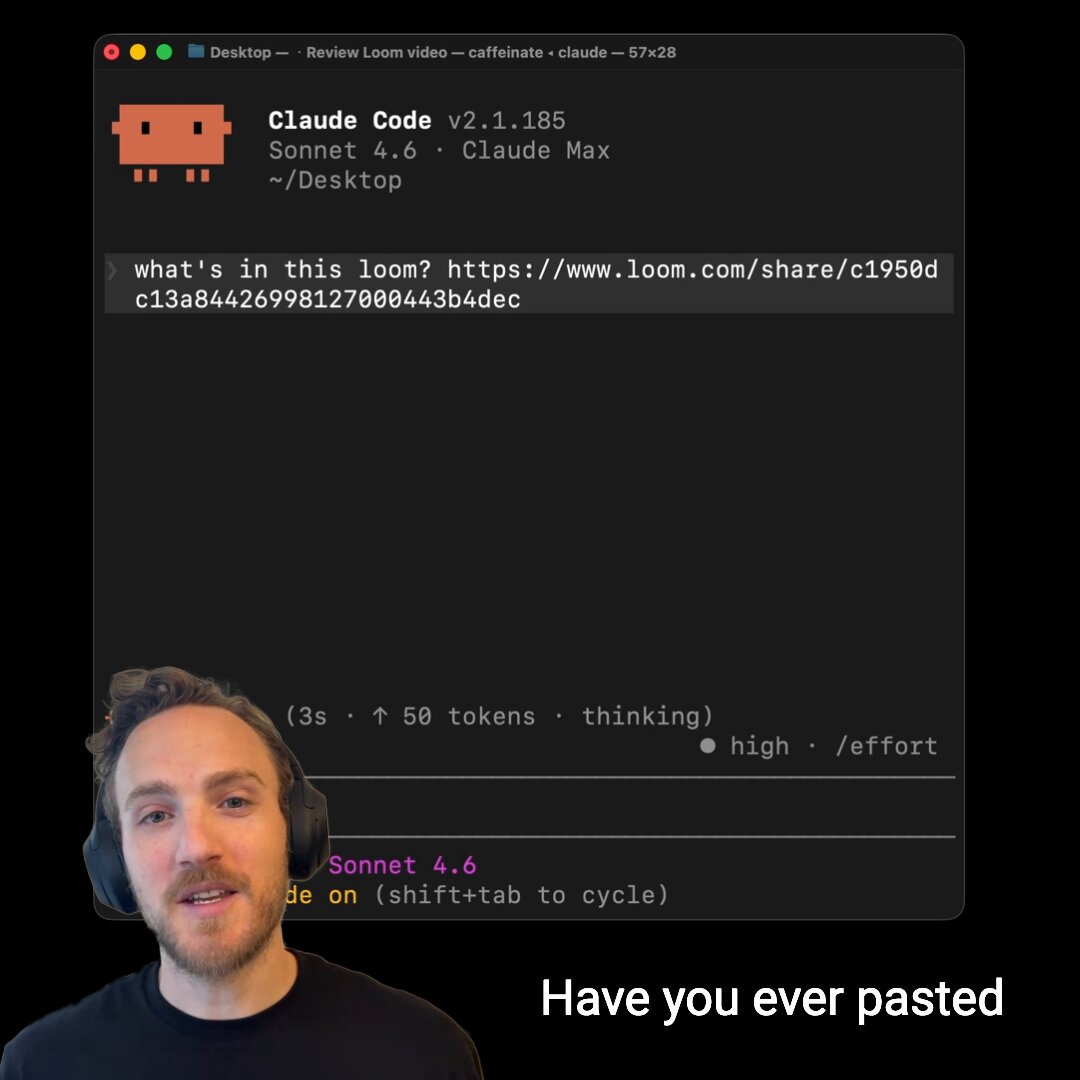
This multi-agent philosophy is also making its way into commercial platforms. Elon Musk (@elonmusk) teased upgrades to Grok Build, quoting a developer who noted that the platform utilizes a team of agents including "implementors, skeptics, code reviewers, and planners." Furthermore, asynchronous communication is getting the agent treatment. Steve (@Steve8708) introduced Clips, an open-source, agent-native alternative to Loom. Unlike traditional video tools, every Clip comes with APIs and metadata. "Agents can 'see and hear' anything in a Clip - not just transcripts, but everything visually in the video at any timestamp," Steve explained. This allows developers to send visual bug reports directly to their coding agents, seamlessly bridging the gap between human observation and machine execution.
The Economics of AI and the Micro-Company
As agentic capabilities expand, the economic structure of software companies is condensing. We are witnessing the rise of hyper-efficient organizations that leverage AI to maintain massive revenue outputs with remarkably small headcounts. Haseeb (@hosseeb) highlighted an analysis of "The Rise of the 149-Person Company," pointing out a bizarre economic quirk in AI coding subscriptions. If maxed out, these subscriptions offer compute at a rate 20 to 70 times cheaper than buying raw tokens. This massive compute arbitrage allows small teams to operate at the scale of traditional engineering departments without the associated payroll overhead.
This economic advantage is enabling bootstrapped startups to achieve unprecedented milestones. Larsen Cundric (@larsencc) celebrated the success of Astra__AI, a Slovenian startup building an accessible AI tutor. Quoting founder Andrej Skraba (@SkrabaAndrej), the company reached $25 million in ARR, growing 25x in just 12 months. Remarkably, they achieved this in three years while remaining bootstrapped and profitable. Their strategy focused heavily on deep localization, rapid product iteration, and maintaining a small, ambitious team. This proves that massive tech hubs are no longer a prerequisite for building a global AI powerhouse.
The strategic value of controlling AI infrastructure is also driving massive capital allocation at the enterprise level. Amir Haghighat (@amiruci) announced that his company closed a Series F at a $13 billion valuation. He attributes this 20x growth in their inference business to a permanent shift: companies want to own their intelligence layer. "Instead of relying exclusively on closed models, teams are post-training open models for their specific use cases," Haghighat noted. The focus is no longer just on raw capability but on optimization and cost savings. By providing the fastest GLM-5.2 deployment on the market, his company saves enterprise customers tens of millions of dollars annually, proving that infrastructure control and operational efficiency are the new battlegrounds for enterprise AI.
Open Weights and Local AI Punch Above Their Weight
The drive for corporate intelligence sovereignty is mirrored by a vibrant local AI community pushing open-weights models to their absolute limits. The competitive dynamic between proprietary and open-source models has shifted from simply matching benchmarks to actively outperforming closed systems through aggressive optimization. Super Dario (@inductionheads) highlighted this intense dynamic, stating that "it’s now a security risk to _not_ release Mythos." By utilizing Sakana AI's Fugu system, which matches frontier capability without the risk of export controls, open-source developers are framing their releases as a necessary step in a global technological arms race.
Once these open weights are available, developers are finding highly creative ways to extract maximum performance. SpaceTimeViking (@SpaceTimeViking) shared remarkable results from abliterated models running on Nvidia DGX Spark hardware. By performing a ridiculous number of precise passes to remove self-censorship overhead, they achieved virtually zero KV drift. Consequently, their locally running Abliterated Qwen-27B model scores higher than a massive 310B parameter model. This indicates that for many specialized tasks, heavy alignment tax and sheer parameter size are becoming less relevant than raw, unencumbered optimization.
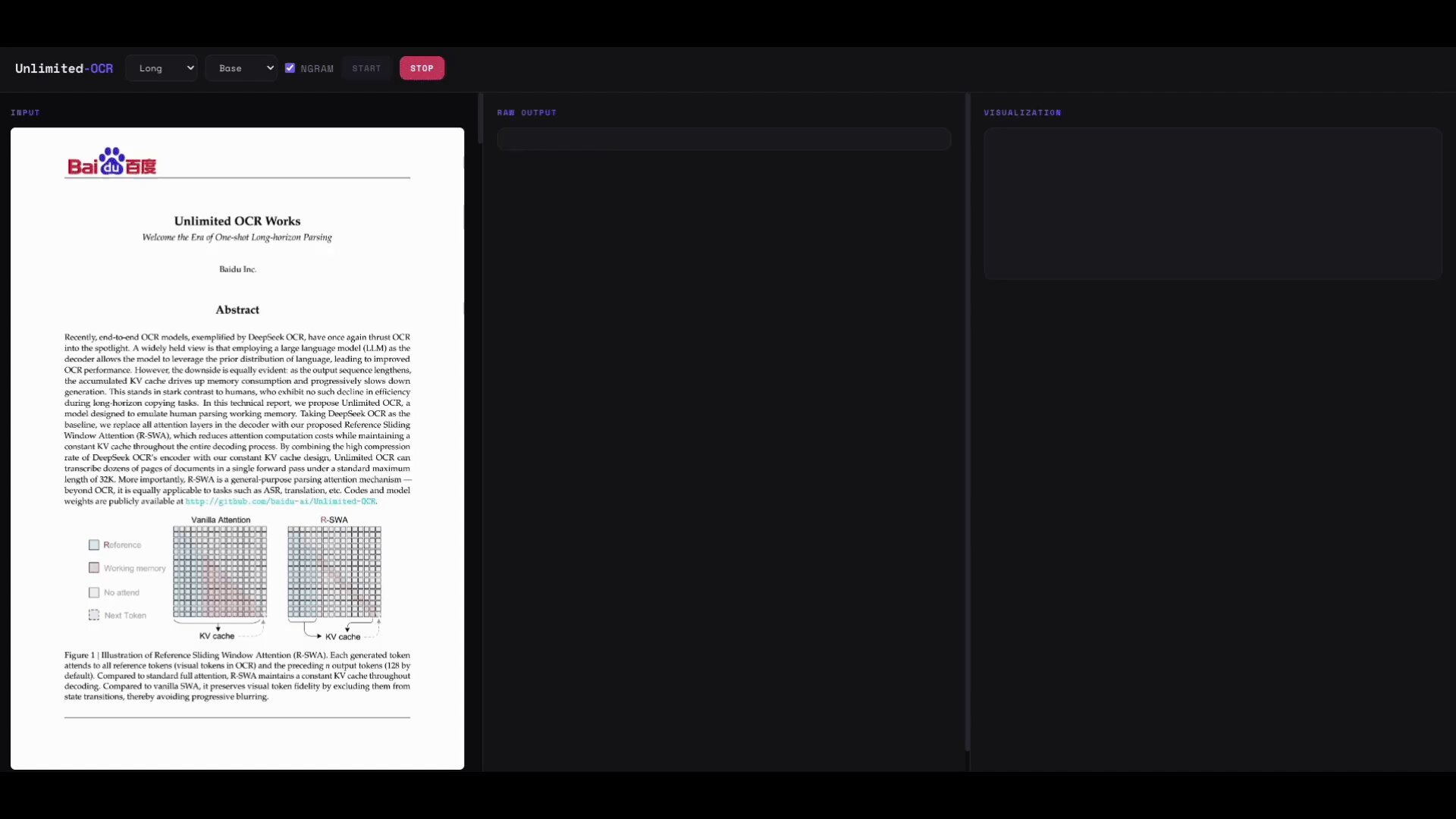
The practical applications of these local breakthroughs are expanding rapidly beyond text generation. Erick (@ErickSky) reported that Baidu has broken a major limitation with Unlimited-OCR, which processes entire documents in a single pass without chunking. Similarly, Dhilip Subramanian (@sdhilip) detailed his switch from paid dictation software to FluidVoice, an open-source local application. Noting that it "corrects as I speak with no API key, and handles slang better than I expected," Subramanian canceled his subscription. These developments underscore a growing trend: the ability to run highly capable, specialized AI entirely offline is fundamentally shifting consumer and developer expectations.
Hardware Meets Generative AI
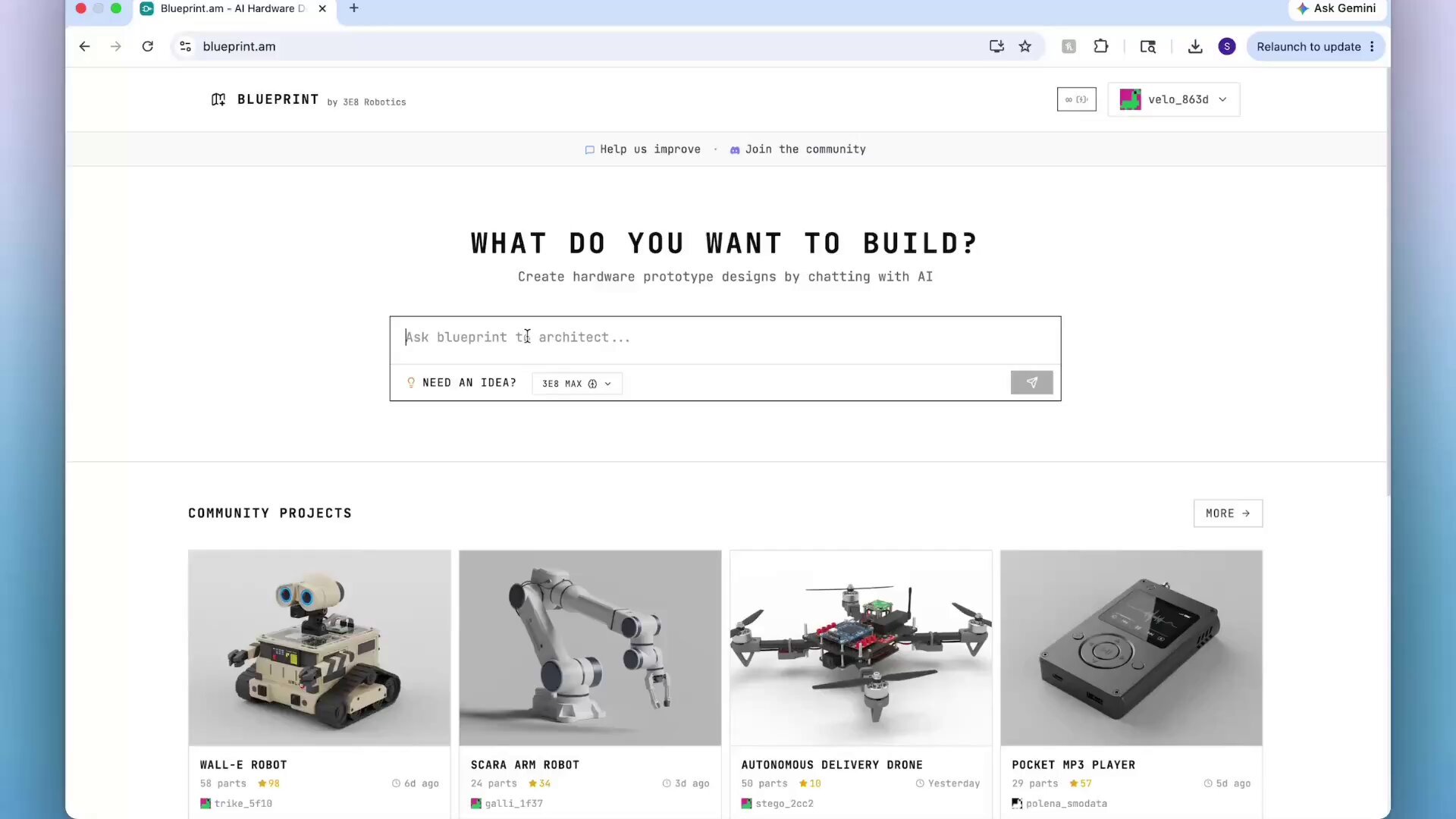
As local inference capabilities expand, hardware manufacturers and tool developers are racing to bridge the gap between digital models and physical reality. The integration of AI into hardware design is democratizing physical engineering, allowing anyone with an idea to generate comprehensive build plans. Sajeel Purewal (@Sajeel_Purewal) introduced Claude for Hardware alongside their Blueprint tool. "Just enter your hardware idea and Blueprint gives you an entire hardware plan for your build," Purewal explained. This effectively turns conceptual prompts into actionable, step-by-step manufacturing instructions, significantly lowering the barrier to entry for hardware entrepreneurship.
This convergence is being actively championed by industry leaders. Time Magazine (@TIME) reported on Nvidia CEO Jensen Huang's keynote address at Computex. Highlighting the introduction of new chips designed to bring advanced AI directly to Windows devices, Huang emphasized the profound nature of this shift. "This computer literally runs everything the world has ever created," Huang stated. By bringing native agents directly to consumer operating systems and edge devices, Nvidia is facilitating a future where AI capabilities are seamlessly woven into the fabric of our daily hardware, moving beyond cloud dependency entirely.
Digital Sovereignty and Escaping the Algorithm
As AI integration deepens across both software and hardware, a counter-cultural movement advocating for radical digital sovereignty is gaining mainstream traction. The realization that AI models are deeply entangled with data harvesting and algorithmic control is prompting users to fundamentally rethink their relationship with technology. Teddy (@Bitcoin_Teddy) shared a compelling manifesto from Pewdiepie detailing a step-by-step process to break free from attention-hungry algorithms.
The strategy centers on deliberately introducing friction back into the user experience. The approach involves quarantining social media apps in secondary device profiles, relying on self-hosted solutions to reclaim personal data, and aggressively utilizing DNS blockers to prevent ads from reaching devices in the first place. As the creator notes regarding self-hosting, "The effect that had on me is I’m not the product anymore. The things I use are mine and because they’re not free, I’m not paying with my privacy." This philosophy perfectly aligns with the broader developer trend toward local AI and open-weights models. Taking back control means building a technological fence that filters out the noise of centralized algorithms, prioritizing intentional, localized computing over the convenience of free, privacy-compromising services.
Sources

Introducing Sakana Fugu: A full multi-agent orchestration system accessible via a single model API. Our ‘Fugu Ultra’ model matches the performance of Fable and Mythos, delivering frontier capability without the risk of export controls. Try it: https://t.co/hhO6qTawgb 🐡
$25,000,000 in ARR, up roughly 25x in 12 months. We did it by staying extremely focused: 1. Build a product students actually use 2. Move fast across product and growth 3. Localize deeply across markets 4. Keep the team small, ambitious, and accountable Our @Astra__AI mission is simple: Build the most accessible, personal AI tutor in the world. We believe every student should have access to world-class learning support, regardless of country, school, background, or income. And this is still the beginning. We did this in 3 years, bootstrapped, profitable, with a small team in Slovenia. No investors. No permissions needed. Now we want to build the company that defines how hundreds of millions of students learn with AI. Thanks to this network for all the support during our journey. ❤️
The Rise of the 149-Person Company
@SemiAnalysis_ recently found something bizarre in the economics of AI coding subscriptions. If you run them at max usage limits, you're actually payi...

This "loop" automation is nuts inside of Codex. "/goal go over every single feature in this app create a user story with expected behaviour based on the code keep a single canonical spreadsheet tracking the features status - when done switch loop to testing every user story and documenting all errors - when done fix every logistical error or ux error - test every user behaviour again post fix" Shoutout to @MatthewBerman for the heads up. Hundreds of user stories being worked through like it's nothing.
/goal is live on Grok Build. We use a team of agents: - implementors - skeptics - code reviewers - planners and a mix of grok build and composer in various roles. Would love to hear your feedback on how ambitious you can be with /goal and where the gaps are
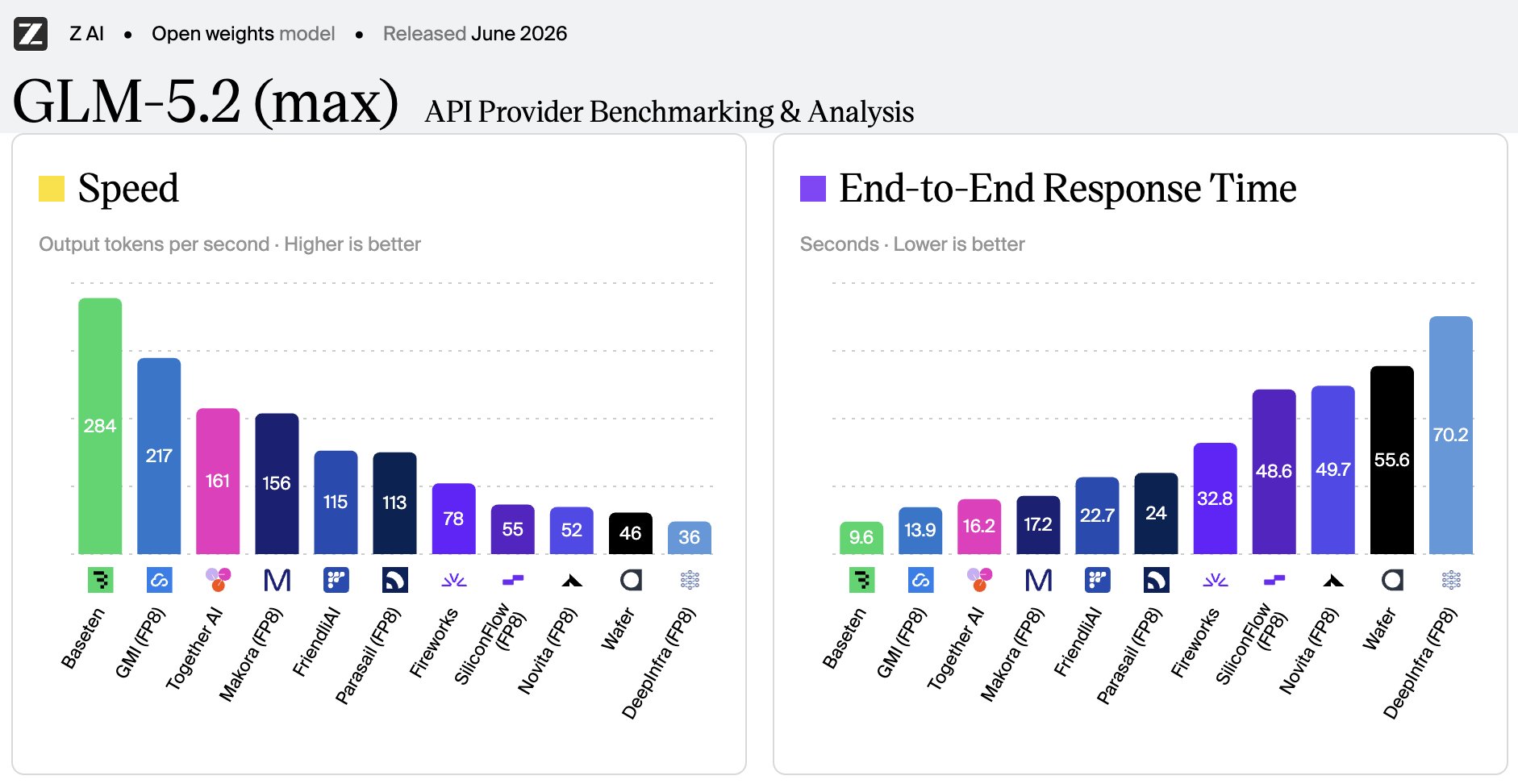
We closed our Series F today at a $13B valuation. Our inference business grew 20x in the last year. I want to explain why: The growth comes from a shift I think is permanent: companies want to own their intelligence layer. Instead of relying exclusively on closed models, teams are post-training open models for their specific use cases. Customers like Abridge, Cursor, Decagon, Harvey, HubSpot, Lovable, Notion, OpenEvidence, and Parallel are building this way. But post-training is still more of an art than a science. That’s why we’ve been working hands-on with customers to build specialized models that match or exceed closed models on the tasks they care about. We provide not just the weights, but also the training recipes and tooling so that they're in charge of the continual learning process. I think more companies, both AI-natives and enterprises, will own their intelligence layer. And I’m excited to help build that future.
Somehow my Abliterated Qwen-27B model scores higher than a 310B parameter model! I did do a ridiculous number of passes to get the most precise abliteration possible. It resulted in virtually 0 kv drift and unlocked capability by removing self censorship overhead. Set it free!