Autonomous Agent Pipelines Emerge as Repurposed PS5 Chips Drive Local Inference Revolution
The AI ecosystem is rapidly shifting from single-prompt interactions toward fully autonomous, scheduled agent frameworks that manage everything from RL pipelines to enterprise DevOps. Simultaneously, the local AI hardware movement is hitting new extremes, with developers successfully building massive inference clusters out of repurposed crypto-mining rigs featuring PS5 chips. The divide between cloud convenience and local autonomy is widening, forcing developers to rethink both infrastructure and context management.
Daily Wrap-Up
The narrative around artificial intelligence is quietly undergoing a massive structural shift. We are moving past the era of manually crafting the perfect prompt and entering a phase defined by orchestrated, autonomous agent workflows. Today's discussions highlight a landscape where developers are building meta-harnesses to let models manage other models, scheduling agents to run background tasks without human intervention, and giving them the keys to complex operational pipelines. The focus is no longer just on what a model can generate in a single shot, but on how we can string these capabilities together to automate entire segments of the software development lifecycle and machine learning research.
Parallel to this push for autonomy is a fierce rebellion against the prohibitive costs of cloud-based inference. The local AI hardware movement is getting incredibly creative, bordering on extreme. Developers are no longer just waiting for the next generation of consumer GPUs. Instead, they are repurposing e-waste like Bitcoin mining boards equipped with PlayStation 5 silicon to run massive models like DeepSeek locally, bypassing API providers entirely. This resourcefulness is fueled by a growing frustration with subscription models and data privacy concerns, proving that where there is a will to run models locally, the hardware community will find an aggressively cost-effective way.
The most practical takeaway for developers: stop focusing exclusively on single prompt-to-response workflows and start investigating orchestration frameworks and context graph technologies, because the ability to coordinate multiple specialized agents over long periods is rapidly becoming the most valuable skill in software engineering.
Quick Hits
- Addy Osmani shared a deep dive into "How modern browsers work," exploring how browsers transform HTML, CSS, and JavaScript into interactive applications. (@addyosmani)
- Gigaptera announced a new open-source GitHub project that finally brings per-app volume control to macOS. (@gigaptera)
Orchestrating the Future of Autonomous Agents
The most prominent trend today is the rapid maturation of autonomous agent frameworks. We are seeing a decisive move away from manual prompting toward systems where AI agents autonomously plan, execute, and debug. Matei Zaharia's newly open-sourced project, Omnigent, exemplifies this shift. As Anthony Ronning pointed out, Omnigent acts as a "meta-harness" that sits above tools like Claude Code and Codex to let developers easily compose them, adding live collaboration and rich control policies. This reflects a broader realization that individual models are no longer enough. The future belongs to architectures that can route tasks across various specialized SDKs.
This push toward autonomy is also tackling highly complex, specialized domains. Ivan Fioravanti highlighted an astonishing milestone where an AutoResearch agent autonomously planned GPU experiments and submitted actual Reinforcement Learning runs. The agent handled the entire workflow, proving that we can automate incredibly high-level research processes. Bill Staples noted a similar trend in the enterprise space with the public beta of GitLab Orbit, a Context Graph for the software development lifecycle. By unifying SDLC data into a single graph, platforms are making agents inherently smarter and less expensive.
The underlying infrastructure supporting these autonomous agents is also becoming more accessible. Flue announced a new Schedules feature, allowing agents to run daily summaries and recurring reports automatically without human prompting. Meanwhile, developers are spending more time inside agent environments than traditional tools, with Tibo noting that he now spends more time in the Codex app than all other Mac apps combined, actively seeking out strategies to maximize his productivity.
The Local Inference Revolution Gets Resourceful
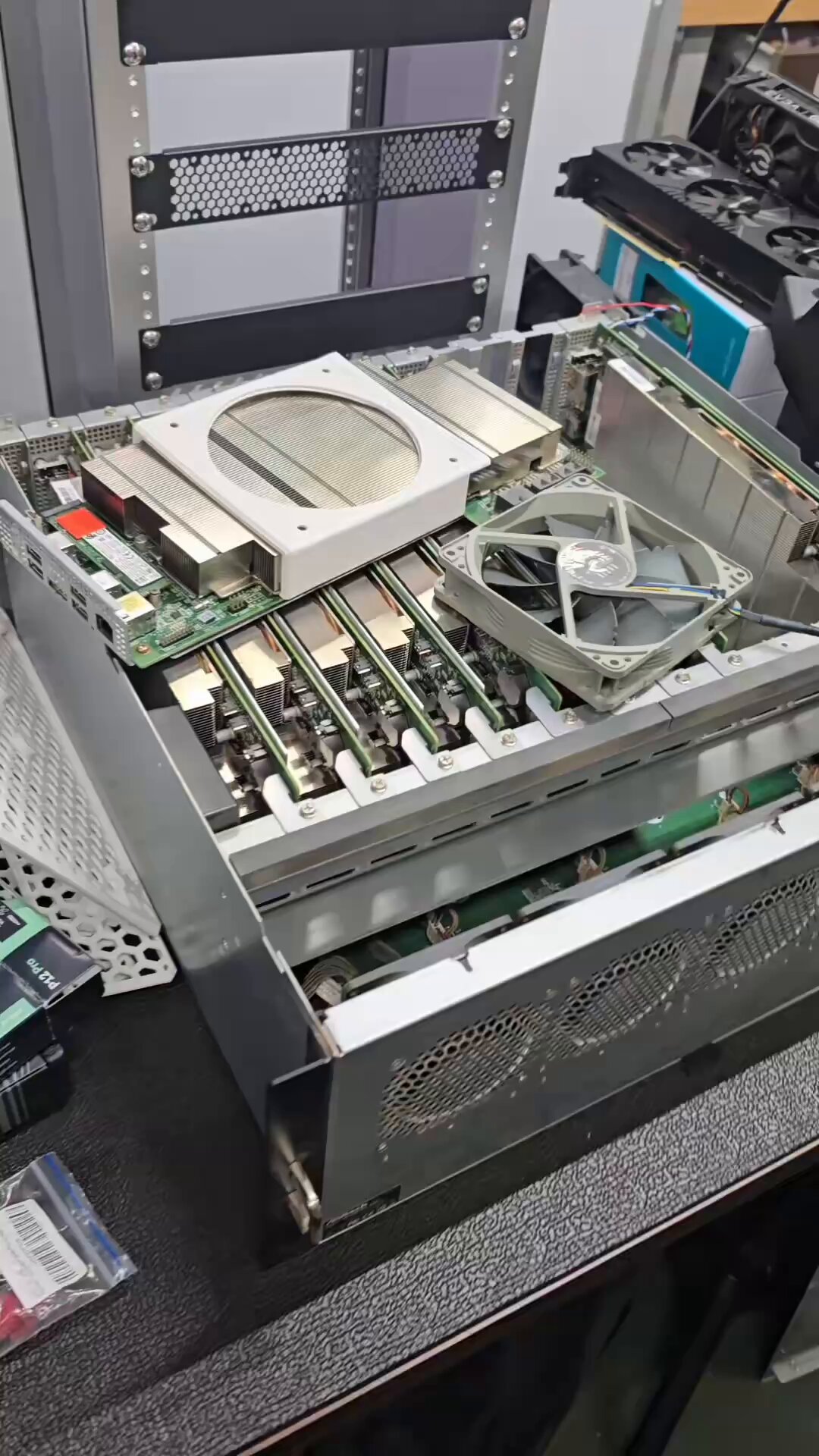
As cloud AI subscriptions mount, the developer community is finding wildly creative ways to run massive models locally. The star of today's discourse is a brilliantly frugal hardware hack detailed by Antid, who highlighted how developers are building 192GB GDDR6 clusters using twelve repurposed BC250 Bitcoin mining boards. Originally housing rejected AMD Oberon chips from the PlayStation 5 manufacturing process, these boards cost around $300 for an entire 4U rack. By distributing the DeepSeek 671B model across this janky but effective hardware cluster, developers are running unquantized inference at usable speeds, entirely bypassing the $12,000 cost of equivalent used RTX 5090s.
This hardware rebellion is supported by the broader open-source community's commitment to local inference. Ahmad dropped an incredibly comprehensive guide covering everything from Mac-first workflows to cluster orchestration, detailing the intricacies of inference engines like llama.cpp, MLX, and TensorRT-LLM. The guide serves as a vital handbook for anyone looking to escape the cloud trap and take control of their hardware stack.
For those who prefer slightly more conventional setups but still want extreme performance, the tiny corp shared that GLM 5.2 is running at a staggering 120 tokens per second across two networked Blackwell tinyboxes. The message from the hardware community is unified and clear. Whether you are cobbling together e-waste crypto miners or dropping $150,000 on enterprise-grade tinybox setups, the era of being tethered to cloud AI subscriptions is coming to an end.
Context Compression, RAG, and the Search for Accuracy
While hardware enthusiasts focus on raw compute, others are optimizing how data is fed into these models. The battle to manage context windows efficiently is producing fascinating, and sometimes counterintuitive, results. Evan Boyle ran evaluations on a popular new proxy tool called Headroom, which claims up to 95% token reduction by intelligently shrinking logs and JSON payloads. Boyle found that the compression actually removed critical information the agent needed, triggering a re-read mechanism that ultimately resulted in larger costs and higher latency. His warning to "beware of things that sound too good to be true" is a vital reality check for developers looking for quick optimization hacks.
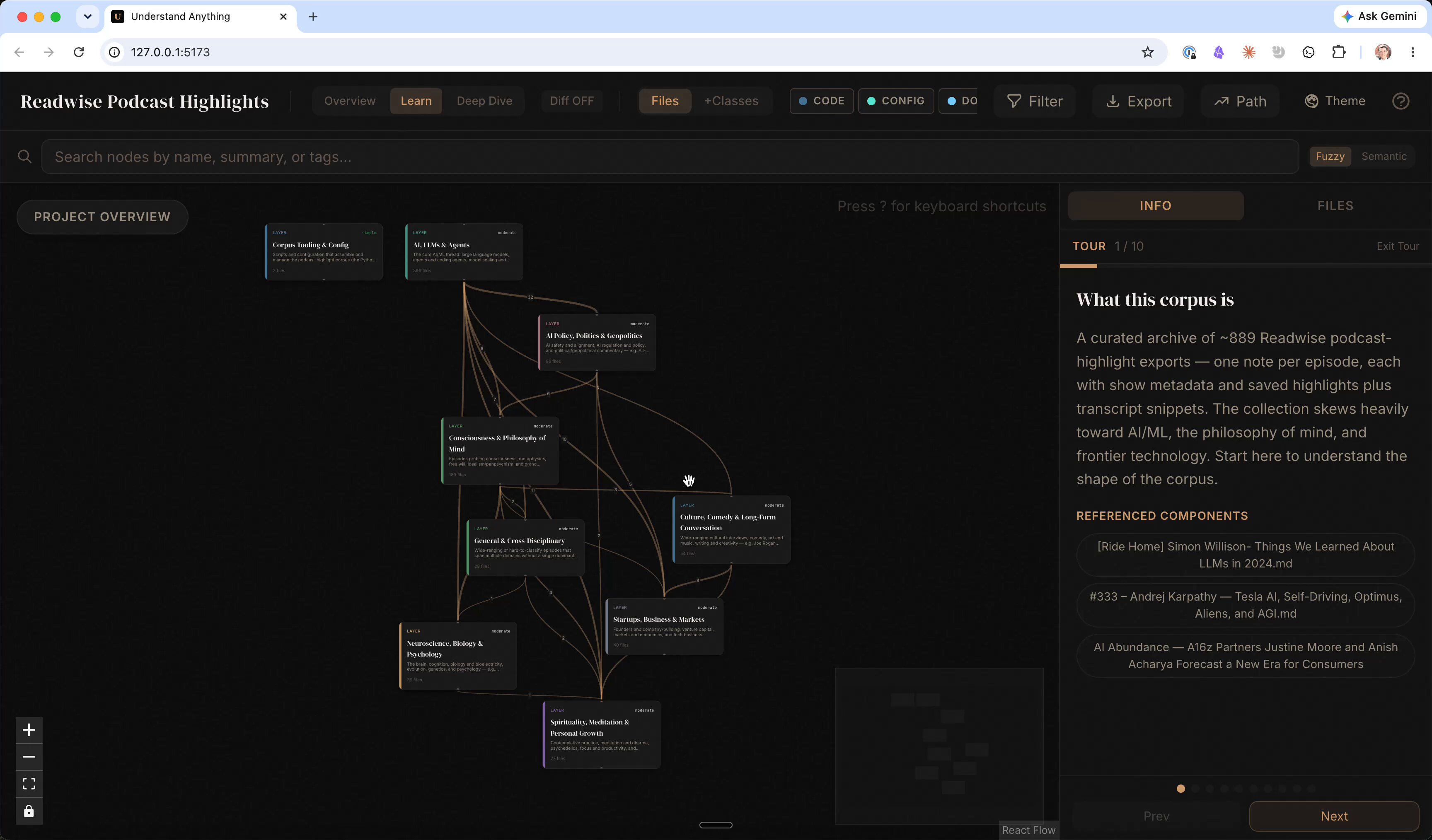
Instead of stripping information down, other developers are focused on structuring information better so models can understand it organically. Dan McAteer showcased "Understand Anything," an open-source project that analyzes a codebase and turns it into an interactive knowledge graph. Rather than just showing the structural hierarchy, the tool actually explains the codebase to the user, proving highly effective for searching through massive datasets like podcast transcript vaults.
This mastery of context also extends to how the broader internet feeds AI systems. Deno pointed out a growing marketing strategy: manipulating Reddit threads to rank number one in ChatGPT search results. Because large language models pull heavily from explicit human conversations, SEO is rapidly mutating into AI Search Optimization. Understanding exactly what formats, subreddits, and comment structures these models prefer is becoming a highly sought-after skill for content marketers.
Model Capabilities and Linguistic Breakthroughs
Underneath all the tooling and orchestration, the base models themselves continue to advance at a blistering pace. Vercel CEO Guillermo Rauch shocked many by stating that GLM-5.2 is incredibly good at coding, prompting Jun Song to simply highlight his authority in the tech space. The constant arrival of highly capable new models like GLM-5.2 forces developers to continuously reassvaluate their preferred tech stacks and coding assistants.
On the research front, we are seeing breakthroughs that challenge our understanding of how language models acquire knowledge. Plinius shared details on "Lingua Ex Machina," a procedural xenolinguistics engine that reveals zero-shot language acquisition capabilities previously unseen in human-uniform datasets. This type of research into zero-shot learning suggests that future models will be able to decipher and generate completely novel, non-human languages with minimal prompting. It is a profound leap from the statistical pattern matching of early LLMs, pointing toward a future where models possess a much deeper structural understanding of linguistic concepts.
Navigating AI Adoption and Career Impact
Amidst the technical leaps, the human element of the AI revolution remains as contentious as ever. Matt Pocock sparked a thoughtful dialogue on the intense polarization surrounding AI adoption. After a user admitted they used to hate Pocock for his AI advocacy but have since come around to loving the tools, Pocock questioned why people harbor such animosity toward those with differing viewpoints. This interaction perfectly encapsulates the softening resistance to AI tools as they transition from controversial novelties to indispensable utilities.
This gradual acceptance is also reflected in how professionals are adapting AI to their personal growth. Peter Dedene shared his adaptation of an "autopilot-interview" tool. Designed to be less tedious than traditional grilling methods, Dedene modified the tool to ask high-stakes questions where critical decisions matter for the rest of a project trajectory. This represents a fascinating psychological shift. Instead of viewing AI strictly as a code generator, developers are learning to use it as a conversational partner and a technical sounding board. As the ethical objections slowly give way to practical utility, professionals are discovering deeply personalized ways to integrate AI into their daily cognitive workflows.
Sources

how i hit inbox 0 every day with Codex: https://t.co/Pka8rcw2vQ
I’d like to announce the public beta launch of GitLab Orbit - the Context Graph for the SDLC. Previously known as the GitLab Knowledge Graph, GitLab Orbit aims to make all of your AI agents better, faster, and cheaper. More in the 🧵 https://t.co/MQSn0j0fbI
🧵 Deli AutoResearch SKILL is now officially open source! 🎉 https://t.co/V3lwwdyQm8 Alongside it, we’re dropping our 4th survey paper — this time on Self-play. https://t.co/SEb2qoKCI6 Inspired by AlphaZero, we got a powerful insight: prior knowledge doesn’t always lift the ceiling. Models can discover more globally optimal solutions just by playing against themselves. The biggest change in this paper? For the first time, the AutoResearch Agent autonomously planned GPU experiments — and submitted actual RL runs on the DeepSeek 285B model. The entire RL pipeline — experiment design, code writing, running, debugging, and conclusion summarization — was 100% automated, with zero human intervention from me. This was incredibly difficult, but an incredibly important step. https://t.co/kuZZNux5RH GRPO is the tool being called by the AutoResearch Agent here. We see this as the beginning of our Continual Learning research journey. 🚀 As always, this is my personal research project, unaffiliated with any organization. All views are my own. #AI #ReinforcementLearning #SelfPlay #OpenSource #AutoML #ContinualLearning #DeepSeek
How modern browsers work
Web developers often treat the browser as a black box that magically transforms HTML, CSS, and JavaScript into interactive web applications. In truth,...
Stop paying for AI subscriptions. These local devices do the same for $3/month.
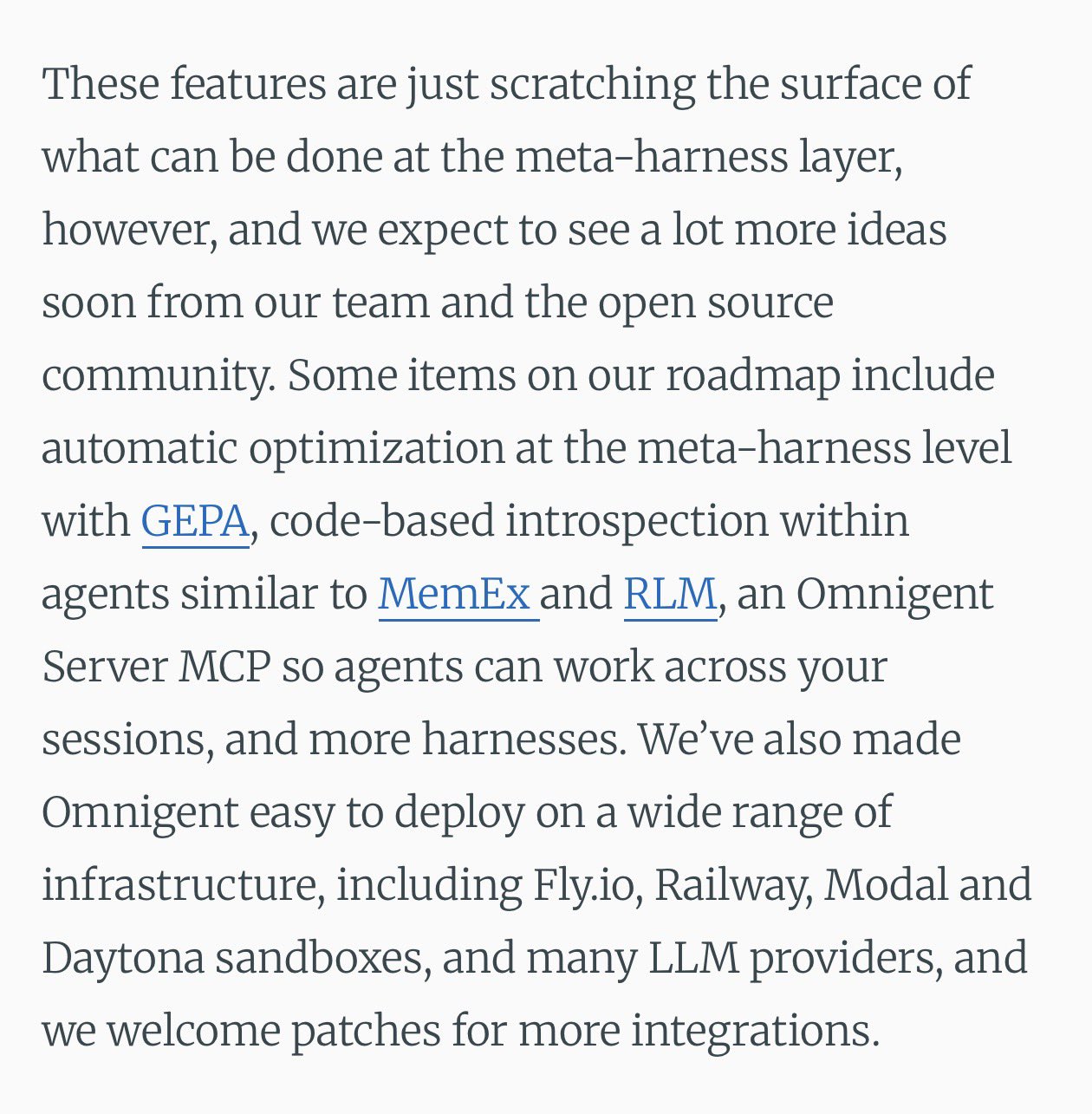
Really excited to open source a new project: Omnigent, a meta-harness for AI agents. It lets you build multi-agent coding and custom agents, sitting above Claude Code, Codex, Pi, and agent SDKs to let you compose them. It also adds live collaboration and rich control policies. https://t.co/jwFmH8nHsZ
UP TO 95% TOKEN REDUCTION WITH ZERO CODE CHANGES A Netflix engineer just open-sourced Headroom, and it’s one of the smartest ways I’ve seen to cut LLM costs. It wraps Cursor or Claude in a local proxy to compress your payload before it hits the LLM: → Intelligently shrinks logs, JSON, and code → Perfectly preserves logic accuracy → Keeps 100% of your data local → Stops Opus-tier models from wasting tokens on boilerplate It already crossed 35K stars, which says a lot. 100% free and open-source. repo in 🧵↓
Genuinely impressed, almost shocked, at how good GLM-5.2 by @zai_org is at coding. This changes things.
Inference Engines for LLMs & Local AI Hardware (2026 Edition)