GLM-5.2 Matches Claude Fable as Agent Swarms Automate Enterprise Migration
Today's developments highlight a major leap in AI autonomy and infrastructure abstraction. Open-source models like GLM-5.2 are closing the gap with proprietary frontier models, while autonomous agent swarms and computer vision tools are beginning to disrupt traditional SaaS architectures and vendor lock-in.
Daily Wrap-Up
The AI ecosystem is undergoing a structural shift as developers move away from manual coding and manual infrastructure management toward orchestration and automation. We are seeing the rapid maturation of agentic workflows that no longer require hand-holding. Tools are now capable of managing their own infrastructure, verifying their own outputs, and migrating data across platforms without relying on traditional APIs. This represents a fundamental change in how software is built and maintained, pushing the boundary of what a single developer or a small team can accomplish. The focus is no longer on writing code but on designing the systems and guardrails that allow AI to do the heavy lifting.
Behind the scenes, a profound cultural and economic divide is forming within engineering organizations. As AI coding tools become ubiquitous, development teams are splitting into those who blindly trust the output and those who feel the crushing burden of reviewing endless machine-generated PRs. This is compounded by the complex economics of enterprise AI. Companies are pouring massive budgets into frontier models, often overpaying for simple tasks due to default configurations and runaway automations. The challenge for leadership is no longer just accessing AI but governing its usage, optimizing spend, and maintaining code quality without burning out senior engineering talent.
The most practical takeaway for developers: Audit your AI automations and downgrade the reasoning models running them to cheaper, faster tiers wherever possible to drastically reduce overhead without sacrificing output quality.
Quick Hits
- Elon Musk highlights SpaceX's Q1 tonnage to orbit, noting that once Starship flies hourly, the company's mass to orbit will be one hundred times greater than all other providers combined, even if competitors triple their current launch rates.
- Ruru showcases a new git graph visualization tool featuring a built in timeline to help developers track repository history more effectively.
- Bubble boi recommends following industry expert Semidoped for high quality, original analysis on the semiconductor and hardware space.
- Peter Steinberger announces that Hannes is joining the Openclaw team in Community and Developer Relations, praising his ability to speak both developer and agent fluently.
Developer Infrastructure Embraces Radical Abstraction
The tools we use to build and deploy software are undergoing a massive simplification phase. Developers are realizing that when AI models take the driver seat, the underlying infrastructure needs less manual configuration. This is evident in the way environments are now seamlessly transitioning between local and remote hosts. As Tibo notes regarding the new Codex update, letting the model drive means you need less infrastructure overall. You can start work on your laptop, push it to a remote box, and bring it back later without missing a beat.
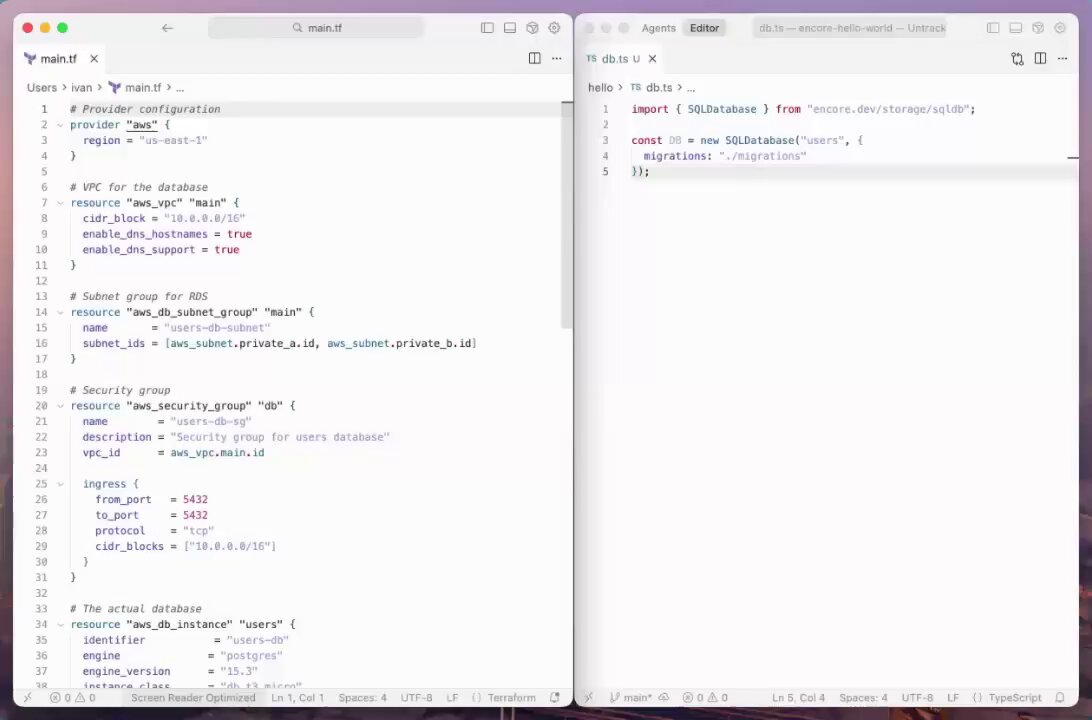
This desire for minimal setup extends into how we deploy applications and manage data. We are seeing a push towards replacing dense configuration files with highly abstracted, concise code. Encore points out the stark difference between legacy setups and modern tools by highlighting that a fifty line Terraform configuration can be replaced with just four lines of code using their platform. This trend enables incredibly cheap and powerful tech stacks to flourish. Oscar Gabriel accurately predicts that combining a five dollar Cloudflare Workers plan with a five dollar PlanetScale plan is poised to become one of the most winningest combinations on the web.
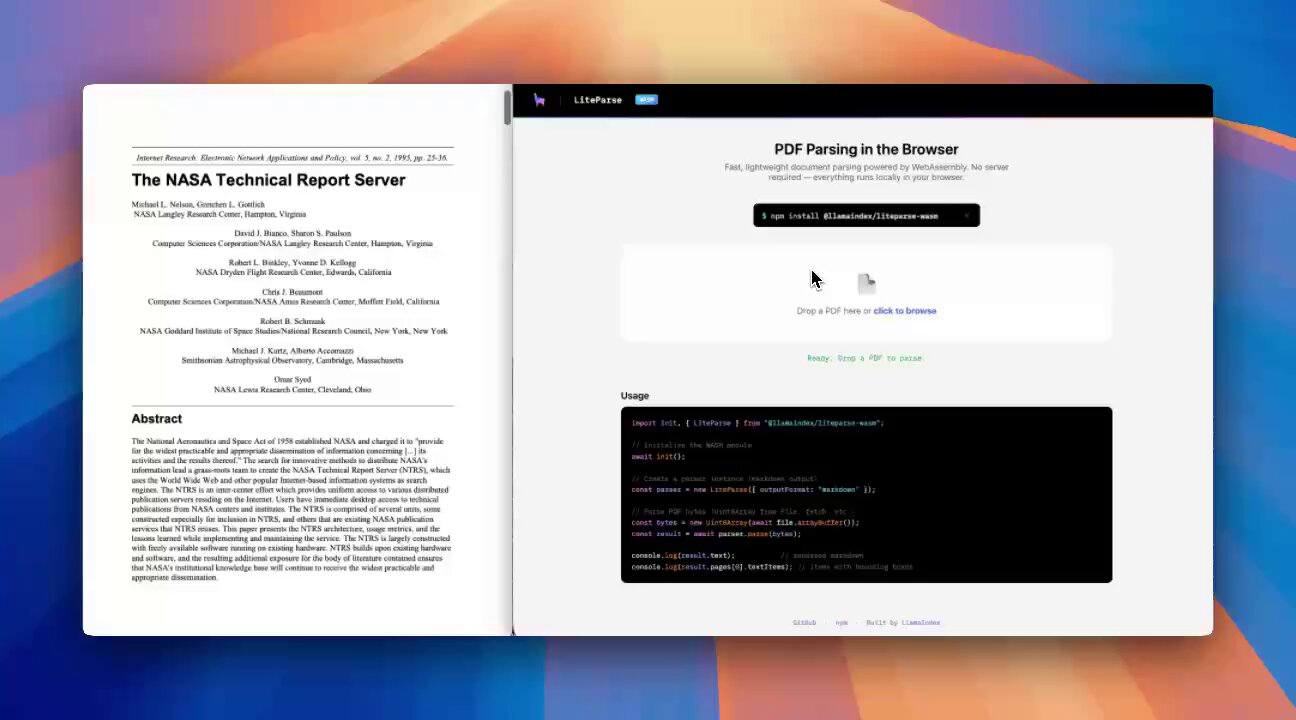
To support these lean setups, the ecosystem is building faster, model free utilities. Jerry Liu introduced LiteParse version 2.1, claiming it is the fastest PDF to markdown parser in the world. It outperforms other open source model free parsers across multiple benchmarks while remaining incredibly lightweight. Burke Holland emphasizes that maintaining productivity does not require a complex setup, noting that he relies on just three simple skills: grill me, frontend design, and finalize. As agents write more of our code, observability becomes critical. Ahmad highlights Moraine, a new agents tracing tool by Fuji Kanaeda that ingests live sessions from IDEs, supports remote clickhouse, and helps agents see exactly who is editing which files without hogging memory.
Autonomous Agent Swarms Disrupt Traditional SaaS
Agentic workflows are moving past simple prompt and response loops into fully autonomous, self verifying systems. A fascinating example shared by NO1ennn details a twenty one year old developer running three hundred AI agents simultaneously using Kimi K2.6. The truly remarkable part is the verification loop. An Opus model checks every single output against its source data. If anything is incorrect, the system does not stop until the error is resolved. This swarm was pointed at one hundred electric vehicle companies, and over three passes, it reduced failed data extractions from twelve down to zero. It is a system that catches its own mistakes before a human ever reads the output.
This level of autonomy is beginning to threaten long standing business moats, particularly in vertical SaaS. Todd Saunders points out that combining a tool like Codex with computer vision is going to gut vertical SaaS faster than anyone is pricing in. For years, incumbent software companies refused to build export APIs specifically to trap customer data. Now, an agent can simply read the screen, extract the data visually, and reformat it for a new system in minutes. Switching your system of record has essentially dropped to a zero dollar cost. Every vendor coasting on data lock in is about to find out how much of their revenue was held hostage rather than earned through genuine product love.
These capabilities are no longer theoretical. At a recent Anthropic conference, Boris Cherny and the creator of Bun live coded on stage, shipping three production pull requests entirely generated by an AI. As Phosphen recounts, the entire process was kicked off with a single prompt that ran for thirty minutes. The setup included AI bots arguing thirty rounds on every PR and an AI rewriting parts of Bun in Rust. The bot wrote the code while the human simply merged the suggestions, proving that autonomous coding agents are ready for prime time.
The Cultural And Economic Divide In Software Engineering
The rapid adoption of AI is forcing a reckoning within engineering departments, creating a stark cultural divide. Deedy paints a vivid picture of this identity crisis bordering on depression for many software engineers. On one side are the lazy engineers who rarely touch their keyboards, letting AI write, test, and explain their code. They automate their standups and Slack messages, skating by on the illusion of productivity. On the other side are the craftsmen who are exhausted from reviewing endless machine generated PRs. They bear the entire burden of understanding and fixing bad AI code, watching bugs seep into production while colleagues shrug. Eventually, the craftsmen give up, exhausted by a system that rewards volume over quality.
This cultural tension is deeply intertwined with the economics of enterprise AI. Rahul points out that it is entirely possible for an organization to spend a fortune on AI and still underutilize it. Large companies often default to the largest, most expensive models with high reasoning efforts for every single task. This creates a tragedy of the commons where a few runaway automations or subagent accidents can inflate costs dramatically. To combat this, smart teams are changing their default model settings across the board. They are analyzing the cost per session and actively compressing model tiers over time.
The solution requires a ruthless audit of how AI is deployed. Before companies institute hard internal budgets, they can achieve massive savings by lowering reasoning levels, banning automations from using frontier models, and utilizing flex API tiers. By shifting tasks down from top tier models like Claude Fable to more affordable options like GLM 5.2, organizations can cut costs by up to seventy five percent without losing functional capability. The gap between the lazy and the craftsmen might only be bridged when companies stop throwing maximum compute at minimum problems and start routing their AI resources intelligently.
Open Source Models Close The Capability Gap
The proprietary moats surrounding frontier AI models are shrinking rapidly as open source alternatives catch up. Brian Roemmele highlights the release of GLM 5.2, describing it as an open source Anthropic Mythos class AI. This sentiment is backed by hard data. Kilocode recently benchmarked GLM 5.2 against Claude Fable 5 using identical prompts and rubrics. The proprietary Fable model scored a 9.1 while the open source GLM 5.2 scored a remarkably close 9.0. The capabilities that were once locked behind expensive APIs or heavily guarded paywalls are now in the hands of the public.
This democratization is expanding across different model families and specializations. 0xSero praises the approach of Zai, noting that their models are becoming exceptionally good at logic and technical writing. These specialized capabilities allow smaller models to punch above their weight class in specific enterprise tasks. Furthermore, hardware optimization is playing a crucial role in making open source models viable for production. Lotto Labs shared work on DFlash speculators for the Qwen 3.5 and 3.6 series. By focusing on speculative decoding, developers have pushed the massive 122 billion parameter Qwen model to output over one thousand tokens per second on a single B200 GPU.
The implication here is profound. When open source models can match the intelligence of frontier models while running at unprecedented speeds on optimized hardware, the justification for paying massive premiums to proprietary vendors disappears. Companies can build robust, private, and highly capable AI systems in house. The focus of the industry is shifting from who has the smartest model to who can serve the smartest model the fastest and the cheapest.
Automating The Human Out Of Prompting And Daily Life
As AI systems become more autonomous, the art of manual prompt engineering is becoming a bottleneck. Developers are now building systems to optimize prompts without human intervention. Amin Karbasi introduces FAPO, which stands for Fully Automated Prompt Optimization. As LLM systems become increasingly agentic, manually tuning prompts across complex workflows is no longer scalable. FAPO autonomously optimizes multi step LLM pipelines, including agents operating over the Model Context Protocol. In testing, FAPO outperformed GEPA, the current state of the art prompt optimizer, on fifteen out of eighteen benchmarks, delivering a massive improvement in performance.
This push towards hands off automation is not just for enterprise software. It is trickling down into personal productivity and household management. Cathryn Lavery wrote about building an AI house manager for her family. The core philosophy here is using AI specifically for the things you are genuinely bad at. Instead of forcing humans to adapt to rigid software interfaces, people are configuring flexible AI agents to handle the tedious administrative burdens of daily life. Whether it is optimizing complex multi agent coding pipelines or managing family schedules, the ultimate goal of AI is finally being realized: getting the technology out of the way so humans can focus on what actually matters.
Sources
J
We built the fastest PDF -> markdown parser in the world 🚀⚡️
AND it’s more accurate than any other open-source, model-free parser (pymupdf4llm, opendataloader, pdf-inspector, markitdown) on 3 standardized benchmarks: olmOCR0-bench, opendataloader-bench, ParseBench
Introducing LiteParse v2.1. The v2 base version was already the fastest document->text parser on the planet, and with this new release we’ve introduced markdown.
It is fully open-source (Apache 2.0) and free, is usable from CLI/Rust/Node/Python/WASM, and is also installable as a one-click agent skill.
Check it out: https://t.co/7oFImAZeb2
Come check out LiteParse: https://t.co/JNER0mVcB8
L
llama_index
@llama_index
LiteParse v2.1 is here, and its bringing the fastest markdown output possible. In this release, we are fulfilling our top request: markdown output. But in the spirit of "lite"-ness, we are doing this completely LLM-free and fast. Not only is it fast, it also beats all other model-free competitors in 3 separate benchmark datasets. Read more about it in our release blog: https://t.co/MiqML6kxTY
N
A 21-YEAR-OLD FROM CHINA RUNS 300 AI AGENTS AT ONCE. THE PART THAT MATTERS ISN'T THE SPEED, IT'S THAT NONE OF THEM CAN LIE TO HIM
he opens the dashboard and shows the swarm live, 300 Kimi K2.6 agents firing in parallel, then Opus 4.8 checking every single output against its source. this is not just a faster swarm. it is a loop that refuses to stop while anything is still wrong
he pointed it at 100 EV-market companies. first pass: 12 failed. wrong revenue, dead citations, empty fields. second pass: 3 failed. third pass: zero
this is not another agent demo. it is a system that catches its own mistakes before he reads a single row
0
0xRicker
@0xRicker
The Self-Verifying Loop: 300 agents, 4,000 steps, 5 live data feeds on autopilot with Kimi K2.6
P
Boris Cherny and Bun's creator live-coded on stage at Anthropic's conference. They shipped 3 production PRs. The audience watched.
"This entire thing was one prompt, and that just ran for 30 minutes."
In 32 minutes, Bun's creator walks through the setup running his repo while he sleeps.
> AI bots arguing 30 rounds on every PR
> a bot that out-commits Bun's creator
> Bun being rewritten in Rust by Claude
> the image library Claude built to beat sharp
The bot writes the code. The human merges the suggestions. None of this worked three months ago.
E
terraform: 50 lines
encore: 4 lines
why are your agents still writing the 50-line version? https://t.co/cYvw9kHDcD
E
Q1 tonnage to orbit by launch provider.
Once Starship is flying hourly, SpaceX’s mass to orbit will be about 100 times more than everyone else combined, even if they triple their current launch rate.
F
FutureJurvetson
@FutureJurvetson
@engine_rich Bryce's format pre-dates all that... and it's not ideal. Every quarter they have to use a magnifying box to show the "also ran" companies. Here's kg to orbit for Q1, cc @ElonMusk https://t.co/aScNZTcbnT
A
Friends don’t let friends write prompts by hand, they give them FAPO.
F
fdtn_ai
@fdtn_ai
Introducing FAPO: Fully Automated Prompt Optimization. As LLM systems become increasingly agentic, manually tuning prompts across complex workflows quickly becomes a bottleneck. FAPO autonomously optimizes multi-step LLM pipelines—including ReAct agents operating over MCP—with optimization runtime powered by Claude Code and Codex. In work led by AI Research Intern, Baturay Saglam, FAPO outperforms GEPA, the current SOTA prompt optimizer, on 15 of 18 benchmarks, delivering an average improvement of +14.1 percentage points. Check out the blog from our AI researcher Huaibo Zhao in the comment.
R
Git graph with timeline. 📈 https://t.co/gMbfZWEWjc
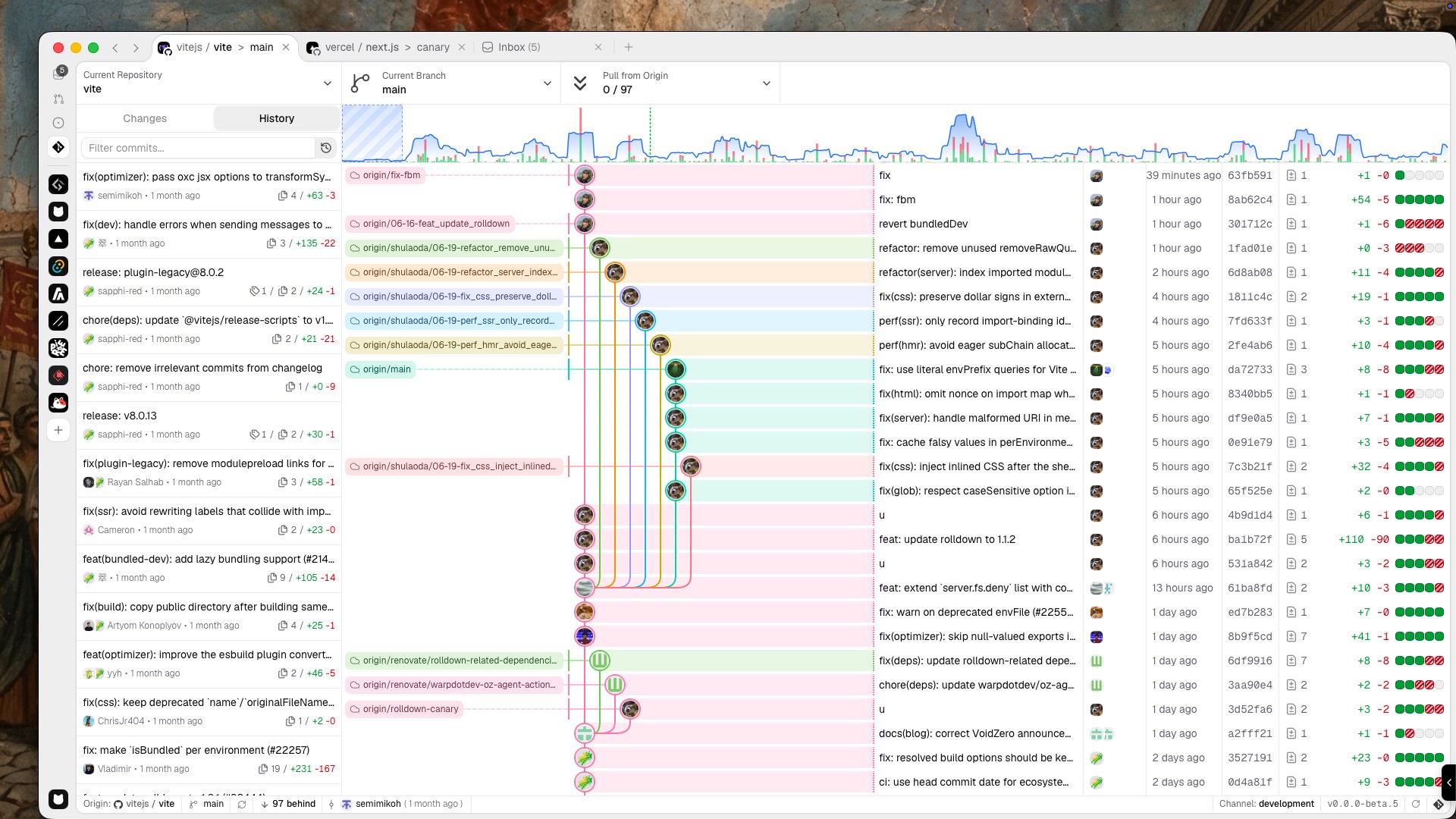
R
ruru_1x
@ruru_1x
Git graphs have been archived internally 👀 https://t.co/mqKopF0L2E
C
How to build an AI house manager for your family
How to build an AI house manager for your family
My favorite thing about AI is that it does the parts of my life I am genuinely bad at. Not the fun parts. Give me a hard problem to solve, something t...
B
Another person using only 3 skills. I'm the same...
1) grill-me
2) frontend-design
3) finalize
You do not need a complex setup to be super productive.
C
catalinmpit
@catalinmpit
The only skills I'm using so far: a) grill me b) caveman c) thermo-nuclear-code-quality-review Any other suggestions?
R
it is simultaneously possible to spend a lot on AI and still underuse it, esp in larger orgs
we're seeing this with meta, uber, and many other orgs instituting budgets
some factors are at play:
1. cost of the frontier comes at an enormous premium: fable -> glm 5.2 is a 10x dropoff in cost
2. tragedy of the commons, in large orgs, much safer to always default to larger model at a higher reasoning effort. ends up in a situation where most features/people are on too high of a setting, resulting in 2-3x more spend than needed
3. very easy for runaway automations, openclaw bros, subagent accidents, to create a lot of spend quickly
results in a very skewed distrubtion of usage with a small number of people/features with high usage
to counteract these issues, and avoid internal budgets (for now)
1. we changed defaults across the company to lower reasoning levels, across surfaces
2. thinking about the p50, p75, p95 session. cost to PR/cost for support ticket/cost for session, and actively compressing model tiers (gpt 5.1->5.4-mini) over time
3. banning automations from using frontier models, and high reasoning efforts, and using flex api tiers (adds up to 75%+ savings)
tldr before you institute budgets, try these first
more in the blog:
https://t.co/L5HnjstvI8
B
People ask me all the time what are some good accounts to follow on here about semis and I rarely have an answer cause most don’t know what they are talking about or just reacting to what other people say.
But this on the other hand is pretty pretty gooooood!
S
semidoped
@semidoped
Images to go along with this episode are here: https://t.co/nhVbDyCYpz
O
$5 Workers plan + $5 Planetscale plan boutta be the most winningest combo on the web
P
PlanetScale
@PlanetScale
Workers + Hyperdrive + PlanetScale. A powerful stack, now with a unified bill in your Cloudflare dashboard. https://t.co/qL34L72uCi
T
Remote / local handoff in Codex! Removing boundaries one at a time.
When you let the model be in the driver seat, you actually need less infrastructure.
G
guinnesschen
@guinnesschen
Codex can now hand off threads between local and remote hosts. Start work on your laptop, send it to a remote box before you close the lid, bring it back later. And yes, Codex can orchestrate the handoff for you. https://t.co/CcIG9fwzXd
L
This is awesome work
Dflash for qwen 3.5/6 series
C
charles_irl
@charles_irl
Speculation Is All You Need. In this blog post, we announce the co-release (w/ Z Lab) of six more state-of-the-art DFlash speculators for @Alibaba_Qwen 3.x. Over 1k output tps for 3.5 122B-A10B on a B200. Read the blog for why we're all-in on spec dec. https://t.co/Bv3Zc95Xgh https://t.co/FQ6eWQbhTO
0
I love how zai has been approaching the challenges of their industry.
Their models are good at logic, technical writing, ETC..
0
0xSero
@0xSero
Stop what you're doing and try https://t.co/Dgptx17YHh Holy wtf. This is incredible, so fast, so good. Not even a second after i pasted the repo I had a whole wiki... https://t.co/cPvyaLK08h
T
Codex + computer vision is going to gut vertical saas faster than anyone’s pricing in.
Switching your system of record has dropped to ~$0.
Now, an agent reads your data out of the old system and reformats it into the new one in minutes… without your help.
I can name a dozen vertical tools that refuse to build an API, on purpose. They don’t want to give the ability to export, and that’s the moat.
But that doesn’t matter anymore.
The agent doesn’t need your API. It reads the screen and moves your data for you.
Every vertical incumbent coasting on lock-in is about to find out how much of their NRR was hostage.. not love.
A
This man is finally posting about his really cool Agents Tracing Tool
F
fujikanaeda
@fujikanaeda
🧊 Moraine v0.6.0, v0.6.1 Missed making an update before, so this is a twofer. `uv tool install moraine-cli && moraine up` New: 💻 New website! https://t.co/US2SpBzj6b 🍽️ OpenCode and Cursor IDE live session ingest support! 🛜 Remote clickhouse support! 🎯 File Radar in Moraine MCP. More than git-blame, agents can see all turns and sessions referencing & editing any file. ❤️🔥 Performance improvements (no more cpu+memory hogging when running dozens of agents). 🐞 Bug fixes v0.6.1 Notes: https://t.co/m2zn7L6Fe3 v0.6.0 Notes: https://t.co/hUqG5cXbFg
B
Like I said Open Source Anthropic Mythos class AI in GLM-5.2!
We see the same.
Time to pick a different bogeyman for Anthropic, this is now in everybody’s hands.
K
kilocode
@kilocode
Everyone benchmarks GLM-5.2 against the frontier now. So we did too. We pulled GLM-5.2's plan up against Claude Fable 5's, the plan that won our last frontier round. Same prompt, same task, same rubric. Fable scored 9.1. GLM-5.2 scored 9.0. https://t.co/rWYSZORlAU
P
Hannes speaks both developer and agents. Blessed to have him on the team!
H
hrudolph
@hrudolph
I’m excited to share that I’m joining @steipete and the @openclaw team in Community and Developer Relations. This is a dream opportunity, and I’m grateful to be part of what’s next.
D
Most software engineers are facing an identity crisis bordering on depression.
As CTOs aggressively evangelize tokenmaxxing, a class divide ensues.
The lazy. The lazy push code. They don't write it. They don't manually test it. They don't even read it. They're on autopilot. See Jira ticket, prompt for task, submit code. Many of them are barely on their computer the whole day. A comment on the PR asking why they did this? The lazy ask AI. A Slack message? The lazy ask AI. Need to prepare for standup? The lazy ask AI. As long as it sounds enough like them and isn't detected. Some of the lazy are even overemployed, and work multiple jobs. The lazy smart ones get away with this, and even rewarded. After all, software engineering for the lazy is just a dance to convince your colleagues you're smart and hard working.
The craftsmen. The craftsmen are tired. Very tired. 15 PRs in queue. Slack blowing up. The entire burden of review falls on the craftsman. The burden of understanding. They try. They work their way through the code, thoughtfully commenting to improve what ships. The response? A lazy: "That's a clever idea! You're absolutely right." with an incorrect change. It's fine, the craftsman says. I can fix them. They write a doc urging his colleagues to be better. The next day? 20,000 line PR to review. Day after day, their workload grows. Bugs seep into production. No one seems to care. Another round of AI is thrown at it. Their animosity to their colleagues rises. Eventually, they give up. It's just not what it used to be. The craft they loved is dead. They eventually wake up, a lazy.
This isn't all companies. Many companies are genuinely more productive, adopt the right set of principles and practices around AI development and have highly talented teams that trust each other. It tends to happen in bigger companies that are 10+yrs old with a higher talent variance. But it happens. A lot.