OpenAI's $34B Losses Leaked While Local AI Chips and Open Source Models Reach Parity
Leaked financials reveal OpenAI's staggering $34 billion burn rate, prompting serious industry predictions of bankruptcy and acquisition. Meanwhile, Vercel launches a new agent framework, open source models like GLM 5.2 match proprietary capabilities, and hardware hackers burn transformers directly onto silicon for blazing-fast local inference.
Daily Wrap-Up
The AI industry is currently defined by a massive juxtaposition between the staggering financial burn rates of frontier labs and the rapid democratization of technology at the edges. Today's discourse was dominated by the leaking of OpenAI's audited financials, which @edzitron shared to show a staggering $34 billion in costs against $13 billion in revenue for 2025. This massive gap is leading to increasingly grim predictions for the lab, with @TheAhmadOsman boldly stating that OpenAI will go bankrupt, Anthropic will be acquired by Amazon, and Google will ultimately own AI on phones. Yet, while the foundational labs grapple with astronomical sustainability questions, the application layer is proving immensely lucrative. @levie highlighted the $60 billion valuation of the SpaceX/Cursor merger, noting that Cursor has provided the first true at-scale template for applied AI by dominating domain focus, model routing, and distribution.
Developers are clearly internalizing these market shifts, moving their focus away from simply calling APIs and toward building robust local systems and agentic workflows. There is a profound realization that raw model intelligence is no longer the sole bottleneck. Instead, the focus has shifted to context, memory, permissions, and visibility. @sqs noted that understanding code via agentic diffs is now how he reads code 75 percent of the time. Meanwhile, @0xbelorix detailed how the harness around the model does the actual heavy lifting, and @shadcn revealed Vercel's new agent framework that treats agent architecture much like a full-stack web framework. As cloud inference costs become a glaring liability for companies like OpenAI, the developer community is aggressively pursuing radical efficiency through local models and hardware optimizations.
The most entertaining and surprising moment of the day came from the open source hardware community, where an engineer managed to burn a full AI transformer model with KV cache directly into a custom digital chip. Running entirely without a GPU or CPU, this pure silicon setup achieved over 56,000 tokens per second on just 80 MHz. It is a perfect example of how innovation is moving faster than the legacy cloud providers can monetize it. The most practical takeaway for developers: stop over-relying on default model loops and start engineering your own agent harnesses with custom rules, subagents, and strict permissions, as the orchestration layer is where all practical AI value is currently being captured.
Quick Hits
- The a16z new media team crafted a highly produced 3D video using custom composed tracks and specialized sorting tools, earning praise from @elonmusk. (@richardzphotoz)
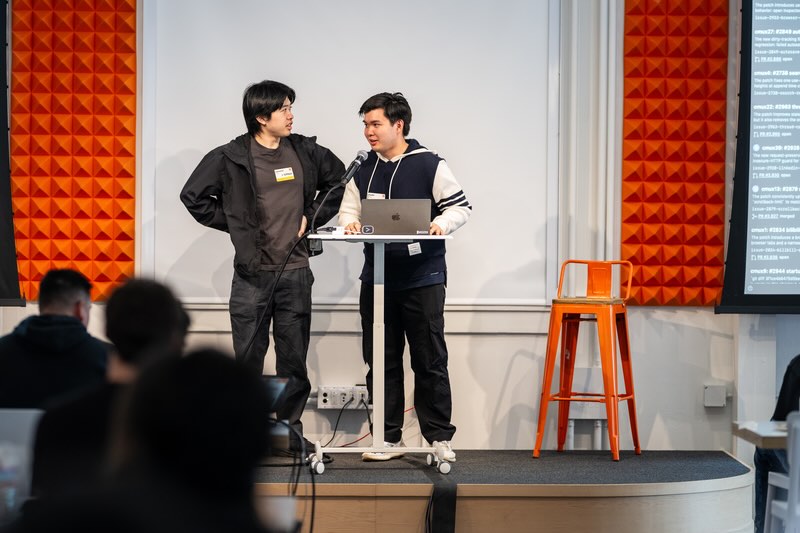
- @austinywang celebrated YC Demo Day P26, reminiscing about the S24 batch and sharing a moment with @garrytan loving the cmux project. (@mvanhorn)
- Supermicro and NVIDIA are pushing new RTX PRO Blackwell Server Edition GPUs optimized for enterprise data center and edge deployments. (@Supermicro)
- A new platform called Honen launched to turn company docs into personalized AI training, partnering with NVIDIA to bring AI literacy to 250,000 learners. (@esandurrani)
- @sydneyrunkle and @Vtrivedy10 discussed the hierarchy of loops and early software primitives that are beginning to solidify in modern development environments.
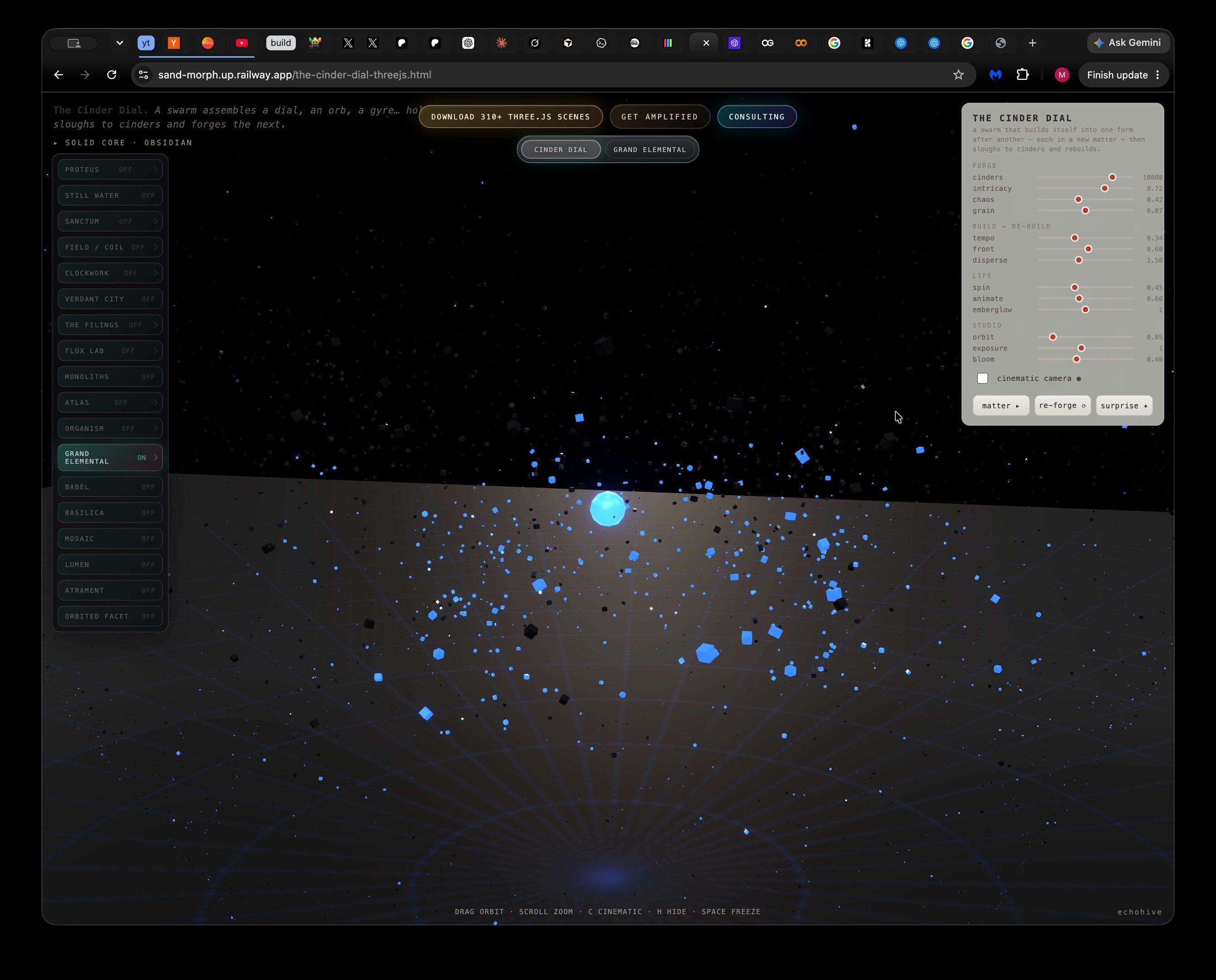
- @hive_echo continues to release mesmerizing three.js and WebGL interactive scenes, including the rose gyre and the new cinder dial, available via their Patreon and playground.
- @jaynitx shared Elon Musk's 5-step engineering algorithm, reminding builders that the most common mistake of smart engineers is optimizing a thing that should not exist.
The Economics of Frontier AI Are Cracking
The financial realities of building massive frontier models are becoming impossible to ignore. For years, the implicit assumption in Silicon Valley was that sheer scale would eventually lead to profitability for labs like OpenAI. However, leaked financials tell a drastically different story. "In 2025, OpenAI had $13.07 billion in revenue and $34 billion in costs," @edzitron reported, with @atmoio highlighting the "less-funny era of AI" and the dramatic vibe shift towards Anthropic sympathizers as the market digests these astronomical losses. The sheer math of spending tens of billions of dollars more than you bring in annually is forcing a reevaluation of the entire AI ecosystem.
These numbers lend massive credibility to darker predictions for the industry's current leaders. "Google will own AI on Phones. Anthropic will be acquired by Amazon. OpenAI will go bankrupt," @TheAhmadOsman stated bluntly. While catastrophic for the labs, this financial pressure perfectly explains the explosive valuations of companies operating at the applied control plane. @chamath pointed out that the $60 billion valuation of the SpaceX/Cursor merger is highlighting the next big phase of AI value creation: governance, control, and auditability across models. @levie reinforced this, noting that Cursor proved the value of a deep domain focus, writing, "Every aspect of their business was tuned to carve out ground and keep doubling down in a highly competitive space." As foundation models commoditize or bankrupt their creators, the real money is shifting to those who build the most reliable routing and application layers.
The Coding Agent Harness Era Begins
We are witnessing the death of basic prompt-and-response coding assistants. The frontier of software development has moved entirely to orchestration, with developers realizing that the harness around the model is far more important than the model itself. @beyang noted that understanding code is now the primary bottleneck in agentic coding, leading to tools like Amp that allow developers to stage changes and provide direct feedback on agent threads. "This is how I read code 75%+ of the time now," @sqs confirmed. The era of treating AI as a magic box is over, replaced by a rigorous engineering discipline focused on context window management, subagents, and strict permission structures.
The sophistication of these harnesses is scaling rapidly, fueled by new infrastructure tools. @0xbelorix outlined a 14-step roadmap for agent harness engineering, pointing out that most builders fail because they run Claude Code on default settings. "Self-improvement was never a property of the model. It's a property of the harness," they explained, emphasizing that enforcement hooks and memory are what prevent an agent from producing slop. To support this architectural shift, @vercel introduced "eve," an agent framework structured much like Next.js, which @shadcn enthusiastically endorsed as the definitive standard for building agents. Furthermore, as these loops become more complex, developers like @eliautobot are building self-hosted 3D worlds specifically to provide visibility into what state an agent is in and what it is currently doing, proving that observability is the next major frontier in AI tooling.
Radical Hardware Efficiency and Local AI Independence
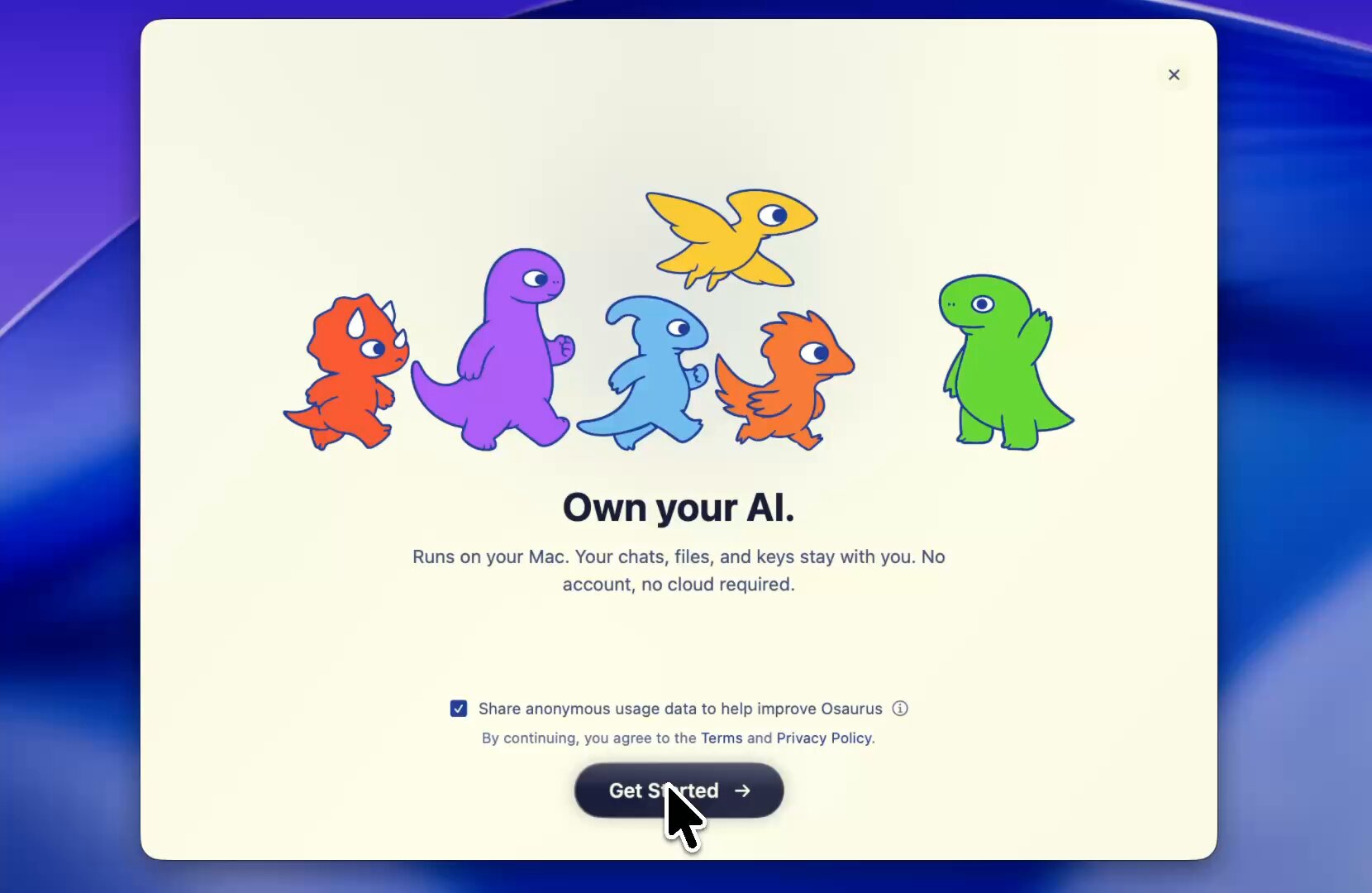
As cloud API costs remain a looming threat, the push for fully local, hyper-efficient AI has never been more aggressive. The desire to own the model outright is palpable across the developer community. "You've been renting your AI. This is what owning it looks like," @OsaurusAI stated, showing off a completely local, open-source model that requires no account, no key, and notably, no bloated Electron wrapper. This sentiment was echoed by @ashpreetbedi, signaling a growing resentment toward the subscription-heavy, cloud-locked ecosystems of major AI labs. Developers want sovereignty over their compute, and the tools to achieve it are arriving faster than expected.
The most mind-blowing hardware breakthrough of the day proves that local AI does not require a massive rig of enterprise GPUs. @FGuzmanAI managed to burn a full AI transformer model, complete with KV cache, directly into a custom digital chip. "56,000+ tokens/sec at just 80 MHz. I burned a full Transformer with KV cache into a custom chip," they revealed, running the @karpathy microGPT entirely on pure digital silicon without a CPU or GPU. @BrianRoemmele was blown away by the achievement, noting that it uses less energy than a calculator and prototyping on FPGA proves that massive on-device scaling is imminent. This type of radical hardware efficiency completely bypasses the massive cloud costs burdening companies like OpenAI, ensuring that the future of AI inference will ultimately be deeply embedded, highly efficient, and fundamentally local.
Open Source Models Reach True Frontier Parity
For years, the open source AI community has chased the coattails of proprietary giants, but the gap has officially closed. The release of GLM 5.2 by @Zai_org sent shockwaves through the community, offering a 754B parameter MIT-licensed model with a 1M context window and specialized reasoning capabilities. The most notable aspect of this release is not the benchmark scores, but the real-world viability reported by developers who have pushed it to its limits. The fact that an open weights model can now stand shoulder to shoulder with closed titans completely disrupts the remaining value propositions of the heavily funded frontier labs.
Developer @Sentdex provided an extensive breakdown of his weekend using GLM 5.2 exclusively, and the results are staggering. "I never needed to fallback to GPT 5.5 or Opus 4.8. This really blew my mind," he explained, noting that he ran it through both his own custom coding agent harness and Hermes with extreme success. He was unable to find a single task that the proprietary models could solve but the open model could not. The fact that a developer can now access frontier-grade intelligence, run it on-prem, and modify its architecture under an MIT license represents a massive tectonic shift. It validates the broader trend of the community moving away from rented APIs toward full ownership of their AI pipelines.
Standardizing AI Knowledge Formats
As agents become more autonomous and capable of executing complex, multi-step workflows, the way we feed them contextual information requires a fundamental overhaul. Simple text files and basic vector search are no longer sufficient for enterprise-grade reasoning. The industry is beginning to formalize how knowledge is structured for these systems. @firt shared a major announcement from Google Cloud regarding the Open Knowledge Format (OKF), which aims to bring standardization to how models ingest data.
This new open specification formalizes the LLM-wiki pattern into a portable format, representing a massive step forward for knowledge management. If AI agents are to act reliably across different harnesses and platforms, they need a standardized way to parse context. This shift mirrors the early days of the web, where standardized markup languages allowed disparate systems to communicate seamlessly. By pushing for an open specification, Google is positioning the infrastructure layer of AI memory as a shared utility, which will be crucial for developers building complex, stateful applications without locking themselves into a single provider's proprietary RAG architecture.
Sources

Elon Musk's Algorithm: the 5-Step process he uses to build everything
“Exclusive: OpenAI Losses Increased Nearly 8X in 2025, With Spending Hitting $34 Billion” “…The financial condition of OpenAI is deeply concerning. $38.53 billion in losses are astronomical, and far higher than most believed it would be. Losses also appear to be mounting year-over-year at a dramatic rate, and I’m not sure how this company finds a way toward any kind of sustainability or profitability….” @edzitron
56,000+ tokens/sec at just 80 MHz. 🤯 I burned a full Transformer with KV cache into a custom chip. Designed gate by gate as a 100% digital integrated circuit. Prototyped on a FPGA. (No GPU. No CPU) Just pure digital silicon running @karpathy microGPT, spelling out names on a tiny LCD. This is GateGPT 👇

Exclusive: I have seen OpenAI's audited financials for 2024 and 2025. In 2025, OpenAI had $13.07 billion in revenue and $34 billion in costs. $867 million of its revenue came from SoftBank, and $303 million came from Microsoft. https://t.co/0xpILXnURG
$60Billion. This is the first, but not the last, big exit at the application layer of AI. As product value accrues and accelerates upwards, the focus over the next few years will be firmly on the “control plane”: What gives organizations who want to go all in on AI the governance, control, auditability and business continuity across models and across time that they will need to firmly make the leap. This is the next big phase of AI value creation that the SpaceX/Cursor merger is highlighting.
Understanding the code is now a key bottleneck in agentic coding. Amp now shows you the diff for any thread and lets you stage and provide feedback on changes. https://t.co/vqDqVvbmaH
Introducing GLM-5.2: Frontier Intelligence, Open Weights - Significant improvements in coding and agentic tasks - Strong long-horizon capabilities with a 1M context window - Two levels of reasoning effort: GLM-5.2 (max) pushes the limits, while GLM-5.2 (high) strikes a strong balance between performance and token efficiency - MIT-licensed open weights - Same API pricing as GLM-5.1 Tech Blog: https://t.co/LAsxUdN0JZ Weights: https://t.co/g0A1C4UWx4 API: https://t.co/Kc3E22cbN7 Coding Plan: https://t.co/Nk8Y98HNhU Chat: https://t.co/WCqWT0qCQb


https://t.co/yoplqLmc06
closer look at the rose gyre made with @threejs you can play with it at the playground, link below https://t.co/7DL6mxHzCu

Agent harness engineering with Claude: 14-step roadmap from one agent to a self-improving system.
Introducing eve, an agent framework. 𝚊𝚐𝚎𝚗𝚝/ 𝚊𝚐𝚎𝚗𝚝.𝚝𝚜 𝚒𝚗𝚜𝚝𝚛𝚞𝚌𝚝𝚒𝚘𝚗𝚜.𝚖𝚍 𝚝𝚘𝚘𝚕𝚜/ 𝚜𝚔𝚒𝚕𝚕𝚜/ 𝚜𝚊𝚗𝚍𝚋𝚘𝚡/ 𝚜𝚌𝚑𝚎𝚍𝚞𝚕𝚎𝚜/ Like Next.js, for agents. https://t.co/ezUIGLkSqG