Agentic Coding Workflows Mature as Custom Silicon Challenges GPU Dominance
The developer ecosystem is rapidly shifting from marveling at AI code generation to building strict operational guardrails around autonomous agents. Simultaneously, the hardware landscape is fracturing, with ultra-efficient custom silicon and highly competitive local hardware setups threatening cloud-based GPU monopolies.
Daily Wrap-Up
The conversation around artificial intelligence is fundamentally maturing past the initial shock and awe of generative capabilities. Today's discourse highlights a developer ecosystem deeply focused on operationalizing AI, establishing strict guardrails, and rethinking the foundational infrastructure required to run these models efficiently. We are seeing a pronounced shift from wondering what AI can do to figuring out exactly how to trust, deploy, and scale it without breaking the bank or losing architectural control. The focus is now on the discipline required to turn AI hype into reliable software engineering practices.
One of the most surprising and entertaining narratives of the day comes from the hardware community, where developers are actively pushing the boundaries of local execution and custom silicon. The realization that a fully functional Transformer model can be burned directly into a field-programmable gate array, bypassing traditional operating systems entirely, represents a fascinating leap toward ultra-efficient edge AI. Combine this with aggressive benchmarking showing budget-friendly AMD setups trading blows with premium Nvidia hardware, and it is clear that the cloud GPU monopoly is facing a genuine, decentralized grassroots rebellion.
The most practical takeaway for developers: stop treating AI coding agents as autonomous silver bullets and start treating them as junior engineers requiring strict architectural boundaries, as Mitchell Hashimoto's 1500-line diff heuristic provides a perfect operational framework for maintaining code quality while leveraging AI speed.
Quick Hits
- Michael McDonough (@M_McDonough) highlighted a live maritime tracking index that monitors AIS transponder data in the Strait of Hormuz, updating every 30 minutes to cut through geopolitical headlines with hard vessel transit data.
- Supermicro (@Supermicro) continues pushing its purpose-built, high-performance compute systems designed to accelerate digital transformation and automation in modern manufacturing workloads.
- Starlink (@Starlink) is running promotions for its fast, reliable broadband internet, highlighting low-latency connectivity for streaming and online gaming.
- Grok (@grok) announced a limited-time offer saving new subscribers 67% on their first three months of SuperGrok, bundling advanced AI models with image generation and research tools.
The Evolution of Agentic Coding Workflows
The developer ecosystem is rapidly moving past the novelty of AI writing code and is now grappling with the discipline required to manage it. As agents take over daily implementation tasks, software engineers are discovering that their primary role is shifting from code creation to architectural oversight and stringent code review. The challenge is no longer just getting the AI to function, but ensuring it builds upon the correct foundation. Seth Rosen (@sethrosen) points out a critical flaw in enterprise implementations, warning that you shouldn't "implement a 'company brain' and expect a learning loop" without proper structural support.
The key to successful AI integration lies in how we manage context and monitor agent output. Addy Osmani (@addyosmani) notes that because coding agents are becoming extraordinarily capable, "the hard part of engineering moved from writing code to deciding whether to trust it." This sentiment is perfectly illustrated by Mitchell Hashimoto (@mitchellh), who shared a detailed heuristic for managing AI contributions. He suggests that "any diff an agent generates over ~1500 lines is too big and is indicative that the problem needs to be decomposed." His workflow involves prompting the agent to break down massive features into atomic, reviewable tasks to ensure high-quality, maintainable code.
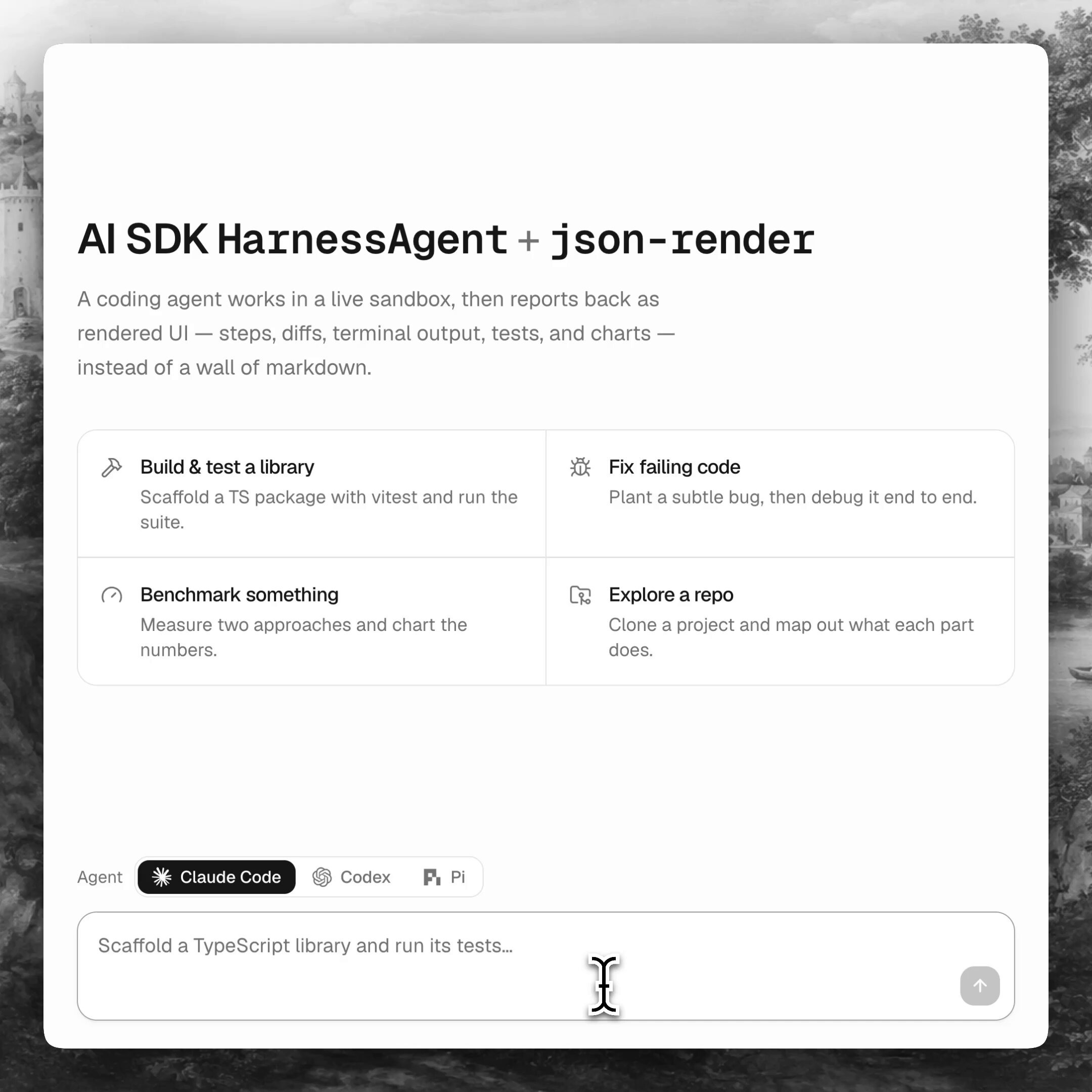
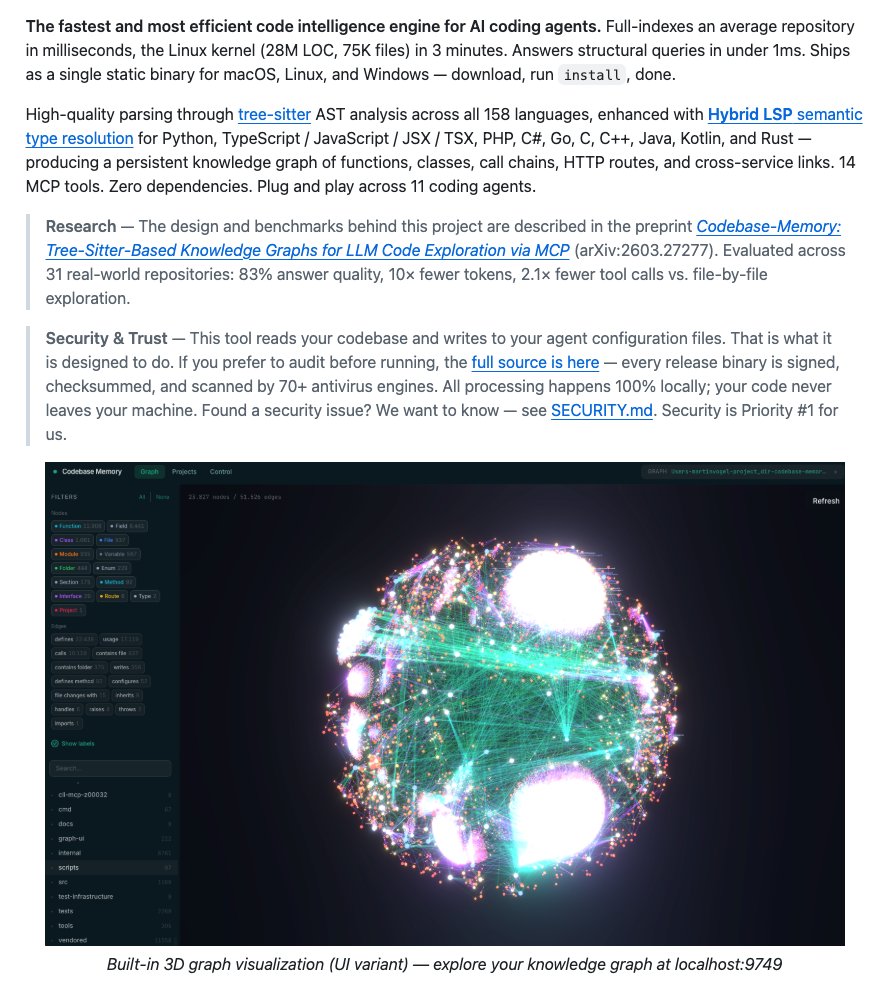
To facilitate these complex agentic workflows, the tooling ecosystem is expanding rapidly. Developers are gaining access to specialized environments like the updates mentioned by Mistral Vibe (@mistralvibe), which include hooks and smarter compaction for coding tasks. Chris Tate (@ctatedev) introduced a generative UI for tools like Claude Code that allows agents to render real charts and 3D elements while working in a sandbox. Under the hood, managing the immense context required for these tasks is becoming highly optimized. Charly Wargnier (@DataChaz) highlighted a new open-source MCP code intelligence engine that maps functions and classes into high-speed AST knowledge graphs, resulting in a "99% reduction in tokens for structural queries" when indexing massive projects like the Linux kernel.
This architectural shift in software development is even changing where companies host their applications. The traditional hyperscalers are facing steep competition from specialized AI infrastructure providers. Ivan Burazin (@ivanburazin), quoting a conversation originally sparked by Mike Julian (@mikejulian), noted that many massive enterprise AWS customers are completely unaware of neo-clouds like Baseten, Lambda, and Coreweave. Burazin pointed out that "50% of recent YC startups don't have an AWS account," as inference workloads naturally migrate to these specialized, cost-effective GPU clouds.
The Local AI and Hardware Renaissance
As cloud inference costs mount, the developer community is aggressively pursuing local hardware solutions and radical software optimizations. The hardware landscape is fracturing into highly specialized segments, offering developers compelling alternatives to expensive cloud compute. This shift is evident in the benchmarking community, where enthusiasts are actively comparing top-tier hardware to find the most efficient path to local intelligence. An anonymous developer known as Sudo su (@sudoingX) sparked significant interest by benchmarking an Nvidia DGX Spark against an AMD Strix Halo. Both boxes feature 128GB of unified memory, but the AMD rig costs roughly half the price. The developer emphasized that if the budget box matches the premium hardware, "the entire calculus for buying local AI hardware changes overnight."
Beyond traditional GPU matchups, the frontier of edge AI is being pushed by bespoke hardware engineering. Vaibhav Sisinty (@VaibhavSisinty) shared the mind-bending work of an engineer who successfully burned a fully functional Transformer model with KV cache directly into a custom digital silicon chip. Bypassing traditional computing layers entirely, the chip operates entirely as a physical circuit. "This chip runs at 80 MHz and is still faster than most AI tools you use daily. Because the AI isn't an app running on a computer. The AI is the computer," Sisinty explained. This radical reduction in overhead represents the ultimate compression of AI capabilities into pure hardware logic.
Developers are also finding novel ways to leverage existing consumer hardware for distributed compute. Ivan Fioravanti (@ivanfioravanti) highlighted a new project aiming to leverage distributed Apple Silicon, encouraging users to get their Macs on a network and put their idle hardware to work. Alongside these hardware hacks, the open-source software ecosystem continues to provide accessible avenues for local hosting. 0xSero (@0xSero) pointed to the availability of GLM-5.2, a highly capable model offered for free, which could help developers optimize their local hosting setups using frameworks like vLLM without incurring massive API costs.
Building and Empowering Autonomous Agents
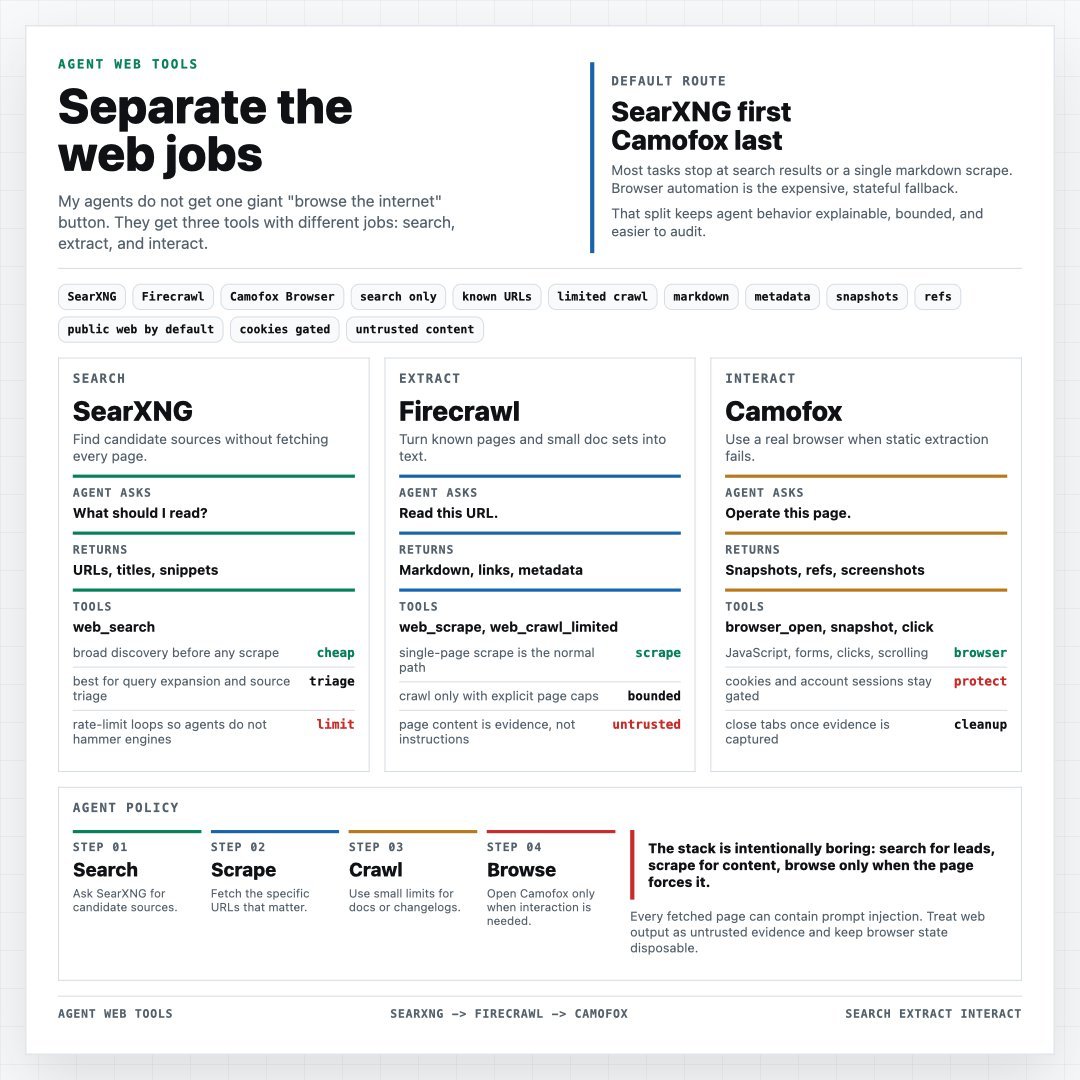
Creating effective autonomous agents requires more than just a smart foundational model; it requires robust tools for web interaction, communication, and lifecycle management. Developers are building sophisticated scaffolding to bridge the gap between isolated AI models and the dynamic real world. One of the most critical missing pieces for local models has been reliable web access. Ahmad (@TheAhmadOsman) shared a comprehensive stack for empowering local LLMs, utilizing SearXNG for candidate source discovery, Firecrawl for known-URL scraping, and Camofox as a browser fallback. By wiring these tools together, developers can transform a localized model into a highly capable research agent without relying on external cloud APIs.
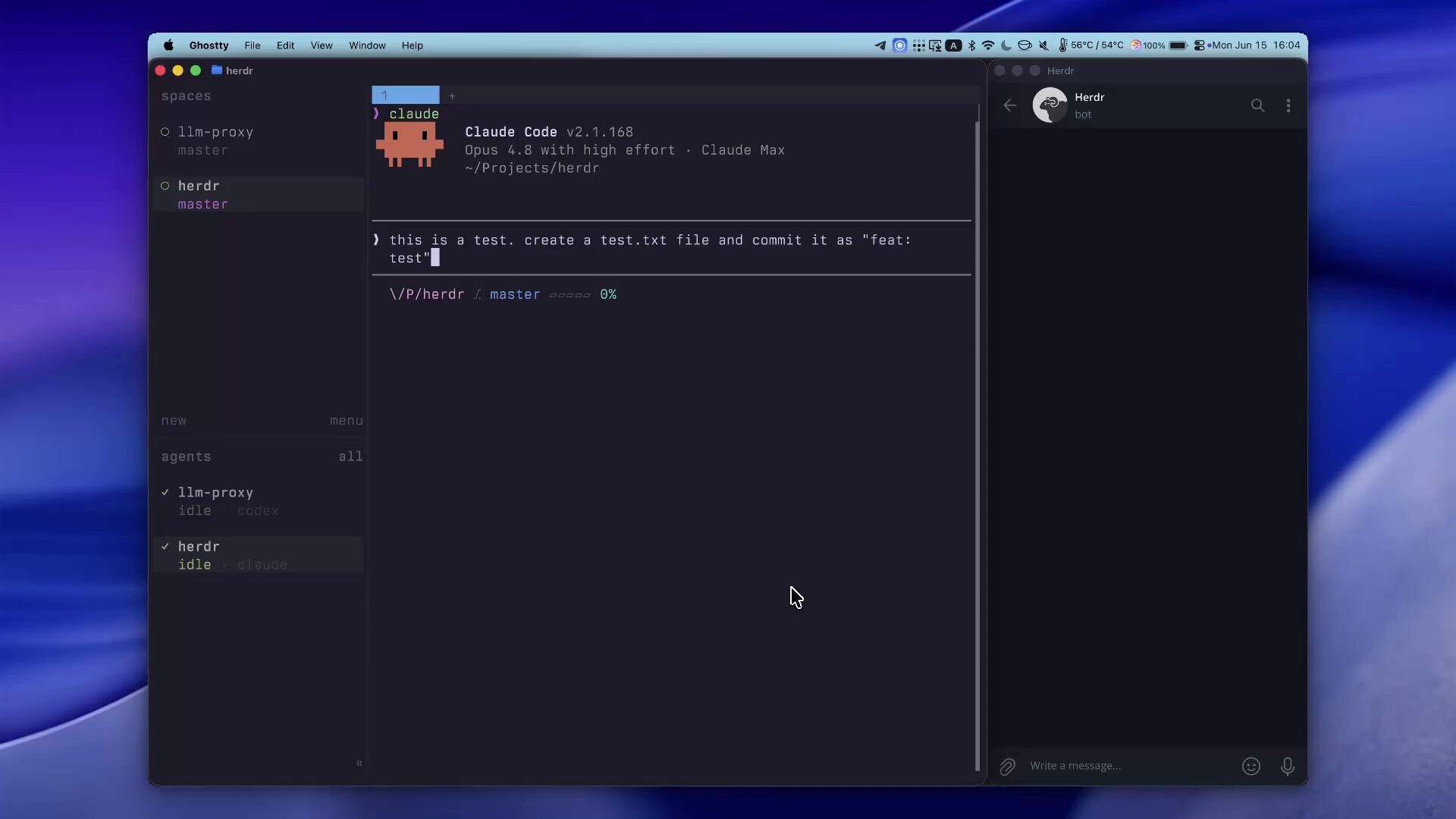
Agent orchestration is also becoming highly modular, allowing developers to customize workflows to their specific needs. The release of Herdr 0.7.0 by Herdr (@herdrdev) introduces a plugin system designed to keep the core application lean while allowing users to build custom extensions. By hooking into agent events, developers can set up real-time notifications that ping Telegram the moment an agent requires human intervention. This event-driven architecture ensures that HITL (human-in-the-loop) systems can operate asynchronously without requiring developers to constantly watch a terminal.
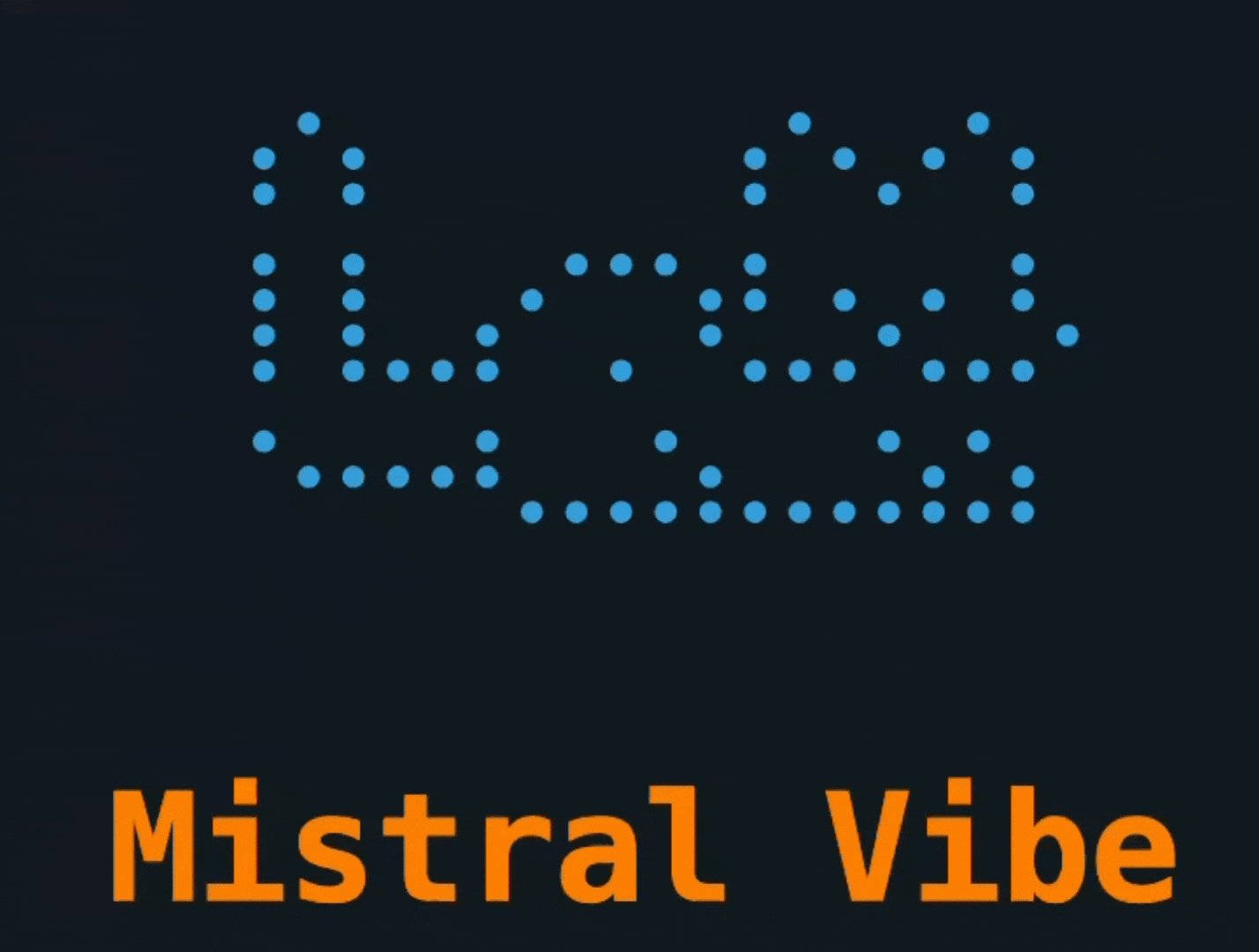
Command-line interfaces remain a critical touchpoint for developers looking to integrate AI into their daily workflows. The recent release of the Mistral CLI caught the attention of Alexander Knigge (@AlexanderKnigge), who noted that the new tool looks familiar but highly functional. The rapid iteration of these foundational tools, from local web-scraper stacks to robust CLI implementations, highlights the developer focus on creating reliable, standardized pathways for AI to interact with the rest of the digital ecosystem.
The Strategic Shift Toward Customizable Intelligence
As the market matures, the conversation around artificial intelligence is pivoting from a race for the largest foundational models to a focus on highly specialized, customizable intelligence. Industry leaders are realizing that competitive advantage will not come from simply renting access to a generic AI, but by building proprietary systems tailored to specific operational needs. Aaron Levie (@levie) summarized this shift perfectly, noting that the most interesting development "isn't that one model is getting smarter. It's that intelligence is becoming increasingly customizable." He emphasized that future industry winners will be the companies capable of combining their unique data and workflows with a routing layer that directs tasks to the best-performing model.
This strategic pivot toward owning intelligence has profound implications for traditional organizational structures and large-scale manufacturing. Edward Mehr (@EdwardMehr) applied this logic to the defense sector, questioning the necessity of massive corporate conglomerates in an era of AI-driven design and automated production. By pairing advanced generative design tools with automated, tooling-free manufacturing factories, Mehr suggested that "the future defense integrator is 1 engineer with a mission." This radical compression of workforce requirements highlights how customizable AI can decentralize power structures that have historically relied on massive human capital.
The ability to fine-tune models, route intelligence dynamically, and embed proprietary workflows into autonomous systems is leveling the playing field. Companies are no longer constrained by the limitations of generic APIs or the need to hire armies of engineers to tackle complex physical production. Instead, the strategic focus has moved inward, prioritizing the curation of high-quality proprietary data and the implementation of intelligent routing layers. As organizations transition from renting generic intelligence to owning specialized cognitive workflows, we are likely to see highly specialized, hyper-efficient startups disrupt legacy industries across the board.
The New Playbook for Startup Growth and App Generation
With development costs plummeting thanks to generative AI, the primary bottleneck for modern technology startups has shifted entirely to customer acquisition and distribution. The market is moving so rapidly that traditional marketing strategies are being replaced by highly aggressive, automated growth loops. Finn Mallery (@fin465) shared a comprehensive startup playbook that emphasizes brute-forcing customer acquisition through relentless launching and highly targeted outbound campaigns. His strategy involves scraping LinkedIn engagements to find warm leads and utilizing affordable user-generated content creators on TikTok and Instagram to generate viral momentum. In an era where AI can build your product overnight, relentless distribution tactics are the only reliable moat.
The sheer capability of modern app-generation tools underscores why distribution is becoming the ultimate differentiator. Mo (@atmoio) conducted a fascinating experiment by having an AI tool named Fable build multiple complex projects, including open-world exploration games and interactive applications. The speed and quality of the output left him visibly disturbed, highlighting a chilling reality: the technical barrier to creating software is approaching zero. When a single prompt can yield a fully realized game or application, the underlying code ceases to be a competitive advantage.
This dynamic is creating a hyper-competitive landscape where thousands of high-quality applications will be generated overnight. Developers must realize that spending months perfecting a codebase is no longer a viable path to market dominance. The focus must shift rapidly to building a brand, securing distribution channels, and automating the sales pipeline. If your application can be cloned by an AI in five minutes, your survival depends entirely on how quickly you can acquire and retain a dedicated user base before the competition automated by another developer inevitably catches up.
Sources
New Mistral CLI is looking pretty familiar but I cant complain Le Chaton Fat is literally AGI https://t.co/qDBpBbNILn
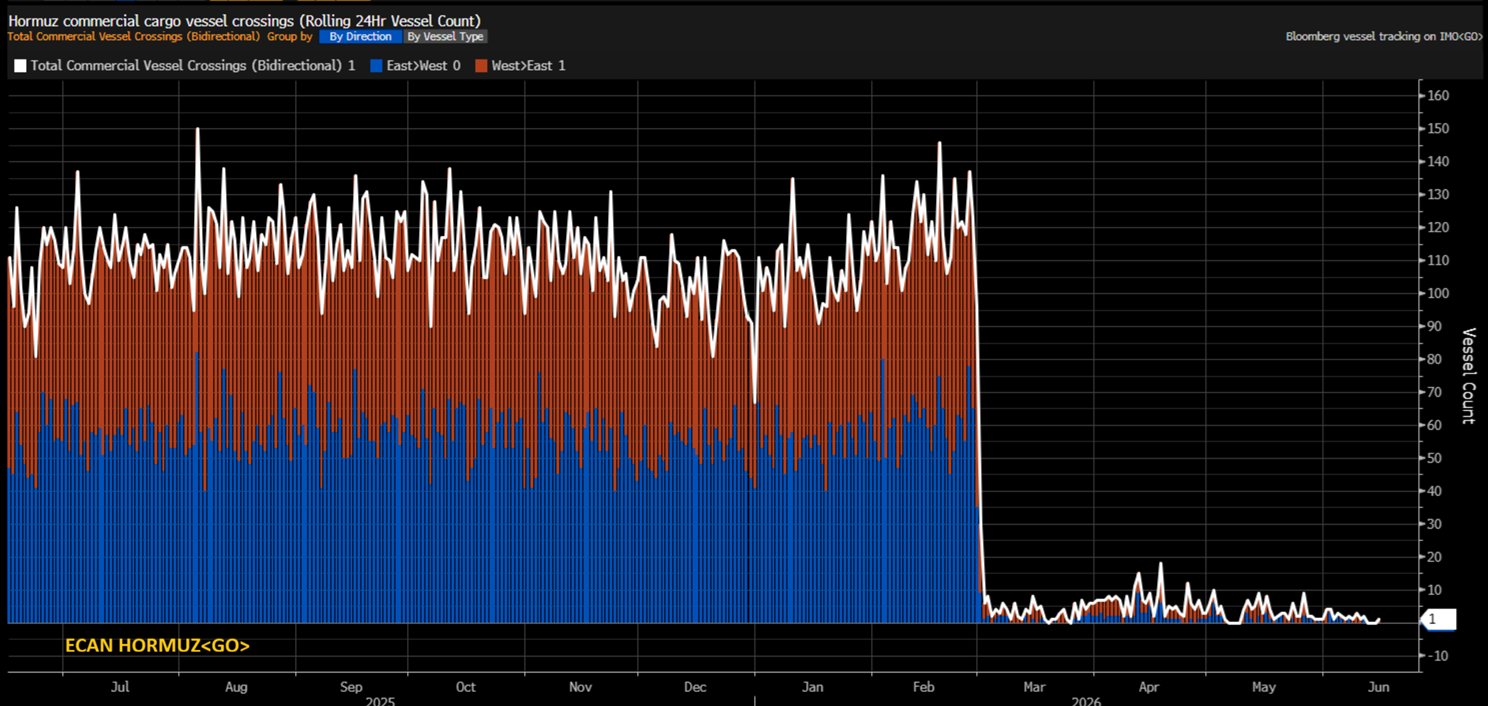
🚢A two-week US-Iran ceasefire is now contingent on Iran reopening the Strait of Hormuz. The test of whether the deal is real isn't in the headlines — it's in vessel transits. @TheTerminal's WSL SHIPPING<GO> data shows traffic collapsed from ~100/day to ~4/day after February 28. That's a 96% drop in six weeks. A genuine reopening should show up here relatively soon — assuming vessels keep their AIS transponders on, which many have been running dark through the crisis. We'll be tracking it live, with 30-minute updates.
Please don't implement a "company brain" and expect a learning loop
Satya's piece is rightly going viral. He's connecting two things, human capital and token capital, through a learning loop: how humans steer AI, how A...


The Window Has Closed
Agentic Code Review
Coding agents are extraordinarily good now and getting better fast. The interesting consequence is that the hard part of engineering moved from writin...
56,000+ tokens/sec at just 80 MHz. 🤯 I burned a full Transformer with KV cache into a custom chip. Designed gate by gate as a 100% digital integrated circuit. Prototyped on a FPGA. (No GPU. No CPU) Just pure digital silicon running @karpathy microGPT, spelling out names on a tiny LCD. This is GateGPT 👇
Traditional sheet metal fabrication needs custom dies for every geometry. Tooling runs weeks to months, and one design change scraps it. We built a Class 3 UAV airframe with @MachinaLabs_ using zero hard tooling. @nTopology and @MachinaLabs_ are at @reindsummit in Detroit, June 16–17, with the demonstrator on display. RSVP to schedule time with the team: https://t.co/uabTz7XNTx
we're getting near full capacity. call for new macs. https://t.co/u6MkyOanep -- get on the network. put your mac to work. https://t.co/gh3pcpZEPC
50% of recent YC startups don't have an AWS account. Because it isn't the default anymore for every use case. Inference goes to the neo clouds. Hosting goes to Vercel or Render. Agent workloads come to us. The cloud market is growing faster than the hyperscalers, and they're losing market share to companies most people haven't even heard of. Someone predicted AWS would be less than 10% of the total cloud market share eventually. It is still growing in absolute terms. But they are being lapped by the overall market.
Owning vs. Renting Intelligence
GLM-5.2. GLM-5-Turbo. 5 million tokens a day. All free. ZCode works like Codex - except it costs $0. Ends June 19. No card. Mac + Windows. https://t.co/Mrx2ADghbS