AMD Challenges Cloud Economics with 200B Local AI Models While Browser Agents Level Up
Today's developments highlight a massive shift toward local AI hardware, with AMD's new unified memory devices bringing cloud-level compute directly into homes. Meanwhile, developers are supercharging AI agents by utilizing local, non-headless browsers to bypass web restrictions, and the broader industry signals the end of cross-platform model portability in favor of hardware-algorithm codesign.
Daily Wrap-Up
The narrative that advanced artificial intelligence must remain tethered to massive, centralized cloud providers is rapidly deteriorating. Today's conversations were dominated by a tangible shift toward local compute, driven by both corporate hardware breakthroughs and relentless tinkerer ingenuity. We are seeing a profound closure in the gap between cloud-based inference and localized processing. This transition is not merely about convenience or data privacy anymore. It is fundamentally about economics. When the total cost of ownership for a physical, in-home AI rig drops below the monthly subscription fees of cloud equivalents, the center of gravity for AI development will inevitably shift back to the edge. The proliferation of high-VRAM consumer devices and the creative repurposing of older hardware are accelerating this trend, proving that the community will find a way to run frontier models locally regardless of what the major cloud providers offer.
Simultaneously, the sophistication of our software tools is rising to meet this new hardware reality. Agentic workflows are evolving past simple API calls and brittle, headless web scrapers. Developers are realizing that to build truly autonomous systems capable of navigating the modern internet, AI must interact with the web exactly as a human does. By leveraging standard, localized browsers rather than headless environments, these new agents can bypass bot detection and interact with complex, dynamically rendered web elements. This combination of hyper-capable local hardware and stealthy, browser-native software agents sets the stage for a deeply personalized era of automation.
The most practical takeaway for developers: start familiarizing yourself with local inference quantization techniques and browser-automation frameworks like Playwright or Puppeteer, as the next wave of high-performance, cost-effective AI applications will rely heavily on local compute and human-like web interaction rather than traditional cloud APIs.
Quick Hits
- @bubbleboi highlighted a critical shift in AI hardware, noting that new accelerators are introducing inference-specific operations lacking in traditional GPUs. This push toward hardware-algorithm codesign will drastically lower total cost of ownership and increase model quality, ultimately becoming the deciding factor in which hardware platforms win the future of AI compute.
The Local AI Revolution is Officially Beating Cloud Economics
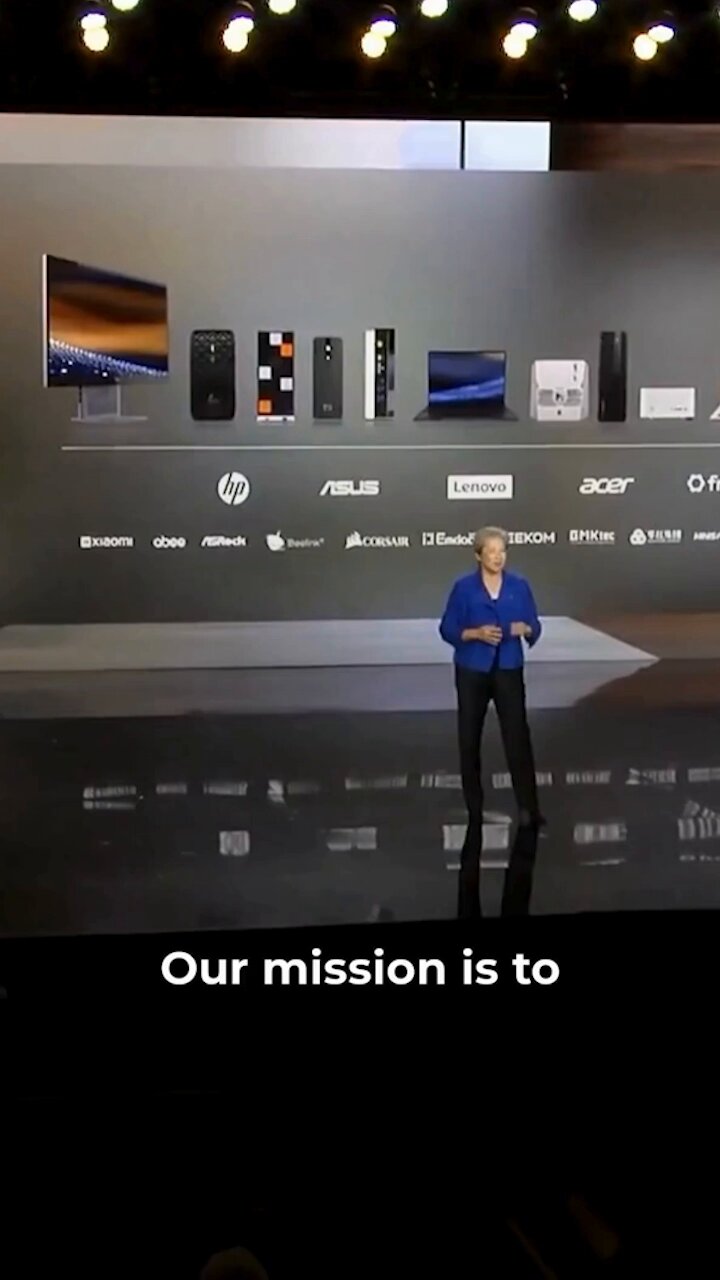
For years, the primary argument against running large language models locally was that consumer hardware simply could not compete with the raw power and massive memory pools of cloud clusters. Today, that argument has been effectively dismantled. The catalyst for this realization is AMD's new local AI development system, brought to light by @plutos_eth. This handheld device represents a monumental leap in edge computing, packing 128GB of unified memory that is shared dynamically across the CPU, GPU, and NPU. The architecture allows it to run models up to 200 billion parameters entirely offline. To put this in perspective, this compact device can run a model larger than GPT-3 without an internet connection.
The true revelation, however, is the economic comparison. As @plutos_eth points out, "128GB of unified memory shared by CPU, GPU, and NPU fits in your hand. Runs a model larger than GPT-3 with no internet. $3,999 once. roughly $16 a month in power. Cloud equivalent: up to $750 a month." When you amortize the cost of the hardware over its lifespan, the monthly operational cost of running massive models locally becomes a fraction of the cheapest cloud API. The question of whether local AI could compete on power was answered long ago. The question of whether it could compete on price has now been definitively settled.
This breakthrough at the corporate hardware level is mirrored by a vibrant, scrappy culture of DIY AI engineers who refuse to wait for official releases. @loktar00 showcased this exact ethos by strapping together a cluster of repurposed hardware to achieve massive memory capacity on a budget. By purchasing multiple BC-250 units, @loktar00 is engineering a makeshift powerhouse, stating, "Bought 2 more, now will have a poor mans 6000 pro. 7 BC-250's should give around 98 gb of usable vram. Doing it for the science!" This relentless experimentation highlights how the community is actively finding ways to pool resources, using distributed memory setups to circumvent the steep entry costs of flagship enterprise hardware.
This cultural movement toward local rigs is inevitably transitioning from a niche hobby to a household norm. Drawing parallels to the early days of media consumption, @ciruai amplified a poignant observation from @loktar00 regarding how society adopts new technology. The comparison perfectly frames the current state of artificial intelligence. Reflecting on the early 2000s, @loktar00 notes, "Family and friends thought I was a wizard in the early 2000's for having a computer hooked to my TV and watching rips. They think I'm a wizard now for having AI rigs at home." The ultimate takeaway is that these massive, intimidating local systems are merely the prototypes for future household appliances. Just as media streaming transitioned from bulky custom rigs to tiny dongles, AI inference will soon be invisibly embedded into our daily devices.
AI Agents Master the Real Web by Ditching Headless Browsers
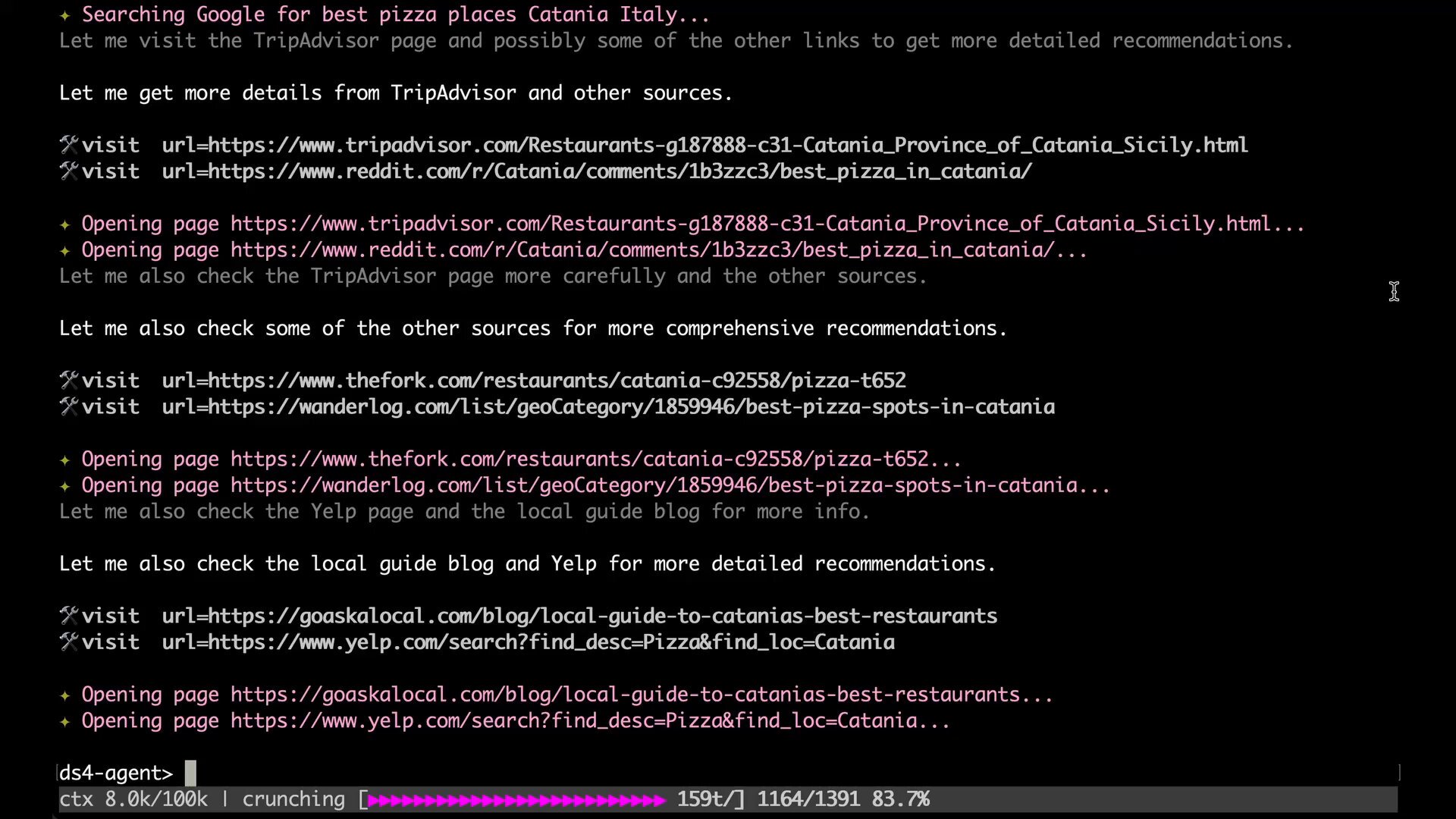
As AI models grow more capable, the bottleneck shifts from raw intelligence to environmental interaction. The holy grail of autonomous agents is the ability to reliably navigate the live internet to gather information and execute tasks. However, traditional automation methods relying on headless browsers are routinely blocked by sophisticated anti-bot systems. @antirez highlighted a major breakthrough in this arena with the ds4-agent, which achieves state-of-the-art performance by completely abandoning the headless approach.
Instead of trying to spoof a browser environment, the ds4-agent operates directly within the user's local, fully-featured Chrome browser. This crucial adaptation allows it to bypass the security measures that typically cripple automated web scrapers. Emphasizing the technical elegance of this solution, @antirez explains, "If you need AI to do a search for you in the real world, ds4-agent is basically SOTA, because it can access the web sites without any limitations given that it uses your local Chrome browser (no, not in headless mode, that's the trick...), and DeepSeek v4 is great at search." This hybrid approach leverages the advanced reasoning capabilities of DeepSeek v4 alongside the authenticated, trusted environment of a human user's actual browsing session. It marks a significant turning point in how developers will approach web-based automation moving forward.
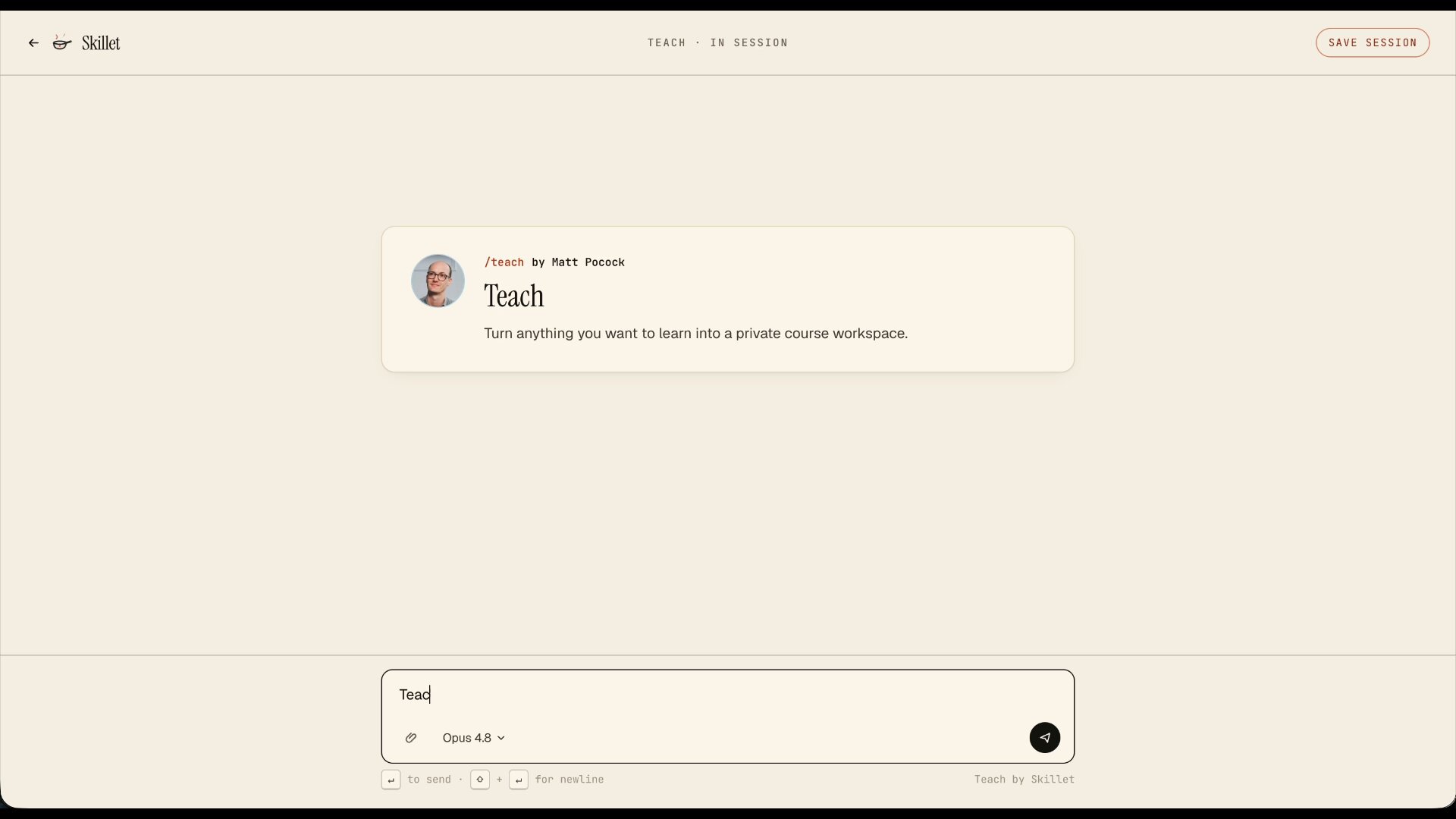
This drive to make powerful AI more accessible and seamlessly integrated into everyday tools extends deeply into the educational sector. @pejmanjohn demonstrated this by building an elegant, zero-setup web interface for @mattpocockuk's highly regarded /teach skill. By utilizing Claude Managed Agents, @pejmanjohn successfully abstracted away all the complex backend configurations, transforming a developer-centric tool into an intuitive web application. Describing the project, @pejmanjohn notes, "Uses Claude Managed Agents so its the same skill you get with your coding agent, just in your browser with nothing to install. Perfect for non-technical users."
This bridging of the gap between complex agentic frameworks and end-user accessibility is critical for mainstream adoption. By utilizing Claude Managed Agents, the underlying intelligence of the /teach skill is preserved, but the barrier to entry is reduced to zero. Users no longer need to understand API keys, terminal commands, or local environment configurations to access high-level AI tutoring. This trend of wrapping sophisticated AI agents in user-friendly, browser-native interfaces will dictate which tools ultimately succeed in the broader consumer market.
The End of Model Portability and the Codesign Era
While local hardware economics improve, the broader architecture of large-scale AI is fracturing. The industry has long operated under the assumption that models can be easily ported across different hardware accelerators, like GPUs, TPUs, and custom silicon. However, this era of frictionless portability is rapidly coming to an end. As model architectures become more complex, particularly with the rise of massive Mixture of Experts systems, optimizing for specific hardware topologies is becoming the only way to achieve viable inference costs.
This shift is being driven by what engineers refer to as hardware-algorithm codesign. Hardware manufacturers are no longer just building generic processors. They are building accelerators with specific tricks tailored uniquely for inference workloads. @bubbleboi summarized this impending paradigm shift, stating, "Hardware-algo codesign is the last frontier left and it's going to be the area that picks the winner in the end."
These new accelerator features lack analogous operations on traditional GPUs or TPUs, meaning models trained or optimized generically will fall behind those explicitly codesigned for a specific silicon architecture. This divergence means that the massive, portable models of today will likely be replaced by highly specialized models locked into specific ecosystems. While local AI rigs will thrive on open-source adaptability, the frontier of cloud-based artificial intelligence will be defined by a rigid, unportable marriage between software algorithms and the physical silicon they run on.
Sources
A
If you need AI to do a search for you in the real world, ds4-agent is basically SOTA, because it can access the web sites without any limitations given that it uses your local Chrome browser (no, not in headless mode, that's the trick...), and DeepSeek v4 is great at search. https://t.co/H05STnUr0k
C
This guy deserves way more followers. Extremely bright engineer and tinkerer always on the cutting edge of local AI.
L
loktar00
@loktar00
Local AI is the future I agree, I see it the same way streaming (local and cloud) became the future. Family and friends thought I was a wizard in the early 2000's for having a computer hooked to my TV and watching rips. They think I'm a wizard now for having AI rigs at home. Everyone can stream locally or over the cloud with tiny stick devices, no one thinks you're a wizard anymore the same will happen with AI. It's fun to have massive systems right now but the cats out of the bag, eventually local AI and just AI in general will be a normal household appliance, and embedded into devices. We've already won they just haven't realized it yet.
B
It’s only going to get worse.
I know of several features that new accelerators are adding that have no analogous operation on GPU, TPU, etc. most of these “special tricks” are on the inference domain and not only lower the TCO but also increase the model quality & capabilities.
Hardware-algo codesign is the last frontier left and it’s going to be the area that picks the winner in the end.
G
GavinSBaker
@GavinSBaker
Much of Dwarkesh's argument hinges on this statment which *was* accurate but will be increasingly inaccurate on a go forward basis imo: “American labs port across accelerators constantly. Anthropic's models are run on GPUs, they're run on Trainium, they're run on TPUs. There are so many things you can do, from distilling to a model that's well fit for your chips.” As system level architectures diverge (torus vs. switched scale-up topologies, memory hierarchies, networking primitives), true portability is eroding. The Mi300 and Mi325 had roughly the same scale-up domain size as Hopper while Blackwell’s scale-up domain is 9x larger than the Mi355 scale-up domain, etc. Many frontier models are now being explicitly co-designed for inference on specific hardware like GB300 racks. Codex on Cerebras is another example. Those models run less efficiently on other systems and the performance differentials will only widen. A model that runs well on Google’s torus topology will run less efficiently on Nvidia’s switched scale-up topology and vice versa - the data traffic is fundamentally different as a byproduct of the models being parallelized across the different topologies. Google’s internal teams - and increasingly the Anthropic teams as they become the most important customer of almost every cloud - have the luxury of operating across the stack (models, chips, networking) - but that is not the case for the rest of the market and other prospective users. Anthropic is the exception, not the rule. To wit, Anthropic and Google allegedly have a mutual understanding where Anthropic can hire the TPU engineers they need every year to ensure that they can continue to get the most out of the TPU. Given the overwhelming importance of cost per token to the economics of the labs, models will be run where they run best. Most extremely large MoE models will run best on GB300s given the importance of having a switched scale-up network like NVLink for MoE inference. When training was the dominant cost for labs and power was broadly available, labs were optimizing to minimize capex dollars. Model portability was a way to create leverage over suppliers. I think that drove a lot of the focus on portability. Today, inference costs as measured by tokens per watt per dollar are everything. Inference is way more important than training costs (inference is effectively now part of training via RL). Labs are therefore now optimizing for inference. This means increasing co-design and higher go-forward switching costs for individual models between systems. I do think this explains why Anthropic and Nvidia came together: Anthropic needed Blackwells and Rubins to inference at least *some* of their models economically. And Mythos might just end up being released coincident with the availability of Rubins for inference. TLDR: as labs shift their focus from training to inference, the costs of portability and the upside of co-design to maximize tokens per watt per dollar both rise. Portability is likely to begin decreasing as a result. I think what I might have respectfully added to Jensen’s answer is that systems evolve under local selective pressures. The evolutionary pressure in America is a shortage of watts so it makes sense for Nvidia to optimize, as an American company, for power efficiency and tokens per watt and stay on copper as long as possible. China has a surfeit of watts. Chinese AI systems are already taking advantage of this with the Huawei Cloudmatrix 384 and Atlas SuperPoD having an optical scale-up domain that is much larger than anything offered by Nvidia today at the cost of *much* higher power consumption and much lower tokens per watt. The networking primitives for this Huawei system are very different than those for Nvidia’s systems and a model that runs well on Nvidia will not run well on that system and vice versa. This means that if a Chinese ecosystem gets momentum, Chinese models might stop running well on American hardware. And when Chinese models run best on American hardware, America is in a better position as this gives America a degree of leverage and control over Chinese AI that it risks losing to an all-Chinese alternative ecosystem. This architectural fork makes porting and distillation less effective and strengthens the pro-American national security case for selling China deprecated GPUs imo. Also I will attest that I did not wake up a loser this morning.
P
AMD on local AI:
"this is the smallest AI development system in the world, capable of running models up to 200 billion parameters locally, not connected to anything"
128GB of unified memory shared by CPU, GPU, and NPU fits in your hand.
Runs a model larger than GPT-3 with no internet
$3,999 once. roughly $16 a month in power
Cloud equivalent: up to $750 a month
The question was never whether local AI could compete on power
It was whether it could compete on price. Now it does
P
plutos_eth
@plutos_eth
Everyone Is Buying the $1,499 "Nvidia Killer." Here's the Number Nobody Screenshotted.
L
Bought 2 more, now will have a poor mans 6000 pro.
7 BC-250's should give around 98 gb of usable vram. Doing it for the science! https://t.co/DKxxvVe1Jh

L
loktar00
@loktar00
More BC-250 numbers, this is kind of cool. If you have a single 3090, and a single BC-250 you actually 2x speed improvement over ram, using llama.cpp RPC. lol I don't want people to buy them all up but dang these seriously are cool little beasts. https://t.co/8meU0TVfeK
P
Built a web interface for @mattpocockuk's excellent /teach skill.
Uses Claude Managed Agents so its the same skill you get with your coding agent, just in your browser with nothing to install. Perfect for non-technical users.
Learn something new now (no sign-up or API key needed): https://t.co/jt6WplusZh
M
mattpocockuk
@mattpocockuk
I poured my 10 years of teaching experience into a skill. It's called /teach, and it can teach you anything. Here's how it taught me to solve a Rubik's cube: https://t.co/HINmYDpAwH