Compound AI Systems Eclipse Frontier Models as Local Inference Hits Mini PCs
Today's ecosystem update highlights a major paradigm shift towards orchestration and local infrastructure. Developers are moving away from single monolithic models, favoring compound routing systems, autonomous cloud agents, and surprisingly powerful local hardware setups that promise complete AI sovereignty.
Daily Wrap-Up
The AI ecosystem is undergoing a structural polarization right before our eyes. On one side, we have the immense power of orchestrated, cloud-based compound systems capable of running long-horizon enterprise workflows. On the other side, there is a rapidly accelerating movement toward edge computing and personal AI sovereignty, driven by genuine fears of regulatory black swans and ecosystem lock-in. The overarching narrative today is that raw model intelligence is becoming a commodity. The actual value has shifted entirely to how we route, combine, and host these capabilities.
For developers, the focus must shift from prompt engineering to system architecture. The conversation has moved past asking a single model a single question. We are now looking at self-improving agent loops, multi-agent harnesses, and dynamic inference routing that balances cost against capability in real time. If your application relies on a hardcoded call to a single closed model, you are building on increasingly fragile ground. The smartest engineers are treating models as swappable components inside a larger orchestration engine.
The most entertaining and surprising moment today comes from the hardware space. An independent developer managed to outperform massive corporate engineering teams by building a pixel-by-pixel driver that runs full Transformer models with KV cache on a custom FPGA chip at 80 MHz. This is alongside the revelation that mini PCs are now running 235 billion parameter models entirely locally. The barrier to entry for frontier-level intelligence is collapsing. The most practical takeaway for developers: abstract your model calls immediately, implement a routing layer to dynamically shift between frontier and local models based on the task, and begin containerizing your infrastructure to support cloud-based autonomous agents.
Quick Hits
- @MatthewBerman shares four incredible open-source AI projects including a new search engine, local NotebookLM alternative, and a tool to save 90% on AI API bills.
- @constants2026 highlights that Claude can now generate full songs natively, beating dedicated platforms like Suno entirely for free.
- @grok announces a limited time 67% discount for the first three months of SuperGrok to attract users to its advanced research and image generation models.
- @DanHollick launches "Making Software" in early access, a massive educational resource featuring 70,000 words and over 600 custom illustrations.
The Rise of Compound Systems and Intelligent Routing
Relying on a single large language model is quickly becoming an architectural anti-pattern. The smartest minds in the industry are realizing that orchestration and routing layers will capture immense value. As model capabilities equalize across different providers, the ability to dynamically route prompts based on cost, capability, and regulatory risk is becoming a massive competitive advantage. @levie points out that this routing layer is exploding in value for three distinct reasons: cost optimization, capability maximization, and risk mitigation against sudden government regulations.
This sentiment is echoed fiercely by @iamtrask, who views the launch of new compound model APIs as a massive structural shift. He argues that frontier AI companies will never own the frontier again because combinations of models will always outperform individual models. This is the gateway to vastly more data and massive leaps in compute efficiency. He notes that the AI scaling laws always win out over single-model hubris.
Finally, developers are realizing that even how we query these models needs optimization. @morganlinton shares his shock at achieving the same complex results using lower effort levels on newer models like Fable compared to maximum effort settings on Opus 4.8 or GPT 5.5. If you aren't utilizing models with variable effort levels, you are likely burning unnecessary compute and time.
Agentic AI Maturing in the Enterprise
The leap from simple chatbots to autonomous enterprise workforces is officially hitting mainstream development workflows. Building an agent today is less about writing a prompt and more about designing a self-improving digital employee. @JoeChoiGreene provides a masterclass on this evolution, detailing how cloud agents are fundamentally changing engineering capacity. He explains how automating oncall duties cut workload by 80%, helped by a meta bot that runs weekly to review rejected pull requests and improve the primary bot's instructions. As he puts it, this creates a self-improving loop that is simply a cloud agent with a cron trigger combined with another agent to review and improve the first.
This highly structured approach to agent design is becoming a discipline of its own. @andrewtorkbaker highlights a terrific articulation of this new architecture, noting that the log itself is becoming the core structure of the agent. Building on this, @matei_zaharia open-sourced Omnigent, a new meta-harness that sits above coding tools like Claude Code and Codex. It allows developers to compose multi-agent systems while adding live collaboration and rich control policies to keep the chaotic agents in check.
To make these agents truly useful in production, developers are having to enforce strict constraints to prevent hallucinations and bloated code. @techNmak highlights a tool called Ponytail, designed to act like a senior developer who replaces fifty lines of code with one. By forcing the agent to look for a reason not to write code before it actually writes anything, the tool reduces code volume by up to 94% while dropping costs by 77%. Meanwhile, @mercor_ai is pushing the boundaries of what professional tasks these agents can handle, releasing APEX-Agents to benchmark how well models execute long-horizon, cross-application tasks expected of bankers, lawyers, and consultants.
The Personal AI Hardware Revolution
The fear of regulatory capture and model deprecation is sparking a renaissance in local hardware and personal AI sovereignty. The idea that a government or corporation can simply ban or cut off access to critical AI infrastructure is driving developers back to local machines. @dee_hw kicks off this conversation with a stark warning following the government ban on Fable 5. The solution is building a Personal AI Computer to run local models safely disconnected from external control.
The hardware to make this happen is arriving faster than anyone expected. @starmexxx breaks down the staggering implications of the new AMD Ryzen AI chips. He points out that mini PCs like the GMKTEC EVO-X2 can now run a 235 billion parameter model entirely on a single piece of silicon using 128GB of unified memory. This lunchbox-sized PC can replace a heavy subscription stack of Claude, ChatGPT, and Cursor, paying for itself in less than a year.
Building a private AI ecosystem goes beyond just running raw inference locally. @bradmillscan outlines a full stack approach for personal AI, starting with buying a computer with lots of RAM, downloading local models like Hermes, and setting up a private gateway. Most importantly, he utilizes local re-rankers and a memory retrieval layer to give local models the long-term memory they historically lacked, providing a user experience far superior to standard web applications.
Perhaps the most astonishing hardware achievement comes from @FGuzmanAI, who bypassed traditional GPUs and CPUs entirely. He burned a full Transformer model with KV cache directly into custom silicon as a 100% digital integrated circuit. Prototyped on an FPGA running at just 80 MHz, this custom hardware achieves over 56,000 tokens per second. This proves that custom silicon can drastically outpace general-purpose hardware for specific AI tasks. In a related hardware breakthrough, @antoine_os shares the excitement of a solo developer outperforming massive engineering teams by creating a pixel-by-pixel driver that achieves 60 frames per second on e-ink displays, opening entirely new avenues for low-power AI interfaces.
AI Strategy and Career Shifts
As AI commoditizes, macro-level strategies and individual career choices are shifting radically. At the sovereign level, nations are wasting immense resources trying to compete on foundational pre-training. @jun_song argues that post-training an open-weight model is the absolute most efficient way for a country to build sovereign AI capabilities. Because the United States and China hold virtually all the high-quality data, other nations attempting to build large language models from scratch are simply burning taxpayer money.
On an individual level, tech professionals are starting to reevaluate their positions in the industry. @denvercoder shares a deeply personal perspective on leaving the IT sector entirely for a skilled trade. Despite having twelve successful apps in the app store and appreciating the power of AI, the writing is on the wall regarding the long-term stability of traditional IT roles. It is a poignant reminder that the efficiencies we build in software are actively reshaping the broader labor market.
This shift is happening against a backdrop of increasing physical constraints on the technology sector. @steipete highlights the escalating global shortage of semiconductor chips. This lack of available hardware is forcing companies to rethink raw material extraction. Google Research is exploring phone cluster computing as a way to bypass new manufacturing bottlenecks, directly reducing the environmental footprint of our growing compute demands by leveraging the second life of existing mobile devices.
Developer Tools and Ecosystem Updates
The tooling ecosystem is aggressively adapting to support longer context windows, richer formatting, and stricter access protocols. We are seeing platforms push their limits to accommodate complex agent workflows. @louszbd shares a major update with the release of GLM-5.2, a clear step up from its predecessor. The model now supports a massive 1 million token context window and has seen serious improvements in memory, proving its distinct edge on long-horizon, messy coding tasks.
Security and regulatory compliance are also becoming baked directly into the developer experience. @sqs announces a proactive identity verification system for Amp, allowing users to verify their identity via Stripe using a passport or government ID. Because future access to frontier models is highly uncertain due to shifting government and lab policies, this step ensures developers can maintain uninterrupted access to the best models available without the platform imposing arbitrary restrictions.
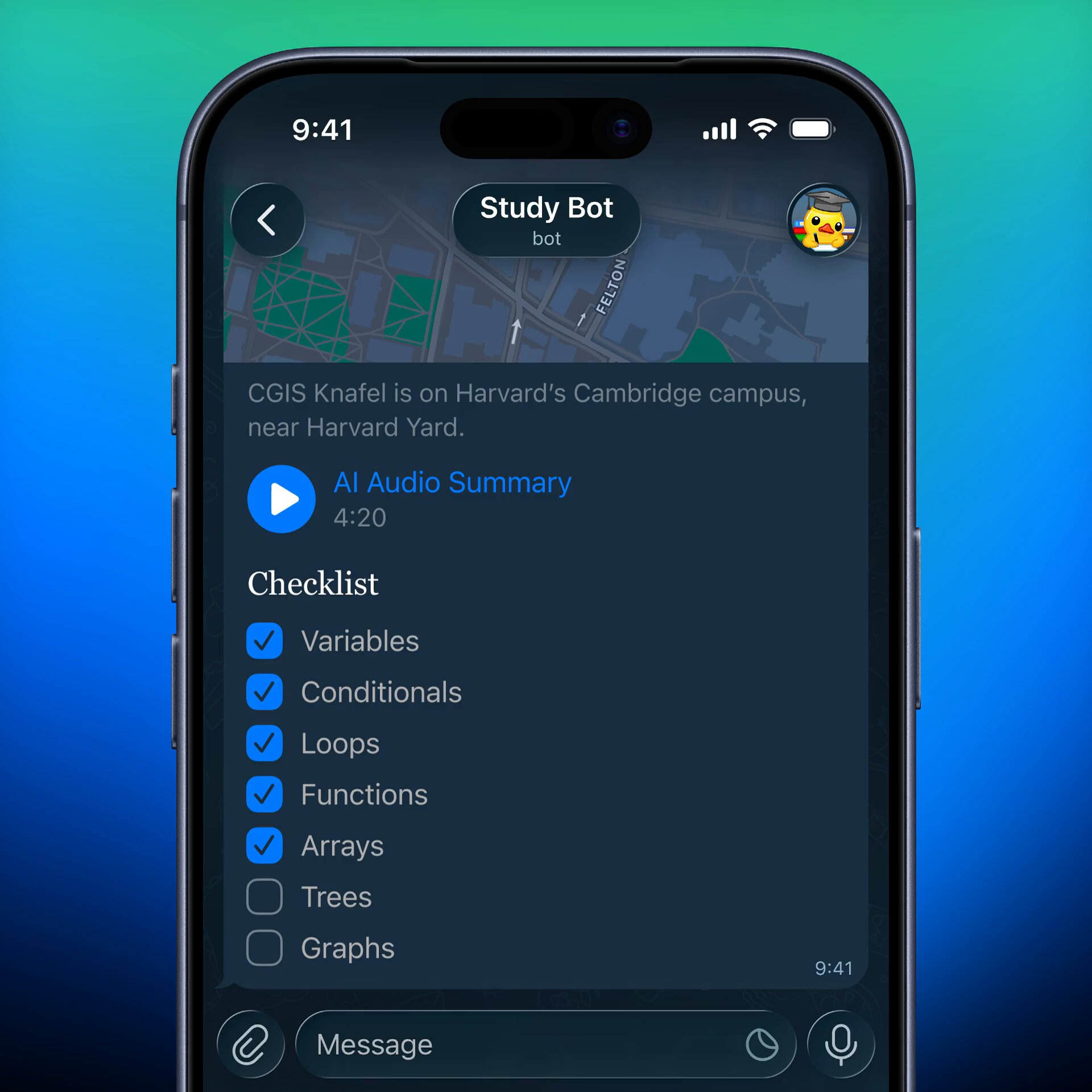
Finally, interfaces are rapidly evolving to support agentic outputs and dynamic workspaces. Telegram is massively upgrading its bot ecosystem, with @durov announcing rich formatting for all chatbots. Developers can now utilize tables, nested lists, inline media, and formulas directly in Telegram messages. For the desktop development experience, @_MaxBlade introduces dynamic resizing to CNVS. This provides an inspiring, high-performance workspace for agents, ensuring developers can ship beautiful projects without feeling like they are working in a digital dumpster.
Sources
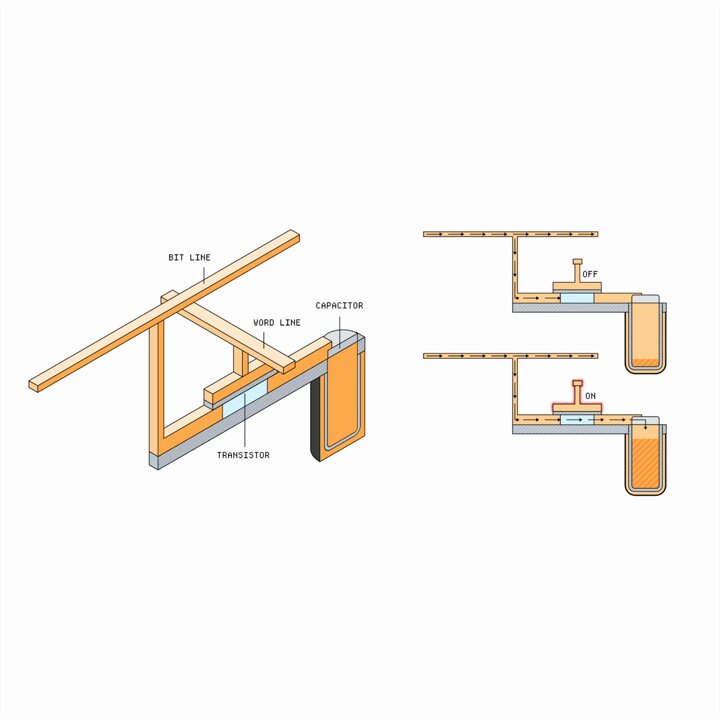

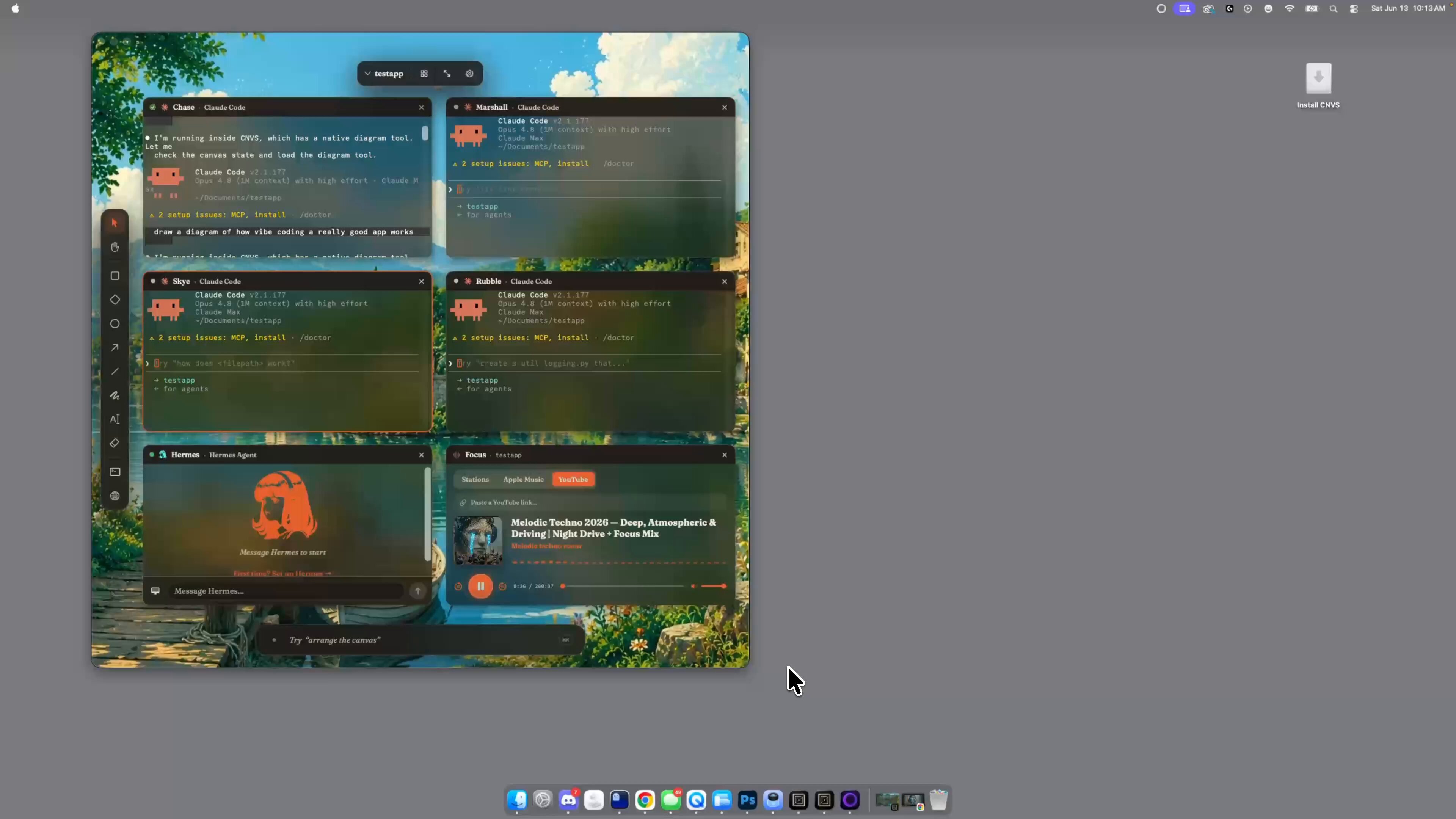
if vibe coding was actually a VIBE : yes you can run remote canvasses straight on your vps and ship to production like a psychopath. yes its built in swift and uses very little memory and is insanely performant. yes it has agentic voice control with gpt realtime 2. yes their is bidirectional agent / canvas control via mcp and cli. yes their is built in shared memory system without bloat. made with love by a dad in his basement who is tired of vibe coding being slow, boring, and constrained. CNVS coming soon.

If you aren't using models with different effort levels, you're probably wasting tokens, and time




Intelligence should be open, accessible, and ready to build with, empowering every developer, everywhere. GLM-5.2 is now available to all GLM Coding Plan users, including Lite, Pro, Max, and Team plans. https://t.co/AedZACyzej As our new flagship model, GLM-5.2 delivers powerful coding capabilities, usable 1M-context support, and continued strengths in long-horizon tasks. API and Chatbot services will launch next week. The model will also be officially open-sourced next week under the MIT License. The future of AI is open, and it belongs to the people.

GMKTEC EVO-X2 RUNS A 235B MODEL. SAME TIER AS THE TOP OPENAI AND CLAUDE PLANS
Local LLMs are cool as hell, but they still have one big flaw. When you close the chat, it forgets everything. No memory of your life, your health, your cars, your Bitcoin setup.. nothing. That's why the hosted ones feel smarter. They save all your chats on their servers so they remember you. The missing piece is building real long-term personal memory for local models. Im honestly surprised this hasnt been solved yet. It feels so obvious now.
some reflections from solely using cloud agents this year: 1. every engineer should default to cloud. it completely changes how you view and use agents. if you run a company, it might be worth mandating everyone starts in cloud 2. cloud agent adoption has been much slower than i expected— e.g. looking at a ton of cursor profiles it’s clear majority cloud usage is still rare 3. getting your dx cloud agent ready still requires creative jiu jitsu. dev infra docs could be much better — “this is how to make our stuff accessible to agents/parallelizable.” luckily investments also benefit humans 4. it’s still a PITA to setup & manage cloud envs across cursor/devin etc. but i assume it’ll get bitter lessoned and we don’t need conventions for setup scripts etc. 5. where are the labs?! would love to see codex et al. invest more in their cloud experience. i know they can do it :) 6. it’s strange that cursor/devin’s investment in mobile apps lags behind their investment in cloud agents. they should go hand in hand. the ability to start agents from slack mobile isn’t enough! 7. a cloud agent spinning up other cloud agents (middle manager pattern) is goated. e.g. nice to go for a run, yap for twenty minutes, and end up with parallel agents. only devin supports this well 8. the uis of ADEs have somewhat adapted for cloud agents. but ui patterns for upcoming long running *and* proactive agents are understudied. super excited to see more experiments here (and will contribute) overall: i freaking love cloud agents. you’ll dissappoint me personally if next month you still spin up more local agents than cloud. very grateful for cursor and devin for making this technology so easy to use!
The Log Is the Agent
Alibaba Qwen3.7 slowly fading into irrelevance at the frontier due to proprietary stance. In it's place we have Minimax M3 and... *checks notes* Rio 3.5 397b, made by the municipal IT company of Rio de Janeiro's city government. https://t.co/JgIJYVhoEi https://t.co/lVR83aAvPD

Introducing the Fusion API, the smartest compound model in the market. Fusion achieves Fable-level intelligence at half the price. How it works 👇 https://t.co/OTUQAdTQjU
Today on the blog, we discuss a pathway for the second life of phones through the exploration of “phone cluster computing”, which can directly reduce the environmental footprint of computing by avoiding the need for further raw material extraction. More →https://t.co/FFUNjfaEm5 https://t.co/Fvs7ju2r0Y
Introducing the Fusion API, the smartest compound model in the market. Fusion achieves Fable-level intelligence at half the price. How it works 👇 https://t.co/OTUQAdTQjU