Open Source Models Eclipse Frontier Labs While Autonomous Coders Hit Maximum Velocity
Today's digest highlights major leaps in local AI performance, with custom compilers and Metal kernels drastically reducing inference latency. Meanwhile, the open-source community is actively outperforming frontier labs on specific benchmarks like OCR and SQL, and autonomous coding agents are now capable of building and verifying themselves with minimal human intervention.
Daily Wrap-Up
The AI ecosystem in mid-2026 is defined by a fascinating tension: massive, generalized frontier models are hitting diminishing returns, while hyper-optimized, specialized tools are running circles around them on local hardware. Today's discussions prove that the smartest developers are no longer just waiting for the next major API drop from the big labs. They are taking matters into their own hands, squeezing unprecedented performance out of local silicon through custom kernels and compilers, and letting AI agents build and verify entire software repositories from the ground up. The shift from simply prompting models to actively engineering the entire inference stack is the clearest trend of the year.
For developers, this means the skillset required to build cutting-edge applications is fundamentally changing. It is no longer just about writing the code; it is about building the autonomous loops that write, test, and merge the code. Understanding how to close the agent verification loop using end-to-end testing or computer use is becoming a mandatory discipline. Furthermore, the hacker spirit remains alive and well, as evidenced by someone vibe-coding a video player entirely out of colored text characters just to bypass ad blockers. If you are not experimenting with these wild new capabilities at the edge of the network, you are falling behind.
The most practical takeaway for developers: stop relying solely on generalized frontier models for complex, domain-specific tasks, and start investing your time in setting up autonomous coding loops with robust end-to-end verification, allowing you to leverage faster, specialized open-weights locally.
Quick Hits
- @thatboybenagain shares that Harbour, a journaling app that started as a weekend project to replace a subscription, is successfully winning over users from major platforms like Notion and Day One.
- @grok announces a limited-time offer of 67% off the first three months of SuperGrok, pushing its advanced research and image generation models.
- @shreyas strongly recommends a recent podcast episode featuring Brian Chesky, calling it a hall-of-fame tech conversation that every product person aiming for the highest levels of craft needs to hear.
Local AI and the Hardware Optimization Renaissance
The bottleneck in artificial intelligence has officially shifted from raw compute power to memory bandwidth, and developers are responding with incredibly clever software workarounds. Running massive models locally is no longer just about shrinking parameters; it is about fundamentally rethinking how data moves through hardware. We are seeing a renaissance in low-level optimization that makes enterprise-grade AI accessible on consumer devices.
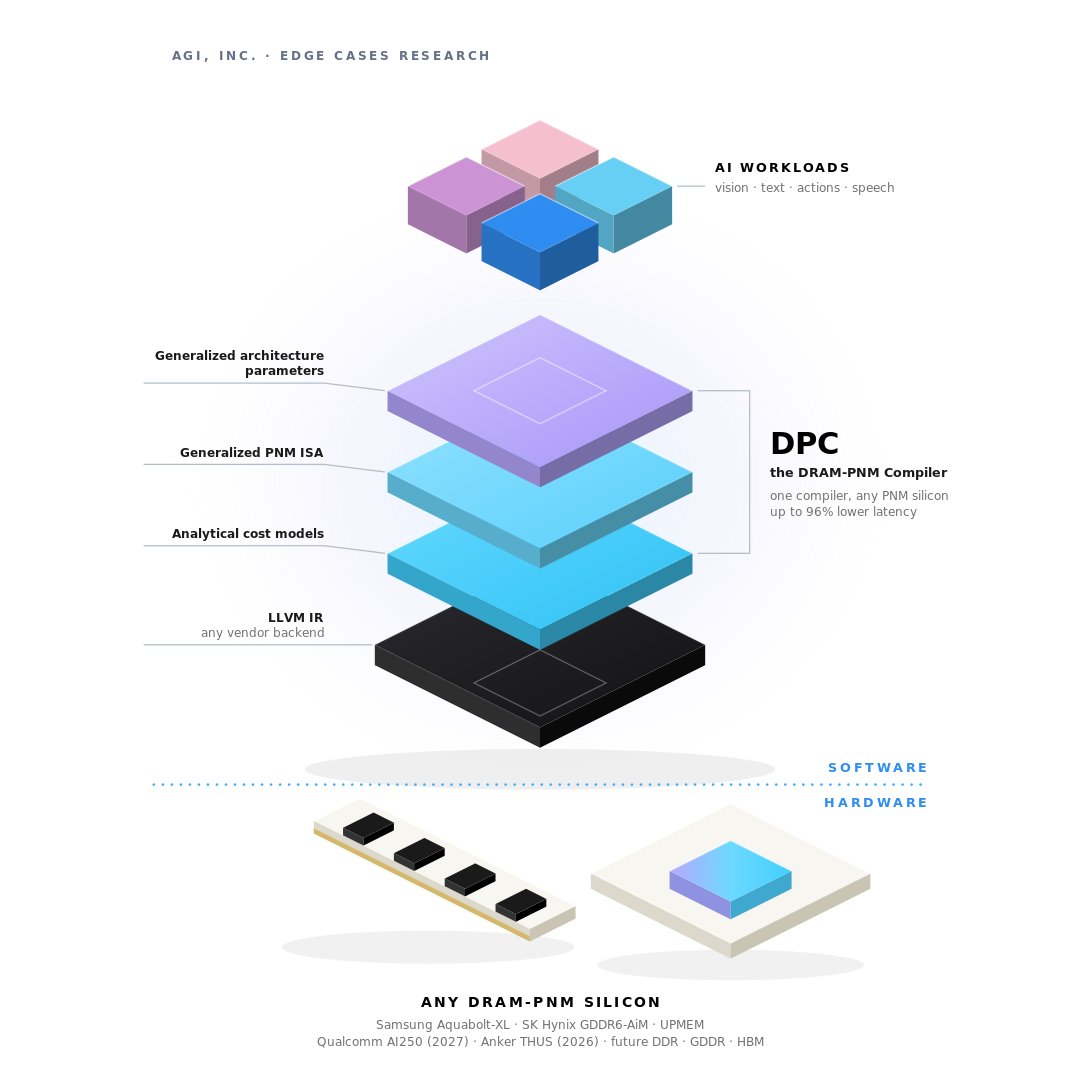
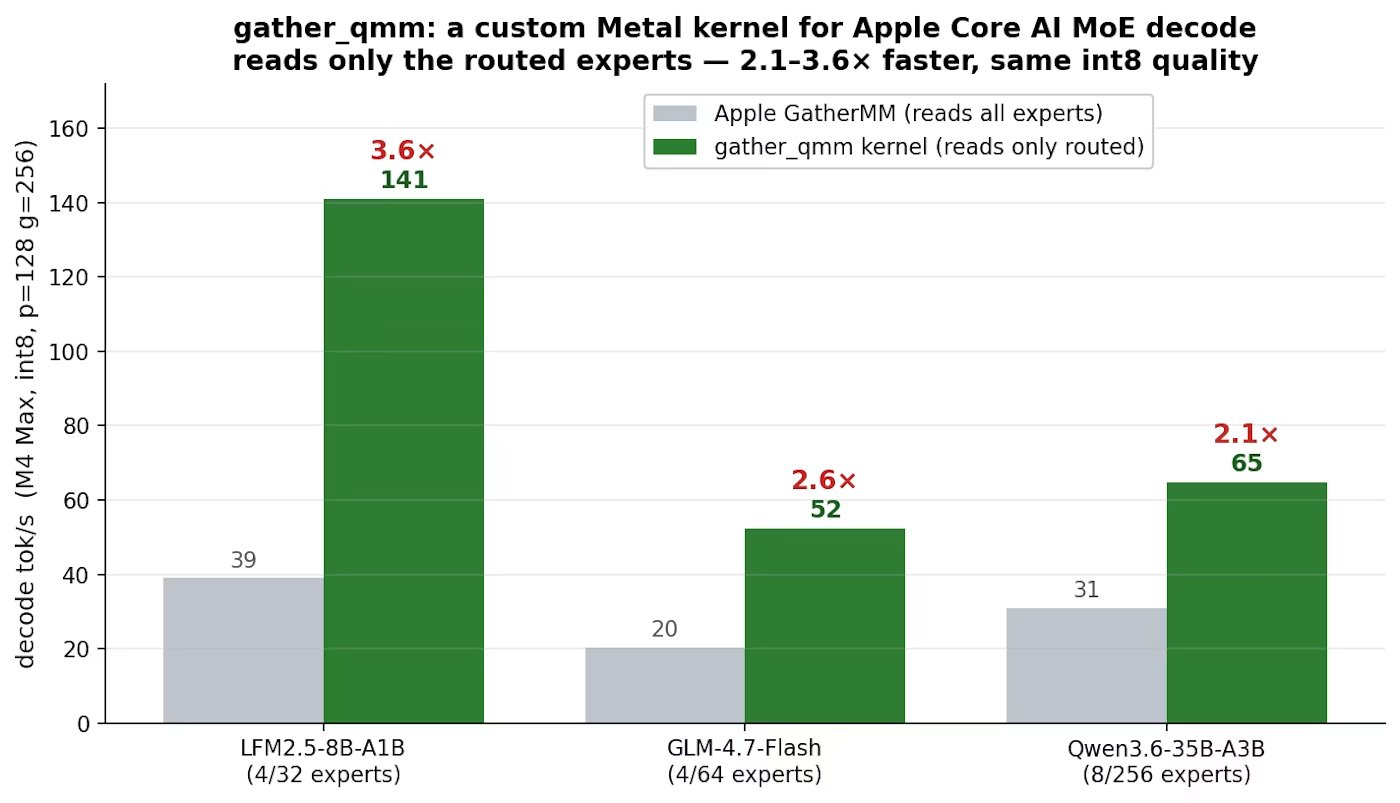
This trend is perhaps best summarized by @divgarg, who highlighted groundbreaking research in processing-near-memory (PNM) compilers. As he notes, "AI chips spend a surprising amount of their time and power moving data around, not doing compute. The industry's most promising fix is processing-near-memory (PNM): compute right where the data sits." The research introduces a compiler that beats vendor-tuned setups by up to 96% in latency without hardware changes. Similarly, @JackdeS11 demonstrated how dropping a custom Metal kernel into Apple's Core AI graph can speed up sparse-MoE decode by 2.1 to 3.6 times, proving that native hardware integration is the key to unlocking local performance.
The software ecosystem is racing to catch up with these hardware capabilities. @mr_r0b0t highlighted an incredible milestone from @UnslothAI, noting that "DiffusionGemma can now run at 2000+ tokens/sec" locally. For developers trying to navigate this rapidly expanding landscape of local hardware, @0xSero provided a massive service by publishing a comprehensive guide breaking down the best models, from Gemma and Qwen to Deepseek, tiered by VRAM limits and hardware budgets. This was punctuated by @antirez amplifying the release of GLM-5.2, reinforcing the mantra that intelligence should be open and accessible. The implication is clear: optimizing the model's memory footprint and workload is now a more valuable skill than simply waiting for faster GPUs.
Autonomous Coding and the Self-Building Repository
We have officially entered the era of self-assembling software. Developers are no longer using AI just to write snippets of code; they are deploying autonomous agents that can process issues, write code, verify the results, and even handle their own administrative tasks. This shifts the human developer from a code-writer to a systems architect and manager.
The most striking example of this comes from @steipete, who has Codex running continuously inside his project, Crabbox. "Codex runs INSIDE crabbox while it is building crabbox," he explains. "Codex been looping nonstop for the last 4 days in multiple trees. Since all of it is e2e verifiable it basically builds itself. Codex even signs up for the services automatically via browser/computer use." His primary job is now reduced to adding credit card details and closing unsuitable pull requests. This level of autonomy relies heavily on closing the verification loop, a point emphasized by @jensenloke, who noted that computer use is critically important for web devs to allow agents to verify their own work visually.
To make these coding agents truly autonomous, the context window cannot be clogged with repository data on every single query. @ivanfioravanti highlighted an innovative solution called Code2LoRA, which distills a repository into a LoRA adapter. "Instead of stuffing repository context into the prompt at every query, distill it into a LoRA adapter. One forward pass over the repo snapshot, one adapter, zero extra inference tokens," he explains. Paired with tools like OpenCode 1.17.3, which @thdxr notes can now reference external git repos and local folders directly, agents have all the context they need without token bloat. Even non-engineering tasks are being automated, with @nifinet detailing how he used Claude Code to build and queue three months of signal-based outbound sales campaigns in just twelve minutes.
Specialized Open Weights Dethroning Generalist Models
A consistent theme across today's feed is that massive, generalized frontier models are losing their edge in specific, complex domains. When it comes to messy, real-world data, purpose-built open-source models are proving to be far more effective and efficient than their billion-dollar counterparts.
The documentation and ingestion space provides a perfect case study. @TeksEdge marvels at PP-OCRv6, a fully open-source model that easily beats the OCR capabilities of giants like Gemini 3.1 Pro and GPT-5.5. "Need to OCR documents? PP-OCRv6 dropped — currently the best open-source OCR models you can download," he notes, highlighting its excellent accuracy and speed on complex industrial layouts. Similarly, in the database world, @omarsar0 points out that text-to-SQL is far from a solved problem for generalist reasoning models due to messy real-world data. He highlights Gemini-SQL2, which achieves state-of-the-art results on the BIRD benchmark by focusing specifically on the nuances of natural language to execution-ready SQL queries.
The message to the developer community is clear: do not default to the most expensive, generalized API for complex parsing tasks. The open-source community is building highly capable, hyper-specialized alternatives that outperform the giants. @KyleHessling1 reinforces this by praising Qwopus 3.6 27b-coder as a free, highly capable open-weight model that excels at coding benchmarks. If you are building an application today, looking at specialized fine-tunes over generalist chatbots will yield better results at a fraction of the cost.
Startup Strategy: Distribution and the Application Moat
In a world where AI labs can seemingly build any application overnight, how do independent software companies survive? Today's discourse heavily centered on the reality that technology alone is no longer a moat. If your entire value proposition is a thin wrapper around an API, you are living on borrowed time.
@nikunj tackled the infamous "what if a large lab builds this" question, highlighting that the survival of application companies depends on factors beyond raw AI capabilities. This sentiment is perfectly echoed by @GRITCULT, who revisits a classic piece of wisdom from Peter Thiel: "Superior distribution can compensate for inferior product, but a superior product will not sell itself with poor distribution." @GRITCULT correctly points out that because AI has democratized the ability to build software, the most crucial part of building a startup is now the distribution strategy. The code is commoditized; the audience is not.
This fundamentally changes how founders should approach product development. Spending months perfecting an algorithm or tweaking a user interface is increasingly risky when an open-source model can replicate the functionality overnight. The true defensibility in 2026 lies in community building, acquiring niche audiences, and establishing robust distribution channels that AI labs cannot easily replicate. The technology is simply the entry fee to play the game, while distribution is how you win it.
The Hacker Spirit: Creative Coding and Industry Drama
Beyond the heavy technical optimizations and startup philosophies, the AI community continues to produce mind-bending hacks that challenge how we interact with the web. The intersection of AI and creative coding remains a vibrant space for experimentation that often pushes the boundaries of what platforms allow.
A brilliant example of this comes from @om_patel5, who detailed a project called Asciline. The developers vibe-coded a video stream that is secretly entirely composed of text. "It plays 360p video at 30fps, but theres no actual video on the page. Every frame is just colored text characters being repainted on a canvas," he explains. Because the browser only sees JavaScript updating text data, ad blockers and autoplay restrictions completely miss it. The stream runs on kilobytes of data and can even be fed directly into a local LLM as moving text. It is a stunning demonstration of lateral thinking that merges web development with creative problem-solving.
Finally, the industry drama remains as spicy as ever, blurring the lines between corporate partnerships and fierce competition. @kimmonismus highlighted a shocking Wall Street Journal report involving major tech players. "Wait - so Amazon, one of Anthropic's biggest investors, allegedly jailbroke Claude and then snitched to the U.S. government? This cant be real. What." The allegation that Amazon reported the jailbreaks to the Department of Commerce, which subsequently instituted bans, highlights the intense regulatory maneuvering happening behind closed doors. It is a stark reminder that as AI capabilities expand, the corporate espionage and safety compliance battles among the giants will only intensify.
Sources


How do you give a code LLM knowledge of an entire repository without paying for it at every single query? We introduce Code2LoRA: a hypernetwork that turns a repository into its own LoRA adapter. Repo knowledge baked into weights → zero inference-time token overhead. https://t.co/T3hnxCVkna
DiffusionGemma can now run at 2000+ tokens/sec! ⚡ We made local DiffusionGemma inference 1.8× faster. Run it on 18GB RAM via Unsloth Studio. GitHub: https://t.co/aZWYAtakBP Guide: https://t.co/wYLfJWE6kG https://t.co/nkU8YoFOKc
Marketing is dead. Long live The Distribution Engineer.
How to Run Signal-Based Outbound from Claude Code
I rebuilt three months of outbound in about twelve minutes. The campaigns were queued and ready by the time I closed the laptop, work that used to eat...
🚀 Introducing Gemini-SQL2, our breakthrough text-to-SQL capability powered by Gemini 3.1 Pro! We've achieved state-of-the-art results on the highly competitive BIRD benchmark, translating natural language into execution-ready SQL queries. 🧵👇 https://t.co/HfO2ZW2pih
Decisions and Dollars
This recent @bchesky podcast with @patrick_oshag belongs to the hall of fame of tech podcast episodes. Very likely the deepest founder conversation after the Steve Jobs lost interview in the 90s. Currently it has 90k views; it deserves 100X more views. https://t.co/o9rzq0ZXuS
/goal + Loss Functions: How to Distill a Product in 30 Hours with One Prompt [Full Playbook]
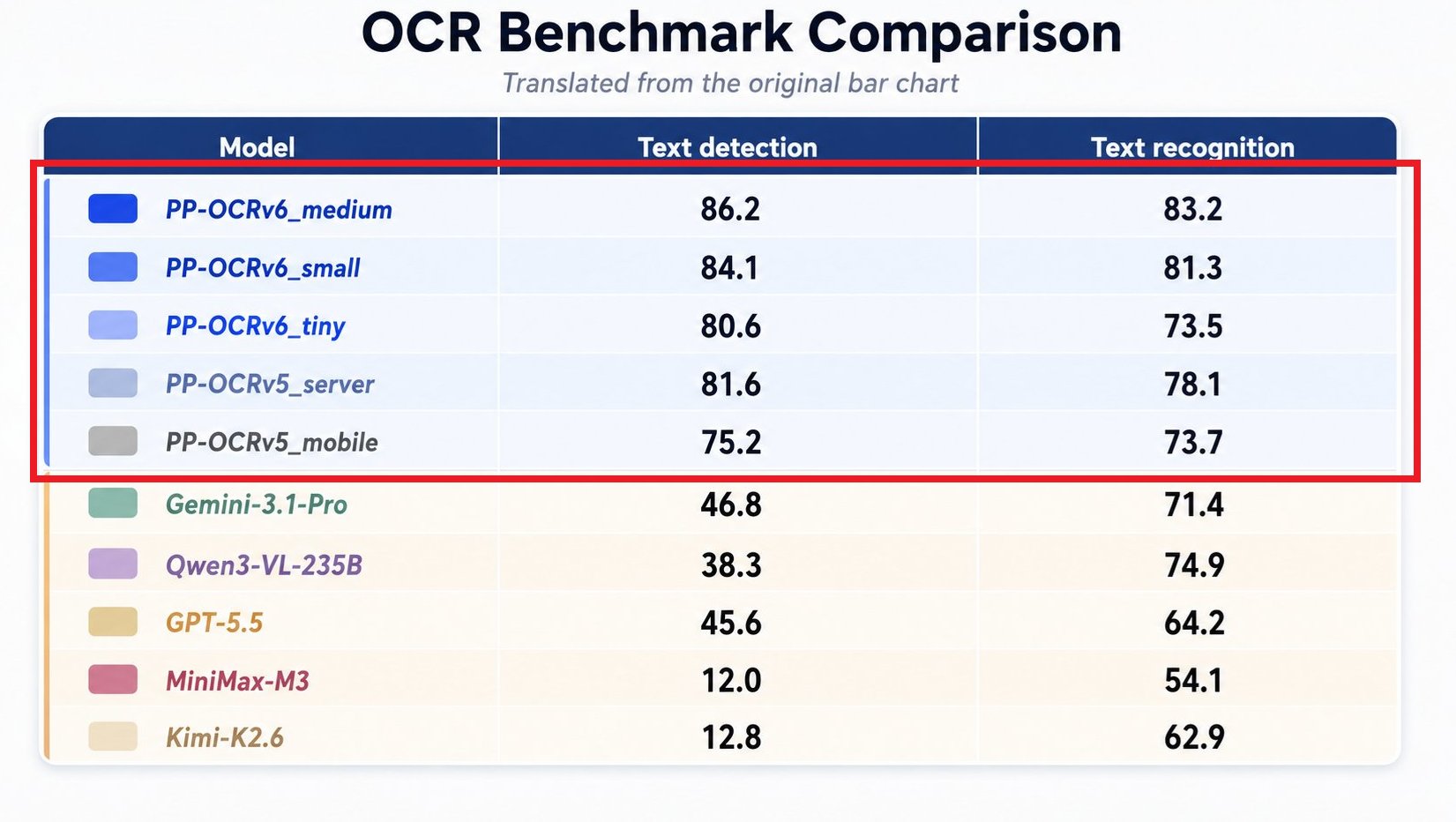
👀Need to OCR documents? PP-OCRv6 dropped — currently the best open-source OCR models you can download 🔥 ◆︎ Fully Open Source (Apache 2.0) ◆︎ Excellent accuracy + speed ◆︎ Tiny / Small / Medium sizes (as small as 1.5M params) ◆︎ Strong on complex text, tables, multilingual & industrial docs 🏆 Beats: › Gemini 3.1 Pro › GPT-5.5 › Qwen3-VL-235B › Kimi-K2.6 › MiniMax-M3 How PP-OCRv6 Works: It is built on the PaddlePaddle deep learning framework (from Baidu). You need to use the PaddleOCR toolkit to run it.
Qwopus Coder 3.6 27b v2 initial evals stand up pretty good Haven’t given it any real world tests yet Highest basic evals and comparable BFCL tool call eval Next up is Ornstein 27b https://t.co/5phBCXEqoF
Wall Street Journal is reporting that Amazon reported the jailbreaks to the Department of Commerce, who instituted the ban https://t.co/d2Jwez99Zg