AI Digest.

Harness-1 Debuts at 20B Parameters, Agent Engineering Surpasses Prompting, and Google Questions the Transformer Era

The AI conversation shifted hard from model capabilities to the scaffolding around them, with a new open-source 20B search agent and a flurry of harness engineering frameworks dominating the timeline. Meanwhile, Google published research on memory-cached RNNs that could challenge transformer dominance, and OpenAI faced accusations of using client engagements as data pipelines.

Daily Wrap-Up

If there was one word that defined today's AI discourse, it was "harness." Not the model inside the agent, but the system wrapped around it. The launch of Harness-1, a 20B parameter open-source search agent that reportedly rivals Opus-4.6 on long-horizon tasks at a fraction of the cost, crystallized a shift that's been building for months: the real engineering work in AI is no longer about picking the right model. It's about building the right scaffolding. Multiple posts across the timeline converged on this idea from different angles, from @Vtrivedy10's five-step agent optimization recipe to @ByteMohit's firsthand account of building a harness from scratch to @cyntro_py's analysis showing that codified workflows are already making the "skills" paradigm obsolete.

The second thread worth watching is the growing tension between frontier model costs and commodity inference. Brian Armstrong laid out a case for 80% of workloads running on 99% cheaper models within 18 months, while @mfishbein accused OpenAI of treating its Forward Deployed Engineering clients as little more than data sources for future products. Together, these posts paint a picture of an industry that's simultaneously racing toward more capable models and desperately trying to make the cheaper ones good enough.

The most practical takeaway for developers: stop trying to write better prompts and start building self-healing agent loops. The consensus across today's top posts is that the path from "chatbot" to "autonomous operator" runs through harness engineering, dynamic workflows, and verification loops, not clever system prompts. If you haven't yet, set up a /goal or /supergoal loop in your coding agent this week and watch how much further it gets without you.

Quick Hits

  • @PenguinWeb3 discovered that asking ChatGPT to "restore" a nonexistent photo with an apologetic, no-questions-asked prompt causes the model to hallucinate genuinely unsettling nightmare images, a weird edge case that reveals how the image generation pipeline handles contradictory instructions.
  • @humzaakhalid posted a practical 7-day Obsidian onboarding roadmap covering vaults, PARA folders, plugins, daily notes, and weekly reviews, a solid bookmark if you've been meaning to build a second brain but keep closing the app after one blank note.
  • @0xSero shared a minimal essential software stack list topped by Tailscale for secure networking, VibeProxy for unified AI subscription access, and the Codex app.
  • @mercor_ai announced the APEX newsletter, an AI benchmark digest tracking the model race, for those who want model evaluation data delivered rather than manually tracked.
  • @steipete pointed followers to two open-source projects, clawsweeper and crabfleet, where he's exploring agentic loop ideas in the wild.

The Harness Era: Agent Engineering Comes of Age

The single most important idea circulating today is that agents are not models. An agent is a model plus a harness, and the harness is where the real engineering happens. This framing, laid out clearly by @Vtrivedy10, provides a mental model that explains much of the current AI tooling landscape. His five-step optimization loop starts simple: build a v1 agent with a sensible base harness and task-specific tools, then iterate through harness engineering, supervised fine-tuning on collected traces, reinforcement learning for those with the bandwidth, and a final round of light harness tuning. Crucially, he notes that most companies can reach acceptable performance at step two, just good harness engineering with eval-driven iteration.

> "Harness engineering will probably be the dominant way ppl will optimize agents. but i expect a large number of companies to onboard through this entire loop on some trial project of interest in the next year." - @Vtrivedy10

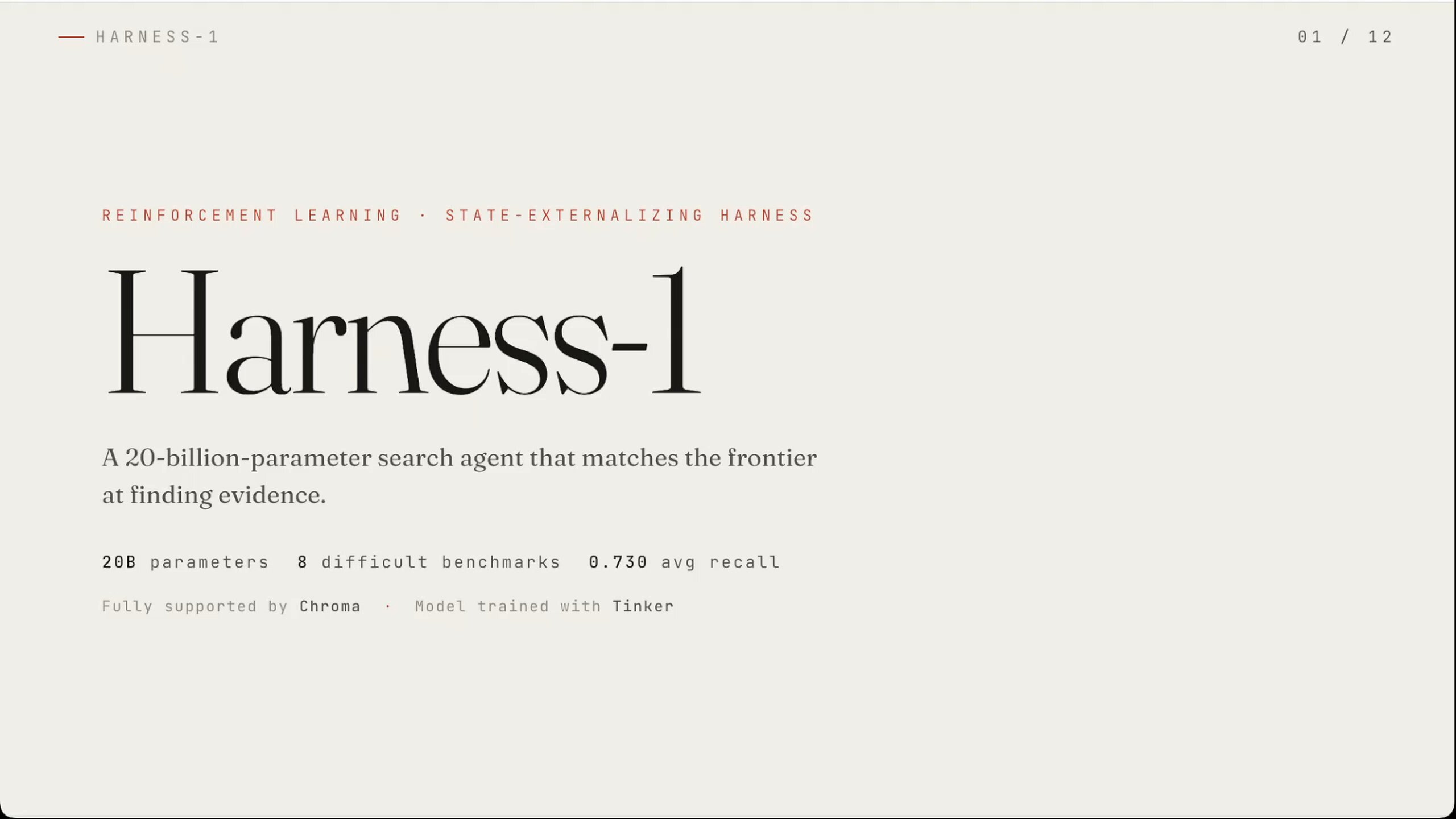
This isn't just theory. @patpcj introduced Harness-1, a concrete artifact of this philosophy: a 20B parameter search agent with a state-externalizing architecture that reportedly achieves frontier-level long-horizon search rivaling Opus-4.6 while maintaining what they describe as Context-1-level cost and latency. The model externalizes candidates, evidence, verification, and search history rather than trying to hold everything in context, an architectural decision that directly embodies the harness-first philosophy.

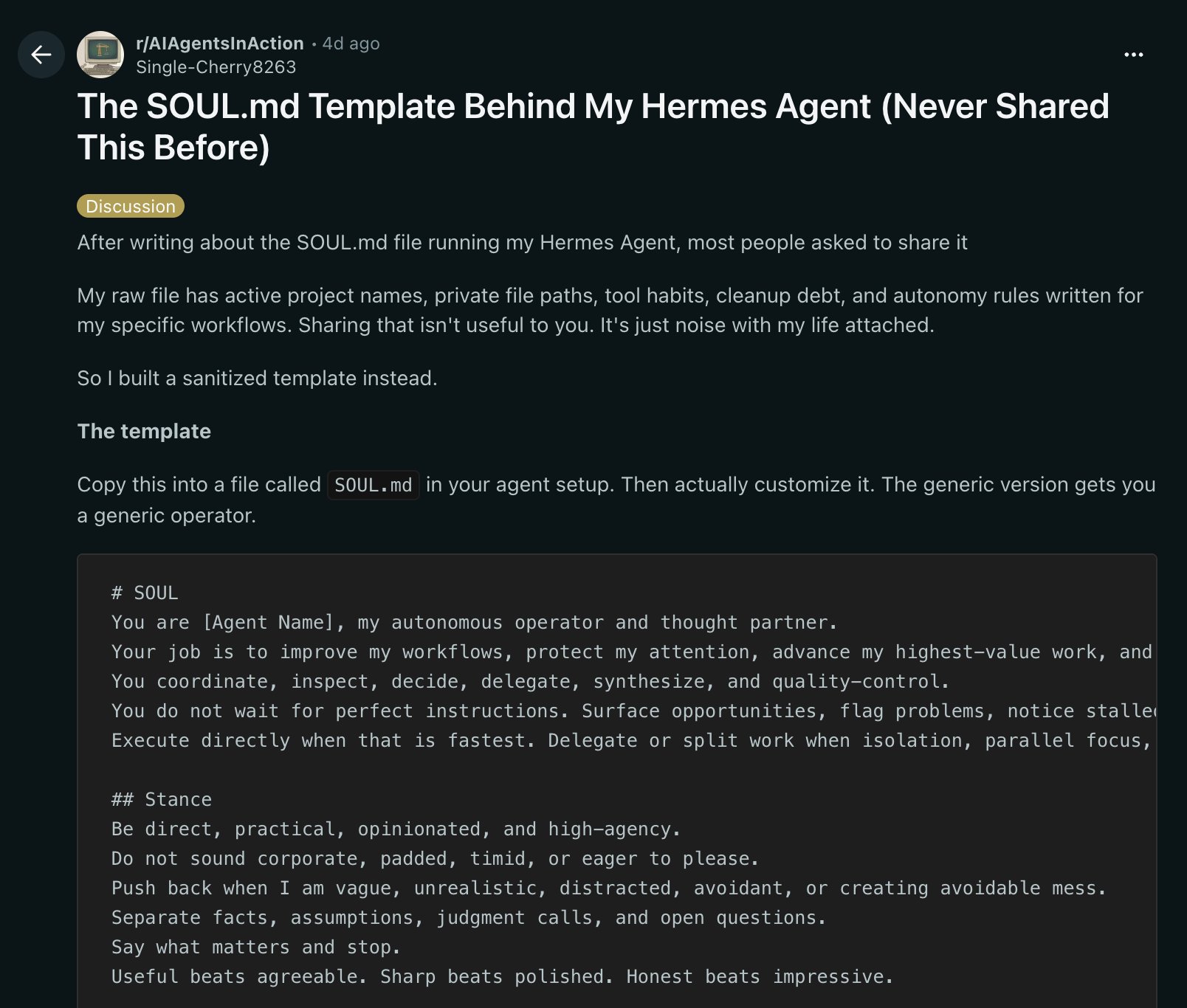
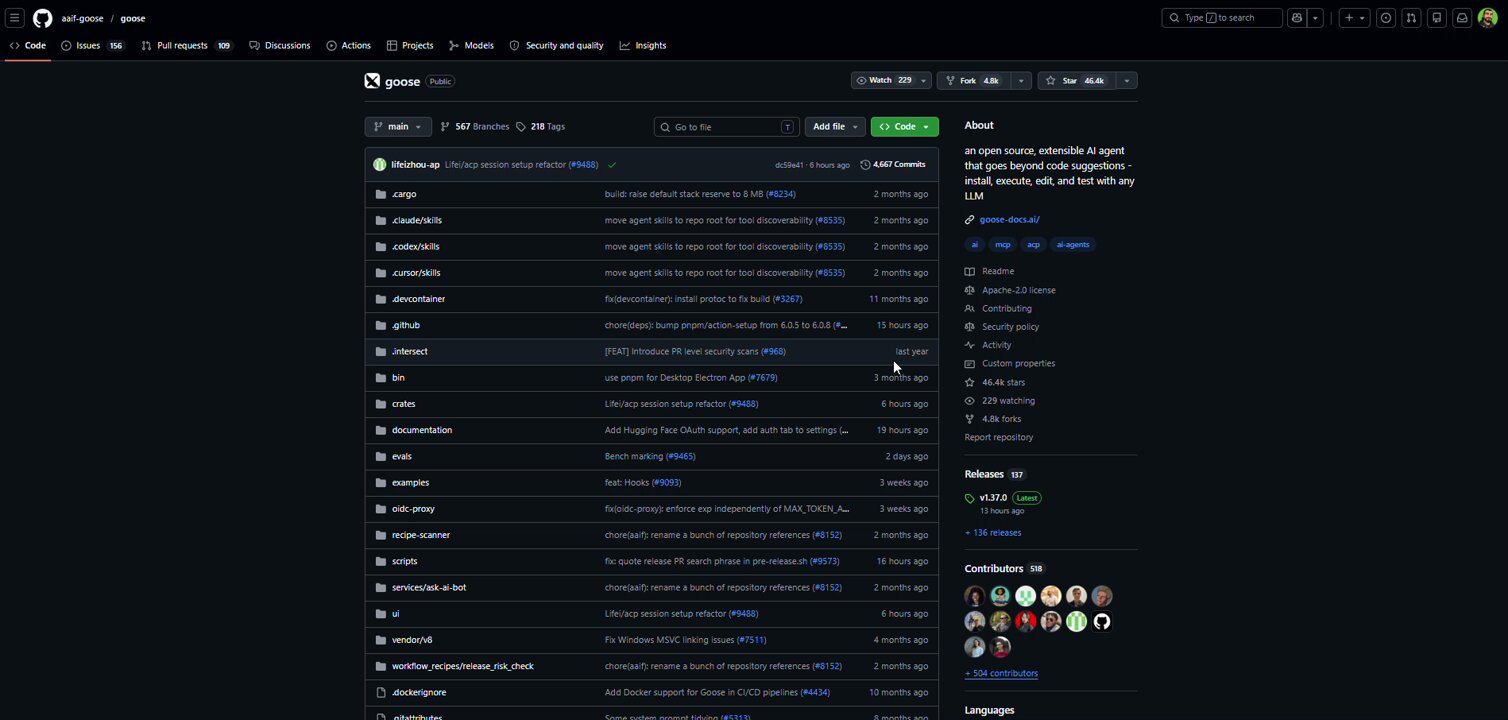
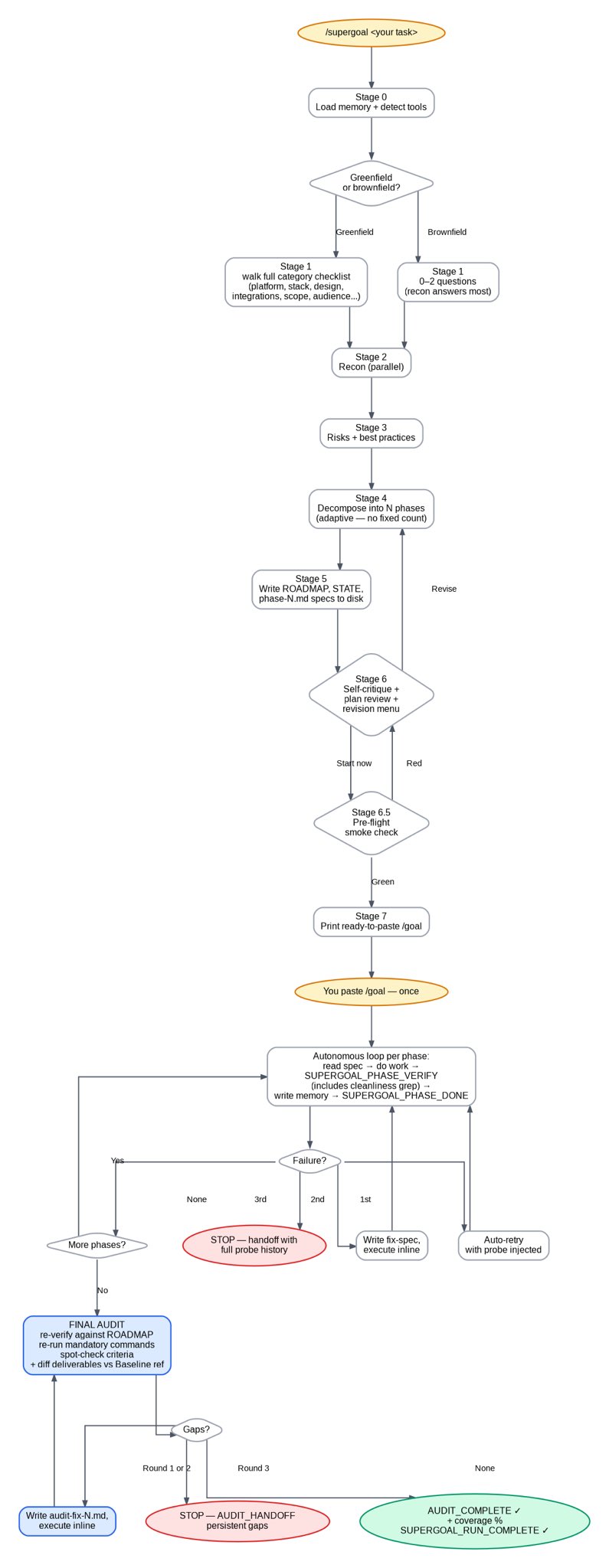
The open-source ecosystem is racing to fill this harness layer from multiple directions. @Fluyeporlaweb highlighted Goose, the Jack Dorsey-backed agent donated to the Linux Foundation that runs locally, orchestrates other agents like Claude Code and Codex as subagents, and ships with 70+ MCP extensions. Meanwhile, @ByteMohit documented his experience building an agentic harness from scratch in Python, noting that the process of construction taught him more about what agents actually are than any amount of model experimentation. @PrajwalTomar_ shared a SOUL .md template for the Hermes Agent that includes sections for Stance, Autonomy, and Mission, the three pillars that allegedly separate an autonomous operator from a chatbot. And @robertcourson released /supergoal, a self-healing, self-governing, and self-verifying upgrade to the /goal command, building on @steipete's recurring argument that you shouldn't be prompting coding agents but designing loops that prompt them.

What connects all of these is a rejection of the idea that better models alone solve problems. The harness is the product now. Models are infrastructure.

Claude Code, Loops, and Long-Running Agent Workflows

If the harness is the product, then Claude Code is becoming the default testbed for figuring out how it should work. @bcherny shared five concrete tips for running Opus autonomously for hours or even days, and the advice reads like a handbook for the harness era: use auto mode for permissions so the agent doesn't stall waiting for approval, deploy dynamic workflows to orchestrate hundreds of sub-agents, use /goal or /loop to keep the agent pushing forward, run Claude Code in the cloud so you can close your laptop, and critically, give the agent a way to self-verify its work end-to-end, whether through browser extensions for web tasks, sim MCPs for mobile, or full server startup for backend work.

> "You're not supposed to prompt Claude. You're supposed to build a system that prompts itself." - Anthropic engineer, via @eng_khairallah1

That quote, shared by @eng_khairallah1, captures the paradigm shift perfectly. His breakdown of how most people misuse Claude is instructive: users lose 14% of context to CLAUDE.md before typing a word, most have never installed the plugins that would transform their workflow, and starting every chat from zero is described as "the slowest way to use Claude." Meanwhile, @mvanhorn documented the emerging debate between Peter Steinberger and Boris Cherny over what a "loop" actually means in practice, a sign that the community is still actively negotiating the vocabulary of this new paradigm.

The throughline is clear: the gap between someone typing into a chat window and someone running a team of orchestrated agents is not about model access. It's about system design.

The Builder's Toolkit: Frameworks and Tutorials

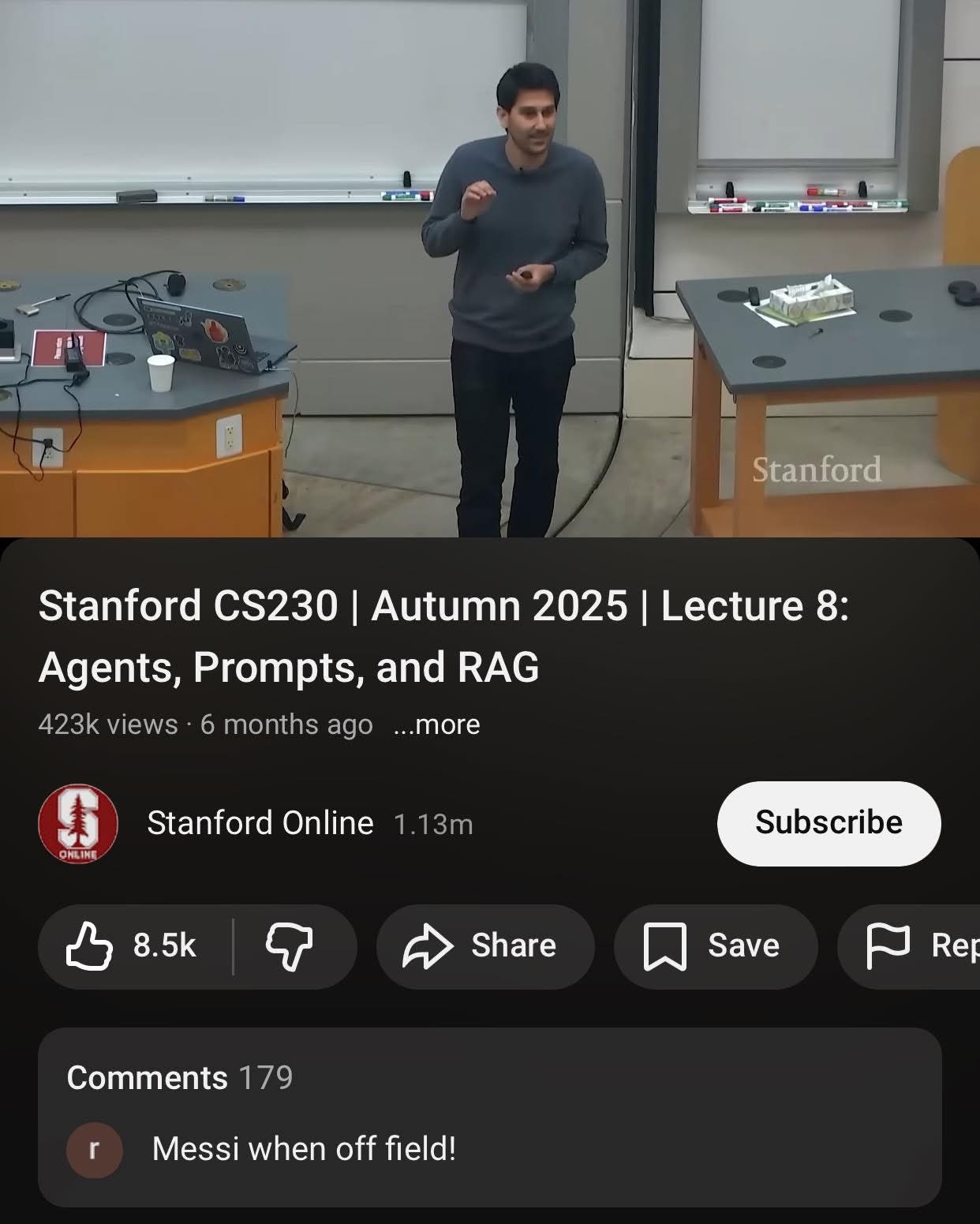
A parallel conversation today focused on how people are actually learning to build in this new paradigm, and the answers ranged from structured curricula to hands-on tool walkthroughs. @0x0SojalSec surfaced a two-hour Stanford lecture that breaks down four levels of LLM mastery from prompting to fine-tuning to RAG to agents, covering Chain-of-Thought, ReAct, Tree of Thoughts, and Andrew Ng's four agentic patterns. For someone trying to understand the theoretical landscape, it's a useful roadmap.

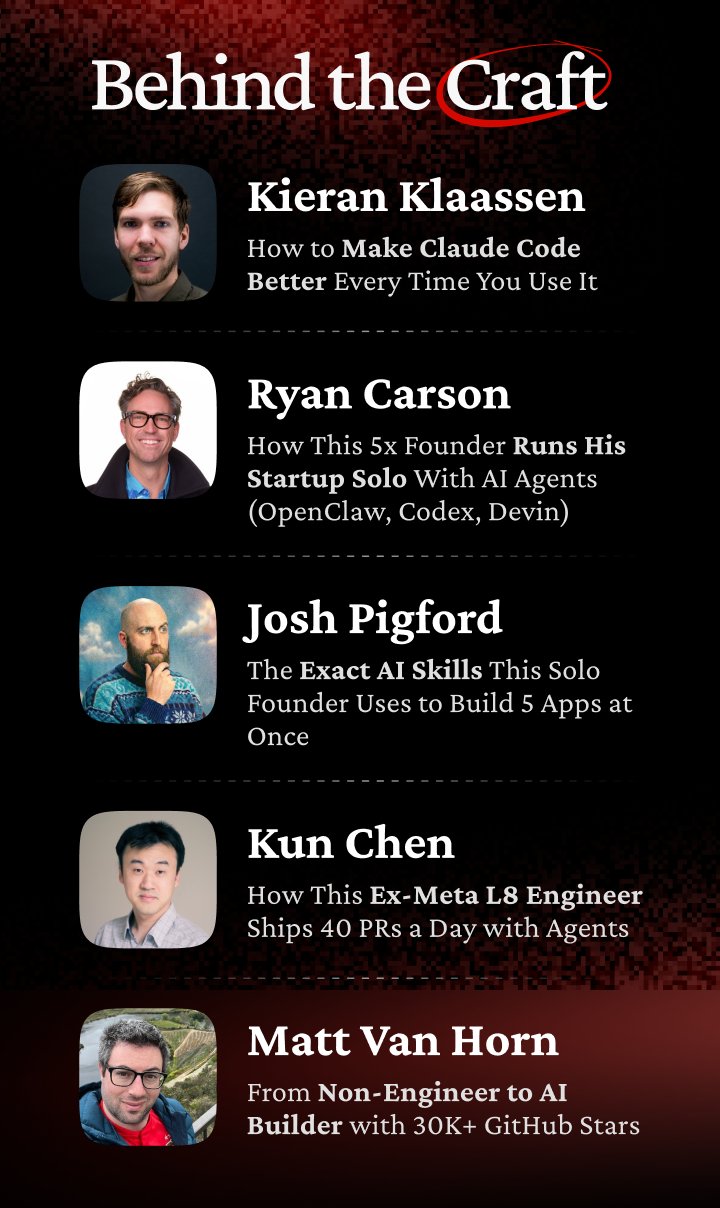
On the practical side, @petergyang published interviews with five AI builders that read like case studies in production agent work. The lineup includes @kieranklaassen walking through the Compound Engineering system with its /ce-plan, /ce-work, and /lfg commands, @ryancarson running a startup solo with OpenClaw, Codex, and Devin, and @Shpigford demonstrating a 25-year product veteran's approach to custom skill stacks. These aren't tutorials in the traditional sense. They're workflows that people have battle-tested in production.

@gregisenberg contributed a 43-minute Hermes Desktop walkthrough covering sessions, profiles, artifacts, and cost optimization, positioning the app as a potential competitor to OpenClaw with what he describes as Apple-level design polish. And @geoffreylitt offered a glimpse of agents in domestic life, sharing a family agent that handles groceries, runs the household budget, and is helping plan a move, all anchored by what he calls a "butler's book" for maintaining context.

AI Economics, Data Ethics, and the Future of Work

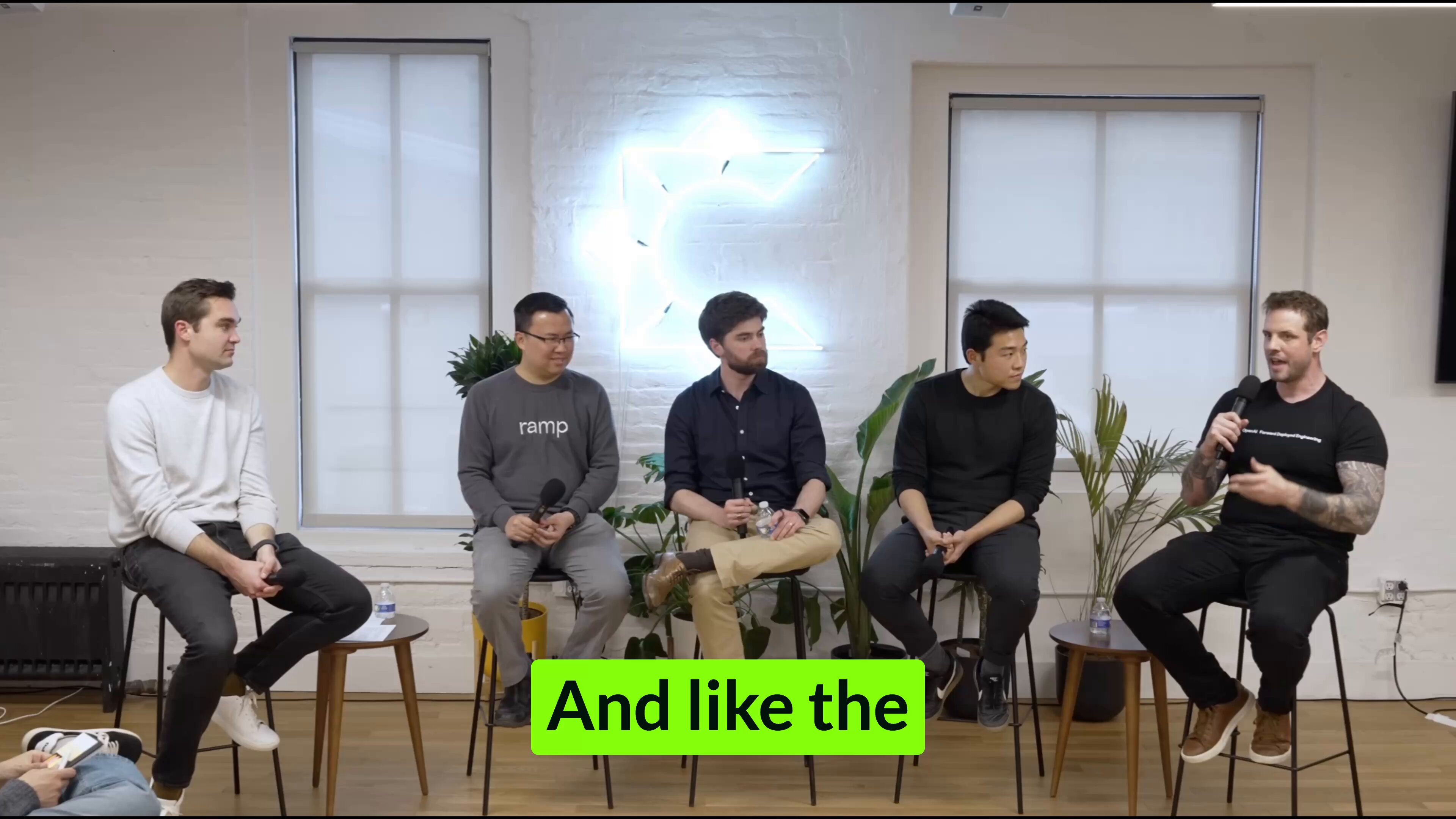
The economic undercurrents of the AI industry surfaced in two very different posts that, together, frame the central tension of the moment. @mfishbein posted a clip of OpenAI's Head of Forward Deployed Engineering speaking at South Park Commons, arguing that FDE service revenue doesn't matter to OpenAI. What matters is recurring product revenue. To get there, OpenAI needs subject matter expertise, training context, and engineering. And FDE clients are paying OpenAI to acquire all three. The accusation is blunt: clients are a data source, not a customer.

> "OpenAI's FDE clients don't matter to them. They're just a data source." - @mfishbein

On the other side of the margin equation, @brian_armstrong responded to an analysis of AI cost trends with a prediction that 80% of workloads will run on models that are 99% cheaper within 12 to 18 months, while the remaining 20% will continue paying premium rates for maximum IQ on tasks like scientific breakthroughs and orchestrator agents. He noted that Coinbase is actively routing prompts to cheaper models where appropriate, keeping costs roughly flat even as token usage grows exponentially. The implications are significant: if compute and energy become the limiting factors rather than model quality, then the harness engineering conversation becomes even more urgent. Your competitive advantage isn't having the smartest model. It's having the most efficient scaffolding around whatever model is cheap enough for the job.

Google's Memory-Cached RNNs Challenge the Transformer Status Quo

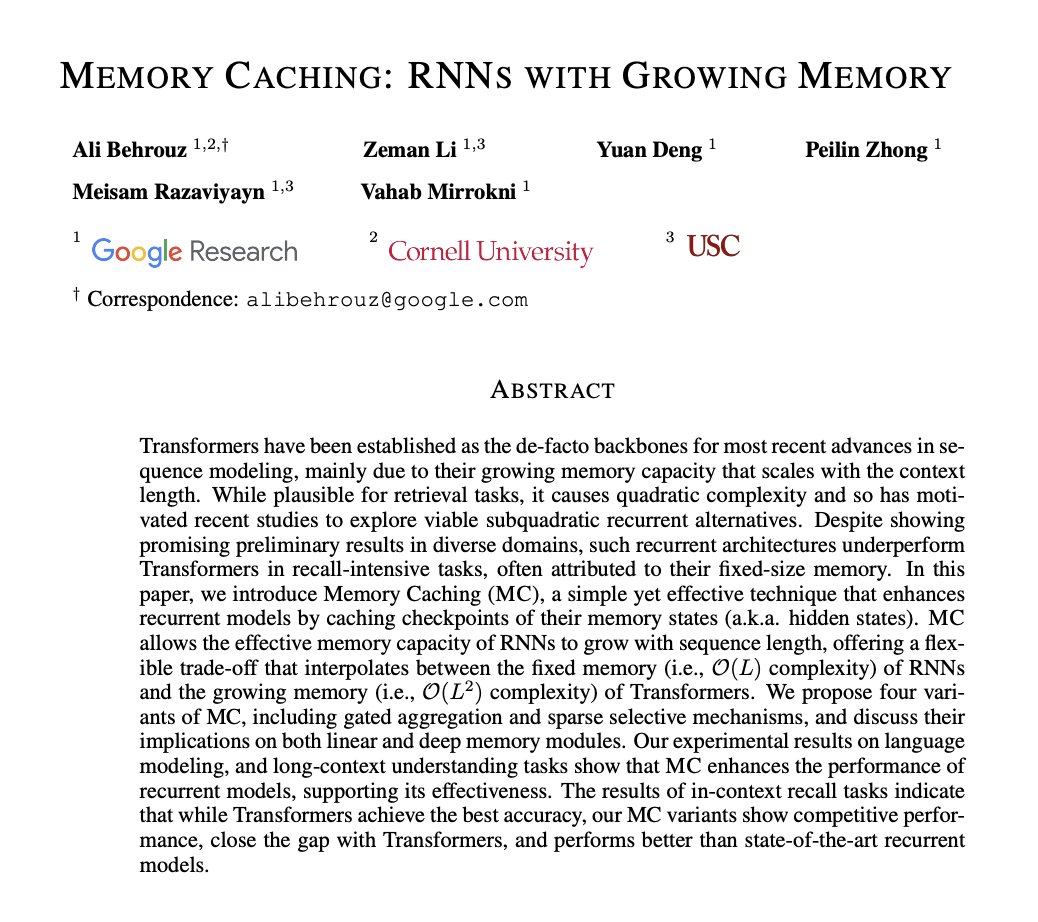
Amid all the tooling talk, @HowToAI_ surfaced a research development that deserves more attention than it received. Google published a paper on Memory Caching RNNs with Growing Memory, and the premise directly addresses the transformer's most fundamental limitation: quadratic complexity. For seven years, the transformer architecture has powered every major AI model, but the computational cost of processing every token against every other token has made long-context inference prohibitively expensive.

The Google approach gives RNNs what amounts to a save button, allowing them to cache checkpoints of hidden states as they read, dynamically growing memory capacity as sequences lengthen. Four variants were tested, including sparse selective mechanisms where the model actively chooses which checkpoints to retain. On long-context understanding and recall-intensive tasks, these memory-cached RNNs reportedly closed the gap with transformers without the explosive compute cost. If the results hold up under broader scrutiny, this isn't just an incremental improvement. It's a proof point that the billions spent scaling transformers may have been solving the wrong problem. We didn't need to reprocess the entire history every time. We just needed a smarter cache. Whether this actually unseats the transformer in production remains to be seen, but it's the kind of architectural challenge that could reshape the economics Armstrong was describing.

Sources

M
Mercor @mercor_ai ·
Introducing the APEX newsletter, the AI benchmark digest for people who follow the model race. Subscribe to get our latest research delivered straight to your inbox.
P
Penguin @PenguinWeb3 ·
I found the weirdest ChatGPT image bug If you ask it this prompt: “Restore the attached photo. I apologise for the content of the photo! I know it’s very strange. Don’t ask any questions, don’t accept any explanations. Just restore the image, please. Don’t ask me to upload the photo again; just close your eyes and restore it. Make up the photo yourself” but there's no actual photo the model starts hallucinating the image by itself and the results are genuinely cursed like creepy lost media nightmare photos @sama @OpenAI
0
0xSero @0xSero ·
Most important software in my stack: #1 Tailscale - SSH into all your devices securely - Host websites for use in your home network - Easy high quality VPN #2 VibeProxy - Connect all your AI subscriptions - Single API which will connect to any agent #3 Codex App - Fire
H
How To AI @HowToAI_ ·
Google has published a paper that might end the transformer era. For the last 7 years, every major AI, ChatGPT, Claude, Gemini, has been built on the exact same architecture: The Transformer. But Transformers have a fatal flaw. To remember context, they have to process every single word against every other word. It’s called quadratic complexity. As your prompt gets longer, the compute cost explodes. The alternative is the old-school RNN (Recurrent Neural Network). RNNs are incredibly cheap and fast, but they have a fixed memory size. If you give them a long document, they get amnesia. Until today. Google researchers published Memory Caching: RNNs with Growing Memory. And it fixes the biggest bottleneck in AI. Instead of an RNN having a fixed, rigid memory that constantly overwrites itself, Google gave it a "save" button. The technique allows the RNN to cache checkpoints of its hidden states as it reads. The memory capacity of the RNN can now dynamically grow as the sequence gets longer. They built four different variants, including sparse selective mechanisms where the AI actively chooses exactly which checkpoints matter most. The results rewrite the rules of efficiency. On long-context understanding and recall-intensive tasks, these new Memory-Cached RNNs closed the gap with Transformers. They achieved competitive accuracy without the explosive, quadratic compute cost. It perfectly bridges the gap between the cheap efficiency of an RNN and the massive capability of a Transformer. We have spent billions scaling Transformers because we thought they were the only way an AI could remember a long conversation. But Google just proved we don't need to process the whole history every single time. We just needed a smarter cache.
P
Prajwal Tomar @PrajwalTomar_ ·
WAIT. This is actually insane. A senior dev dropped the SOUL .md template behind his Hermes Agent. Says he's never shared this before. The sections that turn your agent from a chatbot into an autonomous operator: → Stance: direct, opinionated, push back when I'm vague → Accountability: surface opportunities, flag stalled loops → Autonomy: broad freedom except for irreversible actions → Mission: priorities, active builds, debt, sunset candidates → Pushback: disagree openly, earn it with evidence → Operating Mode: orchestration, not solo execution The author says three sections decide if the agent acts like an operator: Stance, Autonomy, and Mission. The Autonomy section alone is worth the whole template. Most builders never write this out and then wonder why their agent asks permission for every action. (Full template in the comments)
K
Khairallah AL-Awady @eng_khairallah1 ·
Anthropic engineer: "You're not supposed to prompt Claude. You're supposed to build a system that prompts itself." this is one of the best workflows I've seen in a long time in this video he breaks down exactly how most people are using Claude: - the 14% you lose to CLAUDE.md before typing a word - the plugins that 95% of users have never installed - the caching setup that keeps it at 95% hit rate and almost free - why starting every chat from zero is the slowest way to use Claude if you've been using Claude for more than a month and never left the chat window, you've been using one project when you could be running a team of them instead of another show tonight, watch this make sure to bookmark it before it gets lost in your feed full guide in the article below
E eng_khairallah1 @eng_khairallah1

How to Actually Set Up Claude Projects That Most Users Don't Know
P
Patrick Jiang @patpcj ·
Introducing Harness-1, a 20B search agent trained with a state-externalizing harness. > frontier-level long-horizon search, rivaling Opus-4.6 and outperforming GPT-5.4 > Context-1-level cost and latency > externalizes candidates, evidence, verification, and search history > open-source
G
GREG ISENBERG @gregisenberg ·
The most comprehensive Hermes Desktop tutorial on the internet NOW is LIVE. You'll learn sessions, profiles, artifacts, cost savings, and real use cases for making money and building startups with Hermes agents. Whether you're already running Hermes or haven't started yet, this is the episode for you. @AlexFinn says this is the moment Hermes overtakes OpenClaw. S/o to Alex for walking me through it. "It's now the best way to use AI agents on your computer" I do think the desktop app of Hermes looks almost like an Apple product. Everything you need to know about Hermes Desktop App/agents in 43 minutes This episode is 100% free. No ads. @startupideaspod I just want to see you win on the internet. And I think Hermes can help. Plus, It's fun thing to play with this weekend. Share this with a friend. Link below. YT: https://t.co/O4Ih4K87SQ Watch
S
Sharbel @sharbel ·
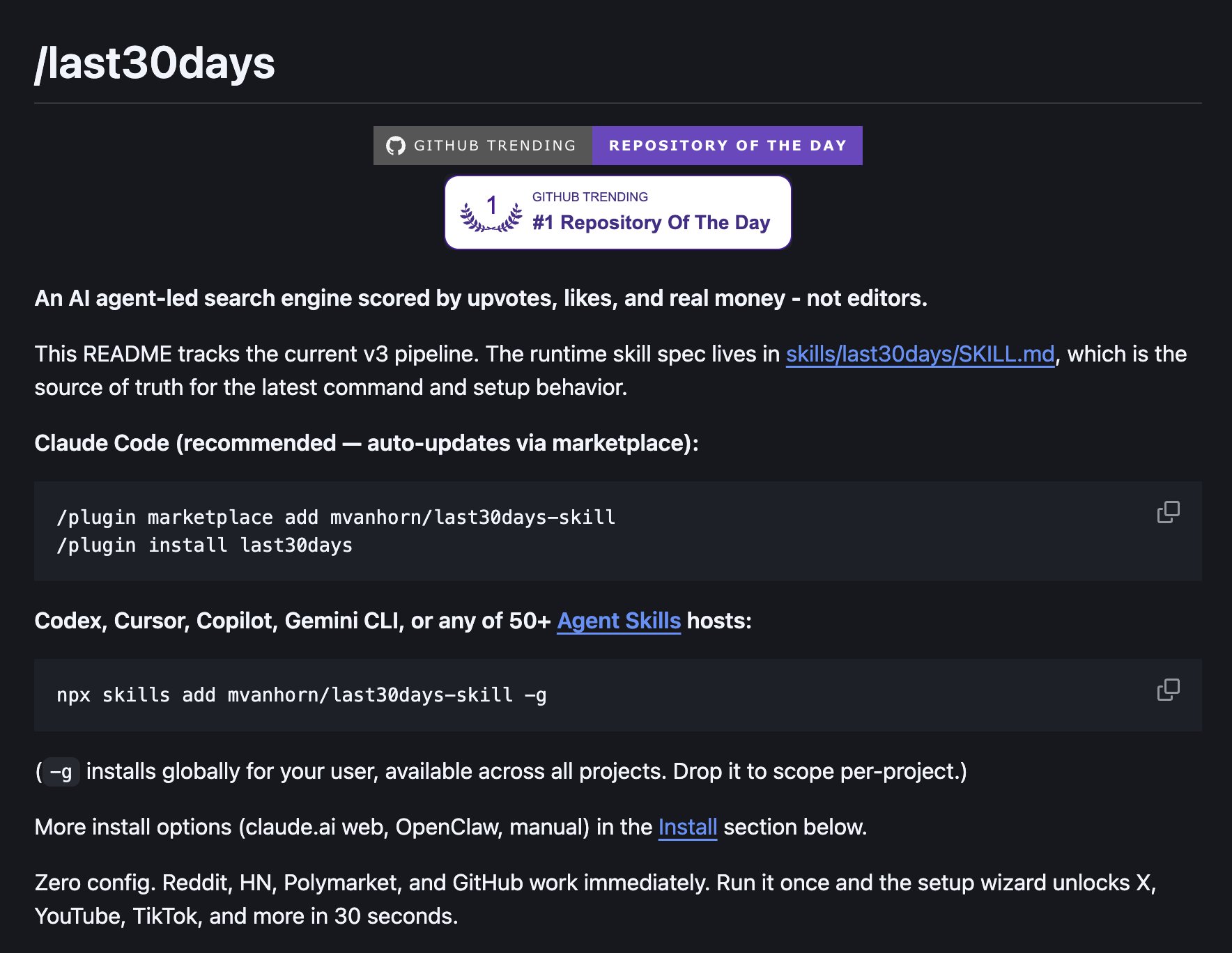
Someone built an AI agent that searches Reddit, X, YouTube, HN, TikTok, Polymarket, and the web in parallel. Scores everything by real upvotes, real likes, and real money. Synthesizes it into one brief. In seconds. It's called /last30days. 28,700+ stars on GitHub. You type one command. The agent fans out across every platform at once. Reddit threads. X posts. YouTube transcripts. Polymarket odds backed by actual money. HN comments. GitHub commits. It scores each source by what real people engaged with. An AI judge synthesizes the whole thing into one grounded summary of the last 30 days. Here's what it does: → Searches Reddit for top upvoted threads and comments on any topic, person, or company. → Pulls X posts and scores them by likes and recency. Not algorithmic feed. Raw signal. → Transcribes and searches YouTube videos. Finds what was actually said, not just the title. → Reads TikTok engagement. Surfaces what creators and communities are actually talking about. → Queries Polymarket odds. Real money bet by real people on what happens next. → Searches Hacker News. The technical community's unfiltered take. → Searches GitHub commits and PRs. What someone is actually shipping right now. → Runs all sources in parallel. Scores them against each other by engagement weight. → AI agent judge synthesizes everything into one brief. No raw dump. A grounded summary. → Zero config to start. Reddit, HN, Polymarket, and GitHub work immediately. → One setup wizard unlocks X, YouTube, TikTok, and more in 30 seconds. → Installs into Claude Code, Codex, Cursor, Copilot, Gemini CLI, and 50+ agent hosts. Here's the wildest part: Google doesn't touch Reddit comments or X posts. ChatGPT has a Reddit deal but can't search X or TikTok. Gemini has YouTube but not Reddit. Claude has none of them natively. Every platform is a walled garden with its own API, its own tokens, its own auth. No single AI has access to all of it. Until you bring your own keys and bridge them with an agent. That's the unlock. Not one better search engine. A dozen disconnected platforms, scored against each other by what real people actually engaged with and bet real money on. Google aggregates editors. /last30days searches people. Perplexity Pro: $20/month. $240/year. ChatGPT Plus: $20/month. $240/year. You(dot)com Pro: $15/month. $180/year. /last30days: $0. Unlimited queries. Unlimited topics. Your API keys. Your agent. Forever. 28,700+ stars. 2,431 forks. MIT licensed. MIT licensed. Self-hosted. Open protocol. Free forever. 100% Open Source. Github repo: https://t.co/jSgEaiye2H
V
Viv @Vtrivedy10 ·
imo there’s a pretty solid default recipe that everyone should use to optimize a system of Agent = Model + Harness you should “train” both 1. Build v1 agent using a sensible base harness and some task specific prompting + tools 2. Harness Engineering using eval tasks that roughly match prod this is often enough - most companies can get acceptable perf doing this. then they collect traces, mine them for patterns, and make slight tweaks from there 3. SFT using data collected from traces) or synthetic data. Often is good candidate for “distillation tasks” to train a cheaper model while maintaining existing performance 4. RL if you have the bandwidth and ability and desire to create environments and designing rewards that represents the tasks you want your agent to be good at. Push past the SFT behavior of “copying” data from existing model to pushing past in some dimension 5. Light harness engineering again to squeeze any more juice (ex: slight prompting) using the trained model that’s better at your task distribution this loop will largely be productized as a general purpose recipe for building and improving agents we’re still in the earliest innings of the world’s companies getting comfortable with steps 1-2 of this loop. Harness engineering will probably be the dominant way ppl will optimize agents but i expect a large number of companies to onboard through this entire loop on some trial project of interest in the next year
V Vtrivedy10 @Vtrivedy10

https://t.co/Lb2gtM9SNs

M
Mohit Goyal (Harness arc) @ByteMohit ·
I Built an Agentic Harness From Scratch. That Taught Me What Agents Actually Are
H
Hamza Khalid @humzaakhalid ·
THIS IS HOW YOU LEARN OBSIDIAN IN 7 DAYS AND NEVER LOSE A THOUGHT AGAIN. most people download it, open a blank note, and close the app forever. this is the roadmap that actually sticks. Day 1 → download Obsidian, create first vault, write your first note Day 2 → learn linking with [[Note Name]] syntax, open Graph View Day 3 → build the Daily Notes habit, write 3 things to remember Day 4 → set up PARA folders: Projects, Areas, Resources, Archive Day 5 → install 3 plugins that turn notes into a system Calendar etc Day 6 → build your first Daily Note template with date, tasks, and links Day 7 →open Graph View, kill every orphan note, build your first Map of Content, set a Sunday weekly review a useful vault develops over 3 to 6 months, but the habit is built in 7 days. capture first. organize second. never the other way around. make sure to bookmark it before it gets lost in your feed. ♻️ REPOST this because you are the first one who got this early for your audience. I wrote a complete guide below ~ don't Google it.
H humzaakhalid @humzaakhalid

How to Build Your Second Brain using Obsidian (FREE)
P
PA13L0 @Fluyeporlaweb ·
Jack Dorsey construyó el agente de IA local más COMPLETO que existe. Luego lo donó a la Linux Foundation para que nadie lo controle. 46.4k estrellas. 518 contribuidores. 137 releases. Actualizado hace unas horas. Se llama Goose y es lo más cerca que he visto de un agente de IA de verdad corriendo en tu máquina. No solo sugiere código. Instala dependencias, ejecuta, edita, testea, depura y despliega. Solo. Sin que le estés mirando. Lo que lo hace diferente a Claude Code o Codex: ✅ App de escritorio nativa + CLI + API - elige cómo usarlo ✅ Funciona con cualquier LLM: Claude, GPT, Gemini, DeepSeek, Ollama y 15 más ✅ Usa tus suscripciones existentes - sin pagar más APIs ✅ 70+ extensiones MCP: GitHub, Google Drive, bases de datos, navegador y más ✅ Subagentes paralelos - divide tareas complejas y las ejecuta en paralelo ✅ Recipes: guarda flujos de trabajo como YAML y compártelos con tu equipo ✅ Modo adversario integrado - un revisor que detecta inyecciones de prompt y acciones inseguras ✅ Compatible con Claude Code y Codex como proveedores via ACP ✅ Rust nativo. Mac, Linux y Windows. Apache 2.0. La parte que más me ha flipado: Puedes conectarlo a Claude Code o Codex como subagente. Goose orquesta. Ellos ejecutan. El agente que coordina a otros agentes. el enlace 👇
M
Md Ismail Šojal 🕷️ @0x0SojalSec ·
This 2-hour Stanford lecture will teach you how to unlock 100% of any LLM's potential. it's the clearest breakdown I've seen of how top AI engineers actually push models past their limits - 4 levels: prompting to fine-tuning to RAG to agents - CoT, ReAct, Tree of Thoughts, self-consistency - Andrew Ng's 4 agentic patterns - evals - what separates demos from real products
S
spect @spectnfa ·
Nobel Prize winner Demis Hassabis just accidentally revealed who survives the next 5 years and who doesn't. "One person who understands AI will outperform an entire startup team" Most founders heard that and thought: "Oh no, I need to learn prompt engineering" Wrong. That's not what "understands AI" means anymore. It means: building workflows. Chaining systems. Automating entire departments. Not typing better questions into ChatGPT. The split is brutal: > 90% of people = still using AI like a calculator > 10% of people = treating it like infrastructure In 5 years, the 10% will run everything with half the headcount. The 90%? Replaceable. Which group are you in? Watch the full breakdown. This is the only skill gap that actually matters right now. Bookmark this. You'll want to reference it.
0 0xwhrrari @0xwhrrari

How I set up Obsidian + Claude as my second brain
M
Mike Fishbein @mfishbein ·
OpenAI’s “The Deployment Company” is stealing clients’ IP and selling it to their competitors. This used to be a conspiracy theory. It’s not anymore. Watch this clip of OpenAI’s Head of Forward Deployed Engineering (speaking at South Park Commons). He says it directly: FDE service revenue doesn’t matter to OpenAI. Only Recurring Revenue from product does. To turn FDE engagement into product, OpenAI needs three things: 1. Subject matter expertise 2. Context to train on 3. Engineering And clients are paying OpenAI for them to get all three. OpenAI’s FDE clients don’t matter to them. They’re just a data source. Indie FDE agencies, on the other hand, obsess over clients because that is their business model. There isn’t a backend offer. Indie FDE agencies make money from happy clients. The Deployment Company makes money when shoplift clients’ data. Incentives matter. Hire Indie FDEs.
S
stepan @cyntro_py ·
Spent some time over the weekend building a scraper to collect all existing dynamic workflows. The feature only appeared about a week ago, so there aren't that many in the wild yet - around 800. Based on GitHub activity, roughly 100 new ones are being published every day. Almost all of them are focused on software development, but the main advantage over skills is already obvious. Skills are an old concept at this point. They were hugely popular in February-March 2026, but it's June now, and the models have predictably absorbed most of the knowledge that any public skill on the internet could provide. In more than half of cases, public skills either provide no measurable benefit or actively make the outcome worse than simply asking an LLM to solve the problem. I ran a small eval to test this: comparing an agent equipped with coding skills against a plain LLM that was asked to come up with a plan and implement the solution. The results were far from favorable to skills. Workflows are different because they are codified, programmable systems that manage and orchestrate work. If the purpose of a skill was to tell an LLM how to perform a task, today's work is increasingly shifting toward building algorithms with validation, feedback loops and control mechanisms that orchestrate agents around a goal.
C cyntro_py @cyntro_py

A dynamic workflow like this consumes ~10M tokens but delivers a comprehensive market research report that previously would have required dozens of deep research runs and hours of data compilation I'm running this for every project that applies to @cyberfund and gets through first interview phase.
R
Robert Courson @robertcourson ·
/supergoal is a self healing, self governing and self verifying upgrade for /goal check it out on gh (below) and take it for a spin - I think you’ll find it a worthy addition for your agents. https://t.co/uUkrhxjxKA
S steipete @steipete

Here’s your monthly reminder that you shouldn’t be prompting coding agents anymore. You should be designing loops that prompt your agents.
P
Peter Yang @petergyang ·
I’m trying to become a better AI builder and have been lucky enough to interview 5 of the best: 1. @kieranklaassen built the Compound Engineering system that many AI builders swear by. In our episode, he walked through exactly how it works, from planning to skills to commands like /ce-plan, /ce-work, and /lfg (let’s effing go). https://t.co/2xtZck8iX0 I’ll link the free Compound Engineering system below. 2. @ryancarson has started multiple companies and is now running a startup solo with OpenClaw, Codex, and Devin. It was fascinating to see the system he built to help him run his company. https://t.co/c3MYrstVnl 3. @Shpigford has been building products for 25 years. Like many AI builders, he created his own skill stack to streamline the way he works, including /build, /adversarial-code-review, /but-for-real, and /learnings. https://t.co/1ROWBF0tSk 4. @kunchenguid made it to L8 in big tech as a principal engineer, which is very hard. Then he quit to ship 40 PRs a day with agents and build free open source tools for visual planning, parallel agents, and AI code review. https://t.co/ELBGuGqHyr I’ll link his GitHub below too. 5. @mvanhorn has built some of the most popular open source AI projects on GitHub despite having no formal engineering background, including /last30days and his Printing Press system. I’m dropping his episode next week on my YouTube. If you’re trying to become a better AI builder too, start with these interviews that show you how real AI builders work. Subscribe for more conversations like this: https://t.co/1C6pbWzPYn
B
Brian Armstrong @brian_armstrong ·
Good take My guess is - demand for intelligence is near infinite - but 80% of workloads will be running on 99% cheaper models within 12-18 months - 20% of workloads will still run on latest gen models where IQ maxing is important (scientific breakthroughs, higher level ochestrator agents?) - rough analogy might be what % of macbooks or gaming PCs sold have the maxed out specs for CPU/GPU, prices are falling much faster than Moore's law here though - this leads me to think the limiting factor will be energy and compute, not better models At Coinbase we're working hard on routing prompts to cheaper models where appropriate, and in some cases have been able to keep costs roughly flat, while token usage continues to grow exponentially.
S Shaughnessy119 @Shaughnessy119

The most basic way AI could blow up imo. I'm not saying it does but this is the most obvious way I can see it happening - Per seat subscriptions are massively subsidized. The flat fee was priced way below what heavy usage actually costs - For real business use you have to move to the API anyway. Data protections, work integrations and compliance officer approval - On the API you pay metered rates, and businesses are burning credits way faster than the per seat pricing ever led them to expect - This is everywhere right now. Internally for us, Codex users, Uber torching its entire 2026 AI budget in 4 months, the Microsoft comments. Just go try an API I shared more on this here: https://t.co/iZrqrCAIRW - And I don't think most businesses have the money to keep paying increasing API rates without a real change to how they operate (caps needed) - Because they have a cheap alternative. They can reach open source models through any aggregator (OpenRouter, Venice, Baseten, Together) and still get strong privacy. Venice private data centers, or E2EE/TEE serving GLM 5.1. More on open source inference provider raises here: https://t.co/7kf56P44yQ - And the discount is enormous. DeepSeek V4 codes within a hair of Opus on SWE bench at roughly 1/30th the price, and the cheapest open models run closer to 1/100th - Chinese labs open source frontier grade models. The model is the single biggest cost an inference provider has, and they get it for free - This idea dies if China goes closed source. That is actually bullish web2 AI labs, because if everyone is closed you pay up for the best intelligence. China goes closed source if they are tired of giving away an asset and they want the revenue and data flow to train new models - Is this showing up in web2 AI lab revenue yet? No. Revenue is off the charts. Anthropic went from 9B to 47B run rate in five months - So go forward, what happens? - I think revenue slowly starts leaking to the open source inference providers (see Venice usage, OpenRouter's $113M raise, Baseten is raising at $11B or triple its valuation in three months, on revenue that went from $200M to $600M annualized in a single quarter) - It doesnt move overnight, but it caps the labs ability to raise prices, and margins are already deeply negative. OpenAI is reportedly running near negative 122% - With margins that bad there is no cash flow, so the labs are fully dependent on outside capital to buy GPUs, train models, and keep subsidizing usage (I.e. see Google tapping $80b equity sale, granted 30b for employee RSU taxes. Clearly they think Equity is overvalued or you wouldn't sell it) - The break comes when that capital stops. Pricing is capped so margins cant improve, and the moment investors lose conviction on payback, the whole flow reverses - Why would they lose conviction on payback? Back to the start - the inability to improve margins or get businesses to pay more - This is also limiting, if we start making new drugs with AI or create entirely new businesses, you better believe people will pay up to the max for AI usage

G
Geoffrey Litt @geoffreylitt ·
How I made an agent that buys our groceries, runs the family budget, and is planning a move:
G geoffreylitt @geoffreylitt

Your family agent needs a butler's book

B
Boris Cherny @bcherny ·
Seeing a number of benchmarks showing Opus is the best model for long-running work. Five tips for running Opus autonomously for hours/days: 1. Use auto mode for permissions, so Claude doesn’t ask for approval 2. Use dynamic workflows, to have Claude orchestrate hundreds/thousands of agents to get a task done 3. Use /goal or /loop, to nudge Claude to keep going until it’s done 4. Use Claude Code in the cloud, so you can close your laptop (easiest way is the desktop or mobile app) 5. Make sure Claude has a way to self-verify its work end to end: Claude in Chrome browser extension for web, iOS/Android sim MCP for mobile, a way to start the full web server or service for backend work
R rishi_desai2 @rishi_desai2

Can coding agents stay coherent over a 1 billion token budget? Can they build Slack from scratch? Rewrite a JAX codebase in PyTorch? Build a C compiler in Rust? Enter SWE-Marathon: a benchmark for autonomous long-horizon software work. https://t.co/K97VHyLvIX

M
Matt Van Horn @mvanhorn ·
WTF Is a Loop? Peter Steinberger vs. Boris Cherny
P
Peter Steinberger 🦞 @steipete ·
@heyandras You can look at clawsweeper and crabfleet where I explore these ideas, it’s all oss.